Voice biometrics—the use of voice-recognition software to record and use your speech patterns as a unique “fingerprint” that can be used to identify you—will be increasingly standardized for government and businesses in the next two to three years
Everybody has a unique voice—and it can now be used to track you.
That’s the burgeoning field of “voice biometrics,” and businesses and governments are increasingly using the technology to track individuals—an estimated 65 million voiceprints are now in corporate and government databases, according to the Associated Press. And the technology is now widely available, and spreading rapidly.
Among the companies that AP identifies as using biometrics are Barclays Bank, mutual fund manager Vanguard Group, and Turkish cell phone provider Turkcell. On the government side, US law enforcement uses voice biometrics to track inmates and paroled offenders, the Internal Revenue Department in New Zealand currently has 1 million voiceprints on record, and South Africa’s Social Security Agency has tallied 7 million voiceprints.
Via AP:
Activists worry that the popularity of voiceprinting has a downside.
“It’s more mass surveillance,” said Sadhbh McCarthy, an Irish privacy researcher. “The next thing you know, that will be given to border guards, and you’ll need to speak into a microphone when you get back from vacation.”
The legality of voice recording differs from country to country. In the United States, voice recording falls under state, rather than federal law, and rules differ from state to state. In 38 states and the District of Columbia, “conversations may be recorded if the person is party to the conversation, or if at least one of the people who are party to the conversation have given a third party consent to record the conversation. In California, Connecticut, Delaware, Florida, Illinois, Maryland, Massachusetts, Nevada, New Hampshire, Pennsylvania, Vermont, and Washington State, the consent of all parties of the conversation must be obtained in order to record a conversation,” according to Wikipedia.
Consent, of course, may be given without much thought—it might easily be buried in, for instance, a phone company’s terms of service, or an “all calls may be recorded for training purposes” notice on a phone call you sleep through.
Within the next two to three years, it’s expected that more and more companies will begin standardizing the use of voice biometrics as passwords—you’ll just speak your name or a phrase into the phone to identify yourself, instead of a password.
Of course, once locked in, voice biometrics could conceivably be used to track individuals in public places, meaning that the use of cell phones to monitor and track individuals could be obsolete, giving way to simply tracking any spoken word as long as it’s in the range of equipment sensitive enough to identify voice biometrics.
The Electronic Frontier Foundation has been sounding the alarm about biometrics and civil liberties violations since 2003—in this case, facial recognition technology. Documents released by Edward Snowden this summer reveal that the NSA collects over 55,000 facial recognition quality images a day through global surveillance programs—through e-mails, texts, social media, videoconferencing and more. As the NSA has been demonstrated to track and record nearly all cell phone calls, it presumably wouldn’t be much trouble to use that information for establishing a covert voice biometrics database.
Avram Noam Chomsky (/ˈnoʊmˈtʃɒmski/; born December 7, 1928) is an American linguist, philosopher,[21][22]cognitive scientist,logician,[23][24][25] political commentator and activist. Sometimes described as the “father of modern linguistics”,[26][27] Chomsky is also a major figure in analytic philosophy.[21] He has spent most of his career at the Massachusetts Institute of Technology (MIT), where he is currently Professor Emeritus, and has authored over 100 books. He has been described as a prominent cultural figure, and was voted the “world’s top public intellectual” in a 2005 poll.[28]In the 1990s, Chomsky embraced political activism to a greater degree than before.[113His far-reaching criticisms of U.S. foreign policy and the legitimacy of U.S. power have raised controversy.[114][115] Chomsky has received death threats because of his criticisms of U.S. foreign policy.[116] He has often received undercover police protection at MIT and when speaking on the Middle East, although he has refused uniformed police protection.[117]The Electronic Intifada website claims that theAnti-Defamation League “spied on” Chomsky’s appearances, and quotes Chomsky as being unsurprised at that discovery or the use of what Chomsky claims is “fantasy material” provided to Alan Dershowitz for debating him. Amused, Chomsky compares the ADL’s reports to FBI files.[118]
Chomsky resides in Lexington, Massachusetts, and travels, giving lectures on politics and linguistics.
Following leads on the anthrax trail took us across four continents – filming outside the high security perimeter fences of some of the world’s most secret germ war labs (and inside a couple), tracking down and talking to experts and scientists some of whom were members of the so called “International Bio-Weapons Mafia”. None was more chilling than the face to face we got with the man they call Doctor Death – Wouter Basson, the army scientist who headed apartheid South Africa’s secret germ war program – Project Coast.
Shrouded in mystery and hidden behind front companies that used worldwide intelligence connections, the shocking activities of the program only emerged after the fall of apartheid – revealing a shockingly sophisticated operation that had 200 scientists developing germ war agents to be used against the country’s black population.
This was one of the very few interviews Doctor Death has given and for the first time he talks candidly about the help the received from the West, his relationship with David Kelly and the creation of “the Black Bomb” an agent that could sterilize blacks without their knowledge.
And then there’s his strange relationship with Larry Ford, the Mormon gynecologist to Hollywood stars who was also moonlighting for the South Africans and had CIA connections.
Some experts are wondering whether Doctor Deaths’s program provided a convenient off-shore operation for Western germ war experimentation?
Operating out of South Africa during the Apartheid era in the early 1980’s, Dr. Wouter Basson launched a secret bioweapons project called Project Coast. The goal of the project was to develop biological and chemical agents that would either kill or sterilize the black population and assassinate political enemies. Among the agents developed were Marburg and Ebola viruses.
Basson is surrounded by cloak and dagger intrigue, as he told Pretoria High court in South Africa that “The local CIA agent in Pretoria threatened me with death on the sidewalk of the American Embassy in Schoeman Street.” According to a 2001 article in The New Yorker magazine, the American Embassy in Pretoria was “terribly concerned” that Basson would reveal deep connections between Project Coast and the United States.
In 2013, Basson was found guilty of “unprofessional conduct” by the South African health council.
Bioweapons expert Jeanne Guillemin writes in her book Biological Weapons: From the Invention of State-Sponsored Programs to Contemporary Bioterrorism, “The project‘s growth years were from 1982 to 1987, when it developed a range of biological agents (such as those for anthrax, cholera, and the Marburg and Ebola viruses and for botulinum toxin)…“
Basson’s bioweapons program officially ended in 1994, but there has been no independent verification that the pathogens created were ever destroyed. The order to destroy them went directly to Dr. Basson. According to the Wall Street Journal, “The integrity of the process rested solely on Dr. Basson’s honesty.”
Basson claims to have had contact with western agencies that provided “ideological assistance” to Project Coast. Basson stated in an interview shot for the documentary Anthrax War that he met several times with Dr. David Kelly, the infamous UN weapons inspector in Iraq. Kelly was a top bioweapons expert in the United Kingdom. He was found dead near his home in Oxfordshire in 2003. While the official story claims he committed suicide, medical experts highly doubt this story.
In a 2007 article from the Mail Online, it was reported that a week prior to his death, Dr. Kelly was to be interviewed by MI5 about his ties to Dr. Basson.
Dr. Timothy Stamps, Minister of Health of Zimbabwe, suspected that his country was under biological attack during the time that Basson was operating. Stamps told PBS Frontline in 1998 that “The evidence is very clear that these were not natural events. Whether they were caused by some direct or deliberate inoculation or not, is the question we have to answer.”
Stamps specifically named the Ebola and Marburg viruses as suspect. Stamps thinks that his country was being used as a testing ground for weaponized Ebola.
“I’m talking about anthrax and cholera in particular, but also a couple of viruses that are not endemic to Zimbabwe [such as] the Ebola type virus and, we think also, the Marburg virus. We wonder whether in fact these are not associated with biological warfare against this country during the hostilities…Ebola was along the line of the Zambezi [River], and I suspect that this may have been an experiment to see if a new virus could be used to directly infect people.”
The Ghanaian Times reported in early September on the recent Ebola outbreak, noting connections between Basson and bioweapons research. The article points out that, “…there are two types of scientists in the world: those who are so concerned about the pain and death caused to humans by illness that they will even sacrifice their own lives to try and cure deadly diseases, and those who will use their scientific skill to kill humans on the orders of… government…”
Indeed, these ideas are not new. Plato wrote over 2,000 years ago in his work The Republic that a ruling elite should guide society, “…whose aim will be to preserve the average of population.” He further stated, “There are many other things which they will have to consider, such as the effects of wars and diseases and any similar agencies, in order as far as this is possible to prevent the State from becoming either too large or too small.”
As revealed by The Age, Nobel prize winning Australian microbiologist Sir Macfarlane Burnet secretly urged the Australian government in 1947 to develop bio weapons for use against the “overpopulated countries of South-East Asia.” In a 1947 meeting with the New Weapons and Equipment Development Committee, the group recommended that “the possibilities of an attack on the food supplies of S-E Asia and Indonesia using B.W. agents should be considered by a small study group.”
This information gives us an interesting perspective on the recent unprecedented Ebola outbreak. Is it an organic natural phenomenon? Did this strain of Ebola accidentally escape from a bioweapons lab? Or, was it deliberately released?
Written by Krishnamurti in 1980 at the request of his biographer Mary Lutyens.
The core of Krishnamurti’s teaching is contained in the statement he made in 1929 when he said, “Truth is a pathless land”. Man cannot come to it through any organization, through any creed, through any dogma, priest or ritual, not through any philosophical knowledge or psychological technique. He has to find it through the mirror of relationship, through the understanding of the contents of his own mind, through observation and not through intellectual analysis or introspective dissection.
Man has built in himself images as a fence of security—religious, political, personal. These manifest as symbols, ideas, beliefs. The burden of these images dominates man’s thinking, his relationships, and his daily life. These images are the causes of our problems for they divide man from man. His perception of life is shaped by the concepts already established in his mind. The content of his consciousness is his entire existence. The individuality is the name, the form and superficial culture he acquires from tradition and environment. The uniqueness of man does not lie in the superficial but in complete freedom from the content of his consciousness, which is common to all humanity. So he is not an individual.
Freedom is not a reaction; freedom is not choice. It is man’s pretence that because he has choice he is free. Freedom is pure observation without direction, without fear of punishment and reward. Freedom is without motive; freedom is not at the end of the evolution of man but lies in the first step of his existence. In observation one begins to discover the lack of freedom. Freedom is found in the choiceless awareness of our daily existence and activity.
Thought is time. Thought is born of experience and knowledge, which are inseparable from time and the past. Time is the psychological enemy of man. Our action is based on knowledge and therefore time, so man is always a slave to the past. Thought is ever limited and so we live in constant conflict and struggle. There is no psychological evolution. When man becomes aware of the movement of his own thoughts, he will see the division between the thinker and thought, the observer and the observed, the experiencer and the experience. He will discover that this division is an illusion. Then only is there pure observation which is insight without any shadow of the past or of time. This timeless insight brings about a deep, radical mutation in the mind.
Total negation is the essence of the positive. When there is negation of all those things that thought has brought about psychologically, only then is there love, which is compassion and intelligence.
Just a few years ago he was doing well; as a trained Intelligence Analyst in the US Air National Guard he looked forward to a stable and glamorous career at the center of action, living inside a virtual videogame and fighting America’s enemies via drones. It was a heady combination of gamer geek dreams and the aspirations of a good boy who’d grown up in a military family, following his parents’ path to public service.
Now he sits in a cell in a foreign country, far from his Indiana roots, suffering from PTSD and recovering from two apparent suicide attempts. The last one by diving headfirst onto a concrete floor from a top bunk bed. He’s struggling hard to stay in that cell, too; or at least, never to return to the land of his birth, the land he once served so proudly.
In a series of clipped, yet eloquent, emails Major Paul DeHart, Matt’s father, talked to us about the struggles his family have been through in the days since. “No prison is a good prison. Depriving any human being much less one who has grown up under western law which in theory at least values human dignity and freedom above most things is punishment enough. I will say compared to the way human beings in general and prisoners specifically are treated in any US prison system, state or federal, Canadian prisoners seem to be treated as human beings with at least the potential for rehabilitation.”
“But, the US approach to warehousing prisoners and exploiting them as resources for labour and prison-industrial-complex businesses is no different than the way the US approaches old people in nursing homes or labour in general. From a corporatist standpoint, a human resource which is no longer productive is no longer of any value. The concept of intrinsic human value seems to have been forgotten.”
On his son’s complex situation and appeal for sanctuary: “It’s simple in our book. He was tortured by the US. That is a violation of international law. Does anyone doubt any more that the US tortures people? If they have done it overseas to supposed enemies – why not to their own citizens? Why is the US Senate report in CIA torture still not released. You figure it out. Along those lines – I reference what happened to Canadian citizen [Maher] Arar.”
As Matt himself explained to the National Post, “It’s not that I’m not patriotic — I am. I voted for Bush. My family is military, pretty gung ho. But everything has changed.”
The DeHart case (as explained in the masterful five-part National Post chronicle) is neither straightforward nor at first glance tremendously sympathetic. Of his own volition he walked into the Russian Embassy in Washington, DC. What happened there depends on which version of the stories he’s told you believe. Either he was there to look for work and a new start, having lost faith in the US, or he was there to mislead them about drone technology, deliberately handing them misinformation to protect the country he loved. But what does this have to do with the child pornography charges against him, the only charges which have been filed? And if he’s wanted on child pornography charges, why did the FBI interrogate him as part of an espionage investigation, as the documentation shows?
And what does this have to do with Anonymous?
It all started with Chanology. According to statements DeHart gave Adrian Humphreys of the National Post, he participated in Project Chanology, the original “moralfag” action which pitted Anonymous against the Church of Scientology. There were many aspects to the operation, but the most famous was the adoption of the Guy Fawkes mask, since become inextricably associated with the hacktivist collective. The statements DeHart gave were corroborated by operation founder Gregg Housh, although he could not specifically identify participants, having known them only via pseudonyms.
Chanology was DeHart’s first taste of activism, and he liked it. Getting deeper into the hacktivist scene, he eventually ran a server on which some files which may or may not have been destined for WikiLeaks resided.
His American lawer Tor Ekeland told us via email, “This whole matter revolves around a file that appeared in the fall of 2009 on a TOR server Matt was a co-sys admin. People speculate that it was enroute to Wikileaks, although I have not seen any confirmation of this fact. The file was unencrypted for the first two days on the server. According to published reports, it’s an FBI investigative file of domestic criminal activity by the CIA.”
Then came the raid.
That was 2010. No malware and no such mystery file was found on DeHart’s computer equipment; he’d long since deleted the file, which had been uploaded to the server by someone else.
“I opened the door and it was the police task force. Your stomach drops and your heart beats like crazy. It takes you by surprise, even though I had nothing to hide once the server was destroyed…
I was shook up,” Matt said. “I don’t know everything they took, but I know they took everything. After they had left I looked at the search warrant which was left on the couch. It was a generic warrant from the Memphis FBI field office and it said they were searching for child pornography.”
That was when he started to lose faith. Not too long after that he visited the Russian and Venezuelan embassies, looking for the future he could no longer see himself having in the USA. He didn’t find it there and decided to take the same route once taken by escaped slaves, the Underground Railway to the free environs of Canada.
Part of the reasoning, as his father told Humphreys, was that if there was any hold-up with the passport, they’d know the child porn incident wasn’t over. There was no problem with the passport. He left, signed up for a French Immersion course which to his chagrin didn’t take, then enrolled in technical college in scenic Prince Edward Island, intending to study welding. “I figured I’d try something that had nothing to do with computers. I felt good going to Canada,” he explained to the National Post.
All was going well, but in order to start school he needed a student visa, which he had to obtain from his home country.
You see this coming, don’t you?
He bussed across the St Croix river to the American side, where he spent the night at a hotel and took care of the paperwork. Then he headed back to Canada. Presenting his passport at the border, he anticipated no issues. The guard scanned it, checked the computer, scanned it again, went into an office to check something, and suddenly all hell broke loose.
While two guards threw themselves in front of the exit, blocking it, DeHart was cuffed and plopped in a chair. Soon he was tumbled into the back of a Border Patrol vehicle which was driven by an FBI agent and taken to an ICE detention center, where he was refused a lawyer and detained.
DeHart says he was strapped into a lab chair and drugged with an IV drip, before being aggressively questioned for hours. He was shown a new criminal complaint, charging him with soliciting child pornography; it was written that very day.
His father explained some anomalies. “We have repeatedly asked in court in the US for actual transcripts of his interrogations and have been told there are no audio or video records. Yeah right. Two agents are flown out from the national security section in DC to interrogate Matt and there are no records. Hmmm.”
He was transferred from the ICE detention center to another holding facility, where he collapsed and was taken to hospital, where the doctors determined him to be in a paranoid state, claiming persecution by the FBI. His symptoms were consistent with “drug induced psychosis” according to medical personnel.
Department of Justice documents show that DeHart was not actually detained on child porn charges; he was detained relating to an issue of national security/espionage. And he remained detained for months, until a judge added up the inconsistencies in the case, found DeHart a credible witness and not a flight risk, and ordered that he be released with a monitoring bracelet and curfew.
On November 5, Guy Fawkes Day, Million Mask March day, Matt DeHart filed a motion to dismiss the charges against him.
On April 2 of the next year, he and his family fled, driving north almost a full day and night to a border station in Fort Francis, Ontario, where they claimed refugee status and requested asylum from the Canadian government. Ekeland explained, “He and his family are seeking refugee status in Canada based on the fact that Matt was tortured by the FBI and that he cannot get a fair trial in the U.S.”
Paul DeHart said, “We came to Canada to seek protection from the US under international law. We know the tremendous courage it would take any Canadian official to stand up to Canada’s closest ally and biggest trading partner. However, it has been done before. In my generation Canada welcomed war protesters who disobeyed draft laws in the US and came to Canada where tens of thousands of them were granted immigrant status and protected.” In more recent, more Conservative times, however, the Canadian government has been rounding up and repatriating (ie returning to the US) AWOL American soldiers.
The next day the Canadian government from whom they were seeking aid charged Matt with espionage against Canada.
“There are Americans who try to sneak across the Canadian border to flee US law enforcement all the time,’” said Paul DeHart. CBSA [Canada Border Services Agency] I’m sure keeps stats. We did not sneak anywhere. We reported to a CBSA office and declared ourselves as asylum seekers under the UN Convention Against Torture (CAT). Matt was not detained by Canadian officials until the following day when a US Judge issued an arrest warrant for failing to appear at a schedule court hearing.”
And this, along with the still-unresolved child pornography charges, is why Matt DeHart has spent the last year in Canadian jail cells. At one point he won limited release, and was reunited with his family, but when the family moved to a different apartment Matt notified his corrections officer of the move in an incorrect manner: by notifying the company in charge of his electronic monitor, who then notified the officer. His father explained, “Someone in the CBSA made a decision to have him rearrested on a
reporting technicality which had nothing to do with flight risk or danger to the community and forfeit the $10,000 bond we put up. Money by the way we could not afford to lose.” He remains in custody. Rallies for his release have been unsuccessful, if high-profile.
Paul DeHart told us, “You should thank God as Canadians you seem to still have a mature and unbiased judiciary. The judge who reviewed Matt’s bond release in Sept 2013, after CBSA challenged it in court, wrote a very well-supported opinion which basically said in paraphrase – in Canada someone is innocent until proven guilty. If her 13-page opinion is indicative of the quality of
Canadian judges, then I’d say at least judicially, Canadians are in good hands.”
“We are awaiting two decisions by the Immigration and Refugee Board. First, we await the admissibility decision for Matt. He is opposed by the govt for the charges in TN. The final submissions were sent in middle of August. A negative decision will start a time clock on a shortened process to have Matt sent back to the US. Actually, it’s my understanding that he would just have to be deported from Canada. Theoretically it doesn’t have to be back to the US, but where else would he be sent?”
“The other decision is whether as a family we qualify under for protection from the Canadian government. Final submission for that hearing are due this month. No telling how long either decision will take. Considering the unusual nature of our claim, we suspect the Canadian government will be sure to make a very thorough examination of each and have detailed rationale for the decisions.” This is going to involve a lot of lawyers, though, and they are not inexpensive, particularly for a couple of new immigrants who left behind established careers. “The [child porn] case in Tennessee is suspended until/unless Matt returns to the US as we understand it.”
The governments in question don’t appear to be in any rush. Major DeHart raises an interesting question: extradition. “After being in Canada since April 2013, a year and a half, there has been no extradition request from the US. Since these are relatively routine it raises the question – why not?”
We asked DeHart about the extent to which the Canadian and US governments were cooperating on the case. “Who knows?” he replied. “Clearly the questions Matt was asked by both CSIS [Canadian Security Intelligence Service, the “Canadian FBI”] and the War Crimes unit of CBSA were focused on events in the US which had nothing to do with child pornography. Questions Leann and I were asked at the admissibility hearing by CBSA hearings officers seemed to have come directly from the US. And, that makes sense since US border personnel are on Canadian soil and work closely with CBSA.”
Their old government seems content to leave the entire family in the hands of the Canadians, despite maintaining an apparent interest in watching events unfold. “We have not been contacted by anyone from the US government since we came to Canada,” Paul DeHart told us. “I will say that the day after we crossed the border in Ft. Frances we noticed at least a dozen US Homeland Security vehicles parked in that relatively small town. I do know we did not feel safe from the US there.” As a former NSA employee, DeHart is well-equipped to identify HS vehicles.
On September 12 DeHart’s US attorney Tor Ekeland created an online fundraiser to cover his legal expenses. He chose the site GoFundMe, which often works with Anonymous fundraisers.
That same day, the fundraiser was shut down.
“We got an email from GoFundMe saying we’d violated their Terms of Service, and that our account was being terminated,” Ekelund told me via email. “When we asked for explanation we got none. By the time we’d received the email the account had already been deleted.”
Paul DeHart said, “Well, you can draw your own conclusions. Supposedly the site was taken down for a violation of terms of service. But, since it was started and run by a law firm, that makes little sense.”
Not wasting any time, Ekeland immediately rebuilt the fundraiser on Canadian site Fundrazr, which also hosts Julian Assange’s personal fundraiser. “We had the Fundrazr up in an hour or two, most of the time which was spent on looking at alternatives sites. It took about 15 minutes to actually get it up and running again. It stands at $550 of a $10,000 goal.
“No money was lost. Gofundme sent us everything. I really don’t focus on fundraising, and I usually go thousands of dollars out of pocket on the cases I have that are like this. I never make money of these types of cases, and I’m certainly not doing it for the money.”
The future is uncertain, obscured in a blizzard of paperwork, allegations, missing files, and, most recently, very specific publication bans (which we are probably breaking by reporting this). There are two powerful, often collusive, governments
Ekeland explained, “As of this writing, the U.S. government has not taken any action to extradite Matt. They will not try him in absentia.”
Paul DeHart sums it up. “Unless you have spent a large part of your adult life serving in the S military you would have a hard time understanding what an absolutely gut-wrenching, traumatic experience it is to have to fill out a basis of claim form for asylum against the country you love and served. But there is no excuse for what was done to our son, and no one in the US seemed to care about that.”
“It is our intention to remain in Canada and live out the rest of our lives in peace. If we are granted status we would never be allowed to return to the country of our birth. My own mother passed away in May 2013 after we came here. I was unable to attend her funeral.”
“If we are permitted to remain in Canada and Matt is allowed free to pursue life again, then our lives will resume. We will work, live, and make a new life in Canada. We have no ambitions beyond this: to live free from the fear of the US government. Imagine knowing that your head is in the sights of a sniper some 2 miles away. You know that at any moment a trigger can be pulled sending a 50 calibre bullet into your skull and exploding it. I know that’s graphic and perhaps hyperbole, but that is what it
feels like to know that our lives are in the sights of the most powerful government on earth.”
“You wonder if this is the day someone pulls the trigger.”
NOTE: Matt’s job description has been corrected. He was originally reported to be a drone pilot, but was actually an Intelligence Analyst. His father writes, “His job in the Air National Guard was equivalent to PFC Manning’s in the Army.”
Michael Fishbach, co-founder of The Great Whale Conservancy (GWC), narrates his encounter with a young humpback whale entangled in local fishing nets.
At first, the animal appeared to be dead, yet Fishbach investigated and quickly discovered that the poor creature was tangled in a fishing net.
The humans had to act fast; what began as a tragedy soon became a thrilling rescue as Fishbach and his crew labored to free the young whale.
The entire encounter was caught on videotape and later narrated by Fishbach himself.
Watch as the whale named Valentina by her rescuers goes from near death to freedom, then rewards her saviours with dozens of magnificent full-body breeches and tail flips.
Indeed, this video has the power to inspire action on behalf of other beings. In ways big and small, each of us can be the one who helps another.
Opportunities to be a hero for animals are all around. Where will your compassion take you next?
Unbelievable hidden messages and symbolism are found not just in Disney productions but also Hollywood in large in general. The entertainment industry may not even realize the severity of the situation with its effort to follow along in ‘cool’ and ‘hip’ trends like flashing the Devil Horns and promoting 666 satanic symbolism.
When communities attempt to police the police, they often get, well… policed.
In several states, organized groups that use police scanners and knowledge of checkpoints to collectively monitor police activities by legally and peacefully filming cops on duty have said they’ve experienced retaliation, including unjustified detainment and arrests as well as police intimidation.
The groups operate under many decentralized organizations, most notably CopWatch and Cop Block, and have proliferated across the United States in the last decade – and especially in the aftermath of the events that continue to unfold in Ferguson, Missouri, after officer Darren Wilson fatally shot unarmed, black teenager Michael Brown.
Many such groups have begun proactively patrolling their communities with cameras at various times during the week, rather than reactively turning on their cameras when police enter into their neighborhoods or when they happen to be around police activity.
Across the nation, local police departments are responding to organized cop watching patrols by targeting perceived leaders, making arrests, threatening arrests, yanking cameras out of hands and even labeling particular groups “domestic extremist” organizations and part of the sovereign citizens movement – the activities of which the FBI classifies as domestic terrorism.
Courts across the nation at all levels have upheld the right to film police activity. The American Civil Liberties Union (ACLU) and photographer’s associcationshave taken many similar incidents to court, consistently winning cases over the years. The Supreme Court has ruled police can’t search an individual’s cellphone data without a warrant. Police also can’t legally delete an individual’s photos or video images under any circumstances.
“Yet, a continuing stream of these incidents (often driven by police who have been fed ‘nonsense‘ about links between photography and terrorism) makes it clear that the problem is not going away,” writes Jay Stanley, a senior policy analyst at the ACLU’s Speech, Privacy & Technology Project.
Sources who have participated in various organized cop watching groups in cities such as New York; Chicago; Cleveland; Las Vegas; Oakland; Arlington, Texas; Austin and lastly Ferguson, Missouri, told Truthout they have experienced a range of police intimidation tactics, some of which have been caught on film. Cop watchers told Truthout they have been arrested in several states, including Texas, New York, Ohio and California in retaliation for their filming activity.
More recently, in September, three cop watchers were arrested while monitoring police activity during a traffic stop in Arlington, Texas. A group of about 20 people, a few of them associated with the Tarrant County Peaceful Streets Project, gathered at the intersection of South Cooper Street and Lynda Lane during a Saturday night on September 6 to film police as they conducted a traffic stop. A video of what happened next was posted at YouTube.
Arlington police charged Janie Lucero, her husband, Kory Watkins, and Joseph Tye with interference of public duties. Lucero and Watkins were charged with obstructing a highway while Tye was arrested on charges of refusing to identify himself.
Arlington police have defended the arrests of the three cop watchers, but the watchers say they weren’t interfering with police work, and were told to move 150 feet away from the officers – around the corner of a building where they couldn’t film the officers.
“When we first started [cop watching, the police] seemed kind of bothered a little bit,” Watkins told Truthout. “There was a change somewhere where [the police] started becoming a little bit more offended, and we started having more cop watchers so I guess they felt like they needed to start bringing more officers to traffic stops.”
On the night of Watkin’s arrest, his group had previously monitored two other traffic stops without any confrontation with Arlington police officers before the incident that led to the arrests.
Sometimes, though, retaliation against cop watching groups goes far beyond arresting cop watchers on patrol.
Cops Label Cop Watch Groups Domestic Terrorists
On New Year’s Day in 2012, Antonio Buehler, a West Point graduate and former military officer, witnessed two Austin police officers assaulting a woman. He pulled out his phone.
As he began photographing the officers and asking questions about their activities, the cops assaulted and arrested him. He was charged with spitting in a cop’s face – a felony crime.
However, two witness videos of the incident surfaced and neither of them showed that Buehler spit in Officer Patrick Oborski’s face. A grand jury was finally convened in March 2013 and concluded there was not enough evidence to indict Buehler on any of the crimes he was charged with.
A few months after the New Year’s Day incident, Buehler and other Austin-based activists started the Peaceful Streets Project (PSP), an all-volunteer organization dedicated to stopping police abuse. The group has held “Know Your Rights” trainings and a Police Accountability Summit. The group also regularly organizes cop watch patrols in Austin.
Since the PSP was launched, the movement has grown, with local chapters popping up in other cities and states across the United States, including Texas’ Tarrant County chapter, which the three cop watchers arrested in Arlington were affiliated with.
But as the Peaceful Streets movement spread, police retaliation against the groups, and particularly Buehler himself, also escalated.
“[The Austin Police Department (APD)] sees us as a threat primarily because we shine a spotlight on their crimes,” Buehler said.
The group recently obtained documents from the APD through a Freedom of Information Act (FOIA) request that reveal Austin police colluded to arrest Buehler and other cop watchers affiliated with the Peaceful Streets Project. Since the New Year’s Day incident, Buehler has been arrested three more times by APD officers. At least four other members of PSP have been arrested on charges of interference or failing to identify themselves during their cop watching activities.
The emails indicate APD officers monitored Buehler’s social media posts and attempted to justify arresting him for another felony crime of online impersonation over an obviously satirical post he made on Facebook, as well as reveal that some APD officers coordinated efforts to stop PSP members’ legal and peaceful activities, even suggesting reaching out to the District Attorney’s office to see if anything could be done to incarcerate members of the group.
Another internal email from APD senior officer Justin Berry identifies PSP as a “domestic extremist” organization. Berry writes that he believes police accountability groups including PSP, CopWatch and Cop Block are part of a “national domestic extremism trend.” He believes he found “mirror warning signs” in “FBI intel.” Berry makes a strange attempt to lump police accountability activists and the hacker-collective Anonymous in with sovereign citizens groups as a collective revolutionary movement.
“Sovereign citizens” groups generally believe federal, state and local governments are illegitimate and operate illegally. Some self-described sovereign citizens create fake license plates, identification and forms of currency to circumvent official government institutions. The FBI classifies the activities of sovereign citizens groups as domestic terrorism, considering the groups a growing “domestic threat” to law enforcement.
Buehler told Truthout the APD is working with a Department of Homeland Security (DHS) fusion center to attempt to identify PSP as a sovereign citizens group to associate its members with domestic terrorism with state and federal authorities. DHS fusion centers are designed to gather, analyze and promote the sharing of intelligence information between federal and state agencies.
“They have spent a fair amount of resources tracking us, spying on us and infiltrating our group, and we are just peaceful activists who are demanding accountability for the police,” Buehler told Truthout. “They have absolutely no evidence that we’ve engaged in any criminal activity or that we’ve tried to engage in criminal activity.”
APD officials did not respond to a request for comment.
“They’ve pushed us; they’ve assaulted us for filming them; they’ve used their horses against us and tried to run us into walls; they’ve driven their cars up on us; they illegally detained us and searched us; they get in our face and they yell at us; they threaten to use violent force against us,” Buehler said. “But we didn’t realize until these emails just how deep this intimidation, how deep these efforts were to harm us for trying to hold them accountable.”
Buehler also said the group has additional internal emails which have not been released yet that reveal the APD attempted to take another charge to the District Attorney against him for felony child endangerment over the activities of a teenaged member of PSP.
He said he and other members of PSP were interested in pursuing a joint civil action against the APD over their attempts to frame and arrest them for their First Amendment activities.
This is not the first time a municipal police department has labeled a local cop watching group as an extremist organization.
In 2002, internal files from the Denver Police Department’s (DPD) Intelligence Unit were leaked to the ACLU, revealing the unit had been spying on several activist groups in the city, and keeping extensive records about members of the activist groups. Many of these groups were branded as “criminal extremist” organizations in what later became a full-scale controversy widely known as the Denver police’s “spy files.” Some of the groups falsely branded as “criminal extremist” groups included three police accountability organizations: Denver CopWatch, End the Politics of Cruelty and Justice for Mena.
Again, from October 2003 through the Republican National Convention (RNC) in August 2004, intelligence digests produced by the New York City Police Department (NYPD) on dozens of activist groups, including several police accountability organizations, were made public under a federal court order. TheNYPD labeled participants of the “Operation CopWatch” effort as criminal extremists.
Those who participated in “Operation CopWatch” during the RNC hoped to identify undercover cops who might attempt to provoke violence during demonstrations and document police violence or misconduct against protesters.
Communities Benefiting From Cop Watch Patrols Resist Police Retaliation Against Watchers
In some major urban areas, rates of police harassment of individuals drop considerably after cop watchers take to the streets – and communities band together to defend cop watch patrols that experience police retaliation, say veteran cop watchers.
Veteran police accountability activist José Martín has trained and organized with several organizations that participate in cop watch activities. Martín has been detained and arrested several times while cop watching with organized patrols in New York and Chicago.
His arrests in New York are part of a widely documented problem in the city. In fact, retaliation in New York against cop watchers has been so widespread that the NYPD had to send out an official memo to remind officers that it is perfectly legal for civilians to film cops on duty.
Martín described an experience in Chicago in which he felt police unjustly retaliated against him after a local CopWatch group formed and began regularly patrolling Chicago’s Pilsen neighborhood. After the group became well-known by the Pilsen community, residents gathered around an officer who had detained Martín after a patrol one night in 2009, calling for his release. The officer let him go shortly after.
“When cop watchers are retaliated against, if the community is organized, if there is a strong relationship between cop watch patrols and the community, but most importantly, if the cop watchers are people of the community, that community has the power to push back against retaliation and prevent its escalation,” Martín said. “Retaliation doesn’t work if you stand together.”
Another veteran cop watcher, Jacob Crawford, co-founder of Oakland’s We Copwatch, is helping the community of Ferguson, Missouri, organize cop watch patrols and prepare the community for the potential of police retaliation. His group raised $6,000 to pass out 110 cameras to organizers and residents in Ferguson, and train them to monitor police activity in the aftermath of the upheavals that rocked the city after Wilson killed Brown.
“I do expect retaliation, I do expect that these things won’t be easy, but these folks are in it,” Crawford told Truthout. “This is something that makes more sense to them than not standing up for themselves.”
Ben Rich, the “Father of the Stealth Fighter-Bomber” and former head of Lockheed Skunk Works,had once let out information about Extraterrestrial UFO Visitors Are Real. He states “we’ve” been to the stars” and “have the technology to go to the stars”, however, put in context–as many insiders believe–we’ve been taken to other planets by means of extraterrestrial ships due to radiation belt, so while we have the technology to go, we have to be “taken due to radiation belt and our bodies would not handle it–i.e.–why some have proposed we ride along [?] … are taken [?]
In films that present humans alongside alien counterparts, we inevitably learn more about our own humanity than of the alien creature’s new perceptions. When we visit a new country far from home, we make just as many (if not more) discoveries about ourselves as we do about our host nation – as any traveler can attest, looking at our own culture from a distance allows for a better understanding of both its strengths and frailties, and opens it up to a greater dialogue about the world at large.
In 1977, the Voyager 2 probe was sent into space with a recorded message of peace (in 55 different languages) along with an eclectic collection of music and 116 images of life on this planet. John Carpenter, in his 1984 film Starman, explores what might have happened if an alien ship were to encounter this Earthling greeting. Alongside a sweet romance between the two lead characters, there is the story of how American government officials react to the appearance of the “Starman.” A socially-conscious piece of sci-fi, the naive and otherworldly Starman reveals both the government’s uneasiness with extraterrestrials (despite spending trillions on defense yearly) and the public’s split perspectives concerning the existence of real alien beings.
Many UFOlogical scenarios begin with a cataclysmic encounter that destroys the planet. Aliens are often depicted as a race evolutionarily superior to our own, with apocalyptic powers that can be used to levitate objects, save lives, start cars – different remarkable skills for different alien life forms. For years, comics, books, television shows and films have drawn people to the world of UFOs and extraterrestrial activities. In the 1940s and 50s, freakish events – the end of the Second World War, the unforgettable image of the atom bomb’s mushroom cloud and a pervasive storm of anticommunist sentiment – inspired the creation of a slew of sci-fi masterpieces. The Roswell Crash happened in 1947, only two years after the atomic bomb was dropped on Japanese citizens. These early B-movies put the nation’s fears of invasion and destruction on film. The reality of an alien invasion, after the paranoia and chaos of the era, did not seem so outside the realm of possibility.
The “mysterious” nature of aliens, and their continued unconfirmed legitimacy by the U.S. government only adds to their appeal. While many prominent scientists have attested to the likelihood of their existence, the proof of alien abductions and landings has been largely discredited. Carl Sagan, in one of his last interviews, said that extraterrestrial intelligence is a “wonderful prospect, but requires the most severe and rigorous standards of evidence.”
For most UFO enthusiasts, theories about advanced civilizations on other planets are a matter of sheer speculation, with little consideration for standards of scientific conjecture. That said, it is difficult to consider extraterrestrial life in terms of our own. Different types of thinking are needed to properly consider a race of beings capable of journeying among the stars – we need to be mentally flexible, as these beings are truly alien and, in all likelihood, of an appearance that our eyes will be completely untrained to see.
What reasons could there be to hide evidence of aliens? Since the Roswell, New Mexico incident, many believe that there are sweeping security measures and secrecy in place to keep the subject under wraps. But the public is not convinced. According to two National Geographic polls held in 2012, 36 percent of Americans believe UFO’s exist, and 79 percent believe a government coverup is responsible for withholding detailed alien information.
This past summer, microbiologists in California discovered bacteria that survive, not by eating “food” as we commonly think of it, but by feeding on electricity. NASA has theorized that beings in the “dark energy biosphere”, beneath deep sea beds, consume so little energy that their “means of living could theoretically be used by extraterrestrial life living in other areas of the solar system, or universe.” Both of these findings prove that limiting space exploration to “Earth-like” planets will limit our discovery of other living beings. If we are modeling our assumptions as to what an alien life needs on our own, isn’t that missing the entire point? Who knows what kind of conditions another life form needs to thrive? Astronomers from the government-backed SETI (Search for Extraterrestrial Intelligence) have recently conceded that the chance of discovering life on other planets is inevitable and will likely occur within the next 20 years.
If there are beings capable of harnessing pure energy, they may take the form of these electron-feasting bacteria. Certain species are also capable of producing electrons while metabolizing chemicals, leading scientists to believe that they may be an eventual source of natural energy.
Today, with energy prices skyrocketing, the environment in crisis mode, and no clear solution in sight, it could make sense toinvest in projects towards this end. While we haven’t yet been visited by other forms of life, by harnessing pure energy we may edge closer to a new kind of sustainability. Canadian science fiction writer Karl Schroeder has posited that “any sufficiently advanced technology is indistinguishable from nature” (borrowing from Arthur C. Clarke’s original, “any sufficiently advanced technology is indistinguishable from magic”). Aliens may blend seamlessly into the galaxy, their artificial systems no different from our natural ones. In Carpenter’s film, after finding the welcome messages from Voyager, the Starman heads to Earth – only to discover the hostility of American military men when he is shot down by the U.S. Air Force. But when Starman was released, we were living in a different time. There are hundreds of millions of galaxies in space, and within them millions and millions of stars. If even 1/100 of them contain “life” in any definition, that is still billions of planets with extraterrestrial beings. It’s time we found comfort, rather than fear, in the fact that we are not alone. And even if there aren’t others out there in space, the principle of coexisting peacefully can be applied equally back here on Earth
Published in Australian Biologist 6: 96 – 105, June 1993
Introduction
What might head a list of the defining characteristics of the human species? While our view of ourselves could hardly avoid highlighting our accomplishments in engineering, art, medicine, space travel and the like, in a more dispassionate assessment agriculture would probably displace all other contenders for top billing. Most of the other achievements of humankind have followed from this one. Almost without exception, all people on earth today are sustained by agriculture. With a minute number of exceptions, no other species is a farmer. Essentially all of the arable land in the world is under cultivation. Yet agriculture began just a few thousand years ago, long after the appearance of anatomically modern humans.
Given the rate and the scope of this revolution in human biology, it is quite extraordinary that there is no generally accepted model accounting for the origin of agriculture. Indeed, an increasing array of arguments over recent years has suggested that agriculture, far from being a natural and upward step, in fact led commonly to a lower quality of life. Hunter-gatherers typically do less work for the same amount of food, are healthier, and are less prone to famine than primitive farmers (Lee & DeVore 1968, Cohen 1977, 1989). A biological assessment of what has been called the puzzle of agriculture might phrase it in simple ethological terms: why was this behaviour (agriculture) reinforced (and hence selected for) if it was not offering adaptive rewards surpassing those accruing to hunter-gathering or foraging economies?
This paradox is responsible for a profusion of models of the origin of agriculture. ‘Few topics in prehistory’, noted Hayden (1990) ‘have engendered as much discussion and resulted in so few satisfying answers as the attempt to explain why hunter/gatherers began to cultivate plants and raise animals. Climatic change, population pressure, sedentism, resource concentration from desertification, girls’ hormones, land ownership, geniuses, rituals, scheduling conflicts, random genetic kicks, natural selection, broad spectrum adaptation and multicausal retreats from explanation have all been proffered to explain domestication. All have major flaws … the data do not accord well with any one of these models. ‘
Recent discoveries of potentially psychoactive substances in certain agricultural products – cereals and milk – suggest an additional perspective on the adoption of agriculture and the behavioural changes (‘civilisation’) that followed it. In this paper we review the evidence for the drug-like properties of these foods, and then show how they can help to solve the biological puzzle just described .
The emergence of agriculture and civilisation in the Neolithic
The transition to agriculture
From about 10,000 years ago, groups of people in several areas around the world began to abandon the foraging lifestyle that had been successful, universal and largely unchanged for millennia (Lee & DeVore 1968). They began to gather, then cultivate and settle around, patches of cereal grasses and to domesticate animals for meat, labour, skins and other materials, and milk.
Farming, based predominantly on wheat and barley, first appeared in the Middle East, and spread quickly to western Asia, Egypt and Europe. The earliest civilisations all relied primarily on cereal agriculture. Cultivation of fruit trees began three thousand years later, again in the MiddleEast, and vegetables and other crops followed (Zohari 1986). Cultivation of rice began in Asia about 7000 years ago (Stark 1986).
To this day, for most people, two-thirds of protein and calorie intake is cereal-derived. (In the west, in the twentieth century, cereal consumption has decreased slightly in favour of meat, sugar, fats and so on.) The respective contributions of each cereal to current total world production are: wheat (28 per cent), corn/maize (27 per cent), rice (25 per cent), barley (10 per cent), others (10 per cent) (Pedersen et al. 1989).
The change in the diet due to agriculture
The modern human diet is very different from that of closely related primates and, almost certainly, early hominids (Gordon 1987). Though there is controversy over what humans ate before the development of agriculture, the diet certainly did not include cereals and milk in appreciable quantities. The storage pits and processing tools necessary for significant consumption of cereals did not appear until the Neolithic (Washburn & Lancaster 1968). Dairy products were not available in quantity before the domestication of animals.
The early hominid diet (from about four million years ago), evolving as it did from that of primate ancestors, consisted primarily of fruits, nuts and other vegetable matter, and some meat – items that could be foraged for and eaten with little or no processing. Comparisons of primate and fossil-hominid anatomy, and of the types and distribution of plants eaten raw by modern chimpanzees, baboons and humans (Peters & O’Brien 1981, Kay 1985), as well as microscope analysis of wear patterns on fossil teeth (Walker 1981, Peuch et al.1983) suggest that australopithecines were ‘mainly frugivorous omnivores with a dietary pattern similar to that of modern chimpanzees’ (Susman 1987:171).
The diet of pre-agricultural but anatomically modern humans (from 30,000 years ago) diversified somewhat, but still consisted of meat, fruits, nuts, legumes, edible roots and tubers, with consumption of cereal seeds only increasing towards the end of the Pleistocene (e.g. Constantini 1989 and subsequent chapters in Harris and Hillman 1989).
The rise of civilisation
Within a few thousand years of the adoption of cereal agriculture, the old hunter-gatherer style of social organisation began to decline. Large, hierarchically organised societies appeared, centred around villages and then cities. With the rise of civilisation and the state came socioeconomic classes, job specialisation, governments and armies.
The size of populations living as coordinated units rose dramatically above pre-agricultural norms. While hunter-gatherers lived in egalitarian, autonomous bands of about 20 closely related persons, with at most a tribal level of organisation above that, early agricultural villages had 50 to 200 inhabitants, and early cities 10,000 or more. People ‘had to learn to curb deep-rooted forces which worked for increasing conflict and violence in large groups’ (Pfeiffer 1977:438).
Agriculture and civilisation meant the end of foraging – a subsistence method with shortterm goals and rewards – and the beginning (for most) of regular arduous work, oriented to future payoffs and the demands of superiors. ‘With the coming of large communities, families no longer cultivated the land for themselves and their immediate needs alone, but for strangers and for the future. They worked all day instead of a few hours a day, as hunter-gatherers had done. There were schedules, quotas, overseers, and punishments for slacking off’ (Pfeiffer 1977:21).
Explaining the origins of agriculture and civilisation
The phenomena of human agriculture and civilisation are ethologically interesting, because (1) virtually no other species lives this way, and (2) humans did not live this way until relatively recently. Why was this way of life adopted, and why has it become dominant in the human species?
Problems explaining agriculture
Until recent decades, the transition to farming was seen as an inherently progressive one: people learnt that planting seeds caused crops to grow, and this new improved food source led to larger populations, sedentary farm and town life, more leisure time and so to specialisation, writing, technological advances and civilisation. It is now clear that agriculture was adopted despite certain disadvantages of that lifestyle (e.g. Flannery 1973, Henry 1989). There is a substantial literature (e.g. Reed 1977), not only on how agriculture began, but why. Palaeopathological and comparative studies show that health deteriorated in populations that adopted cereal agriculture, returning to pre-agricultural levels only in modem times. This is in part attributable to the spread of infection in crowded cities, but is largely due to a decline in dietary quality that accompanied intensive cereal farming (Cohen 1989). People in many parts of the world remained hunter-gatherers until quite recently; though they were quite aware of the existence and methods of agriculture, they declined to undertake it (Lee & DeVore 1968, Harris 1977). Cohen (1977:141) summarised the problem by asking: ‘If agriculture provides neither better diet, nor greater dietary reliability, nor greater ease, but conversely appears to provide a poorer diet, less reliably, with greater labor costs, why does anyone become a farmer?’
Many explanations have been offered, usually centred around a particular factor that forced the adoption of agriculture, such as environmental or population pressure (for reviews see Rindos 1984, Pryor 1986, Redding 1988, Blumler & Byrne 1991). Each of these models has been criticised extensively, and there is at this time no generally accepted explanation of the origin of agriculture.
Problems explaining civilisation
A similar problem is posed by the post-agricultural appearance, all over the world, of cities and states, and again there is a large literature devoted to explaining it (e.g. Claessen & Skalnik 1978). The major behavioural changes made in adopting the civilised lifestyle beg explanation. Bledsoe (1987:136) summarised the situation thus:
‘There has never been and there is not now agreement on the nature and significance of the rise of civilisation. The questions posed by the problem are simple, yet fundamental. How did civilisation come about? What animus impelled man to forego the independence, intimacies, and invariability of tribal existence for the much larger and more impersonal political complexity we call the state? What forces fused to initiate the mutation that slowly transformed nomadic societies into populous cities with ethnic mixtures, stratified societies, diversified economies and unique cultural forms? Was the advent of civilisation the inevitable result of social evolution and natural laws of progress or was man the designer of his own destiny? Have technological innovations been the motivating force or was it some intangible factor such as religion or intellectual advancement?’
To a very good approximation, every civilisation that came into being had cereal agriculture as its subsistence base, and wherever cereals were cultivated, civilisation appeared. Some hypotheses have linked the two. For example, Wittfogel’s (1957) ‘hydraulic theory’ postulated that irrigation was needed for agriculture, and the state was in turn needed to organise irrigation. But not all civilisations used irrigation, and other possible factors (e.g. river valley placement, warfare, trade, technology, religion, and ecological and population pressure) have not led to a universally accepted model.
Pharmacological properties of cereals and milk
Recent research into the pharmacology of food presents a new perspective on these problems.
Exorphins: opioid substances in food
Prompted by a possible link between diet and mental illness, several researchers in the late 1970s began investigating the occurrence of drug-like substances in some common foodstuffs.
Dohan (1966, 1984) and Dohan et al. (1973, 1983) found that symptoms of schizophrenia were relieved somewhat when patients were fed a diet free of cereals and milk. He also found that people with coeliac disease – those who are unable to eat wheat gluten because of higher than normal permeability of the gut – were statistically likely to suffer also from schizophrenia. Research in some Pacific communities showed that schizophrenia became prevalent in these populations only after they became ‘partially westernised and consumed wheat, barley beer, and rice’ (Dohan 1984).
Groups led by Zioudrou (1979) and Brantl (1979) found opioid activity in wheat, maize and barley (exorphins), and bovine and human milk (casomorphin), as well as stimulatory activity in these proteins, and in oats, rye and soy. Cereal exorphin is much stronger than bovine casomorphin, which in turn is stronger than human casomorphin. Mycroft et al. (1982, 1987) found an analogue of MIF-1, a naturally occurring dopaminergic peptide, in wheat and milk. It occurs in no other exogenous protein. (In subsequent sections we use the term exorphin to cover exorphins, casomorphin, and the MIF-1 analogue. Though opioid and dopaminergic substances work in different ways, they are both ‘rewarding’, and thus more or less equivalent for our purposes.)
Since then, researchers have measured the potency of exorphins, showing them to be comparable to morphine and enkephalin (Heubner et al. 1984), determined their amino acid sequences (Fukudome &Yoshikawa 1992), and shown that they are absorbed from the intestine (Svedburg et al.1985) and can produce effects such as analgesia and reduction of anxiety which are usually associated with poppy-derived opioids (Greksch et al.1981, Panksepp et al.1984). Mycroft et al. estimated that 150 mg of the MIF-1 analogue could be produced by normal daily intake of cereals and milk, noting that such quantities are orally active, and half this amount ‘has induced mood alterations in clinically depressed subjects’ (Mycroft et al. 1982:895). (For detailed reviews see Gardner 1985 and Paroli 1988.)
Most common drugs of addiction are either opioid (e.g heroin and morphine) or dopaminergic (e.g. cocaine and amphetamine), and work by activating reward centres in the brain. Hence we may ask, do these findings mean that cereals and milk are chemically rewarding? Are humans somehow ‘addicted’ to these foods?
Problems in interpreting these findings
Discussion of the possible behavioural effects of exorphins, in normal dietary amounts, has been cautious. Interpretations of their significance have been of two types:
– where a pathological effect is proposed (usually by cereal researchers, and related to Dohan’s findings, though see also Ramabadran & Bansinath 1988), and
– where a natural function is proposed (by milk researchers, who suggest that casomorphin may help in mother-infant bonding or otherwise regulate infant development).
We believe that there can be no natural function for ingestion of exorphins by adult humans. It may be that a desire to find a natural function has impeded interpretation (as well as causing attention to focus on milk, where a natural function is more plausible) . It is unlikely that humans are adapted to a large intake of cereal exorphin, because the modern dominance of cereals in the diet is simply too new. If exorphin is found in cow’s milk, then it may have a natural function for cows; similarly, exorphins in human milk may have a function for infants. But whether this is so or not, adult humans do not naturally drink milk of any kind, so any natural function could not apply to them.
Our sympathies therefore lie with the pathological interpretation of exorphins, whereby substances found in cereals and milk are seen as modern dietary abnormalities which may cause schizophrenia, coeliac disease or whatever. But these are serious diseases found in a minority. Can exorphins be having an effect on humankind at large?
Other evidence for ‘drug-like’ effects of these foods
Research into food allergy has shown that normal quantities of some foods can have pharmacological, including behavioural, effects. Many people develop intolerances to particular foods. Various foods are implicated, and a variety of symptoms is produced. (The term ‘intolerance’ rather than allergy is often used, as in many cases the immune system may not be involved (Egger 1988:159). Some intolerance symptoms, such as anxiety, depression, epilepsy, hyperactivity, and schizophrenic episodes involve brain function (Egger 1988, Scadding & Brostoff 1988).
Radcliffe (1982, quoted in 1987:808) listed the foods at fault, in descending order of frequency, in a trial involving 50 people: wheat (more than 70 per cent of subjects reacted in some way to it), milk (60 per cent), egg (35 per cent), corn, cheese, potato, coffee, rice, yeast, chocolate, tea, citrus, oats, pork, plaice, cane, and beef (10 per cent). This is virtually a list of foods that have become common in the diet following the adoption of agriculture, in order of prevalence. The symptoms most commonly alleviated by treatment were mood change (>50 per cent) followed by headache, musculoskeletal and respiratory ailments.
One of the most striking phenomena in these studies is that patients often exhibit cravings, addiction and withdrawal symptoms with regard to these foods (Egger 1988:170, citing Randolph 1978; see also Radcliffe 1987:808-10, 814, Kroker 1987:856, 864, Sprague & Milam 1987:949, 953, Wraith 1987:489, 491). Brostoff and Gamlin (1989:103) estimated that 50 per cent of intolerance patients crave the foods that cause them problems, and experience withdrawal symptoms when excluding those foods from their diet. Withdrawal symptoms are similar to those associated with drug addictions (Radcliffe 1987:808). The possibility that exorphins are involved has been noted (Bell 1987:715), and Brostoff and Gamlin conclude (1989:230):
‘… the results so far suggest that they might influence our mood. There is certainly no question of anyone getting ‘high’ on a glass of milk or a slice of bread – the amounts involved are too small for that – but these foods might induce a sense of comfort and wellbeing, as food-intolerant patients often say they do. There are also other hormone-like peptides in partial digests of food, which might have other effects on the body.’
There is no possibility that craving these foods has anything to do with the popular notion of the body telling the brain what it needs for nutritional purposes. These foods were not significant in the human diet before agriculture, and large quantities of them cannot be necessary for nutrition. In fact, the standard way to treat food intolerance is to remove the offending items from the patient’s diet.
A suggested interpretation of exorphin research
But what are the effects of these foods on normal people? Though exorphins cannot have a naturally selected physiological function in humans, this does not mean that they have no effect. Food intolerance research suggests that cereals and milk, in normal dietary quantities, are capable of affecting behaviour in many people. And if severe behavioural effects in schizophrenics and coeliacs can be caused by higher than normal absorption of peptides, then more subtle effects, which may not even be regarded as abnormal, could be produced in people generally.
The evidence presented so far suggests the following interpretation.
The ingestion of cereals and milk, in normal modern dietary amounts by normal humans, activates reward centres in the brain. Foods that were common in the diet before agriculture (fruits and so on) do not have this pharmacological property. The effects of exorphins are qualitatively the same as those produced by other opioid and / or dopaminergic drugs, that is, reward, motivation, reduction of anxiety, a sense of wellbeing, and perhaps even addiction. Though the effects of a typical meal are quantitatively less than those of doses of those drugs, most modern humans experience them several times a day, every day of their adult lives.
Hypothesis: exorphins and the origin of agriculture and civilisation
When this scenario of human dietary practices is viewed in the light of the problem of the origin of agriculture described earlier, it suggests an hypothesis that combines the results of these lines of enquiry.
Exorphin researchers, perhaps lacking a long-term historical perspective, have generally not investigated the possibility that these foods really are drug-like, and have instead searched without success for exorphin’s natural function. The adoption of cereal agriculture and the subsequent rise of civilisation have not been satisfactorily explained, because the behavioural changes underlying them have no obvious adaptive basis.
These unsolved and until-now unrelated problems may in fact solve each other. The answer, we suggest, is this: cereals and dairy foods are not natural human foods, but rather are preferred because they contain exorphins. This chemical reward was the incentive for the adoption of cereal agriculture in the Neolithic. Regular self-administration of these substances facilitated the behavioural changes that led to the subsequent appearance of civilisation.
This is the sequence of events that we envisage.
Climatic change at the end of the last glacial period led to an increase in the size and concentration of patches of wild cereals in certain areas (Wright 1977). The large quantities of cereals newly available provided an incentive to try to make a meal of them. People who succeeded in eating sizeable amounts of cereal seeds discovered the rewarding properties of the exorphins contained in them. Processing methods such as grinding and cooking were developed to make cereals more edible. The more palatable they could be made, the more they were consumed, and the more important the exorphin reward became for more people.
At first, patches of wild cereals were protected and harvested. Later, land was cleared and seeds were planted and tended, to increase quantity and reliability of supply. Exorphins attracted people to settle around cereal patches, abandoning their nomadic lifestyle, and allowed them to display tolerance instead of aggression as population densities rose in these new conditions.
Though it was, we suggest, the presence of exorphins that caused cereals (and not an alternative already prevalent in the diet) to be the major early cultigens, this does not mean that cereals are ‘just drugs’. They have been staples for thousands of years, and clearly have nutritional value. However, treating cereals as ‘just food’ leads to difficulties in explaining why anyone bothered to cultivate them. The fact that overall health declined when they were incorporated into the diet suggests that their rapid, almost total replacement of other foods was due more to chemical reward than to nutritional reasons.
It is noteworthy that the extent to which early groups became civilised correlates with the type of agriculture they practised. That is, major civilisations (in south-west Asia, Europe, India, and east and parts of South-East Asia; central and parts of north and south America; Egypt, Ethiopia and parts of tropical and west Africa) stemmed from groups which practised cereal, particularly wheat, agriculture (Bender 1975:12, Adams 1987:201, Thatcher 1987:212). (The rarer nomadic civilisations were based on dairy farming.)
Groups which practised vegeculture (of fruits, tubers etc.), or no agriculture (in tropical and south Africa, north and central Asia, Australia, New Guinea and the Pacific, and much of north and south America) did not become civilised to the same extent.
Thus major civilisations have in common that their populations were frequent ingesters of exorphins. We propose that large, hierarchical states were a natural consequence among such populations. Civilisation arose because reliable, on-demand availability of dietary opioids to individuals changed their behaviour, reducing aggression, and allowed them to become tolerant of sedentary life in crowded groups, to perform regular work, and to be more easily subjugated by rulers. Two socioeconomic classes emerged where before there had been only one (Johnson & Earle 1987:270), thus establishing a pattern which has been prevalent since that time.
Discussion
The natural diet and genetic change
Some nutritionists deny the notion of a pre-agricultural natural human diet on the basis that humans are omnivorous, or have adapted to agricultural foods (e.g. Garn & Leonard 1989; for the contrary view see for example Eaton & Konner 1985) . An omnivore, however, is simply an animal that eats both meat and plants: it can still be quite specialised in its preferences (chimpanzees are an appropriate example). A degree of omnivory in early humans might have preadapted them to some of the nutrients contained in cereals, but not to exorphins, which are unique to cereals.
The differential rates of lactase deficiency, coeliac disease and favism (the inability to metabolise fava beans) among modern racial groups are usually explained as the result of varying genetic adaptation to post-agricultural diets (Simopoulos 1990:27-9), and this could be thought of as implying some adaptation to exorphins as well. We argue that little or no such adaptation has occurred, for two reasons: first, allergy research indicates that these foods still cause abnormal reactions in many people, and that susceptibility is variable within as well as between populations, indicating that differential adaptation is not the only factor involved. Second, the function of the adaptations mentioned is to enable humans to digest those foods, and if they are adaptations, they arose because they conferred a survival advantage. But would susceptibility to the rewarding effects of exorphins lead to lower, or higher, reproductive success? One would expect in general that an animal with a supply of drugs would behave less adaptively and so lower its chances of survival. But our model shows how the widespread exorphin ingestion in humans has led to increased population. And once civilisation was the norm, non-susceptibility to exorphins would have meant not fitting in with society. Thus, though there may be adaptation to the nutritional content of cereals, there will be little or none to exorphins. In any case, while contemporary humans may enjoy the benefits of some adaptation to agricultural diets, those who actually made the change ten thousand years ago did not.
Other ‘non-nutritional’ origins of agriculture models
We are not the first to suggest a non-nutritional motive for early agriculture. Hayden (1990) argued that early cultigens and trade items had more prestige value than utility, and suggested that agriculture began because the powerful used its products for competitive feasting and accrual of wealth. Braidwood et al. (1953) and later Katz and Voigt (1986) suggested that the incentive for cereal cultivation was the production of alcoholic beer:
‘Under what conditions would the consumption of a wild plant resource be sufficiently important to lead to a change in behaviour (experiments with cultivation) in order to ensure an adequate supply of this resource? If wild cereals were in fact a minor part of the diet, any argument based on caloric need is weakened. It is our contention that the desire for alcohol would constitute a perceived psychological and social need that might easily prompt changes in subsistence behaviour’ (Katz & Voigt 1986:33).
This view is clearly compatible with ours. However there may be problems with an alcohol hypothesis: beer may have appeared after bread and other cereal products, and been consumed less widely or less frequently (Braidwood et al. 1953). Unlike alcohol, exorphins are present in all these products. This makes the case for chemical reward as the motive for agriculture much stronger. Opium poppies, too, were an early cultigen (Zohari 1986). Exorphin, alcohol, and opium are primarily rewarding (as opposed to the typically hallucinogenic drugs used by some hunter-gatherers) and it is the artificial reward which is necessary, we claim, for civilisation. Perhaps all three were instrumental in causing civilised behaviour to emerge.
Cereals have important qualities that differentiate them from most other drugs. They are a food source as well as a drug, and can be stored and transported easily. They are ingested in frequent small doses (not occasional large ones), and do not impede work performance in most people. A desire for the drug, even cravings or withdrawal, can be confused with hunger. These features make cereals the ideal facilitator of civilisation (and may also have contributed to the long delay in recognising their pharmacological properties).
Compatibility, limitations, more data needed
Our hypothesis is not a refutation of existing accounts of the origins of agriculture, but rather fits alongside them, explaining why cereal agriculture was adopted despite its apparent disadvantages and how it led to civilisation.
Gaps in our knowledge of exorphins limit the generality and strength of our claims. We do not know whether rice, millet and sorghum, nor grass species which were harvested by African and Australian hunter-gatherers, contain exorphins. We need to be sure that preagricultural staples do not contain exorphins in amounts similar to those in cereals. We do not know whether domestication has affected exorphin content or-potency. A test of our hypothesis by correlation of diet and degree of civilisation in different populations will require quantitative knowledge of the behavioural effects of all these foods.
We do not comment on the origin of noncereal agriculture, nor why some groups used a combination of foraging and farming, reverted from farming to foraging, or did not farm at all. Cereal agriculture and civilisation have, during the past ten thousand years, become virtually universal. The question, then, is not why they happened here and not there, but why they took longer to become established in some places than in others. At all times and places, chemical reward and the influence of civilisations already using cereals weighed in favour of adopting this lifestyle, the disadvantages of agriculture weighed against it, and factors such as climate, geography, soil quality, and availability of cultigens influenced the outcome. There is a recent trend to multi-causal models of the origins of agriculture (e.g. Redding 1988, Henry 1989), and exorphins can be thought of as simply another factor in the list. Analysis of the relative importance of all the factors involved, at all times and places, is beyond the scope of this paper.
Conclusion
‘An animal is a survival machine for the genes that built it. We too are animals, and we too are survival machines for our genes. That is the theory. In practice it makes a lot of sense when we look at wild animals…. It is very different when we look at ourselves. We appear to be a serious exception to the Darwinian law…. It obviously just isn’t true that most of us spend our time working energetically for the preservation of our genes’ (Dawkins 1989:138).
Many ethologists have acknowledged difficulties in explaining civilised human behaviour on evolutionary grounds, in some cases suggesting that modern humans do not always behave adaptively . Yet since agriculture began, the human population has risen by a factor of 1000: Irons (1990) notes that ‘population growth is not the expected effect of maladaptive behaviour’.
We have reviewed evidence from several areas of research which shows that cereals and dairy foods have drug-like properties, and shown how these properties may have been the incentive for the initial adoption of agriculture. We suggested further that constant exorphin intake facilitated the behavioural changes and subsequent population growth of civilisation, by increasing people’s tolerance of (a) living in crowded sedentary conditions, (b) devoting effort to the benefit of non-kin, and (c) playing a subservient role in a vast hierarchical social structure.
Cereals are still staples, and methods of artificial reward have diversified since that time, including today a wide range of pharmacological and non-pharmacological cultural artifacts whose function, ethologically speaking, is to provide reward without adaptive benefit. It seems reasonable then to suggest that civilisation not only arose out of self-administration of artificial reward, but is maintained in this way among contemporary humans. Hence a step towards resolution of the problem of explaining civilised human behaviour may be to incorporate into ethological models this widespread distortion of behaviour by artificial reward.
References
Adams, W .M., 1987, Cereals before cities except after Jacobs, in M. Melko & L.R. Scott eds, The boundaries of civilizations in space and time, University Press of America, Lanham.
Bell, I. R., 1987, Effects of food allergy on the central nervous system, in J. Brostoff and S. J. Challacombe, eds, Food allergy and intolerance, Bailliere Tindall, London.
Bender, B., 1975, Farming in prehistory: from hunter-gatherer to food producer, John Baker, London.
Bledsoe, W., 1987, Theories of the origins of civilization, in M. Melko and L. R. Scott, eds, The boundaries of civilizations in space and time, University Press of America, Lanham.
Blumler, M., & Byrne, R., 1991, The ecological genetics of domestication and the origins of agriculture, Current Anthropology 32: 2-35.
Braidwood, R. J., Sauer, J.D., Helbaek, H., Mangelsdorf, P.C., Cutler, H.C., Coon, C.S., Linton, R., Steward J. & Oppenheim, A.L., 1953, Symposium: did man once live by beer alone? American Anthropologist 55: 515-26.
Brostoff, J., & Gamlin, L., 1989, The complete guide to food allergy and intolerance, Bloomsbury, London.
Chang, T. T., 1989, Domestication and the spread of the cultivated rices, in D.R. Harris and G.C. Hillman, eds, Foraging and farming: the evolution of plant exploitation, Unwin Hyman, London.
Claessen, H. J. M. & Skalnik P., eds, 1978, The early state, Mouton, The Hague.
Cohen, M. N., 1977, Population pressure and the origins of agriculture: an archaeological example from the coast of Peru, in Reed, C.A., ed., The origins of agriculture, Mouton, The Hague.
Cohen, M. N., 1989, Health and the rise of civilization, Yale University Press, New Haven.
Constantini, L., 1989, Plant exploitation at Grotta dell’Uzzo, Sicily: new evidence for the transition from Mesolithic to Neolithic subsistence in southern Europe, in Harris, D. R. & Hillman, G. C., eds, Foraging and farming: the evolution of plant exploitation, Unwin Hyman, London.
Dawkins, R., 1989, Darwinism and human purpose, in Durant, J. R., ed., Human origins, Clarendon Press, Oxford.
Dohan, F., 1966, Cereals and schizophrenia: data and hypothesis, Acta Psychiatrica Scandinavica 42:125-52.
Dohan, F., 1983, More on coeliac disease as a model of schizophrenia, Biological Psychiatry 18:561-4.
Dohan, F. & Grasberger, J., 1973, Relapsed schizophrenics: earlier discharge from the hospital after cereal-free, milk-free diet, American Journal of Psychiatry 130:685-8.
Dohan, F., Harper, E., Clark, M., Ratigue, R., & Zigos, V., 1984, Is schizophrenia rare if grain is rare? Biological Psychiatry 19: 385-99.
Eaton, S. B. & Konner, M., 1985, Paleolithic nutrition – a consideration of its nature and current implications, New England Journal of Medicine 312: 283-90.
Egger, J., 1988, Food allergy and the central nervous system, in Reinhardt, D. & Schmidt E., eds, Food allergy, Raven, New York.
Flannery, K. V., 1973, The origins of agriculture, Annual Review of Anthropology 2:271-310.
Fukudome, S., & Yoshikawa, M., 1992, Opioid peptides derived from wheat gluten: their isolation and characterization, FEBS Letters 296:107-11.
Gardner, M. L. G., 1985, Production of pharmacologically active peptides from foods in the gut. in Hunter, J. & Alun-Jones, V., eds, Food and the gut,Bailliere Tindall, London.
Gam, S. M. & Leonard, W. R., 1989, What did our ancestors eat? Nutritional Reviews 47:337 45.
Gordon, K. D., 1987, Evolutionary perspectives on human diet, in Johnston, F., ed, Nutritional Anthropology, Alan R. Liss, New York.
Greksch, G., Schweiger C., Matthies, H., 1981, Evidence for analgesic activity of beta-casomorphin in rats, Neuroscience Letters 27:325~8.
Harlan, J. R., 1986, Plant domestication: diffuse origins and diffusion, in Barigozzi, G., ed., The origin and domestication of cultivated plants, Elsevier, Amsterdam.
Harris, D. R., 1977, Alternative pathways towards agriculture, in Reed, C. A., ed., The origins of agriculture, Mouton, The Hague.
Harris, D. R. & Hillman, G. C., eds, 1989, Foraging and farming: the evolution of plant exploitation, Unwin Hyman, London.
Hayden, B., 1990, Nimrods, piscators, pluckers, and planters: the emergence of food production, Journal of Anthropological Archaeology 9:31-69.
Henry, D. O., 1989, From foraging to agriculture: the Levant at the end of the ice age, University of Pennsylvania Press, Philadelphia.
Heubner, F., Liebeman, K., Rubino, R. & Wall, J., 1984, Demonstration of high opioid-like activity in isolated peptides from wheat gluten hydrolysates, Peptides 5:1139-47.
Irons, W., 1990, Let’s make our perspective broader rather than narrower, Ethology and Sociobiology 11: 361-74
Johnson, A. W. & Earle, T., 1987, The evolution of human societies: from foraging group to agrarian state, Stanford University Press, Stanford.
Katz, S. H. & Voigt, M. M., 1986, Bread and beer: the early use of cereals in the human diet, Expedition 28:23-34.
Kay, R. F., 1985, Dental evidence for the diet of Australopithecus, Annual Review of Anthropology 14:315 41.
Kroker, G. F., 1987, Chronic candiosis and allergy, in Brostoff, J. & Challacombe, S.J., eds, Food allergy and intolerance, Bailliere Tindall, London.
Lee, R. B. & DeVore, I., 1968, Problems in the study of hunters and gatherers, in Lee, R.B. & DeVore, I., eds, Man the hunter, Aldine, Chicago.
Mycroft, F. J., Wei, E. T., Bernardin, J. E. & Kasarda, D. D., 1982, MlF-like sequences in milk and wheat proteins, New England Journal of Medicine301:895.
Mycroft, F. J., Bhargava, H. N. & Wei, E. T., 1987, Pharmacalogical activities of the MIF-1 analogues Pro-Leu-Gly, Tyr-Pro-Leu-Gly and pareptide,Peptides 8:1051-5.
Panksepp, J., Normansell, L., Siviy, S., Rossi, J. & Zolovick, A., 1984, Casomorphins reduce separation distress in chicks, Peptides 5:829-83.
Paroli, E., 1988, Opioid peptides from food (the exorphins), World review of nutrition and dietetics 55:58-97.
Pedersen, B., Knudsen, K. E. B. & Eggum, B. 0., 1989, Nutritive value of cereal products with emphasis on the effect of milling, World review of nutrition and dietetics 60:1-91.
Peters, C. R. & O’Brien, E. M., 1981, The early hominid plant-food niche: insights from an analysis of plant exploitation by Homo, Pan, and Papio in eastern and southern Africa, Current Anthropology 22:127-40.
Peuch, P., Albertini, H. & Serratrice, C., 1983, Tooth microwear and dietary patterns in early hominids from Laetoli, Hadar, and Olduvai, Journal ofHuman Evolution 12:721-9.
Pfeiffer, J. E., 1977, The emergence of society: a prehistory of the establishment, McGraw Hill, New York.
Pryor, F. L., 1986, The adoption of agriculture: some theoretical and empirical evidence, American Anthropologist 88:879-97.
Radcliffe, M. J., 1987, Diagnostic use of dietary regimes, in Brostoff, J. & Challacombe, S. J., eds, Food allergy and intolerance, Bailliere Tindall, London.
Ramabadran, K. & Bansinath, M., 1988, Opioid peptides from milk as a possible cause of Sudden Infant Death Syndrome, Medical Hypotheses 27:181-7.
Randolph, T. G., 1978, Specific adaptation, in Annals of Allergy 40:333-45
Redding, R., 1988, A general explanation of subsistence change from hunting and gathering to food production, Journal of Anthropological Archaeology7:56-97.
Reed, C. A., ed., 1977, The origins of agriculture, Mouton, The Hague.
Rindos, D., 1984, The origins of agriculture: an evolutionary perspective, Academic Press, Orlando.
Scadding, G. K. & Brostoff, J., 1988, The dietic treatment of food allergy, in Reinhardt, D. & Schmidt, E., eds, Food allergy, Raven, New York.
Simopoulos, A. P., 1990, Genetics and nutrition: or what your genes can tell you about nutrition, World review of nutrition and dietetics 63:25-34.
Sprague, D. E. & Milam, M. J., 1987, Concept of an environmental unit, in Brostoff, J. & .Challacombe, S. J., eds, Food allergy and intolerance, Bailliere Tindall, London.
Stark, B. L., 1986, Origins of food production in the New World, in Meltzer, D. J., Fowler, D. D. & Sabloff, J. A., eds, American archaeology past and future, Smithsonian Institute Press, Washington.
Susman, R. L., 1987, Pygmy chimpanzees and common chimpanzees: models for the behavioural ecology of the earliest hominids, in Kinzey, W. G., ed., The evolution of human behaviour: primate models, State University of New York Press, Albany.
Svedburg, J., De Haas, J., Leimenstoll, G., Paul, F. & Teschemacher, H., 1985, Demonstration of betacasomorphin immunoreactive materials in in-vitro digests of bovine milk and in small intestine contents after bovine milk ingestion in adult humans, Peptides 6:825-30.
Thatcher, J. P., 1987, The economic base for civilization in the New World, in Melko, M. & Scott, L. R., eds, The boundaries of civilizations in space andtime, University Press of America, Lanham.
Walker, A., 1981, Dietary hypotheses and human evolution, Philosophical Transactions of the Royal Society of London B292:57-64.
Washburn, L. & Lancaster, C. S., 1968, The evolution of hunting, in Lee, R. B. & DeVore, I., eds, Man the hunter, Aldine, Chicago.
Wittfogel, K., 1957, Oriental Despotism, Yale University Press, New Haven.
Wraith, D. G., 1987, Asthma, in Brostoff, J. & Challacombe, S. J., eds, Food allergy and intolerance, Bailliere Tindall, London.
Wright, H. E., 1977, Environmental changes and the origin of agriculture in the Near East, in Reed, C. A., ed, The origins of agriculture, Mouton, The Hague.
Zioudrou, C., Streaty, R. & Klee, W., 1979, Opioid peptides derived from food proteins: the exorphins Journal of Biological Chemistry 254:244S9.
Zohari, D., 1986, The origin and early spread of agriculture in the Old World, in Barigozzi, G., ed., The origin and domestication of cultivated plants,Elsevier, Amsterdam
“What we committed in the Indies stands out among the most unpardonable offenses ever committed against God and mankind, and this trade [in Indian slaves] as one of the most unjust, evil, and cruel among them.” – Bartolomé de las Casas
Christopher Columbus
Age Of Exploration
Christopher Columbus was not the first to discover the Americas, nor was he the first to realize that the earth is round. He was the first, however, in other exploits, namely genocide and the transatlantic slave trade. Doesn’t sound familiar? Read on.
The Afro-Phoenicians are described as having sailed from Egypt to the coast of Mexico as early as 750 B.C. Though Columbus may not have been the first to discover the Americas, his exploits there marked a turning-point in European thought and conquest. Five factors made this new “Age of Exploration” possible:
Advances in military technology. Around 1400, due to ongoing wars, European rulers began to improve their guns and refine their warfare strategies, prompting a European arms race. Nations with less military ability would now easily succumb to the European nations who chose to conquer them.
The printing press. Increased information now allowed rulers to govern distant lands more easily. News of Columbus’ findings traveled quickly back to the King and Queen of Spain.
Winning esteem through wealth. The amassing of great wealth was now seen not just as something positive, but also as a way in which to dominate others and allow for their “salvation.”
Proselytizing religion. European Christianity believed that religion legitimatized conquest. They would land and say a few words (in an unfamiliar language) to get the inhabitants to convert to Christianity. If they were not instantly converted, the Europeans felt relieved of their religious duties, and free to do whatever they wanted with them.
Disease. European strains of smallpox and the plague were transmitted to those they met in their travels, allowing for easier and faster domination of them.
“Tomorrow morning before we depart, I intend to land and see what can be found in the neighborhood.” – Christopher Columbus
In 1492, Columbus “discovered” the Americas when he landed in Haiti and several islands in the Caribbean. The Arawak Indians inhabited these islands, and at first Columbus described them as “very handsome,” and went into great detail about their formidable wooden boats that could hold 40-45 men. In little time, though, and after noticing their gold nose rings, he got to the point: “I was very attentive to them, and strove to learn if they had any gold.” In search of this gold, he sailed the next day around the island, ending with the ominous statement: “I could conquer the whole of them with fifty men and govern them as I pleased.” On this first voyage, Columbus captured 20-25 Arawak slaves, who he then transported back to Spain.
For the second voyage to Haiti the following year (1493), Ferdinand and Isabella gave him the resources needed to subdue the population. When he returned to Haiti, Columbus demanded food, gold, and cotton thread, and was increasingly met with resistance. This resistance gave him the opportunity he needed to declare war on the Arawaks. According to Bartolomé de Las Casas, who was there with the Spanish, Columbus chose “200 foot soldiers and 20 cavalry, with many crossbows and small cannon, lances, and swords, and a still more terrible weapon against the Indians, in addition to the horses: this was 20 hunting dogs, who were turned loose and immediately tore the Indians apart.”
The Spanish won the war, of course, for the Arawaks had only rudimentary weapons. As Columbus still could not find the gold he sought, and having to bring something back to Spain, he rounded up 1,000 Arawaks to be used as slaves. Five hundred of these he brought back to Spain, and the remaining 500 he gave to the Spanish then “governing” the island.
“These people are very unskilled in arms; with 50 men they could all be subjected and made to do all that one wished.” – Christopher Columbus
Though now in control of the Arawak Indians and their island Haiti, Christopher Columbus still could not find the gold that he was sure was somewhere on the island. The Arawaks, I’m sure, were not very willing to tell him where it was. Therefore, he set up a “tribute system” which worked thus:
Every three months, each Haitian over 14 years of age would be required to pay Columbus with either 25 pounds in cotton or a large “hawk’s bell” of gold dust (a lot of gold dust.)
Once the slaves paid this, they would receive a metal token. This token was worn around their necks as a signal that they were home-free for another 3 months (during which time they saved up for their next token, of course.)
Those who did not pay had both of their hands chopped off.
“Gold is a treasure, and he who possesses it does all he wishes to in this world, and succeeds in helping souls into paradise.” – Christopher Columbus
Hispaniola – [get directions]is a major island in the Caribbean, [now] containing the two sovereign states of the Dominican Republic and Haiti
Genocide
Due to the tribute system, the Arawaks were forced to work in the mines instead of growing food in their fields, which led to generalized malnutrition. According to a letter written by Pedro de Cordoba to King Ferdinand, “As a result of the sufferings and hard labor they endured, the Indians choose and have chosen suicide. The women, exhausted by labor, have shunned conception and childbirth…Many, when pregnant, have taken something to abort and have aborted. Others after delivery have killed their children with their own hands, so as not to leave them in such oppressive slavery.”
The initial Arawak population was estimated at 8,000,000. By 1516 only around 12,000 were still alive. By 1542, less than 200 remained. By 1555, the Arawaks were all gone.
Thus, the crime of genocide began with our very own Christopher Columbus. He completely exterminated an entire race of 8,000,000 people –and that’s only counting one of the cultures he decimated. “Haiti under the Spanish is one of the primary instances of genocide in all human history.” – Dr. James W. Loewen
“After having dispatched a meal, I went ashore, and found no habitation save a single house, and that without an occupant; we had no doubt that the people had fled in terror at our approach, as the house was completely furnished.” – Christopher Columbus
Columbus wasn’t just into subjugating and decimating; he was also interested in the sexual aspect of slavery. According to a letter written by Michele de Cuneo, before his first voyage had even reached Haiti in 1492, “Columbus was rewarding his lieutenants with native women to rape.” Columbus wrote in 1500: “A hundred castellanoes are as easily obtained for a woman as for a farm, and it is very general and there are plenty of dealers who go about looking for girls; those from nine to ten are now in demand.” This is not exactly the character of Christopher Columbus that was portrayed in public school.
Aside from sexual slavery, there existed, of course, the aspect of using slavery for profit. When there were no more Arawaks to mine his gold for him–for they no longer existed–Columbus systematically depleted the Bahamas of their peoples for this task. Tens of thousands of slaves from the Bahamas were transported to Haiti, leaving the islands behind deserted. Peter Martyr reported in 1516: “Packed in below deck, with hatchways closed to prevent their escape, so many slaves died on the trip that a ship without a compass, chart, or guide, but only following the trail of dead Indians who had been thrown from the ships could find its way from the Bahamas to Hispaniola.”
After the new batch of slaves died, Columbus depleted Puerto Rico, and then Cuba. When they had all succumbed, he turned his eyes to Africa, thus establishing the transatlantic slave trade and the concept of “race.” Through his exploits in Haiti, Columbus lead the way for other European nations to begin seeking wealth through domination, conquest, and slavery. In essence, Columbus changed the world, and we recognize this in one way or another by delineating history as being either pre- or post-Columbian.
“Columbus’ government was characterized by a form of tyranny. Even those who loved him had to admit the atrocities that had taken place. Now one can understand why he was sacked and we can see that there were good reasons for doing so. The monarchs wanted someone who did not give them problems. Columbus did not solve problems, he created them.” – Francisco de Bobadilla
The second Monday of each October, The United States of America celebrates “Columbus Day” with a public holiday and parades. Grade school kids write about how wonderful he was, and high school students write reports proclaiming his brilliance and enduring courage. He is virtually made into a sort of God, carefully placed upon a pedestal of complete ignorance.
Many college students who take history classes, and many indigenous peoples, in contrast, opt to protest the holiday in respect for the countless nations decimated by Columbus. As George P. Horse Capture writes, “No sensible Indian person can celebrate the arrival of Columbus.” Nor, I should add, can any sensible person who knows anything of his history.
“The worshipful biographical vignettes of Columbus in our textbooks serve to indoctrinate students into a mindless endorsement of colonialism that is strikingly inappropriate in today’s post-colonial era.” – Dr. James W. Loewen
“Here was a man lived long ago,
Who dreamed a special dream –
Christopher Columbus,
Christopher Columbus,
Christopher Columbus,
Dreamed a special dream.”
What is impressive about Woody Harrelson is his obvious compassion. For the animals, for the planet and now – for the trees.
It is evident in most everything he does, on and away from the silver screen that he is passionate. Harrelson is a vegan and long time vegetarian, stating, “When I was 23, 24, I used to have a really bad runny nose, mucus, tons of acne, reddishness all over. A woman on a bus I took looked at me and said I was lactose intolerant. (She said), ‘Stop dairy for three days, and all this is going to go away.’ I stopped dairy, and sure enough it was gone three days later, never to return except when I get dairy accidentally.”
“I used to eat burgers and steak, and I would just be knocked out afterward; I had to give it up.”
Harrelson is a raw vegan, he doesn’t eat sugar, flour, dairy or meat. He lives with his family on a working organic farm on Maui — runs a biodiesel tractor, grows five different kinds of avocado trees, and tons of coconuts.
He is definitely an environmentalist – his company, Prairie Paper Ventures makes paper from crop waste instead of trees. Their website chants “Give Wheat a Chance.”
It took awhile to figure out how to turn leftover wheat and straw into paper, but he and his partners Jeff Golfman and Clayton Manness, figured it out and now there are 2 mills running in India – under the line “Step Forward“.
“Just know that two boxes of this paper saves one tree, so you can make a very real difference,” Harrelson says in a video on the company’s site promoting its “new paper paradigm.”
Staples has jumped on the bandwagon – they’re selling Prairie Paper in their stores in Canada and online. A ream, made of 80 percent wheat straw waste fiber and 20 percent wood fiber, sells for about $8.50.
What Harrelson will do next nobody knows, but for certain – it will be for the good of the planet.
We’re undergoing an amazing transformation. Absolutely diametrically opposed to the constant, gradual attempt by elitists to shut down humanity via eons of engineered subjugation, we’re being consciously and vibrationally liberated by the very nature of the Universe in spite of all their efforts.
It’s not readily apparent to most, but it’s very clearly there. It’s subtle and yet obvious at the same time.
Knowledge of this change or shift in consciousness is experiential. It appears in the form of social trends and changes, but once someone crosses that threshold of awakening they’re already living in that new reality. To what degree it affects their lifestyle will of course vary from person to person, but change they will. As will the lives they in turn affect.
And so it unfolds.
It’s Beyond Explanation
First of all, the natural mind, earthbound logic and reasoning, will not explain the important things in life. Explain love for example. Thankfully it’s wonderfully beyond words, as is all the important stuff. Really, words hardly suffice for real communication but are rather a limited means of information transfer. It’s only in our lower level density words take on such importance. And it’s there that they’re more a limiting and confining aspect of the matrix than a help. They certainly never quite cut the mustard when it comes to conveying Truth or true conscious awareness.
In the words of Lao Tzu:
Existence is beyond the power of words to define
Terms may be used
But are none of them absolute.
In the beginning of heaven and earth there were no words,
Words came out of the womb of matter;
And whether a man dispassionately sees to the core of life
Or passionately sees the surface,
The core and the surface are essentially the same,
Words making them seem different
Only to express appearance.
If name be needed, wonder names them both:
From wonder into wonder
Existence opens.
– Lao Tzu
Symptoms of the Shift
The point above – we’ll be witnessing physical changes as this shift takes place, but the true esoteric nature of the important inner change in humanity is hard to quantify. However, it’s not impossible amongst those who are experiencing this changeover. There’s a lot of chatter about this as some say we’re moving into a new dimension and others think it’s a move to another timeline.
I don’t know what it is. But I’m experiencing this vibrational change as well, most profoundly in an intuitive sense. I just know it because it’s happening to me, and then I read about and see it in others, as is the case of so many in the awakened community. While this is by no means complete, here are a few symptoms various people are experiencing to varying degrees, myself included.
– A different sense of time.
In most cases people are noticing time seems to be compressing, with the feeling that it’s moving quicker and quicker. There seems to be less time in a day, a week, a month and before you know it another year just flew by. This has been proven to be true in a physical sense, but not nearly as profound as this fleeting experience so many are experiencing.
– Sensory changes.
Some are experiencing heightened senses of smell and hearing, or fleeting shifts in what they’re looking at.
– Paranormal experiences.
Many are seeing shadow figures or fleeting ephemeral movements, often out of the corner of the eye. Some are seeing morphing entities they’ve never seen before, and several have reported having a sense of transparency come over them personally.
– Strange sleep cycles and increased dream activity.
This has been huge for me and I know many others. Every night there’s a new “movie” playing or several short ones. Some of the dreams don’t even feel like dreams, but just stepping into a another parallel world.
– Relationship changes.
Many things that have been suppressed seem to be coming to the surface for many. This is a good thing, although it can be disruptive while the information gets processed and reconciliation is reached.
– A sense of letting go.
The past and previous attachments seem to be falling away. And oh so naturally. It’s like letting go of a robe you were wearing and just leaving it behind as you walk towards to this gorgeous landscape, much like the picture at the top of moving into a wonderful, natural world.
– Increased openness to change and new truths.
While this is a fundamental element to waking up, this aspect I find is stepping up big time. There’s a wonderful bleed-over effect as I see it, where various information fields are merging. Maybe it’s just increased tolerance of differing takes from lightworkers to social activists, but the meld is on and it’s a beautiful thing.
– Moving away from dwelling on the dark side.
While it’s important to expose the tricks and lies of these feudal would-be overlords, the trend is moving towards emphasizing encouragement and positive solutions. Nothing wrong with a good rant at the right time or particularly perceptive exposes and take downs, but it’s becoming increasingly important to dwell on the bright side and work to strengthen this new awareness with positive, affirming words and actions. And it’s happening naturally, which to me is again this vibrational change we’re all experiencing working through each of us to manifest this evolving change in humanity.
Anyway, those are just a few aspects, and if you’d like to add your experiences and observations below it would be fun to chat about.
But it’s real. And fantastic!
Don’t Be Too Surprised…
… when strange things happen to you. They will. Learn to roll with it. Personally, I think the power of expectancy is huge. It has pulling power. When you’re aware of and even look around for these manifestations, whether a kind of voice in your mind’s ear, a strong intuitive pull, a fleeting glimpse of something, or another amazing synchronicity, it’s a blast! For some it goes way past that. But we all have that potential.
I guarantee you won’t be disappointed. And it’s way more than just the power of intention, which is cool enough in itself. Universe is just waiting to be manifest through each of us more and more, and continually. No angst there, just amazing potential waiting to be discovered by anyone and everyone.
And don’t be surprised if your life gets “disrupted”. This isn’t all puppies and flowers. This changeover comes with some expense.
Some are getting hit with health challenges they’ve never had, or work or money issues, or as I mentioned about relationship issues. Some are very anxious and nervous suddenly and need to learn to get a sounder grip on their spirituality. That, or detach from crap in their lives that Universe is trying shake them free of. There are lots of things going on.
The Matrix is Crumbling
This ugly matrix that we’ve been shoe-horned into is a very complex, controlling nasty thing. And it can’t hold up, just by the manufactured nature of it. It’s not real, it’s created, by ugly forces to harness and abuse others for its own satisfaction. No way it can last in the face of an inherently loving and natural creative Universe.
Much like earth. As hard as they try to control it for their own devices, Gaia will win out in the long run.
This is the reason they’re working feverishly to clamp down on humanity. And it always backfires. Little do they know they’re accelerating their own downfall and humanity’s awakening. The more freedoms they take away, the more people wake up to what they had – and want back. More than that, the more people step back and ask how things got this way, and how far back does this go.
That, my friends, is the recipe for awakening. You got questions? Universe has answers!
Yugas, Yogis and Cycles of Awakening
Did you know Buddha, Lao Tzu, Mahavira, Zoroaster and Heracletus were all contemporaries? That was the wake up of their day! Between 500 and 600 BC their awakening hit, and like the 100th monkey it was spontaneous in different parts of the world!
Siddhartha Gautama who become the Buddha was teaching in India at the same time Mahavira was expounding Jainism – both radical departures from the spiritual teachings of their day, both teaching about transcendence to an all-connected oneness, with Jainism emphasizing non-violence and respect for all living things. Around the same time, the teachings of Lao Tzu as summsarized in the amazing Tao Te Ching, were changing the direction and consciousness of China and eventually the entire world.
Meanwhile over in Persia there was Zoroaster teaching a new spirituality, while in Greece the pre-Socratic philosophers Heraclitus and Parmenodes and others were having an awakening of their own, espousing very esoteric teachings on the timeless and constantly changing nature of the Universe. These later morphed into the more heady Socratic discourses and philosophies, pulling further and further away from the transcendental dimension and inter-connectivity and oneness of the Universe espoused by the pre-Socratic teachers.
Pythagoras also lived in this time, believed to have had many mystical and alchemical insights and teachings that have been passed down through the mystery schools.
These were all within 100 years of each other, overlapping lifetimes, several apparently teaching simultaneously. Again, these “coincidental” awakenings prove the wave idea, where waves of vibrational change are somehow amplified by both Universe and the receptivity of those who awaken.
Clearly the momentous galactic alignment and shift out of the Piscean age we’re experiencing is both symbolic and largely causal of our awakening and changeover into a new, golden era – the one foretold by many a seer. After all, it’s a cycle.
Or should I say a spiral? Hmm.
Perfectly Put
I’ll end this with some quintessential David Icke, where he speaks about this wonderful shift we’re undergoing.
This awakening is for everyone! So pass it on!
Thank you, David. Your years of loving work have helped change the world.
A man with Ebola in Dallas was initially sent home from the hospital with antibiotics after seeking treatment for an unknown illness, officials said.
The man, whose name wasn’t released, is the first case of the deadly viral infection to be diagnosed outside of Africa. He traveled from Liberia and arrived in the U.S. on Sept. 20, the Centers for Disease Control and Prevention said yesterday.
The man is being kept in isolation in an intensive care unit. He had no symptoms when he left Liberia and began to show signs of the disease on Sept. 24, the CDC said. He sought care on Sept. 26, was hospitalized two days later at Texas Health Presbyterian Hospital and is critically ill, said CDC Director Thomas Frieden. The agency is working to identify anybody who had contact with the man and track them down, he said.
Medical officials in the United States announced on Tuesday the first case of Ebola to be diagnosed outside Africa during the latest outbreak, which has killed more than 3,000 people this year.
The patient, who has not yet been identified, is being treated in Dallas, Texas.
The Centers for Disease Control (CDC) said the patient left Liberia in west Africa on 19 September, but did not develop symptoms until a few days after arriving in the US. He was admitted to the Texas Health Presbyterian hospital in Dallas on Sunday.
Thomas Frieden, the director of the CDC, said the patient was being treated in strict isolation, and that all measures would be taken to ensure that the disease would not spread in the US
The telling sentence in NPR’s report that US attorney general Eric Holder plans to step down once a successor is confirmed came near the end of the story.
“Friends and former colleagues say Holder has made no decisions about his next professional perch,” NPR writes, “but they say it would be no surprise if he returned to the law firm Covington & Burling, where he spent years representing corporate clients.”
A large chunk of Covington & Burling’s corporate clients are mega-banks like JP Morgan Chase, Wells Fargo, Citigroup and Bank of America. Lanny Breuer, who ran the criminal division for Holder’s Justice Department, already returned to work there.
In March, Covington highlighted in marketing materials their award from the trade publication American Lawyer as “Litigation Department of the Year,” touting the law firm’s work in getting clients accused of financial fraud off with slap-on-the-wrist fines.
Covington, American Lawyer says, helps clients “get the best deal they can.”
Holder has a mixed legacy: excellent on civil and voting rights, bad on press freedom and transparency.
But if you want to understand what he did for the perpetrators of a cascade of financial fraud that blew up the nation’s economy in 2008, you only have to read that line from his former employer: he helped them “get the best deal they can.”
As for homeowners, they received a raw deal, in the form of little or no compensation for some of the greatest consumer abuses in American history.
Before Holder became Attorney General, banks fueled the housing bubble with predatory and at times, allegedly fraudulent practices.
As far back as 2004, the FBI warned of an “epidemic” of mortgage fraud, which they said would have “as much impact as the Savings & Loan crisis.”
They were wrong; it was worse.
Brian T Moynihan, chief executive officer of Bank of America Corp, one of the banks accused of extensive mortgage abuses. Very little of the money from its settlements has gone to help homeowners.Photograph: Bloomberg via Getty Images
And banks and lenders carried through that fraud to every level of the mortgage process. They committed origination fraud through faulty appraisals and undisclosed trickery.
They committed servicing fraud through illegal fees and unnecessary foreclosures.
They committed securities fraud by failing to inform investors of the poor underwriting on loans they packaged into securities.
They committed mass document fraud when they failed to follow the steps to create mortgage-backed securities, covering up with fabrications and forgeries to prove the standing to foreclose.
By the time the bubble collapsed, the recession hit and Holder took over the Justice Department, Wall Street was a target-rich environment for any federal prosecutor. Physical evidence to an untold number of crimes was available in court filings and county recording offices.
Financial audits revealed large lapses in underwriting standards as early as 2005. Provisions in the Sarbanes-Oxley Act, passed during the last set of financial scandals in 2002, could hold chief executives criminally responsible for misrepresenting their risk management controls to regulators.
Any prosecutor worth his salt could have gone up the chain of command and implicated top banking executives.
In 2009, Congress passed the Fraud Enforcement and Recovery Act, giving $165m to the Justice Department to staff the investigations necessary to bring those accountable for the financial crisis to justice.
Yet, despite the Justice Department’s claims to the contrary, not one major executive has been sent to jail for their role in the crisis.
The department has put real housewives in jail for mortgage fraud, but not real bankers, saving their firepower for people who manage to defraud banks, not for banks who manage to defraud people.
Most of the “investigations” of financial institutions over the past six years have swiftly moved to cash settlements, often without holding anyone responsible for admitting wrongdoing or providing a detailed description of what they did wrong.
The headline prices of these settlements usually bore no resemblance to the reality of what they cost the banks.
The National Mortgage Settlement, for example, was touted by Holder’s Justice Department as a $25bn deal. In reality, banks were able to pay one-quarter of that penalty with other people’s money, lowering principal balances on loans they didn’t even own.
Other penalties featured similarly inflated numbers that didn’t reflect the true cost. Banks could satisfy their obligations under the settlements through routine business practices (including some, like making loans to low-income homeowners, that make them money).
A recent series of securities fraud settlements with JP Morgan, Bank of America and Citigroup, which DoJ said cost the banks $36.65bn, actually cost them about $11.5bn. And shareholders, not executives, truly bear that cost.
Incidentally, the Wall Street Journal found last week that the Justice Department only collects around 25% of the fines they impose. So the banks may have gotten off even easier.
The Justice Department has reportedly collected only 25% of the fines it has imposed on banks.Photograph: Petros Giannakouris/AP
These settlements have actually perverted the notion of justice, turning accountability into a public relations vehicle. And Holder’s Justice Department has been guilty of cooking the books: they admitted last August to overstating the number of criminal financial fraud charges by over 80%.
The DoJ’s Inspector General criticized this in a March report, and also found that DoJ de-prioritized mortgage fraud, making it the“lowest-ranked criminal threat” from 2009-2011.
As for homeowners, the biggest victims of Wall Street misconduct, they received little relief. Victims who already lost their homes got checks in the National Mortgage Settlement for between $1,500-$2,000, compensating people wrongly foreclosed upon with barely enough money for two month’s rent.
Despite claims that 1m borrowers still in their homes would get principal reductions under the settlement, when the final numbers came in this March, just 83,000 families received such a benefit, an under-delivery of over 90%.
Considering that over five million families experienced foreclosures since the end of the crisis, that relief is a drop in the bucket.
For those still eligible for relief, thanks to the expiration of a law called the Mortgage Forgiveness Debt Relief Act, any principal forgiveness will count as earned income for tax purposes, meaning that homeowners struggling to avoid foreclosure will subsequently get hit with a tax bill they cannot afford.
The Justice Department only recognized this belatedly, creating a fund in a recent Bank of America settlement to “partially” defray tax costs.
For others without that benefit, the help the Justice Department provided will look more like harm.
More important, the settlements didn’t end the misconduct.
Homeowners today continue to lose their homes based on false documents. Because the Justice Department just put a band-aid over the fraud, and didn’t convict any of the ringleaders, the problems went unaddressed, and the root causes never got fixed.
In fact, the entire banking sector’s get-out-of-jail free card gives them confidence that they could commit the same crimes again, with little if any legal implications.
The decision to protect banks instead of homeowners should be laid at the feet of the president and his administration, not one man in the Justice Department. But Holder certainly carried out the policy, even if he didn’t devise it.
We’ll soon find out if Holder merely presided over DoJ in a pause between helping corporate clients at Covington & Burling. But the failure to prosecute during his time in office certainly makes it look like Holder’s sympathies were with those clients even while serving as attorney general.
With a rash of “beheadings” sweeping the world, a horrified public is asked to see this depraved barbarity as The New Normal.
First we had the August “murder” on video of U.S. journalist James Foley, shown kneeling before a black-robed, masked figure brandishing a knife. Yes, even a rather small knife can do it (just as box-cutters can enable the hijacking of commercial airplanes). The perpetrator is identified as a member of the terrorist group ISIS (or IS or ISIL), which supposedly wants to install a new Islamic caliphate based in the region.
However, the video did not actually show the beheading, but faded to black at the appropriate moment. A subsequent frame purports to show Foley’s head propped up on his headless body. This video was staged, however, as proved by numerous researchers, and even admitted in the British press.[1] According to a report in The Telegraph:
…a study of the four-minute 40-second clip, carried out by an international forensic science company which has worked for police forces across Britain, suggested camera trickery and slick post-production techniques appear to have been used…no blood can be seen, even though the knife is drawn across the neck area at least six times.[2]
Nonetheless, the U.S. media continue to report this “beheading” as a real occurrence, over and over again, followed by another “beheading” of an American journalist, Steven J. Sotloff, in a video released in early September. This was supposedly a “second message to America” from ISIS: “Just as your missiles continue to strike our people, our knife will continue to strike the necks of your people.”[3] This video too is problematic, with no blood in evidence before the scene fades to black.[4]
Both Foley and Sotloff have intelligence connections, as does SITE, the media dissemination service behind the release of the videos. SITE [Search for International Terrorist Entities] is an offshoot of Intel Center, both of which have an uncanny ability to produce such material at the most opportune times in support of U.S. foreign policy.[5] A visit to the SITE website is instructive.[6]
The SITE Intelligence Group, founded in 2001 by Rita Katz, is an intelligence gathering operation that monitors jihadists online, often finding terrorist statements and videos as uploads “before they are published,” according to Katz. These are transmitted to U.S. intelligence services, which are curiously beholden to SITE for these sensitive materials, and they are then released to the U.S. media.[7]
All such information obtained by SITE and then broadcast is therefore suspect. Nonetheless, the Foley and Sotloff videos have reportedly gotten the U.S. public on board with the bombing of northern Iraq and Syria in an R-2-P operation (Responsibility To Protect), the real goal being to take out Bashar al-Assad in Syria.
As for the U.K., David Haines was shown in a third “beheading” video released by SITE in mid-September.[8] And the black-robed “killer” has a British accent, which surely indicates that British citizens have gone to Iraq-Syria to join ISIS – and that they could return to wreak havoc in the homeland.
Not to neglect France, which now has its own beheading – of Hervé Gourdel, a mountaineering guide from Nice who was kidnapped in Algeria, shown in a video released by SITE in late September.[9] And certainly Australia should have one as well, but a dastardly ISIS plot in Sydney was reportedly thwarted by the government.[10]
These western countries are instrumental to the U.S.-led coalition to protect the world against ISIS, since the coalition initially included only Middle Eastern client states such as Saudi Arabia, Qatar, Bahrain, United Arab Emirates, and Jordan. As of this writing, France, Australia, Belgium, Denmark, and England have now signed on, with Turkey lining up as well.[11]
Just to drive the point home (as it were) for any “war weary” Americans out there, we now have a home-grown beheading of an employee at a food processing plant in Moore, Oklahoma. The perpetrator, a black man named Alton Nolen, is said to have been fired from his job at Vaughan Foods. Nolen “recently started trying to convert some of his co-workers to the Muslim religion,” according to a police spokesperson.[12]
On “a Facebook page that appears to be his,” Nolen posted the following: “This is the last days… AMERICA AND ISRAEL ARE WICKED. WAKE UP MUSLIMS!!!” The FBI is assisting with the investigation after putting out “an alert to local law enforcement officials across the country to be on the watch for so-called lone wolves who might respond violently” in the wake of U.S. bombing in Syria. Now ask yourself: is this scenario credible?[13]
Nonetheless, the “beheadings”are getting major traction in the U.S. press. Magazines feature articles and editorials, television anchors report with great gravity, and radio hosts banter with listeners about these fake events. WAKE UP AMERICANS!!! As this war propaganda multiplies, with gullible members of the public accepting these psy-ops as fact, at stake are the destruction of the Middle East, continued massive “collateral damage” in Iraq and Syria – and the degrading of our own collective mentality.[14]
William Melvin “Bill” Hicks (December 16, 1961 – February 26, 1994) was an American stand-up comedian, social critic, satirist and musician. His material, encompassing a wide range of social issues including religion, politics, and philosophy, was controversial, and often steeped in dark comedy. He criticized consumerism, superficiality, mediocrity, and banality within the media and popular culture, which he characterized as oppressive tools of the ruling class that “keep people stupid and apathetic”.[1]
Stanley Kubrick. This famed movie director who made films such as 2001: A Space Odyssey, A Clockwork Orange, The Shining and Eyes Wide Shut, placed symbols and hidden anecdotes into his films that tell a far different story than the films appeared to be saying. In Kubrick’s Odyssey, Part I, Kubrick and Apollo, author and filmmaker, Jay Weidner presents compelling evidence of how Stanley Kubrick directed the Apollo moon landings.
He reveals that the film 2001: A Space Odyssey was not only a retelling of Arthur C. Clarke and Stanley Kubrick’s novel, but also a research and development project that assisted Kubrick in the creation of the Apollo moon footage. In light of this revelation, Weidner also explores Kubrick’s film, The Shining and shows that this film is, in actuality, the story of Kubrick’s personal travails as he secretly worked on the Apollo footage for NASA. Called by Wired Magazine an “erudite conspiracy hunter”, Jay Weidner is a renowned author and filmmaker.
Roseanne Barr is an outspoken actress and comedienne who never shied away from tackling difficult and controversial issues, even if that meant being unpopular or being tagged as “crazy” by mass media. While I can’t say that I agree with all of her views, she remains one of the very few people in Hollywood who dare talking about its most damning issue: MK ULTRA.
In a recent interview with RT, Roseanne talked about the dark side of the entertainment industry and directly mentioned MK ULTRA as being a major force in Hollywood. Here’s the interview (it is set up to start at the part about the entertainment industry).
Roseanne basically says that Hollywood stars are terrified of using their status to speak out about important issues because there’s a “culture of fear” going on there, where “speaking out” almost automatically equals being shunned from the industry and having one’s career destroyed.
George Denis Patrick Carlin[1] (May 12, 1937 – June 22, 2008) was an American comedian, social critic,actor, and author. Carlin was noted for his black comedy as well as his thoughts on politics, the English language, psychology, religion, and various taboo subjects. Carlin and his “Seven dirty words” comedy routine were central to the 1978 U.S. Supreme Court case F.C.C. v. Pacifica Foundation, in which a 5–4 decision by the justices affirmed the government’s power to regulate indecent material on the public airwaves.
He is widely regarded as one of the most important and influential stand-up comedians of all time: one newspaper called Carlin “the dean of counterculture comedians.”[2] In 2004, Carlin was placed second on the Comedy Central list of the 100 greatest stand-up comedians, ahead of Lenny Bruce and behind Richard Pryor.[3] The first of his 14 stand-up comedy specials for HBO was filmed in 1977. From the late 1980s, Carlin’s routines focused on sociocultural criticism of modern American society. He often commented on contemporary political issues in the United States and satirized the excesses of American culture. He was a frequent performer and guest host on The Tonight Show during the three-decade Johnny Carson era, and hosted the first episode of Saturday Night Live. His final HBO special, It’s Bad for Ya, was filmed less than four months before his death. In 2008, he was posthumously awarded the Mark Twain Prize for American Humor.
“Consensus reality is often intentionally misleading.” [On supporting a new 9/11 investigation] he added, “You know, that’s like…they don’t investigate themselves in this country…it would be likethe Kennedy thing…it would be like everything! The people in charge do what they want, and they will always do what they want. Power does what it wants to. I wouldn’t trust an investigation.”
Lawrence Krisna Parker (born August 20, 1965), better known by his stage namesKRS-One, and Teacha, is an American rapper from The Bronx, New York City, New York. KRS-One rose to prominence as part of the group Boogie Down Productions, which he formed with DJ Scott La Rock in the late 1980s. Following the release of the group’s debut album, Criminal Minded, La Rock was shot dead, but KRS-One continued the group, effectively as a solo project. He began releasing records under his own name in 1993.
KRS-One is noted to be a politically active musician having started the Stop the Violence Movement, after the death of Scott La Rock, and the Temple of Hip Hop, as well as addressing political issues in his music.
The Wu-Tang Clan is an elite group of ninja revolutionaries and mind control cult, under the leadership of reverend Bob Diggs, that arose in the early 1890s to challenge the authority of the various secret societies ruling the world, including the Illuminati, the Freemasons, Newscorp and the Spanish Inquisition. The Clan pledged to free the world from impending doom and usher in a brave new era in which everyone will be stoned, wear their own clothing line and talk in incomprehensible but nonetheless impressive speech, a.k.a Wu Ebonics.
Before Jay-Z and other members of the entertainment world were thought to belong to the Illuminati, rap group Wu-Tang Clan spoke of the mysterious organization many years ago. The Illuminati is believed to play a role in the exchange of power that has a hand in controlling the public on many different levels. They possess an influence that is detected in the movie, television, and music industries. Before the obsession with who belongs to the Illuminati really kicked off, it was about 1995 when members of the Clan sounded off about the Freemasonry, the Illuminati and a New World Order.
The June/July issue of Vibe (published in 1995) highlighted an article that included the thoughts of Wu Tang Clan group members Raekwon, U-God and Ghostface Killah, who discussed the possibility of changes coming in the year 2000. Raekwon mentions a videotape that they’ve watched, which speaks of the “Masons’ plan for New World Order. He says, “Right now, we’re preparing for the Illuminati 2000, which is the Masons’ plan for New World Order. We got a videotape of these mothafuckas droppin’ all types of sh*t about how they plan to run sh*t in the year 2000 and better.”
U-God agrees with Raekwon and adds that there are plans to place microchip implants in babies so that people can be found wherever they are. He also spoke of all money being replaced by plastic credit cards.
Raekwon continues in the article to state: “Brothers dont realize these are the last days. Thats why we so tightly knit. We gotta blow this sh*t up now, or else we aint gonna have another chance. When you really think this whole world is corrupted to an extent…everything! Illuminati is a belief, but at the same time, its no religion. We dealin with facts, just like we dealing with the planets and all that. Its deep.”
Another member of the group warns to stop speaking on the topic, and the conversation ends with their belief that people can get killed for talking about the subject. The rest of the Vibe article goes on to mention a book titled, ‘The New World Order’ printed by Publius Press, which highlights the conspiracies associated with the Illuminati.
The Wu-Tang Clan is a rap group from New York City that is recognized for their commanding, creative lyrics. Over the years, various members have mentioned theories of mind control and higher authorities programming music listeners with the types of music that get the most airplay and publicity. In their song, ‘Impossible,’ the group touches upon some of their beliefs regarding certain aspects of America that are meant to control and deceive the public. The intro starts the song by telling listeners that the lyrics will touch upon fate, destiny and the state of humanity, and later on, one member specifically mentions the Illuminati: “We want sanitary food / Planetary conquest / Thug peoples on some hard cold body sh*t / Get your sh*t together before the f**kin’ Illuminati hit.”
Other significant lyrics in the rap song include:
“Electric microbes, robotic probes Taking telescope pictures of globe, babies getting pierced with microchips Stuffed inside their earlobes, then examinated Blood contaminated, vaccinated, lives fabricated”
The Clan uses their words in the above lyrics to create imagery that highlights their views on technology taking over, and forces uses advanced technology to control and track communities. They feel that the government (or other entities) purposefully contaminates the population with disease so that they can sell vaccines and wealthy companies benefit from the profits.
Another twist to the tale of Wu Tang Clan in regards to the Illuminati is the belief that one of their former members, Ol Dirty Bastard was killed because of his views on the Illuminati. The rapper would speak openly about the secret organization and of suffering from “harassment from the government.” While some deemed the musician a drug addict and on the brink of insanity, you may also wonder about the common tactic of the Illuminati of making people appear crazy so that their words and messages are not taken seriously.
Eminem has hinted that his story-telling talents ended up being a curse in recent albums, such that he has been forced into becoming a slave and pawn of the music industry mega corporations. Rapping now about a multitude of Satanistic and Illuminati related subjects we are left to wonder if he is Enlightened and sending us a message, perhaps telling us to stay away? Showing the Horns of Baphomet, and One-Eye Illuminati signature isn’t subtle, so perhaps instead now a fully converted practitioner of Satanism by choice. keep in mind, Enlightenment can be used for positive or negative.
Looking closely at Eminem’s lyrics, he was a troubled man with a talent exploited by the system he let create the rap legend that is Eminem. Insiders have claimed that he has been threatened, bribed, and/or coerced into continuing participation with industry demands exploiting his talents with an esoteric agenda. Close friend and confidant, Proof, may have been a ‘hit’ designed to force him back into the game, producing chart topping singles. Rumor had it that he has wanted to retire & disappear for some time, to focus on being a father.
“Strap him with an Ak-47, let him go fight his own war; Let him impress daddy that way; No more blood for oil, we got our own battles to fight on our own soil; No more psychological warfare, to trick us to thinking that we ain’t loyal; If we don’t serve our own country, we’re patronizing a hero; Look in his eyes its all lies; The stars and stripes, they’ve been swiped, washed out and wiped; And replaced with his own face, Mosh now or die; If I get sniped tonight you know why, Cause I told you to fight!”


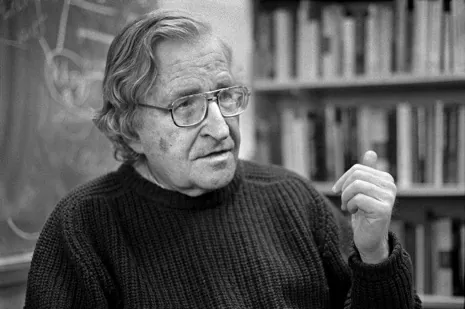


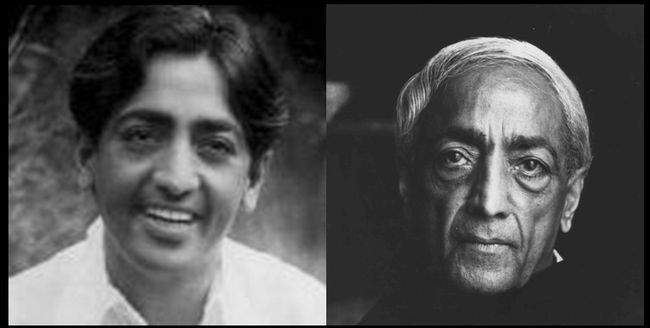








 Hispaniola –










 a food processing plant in Moore, Oklahoma. The perpetrator, a black man named Alton Nolen, is said to have been fired from his job at Vaughan Foods. Nolen “recently started trying to convert some of his co-workers to the Muslim religion,” according to a police spokesperson.[12]