Jury Says Blogger Has To Pay For His Words Even Though He Did Not Lie

Jury Says Blogger Has To Pay For His Words Even Though He Did Not Lie

David Makarewicz, Contributing Writer
Activist Post
March 14th, 2011

On Friday, a Minnesota jury found that a blogger must pay $60,000 in damages because of statements he published in his blog about a public figure who was subsequently fired from his job.  Internet publishers and free speech advocates should pay close attention to this case if it is appealed because the blogger was found liable even though the jury did not find that the blogger’s statements were false.

This decision is the latest example of the law’s apparent struggle to apply basic constitutional protections to internet publishers.  If the Minnesota ruling holds up, it will mean that bloggers will have to worry they will be forced to pay for true statements that they publish that cause a person damages.

In June 2009, Jerry Moore was fired from the University of Minnesota after blogger John Hoff a/k/a Johnny Northside wrote a blog post criticizing the college for hiring Moore.  In the post, Hoff criticized Moore’s previous work as Executive Director of a community organization and linked Moore to a real estate scandal.  In the post, Hoff stated, “Repeated and specific evidence in Hennepin County District Court shows Jerry Moore was involved with a high-profile fraudulent mortgage at 1564 Hillside Ave N.

Following his firing, Moore brought a lawsuit in Minnesota state court (copy of complaint), claiming Hoff was liable for defamation and intentional interference with his contract with the school.  The case went to trial last week and on Friday, the jury returned its verdict in favor of Hoff on the defamation claim but against him on the intentional interference with contract count.

The jury found Hoff was not liable for defamation because they were not convinced that the blogger’s statements about Moore were false.  The jury returned the following interrogatory (answer in bold):

1.  Was the statement “Repeated and specific evidence in Hennepin County District Court shows that Jerry Moore was involved with a high-profile fraudulent mortgage at 1564 Hillside Ave. N.” false? No

Although it has been reported elsewhere that the jury found that Hoff’s statement was true, that is not precisely correct.  The jury found that Moore did not prove that Hoff’s statement was false, not that the statement was true.

Since the publishing of a false statement is a basic element of a defamation claim, that finding was enough to defeat the defamation count.  Although the judge had previously ruled that Moore was a limited public figure, which would have also required the jury to find actual malice in order to prove defamation, the jury stopped at the first question and did not make a finding on actual malice.

Moore’s failure to prove a false statement seemingly should have been the end of the entire case against Hoff, but it was not.  Even without a false statement, the court allowed the jury to find against the blogger on the intentional interference with contract claim and awarded Moore $35,000 in damages for lost wages and $25,000 for emotional distress.

Generally, intentional interference with contract occurs when someone knows about a contractual relationship and intentionally induces one of the parties to breach the contract.  If the other party to the contract suffers damages, he can sometimes sue to recover his losses.

In the absence of First Amendment protections, this case might be a reasonable example of an intentional interference with contract.  Hoff’s blog posts give the impression that he knew about Moore’s contract with the college and that his posts were at least partially intended to convince the college to fire Moore, which they did.  However, Constitutional free speech protections should not permit a plaintiff such as Moore to fail to make a defamation case against a publisher, but still be able to backdoor his damages through another claim.

The Minnesota case reminds me of the famous 1988 Hustler Magazine v. Falwell case, in which a jury found that Hustler publisher Larry Flynt was not liable for defamation, but found him liable for intentionally inflicting emotional distress on Reverend Falwell.  Unlike the Minnesota case, the Falwell case specifically focused on a publisher’s right to publish satire of a public figure rather than the right to publish direct factual claims, but in both cases, a jury found against a publisher even though they found the publisher was not liable for defamation.

Flynt appealed the case to the United States Supreme Court, who overturned the jury finding in favor of Falwell because the First Amendment demands that the proper action against a public figure is a defamation suit, not a suit for intentional infliction of emotional distress.  The Court reasoned that criticism of public figures, such as Falwell or Moore, is sometimes going to cause unfortunate damages, but this important form of speech must be protected by “a constitutional rule that allows public figures to recover for libel or defamation only when they can prove both that the statement was false and that the statement was made with the requisite level of culpability.”

This does not mean that a publisher is free to say anything about a public figure, whether true or false, without repercussions.  The Court explained that the First Amendment does not allow unfettered speech without any limits and culpability because of the particularly insidious nature of false statements.  The Court stated that a defamation claim, which requires a showing of a false statement, is the appropriate action to bring against a publisher because:

False statements of fact are particularly valueless; they interfere with the truthseeking function of the marketplace of ideas, and they cause damage to an individual’s reputation that cannot easily be repaired by counterspeech, however persuasive or effective.

The same analysis should be applied to the Minnesota case.  Even if Hoff’s statements damaged Moore, who was deemed a public figure, if those statements were not false and did not reach the level of defamation, the First Amendment should protect Hoff from having to pay damages.  Allowing Moore to recover for intentional interference with contract is not very different from allowing Jerry Falwell to recover damages for intentional infliction of emotional distress.  In both cases, a jury has ruled that the publisher’s speech was not defamatory, yet the plaintiff is awarded the damages caused by that speech.

Legal commentator Eugene Volokh believes that the ruling against Hoff will be ruled unconstitutional if the case is appealed.  He also astutely adds that most states have a rule of intentional interference with contract that states that “One who intentionally causes a third person not to perform a contract or not to enter into a prospective contractual relation with another does not interfere improperly with the other’s contractual relation, by giving the third person … truthful information.”

Hoff’s attorneys have stated they plan to appeal the decision and they should.  If a decision like this is allowed to stand, it could have a chilling effect on bloggers’ ability to do the important work of making true factual accusations against politicians and other public figures.

Bloggers and other publishers must be free to expose these true facts, even if those facts bring a public figure down without fear that they will have to compensate the public figure for the fall.  Otherwise, would we find ourselves in a country where Woodward and Bernstein would have to had to pay Richard Nixon for the losses caused by his impeachment and loss of job as President even if they were telling the truth about Watergate?

David Makarewicz is an attorney practicing internet law concerning privacy rights and copyright defense for websites and blogs.  Visit Dave at Sites and Blogs to keep up with breaking Internet news.


http://theintelhub.com/2011/03/14/jury-says-blogger-has-to-pay-for-his-words-even-though-he-did-not-lie/

Camelot Whistleblower John Doe: Off World Colonies, ETs, and Underground Bases

Camelot Whistleblower John Doe: Off World Colonies, ETs, and Underground Bases

The following is an overview of information given to me a few days ago by a source I have named John Doe.

Most, if not all, of this information covers previously released info however, this can be seen as up-to-date verification of much of that testimony gathered from various other whistleblowers and researchers. John Doe was recruited into the CIA at a young age and has been involved in many operations including Iran Contra.

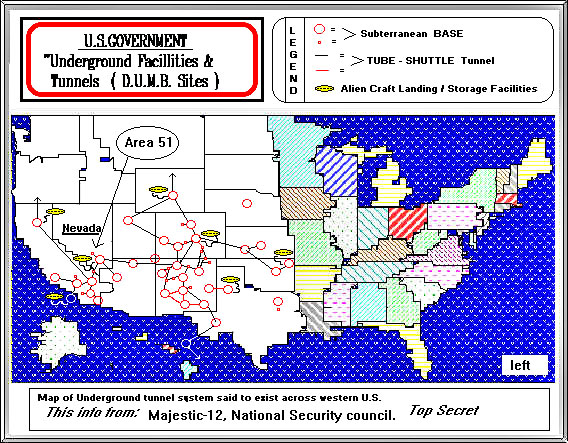
He first described being taken to one of the underground bases in Colorado – dumb (deep underground military base). Says it allows for 100,000 people, has high ceilings massive rooms, something like a Mall. He said these bases are built for cataclysmic events coming anytime up to 6 years in the future. He said that people like him are told “you are going to have ticket” … not true. Most of them are being misled to believe that. He said the problem they are having now is that they realize that many facilities they have built won’t survive.. so they are hard at work retrofitting them and trying to bring them up to speed. He says he has been in 4 ..there are dozens.

While down in one of the bases he was introduced to a human looking ET — (the description best fits those known as Nordics- my label – Kerry). He says these human-looking visitors are all over the Pentagon and CIA… He describes them as being very handsome, around 6’3″ with very striking eyes. His impression is that they are not overly friendly with no obvious sense of humor. The one he met looked to be in his 30s.

This individual said that they are using and sharing technology with us that has been around for thousands of years. There’s life everywhere in the universe. However, the earth is one of a only a handful of planets that has everything… an extremely interesting and desirable planet. He said the diversity here is rare but not unique.

He said that real intel comes from the mid-level guys…. And this is where ‘information flows’. Interestingly, he said that the mid-level guys are not convinced these guys (the Nordics) are only here to help…He said they are in essence, intergalactic capitalists. They have been here for thousands of years… And that they never give without taking something.

The secret government is on a crash program to finish the facilities and to get the them up to snuff before the Earth changes. He said they had to escalate their work and correspondingly the influx of cash… To that end they have been using the drug trade to fund their endeavors and when they run out there they had to steal money off the people in order to complete the work in time.

He stressed there is a lot of mistrust on the mid-level who are not as convinced as those on the higher levels of management that the Nordics can be trusted… and also that their supervisors are telling them the truth… about anything.

John Doe talked about the technology we have received from the ETs and said, what people don’t realize is that along with what we have received, you also have to use terrestrial materials to make it work. And that there’s a lot of problems with converting the technology to get it to work here in this dimension and on Earth. You need to do a great deal of R&D to convert the technologies to get them to work here. When things don’t work, this adds to the mistrust.

In regard to the military/secret government, he said, that these guys have worked for 50 years in order to be prepared and to save a semblance of civilization.

Cataclysmic changes could happen anytime but not on a specific date like December 21, 2012… He said there will be an escalating of severity and will take from now up to the next 6 years. This, he said, is fairly agreed upon among the ranks.

There is a known object entering our solar system that is on an orbit coming through, that and the line-up of planets next year will cause massive disruptions and eventually, a polar shift. It’s in essence the Apocalypse like Bible speaks of… This incoming planet or actually star (dark star) is also stimulating the high activity of the sun. Things are ratcheting up every year and he can can only guess on the exact time frame.

In general, he talked about the recent revolutions and uprisings in the Middle East and said specifically that Tunesia was not spontaneous event.. He points to the placards in English as evidence of prior planning.

Referring to the Earth changes he said “this is going to be a bloodbath” with approximately a 25-30% survival rate worldwide. The changes will be a process that builds.

He said, while, given access to seeing and hearing about the secret projects they are involved in, that from his point of view they were aimed at destructive technologies and they seemed to have no compunction or conscience over the ultimate aim of the projects. Such as what human in their right mind would want to mess with the upper atmosphere and create destructive weapons… he said he can’t understand it.

He said he is sure that Obama has lost his ticket (to the underground bases) and that he is uninformed or doesn’t get it. He said Clinton however, has his ticket because most of the drug traffic went right through his state… and that he has
ingratiated himself with the CIA from the beginning. He said Pamela Harriman helped get him into office….

Reason for Coming Forward

Paraphrasing… he said, “I would love to get on top of my house and scream it but everybody’s going through their lives and they have got no idea. I want to protect my children and I can’t. I like to believe I have a soul. I would like to get forgiveness.” – John Doe

Note: this information is free to post around the net, all I ask is that you credit Project Camelot Productions. Thank you.


http://projectcamelotproductions.com/interviews/john_doe%20whistleblower/john_doe.html

He Served the Empire Abroad; The Regime Killed Him in His Home

He Served the Empire Abroad; The Regime Killed Him in His Home

Posted by William Grigg on May 11, 2011 01:16 PM

Jose Guerena survived two combat tours of Iraq, only to become a casualty of the Regime’s longest war — the one waged against its domestic subjects in the name of drug prohibition. The former Marine was slaughtered by a SWAT team during a May 5 assault on his home in Arizona.

Guerena’s wife, Vanessa, heard a noise outside the couple’s home near Tucson at about 9 a.m. Jose, who had just gone to bed after pulling a 12-hour shift at the Asarco Mine, suspected — correctly, as it turned out — that his family was threatened by an armed criminal gang. Grabbing his AR-15, Guerena instructed his wife and four-year-old son to hide in the closet while he confronted the intruders. According to Mrs. Guerena, the stormtroopers from the Pima County Regional SWAT team never identified themselves as police; they simply stormed into the home and started shooting.

“I saw this guy pointing me at the window, Vanessa recalled in a television interview. “So, I got scared.  And, I got like, ‘Please don’t shoot, I have a baby.’ I put my baby [down]. [And I] put bag in window. And, I yell ‘Jose! Jose! Wake up!'”

“A deputy’s bullet struck the side of the doorway, causing chips of wood to fall on his shield,” recounts the Arizona Daily Star, paraphrasing an account provided by Pima County Sheriff’s Office (PCSO) functionary Michael O’Connor. “That prompted some members of the team to think the deputy had been shot.” Guerna never fired a shot; the marauders who invaded his home fired no fewer than seventy-one. As is standard procedure in such events, the invaders claimed that Guerna had fired on the officers, as he had every moral and legal right to.


Neither Jose nor his wife had a criminal history of any kind. The attack on their home was described as a narcotics enforcement operation, but there are no reports that narcotics were found at the residence – – even though the invaders reportedly “seized” (that is, stole) something that belonged to the victim.

“Tucson is notorious for home invasions and we didn’t want it to look like that,” insisted PCSO spokesman O’Connor, exhibiting the dull-witted refusal to acknowledge the obvious that typifies tax-feeders of his station. He also maintained that the death squad “went lights and sirens and we absolutely did not do a `no-knock’ warrant,” a claim refuted by the only surviving witness, Vanessa Guerena. Such details are morally inconsequential, since there was no reason — apart from the institutional vanity of the PCSO and the indecent eagerness of the armored adolescents who compose its SWAT team — to conduct a paramilitary raid to serve a routine search warrant.

“I never imagined I would lose him like that, he was badly injured but I never thought he could be killed by police after he served his country,” lamented the wife of the murdered ex-Marine, who died on his feet, a rifle in his hand, and  his face to an unexpected enemy.  The grim but unavoidable truth is this: We shouldn’t be at all  surprised that a Regime capable of sending Americans abroad to terrorize Iraqis in their homes would employ the same state terrorism against Americans here at home.

http://www.lewrockwell.com/blog/lewrw/archives/87886.html

EXCLUSIVE: Fired Army Whistleblower Receives $970K for Exposing Halliburton No-Bid Contract in Iraq

EXCLUSIVE: Fired Army Whistleblower Receives $970K for Exposing Halliburton No-Bid Contract in Iraq

Bunnatine “Bunny” Greenhouse, the former chief oversight official of contracts at the Army Corps of Engineers, has reached a $970,000 settlement six years after she was demoted for publicly criticizing a multi-billion-dollar, no-bid contract to Halliburton—the company formerly headed by then-Vice President Dick Cheney. Greenhouse had accused the Pentagon of unfairly awarding the contract to Halliburton subsidiary Kellogg Brown & Root. Testifying before Congress in June 2005, she called the contract the worst case of government abuse she had ever witnessed in her 20-year career. Just two months after that testimony, Greenhouse was demoted at the Pentagon, ostensibly for “poor performance.” She had overseen government contracts for 20 years and had drawn high praise in her rise to become the senior civilian oversight official at the Army Corps of Engineers. With the help of the National Whistleblowers Center, Greenhouse filed a lawsuit challenging her demotion. In a Democracy Now! broadcast exclusive, Greenhouse announces that a settlement has been reached in what is seen as a major victory for government whistleblowers. We’re also joined by Greenhouse’s attorney, Michael Kohn, and by Stephen Kohn, executive director of the National Whistleblowers Center. [includes rush transcript]

AMY GOODMAN: Today, a Democracy Now! exclusive, as we turn to the resolution of one of the most significant U.S. government whistleblower cases to result from the Iraq war. The former chief oversight official of contracts at the Army Corps of Engineers has reached a settlement six years after she was demoted for publicly criticizing a multi-billion-dollar, no-bid contract to Halliburton. That’s the company that was formerly headed by, well, then-Vice President Dick Cheney. The official, Bunnatine Greenhouse, known as Bunny Greenhouse, had accused the Pentagon of unfairly awarding the contract to Halliburton subsidiary Kellogg Brown & Root, KBR. Testifying before Congress in June 2005, Bunny Greenhouse called the contract the worst case of government abuse she had ever witnessed in her 20-year career.

BUNNATINE GREENHOUSE: My name is Bunnatine H. Greenhouse. I have agreed to voluntarily appear at this hearing in my personal capacity, because I have exhausted all internal avenues to correct contracting abuse I observed while serving this great nation as the United States Army Corps of Engineers senior procurement executive. In order to remain true to my oath of office, I must disclose to appropriate members of Congress serious and ongoing contract abuse I cannot address internally. I can unequivocally state that the abuse related to contracts awarded to KBR represents the most blatant and improper contract abuse I have witnessed during the course of my professional career.

AMY GOODMAN: Just two months after that testimony, Bunny Greenhouse was demoted at the Pentagon, ostensibly for “poor performance.” She had overseen government contracts for 20 years, had drawn high praise in her rise to become the senior civilian oversight official at the U.S. Army Corps of Engineers. With the help of the National Whistleblower Center, Bunny Greenhouse filed a lawsuit challenging her demotion.

In this Democracy Now! exclusive, she joins us today from her home to announce that a settlement has been reached in what’s seen as a major victory for government whistleblowers.

Bunny Greenhouse, welcome to Democracy Now! Thank you for joining us on the line from Virginia. We’re also joined on the phone by her attorney, Michael Kohn, president of the National Whistleblowers Association, and here in New York by Stephen Kohn, executive director of the National Whistleblowers Association. So welcome, all. Bunny Greenhouse, first, your feelings today?

BUNNATINE GREENHOUSE: Well, it’s a mixture of happiness, to be able to go on with the rest of my life and be a contributory American citizen, and it’s a bit of sadness, because I was postured, you know, to go on with the court case, you know, that it would be a victory, as well. But, you know, when I was faced a year ago with an attempt to physically harm me, I knew then that it was time to get out of such a hostile environment.

AMY GOODMAN: What do you mean? What was—what happened to you last year?

BUNNATINE GREENHOUSE: Well, the day before my 66th birthday, I was directed to be at my desk for the final day of a fact finding on another EEO case that I had. And not knowing—being so focused on getting that done, I didn’t notice that a trap had been set up for me to fall. And it was a long white cord that was stretched across, with a big loop on the end. And after that fact-finding session, I got up, unnoticing this, and had—was so doubly looped under my file cabinet, I tripped on this. And now the kneecap on the left side doesn’t move at all. And so, I knew then to ask my commander to either work from home or from a telework, official telework site, or move to another agency. And they refused to do that, saying that I had to settle my global case rather than that. So, that’s the sad part of it, that I had to, you know, stop the venture of going before a jury, because my physical welfare had finally come into jeopardy.

AMY GOODMAN: So after this six-year battle, Bunny Greenhouse, you have been awarded $970,000, representing full restitution for lost wages, compensatory damages, attorney fees. Talk about what it was that you exposed during the Iraq war. It was during the Bush administration—President Bush, Vice President Cheney. Vice President Cheney had been the head of Halliburton. What had you exposed?

BUNNATINE GREENHOUSE: Well, I had taken an oath of office that said that I was going to conduct the business of procurement and contracting in the Corps impartially, beyond reproach, with the highest degree of integrity, and with preferential treatment toward none. That was federal law, and one that I respected.

I noticed that when they sent in the sole-source, no-bid contract justification, it had in there only government-imposed uniquenesses of the company—you know, KBR—not their own uniquenesses, such as a contingency plan, that the winner had to be familiar with a contingency plan. That was a plan that they had—the government had developed under another—out of scope, under another contract, which is like an economic analysis, that determines all of the budgeting, all of the actions and movements that were going on in the prosecution of that war. Halliburton had been granted that privilege to do that at $2 million. I felt that that was a conflict of interest for any follow-on contracts resulting out of that contingency plan. They also had to know—the winner had to know the day-to-day operations of CENTCOM. Halliburton also had been awarded the LOGCAP contract, you know, which also was a government-imposed uniqueness on them. So they were the only one who knew the day-to-day operations. So, these were kinds of things that I felt that that was unfair. It was a conflict of interest. And those conflicts of interest had been mitigated.

Also, they were asking for a five-year contract for compelling emergency. There is no compelling emergency in the world that people sitting back in Washington would not have an effect upon after a one-year time period, you know, to change or to continue if it was needed for the same contractor, you know, for that venture. Five years just could not be tolerated. They immediately changed it to a two-year base and three-year options, when it came to me as the final signatory. When I found out that General Strock had been the person who said that it was going to—the five years were going to stay, I had no choice because the war was imminent, but to write my objections above my name to let them know that we possibly would be misunderstood, you know, with a contract for five years, even though it was two years and three one-year options. But had I not done that, that five years would never have been revisited, and that would certainly hurt the industrial base, where this contract was supposed to be a bridge.

AMY GOODMAN: We only have a few—we only have a few—

BUNNATINE GREENHOUSE: My two cents was, if it’s going to be a bridge, let it look like a bridge.

AMY GOODMAN: We only have a few minutes.

BUNNATINE GREENHOUSE: Yes.

AMY GOODMAN: And I wanted to quickly ask, who was in charge of awarding this contract? Was it unusual? You work for the Army Corps of Engineers, but wasn’t this under the purview of the Secretary of Defense, of Donald Rumsfeld, at the time? Is that who decided this?

BUNNATINE GREENHOUSE: The contract was—the whole operation was under the Department of Defense. And Department of Defense had chosen the Army as the executive agency, and then it flowed down to the U.S. Army Corps of Engineers to do the execution under this contract. But yes, the Department of Defense was totally responsible, you know, for getting this done.

AMY GOODMAN: And you bravely testified in Congress about what you saw as wrong, even as you were employed by the Army Corps of Engineers and when you were blowing the whistle.

BUNNATINE GREENHOUSE: Yes. I had no choice. I was not willing to compromise my values, because I believe that integrity in government is not an option, that it’s an obligation by all of those who have—who are employed, you know, by the government—

AMY GOODMAN: You were demoted afterwards?

BUNNATINE GREENHOUSE: —regardless of what the consequences would be.

AMY GOODMAN: You were demoted afterwards?

BUNNATINE GREENHOUSE: Yes, I was.

AMY GOODMAN: Stephen Kohn, the significance of this case?

STEPHEN KOHN: Well, federal employees have a very, very hard time blowing the whistle. So whenever the government is forced to pay full damages for all back pay, all compensatory damages, all attorneys’ fees, that’s a major victory. I hope it’s a turning point. The case was hard-fought. It should never have had to been filed. Bunny did the right thing.

I also want to point out that public support was critical for this case. Thousands upon thousands of Americans wrote emails, voiced their support for Bunny. And that, I think, had a major impact on the government.

AMY GOODMAN: And legally—on the phone with us also, Michael Kohn—the significance of this case and for whistleblowers today, very much, under—very much being pursued in the Obama administration?

MICHAEL KOHN: Well, the one bad thing about this case is we tried very hard to get her whistleblower case in federal court, but the courts wouldn’t allow it in. So we had to separate her whistleblower claim from her EEO claim, her discrimination claim. And the bad thing is, on the discrimination claim, you get, you know, compensatory damages, $300,000 cap. But on the whistleblower claim, you’re not entitled to it under federal law, which really forced us to stay in federal court on her discrimination claim and not be able to litigate much of her whistleblower allegations, which is a real setback in—for whistleblower rights. Now, the Obama administration—

AMY GOODMAN: We have five seconds.

MICHAEL KOHN: Everyone should be calling their representatives and telling them they want federal employees to have better laws protecting whistleblowers.

AMY GOODMAN: Well, we’re going to leave it there. We want to thank Michael and Stephen Kohn for being with us, as well as Bunny Greenhouse, the whistleblower who has won.


http://www.democracynow.org/2011/7/26/exclusive_fired_army_whistleblower_receives_970k

Secrets, As Described by John Young of Cryptome.org

Secrets, As Described by John Young of Cryptome.org

To: “Whalen, Jeanne” <Jeanne.Whalen[at]wsj.com>
From: John Young <jya[at]pipeline.com>
Date: Sun, 22 Aug 2010 12:45 +0600
Subject: RE: from the WSJ

Jeanne,

Following up our telephone exchange on Friday:

1. You said the WSJ editor turned down the use of Rupert Murdoch’s
penthouse for an inteview because editorial and business are kept
separate and Murdoch is business. That is hoarily disingenuous for
no media keeps editorial and business separate, the two are
inseparable with business always in control.

2. I said there is no need for me to comment further on Wikileaks,
the story is now a churn of publicity stunts by Wikileaks, its
supporters and detractors.

3. You said there was interest in reporting on Cryptome in addition
to Wikileaks. I said that is another story, not related to Wikileaks.

To amplify 3, Cryptome shares with Wikileaks and many others
older and newer, the aim of reducing secrecy in government,
business, organizations, institutions and individuals.

Pervasive secrecy corrupts as an essential protector of those who
want control and manipulate the citzenry and subjects. Those who
advocate secrecy always justify it by claims of threats that require
secrecy to prevent or fight.

In truth, secrecy protects and empowers those who use it and
weakens those for whom it is invoked to protect.

Secrecy hides privilege, incompetence and deception of
those who depend on it and who would be disempowered
without it.

The very few legitimate uses of secrecy have served as the
seed for unjustified expanded and illegitimate uses.

A vast global enterprise of governments, institutions, organizations,
businesses and individuals dependent up the secrecy of abuse
of secrecy has evolved into an immensely valuable practice whose
cost to the public and benefits to its practitioners are concealed
by secrecy.

Secrecy has led to a very large undergournd criminal enterprise
dealing with stolen, forged, faked, and planted “secret” information
involving governments, businesses, NGOs, institutions and
individuals. Its value likely exceeds that of the drug trade, with
which it works in concert to hide assets, procedures and operators
that is keep the secrets in emulation of the secretkeepers.

Ex-secretkeepers are involved in this undergroung enterprise
as beneficiares, informants, facilitators of exchanges with
the agoveground secretkeepers and as spies for hire.

Secrecy is the single most threatening practice against democracy
and democratic procedures such that it is highly likely that there is
no democracy or democratic institutions unsullied by secrecy.

Secrecy poses the greatest threat to the United States because
it divides the poplulation into two groups, those with access to
secret information and those without. This asymmetrial access
to information vital to the United States as a democracy will
eventually turn it into an autocracy run by those with access
to secret informaton, protected by laws written to legitimate
this privileged access and to punish those who violate these
laws.

Those with access to secret information cannot honestly
partake in public discourse due to the requirement to lie
and dissumlate about what is secret information. They can
only speak to one another never in public. Similarly those
without access to secret information cannot fully
debate the issues which affect the nation, including
alleged threats promulagsted by secretkeepers who
are forbidden by law to disclose what they know.

Senator Patrick Moynihan, among others, has explored
the damaging consequences of excessive secrecy. Attempts
to debate these consequences have been suppressed
or distorted by secrecy practices and laws.

Efforts, governmental and private, to diminish secrecy
have had modest effects, and the amount of secret information
continues to grow virtually unchecked and concealed by
the very means questioned, secrecy itself.

These secrecy-reduction efforts are continually being attacked
by the secrets enterprise by secrecy-wielding oveseers, including
presidents, legislators and the courts.

While some of the privileged media challenge these practices,
most do not and thereby reinforce the unsavory.

It should not be surprising that this leads to an increase in
efforts to challenge secrecy practices by those excluded,
including such initiatives as, among many others around
the globe, Cryptome and Wikileaks.

Cryptome disagrees with the use of secrecy by Wikileaks
and its monetization of secret information which mimics
those it ostensibly opposes, say, Rupert Murdoch, among
untold others.

John

UPDATE: Wiretapping Fundraiser – One Week Mark

UPDATE: Wiretapping Fundraiser – One Week Mark

To Serve or Not to Serve.

To Serve or Not to Serve.

I’m submitting my story because I feel it’s one a lot of people need to hear. I have been getting some negative feedback on CopBlock’s Facebook page from the cops that visit it, so here we go. I was a member of the united states marine corps for 14 years, I joined in 1996 and […]

Report describes investigation of abusive UMass Lowell officer

This article was cross-posted at Massachusetts Cop Block In October of last year, UMass Lowell student Brendan Brown was threatened by a campus police officer for video-recording a group of police officers who were responding to a fight that had taken place outside an apartment. Brown was approached by UMass Lowell Police Officer Noberto Melendez […]

Buy a Ladies shirt, 50% of proceeds go to Ademo’s legal defense

If you’ve been following Copblock closely, you know that Ademo has (ridiculously) been charged with felony wiretapping, while merely seeking to place pressure upon police for their lack of accountability. For more details, please read more here. He will require substantial funds for a defense, particularly if he chooses to seek counsel (which I have […]

Actually yes, ignorance of the law is an excuse

There are countless laws. Literally. Maybe not in the mathematical sense – it is technically possible to count the laws in existence, but based on a colloquial and general use of the term “countless” it is not really feasible for someone to count every law. Just this year, 40,000 laws were passed and are set […]

Reconstructing Leviathan: Academics Outline Harm of Growing Security State

There is no (direct) total war but rather the never ending ‘wars’ on crime, terrorism, illegal immigrants and anti-social behaviour. There is no formal abolition of civil rights, just their hollowing out. In short, there is a need for a new politics of law and order. The old problematic of how to perfect and refine […]

UPDATE: Just Say “NO!!” 4th & 14th Amendments

UPDATE: Just Say “NO!!” 4th & 14th Amendments

30 January 2012

This post is an update to “Just Say “NO!!” 4th & 14th Amendments.” These are links about Peter Cloutier violating my civil rights on January 18, 2012 in Augusta Maine. The first link is the raw mp3 of the violation. The second link is the raw mp3 of my meeting with the internal investigator, Sgt. […]

Read the full story

Posted in Update0 Comments

CopBlocking Grows in the “Shire”

CopBlocking Grows in the “Shire”

30 January 2012

One of the most common statements I hear about CopBlocking (monitoring the police) is, “we don’t have enough people.” If that is the case where you live, considering moving to the Shire (aka New Hampshire). Liberty minded folks are moving here daily to live better lives, one where the government isn’t always sticking its nose in […]

Read the full story

Posted in Allies, Educational5 Comments

FACT: Police Will Violate Your Rights and Lie/Omit to Cover It Up

30 January 2012

On 07/02/11 I crossed from Nogales, Mexico into Nogales, AZ and when I did I, as usual, I refused to answer questions unrelated to a legally required customs and citizenship declaration. The result was my being manhandled into the back room, yelled at, threatened, arrested, handcuffed, and placed in a cell. I remained in the […]

Read the full story

Posted in Articles, Educational8 Comments

Denver Police Tourist Trap

Denver Police Tourist Trap

28 January 2012

http://www.youtube.com/watch?v=hDU5rvYNfGo (Sorry, the first part is pretty shaky) I was dropping off a rental car 1/19/11 in Denver. There are thousands of rental cars in a section of Denver airport. This thug in a blacked out unmarked pickup was targeting visitors and tourists dropping off rental cars. The roads around the area are quite confusing […]

Read the full story

Posted in Guest Posts3 Comments

Police Refuse To Charge Assault Caught On Film

Police Refuse To Charge Assault Caught On Film

28 January 2012

Liberty activist Adam Kokesh was in New Hampshire covering the primaries when he was confronted and assaulted by a Gingrich security guard. After catching this on film and attempting to report the assault, the police said they “don’t care” and only after multiple requests did they even agree to “take down information,” while still refusing […]

Read the full story

Posted in Allies, Guest Posts8 Comments

Just Say “NO!!” 4th & 14th Amendments

28 January 2012

Patrol Officer Peter Cloutier of Augusta, Maine Police Department knowingly, willfully, and intentionally violated my civil and common law rights as guaranteed by the 4th and 14th Amendments, as well as criminally trespassing on my private home through the use of intimidation, force, coercion and threat of kidnapping and bodily injury. After Officer Cloutier and […]

Read the full story

Posted in Guest Posts35 Comments

My Squirt Gun Almost Got Me Shot

My Squirt Gun Almost Got Me Shot

27 January 2012

This story takes place when I was still a teenager. At the time I worked at the local Pizza Hut. I had just left work, literally having just turned out of the parking lot, when the lights and sirens of a police car appear behind me. I diligently pulled over and waited for the officer […]

Read the full story

Posted in Guest Posts, Quick Hits12 Comments

Don’t Stop Recording: Meet James Brown

Don’t Stop Recording: Meet James Brown

27 January 2012

By Ian Freeman, blogger at FreeKeene.com: Back in 2010, on a visit to the NH Attorney Genital’s office, we met “investigator” Dick Tracy. More recently, Copblock’s Ademo and I were in the area so we dropped in again with some more questions, this time meeting “investigator” James Brown. Neither man was interested in speaking on the record and […]

Read the full story

Posted in Allies, Articles4 Comments


http://www.copblock.org/

Christopher Soghoian: Online Privacy Ninja

Christopher Soghoian: Online Privacy Ninja

Christopher Soghoian

chris@soghoian.net
PGP key
blog   twitter
biography   publications
consulting   financial disclosure

Christopher Soghoian is a Washington, DC based Open Society Fellow, supported by the Open Society Foundations.

He is also a Graduate Fellow at the Center for Applied Cybersecurity Research, and a Ph.D. Candidate in the School of Informatics and Computing at Indiana University.

His research is generally focused on the topic of online privacy. This includes both consumer issues (such as online tracking) as well as government surveillance. His Ph.D dissertation is focused on the role that companies play in either resisting or facilitating surveillance of their customers.

He has used the Freedom of Information Act and several other investigative techniques to shed light on the scale of and the methods by which the US government spies on Internet communications and mobile telephones. This work has been cited by (pdf) the 9th Circuit Court of Appeals, and featured on the Colbert Report.

He was the first ever in-house technologist at the Federal Trade Commission (FTC)’s Division of Privacy and Identity Protection. Prior to his year in government, he created a privacy enhancing browser add-on that was downloaded more than 700,000 times in its first year before he sold it to Abine, Inc.

He has worked at or interned with the Berkman Center for Internet & Society at Harvard University, the American Civil Liberties Union (ACLU) of Northern California, NTT DoCoMo Euro Labs, Google, Apple and IBM Research Zurich.

Publications

http://www.dubfire.net/

Thomas Drake – The Secret Sharer

Thomas Drake – The Secret Sharer

Is Thomas Drake an enemy of the state?
by Jane Mayer May 23, 2011

Drake, a former senior executive at the National Security Agency, faces some of the gravest charges that can be brought against an American citizen. Photograph by Martin Schoeller.


On June 13th, a fifty-four-year-old former government employee named Thomas Drake is scheduled to appear in a courtroom in Baltimore, where he will face some of the gravest charges that can be brought against an American citizen. A former senior executive at the National Security Agency, the government’s electronic-espionage service, he is accused, in essence, of being an enemy of the state. According to a ten-count indictment delivered against him in April, 2010, Drake violated the Espionage Act—the 1917 statute that was used to convict Aldrich Ames, the C.I.A. officer who, in the eighties and nineties, sold U.S. intelligence to the K.G.B., enabling the Kremlin to assassinate informants. In 2007, the indictment says, Drake willfully retained top-secret defense documents that he had sworn an oath to protect, sneaking them out of the intelligence agency’s headquarters, at Fort Meade, Maryland, and taking them home, for the purpose of “unauthorized disclosure.” The aim of this scheme, the indictment says, was to leak government secrets to an unnamed newspaper reporter, who is identifiable as Siobhan Gorman, of the Baltimore Sun. Gorman wrote a prize-winning series of articles for the Sun about financial waste, bureaucratic dysfunction, and dubious legal practices in N.S.A. counterterrorism programs. Drake is also charged with obstructing justice and lying to federal law-enforcement agents. If he is convicted on all counts, he could receive a prison term of thirty-five years.

The government argues that Drake recklessly endangered the lives of American servicemen. “This is not an issue of benign documents,” William M. Welch II, the senior litigation counsel who is prosecuting the case, argued at a hearing in March, 2010. The N.S.A., he went on, collects “intelligence for the soldier in the field. So when individuals go out and they harm that ability, our intelligence goes dark and our soldier in the field gets harmed.”

Top officials at the Justice Department describe such leak prosecutions as almost obligatory. Lanny Breuer, the Assistant Attorney General who supervises the department’s criminal division, told me, “You don’t get to break the law and disclose classified information just because you want to.” He added, “Politics should play no role in it whatsoever.”

When President Barack Obama took office, in 2009, he championed the cause of government transparency, and spoke admiringly of whistle-blowers, whom he described as “often the best source of information about waste, fraud, and abuse in government.” But the Obama Administration has pursued leak prosecutions with a surprising relentlessness. Including the Drake case, it has been using the Espionage Act to press criminal charges in five alleged instances of national-security leaks—more such prosecutions than have occurred in all previous Administrations combined. The Drake case is one of two that Obama’s Justice Department has carried over from the Bush years.

Gabriel Schoenfeld, a conservative political scientist at the Hudson Institute, who, in his book “Necessary Secrets” (2010), argues for more stringent protection of classified information, says, “Ironically, Obama has presided over the most draconian crackdown on leaks in our history—even more so than Nixon.”

One afternoon in January, Drake met with me, giving his first public interview about this case. He is tall, with thinning sandy hair framing a domed forehead, and he has the erect bearing of a member of the Air Force, where he served before joining the N.S.A., in 2001. Obsessive, dramatic, and emotional, he has an unwavering belief in his own rectitude. Sitting at a Formica table at the Tastee Diner, in Bethesda, Drake—who is a registered Republican—groaned and thrust his head into his hands. “I actually had hopes for Obama,” he said. He had not only expected the President to roll back the prosecutions launched by the Bush Administration; he had thought that Bush Administration officials would be investigated for overstepping the law in the “war on terror.”

“But power is incredibly destructive,” Drake said. “It’s a weird, pathological thing. I also think the intelligence community coöpted Obama, because he’s rather naïve about national security. He’s accepted the fear and secrecy. We’re in a scary space in this country.”

The Justice Department’s indictment narrows the frame around Drake’s actions, focussing almost exclusively on his handling of what it claims are five classified documents. But Drake sees his story as a larger tale of political reprisal, one that he fears the government will never allow him to air fully in court. “I’m a target,” he said. “I’ve got a bull’s-eye on my back.” He continued, “I did not tell secrets. I am facing prison for having raised an alarm, period. I went to a reporter with a few key things: fraud, waste, and abuse, and the fact that there were legal alternatives to the Bush Administration’s ‘dark side’ ”—in particular, warrantless domestic spying by the N.S.A.

The indictment portrays him not as a hero but as a treacherous man who violated “the government trust.” Drake said of the prosecutors, “They can say what they want. But the F.B.I. can find something on anyone.”

Steven Aftergood, the director of the Project on Government Secrecy at the Federation of American Scientists, says of the Drake case, “The government wants this to be about unlawfully retained information. The defense, meanwhile, is painting a picture of a public-interested whistle-blower who struggled to bring attention to what he saw as multibillion-dollar mismanagement.” Because Drake is not a spy, Aftergood says, the case will “test whether intelligence officers can be convicted of violating the Espionage Act even if their intent is pure.” He believes that the trial may also test whether the nation’s expanding secret intelligence bureaucracy is beyond meaningful accountability. “It’s a much larger debate than whether a piece of paper was at a certain place at a certain time,” he says.

Jack Balkin, a liberal law professor at Yale, agrees that the increase in leak prosecutions is part of a larger transformation. “We are witnessing the bipartisan normalization and legitimization of a national-surveillance state,” he says. In his view, zealous leak prosecutions are consonant with other political shifts since 9/11: the emergence of a vast new security bureaucracy, in which at least two and a half million people hold confidential, secret, or top-secret clearances; huge expenditures on electronic monitoring, along with a reinterpretation of the law in order to sanction it; and corporate partnerships with the government that have transformed the counterterrorism industry into a powerful lobbying force. Obama, Balkin says, has “systematically adopted policies consistent with the second term of the Bush Administration.”

On March 28th, Obama held a meeting in the White House with five advocates for greater transparency in government. During the discussion, the President drew a sharp distinction between whistle-blowers who exclusively reveal wrongdoing and those who jeopardize national security. The importance of maintaining secrecy about the impending raid on Osama bin Laden’s compound was likely on Obama’s mind. The White House has been particularly bedevilled by the ongoing release of classified documents by WikiLeaks, the group led by Julian Assange. Last year, WikiLeaks began releasing a vast trove of sensitive government documents allegedly leaked by a U.S. soldier, Bradley Manning; the documents included references to a courier for bin Laden who had moved his family to Abbottabad—the town where bin Laden was hiding out. Manning has been charged with “aiding the enemy.”

Danielle Brian, the executive director of the Project on Government Oversight, attended the meeting, and said that Obama’s tone was generally supportive of transparency. But when the subject of national-security leaks came up, Brian said, “the President shifted in his seat and leaned forward. He said this may be where we have some differences. He said he doesn’t want to protect the people who leak to the media war plans that could impact the troops.” Though Brian was impressed with Obama’s over-all stance on transparency, she felt that he might be misinformed about some of the current leak cases. She warned Obama that prosecuting whistle-blowers would undermine his legacy. Brian had been told by the White House to avoid any “ask”s on specific issues, but she told the President that, according to his own logic, Drake was exactly the kind of whistle-blower who deserved protection.

As Drake tells it, his problems began on September 11, 2001. “The next seven weeks were crucial,” he said. “It’s foundational to why I am a criminal defendant today.”

The morning that Al Qaeda attacked the U.S. was, coincidentally, Drake’s first full day of work as a civilian employee at the N.S.A.—an agency that James Bamford, the author of “The Shadow Factory” (2008), calls “the largest, most costly, and most technologically sophisticated spy organization the world has ever known.” Drake, a linguist and a computer expert with a background in military crypto-electronics, had worked for twelve years as an outside contractor at the N.S.A. Under a program code-named Jackpot, he focussed on finding and fixing weaknesses in the agency’s software programs. But, after going through interviews and background checks, he began working full time for Maureen Baginski, the chief of the Signals Intelligence Directorate at the N.S.A., and the agency’s third-highest-ranking official.

Even in an age in which computerized feats are commonplace, the N.S.A.’s capabilities are breathtaking. The agency reportedly has the capacity to intercept and download, every six hours, electronic communications equivalent to the contents of the Library of Congress. Three times the size of the C.I.A., and with a third of the U.S.’s entire intelligence budget, the N.S.A. has a five-thousand-acre campus at Fort Meade protected by iris scanners and facial-recognition devices. The electric bill there is said to surpass seventy million dollars a year.

Nevertheless, when Drake took up his post the agency was undergoing an identity crisis. With the Cold War over, the agency’s mission was no longer clear. As Drake puts it, “Without the Soviet Union, it didn’t know what to do.” Moreover, its technology had failed to keep pace with the shift in communications to cellular phones, fibre-optic cable, and the Internet. Two assessments commissioned by General Michael Hayden, who took over the agency in 1999, had drawn devastating conclusions. One described the N.S.A. as “an agency mired in bureaucratic conflict” and “suffering from poor leadership.” In January, 2000, the agency’s computer system crashed for three and a half days, causing a virtual intelligence blackout.

Agency leaders decided to “stir up the gene pool,” Drake says. Although his hiring was meant to signal fresh thinking, he was given a clumsy bureaucratic title: Senior Change Leader/Chief, Change Leadership & Communications Office, Signals Intelligence Directorate.

The 9/11 attacks caught the U.S.’s national-security apparatus by surprise. N.S.A. officials were humiliated to learn that the Al Qaeda hijackers had spent their final days, undetected, in a motel in Laurel, Maryland—a few miles outside the N.S.A.’s fortified gates. They had bought a folding knife at a Target on Fort Meade Road. Only after the attacks did agency officials notice that, on September 10th, their surveillance systems had intercepted conversations in Afghanistan and Saudi Arabia warning that “the match begins tomorrow” and “tomorrow is Zero Hour.”

Drake, hoping to help fight back against Al Qaeda, immediately thought of a tantalizing secret project he had come across while working on Jackpot. Code-named ThinThread, it had been developed by technological wizards in a kind of Skunk Works on the N.S.A. campus. Formally, the project was supervised by the agency’s Signals Intelligence Automation Research Center, or SARC.

While most of the N.S.A. was reeling on September 11th, inside SARC the horror unfolded “almost like an ‘I-told-you-so’ moment,” according to J. Kirk Wiebe, an intelligence analyst who worked there. “We knew we weren’t keeping up.” SARC was led by a crypto-mathematician named Bill Binney, whom Wiebe describes as “one of the best analysts in history.” Binney and a team of some twenty others believed that they had pinpointed the N.S.A.’s biggest problem—data overload—and then solved it. But the agency’s management hadn’t agreed.

Binney, who is six feet three, is a bespectacled sixty-seven-year-old man with wisps of dark hair; he has the quiet, tense air of a preoccupied intellectual. Now retired and suffering gravely from diabetes, which has already claimed his left leg, he agreed recently to speak publicly for the first time about the Drake case. When we met, at a restaurant near N.S.A. headquarters, he leaned crutches against an extra chair. “This is too serious not to talk about,” he said.

Binney expressed terrible remorse over the way some of his algorithms were used after 9/11. ThinThread, the “little program” that he invented to track enemies outside the U.S., “got twisted,” and was used for both foreign and domestic spying: “I should apologize to the American people. It’s violated everyone’s rights. It can be used to eavesdrop on the whole world.” According to Binney, Drake took his side against the N.S.A.’s management and, as a result, became a political target within the agency.

Binney spent most of his career at the agency. In 1997, he became the technical director of the World Geopolitical and Military Analysis Reporting Group, a division of six thousand employees which focusses on analyzing signals intelligence. By the late nineties, the N.S.A. had become overwhelmed by the amount of digital data it was collecting. Binney and his team began developing codes aimed at streamlining the process, allowing the agency to isolate useful intelligence. This was the beginning of ThinThread.

In the late nineties, Binney estimated that there were some two and a half billion phones in the world and one and a half billion I.P. addresses. Approximately twenty terabytes of unique information passed around the world every minute. Binney started assembling a system that could trap and map all of it. “I wanted to graph the world,” Binney said. “People said, ‘You can’t do this—the possibilities are infinite.’ ” But he argued that “at any given point in time the number of atoms in the universe is big, but it’s finite.”

As Binney imagined it, ThinThread would correlate data from financial transactions, travel records, Web searches, G.P.S. equipment, and any other “attributes” that an analyst might find useful in pinpointing “the bad guys.” By 2000, Binney, using fibre optics, had set up a computer network that could chart relationships among people in real time. It also turned the N.S.A.’s data-collection paradigm upside down. Instead of vacuuming up information around the world and then sending it all back to headquarters for analysis, ThinThread processed information as it was collected—discarding useless information on the spot and avoiding the overload problem that plagued centralized systems. Binney says, “The beauty of it is that it was open-ended, so it could keep expanding.”

Pilot tests of ThinThread proved almost too successful, according to a former intelligence expert who analyzed it. “It was nearly perfect,” the official says. “But it processed such a large amount of data that it picked up more Americans than the other systems.” Though ThinThread was intended to intercept foreign communications, it continued documenting signals when a trail crossed into the U.S. This was a big problem: federal law forbade the monitoring of domestic communications without a court warrant. And a warrant couldn’t be issued without probable cause and a known suspect. In order to comply with the law, Binney installed privacy controls and added an “anonymizing feature,” so that all American communications would be encrypted until a warrant was issued. The system would indicate when a pattern looked suspicious enough to justify a warrant.

But this was before 9/11, and the N.S.A.’s lawyers deemed ThinThread too invasive of Americans’ privacy. In addition, concerns were raised about whether the system would function on a huge scale, although preliminary tests had suggested that it would. In the fall of 2000, Hayden decided not to use ThinThread, largely because of his legal advisers’ concerns. Instead, he funded a rival approach, called Trailblazer, and he turned to private defense contractors to build it. Matthew Aid, the author of a heralded 2009 history of the agency, “The Secret Sentry,” says, “The resistance to ThinThread was just standard bureaucratic politics. ThinThread was small, cost-effective, easy to understand, and protected the identity of Americans. But it wasn’t what the higher-ups wanted. They wanted a big machine that could make Martinis, too.”

The N.S.A.’s failure to stop the 9/11 plot infuriated Binney: he believed that ThinThread had been ready to deploy nine months earlier. Working with N.S.A. counterterrorism experts, he had planned to set up his system at sites where foreign terrorism was prevalent, including Afghanistan and Pakistan. “Those bits of conversations they found too late?” Binney said. “That would have never happened. I had it managed in a way that would send out automatic alerts. It would have been, Bang!”

Meanwhile, there was nothing to show for Trailblazer, other than mounting bills. As the system stalled at the level of schematic drawings, top executives kept shuttling between jobs at the agency and jobs with the high-paying contractors. For a time, both Hayden’s deputy director and his chief of signals-intelligence programs worked at SAIC, a company that won several hundred million dollars in Trailblazer contracts. In 2006, Trailblazer was abandoned as a $1.2-billion flop.

Soon after 9/11, Drake says, he prepared a short, classified summary explaining how ThinThread “could be put into the fight,” and gave it to Baginski, his boss. But he says that she “wouldn’t respond electronically. She just wrote in a black felt marker, ‘They’ve found a different solution.’ ” When he asked her what it was, she responded, “I can’t tell you.” Baginski, who now works for a private defense contractor, recalls her interactions with Drake differently, but she declined to comment specifically.

In the weeks after the attacks, rumors began circulating inside the N.S.A. that the agency, with the approval of the Bush White House, was violating the Foreign Intelligence Surveillance Act—the 1978 law, known as FISA, that bars domestic surveillance without a warrant. Years later, the rumors were proved correct. In nearly total secrecy, and under pressure from the White House, Hayden sanctioned warrantless domestic surveillance. The new policy, which lawyers in the Justice Department justified by citing President Bush’s executive authority as Commander-in-Chief, contravened a century of constitutional case law. Yet, on October 4, 2001, Bush authorized the policy, and it became operational by October 6th. Bamford, in “The Shadow Factory,” suggests that Hayden, having been overcautious about privacy before 9/11, swung to the opposite extreme after the attacks. Hayden, who now works for a security-consulting firm, declined to respond to detailed questions about the surveillance program.

When Binney heard the rumors, he was convinced that the new domestic-surveillance program employed components of ThinThread: a bastardized version, stripped of privacy controls. “It was my brainchild,” he said. “But they removed the protections, the anonymization process. When you remove that, you can target anyone.” He said that although he was not “read in” to the new secret surveillance program, “my people were brought in, and they told me, ‘Can you believe they’re doing this? They’re getting billing records on U.S. citizens! They’re putting pen registers’ ”—logs of dialled phone numbers—“ ‘on everyone in the country!’ ”

Drake recalled that, after the October 4th directive, “strange things were happening. Equipment was being moved. People were coming to me and saying, ‘We’re now targeting our own country!’ ” Drake says that N.S.A. officials who helped the agency obtain FISA warrants were suddenly reassigned, a tipoff that the conventional process was being circumvented. He added, “I was concerned that it was illegal, and none of it was necessary.” In his view, domestic data mining “could have been done legally” if the N.S.A. had maintained privacy protections. “But they didn’t want an accountable system.”

Aid, the author of the N.S.A. history, suggests that ThinThread’s privacy protections interfered with top officials’ secret objective—to pick American targets by name. “They wanted selection, not just collection,” he says.

A former N.S.A. official expressed skepticism that Drake cared deeply about the constitutional privacy issues raised by the agency’s surveillance policies. The official characterizes him as a bureaucrat driven by resentment of a rival project—Trailblazer—and calls his story “revisionist history.” But Drake says that, in the fall of 2001, he told Baginski he feared that the agency was breaking the law. He says that to some extent she shared his views, and later told him she feared that the agency would be “haunted” by the surveillance program. In 2003, she left the agency for the F.B.I., in part because of her discomfort with the surveillance program. Drake says that, at one point, Baginski told him that if he had concerns he should talk to the N.S.A.’s general counsel. Drake claims that he did, and that the agency’s top lawyer, Vito Potenza, told him, “Don’t worry about it. We’re the executive agent for the White House. It’s all been scrubbed. It’s legal.” When he pressed further, Potenza told him, “It’s none of your business.” (Potenza, who is now retired, declined to comment.)

Drake says, “I feared for the future. If Pandora’s box was opened, what would the government become?” He was not about to drop the matter. Matthew Aid, who describes Drake as “brilliant,” says that “he has sort of a Jesus complex—only he can see the way things are. Everyone else is mentally deficient, or in someone’s pocket.” Drake’s history of whistle-blowing stretches back to high school, in Manchester, Vermont, where his father, a retired Air Force officer, taught. When drugs infested the school, Drake became a police informant. And Watergate, which occurred while he was a student, taught him “that no one is above the law.”

Drake says that in the Air Force, where he learned to capture electronic signals, the FISA law “was drilled into us.” He recalls, “If you accidentally intercepted U.S. persons, there were special procedures to expunge it.” The procedures had been devised to prevent the recurrence of past abuses, such as Nixon’s use of the N.S.A. to spy on his political enemies.

Drake didn’t know the precise details, but he sensed that domestic spying “was now being done on a vast level.” He was dismayed to hear from N.S.A. colleagues that “arrangements” were being made with telecom and credit-card companies. He added, “The mantra was ‘Get the data!’ ” The transformation of the N.S.A., he says, was so radical that “it wasn’t just that the brakes came off after 9/11—we were in a whole different vehicle.”

Few people have a precise knowledge of the size or scope of the N.S.A.’s domestic-surveillance powers. An agency spokesman declined to comment on how the agency “performs its mission,” but said that its activities are constitutional and subject to “comprehensive and rigorous” oversight. But Susan Landau, a former engineer at Sun Microsystems, and the author of a new book, “Surveillance or Security?,” notes that, in 2003, the government placed equipment capable of copying electronic communications at locations across America. These installations were made, she says, at “switching offices” that not only connect foreign and domestic communications but also handle purely domestic traffic. As a result, she surmises, the U.S. now has the capability to monitor domestic traffic on a huge scale. “Why was it done this way?” she asks. “One can come up with all sorts of nefarious reasons, but one doesn’t want to think that way about our government.”

Binney, for his part, believes that the agency now stores copies of all e-mails transmitted in America, in case the government wants to retrieve the details later. In the past few years, the N.S.A. has built enormous electronic-storage facilities in Texas and Utah. Binney says that an N.S.A. e-mail database can be searched with “dictionary selection,” in the manner of Google. After 9/11, he says, “General Hayden reassured everyone that the N.S.A. didn’t put out dragnets, and that was true. It had no need—it was getting every fish in the sea.”

Binney considers himself a conservative, and, as an opponent of big government, he worries that the N.S.A.’s data-mining program is so extensive that it could help “create an Orwellian state.” Whereas wiretap surveillance requires trained human operators, data mining is automated, meaning that the entire country can be watched. Conceivably, U.S. officials could “monitor the Tea Party, or reporters, whatever group or organization you want to target,” he says. “It’s exactly what the Founding Fathers never wanted.”

On October 31, 2001, soon after Binney concluded that the N.S.A. was headed in an unethical direction, he retired. He had served for thirty-six years. His wife worked there, too. Wiebe, the analyst, and Ed Loomis, a computer scientist at SARC, also left. Binney said of his decision, “I couldn’t be an accessory to subverting the Constitution.”

Not long after Binney quit the N.S.A., he says, he confided his concerns about the secret surveillance program to Diane Roark, a staff member on the House Permanent Select Committee on Intelligence, which oversees the agency. Roark, who has flowing gray hair and large, wide-set eyes, looks like a waifish poet. But in her intelligence-committee job, which she held for seventeen years, she modelled herself on Machiavelli’s maxim that it is better to be feared than loved. Within the N.S.A.’s upper ranks she was widely resented. A former top N.S.A. official says of her, “In meetings, she would just say, ‘You’re lying.’ ”

Roark agrees that she distrusted the N.S.A.’s managers. “I asked very tough questions, because they were trying to hide stuff,” she says. “For instance, I wasn’t supposed to know about the warrantless surveillance. They were all determined that no one else was going to tell them what to do.”

Like Drake and Binney, Roark was a registered Republican, skeptical about bureaucracy but strong on national defense. She had a knack for recruiting sources at the N.S.A. One of them was Drake, who introduced himself to her in 2000, after she visited N.S.A. headquarters and gave a stinging talk on the agency’s failings; she also established relationships with Binney and Wiebe. Hayden was furious about this back channel. After learning that Binney had attended a meeting with Roark at which N.S.A. employees complained about Trailblazer, Hayden dressed down the critics. He then sent out an agency-wide memo, in which he warned that several “individuals, in a session with our congressional overseers, took a position in direct opposition to one that we had corporately decided to follow. . . . Actions contrary to our decisions will have a serious adverse effect on our efforts to transform N.S.A., and I cannot tolerate them.” Roark says of the memo, “Hayden brooked no opposition to his favorite people and programs.”

Roark, who had substantial influence over N.S.A. budget appropriations, was an early champion of Binney’s ThinThread project. She was dismayed, she says, to hear that it had evolved into a means of domestic surveillance, and felt personally responsible. Her oversight committee had been created after Watergate specifically to curb such abuses. “It was my duty to oppose it,” she told me. “That is why oversight existed, so that these things didn’t happen again. I’m not an attorney, but I thought that there was no way it was constitutional.” Roark recalls thinking that, if N.S.A. officials were breaking the law, she was “going to fry them.”

She soon learned that she was practically alone in her outrage. Very few congressional leaders had been briefed on the program, and some were apparently going along with it, even if they had reservations. Starting in February, 2002, Roark says, she wrote a series of memos warning of potential illegalities and privacy breaches and handed them to the staffers for Porter Goss, the chairman of her committee, and Nancy Pelosi, its ranking Democrat. But nothing changed. (Pelosi’s spokesman denied that she received such memos, and pointed out that a year earlier Pelosi had written to Hayden and expressed grave concerns about the N.S.A.’s electronic surveillance.)

Roark, feeling powerless, retired. Before leaving Washington, though, she learned that Hayden, who knew of her strong opposition to the surveillance program, wanted to talk to her. They met at N.S.A. headquarters on July 15, 2002. According to notes that she made after the meeting, Hayden pleaded with her to stop agitating against the program. He conceded that the policy would leak at some point, and told her that when it did she could “yell and scream” as much as she wished. Meanwhile, he wanted to give the program more time. She asked Hayden why the N.S.A. had chosen not to include privacy protections for Americans. She says that he “kept not answering. Finally, he mumbled, and looked down, and said, ‘We didn’t need them. We had the power.’ He didn’t even look me in the eye. I was flabbergasted.” She asked him directly if the government was getting warrants for domestic surveillance, and he admitted that it was not.

In an e-mail, Hayden confirmed that the meeting took place, but said that he recalled only its “broad outlines.” He noted that Roark was not “cleared to know about the expanded surveillance program, so I did not go into great detail.” He added, “I assured her that I firmly believed that what N.S.A. was doing was effective, appropriate, and lawful. I also reminded her that the program’s success depended on it remaining secret, that it was appropriately classified, and that any public discussion of it would have to await a later day.”

During the meeting, Roark says, she warned Hayden that no court would uphold the program. Curiously, Hayden responded that he had already been assured by unspecified individuals that he could count on a majority of “the nine votes”—an apparent reference to the Supreme Court. According to Roark’s notes, Hayden told her that such a vote might even be 7–2 in his favor.

Roark couldn’t believe that the Supreme Court had been adequately informed of the N.S.A.’s transgressions, and she decided to alert Chief Justice William H. Rehnquist, sending a message through a family friend. Once again, there was no response. She also tried to contact a judge on the FISA court, in Washington, which adjudicates requests for warrants sanctioning domestic surveillance of suspected foreign agents. But the judge had her assistant refer the call to the Department of Justice, which had approved the secret program in the first place. Roark says that she even tried to reach David Addington, the legal counsel to Vice-President Dick Cheney, who had once been her congressional colleague. He never called back, and Addington was eventually revealed to be one of the prime advocates for the surveillance program.

“This was such a Catch-22,” Roark says. “There was no one to go to.” In October, 2003, feeling “profoundly depressed,” she left Washington and moved to a small town in Oregon.

Drake was still working at the N.S.A., but he was secretly informing on the agency to Congress. In addition to briefing Roark, he had become an anonymous source for the congressional committees investigating intelligence failures related to 9/11. He provided Congress with top-secret documents chronicling the N.S.A.’s shortcomings. Drake believed that the agency had failed to feed other intelligence agencies critical information that it had collected before the attacks. Congressional investigators corroborated these criticisms, though they found greater lapses at the C.I.A. and the F.B.I.

Around this time, Drake recalls, Baginski warned him, “Be careful, Tom—they’re looking for leakers.” He found this extraordinary, and asked himself, “Telling the truth to congressional oversight committees is leaking?” But the N.S.A. has a rule requiring employees to clear any contact with Congress, and in the spring of 2002 Baginski told Drake, “It’s time for you to find another job.” He soon switched to a less sensitive post at the agency, the first of several.

As for Binney, he remained frustrated even in retirement about what he considered the misuse of ThinThread. In September, 2002, he, Wiebe, Loomis, and Roark filed what they thought was a confidential complaint with the Pentagon’s Inspector General, extolling the virtues of the original ThinThread project and accusing the N.S.A. of wasting money on Trailblazer. Drake did not put his name on the complaint, because he was still an N.S.A. employee. But he soon became involved in helping the others, who had become friends. He obtained documents aimed at proving waste, fraud, and abuse in the Trailblazer program.

The Inspector General’s report, which was completed in 2005, was classified as secret, so only a few insiders could read what Drake describes as a scathing document. Possibly the only impact of the probe was to hasten the end of Trailblazer, whose budget overruns had become indisputably staggering. Though Hayden acknowledged to a Senate committee that the costs of the Trailblazer project “were greater than anticipated, to the tune of, I would say, hundreds of millions,” most of the scandal’s details remained hidden from the public.

In December, 2005, the N.S.A.’s culture of secrecy was breached by a stunning leak. The Times reporters James Risen and Eric Lichtblau revealed that the N.S.A. was running a warrantless wiretapping program inside the United States. The paper’s editors had held onto the scoop for more than a year, weighing the propriety of publishing it. According to Bill Keller, the executive editor of the Times, President Bush pleaded with the paper’s editors to not publish the story; Keller told New York that “the basic message was: You’ll have blood on your hands.” After the paper defied the Administration, Bush called the leak “a shameful act.” At his command, federal agents launched a criminal investigation to identify the paper’s source.

The Times story shocked the country. Democrats, including then Senator Obama, denounced the program as illegal and demanded congressional hearings. A FISA court judge resigned in protest. In March, 2006, Mark Klein, a retired A.T. & T. employee, gave a sworn statement to the Electronic Frontier Foundation, which was filing a lawsuit against the company, describing a secret room in San Francisco where powerful Narus computers appeared to be sorting and copying all of the telecom’s Internet traffic—both foreign and domestic. A high-capacity fibre-optic cable seemed to be forwarding this data to a centralized location, which, Klein surmised, was N.S.A. headquarters. Soon, USA Today reported that A.T. & T., Verizon, and BellSouth had secretly opened their electronic records to the government, in violation of communications laws. Legal experts said that each instance of spying without a warrant was a serious crime, and that there appeared to be hundreds of thousands of infractions.

President Bush and Administration officials assured the American public that the surveillance program was legal, although new legislation was eventually required to bring it more in line with the law. They insisted that the traditional method of getting warrants was too slow for the urgent threats posed by international terrorism. And they implied that the only domestic surveillance taking place involved tapping phone calls in which one speaker was outside the U.S.

Drake says of Bush Administration officials, “They were lying through their teeth. They had chosen to go an illegal route, and it wasn’t because they had no other choice.” He also believed that the Administration was covering up the full extent of the program. “The phone calls were the tip of the iceberg. The really sensitive stuff was the data mining.” He says, “I was faced with a crisis of conscience. What do I do—remain silent, and complicit, or go to the press?”

Drake has a wife and five sons, the youngest of whom has serious health problems, and so he agonized over the decision. He researched the relevant legal statutes and concluded that if he spoke to a reporter about unclassified matters the only risk he ran was losing his job. N.S.A. policy forbids initiating contact with the press. “I get that it’s grounds for ‘We have to let you go,’ ” he says. But he decided that he was willing to lose his job. “This was a violation of everything I knew and believed as an American. We were making the Nixon Administration look like pikers.”

Drake got in touch with Gorman, who covered the N.S.A. for the Baltimore Sun. He had admired an article of hers and knew that Roark had spoken to her previously, though not about anything classified. He got Gorman’s contact information from Roark, who warned him to be careful. She knew that in the past the N.S.A. had dealt harshly with people who embarrassed it.

Drake set up a secure Hushmail e-mail account and began sending Gorman anonymous tips. Half in jest, he chose the pseudonym The Shadow Knows. He says that he insisted on three ground rules with Gorman: neither he nor she would reveal his identity; he wouldn’t be the sole source for any story; he would not supply her with classified information. But a year into the arrangement, in February, 2007, Drake decided to blow his cover, surprising Gorman by showing up at the newspaper and introducing himself as The Shadow Knows. He ended up meeting with Gorman half a dozen times. But, he says, “I never gave her anything classified.” Gorman has not been charged with wrongdoing, and declined, through her lawyer, Laura Handman, to comment, citing the pending trial.

Starting on January 29, 2006, Gorman, who now works at the Wall Street Journal, published a series of articles about problems at the N.S.A., including a story describing Trailblazer as an expensive fiasco. On May 18, 2006, the day that Hayden faced Senate confirmation hearings for a new post—the head of the C.I.A.—the Sun published Gorman’s exposé on ThinThread, which accused the N.S.A. of rejecting an approach that protected Americans’ privacy. Hayden, evidently peeved, testified that intelligence officers deserved “not to have every action analyzed, second-guessed, and criticized on the front pages of the newspapers.”

At the time, the government did not complain that the Sun had crossed a legal line. It did not contact the paper’s editors or try to restrain the paper from publishing Gorman’s work. A former N.S.A. colleague of Drake’s says he believes that the Sun stories revealed government secrets. Others disagree. Steven Aftergood, the secrecy expert, says that the articles “did not damage national security.”

Matthew Aid argues that the material Drake provided to the Sun should not have been highly classified—if it was—and in any case only highlighted that “the N.S.A. was a management nightmare, which wasn’t a secret in Washington.” In his view, Drake “was just saying, ‘We’re not doing our job, and it’s having a deleterious effect on mission performance.’ He was right, by the way.” The Sun series, Aid says, was “embarrassing to N.S.A. management, but embarrassment to the U.S. government is not a criminal offense in this country.” (Aid has a stake in this debate. In 1984, when he was in the Air Force, he spent several months in the stockade for having stored classified documents in a private locker. The experience, he says, sensitized him to issues of government secrecy.)

While the Sun was publishing its series, twenty-five federal agents and five prosecutors were struggling to identify the Times’ source. The team had targeted some two hundred possible suspects, but had found no culprits. The Sun series attracted the attention of the investigators, who theorized that its source might also have talked to the Times. This turned out not to be true. Nevertheless, the investigators quickly homed in on the Trailblazer critics. “It’s sad,” an intelligence expert says. “I think they were aiming at the Times leak and found this instead.”

Roark was an obvious suspect for the Times leak. Everyone from Hayden on down knew that she had opposed the surveillance program. After the article appeared, she says, “I was waiting for the shoe to drop.” The F.B.I. eventually contacted her, and in February, 2007, she and her attorney met with the prosecutor then in charge, Steven Tyrrell, who was the head of the fraud section at the Justice Department. Roark signed an affidavit saying that she was not a source for the Times story or for “State of War,” a related book that James Risen wrote. She also swore that she had no idea who the source was. She says of the experience, “It was an interrogation, not an interview. They treated me like a target.”

Roark recalls that the F.B.I. agents tried to force her to divulge the identity of her old N.S.A. informants. They already seemed to know about Drake, Binney, and Wiebe—perhaps from the Inspector General’s report. She refused to coöperate, arguing that it was improper for agents of the executive branch to threaten a congressional overseer about her sources. “I had the sense that N.S.A. was egging the F.B.I. on,” she says. “I’d gotten the N.S.A. so many times—they were going to get me. The N.S.A. hated me.” (The N.S.A. and the Justice Department declined to comment on the investigations.)

In the months that followed, Roark heard nothing. Finally, her lawyer placed the case in her “dead file.”

On July 26, 2007, at 9 A.M. Eastern Standard Time, armed federal agents simultaneously raided the houses of Binney, Wiebe, and Roark. (At Roark’s house, in Oregon, it was six o’clock.) Binney was in the shower when agents arrived, and recalls, “They went right upstairs to the bathroom and held guns on me and my wife, right between the eyes.” The agents took computer equipment, a copy of the Inspector General complaint and a copy of a commercial pitch that Binney had written with Wiebe, Loomis, and Roark. In 2001, the N.S.A. indicated to Binney that he could pursue commercial projects based on ThinThread. He and the others thought that aspects of the software could be used to help detect Medicare fraud.

Binney professed his innocence, and he says that the agents told him, “We think you’re lying. You need to implicate someone. ” He believed that they were trying to get him to name Roark as the Times’ source. He suggested that if they were looking for criminal conspirators they should focus on Bush and Hayden for allowing warrantless surveillance. Binney recalls an agent responding that such brazen spying didn’t happen in America. Looking over the rims of his owlish glasses, Binney replied, “Oh, really?”

Roark was sleeping when the agents arrived, and didn’t hear them until “it sounded as if they were going to pull the house down, they were rattling it so badly.” They took computers and a copy of the same commercial pitch. Her son had been interested in collaborating on the venture, and he, too, became a potential target. “They believed everybody was conspiring,” Roark says. “For years, I couldn’t talk to my own son without worrying that they’d say I was trying to influence his testimony.” Although she has been fighting cancer, she has spoken with him only sparingly since the raid.

The agents seemed to think that the commercial pitch contained classified information. Roark was shaken: she and the others thought they had edited it scrupulously to insure that it did not. Agents also informed her that a few scattered papers in her old office files were classified. After the raid, she called her lawyer and asked, “If there’s a disagreement on classification, does intent mean anything?” The question goes to the heart of the Drake case.

Roark, who always considered herself “a law-and-order person,” said of the raid, “This changed my faith.” Eventually, the prosecution offered her a plea bargain, under which she would plead guilty to perjury, for ostensibly lying to the F.B.I. about press leaks. The prosecutors also wanted her to testify against Drake. Roark refused. “I’m not going to plead guilty to deliberately doing anything wrong,” she told them. “And I can’t testify against Tom because I don’t know that he did anything wrong. Whatever Tom revealed, I am sure that he did not think it was classified.” She says, “I didn’t think the system was perfect, but I thought they’d play fair with me. They didn’t. I felt it was retribution.”

Wiebe, the retired analyst, was the most surprised by the raid—he had not yet been contacted in connection with the investigation. He recalls that agents locked his two Pembroke Welsh corgis in a bathroom and commanded his daughter and his mother-in-law, who was in her bathrobe, to stay on a couch while they searched his house. He says, “I feel I’m living in the very country I worked for years to defeat: the Soviet Union. We’re turning into a police state.” Like Roark, he says of the raid, “It was retribution for our filing the Inspector General complaint.”

Under the law, such complaints are confidential, and employees who file them are supposed to be protected from retaliation. It’s unclear if the Trailblazer complaint tipped off authorities, but all four people who signed it became targets. Jesselyn Radack, of the Government Accountability Project, a whistle-blower advocacy group that has provided legal support to Drake, says of his case, “It’s the most severe form of whistle-blower retaliation I have ever seen.”

A few days after the raid, Drake met Binney and Wiebe for lunch, at a tavern in Glenelg, Maryland. “I had a pretty good idea I was next,” Drake says. But it wasn’t until the morning of November 28, 2007, that he saw armed agents streaming across his lawn. Though Drake was informed of his right to remain silent, he viewed the raid as a fresh opportunity to blow the whistle. He spent the day at his kitchen table, without a lawyer, talking. He brought up Trailblazer, but found that the investigators weren’t interested in the details of a defunct computer system, or in cost overruns, or in the constitutional conflicts posed by warrantless surveillance. Their focus was on the Times leak. He assured them that he wasn’t the source, but he confirmed his contact with the Sun, insisting that he had not relayed any classified information. He also disclosed his computer password. The agents bagged documents, computers, and books, and removed eight or ten boxes of office files from his basement. “I felt incredibly violated,” he says.

For four months, Drake continued coöperating. He admitted that he had given Gorman information that he had cut and pasted from secret documents, but stressed that he had not included anything classified. He acknowledged sending Gorman hundreds of e-mails. Then, in April, 2008, the F.B.I. told him that someone important wanted to meet with him, at a secure building in Calverton, Maryland. Drake agreed to the appointment. Soon after he showed up, he says, Steven Tyrrell, the prosecutor, walked in and told him, “You’re screwed, Mr. Drake. We have enough evidence to put you away for most of the rest of your natural life.”

Prosecutors informed Drake that they had found classified documents in the boxes in his basement—the indictment cites three—and discovered two more in his e-mail archive. They also accused him of shredding other documents, and of deleting e-mails in the months before he was raided, in an attempt to obstruct justice. Further, they said that he had lied when he told federal agents that he hadn’t given Gorman classified information.

“They had made me into an enemy of the state just by saying I was,” Drake says. The boxes in his basement contained copies of some of the less sensitive material that he had procured for the Inspector General’s Trailblazer investigation. The Inspector General’s Web site directs complainants to keep copies. Drake says that if the boxes did, in fact, contain classified documents he didn’t realize it. (The indictment emphasizes that he “willfully” retained documents.) The two documents that the government says it extracted from his e-mail archive were even less sensitive, Drake says. Both pertained to a successor to Trailblazer, code-named Turbulence. One document listed a schedule of meetings about Turbulence. It was marked “unclassified/for official use only” and posted on the N.S.A.’s internal Web site. The government has since argued that the schedule should have been classified, and that Drake should have known this. The other document, which touted the success of Turbulence, was officially declassified in July, 2010, three months after Drake was indicted. “After charging him with having this ostensibly serious classified document, the government waved a wand and decided it wasn’t so classified after all,” Radack says.

Clearly, the intelligence community hopes that the Drake case will send a message about the gravity of exposing government secrets. But Drake’s lawyer, a federal public defender named James Wyda, argued in court last spring that “there have never been two documents so benign that are the subject of this kind of prosecution against a client whose motives are as salutary as Tom’s.”

Drake insists, too, that the only computer files he destroyed were routine trash: “I held then, and I hold now, I had nothing to destroy.” Drake, who left the N.S.A. in 2008, and now works at an Apple Store outside Washington, asks, “Why didn’t I erase everything on my computer, then? I know how to do it. They found what they found.”

Not everyone familiar with Drake’s case is moved by his plight. A former federal official knowledgeable about the case says, “To his credit, he tried to raise these issues, and, to an extent, they were dealt with. But who died and left him in charge?”

In May, 2009, Tyrrell proposed a plea bargain: if Drake pleaded guilty to one count of conspiring to violate the Espionage Act and agreed to coöperate against the others, he would get a maximum of five years in prison. “They wanted me to reveal a conspiracy that didn’t exist,” Drake says. “It was all about the Times, but I had no knowledge of the leak.” Drake says that he told prosecutors, “I refuse to plea-bargain with the truth.”

That June, Drake learned that Tyrrell was leaving the government. Tyrrell was a Republican, and Drake was hopeful that a prosecutor appointed by the Obama Administration would have a different approach. But Drake was dismayed to learn that Tyrrell’s replacement, William Welch, had just been transferred from the top spot in the Justice Department’s public-integrity section, after an overzealous prosecution of Ted Stevens, the Alaska senator. A judge had thrown out Stevens’s conviction, and, at one point, had held Welch in contempt of court. (Welch declined to comment.)

In April, 2010, Welch indicted Drake, shattering his hope for a reprieve from the Obama Administration. But the prosecution’s case had shrunk dramatically from the grand conspiracy initially laid out by Tyrrell. (Welch accidentally sent the defense team an early draft of the indictment, revealing how the case had changed.) Drake was no longer charged with leaking classified documents, or with being part of a conspiracy. He is still charged with violating the Espionage Act, but now merely because of unauthorized “willful retention” of the five documents. Drake says that when he learned that, even with the reduced charges, he still faced up to thirty-five years in prison, he “was completely aghast.”

Morton Halperin, of the Open Society Institute, says that the reduced charges make the prosecution even more outlandish: “If Drake is convicted, it means the Espionage Law is an Official Secrets Act.” Because reporters often retain unauthorized defense documents, Drake’s conviction would establish a legal precedent making it possible to prosecute journalists as spies. “It poses a grave threat to the mechanism by which we learn most of what the government does,” Halperin says.

The Espionage Act has rarely been used to prosecute leakers and whistle-blowers. Drake’s case is only the fourth in which the act has been used to indict someone for mishandling classified material. “It was meant to deal with classic espionage, not publication,” Stephen Vladeck, a law professor at American University who is an expert on the statute, says.

The first attempt to apply the law to leakers was the aborted prosecution, in 1973, of Daniel Ellsberg, a researcher at the RAND Corporation who was charged with disclosing the Pentagon Papers—a damning secret history of the Vietnam War. But the case was dropped, owing, in large part, to prosecutorial misconduct. The second such effort was the case of Samuel L. Morison, a naval intelligence officer who, in 1985, was convicted for providing U.S. photographs of a Soviet ship to Jane’s Defence Weekly. Morison was later pardoned by Bill Clinton. The third case was the prosecution, in 2005, of a Defense Department official, Lawrence Franklin, and two lobbyists for the American-Israel Public Affairs Committee. Franklin pleaded guilty to a lesser charge, and the case against the lobbyists collapsed after the presiding judge insisted that prosecutors establish criminal intent. Unable to prove this, the Justice Department abandoned the case, amid criticism that the government had overreached.

Drake’s case also raises questions about double standards. In recent years, several top officials accused of similar misdeeds have not faced such serious charges. John Deutch, the former C.I.A. director, and Alberto Gonzales, the former Attorney General, both faced much less stringent punishment after taking classified documents home without authorization. In 2003, Sandy Berger, Clinton’s national-security adviser, smuggled classified documents out of a federal building, reportedly by hiding them in his pants. It was treated as a misdemeanor. His defense lawyer was Lanny Breuer—the official overseeing the prosecution of Drake.

Jack Goldsmith, a Harvard law professor who served in the Bush Justice Department, laments the lack of consistency in leak prosecutions. He notes that no investigations have been launched into the sourcing of Bob Woodward’s four most recent books, even though “they are filled with classified information that he could only have received from the top of the government.” Gabriel Schoenfeld, of the Hudson Institute, says, “The selectivity of the prosecutions here is nightmarish. It’s a broken system.”

Mark Feldstein, a professor of media and public affairs at George Washington University, warns that, if whistle-blowers and other dissenters are singled out for prosecution, “this has gigantic repercussions. You choke off the information that the public needs to judge policy.”

Few people are more disturbed about Drake’s prosecution than the others who spoke out against the N.S.A. surveillance program. In 2008, Thomas Tamm, a Justice Department lawyer, revealed that he was one of the people who leaked to the Times. He says of Obama, “It’s so disappointing from someone who was a constitutional-law professor, and who made all those campaign promises.” The Justice Department recently confirmed that it won’t pursue charges against Tamm. Speaking before Congress, Attorney General Holder explained that “there is a balancing that has to be done . . . between what our national-security interests are and what might be gained by prosecuting a particular individual.” The decision provoked strong criticism from Republicans, underscoring the political pressures that the Justice Department faces when it backs off such prosecutions. Still, Tamm questions why the Drake case is proceeding, given that Drake never revealed anything as sensitive as what appeared in the Times. “The program he talked to the Baltimore Sun about was a failure and wasted billions of dollars,” Tamm says. “It’s embarrassing to the N.S.A., but it’s not giving aid and comfort to the enemy.”

Mark Klein, the former A.T. & T. employee who exposed the telecom-company wiretaps, is also dismayed by the Drake case. “I think it’s outrageous,” he says. “The Bush people have been let off. The telecom companies got immunity. The only people Obama has prosecuted are the whistle-blowers.” ♦

http://www.newyorker.com/reporting/2011/05/23/110523fa_fact_mayer?currentPage=all


God’s Name Is “Jealous”

God’s Name Is “Jealous”

Posted by Russ Kick on March 4, 2011

The following is another chapter from my disinformation book, 50 Things You’re Not Supposed to Know: Volume 2, published in 2004. For more on me go to The Memory Hole or follow me @RussKick on Twitter.

There’s an old joke that says God’s name is Harold, as in: “Our Father, who art in Heaven, Harold be thy name…”

The strange thing is, that’s not too much off the mark, only the truth is even weirder. The Lord does indeed have a name, kind of like Andrew or Beth or José.

It’s right there in the Bible, at Exodus 34:14. Moses has trudged up Mount Sinai with a second pair of stone tablets, on which God will write the Ten Commandments. Moses and the Big G engage in some repartee, then God says:

“For thou shalt worship no other god: for the lord, whose name is Jealous, is a jealous God”

This is straight out of the King James Version. God reveals…

3 Comments

George Washington Embezzled Government Funds

Posted by Russ Kick on February 24, 2011

The following is another chapter from my disinformation book, 50 Things You’re Not Supposed to Know: Volume 2, published in 2004. For more on me go to The Memory Hole or follow me @RussKick on Twitter.

We typically imagine George Washington to be as pure as driven snow, a demigod who won the Revolutionary War, then assumed the mantle of President to flawlessly lead a fledgling country.

The reality is vastly different. Besides being borderline incompetent on the battlefield (during the first four years of the Revolution, he lost every major engagement), the man who could not tell a lie started the tradition of presidential corruption.

The whistle was blown by the Clerk of Congress — writing under the nom de plume “A Calm Observer” — in the Philadelphia Aurora, a muckraking anti-federalist newspaper founded, edited, and published by Benjamin Franklin’s grandson. In 1795, the Aurora published the Clerk’s detailed breakdown of how much loot Washington had taken from…

3 Comments

One Out Of Ten People Weren’t Fathered By The Man They Believe Is Dad

Posted by Russ Kick on February 22, 2011

The following is the second chapter from my disinformation book, 50 Things You’re Not Supposed to Know: Volume 2, published in 2004. For more on me go to The Memory Hole or follow me @RussKick on Twitter.

Geneticists, disease researchers, and evolutionary psychologists have known it for a while, but the statistic hasn’t gotten much air outside of the ivory tower. Consistently, they find that one in ten of us wasn’t fathered by the man we think is our biological dad.

Naturally, adoptees and stepchildren realize their paternal situation. What we’re talking about here is people who have taken it as a given, for their entire lives, that dear old Dad is the one who contributed his sperm to the process. Even Dad himself may be under this impression. And Mom, knowing it’s not a sure thing, just keeps quiet.

Genetic testing companies report that almost one-third of the time, samples sent to them show that the man…

22 Comments

Men Have Clitorises

Posted by Russ Kick on December 27, 2010

Here’s a chapter from my Disinformation-published book titled 50 Things You’re Not Supposed To Know: Volume 2 (2004):

________________________________

It’s long been noted that all of us start in the womb as sexless little blobs. We each had the same undifferentiated external equipment (a bud of tissue), plus two sets of internal ducts.

Depending on whether an embryo has a Y sex chromosome or two X’s, during week seven it starts developing into a boy or a girl. That little mound of tissue (the genital tubercle) either opens to form two sets of labia and a clitoris, or it closes to make a penis and testicles. When viewed this way, the similarities between guys’ and dolls’ private parts is obvious and has drawn comments since ancient Greek times.

But there’s a whole lot more overlap than you might suspect. Women aren’t the only ones who have a clitoris. Men do, too.

To fully understand this, it helps…

5 Comments

The Bayer Company Made Heroin

Posted by Russ Kick on March 24, 2010

Another chapter from my book, 50 Things You’re Not Supposed to Know, published in 2003, by Disinfo.

For more on me, please check out The Memory Hole.

_____________________________________

Aspirin isn’t the only “wonder drug that works wonders” that Bayer made. The German pharmaceutical giant also introduced heroin to the world.

The company was looking for a cough suppressant that didn’t have problematic side effects, mainly addiction, like morphine and codeine. And if it could relieve pain better than morphine, that  was a welcome bonus.

When one of Bayer’s chemists approached the head of the pharmacological lab with ASA — to be sold under the name “aspirin” — he was waved away. The boss was more interested in something else the chemists had cooked up — diacetylmorphine. (This narcotic had been created in 1874 by a British chemist, who had never done anything with it.)

Using the tradename “Heroin” — because early testers said it made them feel…

8 Comments

Work Kills More People Than War

Posted by Russ Kick on March 19, 2010

Another chapter from my book, 50 Things You’re Not Supposed to Know, published in 2003, by Disinfo.

For more on me, please check out The Memory Hole.

_____________________________________

The United Nations’ International Labor Organization has revealed some horrifying stats:

The ILO estimates that approximately two million workers lose their lives annually due to occupational injuries and illnesses, with accidents causing at least 350,000 deaths a year. For every fatal accident, there are an estimated 1,000 non-fatal injuries, many of which result in lost earnings, permanent disability and poverty.

The death toll at work, much of which is attributable to unsafe working practices, is the equivalent of 5,000 workers dying each day, three persons every minute. This is more than double the figure for deaths from warfare (650,000 deaths per year). According to the ILO’s SafeWork programme, work kills more people than alcohol and drugs together and the resulting loss in Gross Domestic Product is 20 times…

11 Comments

Genetically-Engineered Human Have Already Been Born

Posted by Russ Kick on March 14, 2010

Here is another chapter from Russ Kick’s classic bite-size Disinformation book 50 Things You’re Not Supposed to Know, published in 2003.

For more on Russ Kick, check out his website, The Memory Hole.

_____________________________________

The earthshaking news appeared in the medical journal Human Reproduction under the impenetrable headline: “Mitochondria in Human Offspring Derived From Ooplasmic Transplantation.”

The media put the story in heavy rotation for one day, then forgot about it. We all forgot about it.

But the fact remains that the world is now populated by dozens of children who were genetically
engineered. It still sounds like science fiction, yet it’s true.

5 Comments

The Government Can Take Your House and Land, Then Sell Them to Private Corporations

Posted by Russ Kick on March 11, 2010

Another chapter from my book, 50 Things You’re Not Supposed to Know, published in 2003, by Disinfo.

For more on me, please check out The Memory Hole.

_____________________________________

It’s not an issue that gets much attention, but the government has the right to seize your house, business, and/or land, forcing you into the street. This mighty power, called “eminent domain,” is enshrined in the U.S. Constitution’s Fifth Amendment: “… nor shall private property be taken for public use without just compensation.” Every single state constitution also stipulates that a person whose property is taken must be justly compensated and that the property must be put to public use. This should mean that if your house is smack-dab in the middle of a proposed highway, the government can take it, pay you market value, and build the highway.

Whether or not this is a power the government should have is very much open to question, but…

11 Comments

Juries Are Allowed To Judge The Law, Not Just The Facts

Posted by Russ Kick on March 8, 2010

Here is another chapter from Russ Kick’s classic bite-size Disinformation book 50 Things You’re Not Supposed to Know, published in 2003.

For more on Russ Kick, check out his website, The Memory Hole.

_____________________________________

In order to guard citizens against the whims of the King, the right to a trial by jury was established by the Magna Carta in 1215, and it has become one of the most sacrosanct legal aspects of British and American societies. We tend to believe that the duty of a jury is solely to determine whether someone broke the law. In fact, it’s not unusual for judges to instruct juries that they are to judge only the facts in a case, while the judge will sit in judgment of the law itself. Nonsense.

Juries are the last line of defense against the power abuses of the authorities. They have the right to judge the law. Even if a defendant committed a crime, a jury can refuse to render a guilty verdict. Among the main reasons why this might happen, according to attorney Clay S. Conrad:

When the defendant has already suffered enough, when it would be unfair or against the public interest for the defendant to be convicted, when the jury disagrees with the law itself, when the prosecution or the arresting authorities have gone “too far” in the single-minded quest to arrest and convict a particular defendant, when the punishments to be imposed are excessive or when the jury suspects that the charges have been brought for political reasons or to make an unfair example of the hapless defendant …

33 Comments

The Police Aren’t Legally Obligated To Protect You

Posted by Russ Kick on March 5, 2010

Here is another chapter from Russ Kick’s classic bite-size Disinformation book 50 Things You’re Not Supposed to Know, published in 2003.

For more on Russ Kick, check out his website, The Memory Hole.

_____________________________________

Without even thinking about it, we take it as a given that the police must protect each of us. That’s their whole reason for existence, right?

While this might be true in a few jurisdictions in the U.S. and Canada, it is actually the exception, not the rule. In general, court decisions and state laws have held that cops don’t have to do a damn thing to help you when you’re in danger.

In the only book devoted exclusively to the subject, Dial 911 and Die, attorney Richard W. Stevens writes:

It was the most shocking thing I learned in law school. I was studying Torts in my first year at the University of San Diego School of Law, when I came upon the case of Hartzler v. City of San Jose. In that case I discovered the secret truth: the government owes no duty to protect individual citizens from criminal attack. Not only did the California courts hold to that rule, the California legislature had enacted a statute to make sure the courts couldn’t change the rule.

16 Comments

The Supreme Court Has Ruled That You’re Allowed to Ingest Any Drug, Especially If You’re An Addict

Posted by Russ Kick on March 3, 2010

Another chapter from my book 50 Things You’re Not Supposed to Know, published in 2003.

For more on me, check out: The Memory Hole.

_____________________________________

In the early 1920s, Dr. Linder was convicted of selling one morphine tablet and three cocaine tablets to a patient who was addicted to narcotics. The Supreme Court overturned the conviction, declaring that providing an addicted patient with a fairly small amount of drugs is an acceptable medical practice “when designed temporarily to alleviate an addict’s pains.” (Linder v. United States.)

In 1962, the Court heard the case of a man who had been sent to the clink under a California state law that made being an addict a criminal offense. Once again, the verdict was tossed out, with the Supremes saying that punishing an addict for being an addict is cruel and unusual and, thus, unconstitutional. (Robinson v. California.)

Six years later, the Supreme Court reaffirmed these principles in Powell…

8 Comments

The Virginia Colonists at Jamestown Practiced Cannibalism

Posted by Russ Kick on February 25, 2010

Another chapter from my book 50 Things You’re Not Supposed to Know, inspired by historian Howard Zinn, who passed away earlier this year.

For more me, check out: The Memory Hole.

_____________________________________________________

During the harsh winter of 1609–1610, British subjects in the famous colony of Jamestown, Virginia, ate their dead and their shit. This fact doesn’t make it into very many U.S. history textbooks, and the state’s official website apparently forgot to mention it in their history section.

When you think about it rationally, this fact should be a part of mainstream history. After all, it demonstrates the strong will to survive among the colonists. It shows the mind-boggling hardships they endured and overcame. Yet the taboo against eating these two items is so overpowering that this episode can’t be mentioned in conventional history.

Luckily, an unconventional historian, Howard Zinn, revealed this fact in his classic, A People’s History of the United States. Food was so…

9 Comments

The Tattoo Used in Auschwitz Was Originally An IBM Code Number

Posted by Russ Kick on February 24, 2010

Here is another (controversial) chapter from my book 50 Things You’re Not Supposed to Know, published in 2003.

For more on me, look at The Memory Hole.

_____________________________________

IBM in Auschwitz Phone BookThe tattooed numbers on the forearms of people held and killed in Nazi concentration camps have become a chilling symbol of hatred. Victims were stamped with the indelible number in a dehumanizing effort to keep track of them like widgets in the supply chain.

These numbers obviously weren’t chosen at random. They were part of a coded system, with each number tracked as the unlucky person who bore it was moved through the system.

Edwin Black made headlines in 2001 when his painstakingly researched book, IBM and the Holocaust, showed that IBM machines were used to automate the “Final Solution” and the jackbooted takeover of Europe. Worse, he showed that the top levels of the company either knew or willfully turned a blind eye.

A year and a half after that book gave Big Blue…

8 Comments

The U.S. and Soviet Union Considered Detonating Nuclear Bombs on the Moon

Posted by Russ Kick on February 23, 2010

With all the hubub about NASA blowing up the Moon last October, I thought disinfo.com readers would like to know the U.S. (and the Commies!) had it in mind all along.

Here’s another chapter from my book 50 Things You’re Not Supposed to Know, published in 2003.

For more on me, check out: The Memory Hole.

_____________________________________

You’d be forgiven for thinking that this is an unused scene from Dr. Strangelove, but the United States and the Soviet Union have seriously considered exploding atomic bombs on the Moon.

It was the late 1950s, and the Cold War was extremely chilly. Someone in the US government got the bright idea of nuking the Moon, and in 1958 the Air Force Special Weapons Center spearheaded the project (labeled A119, “A Study of Lunar Research Flights”).

The idea was to shock and awe the Soviet Union, and everybody else, with a massive display of American nuclear might. What better demonstration than…

2 Comments

One of the Popes Wrote an Erotic Book

Posted by Russ Kick on February 20, 2010

The following is the second chapter from my book 50 Things You’re Not Supposed to Know, published in 2003.

For more on me: go to The Memory Hole.

_____________________________________

Before he was Pope Pius II, Aeneas Sylvius Piccolomini was a poet, scholar, diplomat, and rakehell. And an author. In fact, he wrote a bestseller. People in fifteenth-century Europe couldn’t get enough of his Latin novella Historia de duobus amantibus. An article in a scholarly publication on literature claims that Historia “was undoubtedly one of the most read stories of the whole Renaissance.” The Oxford edition gives a Cliff Notes version of the storyline: “The Goodli History tells of the illicit love of Euralius, a high official in the retinue of the [German] Emperor Sigismund, and Lucres, a married lady from Siena [Italy].”

It was probably written in 1444, but the earliest known printing is from Antwerp in 1488. By the turn of the century, 37 editions…

40 Comments

The Ten Commandments We Always See, Aren’t The Ten Commandments

Posted by Russ Kick on February 18, 2010

The following is the first chapter from my bite-size Disinformation book 50 Things You’re Not Supposed to Know, published in 2003.

For more on me, check out this website, The Memory Hole.

_____________________________________


First Amendment battles continue to rage across the US over the posting of the Ten Commandments in public places — courthouses, schools, parks, and pretty much anywhere else you can imagine.

Christians argue that they’re a part of our Western heritage that should be displayed as ubiquitously as traffic signs. Congressman Bob Barr hilariously suggested that the Columbine massacre wouldn’t have happened if the Ten Commandments (also called the Decalogue) had been posted in the high school, and some government officials have directly, purposely disobeyed court rulings against the display of these ten directives supposedly handed down from on high.

Too bad they’re all talking about the wrong rules. Every Decalogue you see — from the 5,000-pound granite behemoth inside the Alabama State…


http://www.disinfo.com/tag/50-things/

Time To Tell The Truth About Israel … Without Fear Of The Mind Police

Time To Tell The Truth About Israel … Without Fear Of The Mind Police

TIME TO TELL THE TRUTH ABOUT ISRAEL …

… WITHOUT FEAR OF THE MIND POLICE

The Thought Censors don’t like it? Tough

By David Icke

January 10th 2009

Hello all …

So yet again the people of the virtual-concentration camp, known officially as ‘Gaza’, are being bombarded from the sky and from the ground by the bully-boys of Tel Aviv. 

State-of-the art Israeli jets and tanks, paid for by the United States, strike civilian targets in this tragic, poverty-stricken wasteland which acts as a holding camp for the human beings the Israeli government would rather be dead.

The world watches as a nation of people, the Palestinians, is systematically crushed and destroyed by the tyrants who call the shots in Israel on behalf of that country’s real power structure – the House of Rothschild.

And, taxpayers of America (and elsewhere), you are paying for this calculated slaughter.

The Palestinian ‘territories’ of Gaza and the West Bank

American aid to Israel accounts for something like a third of all US overseas aid when Israel is home to just .001 per cent of the global population and has one of the highest incomes per head in the world. This is without all the ‘private’ donations from US corporations and individuals which are tax-deductible even when given to the Israeli military, unlike any other foreign power.

According to 2007 figures, the United States government gave more than $6.8 million to wealthy Israel every day while to the desperate and devastated Palestinians of the Gaza Strip and the West Bank they gave just $300,000.

US military ‘aid’ to Israel increased by more than a quarter to an average $3 billion a year in 2007 – a figure guaranteed for ten years. This and other support makes Israel the biggest recipient of United States foreign military funding since the Second World War.

The United States is also Israel’s biggest supplier of fighter planes, weapons and other military technology. As a result, Israel has the world’s largest F-16 fleet outside the US Air Force. In their book, The Israel Lobby and U.S. Foreign Policy, John J. Mearsheimer and Stephen M. Walt write:

‘Since the October War in 1973, Washington has provided Israel with a level of support dwarfing the amounts provided to any other state. It has been the largest annual recipient of direct U.S. economic and military assistance since 1976 and the largest total recipient since World War ll. Total direct U.S. aid to Israel amounts to well over $140 billion in 2003 dollars.

Israel receives about $3 billion in direct foreign assistance each year, which is roughly one-fifth of America’s entire foreign aid budget. In per capita terms, the United States gives each Israeli a direct subsidy worth about $500 per year. This largesse is especially striking when one realizes that Israel is now a wealthy industrial state with a per capita income roughly equal to South Korea or Spain.’

Why do they do this? Because the House of Rothschild controls Israel and the House of Rothschild controls the political system of the United States. The network that links the two is called ‘Zionism’, a Rothschild creation – just like Israel itself.

The might of this Zionist cabal spanning Israel, the United States, Europe and beyond is yet again, like the playground bully that it is, attacking the little kid in the callipers – the people of Gaza.

At the time of writing the death toll is more than 800 Palestinian men, women and children with thousands injured, many disabled for life. They are bombing the unarmed innocent knowing there will be no credible response – the way all bullies operate. Oh, brave men of Israel; oh how Yahweh would be so proud:

‘When the LORD your God hands these nations over to you and you conquer them, you must completely destroy them. Make no treaties with them and show them no mercy.’

Deuteronomy 7:1-4

What we are seeing in Gaza, and have seen so many times, both there and in the Lebanon, is merciless Old Testament slaughter: cold, calculated, heartless slaughter.

‘So they sent twelve thousand warriors to Jabesh-gilead with orders to kill everyone there, including women and children. “This is what you are to do,” they said. Completely destroy all the males and every woman who is not a virgin”.’

Judges 21:10-24


Then I heard the LORD say to the other men, “Follow him through the city and kill everyone whose forehead is not marked. Show no mercy; have no pity! Kill them all – old and young, girls and women and little children. But do not touch anyone with the mark. Begin your task right here at the Temple”.’

Ezekiel 9:5-7


‘So they began by killing the seventy leaders. “Defile the Temple!” the LORD commanded. “Fill its courtyards with the bodies of those you kill! Go!” So they went throughout the city and did as they were told.

Ezekiel 9:5-7  

The parallels are endless between the bloodthirsty ‘God’ of the Old Testament and the actions of the heartless, soulless, Artificial Intelligence that controls Israel, most notably the biological robots of the House of Rothschild who thus have no soul, no empathy, no more mercy for the consequences of their actions than a desktop computer. 

Imagine if Iran or anyone else outside Israel and the United States (both Rothschild assets) was doing what the Israeli military is doing in Gaza. There would be global condemnation, not least from Israel and the United States, resolutions passed in the UN Security Council fiercely attacking the country involved and talk of the need for sanctions or military intervention to ‘save the innocent’.

But when Israel does it we have vacuous calls for a truce, an end to the violence while ‘understanding Israel’s position’, and, in terms of soon-to-be President ‘Change’ Obama, silence. It’s all a fraction of what others would face because Israel is a wholly-owned asset of the Rothschilds and so is not subject to the same rules as anyone else. As former Israeli Prime Minister, Ariel Sharon, said:

‘Israel may have the right to put others on trial, but certainly no one has the right to put the Jewish people and the State of Israel on trial.’

And Prime Minister Golda Meir betrayed the same Zionist arrogance:

‘This country exists as the fulfilment of a promise made by God Himself. It would be ridiculous to ask it to account for its legitimacy.’

Ah, it’s all in the Old Testament?  Gotcha, right, well do as you like then.

The ‘Jewish homeland’ was from the start a Rothschild fiefdom orchestrated through the global secret society network of interbreeding families known as the Illuminati.

During the Israeli military attacks on the Lebanon in 2006, the Israeli writer, Barry Chamish, told of a meeting with Evelyn Rothschild’s grandson, who abandoned the family to be a Mormon (so actually he didn’t, even if he thought he did).

Chamish said he learned that just seven families were enjoying the ‘fruits of the war’ with the Lebanon. The grandson had said of the Rothschilds: ‘They created Israel as their personal toy. It makes them richer and gives them more control. It’s not going to be destroyed.’

The Rothschilds funded the early European settlers in Israel, manipulated events in Germany that led to the horrific treatment of Jewish people and others, and then used that as the excuse to reach their long-term goal – a Rothschild-Illuminati stronghold in Palestine using the Jewish population as fodder to be used and abused as necessary.

They called their plan ‘Zionism’. This term is often used as a synonym for Jewish people when it is actually a political movement devised and promoted through the House of Rothschild and opposed by many Jews.

Poster for the Irgun terrorist group

The Israeli bully-boys spend most of their time condemning the terrorism of others and yet their very State was created through terrorism of the most grotesque kind via groups like Irgun, Haganah and the Stern Gang, which bombed and terrorised Israel into being and from which came the Israel Defence Forces, the IDF, which is bombing Gaza today.

Among the leading lights in these and other terrorist groups were Menachem Begin, Yitzhak Shamir and Ariel Sharon, butchers who became Israeli Prime Ministers and had the nerve to condemn Arab terrorism. And to this day the butchery goes on with the goal of destroying the Palestinian people.

After the Rothschild-controlled Zionist terrorists had bombed the State of Israel into existence in 1948, an estimated 800,000 Palestinians were made refugees and fled what had been their own country. Their descendents are said to number some four million.

And the world simply looked on – just as it does to this day – because Israel is a law unto itself and so terms like justice, fairness, decency and mercy do not apply.

Palestinian families fleeing the newly-imposed Israel after their country was occupied by Zionist terrorism in 1948.

The idea was always to destroy the Palestinian people step-by-step long before Israel was even created. The Balfour Declaration of 1917, in which the Rothschild-controlled British government supported the establishment of a ‘Jewish’ homeland in Palestine, said that ‘nothing shall be done which may prejudice the civil and religious rights of the existing non-Jewish communities in Palestine’.

But the Rothschild sidekick Chaim Weizmann would later say: ‘With regard to the Arab question – the British told us that there are several hundred thousand Negroes there but this is a matter of no consequence’. Nor have they been ever since and the goal of destroying them is closer today than ever before.

The first Prime Minister of Israel, yet another terrorist called David Ben-Gurion, made no secret of this fact within his inner circle. Former Israel Prime Minister, Yitzhak Rabin, said in an uncensored version of his memoirs, published in the New York Times on 23 October 23rd, 1979: 

 ‘We walked outside, Ben-Gurion accompanying us. Allon repeated his question – What is to be done with the Palestinian population?’ Ben-Gurion waved his hand in a gesture which said “Drive them out!”‘

The current bombing campaign against the Gaza Palestinians is just the latest step to that end. They have forced Palestinians into a Gaza Strip that is little more than a massive concentration camp in which they control all that goes in and out, people or supplies of food, medicines and other essentials.

When the Israelis close the border posts, that’s it, the Palestinians are trapped and at the mercy of the soulless and heartless that control the Tel Aviv government and military under Rothschild direction.

One writer recently described conditions in Gaza:

‘ … Israel nails shut the coffin that is Gaza under a siege that has lasted nearly three years, steadily intensifying so that malnutrition rates rival those of sub-Saharan Africa, sewage runs raw in the streets and pollutes the ocean, homes are still being bulldozed to super-add collective punishment upon collective punishment; men, women and children are still being sniped at and killed; children are deafened by continuing sonic booms, the vast majority of them suffer from post-traumatic stress syndrome, and many of that majority have no ambition other than becoming “martyrs” …’

And it’s a whole lot worse now.

How can anyone inflict such a lack of mercy on an entire people? The question can only be answered when we understand that Zionist extremists really do believe they are God’s Chosen People and that therefore the Palestinians are little more than cattle.

The Israel Prime Minister and terrorist, Menachem Begin, described the Palestinians in a speech to the Israeli parliament as ‘beasts walking on two legs’. Another Prime Minister and terrorist, Yitzhak Shamir, told Jewish settlers in 1988 that the Palestinians ‘would be crushed like grasshoppers … heads smashed against the boulders and walls.’

Prime Minister and terrorist, Ariel Sharon, then Israeli Foreign Minister, confirmed in 1998 what the plan really was for the Palestinians:

‘It is the duty of Israeli leaders to explain to public opinion, clearly and courageously, a certain number of facts that are forgotten with time. The first of these is that there is no Zionism, colonialisation, or Jewish State without the eviction of the Arabs and the expropriation of their lands.’

The plan is to kill or drive out the Palestinian people using poverty, hunger and war and so allow the Zionists to expand into ‘Greater Israel’. That plan is now well advanced.

In early 2008, the United Nations’ leading humanitarian affairs official said he was ‘shocked’ by the ‘grim and miserable’ conditions in Gaza. Undersecretary General John Holmes blamed this on Israel closing the border crossings and so limiting the supply of food and other materials – just as they are doing today.

He said: ‘All this makes for a grim human and humanitarian situation here in Gaza, which means that people are not able to live with the basic dignity to which they are entitled’.

But they are just ‘beasts walking on two legs’, right?

Richard Falk, the UN Human Rights Council Special Rapporteur on the occupied territories, has also condemned Israel for its actions in Gaza. He is Jewish and therefore much more dangerous to the Israel government because he can’t be dismissed as the old favourite ‘anti-Semitic’. Or maybe he is a ‘self-hater’, the tag given by these sick people to those Jews who speak out against Israel.

Falk’s punishment for daring to criticise the Promised Land as a UN official was to be held for 20 hours and then denied entry to the country and so he is prevented from doing his job of reporting on conditions for the Palestinian people during the current air and ground attacks.

His entry was denied in mid-December – perfect timing not to be there for the latest bombing that they knew was coming. Click here for an interview with Richard Falk

The Bush administration for the last eight years has been dominated by the Neo-conservative, or ‘Neocon’, network which is, itself, dominated by US/Israeli duel citizens and/or Zionists like Paul Wolfowitz, Richard Pearle, Dov Zackheim, William Kristol, Robert Kagan, Elliot Abrams, Douglas Feith, John Bolton, Robert B Zoellick, Dick Cheney, Donald Rumsfeld and others. The neo-con godfather is the late Leo Strauss, a German-born Jewish ‘philosopher’, who believed that people must be governed by a ‘pious elite’.

But surely those days of Zionist dominance are over because ‘Mr. Change’ is coming to ‘power’ now. Er, if only. Barack Obama has packed his ‘new’ administration with Zionists like Rahm Emanuel, his White House Chief of Staff.

Emanuel’s father, Benjamin, is a Zionist extremist who was a member of the Irgun terrorist group in Palestine that I mentioned earlier and we can clearly expect the Obama administration to be balanced and fair on its Israel/Palestinian policy. No wonder Obama has kept quiet on the Israeli bombing of Gaza.

Obama speaks out on Gaza crisis: ‘Hey, I got nothin’ to say, I got the chance of a par here … ask my Chief of Staff, he’s a rabid Zionist and his dad helped bomb Israel into existence. He’ll know what’s goin’ on.’

The Obama government is going to be slavishly pro-Israel because he needed the sanction of the truly massive Zionist lobby in the United States to secure the presidency. His vice-president, Joe Biden, is a long-time bag-carrier for Israel. He said on Israeli television: ‘I am a Zionist – you don’t have to be a Jew to be a Zionist’. Secretary of State Hillary Clinton is another Israel puppetess who pledged to ‘obliterate’ Iran if it launched a nuclear attack on God’s chosen country. 

Would she say she would obliterate Israel if it launched a nuclear attack on Iran? No way.

The Palestinians have never had a chance because the table is weighted, the game is rigged and it always has been. At the time of the First World War, the Rothschild-controlled British government told the Palestine Arabs that if they fought the Ottoman Turks and forced them to leave Palestine and other lands they would be rewarded with an independent Palestine.

The Palestinian Arabs agreed and with support from the British through Lieutenant Colonel Thomas Edward Lawrence – ‘Lawrence of Arabia’ – the Ottoman Empire was defeated. But their reward was not independence. It was first rule by a British ‘Mandate’ and then occupation by Zionist Israel. 

The Arabs were lied to, as Lawrence later admitted, and they have been lied to ever since. All these ‘road maps’ and ‘peace processes’ are always designed to lead nowhere. They are just holding positions to maintain the status quo until the Palestinians are basically no more.

The Israelis always say they are killing people in ‘retaliation’ for attacks by the Palestinian group, Hamas, which officially controls the Gaza ‘authority’, although control is hardly the word with Israel deciding what and who goes in and out.

Hamas operatives are firing seriously low-tech rockets that have so far killed four people. Terrible, yes, and it should not be happening. I have no brief for Hamas, which is another tyranny in its own way, but ask yourself this: What would you do if you were faced with the situation the Palestinians are in after sixty years of oppression and persecution while the world does nothing?

If you remove the injustice, you remove the motivation for a violent response to that injustice. Put people in a position where they either accept their pathetic plight or open fire and some are bound to choose the latter.

But instead of tackling the root cause, injustice, Israel responds with a state-of-the-art bombardment that kills more than 800 and injures thousands in a few days, at least 90% of which are men, women and children who have nothing whatsoever to do with the rocket attacks. In 2007, 25 Palestinians were killed for every Israeli. That’s more than just ‘protecting yourself’.

As Jewish UN representative, Richard Falk, said in the last two weeks even before the ground offensive:

‘The Israeli airstrikes on the Gaza Strip represent severe and massive violations of international humanitarian law as defined in the Geneva Conventions, both in regard to the obligations of an Occupying Power and in the requirements of the laws of war …

Those violations include:  

  • Collective punishment: The entire 1.5 million people who live in the crowded Gaza Strip are being punished for the actions of a few militants.
  • Targeting civilians: The airstrikes were aimed at civilian areas in one of the most crowded stretches of land in the world, certainly the most densely populated area of the Middle East.
  • Disproportionate military response: The airstrikes have not only destroyed every police and security office of Gaza’s elected government, but have killed and injured hundreds of civilians; at least one strike reportedly hit groups of students attempting to find transportation home from the university.’

This savagery towards Palestinians has been going on since the Zionist terror groups began their campaign of violence to secure the State of Israel and the scale of this ongoing evil has often been suppressed by the fear of being called ‘anti-Semitic’.

The Rothschild dynasty has created a highly-funded network of ‘anti-hate’ groups, like the Anti-Defamation League (ADL) and so many others, to label as ‘anti-Semitic’ or ‘racist’ anyone who dares to expose or condemn Israel or its networks of manipulation within the United States and elsewhere.

Politicians (though all but are a few are terrified or rewarded into silence), university professors, people like me, and anyone with any kind of public stage, are immediately condemned by the ADL and smeared as ‘racist’ with support from the Robot Radicals of the Robot ‘Left’ if they expose Israel or anyone who happens to be Jewish.

The irony of those claiming to be the chosen people and above all others accusing anyone else of racism boggles the bloody mind.

Jewish people who challenge the tyranny, like the superb Norman Finkelstein, are dubbed ‘self-haters’ and often lose their jobs and livelihoods as a result. The Rothschild ‘anti-hate’ groups put any Big Brother to shame.

But we can’t – and MUST NOT – stay silent on the plight of the Palestinians because we fear the consequences for ourselves. What are we, mice??

This is not about racism; it is about fascism and the daily onslaught against a helpless and tragic people. I don’t give a shit what the ADL thinks about what I say, nor those on the ‘Left’ who parrot its propaganda like the juveniles that they are.

It needs saying and therefore someone needs to say it. 

And, by the way, those that are running the Zionist agenda, which is part of much bigger global agenda in league with the Illuminati families, don’t give a damn for Jewish people in general. They, too, are just an expendable irrelevance to the greater goal. 

As the first Israeli Prime Minister, the terrorist, David Ben-Gurion, said:

‘If I knew that it was possible to save all the children of Germany by transporting them to England, and only half by transferring them to the Land of Israel, I would choose the latter, for before us lies not only the numbers of these children but the historical reckoning of the people of Israel.’

What kind of sick mind does it take to say that? The kind that has run Israel since 1948 would appear to be the answer.

We need to drop the ludicrous, childish, labels of Jew and Gentile and Muslim and all this illusory crap and come together in the name of peace and justice for all. There is not a Jewish injustice or a Palestinian injustice, there is simply injustice.

Justice for one and no justice for another is ‘justice’ for no-one. For justice has no meaning unless it applies to all, and it will never apply to the Palestinians while the world stays silent and looks the other way.

The Dangerous Terrorists In Gaza

http://www.davidicke.com/articles/war-and-terror-mainmenu-45/19027-time-to-tell-the-truth-about-israel-without-fear-of-the-mind-police

WikiLeaks: Texas Company Helped Pimp Little Boys To Stoned Afghan Cops

WikiLeaks: Texas Company Helped Pimp Little Boys To Stoned Afghan Cops

Another international conflict, another horrific taxpayer-funded sex scandal for DynCorp, the private security contractor tasked with training the Afghan police.

While the company is officially based in the DC area, most of its business is managed on a satellite campus at Alliance Airport north of Fort Worth. And if one of the diplomatic cables from the WikiLeaks archive is to be believed, boy howdy, are their doings in Afghanistan shady.

The Afghanistan cable (dated June 24, 2009) discusses a meeting between Afghan Interior Minister Hanif Atmar and US assistant ambassador Joseph Mussomeli. Prime among Atmar’s concerns was a party partially thrown by DynCorp for Afghan police recruits in Kunduz Province.

Many of DynCorp’s employees are ex-Green Berets and veterans of other elite units, and the company was commissioned by the US government to provide training for the Afghani police. According to most reports, over 95 percent of its $2 billion annual revenue comes from US taxpayers.

And in Kunduz province, according to the leaked cable, that money was flowing to drug dealers and pimps. Pimps of children, to be more precise. (The exact type of drug was never specified.)

Since this is Afghanistan, you probably already knew this wasn’t a kegger. Instead, this DynCorp soiree was a bacha bazi (“boy-play”) party, much like the ones uncovered earlier this year by Frontline.

For those that can’t or won’t click the link, bacha bazi is a pre-Islamic Afghan tradition that was banned by the Taliban. Bacha boys are eight- to 15-years-old. They put on make-up, tie bells to their feet and slip into scanty women’s clothing, and then, to the whine of a harmonium and wailing vocals, they dance seductively to smoky roomfuls of leering older men.

After the show is over, their services are auctioned off to the highest bidder, who will sometimes purchase a boy outright. And by services, we mean anal sex: The State Department has called bacha bazi a “widespread, culturally accepted form of male rape.” (While it may be culturally accepted, it violates both Sharia law and Afghan civil code.)

For Pashtuns in the South of Afghanistan, there is no shame in having a little boy lover; on the contrary, it is a matter of pride. Those who can afford the most attractive boy are the players in their world, the OG’s of places like Kandahar and Khost. On the Frontline video, ridiculously macho warrior guys brag about their young boyfriends utterly without shame.

So perhaps in the evil world of Realpolitik, in which there is apparently no moral compass US private contractors won’t smash to smithereens, it made sense for DynCorp to drug up some Pashtun police recruits and turn them loose on a bunch of little boys. But according to the leaked document, Atmar, the Afghani interior minister, was terrified this story would catch a reporter’s ear.

He urged the US State Department to shut down a reporter he heard was snooping around, and was horrified that a rumored videotape of the party might surface. He predicted that any story about the party would “endanger lives.” He said that his government had arrested two Afghan police and nine Afghan civilians on charges of “purchasing a service from a child” in connection with the party, but that he was worried about the image of their “foreign mentors,” by which he apparently meant DynCorp. American diplomats told him to chill. They apparently had a better handle on our media than Atmar, because when a report of the party finally did emerge, it was neutered to the point of near-falsehood.

The UK Guardian picks up the tale:

US diplomats cautioned against an “overreaction” and said that approaching the journalist involved would only make the story worse.”A widely-anticipated newspaper article on the Kunduz scandal has not appeared but, if there is too much noise that may prompt the journalist to publish,” the cable said.
The strategy appeared to work when an article was published in July by the Washington Post about the incident, which made little of the affair, saying it was an incident of “questionable management oversight” in which foreign DynCorp workers “hired a teenage boy to perform a tribal dance at a company farewell party”.

A tribal dance? Could illegal strip clubs stateside possibly try that one out? “Naw, those are not full-contact lap-dances, Mr. Vice Cop. Krystal and Lexxis are just performing an ancient Cherokee fertility dance. See those buck-skin thongs on and those feathers in their hair?”

As we mentioned, this isn’t DynCorp’s first brush with the sex-slavery game. Back in Bosnia in 1999, US policewoman Kathryn Bolkovac was fired from DynCorp after blowing the whistle on a sex-slave ring operating on one of our bases there. DynCorp’s employees were accused of raping and peddling girls as young as 12 from countries like Ukraine, Moldova and Romania. The company was forced to settle lawsuits against Bolkovac (whose story was recently told in the feature film The Whistleblower) and another man who informed authorities about DynCorp’s sex ring.

There’s your tax dollars at work, Joe Six-Pack. Maybe now you won’t get so worked up about the fact that KPFT gets about ten percent of its funding from the government and uses some of it to air Al-Jazeera.


http://blogs.houstonpress.com/hairballs/2010/12/wikileaks_texas_company_helped.php

WH OKs military detention of terrorism suspects

WH OKs military detention of terrorism suspects


(AP)

(CBS News)

The White House is signing off on a controversial new law that would authorize the U.S. military to arrest and indefinitely detain alleged al Qaeda members or other terrorist operatives captured on American soil.

As the bill neared final passage in the House of Representatives and the Senate on Wednesday, the Obama administration announced it would support passage of the National Defense Authorization Act (NDAA), which contains slightly watered-down provisions giving the military a front line role in domestic terrorism cases.

The administration abandoned its long-held veto threat due to changes in the final version of the bill, namely that in its view, the military custody mandate has been “softened.” The bill now gives the President the immediate power to issue a waiver of the military custody requirement, instead of the Defense Secretary, and gives the President discretion in implementing these new provisions.

“We have concluded that the language does not challenge or constrain the President’s ability to collect intelligence, incapacitate dangerous terrorists, and protect the American people, and the President’s senior advisors will not recommend a veto,” the White House statement said.

The detainee provisions are just one part of the annual NDAA authorizing $662 billion in federal defense spending next year.

While the bill never expanded the authority to detain American citizens indefinitely without charges, proponents said the legislation would codify court decisions finding the President does have the authority to declare “enemy combatants,” as commander-in-chief and under the post-9/11 Authorization for Use of Military Force against al Qaeda and its allies. The administration, which has pledged not to use this power, believes the bill leaves this legal issue unresolved.

“By signing this defense spending bill, President Obama will go down in history as the president who enshrined indefinite detention without trial in U.S. law,” said Kenneth Roth, executive director of Human Rights Watch. “In the past, Obama has lauded the importance of being on the right side of history, but today he is definitely on the wrong side.”

The debate over captured terrorism suspects
Senate keeps controversial detainee policy in defense bill
Bagram: The Other Guantanamo?

FBI Director Robert Mueller, testifying before the Senate Judiciary Committee on Wednesday, said the provisions still could create confusion among counter-terrorism professionals.

“My concern is that you don’t want FBI agents and the military showing up at the same time, with some uncertainty” as to who has control, Mueller said, and raised this hypothetical example: “A case that we’re investigating on three individuals, two of whom are American citizens and would not go to military custody and the third is not an American citizen and could go to military custody?”

Mueller was joined earlier in the detainee debate by Defense Secretary Leon Panetta and Director of National Intelligence James Clapper in opposing the military custody provision, because they said it might inhibit flexibility by counter-terrorism professionals, restrain federal, state, and local law enforcement authorities, and risk losing the cooperation of terror arrestees.

“If President Obama signs this bill, it will damage both his legacy and American’s reputation for upholding the rule of law,” said Laura Murphy, director of the ACLU Washington Legislative Office. “The last time Congress passed indefinite detention legislation was during the McCarthy era, and President Truman had the courage to veto that bill.”

Bill opponents have noted that in the decade since the 9/11, the government has successfully convicted over 300 people for terrorism-related crimes, including thwarted plots to bomb passenger jets, subway lines, and landmarks such as Times Square and the Sears Tower.

By comparison, the military justice system, although stymied by constitutional challenges, has completed only six cases in Guantanamo Bay, Cuba, where 170 detainees remain.

http://www.cbsnews.com/8301-250_162-57343287/wh-oks-military-detention-of-terrorism-suspects/


Washington’s enemy ‘doesn’t exist’

Pakistani radical Mulsims burn the American flag during a demonstration near a local mosque in down town Peshawar after performing Friday noon prayers protesting against the US-led air strikes on Afghanistan 12 October 2001 (AFP Photo / Tariq Mahmood)

Americans are in the crosshairs of terrorists worldwide purely due to Washington’s policy in the Muslim world, not because there is an Islamic enemy whose only aim is to kill Americans for their freedoms and lifestyle, insists a former CIA officer.

­Historian Michael Scheuer, an author of “Through our enemies’ eyes”, who worked for the agency for over 20 years till 2004 and at one time was the chief of the CIA’s ‘Bin Laden unit’, says America’s greatest enemy – radical Islam – never existed: neither when Bin Laden was alive, nor now.

­Israeli lobby drag America into wars

Actually, “it is America’s relationship with Israel that is causing this war [on Islam]”, and until Americans accept this, “we are not going to defeat this enemy,” the author says.

Michael Scheuer believes it is the Israeli lobby in America that is dragging the US into wars.

“In Israel itself as a country, it is not a problem. The real problem is the leaders of the Jewish American community in the US, who influence and corrupt our Congress to support Israel when we have no interest there,” he states.

“The American political establishment is caught between two things. They are extremely pro-Israel and they are almost Marxist in their belief that the spread of democracy is inevitable in all places, in all peoples, in all time,” evaluates the former CIA officer, adding that in their desire to protect Israel, the US establishment cannot tell what’s real.

­Radical islamists will benefit

­Michael Scheuer predicts that in countries caught up in the Arab Spring like Tunisia, Libya and Egypt, “there is not going to be a democracy that in any way resembles democracy in the west.”

At the same time, the anarchy being created in the Muslim world will make radical Islamists the only beneficiaries of the chaos engulfing the Arab countries.

According to Michael Scheuer, further radicalization of Islamist groups, particularly in Africa, is inevitable – thanks to guns becoming more affordable.

The endless flow of uncounted weapons and the opened prisons in the above countries have reinforced Islamist groups around the world, believes Scheuer.

“Their [American political establishment’s] mindless pursuit of secular democracy at the end of the day endangers the stability of the region and probably the whole world,” he says.

­If Syria falls to Islamists – Israel will go down

­As for the situation in Syria – it has been interfered in by the US unconscionably.

“Until they [the Syrians] removed the US ambassador, he was running around their country trying to encourage groups to overthrow the Syrian government. That is not the role of any diplomat, US, Russian, Chinese or British,” the author points out, saying that “Syrians were urged onto the streets cold-bloodedly,” without mention of the possibility of being shot dead by the government.

The author recalls that Syria, with its traditional support of Hezbollah, is naturally an Israeli zone of interest, not an American one.

“Syria is a country with no US interest. Since I was a little boy, we’ve been afraid of the Syrians,” the author says, laughing at the fact that “if you look at the map – it’s hard to imagine that this little blat of country called Syria could be a threat to the US.”

Clarifying a possible result of any American success in Syria, Scheuer says that “this is another good example of dichotomy in the thinking of the American leaders. Because as we call for democracy in Syria, if Assad goes – Israel’s security goes straight down.”

­Israel sets US plans on Iran

­Michael Scheuer reveals that America’s ‘plan on Iran’ depends on that of Israel.

“Both Republicans and Democrats are deathly afraid that Israelis will attack Iran off their own work. If Israel attacks Iran, the Americans will get blamed for condoning it, whether we did or not,” he explains.

“What we are seeing is a slow, almost non-accelerable advance toward some kind of a conflict with Tehran.”

He labels the alleged plot of eliminating a Saudi Arabian ambassador in the US with the help of a Mexican drug cartel “a comic uproar”, saying he can hardly believe Iran would risk a war with the US, Israel and much of NATO, just to kill somebody who is not even a member of the ruling family of Saudi Arabia.

“They’ve come down under belief that democracy is better for everybody. The truth is, American and western foreign policy interests in the Middle East have depended for 50 years on the maintenance of tyranny that gave us access to oil, that protected Israel and persecuted Islamists to protect us. All of that going by the wayside,” acknowledges the author, recalling the Israelis, who were first to realize that democracy might not be good for their security.

­‘Libya will be anti-American’

­Answering a question about war-torn Libya, the author pointed out that this country is notorious for having its Islamists fighting against the Soviets in Afghanistan, and then the same men encountering the Americans in Iraq and also in Afghanistan. Michael Scheuer is uncertain whether Libya will become a hotbed for terrorists, but “it will decidedly be anti-American and anti-NATO”.

­‘We are fighting a religious war’

Despite being largely well-educated and technologically advanced,

“America lacks common sense”

, claims the former CIA officer, maintaining that for the last 20 years, the US has been very efficient in creating enemies and endangering security. The last four American presidents have been telling the population that the wars the US wages abroad are against a bunch of madmen, and in no way religious wars.

“We are definitely fighting a religious war. And until we come to realize that – we are never going to be able to defeat it,” Scheuer concludes.

“Let the Chinese deal with these [Islamist] people for the next 50 years, we’ve had enough of it, but the point is – the Americans cannot get out.”


http://rt.com/news/us-muslim-policy-sheuer-895/

WAR ON DRUGS: US military Admits Guarding, Assisting Lucrative Opium Trade In Afghanistan

WAR ON DRUGS: US military Admits Guarding, Assisting Lucrative Opium Trade In Afghanistan

(NaturalNews) Afghanistan is, by far, the largest grower and exporter of opium in the world today, cultivating a 92 percent market share of the global opium trade. But what may shock many is the fact that the US military has been specifically tasked with guarding Afghan poppy fields, from which opium is derived, in order to protect this multibillion dollar industry that enriches Wall Street, the CIA, MI6, and various other groups that profit big time from this illicit drug trade scheme.

Prior to the tragic events of September 11, 2001, Afghanistan was hardly even a world player in growing poppy, which is used to produce both illegal heroin and pharmaceutical-grade morphine. In fact, the Taliban had been actively destroying poppy fields as part of an effort to rid the country of this harmful plant, as was reported by the Pittsburgh Post-Gazette on February 16, 2001, in a piece entitled Nation’s opium production virtually wiped out (http://news.google.com/newspapers?nid=gL9scSG3K_gC&dat=20010216&printsec=…).

But after 9/11, the US military-industrial complex quickly invaded Afghanistan and began facilitating the reinstatement of the country’s poppy industry. According to the United Nations Drug Control Program (UNDCP), opium cultivation increased by 657 percent in 2002 after the US military invaded the country under the direction of then-President George W. Bush (http://www.infowars.com/fox-news-makes-excuse-for-cias-afghan-opium-culti…).

CIA responsible for reinstating opium industry in Afghanistan after 9/11

More recently, The New York Times (NYT) reported that the brother of current Afghan President Hamid Karzai had actually been on the payroll of the CIA for at least eight years prior to this information going public in 2009. Ahmed Wali Karzai was a crucial player in reinstating the country’s opium drug trade, known as Golden Crescent, and the CIA had been financing the endeavor behind the scenes (http://www.infowars.com/ny-times-afghan-opium-kingpin-on-cia-payroll/).

“The Golden Crescent drug trade, launched by the CIA in the early 1980s, continues to be protected by US intelligence, in liaison with NATO occupation forces and the British military,” wrote Prof. Michel Chossudovsky in a 2007 report, before it was revealed that Ahmed Wali Karzai was on the CIA payroll. “The proceeds of this lucrative multibillion dollar contraband are deposited in Western banks. Almost the totality of revenues accrue to corporate interests and criminal syndicates outside Afghanistan” (http://www.thirdworldtraveler.com/Afghanistan/US_Forces_Narcotics_Trade.html).

But the mainstream media has been peddling a different story to the American public. FOX News, for instance, aired a propaganda piece back in 2010 claiming that military personnel are having to protect the Afghan poppy fields, rather than destroy them, in order to keep the locals happy and to avoid a potential “security risk” — and FOX News reporter Geraldo Rivera can be heard blatantly lying about poppy farmers being financially supported by the Taliban, rather than the CIA and other foreign interests.

You can watch that clip here:
http://www.youtube.com/watch?v=aj-b3pB6M7s

So while tens of thousands of Americans continue to be harmed or killed every year by overdoses from drugs originating from this illicit opium trade, and while cultivation of innocuous crops like marijuana and hemp remains illegal in the US, the American military is actively guarding the very poppy fields in Afghanistan that fuel the global drug trade. Something is terribly wrong with this picture.

The Bin Laden Hoax: A Final Word

The Bin Laden Hoax: A Final Word

The “Bin Laden” hoax is consuming our time and energy even as the global corporate-financier oligarchs flee forward cashing in on the political capital they presume they have gained by making this announcement. Even a superficial examination of mainstream media’s headlines and interviews with the CIA director himself calls into question the official narrative with mind numbing contradictions and faulty logic even a child could spot.
The CIA itself is only 95% sure, based on facial recognition, that they bagged their rogue agent. A London Guardian report compounds this uncertainty stating that the CIA compared the alleged DNA of this man they claim to have shot dead in Pakistan, not with a previous sample from Osama Bin Laden, but against a Bin Laden family member. If we are to believe any of this at all, the CIA is not even saying they are 100% sure, so why should we be?

www.youtube.com/watch?v=qmsIR9BxOwo&feature=player_embedded

“We were never really certain about whether or not Bin Laden was there.”
Stripping further credibility away, was CIA Director Leon Panetta’s interview on PBS where he begins by saying the CIA had no evidence and were entirely uncertain Osama Bin Laden was even in the compound to begin with. According to a Washington Post article, the CIA claims to have had a nearby safe house from which they observed the alleged compound for months. They also confirm that not a single photo or shred of evidence was revealed throughout the course of this lengthy surveillance mission that the elusive, bearded mastermind was present.

But debating the minutiae is self-defeating. Bin Laden has been long dead, according to a myriad of government officials both in America and abroad. We must look at how this stunt is being exploited at home and abroad, rhetorically and geopolitically.
Domestically
It has become an opportunity at home to criticize all who question government statements and further punish those in Western society who still take their responsibility of holding their government accountable seriously. Perhaps the most ridiculous examples can be gleaned from the Pittsburgh Post Gazette article penned by Reg Henry titled, “It’s time for conspiracy theorists to shut up,” where he postulates anyone questioning the “95%” certainty of the CIA is a “lunatic.”
Despite the Jessica Lynch story being completely fabricated, Henry believes her injury and her signing up for service still makes her a hero. He also believes that Pat Tillman is likewise a hero simply for serving, despite being murdered by his own government who then treacherously covered it up. He omits the fact that Tillman had become critical of the war and his true heroism was for standing up against a system willing to murder its own to perpetuate its malicious agenda. Henry might want to read Pat Tillman’s brother’s rebuttal.

www.youtube.com/watch?v=2OA_cNmNojQ&feature=player_embedded

How a real American responds to official government statements: Cindy
Sheehan nails government lies and the propagandists who peddle them to
the wall with healthy skepticism and independent, critical thinking.

This attack on those who question the official narrative coming from a known lying, murderous government is not confined to America’s shores. Jim Corr of “The Corrs” fame has been a long-time outspoken critic of the emerging global government and in particular the glaring inconsistencies behind the September 11, 2001 attacks on the World Trade Center. This vigilance and skepticism has cost him a heavy price, as he faces a constant, unending barrage by pundits like Reg Henry and his counterparts overseas.

www.youtube.com/watch?v=seU4xsz9vsY&feature=player_embedded

Just one of many media barrages unleashed on Jim Corr of Ireland to undermine him personally, and the message of truth he carries.
Most recently he was attacked by the Irish Daily Mirror which stated, “I call it Jim Corr Syndrome and it seems to be contaminating more and more people. It occurs when something big happens and ordinary folk believe the craziest conspiracy story rather than accept the plain truth.  Bin Laden is dead. He was shot during a raid by US special forces. End of story. I’m inclined to believe President Obama on this one but Jim doesn’t and he’s not alone out there. Ironically it’s right-wing Christians who are clambering for evidence of bin Laden’s death. So much for faith.”
www.youtube.com/watch?v=seU4xsz9vsY&feature=player_embedded

Declan O’Shea of Infowars Ireland breaks down the latest attack on Jim Corr and the absolute absurdity surrounding the recent “Bin Laden” hoax.
Apparently the author, Mr. Pat Flanagan, is also unaware of even the official narrative and how tenuously it stands. He also seems to insist that we should simply have “faith” in our government, a statement that surely sent many brave Irish men who fought for Ireland’s freedom over the centuries, spinning in their graves. Such an attitude has invited some of the darkest chapters in human history. Telling people to “shut up” and have “faith,” are the very hallmarks of a fascist society, and we already see amidst this atmosphere of “shut up” the concurrent expansion of an ever increasing, omnipresent police-state. Will we be told next by Henry and Flanagan that having armed paramilitary guards standing on every street corner like Castro’s Cuba is indicative of freedom?
Geopolitically
The most alarming aspect of this entire “Bin Laden” hoax is its geopolitical implications. While people argue over the minutia of the shoddy government narrative and question the patriotism of skeptics, the alleged killing of Bin Laden in the middle of Pakistan’s intelligence and military community has increased tensions between Washington, Islamabad, and perhaps unnoticed by the likes of Reg Henry and Pat Flanagan, Beijing as well. In fact, a flurry of mainstream media stories covered China’s awareness that this stunt is designed to give America an excuse to enter into Pakistan and thus directly confront China who has an established and growing presence in the region.
AlJazeera’s article, “After Osama, China fears the next target,” indicates that the Chinese are well aware America’s foreign policy to “spread democracy” is in actuality an attempt to contain the rise of China and other emerging economies. While pundits in the West maintain such claims are the makings of “tinfoil hat” conspiracies, a nation of 1.3 billion is mobilizing to confront this very real threat.
The skeptical who might be tempted to accuse China’s leadership of unwarranted “tinfoil hat” paranoia might want to consult the the 2006 Strategic Studies Institute’s report “String of Pearls: Meeting the Challenge of China’s Rising Power across the Asian Littoral.” Throughout the report, China’s efforts to secure its oil lifeline from the Middle East to its shores in the South China Sea are examined as are means to maintain American hegemony throughout the Indian and Pacific Ocean. The premise is that, should Western policy wonks and paper-pushers fail to entice China into participating in the “international system” as “responsible stakeholders,” an increasingly confrontational posture must be taken to contain the rising nation.

www.youtube.com/watch?v=zJcn6RBldZQ&feature=player_embedded

Dr. Webster Tarpley breaks down on Press TV the greater implications
of the “Bin Laden” hoax, including the threat of general world war. Part II
can be found here. All three interviewees make valid, cogent points.
Considering the current standoff brewing in Pakistan, where we see a convergence of Iranian, Indian, American, Chinese, and Pakistani interests, punctuated by provocative drone attacks just hours after Pakistan warned America over violating its airspace, it is quite clear “confrontation” has become the order of the day. The disposal of “Bin Laden” or at least his politically convenient ghost, signals not a drawing down of America’s global war, but a deep breath being taken before the final plunge into confrontation with Pakistan, China, and Russia.
The dangers are very real. We must not back down from our innate rights to hold our government accountable for the statements it makes regarding the actions it is increasingly unilaterally taking. We must call out those who tell us to “shut up” and “have faith” and remind them that it is not only our right, but our duty to “speak up” and scrutinize everything our government says and does. We must reach out and remind them of the danger servile obedience invites, and the horrifying historical examples that exhibit the results from such a cowardly stance. We are literally being penned in, rallied around the flag, and mobilized for a greater, impending confrontation, of that there is no doubt.
To contact Mr. Reg Henry of the Pittsburgh Post Gazette and INTELLIGENTLY remind him of his duty as an American, he can be reached at, rhenry@post-gazette.com .
Mr. Pat Flanagan can also be INTELLIGENTLY reminded of his duty as a journalist to objectively examine the evidence before conducting a campaign of degradation against those exercising their rights and duty to call into question their government at, pat.flanagan@irishmirror.ie .
Tony Cartalucci’s articles have appeared on many alternative media websites, including his own at
US Cyber Command achieves ‘full operational capability,’ international cyberbullies be warned

US Cyber Command achieves ‘full operational capability,’ international cyberbullies be warned

By posted Nov 5th 2010 8:52AM

A sword, a lightning bolt, a key, a globe, and a bird. These are the symbols of your United States Cyber Command, which you’ll be proud to know has “achieved full operational capability.” FOC is when a military organization basically has what it needs and knows how to use it, but we’re guessing our new cyber-commandos will be a little nervous at first, like a prom date just presented with a room key, or a Modern Warfare player with a new weapon attachment. Surely the USCC will get into its stride real soon, enabling it to “operate and defend our networks effectively.” You know what that means: feel free to be a little extra offensive when trolling on foreign soil today. Uncle Sam has your back.


http://www.engadget.com/2010/11/05/us-cyber-command-achieves-full-operational-capability-interna/

OKC-9/11 Link the Authorities Willfully Ignored – ‘Hijackers’ Were Alive and in OKC AFTER 911

OKC-9/11 Link the Authorities Willfully Ignored – ‘Hijackers’ Were Alive and in OKC AFTER 911


‘The information linking 9/11 hijackers to several Central Oklahoma locales in the days prior to 9/11/01 was “almost accidentally” uncovered by Oklahoma City-based researchers Chris Emery and Holland Van den Nieuwenhof while working on their research into the 1995 Alfred P. Murrah Federal Building bombing here in Oklahoma City.

As Jack Blood announced on his Deadline Live radio program, based in Austin, Texas, Mohamed Atta and up to five of the 19 9/11 hijackers were seen in Oklahoma City between September 6, 2001 and September 8, 2001 by multiple witnesses who have provided signed affidavits confirming these encounters.

The 911 hijackers seen by witnesses with Atta in Oklahoma have been revealed as: Abdulaziz Alomari, Saeed Al-gamdi, Ahmed Alnami, and Hamza Algamdi.’

Read more: The OKC-9/11 Link the Media and Authorities Willfully Ignored (As Reported by Jack Blood 2008) ‘Hijackers’ Were Alive and in OKC AFTER 911


http://www.davidicke.com/headlines/53204-the-okc-911-link-the-media-and-authorities-willfully-ignored-as-reported-by-jack-blood-2008-hijackers-were-alive-and-in-okc-after-911

Syria Crackdown Gets Italy Firm’s Aid With U.S.-Europe Spy Gear

As Syria’s crackdown on protests has claimed more than 3,000 lives since March, Italian technicians in telecom offices from Damascus to Aleppo have been busy equipping President Bashar al-Assad’s regime with the power to intercept, scan and catalog virtually every e-mail that flows through the country.

Employees of Area SpA, a surveillance company based outside Milan, are installing the system under the direction of Syrian intelligence agents, who’ve pushed the Italians to finish, saying they urgently need to track people, a person familiar with the project says. The Area employees have flown into Damascus in shifts this year as the violence has escalated, says the person, who has worked on the system for Area.

Area is using equipment from American and European companies, according to blueprints and other documents obtained by Bloomberg News and the person familiar with the job. The project includes Sunnyvale, California-based NetApp Inc. (NTAP) storage hardware and software for archiving e-mails; probes to scan Syria’s communications network from Paris-based Qosmos SA; and gear from Germany’s Utimaco Safeware AG (USA) that connects tapped telecom lines to Area’s monitoring-center computers.

The suppliers didn’t directly furnish Syria with the gear, which Area exported from Italy, the person says.

The Italians bunk in a three-bedroom rental apartment in a residential Damascus neighborhood near a sports stadium when they work on the system, which is in a test phase, according to the person, who requested anonymity because Area employees sign non-disclosure agreements with the company.

Mapping Connections

When the system is complete, Syrian security agents will be able to follow targets on flat-screen workstations that display communications and Web use in near-real time alongside graphics that map citizens’ networks of electronic contacts, according to the documents and two people familiar with the plans.

Such a system is custom-made for repression, says Mark Dubowitz, executive director of the Washington-based Foundation for Defense of Democracies, which promotes tighter sanctions against Syria.

“Any company selling monitoring surveillance technology to the Assad regime is complicit in human rights crimes,” he says.

Privately held Area, which got its start in 1996 furnishing phone taps to Italian law enforcement, has code-named the system “Asfador.” The title is a nod to a Mr. Asfador who cold-called the company in 2008 asking it to bid on the deal, according to one person knowledgeable about the project. The person didn’t know Mr. Asfador’s full name, and efforts to identify him were unsuccessful. The price tag is more than 13 million euros ($17.9 million), two people familiar with the deal say.

Change Outpaces Deals

Area Chief Executive Officer Andrea Formenti says he can’t discuss specific clients or contracts, and that the company follows all laws and export regulations.

He says governments often use what is known as “lawful interception” gear to catch criminals. Without referring specifically to Syria, Formenti says political change can outpace business deals.

“You may consider that any lawful interception system has a very long sales process, and things happen very quickly,” he says, citing the velocity of Libyan leader Muammar Qaddafi’s fall, only a year after pitching his Bedouin tent in a Rome park on a visit to Italy. “Qaddafi was a big friend of our prime minister until not long ago.”

When Bloomberg News contacted Qosmos, CEO Thibaut Bechetoille said he would pull out of the project. “It was not right to keep supporting this regime,” he says. The company’s board decided about four weeks ago to exit and is still figuring out how to unwind its involvement, he says. The company’s deep- packet inspection probes can peer into e-mail and reconstruct everything that happens on an Internet user’s screen, says Qosmos’s head of marketing, Erik Larsson.

Monitoring Centers

“The mechanics of pulling out of this, technically and contractually, are complicated,” Larsson says.

The daisy chain of Western companies from the U.S. to Europe shows the route high-tech surveillance equipment takes on its way to repressive regimes that can use it against their own political enemies.

As uprisings in Egypt, Libya and Tunisia toppled Arab leaders this year, Assad, 46, has held on, deploying security forces against demonstrators protesting his rule, and defying a call by U.S. President Barack Obama to step down. Bordering Israel, Iraq, Jordan, Lebanon and Turkey, Syria has been run by Assad and his late father, Hafez, for a combined 41 years.

Captor Computers

Area is installing the system, which includes the company’s “Captor” monitoring-center computers, through a contract with state-owned Syrian Telecommunication Establishment, or STE, the two people familiar with the project say. Also known as Syrian Telecom, the company is the nation’s main fixed-line operator.

Without the Area gear, Syria’s current electronic surveillance captures only a portion of the nation’s communications, and lacks the new system’s ability to monitor all Internet traffic, say the two people who know of Syria’s capabilities through their work for Area.

Businesses that sell surveillance equipment to Syria should be held accountable for aiding repression, says Osama Edward Mousa, a Syrian blogger who was arrested in 2008 for criticizing the regime and fled to Sweden in 2010.

“Every single company who is selling monitoring technology to the Syrian government is a partner to stopping democracy in Syria,” he says. “They are a partner to the killing of people in Syria. They are helping the Syrian government stay in control.”

Syria Sanctions

The European Union has imposed a series of sanctions against Syria since May, including a ban on arms sales and a freeze on assets of people in the regime. The measures don’t prohibit European companies from selling Syria the sort of equipment in Area’s project.

The U.S. has banned most American exports to Syria other than food or medicine since 2004.

That means the U.S. government may need to determine if the shipment of NetApp’s hardware to Syria violated sanctions, says Hal Eren, a former lawyer for the Treasury Department’s Office of Foreign Assets Control who is in private practice in Washington.

“Products of U.S. origin, whether they’re exported or re- exported, are generally prohibited to Syria,” Eren says.

NetApp, which has a market value of about $15 billion and more than 10,000 employees, makes its products in countries around the globe, according to its most recent annual report.

NetApp ‘Not Aware’

“NetApp takes these matters very seriously and is committed to global trade compliance,” Jodi Baumann, NetApp’s Sunnyvale-based senior director for corporate communications, said in a statement. “We are not aware of any NetApp products being sold or having been sold into Syria.”

The NetApp deal was structured in a way that avoided dealing directly with Area, one of the people familiar with the project says. NetApp’s Italian subsidiary sold the equipment through an authorized vendor in Italy which then re-sold it to Area, the person says.

Utimaco General Manager Malte Pollmann says his company relies on Area to ensure its equipment is used and exported legally. “Area is a trusted long-term partner,” he says.

Utimaco, based in Oberursel near Frankfurt, wasn’t aware of any Syria project involving its gear and rarely knows where partners install its equipment, Pollmann says. “I wouldn’t need to know, because it’s not the duty of any of our end partners to tell us,” Pollmann says. “We don’t sell direct.”

No Information

Sophos Ltd., the Abingdon, England-based provider of security and data-protection software that controls Utimaco, referred questions to Utimaco, said Fiona Halkerston, who handles Sophos media relations at London agency Johnson King Ltd.

STE General Director Baker Baker didn’t respond to a request for comment faxed to his office.

At Syria’s embassy in Rome, a press officer said she had no information about the system and declined to comment on human rights implications of such monitoring.

Syria’s purchase of the system illustrates how authoritarian governments are using Western-produced surveillance technology to track dissidents. In Iran, a Bloomberg News investigation showed, European companies provided or marketed gear to track citizens’ locations and communications that law enforcement or state security agencies would have access to.

Tools for Interrogators

In Bahrain, interrogators of human rights activists used text-message transcripts generated by European surveillance equipment, the investigation found. Other Middle Eastern nations that cracked down on uprisings this year purchased the same gear, including Egypt, Yemen and Syria, according to the report.

In Syria, Area’s system for intercepting e-mail and Web sessions will be more intrusive than simpler equipment for blocking websites.

The U.S. is looking into reports that Syria is using technology made by Blue Coat Systems Inc. (BCSI), another company based in Sunnyvale, to censor the Internet and record browsing histories, State Department spokeswoman Victoria Nuland said at an Oct. 24 news briefing.

Blue Coat is investigating allegations its filtering gear was sold or transferred to Syria, spokesman Steve Schick says. The company doesn’t sell to Syria and prohibits its partners from selling to Syria or other embargoed countries, he says.

The State Department’s Nuland underscored the ban on virtually all U.S. exports to Syria, responding to a question about Blue Coat during the news conference.

State Department Concerned

“We are concerned about reports of the use of technology by repressive regimes in general, but Syria in particular, to target activists and dissidents,” she said.

Over the past three years, Area has been working to furnish Syria with precisely those tools.

Area, which is based in a modern office building next to Milan’s Malpensa Airport, got the 2008 phone call asking it to compete for the project as it was struggling to collect debts at home, the person familiar with the call says. Along with two Italian competitors, the company had been pressing the Italian government that year to pay overdue bills for interception work, Area CEO Formenti says.

Area won the Syria deal in 2009, two people familiar with the project say. This February, a ship carrying the computers and other equipment arrived in the Syrian port of Latakia, one of the people says.

Death Toll

With the gear in Syria, deployment of Asfador unfolded in parallel with Assad’s escalating crackdown.

The turmoil began in mid-March. Two weeks into the violence, on March 30, Italian employees of NetApp and Area exchanged e-mails in which the computer supplier gave advice to the surveillance company on how to configure equipment that had just been delivered, copies of the correspondence show.

That same day, Assad addressed Syria’s parliament, blaming the protests on a “conspiracy.” “If the battle was imposed on us today, we welcome it,” he said.

By then, more than 90 people had been killed in clashes, according to Amnesty International.

An Area schematic for “NetApp Storage Cluster B,” dated May 26, shows how the U.S. company’s stacks of disks were being wired in computer cabinets. The schematic bears the Asfador code name as well as a cover sheet titled “STE PDN Monitoring Center Project.”

Also on May 26, Syrian security forces killed at least three protesters in the Daraa governorate, bringing the death toll to more than 1,100 people.

Surveillance Room

If Area’s installation is completed as planned, Assad’s government will gain the power to dip into virtually any corner of the Internet in Syria.

Schematics for the system show it includes probes in the traffic of mobile phone companies and Internet service providers, capturing both domestic and international traffic. NetApp storage will allow agents to archive communications for future searches or mapping of peoples’ contacts, according to the documents and the person familiar with the system.

The equipment has already been set up in an air-conditioned room at a telecom exchange building in the Mouhajireen neighborhood of Damascus, where about 30 metal racks hold the computers that handle the surveillance and storage, the person familiar with the installation says. The data center has a linkup to a surveillance room one floor above, where the intercepted communications will stream to some 40 terminals, the person says.

Two people familiar with terms of the deal say that as a final stage of the installation, the contract stipulates Area employees will train the Syrian security agents who will man those workstations — teaching them how to track citizens.

To contact the reporters on this story: Ben Elgin in San Francisco at belgin@bloomberg.net; Vernon Silver in Rome at vtsilver@bloomberg.net;

To contact the editors responsible for this story: Melissa Pozsgay at mpozsgay@bloomberg.net; Gary Putka at gputka@bloomberg.net


http://www.bloomberg.com/news/2011-11-03/syria-crackdown-gets-italy-firm-s-aid-with-u-s-europe-spy-gear.html

Stratfor disputes OBL killing in Abbottabad

Stratfor disputes OBL killing in Abbottabad

ISLAMABAD – Globally recognised intelligence and forecast STRATFOR has rejected the US Central Intelligence Agency claim that the man killed in Abbottabads compound by US Naval SEALs was al-Qaeda chief Osama bin Laden. This was one of the reasons the CIA kept Pakistans premier intelligence agency Inter-Services Intelligence (ISI) in dark.

The STRATFOR says: The possibility that bin Laden was already dead and in terms of his impact on terrorist operations, he effectively was. That does not mean, however, that he was not an important ideological leader or that he was not someone the United States sought to capture or kill for his role in carrying out the most devastating terrorist attack in the US history. In its latest intelligence gathering, the STRATFOR claims that aggressive US intelligence collection efforts have come to fruition, as killing of Osama bin Laden was perhaps the top symbolic goal for the CIA and all those involved in the US covert operations. Indeed, President Obama said during his speech on May 1 that upon entering the office, he had personally instructed CIA Director Leon Panetta that killing the al-Qaeda leader was his top priority. The logistical challenges of catching a single wanted individual with Bin Laden level of resources were substantial and while 10 years, the United States was able to accomplish the objective it set out to do in October 2001.

Because of bin Ladens communications limitations, since October 2001 when he fled Tora Bora after the US invasion of Afghanistan, he has been relegated to a largely symbolic and ideological role in al-Qaeda. Accordingly, he issued audiotapes on a little more than a yearly basis, whereas before 2007 he was able to issue videotapes.

The growing infrequency and decreasing quality of his recorded messages was the most notable when al-Qaeda did not release a message marking the anniversary of 9/11 in September 2010 but later followed up with a tape on January 21, 2011.

The bottom line is that from an operational point of view, the threat posed by al-Qaeda – and the wider jihadist movement – is no different operationally after his death.

The killing of al-Qaeda leader Osama bin Laden represents possibly the biggest clandestine operations success for the United States since the capture of Khalid Sheikh Mohammed in 2003, it claimed.

The confirmation of his death is an emotional victory for the United States and could have wider effects on the geopolitics of the region, but bin Ladens death is irrelevant for al-Qaeda and the wider jihadist movement from an operational perspective.

The operation that led to bin Ladens death at a compound deep in Pakistan is among the most significant operational successes for the US intelligence in the past decade.

An important local source told this scribe: If it was not the case why all the evidences leading to the confirmation of Ladens death were eliminated. His was never subjected to postmortem. Neither the DNA was collected nor it was matched.

Another important source conceded: How come one of the wives of bin Laden, Hamal, who remained in the custody of Iranian Intelligence and hidden mole of US intelligence community made her way to Abbottabad. Hamal never appeared in public.

Hamal has deep US connections. When she traveled from Iran to Pakistan her movements were under watch and the watchers had decided Hamal to end her journey in Abbottabad, the sources added.

Senior intelligence analysts in Islamabad argue: A three trillion worth manhunt concluded very discreetly. Dead body of the ‘man killed by SEALs had no media mention as was done by the US authorities in case of Iraqs President Saddam.

After receiving this vital information, this scribe phoned a senior Pakistani journalist in Washington DC early Thursday. He did not rule out latest findings on this subject saying: Why the CIA was in hurry to remove all possible evidences of the bin Ladens killing who dominated world politics for over a decade?

The Washinton-based journalist termed the crash of US Armys Chinook helicopter and killings of over 36 US Naval SEALs as a part of the effort to finish left over evidence which could lead to facts of May 2 US action in Abbottabad.

The STRATFOR further states the primary threat is now posed by al-Qaeda franchise which can attempt to stage an attack in the United States or elsewhere in retribution for bin Ladens death, but they do not have training or capabilities for high-casualty transnational attacks.

Pakistans former spymaster Lt Gen (r) Hamid Gul told TheNation they never challenged credence of the STRATFOR. I agree with the latest intelligence gathering about May 2 operations follow up. This remains one of the reasons the CIA never informed its Pakistan counterpart ISI when it decided to kill a fake bin Laden, he said.

Russia Reports Nuclear Explosions Hit Vast US Military Tunnel Network

Russia Reports Nuclear Explosions Hit Vast US Military Tunnel Network


A frightening foreign military intelligence directorate (GRU) report circulating in the Kremlin today states that over the past nearly 36 hours the vast intercontinental military tunnel complex constructed by the United States Air force over the past nearly 45 years was hit with two powerful nuclear explosions at its main terminuses in Colorado and Virginia used nearly exclusively by the Central Intelligence Agency (CIA).

According to this report, this unprecedented nuclear attack began on the evening of 22 August when one of the main air pressure relief tunnels for this CIA tunnel, located at MacDill Air Force Base in Tampa Florida, was forced open allowing millions of cubic feet of air to rush suddenly into the atmosphere. The unique sound of this event was captured by video [3rd video] during a baseball game being played at Tropicana Field near MacDill, though US officials blamed the “mystery noise” on a faulty sound system.

This GRU report, however, points out that Russian engineers are well acquainted with this unique sound as they work feverishly to prepare an additional 5,000 bomb shelters ordered by Prime Minister Putin this past spring to be completed by the end of 2012.

Russian engineers were, also, able to duplicate this unique sound this past March when they were called into the Ukraine to vent a number of deep underground tunnels from poison gas that had killed three people near Kiev and which was, likewise, captured by video.

These bizzare sounds were also heard in Belarus

The sounds were also heard in America

People from Canada, United Kingdom and Lithuania have also reported these strange sounds!

Within a few hours of the venting of this vast tunnel complex, this report continues, a nuclear device was detonated at its western terminus located near Trinidad Colorado with the second blast occurring nearly 12 hours later at the eastern terminus near Culpeper Virginia, and both causing powerful earthquakes felt by tens of millions of Americans.

Unbeknownst to the vast majority of the American people is that the vast military tunnel network constructed since the early 1960’s under their country has cost an estimated $40 trillion and with the exception of this attack shows no sign of abating.

The only known photo of one of the massive US Air Force boring machines used to construct this vast tunnel complex was taken by Little Skull Mountain in Nevada in December 1982 [top right photo] and is similar in design to those used to construct the Chunnel between England and France.

Maps of these tunnels, and the underground bases associated with them, have been compiled over the years by many independent researchers along with lists of their probable locations.

The specific tunnel attacked by these nuclear devices, this GRU report says, was being used by the CIA during their moving of their headquarters and all of their assets out of their Langley Virginia location to their new base located in Denver Colorado that was begun in 2005 for reasons still not fully explained.

The GRU speculates that the timing of this attack in hitting the western terminus first, then the eastern one, was more than likely meant to “trap and destroy” whatever the CIA was currently moving through this tunnel from Langley to Denver.

Most interesting to note is that this attack comes nearly a decade to the day after the 11 September 2011 internal war between the CIA and the US military establishment that rained destruction upon America, and then the world, but whose final battle has yet to be fought, or won, by either side.

To what the final outcome of this titanic struggle will be it is not in our knowing, other than to note that when two powerful forces like these collide, and as they have done so many times in the past, the ultimate losers end up being the American people whose delight in total ignorance as to what is happening around them continues to astound the whole world.


http://www.eutimes.net/2011/08/russia-reports-nuclear-explosions-hit-vast-us-military-tunnel-network/

Pentagon aide ‘was killed by hitman’ claims distraught widow

Pentagon aide ‘was killed by hitman’ claims distraught widow

Prominent Washington aide John Wheeler was assassinated by a hitman in a targeted killing, his widow has claimed.

Katherine Klyce said the way her late husband’s body was dumped at a landfill site could only have been carried out by a professional.

The 66-year-old suggested his work with the Pentagon over his decades-long career could have made him enemies who wanted rid of him.

Scroll down for video

Allegations: Katherine Klyce claims her late husband, prominent Washington aide John Wheeler, was assassinated by a hitman in a targeted killing

She also attacked the police investigation into his death and claimed it hard ‘made her life miserable’.

Officers have confiscated personal items including credit cards and strange charges have been appearing on them in recent weeks including two flights worth $3,000, she said.

The body of Mr Wheeler, 66, a former Army officer who was instrumental in building the iconic Vietnam Veterans Memorial wall in Washington DC, was discovered on a landfill in Wilmington, Delaware, on New Year’s Eve.

Career: He had been special assistant to the Secretary of the Air Force during the presidency of George W Bush and had worked for two other former presidents


A Harvard and Yale graduate, he had served as a military advisor to three presidents and lived in New Castle with his wife, a silk importer.

Landfill workers found him on New Year’s Eve when a garbage truck containing his body completed its run at the Cherry Island landfill and threw his body out.

He had been put into a commercial dumpster in Newark, Delaware, about
12 miles from his home and 15 miles from Wilmington, where it was picked up by a garbage truck and taken to the landfill site.

Confused: Mr Wheeler was caught on a security camera at a Delaware car park booth just two days before his body was found in a nearby landfill

Disorientated: As he spoke to the attendant in the car park he seemed confused and appeared to be stumbling around


Ms Klyce told Slate.com: ‘I think perhaps no one has been on the reward because they’ve already been paid.

‘The way they disposed of his body, it’s a miracle anybody ever found it. That just sounds like a pro to me.’

Turning to the police she said they had been ‘so bad’ and ‘made my life miserable’.
After Mr Wheeler’s death, the whole family went to Newark police station for interrogation.

Discovery: Landfill workers found Mr Wheeler’s body on New Year’s Eve at the Cherry Island landfill, Delaware

Crime scene: He had been put into a commercial dumpster about 12 miles from his home where it was picked up by a garbage truck and taken to the landfill site

‘They treated us like criminals, all of us. They were rude,’ she said. ‘They just don’t have a clue. I think they wish it would all just go away.’

The two flights on her credit card were from New York to Madrid totalling $3,000. It is not clear if these were made by any police officers or by a third party.

Thomas McInerney, a retired Air Force officer, agreed that Mr Wheeler could have made some powerful enemies during his career.

Legacy: Mr Wheeler was instrumental in the approval and construction of the Vietnam Veterans Memorial wall in Washington DC, which includes more than 58,000 names of servicemen who died in the conflict

‘A man with that experience, it could have been foul play to get some of the secrets he had,’ he said.

Detectives are still clueless as to how Mr Wheeler died but they have turned their attentions towards an ongoing row with his neighbour Frank Marini over his ongoing project to build a home next to theirs.

Mr Wheeler reportedly tried to stop the plans in court and said that the house was too big for the area.


Delaware police have admitted that a smoke bomb was placed under the same neighbour’s house last week but have not released any more details.

Mr Wheeler had been special assistant to the Secretary of the Air Force during the presidency of George W Bush.

While working at the Pentagon Mr Wheeler wrote a manual on the effectiveness of biological and chemical weapons and recommended that the US should not use biological warfare.

Although critics initially blasted the design of the Vietnam memorial, which he was instrumental in creating, it has become one of Washington’s most visited sites since its unveiling in 1982.

http://www.dailymail.co.uk/news/article-1358447/Pentagon-aide-killed-hitman-claims-distraught-widow.html#ixzz1EXRETrRB