Update: I’ve clarified two aspects of this story below. First, Micro Systemation’s XRY tool often requires more than two minutes to crack the iPhone’s password. The two minutes I originally cited were a reference to the time shown in the video (now removed by Micro Systemation) below. Given that, as I originally wrote, the phone in the video used the simplest possible password (0000), the process often takes far longer.
Second, Micro Systemation had told me that XRY can gain access to phones that run the latest version of iOS. But in fact, it can only gain access to older iPhones and iPads running the latest version of the operating system, and can’t access the iPhone 4S or the iPad 2 or later. Apologies for this oversight.
Set your iPhone to require a four-digit passcode, and it may keep your private information safe from the prying eyes of the taxi driver whose cab you forget it in. But if law enforcement is determined to see the data you’ve stored on your smartphone, those four digits will slow down the process of accessing it as little as two minutes.
Here’s a video posted last week by Micro Systemation, a Stockholm, Sweden-based firm that sells law enforcement and military customers the tools to access the devices of criminal suspects or military detainees and siphon off their personal information.
Update: After this post brought widespread attention to Micro Systemation’s video, the company has removed it from YouTube.
As the video shows showed, a Micro Systemation application the firm calls XRY can quickly crack an iOS or Android phone’s passcode, dump its data to a PC, decrypt it, and display information like the user’s GPS location, files, call logs, contacts, messages, even a log of its keystrokes.
Mike Dickinson, the firm’s marketing director and the voice in its videos, says that the company sells products capable of accessing passcode-protected iOS and Android devices in over 60 countries. It supplies 98% of the U.K.’s police departments, for instance, as well as many American police departments and the FBI. Its largest single customer is the U.S. military. ”When people aren’t wearing uniforms, looking at mobile phones to identify people is quite helpful,” Dickinson says by way of explanation.
With smartphone adoption rocketing around the world, Dickinson says Micro Systemation’s “business is booming.” The small company has grown close to 25% in revenue year-over-year, earned $18 million in revenue in 2010 up from $12 million the year before, and doubled its employees since 2009.
“It’s a massive boom industry, the growth in evidence from mobile phones,” says Dickinson. “After twenty years or so, people understand they shouldn’t do naughty things on their personal computers, but they still don’t understand that about phones. From an evidential point of view, it’s of tremendous value.”
“If they’ve done something wrong,” he adds.
XRY works much like the jailbreak hacks that allow users to remove the installation restrictions on their devices, Dickinson says, though he wouldn’t say much about the exact security vulnerability that XRY exploits to gain access to the iPhone. He claims that the company doesn’t use backdoor vulnerabilities in the devices created by the manufacturer, but rather seeks out security flaws in the phone’s software just as jailbreakers do, one reason why half the company’s 75 employees are devoted to research and development. “Every week a new phone comes out with a different operating sytems and we have to reverse engineer them,” he says. “We’re constantly chasing the market.”
Update: Mike Dickinson has clarified that Micro Systemation’s XRY tool doesn’t support the iPhone 4S, iPad 2 or iPad 3. It does, however, support the latest version of Apple’s iOS operating system, so he says that older devices that have the latest software installed are still vulnerable.
After bypassing the iPhone’s security restrictions to run its code on the phone, the tool “brute forces” the phone’s password, guessing every possible combination of numbers to find the correct code, as Dickinson describes it. In the video above, the process takes seconds. (Although admittedly, the phone’s example passcode is “0000″, about the most easily-guessed password possible.)
Dicksinson acknowledges that users who set longer passcodes for devices can in fact make the devices far tougher to crack. “The more complex the password, the longer and harder it’s going to be to access the phone,” he says. “In some cases, it takes so long to brute force that it’s not worth doing it.” That may have been the situation, for instance, in one recent case involving the phone of Dante Dears, a paroled convict accused of running a prostitution ring known as “Pimping Hoes Daily” from his Android phone; The FBI, apparently unable or unwilling to crack the phone, asked Google to help in accessing it.
An inquisitive alien visits the planet to check on our progress as a species, and gets into a conversation with the first person he meets. The alien discovers that we live under the rule of a thing called “government”, and wants to understand more about what “government” is, what it does, and why it exists.
“We want the Syrian Army posted on the roofs of the houses, with helicopters and tanks.”
“Stop these snipers from killing us.”
~ The Residents of Homs, Syria.
Moscow has accused the West and co’ of stirring up tensions in the Arab world by calling for the overthrow of President Assad and the Syrian Government. Russia has commented that those nations who are calling for the “Syrian opposition” to avoid dialogue with the government, are only encouraging and provoking further violence.
Author and journalist Webster Tarpley, from a visit to Syria, says it’s very simple: the Western powers, Israel and the Gulf States are the true forces behind the violence in Syria. They are funding Foreign Terrorist Snipers; “Death Squads”, to come into Syria and Murder Innocent Syrians randomly in their twisted bid to destabilize Syria.
Many of the so called “free syrian army” are in FACT just foreign fighters and fanatics, brought into Syria by the Western Powers, the CIA and Mossad, so as to engineer a false and highly exaggerated impression of the situation there, in order to intervene militarily in Syria and depose Assad’s Government.
What worked so wonderfully for them in Libya, they are trying to repeat in Syria. This engineered and false situation the Western Powers, Israel and the Corrupt Gulf Monarchies are engineering and cultivating is ultimately part of their unjust Zionist agenda and War against Iran and must be Exposed for the Pure Evil it is.
Qorvis Communications is a “Public Relations” / lobbying firm based in Washington, DC which specializes in representing high-profile overseas clients – including Saudi Arabia, Bahrain, and Brunei. They are fond of editing Wikipedia to make themselves look better, as documented by Business Insider and Project PM.
According to a media release on 9 Aug, 2000, Qorvis was:
‘Formed through the merger of three well-known and highly regarded companies: The Poretz Group, an investor relations firm serving technology companies; The Weber/Merritt Company, a public affairs and grassroots firm; and JAS Communications, a public relations and marketing communications company. Main mover in the formation of Qorvis was Michael Petruzzello, former CEO of Shandwick North America, who will be the new firm’s managing director. The company launches with approximately $14 million in revenues and 22 employees. In addition, powerhouse law firm Patton Boggs has established an exclusive strategic alliance with Qorvis and is the company’s lead investor.’[1]
Qorvis acquired its Bahrain account from Bell Pottinger in July 2010, for whom it served as a subcontractor until August 2011. [2] In its November 2011 FARA statement, the firm declared having rendered the following services to the Kingdom:
monitoring daily media coverage relevant to Bahrain;
conducting press activities for government officials
drafting/distributing fact sheets, op-ed pieces speeches and news articles by e-mail in order to position Bahrain as a committed player in the war on terror, an agent of peace in the Middle East and other unspecified issues “pertinent to the Kingdom.”[3]
Service began approximately one month prior to a major crackdown on Shiite opposition figures and domestic media outlets.[4] The New York Times speculated that the clampdown was part of the lead-up to the October 2010 parliamentary elections in which the Sunni establishment was expected to lose power to representatives of the Shiite demographic majority.[5]
Qorvis sparked criticism in March, 2011, after issuing a misleading press release on behalf of the Bahraini government.[6] After a draconian crackdown in which security forces in the Bahraini capital violently dispersed unarmed demonstrators, interrupted telecommunications services and reportedly hindered the treatment of injured civilians, Hilary Clinton issued a strong criticism of the government’s actions.[7] Qorvis responded by issuing a press release that emphasized Clinton’s positive comments by presenting them out of context, while completely skirting her critical statements:[8]
      PARIS, March 19, 2011 /PRNewswire-USNewswire/ -- U.S. Secretary of State Hillary Rodham Clinton today emphasized the
      commitment of the United States toward Bahrain and her hope for the success of the National Dialogue in the island
      kingdom. She also affirmed the "sovereign right" of Bahrain to invite security forces from allied countries, and
      stated that the U.S. shared the goals of the GCC regarding Bahrain.

      Since the uprising in Bahrain began, Bahrain's Crown Prince has called on all parties to engage in a dialogue to
      reconcile differences. Secretary Clinton said the goal of the United States is "a credible political process that can
      address the legitimate aspirations of all the people of Bahrain."

      Ambassador Houda Nonoo appreciated the Secretary's comments that dialogue should unfold in a peaceful, positive
      atmosphere that ensures that students can go to school, businesses can operate and people can undertake their normal
      daily activities. Said Ambassador Nonoo, "The government of Bahrain has consistently maintained that differences
      should be resolved peacefully around the negotiating table, but unfortunately, the opposition has not responded to
      this offer and instead has chosen to continue along the path of violence and disruption of normal life in Bahrain. It
      is my government's belief that wisdom will prevail among the opposition and they will come to the negotiating table to
      resolve all differences peacefully."

      This has been issued by Qorvis Communications on behalf of the Embassy of the Kingdom of Bahrain to the United States.

      SOURCE Embassy of the Kingdom of Bahrain to the United States*
Recent media:
‘How Bahrain works Washington’ from Salon (Dec 9, 2011)[9]
‘Meet Bahrain’s Lobbyists’ from The Hill (Dec 9, 2011)[10]
In May, 2011, Bahrani human rights activist Maryam al-Khawaja was invited to speak as part of a panel discussion ‘Dawn of a New Arab World’ at the Oslo Freedom Forum.[11] Writing in the Huffington Post, Oslo Freedom Forum founder and CEO Thor Halvorssen[12] notes that ‘the Bahraini government has been aided by a coterie of “reputation management” experts, including professionals from the Washington, D.C., offices of Qorvis Communications and the Potomac Square Group, in addition to Bell Pottinger out of their offices in London and Bahrain.’ He goes on to describe:
‘Within minutes of Maryam’s speech (streamed live online) the global Bahraini PR machine went into dramatic overdrive. A tightly organized ring of Twitter accounts began to unleash hundreds of tweets accusing Maryam of being an extremist, a liar, and a servant of Iran. Simultaneously, the Oslo Freedom Forum’s email account was bombarded with messages, all crudely made from a simple template, arguing that Maryam al-Khawaja is an enemy of the Bahraini people and a “traitor.” Most of the U.S.-based fake tweeting, fake blogging (flogging), and online manipulation is carried out from inside Qorvis Communication’s “Geo-Political Solutions” division.
The effort is mechanical and centrally organized, and it goes beyond the online world. In fact, right before Maryam was to give her speech, she noticed two young women in the crowd who stalk her speeches and heckled her a few days earlier at an event in the U.S.
More so than intimidation, violence, and disappearances, the most important tool for dictatorships across the world is the discrediting of critics like Maryam.’[13]
An earlier Huffington Post article on Qorvis, linked to by Halvorssen, states:
‘One of the methods used by Qorvis and other firms is online reputation management — through its Geo-Political Solutions (GPS) division, the firm uses ‘”black arts” by creating fake blogs and websites that link back to positive content, “to make sure that no one online comes across the bad stuff,” says the former insider. Other techniques include the use of social media, including Facebook, YouTube and Twitter.’[14]
Attacks made on Maryam al-Khawaja through Twitter were numerous at that time and this, from @ActivateBahrain, is representative: #OFF2011 Maryam Al Khawaja is presenting a falsified presentation in #oslo about #Bahrain it is a package of lies and exaggerations.[15]
Another, from @Dand00na86, and posted to the #Bahrain hashtag included two phone numbers and the message Let Maryam Al-Khawaja know what you think of her lies by calling her direct![16]
Thor Halvorssen also writes that a second Bahrani blogger, Ali Abdulemam, had also been invited to speak at the 2011 Forum:
‘Ali was imprisoned by his government in September 2010 for “spreading false information.” After being released on February 23, he enthusiastically accepted his speaking invitation and plans were made for his travel. And then he disappeared. No one has seen or heard from him since March 18.’
The Geo-Political Solutions division of Qorvis is under the supervision of partner Matt J Lauer.
To date, Qorvis’ work in Yemen has come about through their association with UK firm Bell Pottinger which is reported to have held contracts with Yemen’s National Awareness Authority and Ministry of Foreign Affairs.[17]
On November 29, 2010, Qorvis’ lodged a statement with the US Department of Justice’s register of lobbyists which outlined its role as a subcontractor to Bell Pottinger on a ‘one off basis’[18]. The work required Qorvis ‘to place an opinion article by a Yemeni official in a news outlet’.[19]
A secong statement was lodged on August 4, 2011. Qorvis was to be ‘subcontracted to provide media outreach for print and television media and strategic communications consulting’ and this would last ‘for the duration of Bell Pottinger’s engagement by Yemen’. The contract was worth a ‘payment of $30,000 monthly’[20].
[edit] Involvement With Saudi Government’s 9/11 Response
Three of Qorvis’s founding partners – Judy Smith, Bernie Merritt and Jim Weber – left in December 2002, probably due to the firm’s taking $200,000 a month from the Saudi government to aid in downplaying the links between Saudi Arabia and Al Qaeda after September 11th, 2001.[21]
Sam Dealey – Former editor of the Washington Times, the newspaper funded by the CIA and the Unification Church that eschews both profitability and truth-seeking in favor of sucking Ronald Regan zombie dick.
Ron Faucheux
Greg Lagana – Former SVP for communications and marketing @ DynCorp International; worked for Bush 2 at the Coalition Information Center prior to that.
Matt J Lauer – Former executive director of U.S. Advisory Commission on Public Diplomacy @ Department of State.
Rich Masters – Talking head. Manages client teams for the House of Saud as well as big pharma and the sugar industry.
John Reid – Partner and managing director for the Middle East.
‘Yemen’s butcher, Ali Saleh hires PR firm Bell Pottinger (& Qorvis) amid murder of journo and protesters’[22]
‘Lobbyists Jump Ship In Wake Of Mideast Unrest’[23]
‘PR Mercenaries, Their Dictator Masters, And The Human Rights Stain’[24]
‘Extreme Makeover: Mideast Autocrat Edition: From Moammar Qaddafi to the house of Saud, six repressive rulers who hired PR firms to help clean up their images’[25]
A member of the U.S. Air Command with special clearance of White House, spoke earlier this Sunday, during an interview apparently aired only by Australian MSM, about the official plans of the U.S. military to fight a hostile alien invasion. Take in mind that TPTB are building a mega radio-telescope in Australia and New Zealand, for detecting an alien invasion and also the U.S. Army is deploying thousands of Marines in Australia, what strongly suggests that a major false-flag event will take place in the land of down under.
“A mere demarcation on parchment of the constitutional limits (of government) is not a sufficient guard against those encroachments which lead to a tyrannical concentration of all the powers of government in the same hands.” – James Madison, Federalist Paper #48, 1788.
President Obama signed an Executive Order for “National Defense” yesterday that claims executive authority to seize all US resources and persons, including during peacetime, for self-declared “national defense.”
The EO claims power to place any American into military or “allocated” labor use (analysis here and here).
“American exceptionalism” is the belief that a 200+ year-old parchment in the National Archives has magical powers to somehow guarantee limited government from 1% tyranny, despite the specific and clear warnings of the US Founders, despite world history of repeated oligarchic/1% tyranny claiming to be for the “good of the people,” and despite US history’s descent into vicious psychopathy (short version here: US war history in 2 minutes) hidden in plain view with paper-thin corporate media propaganda.
I don’t know about you, but both my grandfathers were in the US military during the gruesome WW1. My father, father-in-law, and only uncle were in a brutal WW2. Both wars were functions of colonialism; a 1%’s vicious and rapacious greed.
I don’t know about you, but I’m teaching the obvious crimes in war and money, destruction of Constitutional Rights rights (see specific links below), and asking students (of all ages) what they see to do about these clear facts. The first answer people see is to help people get over their “American exceptionalism” to recognize these massive crimes, and demand arrests of the obvious criminal “leadership.”
I don’t know about you, but I refuse to be silent in face of lying and criminal government policies that annually murder millions, harm billions, and loot trillions of the 99%’s dollars.
What will you do?
Here is the US government claiming it can Constitutionally assassinate Americans upon the non-reviewable dictate of the leader, as these criminals take psychopathic steps to murder Americans who expose their crimes.
Here is NDAA 2012 where US government claims it can Constitutionally disappear Americans and then appoint a tribunal with death sentence authority (unless unlimited detention is their choice). Here is the 2006 Military Commissions Act that says the same. This is fascist terrorism to silence Americans from communicating that the 1% are War Criminals to arrest NOW.
Here is US government claiming it can Constitutionally control-drown (waterboard) anyone they declare a “terrorist” as a 1% terror-tactic to silence Americans.
CHICAGO — A week before Ben Breedlove died of a heart attack, the Texas teenager posted a remarkable video describing the peace and bright lights he’d found the other times his heart stopped.
Breedlove, 18, tells his story with simple note cards and the occasional smile, sitting close to the camera and stepping back just once to show the scar from when a pacemaker was implanted to help his troubled heart.
It is a remarkably hopeful video, though Breedlove also describes the fear he lived with after being born with a serious heart condition and disappointment that he could not play sports and “be the same as everyone else.”
“The first time I cheated death was when I was 4,” one of the cards said.
Breedlove had a seizure and as nurses rushed him down a hospital hallway, he told his mother of the bright light overhead.
She said she couldn’t see anything, but he felt his fear and worries washed away and couldn’t help smiling.
“I can’t even describe the peace, how peaceful it was,” he wrote. “I will NEVER forget that feeling or that day.”
Breedlove nearly died again a few months ago when his heart stopped during a routine surgery to remove his tonsils.
“It was a miracle that they brought me back,” he wrote. “I was scared to die but am SO glad I didn’t.”
Breedlove’s heart stopped again on December 6. He was at his Austin high school and sat down on a bench after feeling like he was going to faint.
He passed out and when he woke up, he couldn’t talk or move. He could only watch and listen as paramedics put shock pads on his chest.
He heard them say that his heart had stopped and that he had no pulse, which he explains by the fact that “when people’s bodies ‘die’ the brain still works for a short time.”
“I really thought to myself, this is it, I’m dying,” he wrote.
“The next thing that happened I’m not sure if it was a dream or vision. But while I was still unconscious I was in this white room. No walls, it just went on and on…”
He found himself standing with his favorite rapper, Kid Cudi, and they were both dressed in really nice suits.
“Why he was the only one there with me, I’m still trying to figure out,” Breedlove wrote.
“I had that same feeling, I couldn’t stop smiling. I then looked at myself in the mirror and I was proud of MYSELF. Of my entire life, everything I have done. IT WAS THE BEST feeling.”
Kid Cudi put his hand on his shoulder and then Breedlove’s favorite song came on, the part where Cudi raps “when will this fantasy end… when will the heaven begin?”
Cudi told him “Go now” and Breedlove woke up.
After viewing the video, the rapper said he broke down in tears watching it.
“This has really touched my heart in a way I cant describe, this is why I do what I do. Why I write my life, and why I love you all so much,” Kid Cudi wrote on his blog.
“I know Ben is at Peace, and I hope he gets a chance to sit and talk with my Dad.”
Breedlove ended his video with four final cards: “I didn’t want to leave that place. I wish I NEVER woke up. Do you believe in angels or God? I Do.”
Breedlove died at Christmas and his family said in his death notice that it was a gift from God.
“We know the Lord used the amazing life of our precious son to reach a weary world on Christmas night, just as He did over 2000 years ago with his own Son,” they wrote, and urged people to find the video that Breedlove posted on YouTube on December 18.
Director, Center for Counter-terrorism & World Peace
Nikola Tesla was one of the greatest and most gifted men ever to have walked this Earth.
A huge amount has been written about the prodigal genius of Nikola Tesla and so there may not be a great need to say more here about his life, his brilliance, his vision, and his achievements.
But in brief, Tesla was an extraordinary, intuitive, creative genius who, among a great deal else, invented alternating current (which powers the the modern world) and radio (for which Marconi is often falsely given credit).
Contemporary biographers of Tesla have deemed him “the father of physics”, “the man who invented the twentieth century”, and “the patron saint of modern electricity”.
Much of his life’s work was about providing for the world free (i.e. zero-cost) energy, which Tesla envisaged would be broadcast wirelessly through the air or through the Earth itself with no need for powerlines – but despite years of trying, he never obtained the funding to achieve this, one of his dreams.
It has long since been rumored that he invented or developed a significant number of electrical and electronic devices which were decades ahead of their time and would have been of special interest to US military and intelligence circles. Around 300 patents were issued to Tesla in 25 countries, many of them major and far-reaching in concept.
The reality of Tesla’s murder was brought home to us after listening to this Youtube presentation. Eric Bermen tells Greg Syzmanski how he discovered his former girlfriend was the daughter of ex-Nazi SS Commando Otto Skorzeny, and thereby quite by chance met the elderly Skorzeny who had been living for years in the US, working as a carpenter with a new identity supplied by the CIA after WWII.
Bermen (who sometimes uses the pseudonym Eric Orion) heard a full confession from Skorzeny, who was nearing the end of his life, and was given a shoebox full of over a hundred photographs to substantiate his claims.
Among a number of other highly significant revelations, Bermen heard from Skorzeny that he had personally suffocated Nikola Tesla on January 6, 1943, assisted by fellow-Nazi Reinhard Gehlen. Tesla was then 86 years old.
According to Skorzeny, he and Gehlen had tricked Tesla the previous day into revealing the full details of his most important discoveries. After the murder, they stole the contents of Tesla’s safe, which were delivered to Hitler. (Note, of course, that the US military would have fully repatriated this treasure trove of innovation through Project Paperclip at the end of the war.)
Otto Skorzeny was Hitler’s bodyguard & also an assassin, one of the many Nazis who ex-filtrated to the USA after WWII, as part of Project Paperclip. Many of these Nazi scientists ended up working for NASA, the CIA, and other US secret services.
Although he supposedly died in 1975 in Spain, Skorzeny resurfaced in 1999. Otto Skorzeny described how (“contrary to the CIA-written history books”) he helped Hitler escape to Austria in a plane flown by a female pilot, Hanna Reitsch.
“Hitler did not commit suicide,” Skorzeny recounted. “His double was shot between the eyes, and the dental records proved he was not Hitler. The Americans kept it a secret, worried the truth might anger the Russians.”
A Young Tesla
Despite conflicting literary and historical accounts, Nikola Tesla, a Serb, was born on July 10, 1856, in Smiljan, Lika Serbian province, Austro-Hungarian Empire of that time, or what is now modern-day Croatia. Prior to World War I, Smiljan was on the border of the Austro-Hungarian empire.
The son of a Serbian Orthodox priest who rose to the rank of Archbishop, Tesla had the opportunity to study a variety of topics contained in his father’s personal library. As a young boy, he accompanied his father on trips to Rome, where he was able to study the lesser-known works stored in the Vatican’s vast scientific repository.
Upon completing his studies in engineering and physics at the Polytechnic Institute in Graz, Austria, Tesla attended the University at Prague. He demonstrated, early on, an innate ability to solve mechanical and scientific problems, especially in the area of electricity and its applications in power production.
After working for Edison Telephone Company subsidiaries in Budapest, Paris, and other cities throughout Europe, Nikola Tesla went to America, to meet the man whose company gave him his first job, Thomas Edison.
Tesla found it difficult to work for Edison (due to Edison’s reneging on financial promises), but soon found backers to finance his research and development projects and his new inventions.
Financiers, such as John Pierpont (J.P.) Morgan, George Westinghouse and John Jacob Astor were among those who saw the potential in Tesla’s pioneering, entrepreneurial spirit to capitalize on his technological discoveries in electricity, wireless communications, and physics.
The only official documentation of Nikola Tesla’s arrival to the United States was, again, produced at the Port of New York. [9] On April 7, 1882 a 25-year old Tesla arrived via the SS Nordland, which departed from Antwerp. He had returned, on this trip to the U.S., after lecturing in Paris.
Tesla’s destination: New York. Tesla immigrated as a “laborer,” though this label hardly befit the man who would become the most prolific inventor in history, with some 700 technological patents to his credit. Previous accounts of Tesla’s association with Thomas Edison’s projects place him in the United States in the 1870s.
Tesla in Colorado Springs Lab
His many technological discoveries were certain to have drawn the attention of those hungry for world domination and superiority.
By and large, Tesla’s inventions and his career were excluded from our history books because his inventions and patents were stolen and then weaponized.
It was never intended for us to learn about the suppression of Tesla’s advanced scientific discoveries, nor about those who profited from their theft—the orchestrators of the master plan.
Though much has been written about Tesla’s successes and failures, few have detailed the behind-the-scenes financial activities which disclose a Nazi plot to acquire his technology, while research and development costs had largely been paid (unknowingly) by U.S. taxpayers.
Many of Tesla’s patents fell into Nazi hands prior to and during World Wars I and II. As a result, Tesla continuously found himself in litigation over patent rights and other issues.
Although he had succeeded in winning the majority of his patent lawsuits, his technology had been repeatedly stolen and sold to the German Nazis and other foreign governments, so he never achieved the financial success he deserved.
The embezzlement of his capitalization went unchecked throughout Tesla’s career. At the time of his death (by murder, according to Skorzeny) on January 6, 1943, Tesla died virtually penniless.
On Good Friday, Ortodox Christmas Eve, he was found in bed, dressed in solemn black suit, arms folded on his chest. They say that a great mind felt his death is coming , he put on the solemn black suit – and then died. An incredible lie and mission impossible, even for a great mind as it was Nikola Tesla.
Tesla’s Ashes are preserved in a Gilded Sphere – His Favorite Shape
This is the ultimate proof that he was murdered and his killers dressed him in a suit and left him in the bed! His killers: Otto Skorzeny and Reinhard Gehlen. Nikola Tesla’s successes in discovering new technologies did not go unnoticed by many industrial capitalists and world governments.
In fact, many of his inventions were developed through secret government programs which began soon after his discoveries in alternating current (AC), electromagnetic energy, electric motors, generators, coils, radio transmission, energy-saving devices, and wireless transmission technologies.
Since Tesla was often buried deep in research at remote labs, many of his financial and legal affairs were supervised by his closest associate, George H. Scherff.
Scherff often advised Tesla about pending patent litigation, contracts, proposals, demonstrations, and financial affairs.
As any trusty associate would, Scherff stood beside Tesla through all the ups and downs of his financial nightmares, sometimes arranging for extended credit at the Waldorf-Astoria, where Tesla often resided, or by obtaining a cash advance toward research he had been contracted to perform.
Near the end of his career, Tesla was evicted from the Waldorf for an outstanding bill which exceeded $20,000 — a rather large sum for those days.
As Tesla worked on secret U.S. government projects at Colorado Springs, Colorado, Scherff communicated to Tesla the status of his business affairs. Tesla spoke of hopeful, future financial successes, though Scherff repeatedly delivered the news of dwindling funds. Tesla had begun construction of a wireless power transmission tower (“Wardenclyffe,” Shoreham, Long Island) with funds invested by J.P. Morgan.
Tesla’s Tower
When Morgan discovered that the tower would transmit free electricity and radio waves, he cancelled the project and had the tower dismantled, then sold for scrap. Morgan was not about to allow Americans to receive free electricity, television and radio.
Tesla was devastated when he received the news, but continued on with his new inventions. The Rockefeller Connection Records show that 17 Battery Place is the Whitehall Building and was owned by Frank Rockefeller, who, with his brothers William and John D., also owned many of the companies with offices located there.
The International Longshoremen’s Association (ILA) had its world headquarters there, as well as a variety of oil, mining, and chemical companies.
Though Union Sulphur Company was run by its president, Herman Frasch, a German chemist who patented extraction methods for sulphur and petroleum, Frasch also worked for John D. Rockefeller’s Standard Oil Company (in New York, New Jersey, and Cleveland, Ohio), developing similar extraction methods.
Frank Rockefeller was also an investor of Buckeye Steel Castings in Columbus, Ohio. Buckeye manufactured automatic couplers and chassis for railroad cars owned by the Harrimans, the Rockefellers, and J.P. Morgan. Eventually, Samuel P. Bush was promoted from general manager to president of the company after producing gigantic profits.
Samuel P. Bush’s association with the Rockefellers and his subsequent position as Director of the War Industries Board afforded him the opportunity to create contracts with Remington Arms during the war, courtesy of Percy Rockefeller. Nikola Tesla’s trusted assistant (sometimes referred to as “accountant” or “secretary”) George Scherff, Sr., worked at Union Sulphur Company.
Normally, this association would not set off alarms, considering the state of Tesla’s affairs. Scherff had every right to earn a decent living in order to support his family. That was “the American Way.” But a careful examination of Union Sulphur Co. might reveal that someone was being deceived — Tesla, and Scherff was at the root of this deception.
Who was George Scherff? Who was George Scherff? Better yet, who was George H. Scherff, Sr.? There exists no legitimate record of a George H. Scherff being born in the U.S. from the late-1800s through 1925, yet, George Scherff was Nikola Tesla’s assistant/accountant.
Only one photograph in public circulation records the face of George Scherff, Sr. -at the Association of Radio Engineers banquet of 1915 (above). Tesla is seen standing tallest in the middle of the back row, while Scherff stands at the end of the same row to Tesla’s left, his hands visible at his sides.
If he was born in Germany, could his birthplace shed some light on this mystery? Probably—if they exist (it has become apparent that individuals associated with the Nazi Party commonly have all or parts of their genealogical records expunged—we will explore this further in the section of this article dealing with the “Bush” family tree).
In short, Otto Skorzeny claimed that the true identity of George H.W. Bush was “George H. Scherff, Jr., the son of Nikola Tesla’s illegal-immigrant, German-born accountant, George H. Scherff, Sr.”
Worth a thousand words: But this was not the only bombshell Otto Skorzeny delivered that day in late-1999. Skorzeny, producing a shoe box full of 60-years worth of his personal photographs, showed them to Berman, describing each one in great detail.
The collection featured a photo of a young, majestic Skorzeny in full S.S. Nazi military dress, next to his Fьhrer, Adolph Hitler. Then there were photos of Reinhard Gehlen (S.S. spy and assassin) Dr. Joseph Mengele (the “Angel of Death”) Martin Bormann (Hitler aide and S.S. assassin) .
Eric “Orion” (Berman), in a live radio interview on Republic Broadcasting Network, January 17, 2006, detailed how:
“Skorzeny died on December 31, 1999. His body was cremated, I have a copy of his death certificate, and I saw his ashes. After the war, he helped George Bush found the CIA through Operation Paperclip and ODESSA.”
Berman recounted how Skorzeny was found “not guilty” at the Nuremburg trials, and then ushered into the CIA. “Some 50,000+ S.S. Nazi war criminals, not just rocket scientists, were brought to America after the war.”
Skorzeny, about age 90 at the time, was described by Berman as “very focused and very lucid, and he was still very mobile. He was still able to walk around—he was still very impressive and he had about the biggest hands I have ever shaken. He was 6’-4”and was a giant for his day. He towered over me, and I’m 5’-8”.”
When asked why he thought Skorzeny entrusted this information to him, Berman responded,
“I was dating one of his daughters. He knew that I’m Jewish, first of all, I’m an honest guy and he thought that I would really try to do something about this and bring some justice, yeah, to these wanted Nazi war criminals.
His whole goal was…. they had screwed him over, including George Bush, they screwed him over….. and out of large sums of money over the years. This was his one last way of… you know, getting even with them.”
A biographical article about Nikola Tesla appeared in the Tesla Tech, Inc. magazine, “Extraordinary Technology,” Volume 4, Number 3, Aug., Sept., Oct., 2006. The article, written by Dustin Wallace, spoke of Tesla’s childhood, some of his inventions, and his last days. Wallace wrote (pp. 21-22), “The Yugoslav Monarchy in Exile was summoned to visit Tesla in the fall of 1942.
However, Charlotte Muzar, a secretary, paid Tesla the visit. From his condition upon her arrival she felt as though he may not live through the night. Another friend of Tesla’s, Kenneth Swezey visited him during the time and noted that he was existing on warm milk and Nabisco crackers alone.
It was apparent that Tesla was nearing the end of his time. By late December of 1942, Tesla began meeting with two U.S. government agents in order to share some of his most sensitive discoveries. These men carried away many of his documents for microfilming.”
“On January 4, 1943, Tesla’s faithful assistant, George Scherff, visited Tesla for the last time, Tesla was found deceased in his hotel room on the morning of January 8. 1943. He had passed away between those four days since Scherff’s visit.”
The article continued, “Following Tesla’s death the United States Office of Alien Property, under the instructions of the Federal Bureau of Investigation, confiscated all of Tesla’s papers and property. This was an interesting maneuver considering that Tesla was a United States citizen.”
The significance of this benign description of Tesla’s inventions and his last days has a direct relationship to the previously unknown claims of Otto Skorzeny. As Skorzeny described (to Berman) in detail his involvement with George H. W. Bush (George H. Scherff, Jr.) in organizing the CIA by absorbing Nazi S.S. agents,” he intimated that it was Reinhard Gehlen and himself who murdered Nikola Tesla on January 6, 1943 by strangulation/suffocation.
Prior to the murder, Skorzeny and Gehlen “spoke in great detail to Tesla about his most-advanced technologies and then stole the blueprints of his best, most-secret inventions.”
Were these the “two U.S. government agents” about whom Dustin Wallace wrote? The timing of George Scherff’s last visit to Nikola Tesla was suspicious, as well.
Skorzeny did not stop with these soul-cleansing disclosures. He went on to describe the aliases of himself Frank Edward P_ _ _ _ _, of south Florida (according to Berman, who claims he is trying to protect Skorzeny’s daughter), Reinhard Gehlen (Hank Janowicz, Wayne, N.J.), and Dr. Joseph Mengele (Steven Rabel).
According to Berman,
“Gehlen was tipped off by the FBI about Skorzeny’s unveiling of his identity and location, and Gehlen (Janowicz) then went into hiding. Mengele (Rabel), through a series of anti-aging hormone injections, a black hairpiece, and ‘cannibalism’ has maintained a youthful appearance.”
Having investigated some of Skorzeny’s claims, Berman had contacted the U.S. Justice Department to inform them that Nazi spies were being harbored by certain factions of the U.S. intelligence agencies, in particular, the CIA. “My thoughts were that, uh, I needed to try to bring these wanted SS Nazi war criminal, holocaust killers—terrorists, basically—to justice.
I wanted to call our government and tell ‘em, ‘Hey, that they’re still alive.’ I wanted to bring ‘em to justice. That was my whole intention. I initially had contacted, or tried to contact Eli Rosenbaum, who was the Director of the United States Justice Department, Office of Special Investigations.
Basically, they, uh, thought it was a hoax and they told me that I was mistaken, and that according to the CIA, ‘all of them were all dead and I was mistaken.’ That’s what they told me. I was wrong.“
The CIA admits that the U.S. overthrew the moderate, suit-and-tie-wearing, Democratically-elected prime minister of Iran in 1953. He was overthrown because he had nationalized Iran’s oil, which had previously been controlled by BP and other Western oil companies. As part of that action, the CIA admits that it hired Iranians to pose as Communists and stage bombings in Iran in order to turn the country against its prime minister
If the U.S. hadn’t overthrown the moderate Iranian government, the fundamentalist Mullahs would have never taken over. (Moreover, the U.S. has had a large hand in strengthening radical Islam in the Middle East by supporting radicals to fight the Soviets and others)
The U.S. armed and supported Iraq after it invaded Iran and engaged in a long, bloody war which included the use of chemical weapons. Here is former Secretary of Defense Donald Rumsfeld meeting with Saddam Hussein in the 1980′s, several months after Saddam had used chemical weapons in a massacre:
* The U.S. has been claiming for more than 30 years that Iran was on the verge of nuclear capability
* The U.S. helped fund Iran’s nuclear program
* The U.S. has been actively planning regime change in Iran – and throughout the oil-rich Middle East and North Africa – for 20 years
* The decision to threaten to bomb Iran was made before 9/11
* America and Israel both support a group designated by the U.S. as a terrorist organization which is trying to overthrow the Iranian government
* Top American and Israeli military and intelligence officials say that Iran has not decided to build a nuclear bomb
* Top American and Israeli military and intelligence officials say that – even if Iran did build a nuclear bomb – it would not be that dangerous, because Israel and America have so many more nukes. And see this
* American military and intelligence chiefs say that attacking Iran would only speed up its development of nuclear weapons, empower its hardliners, and undermine the chance for democratic reform
* The people pushing for war against Iran are the same people who pushed for war against Iraq, and said it would be a “cakewalk”.
* Well-known economist Nouriel Roubini says that attacking Iran would lead to global recession. The IMF says that Iran cutting off oil supplies could raise crude prices 30%. War with Iran would kill the American economy. And see this and this
* China and Russia have warned that attacking Iran could lead to World War III
The Arizona legislature passed Arizona House Bill 2549, which would update the state’s telephone harassment law to apply to the Internet and other electronic communications. The bill is sweepingly broad, and would make it a crime to communicate via electronic means speech that is intended to “annoy,” “offend,” “harass” or “terrify,” as well as certain sexual speech. Because the bill is not limited to one-to-one communications, H.B. 2549 would apply to the Internet as a whole, thus criminalizing all manner of writing, cartoons, and other protected material the state finds offensive or annoying. The Bill is currently on Governor Jan Brewer’s desk awaiting her decision on whether to veto or sign the bill.
Media Coalition, a trade association protecting the First Amendment rights of content industries, whose membership includes CBLDF, has been active in opposing the bill. On March 14, Media Coalition sent a memo to the Senate Rules Committee regarding constitutional infirmities in H.B. 2549. Yesterday they sent a letter to Governor Brewer urging her to veto the bill.
That letter outlines the constitutional deficiencies in the bill:
H.B. 2549 would make it a crime to use any electronic or digital device to communicate using obscene, lewd or profane language or to suggest a lewd or lascivious act if done with intent to “annoy,” “offend,” “harass” or “terrify.” The legislation offers no definitions for “annoy,” “offend,” “harass” or “terrify.” “Electronic or digital device” is defined only as any wired or wireless communication device and multimedia storage device. “Lewd” and “profane” are not defined in the statute or by reference. “Lewd” is generally understood to mean lusty or sexual in nature and “profane” is generally defined as disrespectful or irreverent about religion or religious practices.
Government may criminalize speech that rises to the level of harassment and many states have laws that do so, but this legislation takes a law meant to address irritating phone calls and applies it to communication on web sites, blogs, listserves and other Internet communication. H.B. 2549 is not limited to a one to one conversation between two specific people. The communication does not need to be repetitive or even unwanted. There is no requirement that the recipient or subject of the speech actually feel offended, annoyed or scared. Nor does the legislation make clear that the communication must be intended to offend or annoy the reader, the subject or even any specific person.
Speech protected by the First Amendment is often intended to offend, annoy or scare but could be prosecuted under this law. A Danish newspaper posted pictures of Muhammad that were intended to be offensive to make a point about religious tolerance. If a Muslim in Arizona considers the images profane and is offended, the paper could be prosecuted. Some Arizona residents may consider Rush Limbaugh’s recent comments about a Georgetown law student lewd. He could be prosecuted if he intended his comments to be offensive. Similarly, much general content available in the media uses racy or profane language and is intended to offend, annoy or even terrify. Bill Maher’s stand up routines and Jon Stewart’s nightly comedy program, Ann Coulter’s books criticizing liberals and Christopher Hitchens’ expressing his disdain for religion, Stephen King’s novels or the Halloween films all could be subject to this legislation. Even common taunting about sports between rival fans done online is frequently meant to offend or annoy and is often done using salty and profane language.
While protecting people from harassment is a worthy goal, legislators cannot do so by criminalizing speech protected by the Constitution. All speech is presumptively protected by the First Amendment against content-based regulation, subject only to specific historic exceptions.
If passed, the law could create vulnerabilities for cartoonists and publishers who publish material online intended to shock, satirize, and criticize. Beyond the example of the Mohammad cartoons listed in the Media Coalition letter, the taboo-pushing work of cartoonists like R. Crumb, Johnny Ryan, and Ivan Brunetti would potentially be vulnerable to prosecution, as could incendiary works such as Frank Miller’s Holy Terror and Dave Sim’s Cerebus. Similarly, the culture of message boards, within and beyond comics, would be imperiled. With more titles released digitally each week, and an extremely active online ecosystem of professional and fan exchange, laws like this one are extremely worrisome for the creators, publishers, and readers of comics.
For more information about this bill, please visit Media Coalition.
Charles Brownstein is the Executive Director for Comic Book Legal Defense Fund
BEIJING — As the Chinese government forges ahead on a multibillion-dollar effort to blanket the country with surveillance cameras, one American company stands to profit: Bain Capital, the private equity firm founded by Mitt Romney.
Chinese cities are installing surveillance systems with hundreds of thousands of cameras like these at a Beijing building site.
In December, a Bain-run fund in which a Romney family blind trust has holdings purchased the video surveillance division of a Chinese company that claims to be the largest supplier to the government’s Safe Cities program, a highly advanced monitoring system that allows the authorities to watch over university campuses, hospitals, mosques and movie theaters from centralized command posts.
The Bain-owned company, Uniview Technologies, produces what it calls “infrared antiriot” cameras and software that enable police officials in different jurisdictions to share images in real time through the Internet. Previous projects have included an emergency command center in Tibet that “provides a solid foundation for the maintenance of social stability and the protection of people’s peaceful life,” according to Uniview’s Web site.
Such surveillance systems are often used to combat crime and the manufacturer has no control over whether they are used for other purposes. But human rights advocates say in China they are also used to intimidate and monitor political and religious dissidents. “There are video cameras all over our monastery, and their only purpose is to make us feel fear,” said Loksag, a Tibetan Buddhist monk in Gansu Province. He said the cameras helped the authorities identify and detain nearly 200 monks who participated in a protest at his monastery in 2008.
Mr. Romney has had no role in Bain’s operations since 1999 and had no say over the investment in China. But the fortunes of Bain and Mr. Romney are still closely tied.
The financial disclosure forms Mr. Romney filed last August show that a blind trust in the name of his wife, Ann Romney, held a relatively small stake of between $100,000 and $250,000 in the Bain Capital Asia fund that purchased Uniview.
In a statement, R. Bradford Malt, who manages the Romneys’ trusts, noted that he had put trust assets into the fund before it bought Uniview. He said that the Romneys had no role in guiding their investments. He also said he had no control over the Asian fund’s choice of investments.
Mr. Romney reported on his August disclosure forms that he and his wife earned a minimum of $5.6 million from Bain assets held in their blind trusts and retirement accounts. Bain employees and executives are also among the largest donors to his campaign, and their contributions accounted for 10 percent of the money received over the past year by Restore Our Future, the pro-Romney “super PAC.” Bain employees have also made substantial contributions to Democratic candidates, including President Obama.
Bain’s decision to enter China’s fast-growing surveillance industry raises questions about the direct role that American corporations play in outfitting authoritarian governments with technology that can be used to repress their own citizens.
It also comes at a delicate time for Mr. Romney, who has frequently called for a hard line against the Chinese government’s suppression of religious freedom and political dissent.
As with previous deals involving other American companies, critics argue that Bain’s acquisition of Uniview violates the spirit — if not necessarily the letter — of American sanctions imposed on Beijing after the deadly crackdown on protests in Tiananmen Square. Those rules, written two decades ago, bar American corporations from exporting to China “crime-control” products like those that process fingerprints, make photo identification cards or use night vision technology.
Most video surveillance equipment is not covered by the sanctions, even though a Canadian human rights group found in 2001 that Chinese security forces used Western-made video cameras to help identify and apprehend Tiananmen Square protesters.
Representative Frank R. Wolf, Republican of Virginia, who frequently assails companies that do business with Chinese security agencies, said calls by some members of Congress to pass stricter regulations on American businesses have gone nowhere. “These companies are busy making a profit and don’t want to face realities, but what they’re doing is wrong,” said Mr. Wolf, who is co-chairman of the Tom Lantos Human Rights Commission.
In public comments and in a statement posted on his campaign Web site, Mr. Romney has accused the Obama administration of placing economic concerns above human rights in managing relations with China. He has called on the White House to offer more vigorous support of those who criticize the Chinese Communist Party“Any serious U.S. policy toward China must confront the fact that China’s regime continues to deny its people basic political freedoms and human rights,” according to the statement on his Web site. “The United States has an important role to play in encouraging the evolution of China toward a more politically open and democratic order.”
In recent years, a number of Western companies, including Honeywell, General Electric, I.B.M. and United Technologies, have been criticized for selling sophisticated surveillance-related technology to the Chinese government.
Other companies have been accused of directly helping China quash perceived opponents. In 2007, Yahoo settled a lawsuit asserting that it had provided the authorities with e-mails of a journalist who was later sentenced to 10 years in prison for sending an e-mail that prosecutors charged contained state secrets.
Cisco Systems is fighting a lawsuit in the United States filed by a human rights group over Internet networking equipment it sold to the Chinese government. The lawsuit asserts that the system, tailored to government demands, allowed the authorities to track down and torture members of the religious group Falun Gong.
Bain defended its purchase of Uniview, stressing that the Chinese company’s products were advertised as instruments for crime control, not political repression. “China’s increasingly urban population will face growing needs around personal safety and property protection,” the company said in a statement. “Video surveillance is part of the solution to that, as it is anywhere in the world.” The company also said that only one-third of Uniview’s sales were to public security bureaus.
William A. Reinsch, president of the National Foreign Trade Council in Washington, said it was up to the American government, not individual companies, to set the guidelines for such business ventures. “A lot of the stuff we’re talking about is truly dual use,” said Mr. Reinsch, a former Commerce Department official in the Clinton administration. “You can sell it to a local police force that will use it to track down speeders, but you can also sell it to a ministry of state security that will use it to monitor dissidents.”
But Adam Segal, a senior fellow at the Council on Foreign Relations and an expert on the intersection of technology and domestic security in China, said American companies could not shirk responsibility for the way their technology is used, especially in the wake of recent controversies over the sales of Western Internet filtering systems to autocratic rulers in the Arab world. “Technology companies have to begin to think about the ethics and political implications of selling these technologies,” he said.
Uniview is proud of its close association with China’s security establishment and boasts about the scores of surveillance systems it has created for local security agencies in the six years since the Safe Cities program was started.
“Social management and society building pose new demands for surveillance and control systems,” Uniview says in its promotional materials, which include an interview with Zhang Pengguo, the company’s chief executive. “A harmonious society is the essential nature of socialism with Chinese characteristics,” Mr. Zhang says.
Until now, Bain’s takeover of Uniview has drawn little attention outside China. The company was formerly the surveillance division of H3C, a joint venture between 3Com and Huawei, the Chinese telecommunications giant whose expansion plans in the United States have faced resistance from Congress over questions about its ties to the Chinese military.
In 2010, 3Com, along with H3C, became a subsidiary of Hewlett-Packard in a $2.7 billion buyout deal.
H3C also sells technology unrelated to video surveillance, including Internet firewall products, but it was the video surveillance division alone that drew Bain Capital’s interest.
In December, H3C announced that Bain had bought out the surveillance division and formed Uniview, although under terms of the buyout, H3C provides Uniview with products, technical support and, for a period of time, the use of its brand name. Bain controls Uniview but says it has no role in its day-to-day operations.
Bain is, however, well positioned to profit. According to the British firm IMS Research, the Chinese market for security camera networks was $2.5 billion last year, a figure that is expected to double by 2015, with more than two-thirds of that demand coming from the government. Uniview currently has just 1 percent of the market, the firm said.
Chinese cities are rushing to construct their own surveillance systems. Chongqing, in southwest China, is spending $4.2 billion on a network of 500,000 cameras, according to the state news media. Guangdong Province, the manufacturing powerhouse adjacent to Hong Kong, is mounting one million cameras. In Beijing, the municipal government is seeking to place cameras in all entertainment venues, adding to the skein of 300,000 cameras that were installed here for the 2008 Olympics.
By marrying Internet, cellphone and video surveillance, the government is seeking to create an omniscient monitoring system, said Nicholas Bequelin, a senior researcher at Human Rights Watch in Hong Kong. “When it comes to surveillance, China is pretty upfront about its totalitarian ambitions,” he said.
For the legion of Chinese intellectuals, democracy advocates and religious figures who have tangled with the government, surveillance cameras have become inescapable.
Yang Weidong, a politically active filmmaker, said a phalanx of 13 cameras were installed in and around his apartment building last year after he submitted an interview request to President Hu Jintao, drawing the ire of domestic security agents. In January, Ai Weiwei, the artist and public critic, was questioned by the police after he threw stones at cameras trained on his front gate.
Li Tiantian, 45, a human rights lawyer in Shanghai, said the police used footage recorded outside a hotel in an effort to manipulate her during the three months she was illegally detained last year. The video, she said, showed her entering the hotel in the company of men other than her boyfriend.
During interrogations, Ms. Li said, the police taunted her about her sex life and threatened to show the video to her boyfriend. The boyfriend, however, refused to watch, she said.
“The scale of intrusion into people’s private lives is unprecedented,” she said in a phone interview. “Now when I walk on the street, I feel so vulnerable, like the police are watching me all the time.”
Well, it has been the $64,000 question for a couple of decades: Can NSA break something like PGP?
While there might be other black world technologies that could be up to the task (there’s no way to know), what we do know is that a practical quantum computing capability would be, for all intents and purposes, the master key.
I’m pretty confident that NSA has this capability and here’s why: IBM Breakthrough May Make Practical Quantum Computer 15 Years Away Instead of 50. There is no hard constant that one can point to when considering how much more advanced black world technologies are than what we think of as state of the art, but if IBM is 15 years away from building a useful quantum computer, it’s not a stretch to assume NSA has that capability already, or is close to having it.
Bamford lays out a narrative below about the “enormous breakthrough,” but, at the end of the day, it’s conventional computers. There’s no mention quantum computers, or even the far less “out there” photonic systems.
Is Bamford’s piece a limited hangout?
Maybe, but it makes for interesting reading in any event.
Note: For some reason, Bamford refers to Mark Klein as, “A whistle-blower,” without naming him. Because of Mark Klein, we know, for sure, that the mass intercepts are happening, how NSA is doing it, the equipment involved, etc. So, thanks, Mark Klein. Heroes have names on Cryptogon.
—
Update: Former Senior U.S. Intelligence Official and Current Booz Allen Hamilton Senior Vice President Joan A. Dempsey: ‘We’re a Few Years Away from Realizing Real Quantum Processing and Quantum Computing’
One of the first measures of tradecraft, as any good spy will tell you, is being able to tell when something just doesn’t add up. So when Joan Dempsey said she had some 49 years of experience in various roles in the military and intelligence communities, one has to wonder. She hardly looks it, but after spending some 25 years in the U.S. Navy, seven more at the CIA, and another 17 at the Pentagon in a variety of intelligence leadership positions, Dempsey swears it’s true, which means she is one of the few women in the intelligence community with nearly half a century of government experience, which has included, over the years, a number of “firsts.”
…
“I think that’s a huge growth area in intelligence, the big data analysis kinds of things, quantum computing which, I mean, we’re a few years away from realizing real quantum processing and quantum computing. And I mean these are areas that are going to have profound effect on every aspect of our lives, but certainly on the intelligence.
Under construction by contractors with top-secret clearances, the blandly named Utah Data Center is being built for the National Security Agency. A project of immense secrecy, it is the final piece in a complex puzzle assembled over the past decade. Its purpose: to intercept, decipher, analyze, and store vast swaths of the world’s communications as they zap down from satellites and zip through the underground and undersea cables of international, foreign, and domestic networks. The heavily fortified $2 billion center should be up and running in September 2013. Flowing through its servers and routers and stored in near-bottomless databases will be all forms of communication, including the complete contents of private emails, cell phone calls, and Google searches, as well as all sorts of personal data trails—parking receipts, travel itineraries, bookstore purchases, and other digital “pocket litter.” It is, in some measure, the realization of the “total information awareness” program created during the first term of the Bush administration—an effort that was killed by Congress in 2003 after it caused an outcry over its potential for invading Americans’ privacy.
But “this is more than just a data center,” says one senior intelligence official who until recently was involved with the program. The mammoth Bluffdale center will have another important and far more secret role that until now has gone unrevealed. It is also critical, he says, for breaking codes. And code-breaking is crucial, because much of the data that the center will handle—financial information, stock transactions, business deals, foreign military and diplomatic secrets, legal documents, confidential personal communications—will be heavily encrypted. According to another top official also involved with the program, the NSA made an enormous breakthrough several years ago in its ability to cryptanalyze, or break, unfathomably complex encryption systems employed by not only governments around the world but also many average computer users in the US. The upshot, according to this official: “Everybody’s a target; everybody with communication is a target.”
…
In the process—and for the first time since Watergate and the other scandals of the Nixon administration—the NSA has turned its surveillance apparatus on the US and its citizens. It has established listening posts throughout the nation to collect and sift through billions of email messages and phone calls, whether they originate within the country or overseas. It has created a supercomputer of almost unimaginable speed to look for patterns and unscramble codes. Finally, the agency has begun building a place to store all the trillions of words and thoughts and whispers captured in its electronic net. And, of course, it’s all being done in secret. To those on the inside, the old adage that NSA stands for Never Say Anything applies more than ever.
…
The data stored in Bluffdale will naturally go far beyond the world’s billions of public web pages. The NSA is more interested in the so-called invisible web, also known as the deep web or deepnet—data beyond the reach of the public. This includes password-protected data, US and foreign government communications, and noncommercial file-sharing between trusted peers. “The deep web contains government reports, databases, and other sources of information of high value to DOD and the intelligence community,” according to a 2010 Defense Science Board report. “Alternative tools are needed to find and index data in the deep web … Stealing the classified secrets of a potential adversary is where the [intelligence] community is most comfortable.” With its new Utah Data Center, the NSA will at last have the technical capability to store, and rummage through, all those stolen secrets. The question, of course, is how the agency defines who is, and who is not, “a potential adversary.”
…
According to Binney—who has maintained close contact with agency employees until a few years ago—the taps in the secret rooms dotting the country are actually powered by highly sophisticated software programs that conduct “deep packet inspection,” examining Internet traffic as it passes through the 10-gigabit-per-second cables at the speed of light.
The software, created by a company called Narus that’s now part of Boeing, is controlled remotely from NSA headquarters at Fort Meade in Maryland and searches US sources for target addresses, locations, countries, and phone numbers, as well as watch-listed names, keywords, and phrases in email. Any communication that arouses suspicion, especially those to or from the million or so people on agency watch lists, are automatically copied or recorded and then transmitted to the NSA.
The scope of surveillance expands from there, Binney says. Once a name is entered into the Narus database, all phone calls and other communications to and from that person are automatically routed to the NSA’s recorders. “Anybody you want, route to a recorder,” Binney says. “If your number’s in there? Routed and gets recorded.” He adds, “The Narus device allows you to take it all.” And when Bluffdale is completed, whatever is collected will be routed there for storage and analysis.
According to Binney, one of the deepest secrets of the Stellar Wind program—again, never confirmed until now—was that the NSA gained warrantless access to AT&T’s vast trove of domestic and international billing records, detailed information about who called whom in the US and around the world. As of 2007, AT&T had more than 2.8 trillion records housed in a database at its Florham Park, New Jersey, complex.
Verizon was also part of the program, Binney says, and that greatly expanded the volume of calls subject to the agency’s domestic eavesdropping. “That multiplies the call rate by at least a factor of five,” he says. “So you’re over a billion and a half calls a day.” (Spokespeople for Verizon and AT&T said their companies would not comment on matters of national security.)
After he left the NSA, Binney suggested a system for monitoring people’s communications according to how closely they are connected to an initial target. The further away from the target—say you’re just an acquaintance of a friend of the target—the less the surveillance. But the agency rejected the idea, and, given the massive new storage facility in Utah, Binney suspects that it now simply collects everything. “The whole idea was, how do you manage 20 terabytes of intercept a minute?” he says. “The way we proposed was to distinguish between things you want and things you don’t want.” Instead, he adds, “they’re storing everything they gather.” And the agency is gathering as much as it can.
Once the communications are intercepted and stored, the data-mining begins. “You can watch everybody all the time with data- mining,” Binney says. Everything a person does becomes charted on a graph, “financial transactions or travel or anything,” he says. Thus, as data like bookstore receipts, bank statements, and commuter toll records flow in, the NSA is able to paint a more and more detailed picture of someone’s life.
The NSA also has the ability to eavesdrop on phone calls directly and in real time. According to Adrienne J. Kinne, who worked both before and after 9/11 as a voice interceptor at the NSA facility in Georgia, in the wake of the World Trade Center attacks “basically all rules were thrown out the window, and they would use any excuse to justify a waiver to spy on Americans.” Even journalists calling home from overseas were included. “A lot of time you could tell they were calling their families,” she says, “incredibly intimate, personal conversations.” Kinne found the act of eavesdropping on innocent fellow citizens personally distressing. “It’s almost like going through and finding somebody’s diary,” she says.
…
Sitting in a restaurant not far from NSA headquarters, the place where he spent nearly 40 years of his life, Binney held his thumb and forefinger close together. “We are, like, that far from a turnkey totalitarian state,” he says.
…
Meanwhile, over in Building 5300, the NSA succeeded in building an even faster supercomputer. “They made a big breakthrough,” says another former senior intelligence official, who helped oversee the program. The NSA’s machine was likely similar to the unclassified Jaguar, but it was much faster out of the gate, modified specifically for cryptanalysis and targeted against one or more specific algorithms, like the AES. In other words, they were moving from the research and development phase to actually attacking extremely difficult encryption systems. The code-breaking effort was up and running.
The breakthrough was enormous, says the former official, and soon afterward the agency pulled the shade down tight on the project, even within the intelligence community and Congress. “Only the chairman and vice chairman and the two staff directors of each intelligence committee were told about it,” he says. The reason? “They were thinking that this computing breakthrough was going to give them the ability to crack current public encryption.”
This is an old clip showing admittance of the CIA that they use the mainstream media to manipulate the thoughts and ideas of American citizens in the USA. This has not changed obviously and is good to know happened in the past due to our reality today.
The April 2012 issue of Harper’s Magazine includes “The Warrior Class,” a feature by Charles Glass on the rise of private-security contractors since 9/11. The conclusion to the piece describes a series of videos shown to Glass by a source who had worked for the private-security company Blackwater (now Academi, formerly also Xe Services) in Iraq. Clips and photos from the videos are shown below, introduced by Glass’s descriptions:
The first , identified as “Baghdad, Iraq, May–September 2005,” showed Blackwater convoys racing through town. Suddenly, the door of a Blackwater SUV opened and a rifle fired at passing traffic. “They opened the door,” my companion said. “You should never break the seal.”
A still photo showed some graffiti scrawled on a metal beam: THIS IS FOR THE AMERICANS OF BLACKWATER THAT WERE MURDERED HERE IN 2004 SEMPER FIDELIS 3/5 PS FUCK YOU.
The next tape had been taken by a camera in the turret of an armored vehicle. An [M4A1]11. Corrected text. The gun was initially misidentified as an AK47.
fired from the turret at cars that had stopped to let the convoy pass. Whoever was firing the [gun] did so enthusiastically and often, sending rounds into parked cars and an overhead bridge. Another sequence showed a contractor vehicle rear-ending a car, shattering its back windshield.
The footage continued. A Humvee smashed into a car to move it out of the way. Guards swore at passersby. More armored vehicles smashed into civilian cars.
But what about the tape dated April 1, 2006, which was shot from the front seat of the fourth car in an armored convoy? Driving along a wide boulevard in Baghdad, the lead vehicle swerved close to the curb of a traffic island. A woman in a black full-length burka began to cross the street. The vehicle struck the woman and knocked her unconscious body into the gutter. The cars slowed for a moment, but did not stop, nor did they even determine whether the victim was dead or alive. A voice in the car taking the video said, “Oh, my God!” Yet no one was heard on the radio requesting help for her. Most sickeningly, the sequence had been set to an AC/DC song, whose pounding, metallic chorus declared: “You’ve been… thunderstruck!”
The Cyber Intelligence Sharing and Protection Act (CISPA) is quickly becoming the Internet’s new most-hated piece of legislation. But is it really “the new SOPA,” as critics are calling it? Here, a comprehensive rundown of what CISPA is, what it does, and why people think it’s dangerous.
The Internet has a new enemy. The Cyber Intelligence Sharing and Protection Act of 2011 (CISPA), also known as H.R. 3523, is a “cybersecurity” bill in the House of Representatives. CISPA is quickly gaining traction as “the new SOPA,” the infamous anti-piracy bill that was forced to crawl back into its hole after thousands of websites and millions of Web users protested with a massive, high-profile “blackout.” While CISPA does not focus primarily on intellectual property (though that’s in there, too), critics say the problems with the bill run just as deep. But what is CISPA, really, and will its presence on Congress’ agenda cause the same type of online revolt that SOPA and PIPA did?
What is CISPA?
Unveiled to the House by Rep. Mike Rogers (R-MI) and Rep. C.A. “Dutch” Ruppersberger (D-MD) late last year, CISPA is described as a “cybersecurity” bill. It proposes to amend the National Security Act of 1947 to allow for greater sharing of “cyber threat intelligence” between the U.S. government and the private sector, or between private companies. The bill defines “cyber threat intelligence” as any information pertaining to vulnerabilities of, or threats to, networks or systems owned and operated by the U.S. government, or U.S. companies; or efforts to “degrade, disrupt, or destroy” such systems or networks; or the theft or “misappropriation” of any private or government information, including intellectual property.
CISPA also removes any liability from private companies who collect and share qualified information with the federal government, or with each other. Finally, it directs the Privacy and Civil Liberties Oversight Board to conduct annual reviews of the sharing and use of the collected information by the U.S. government.
Read the full text of CISPA here, or the full official summary at the bottom of this page.
Who supports CISPA?
The bill currently has a whopping 106 co-sponsors in the House — more than twice the number SOPA ever had. Also unlike SOPA, CISPA has explicit support from some of the technology industry’s biggest players, including Internet service providers like AT&T and Verizon, Web companies like Facebook, and hardware companies like IBM and Intel.
See the full list of CISPA co-sponsors here. See a complete list of companies and groups that support CISPA here.
What CISPA supporters say it will do
According to Rep. Rogers, CISPA will help U.S. companies defend themselves “from advanced cyber threats, without imposing any new federal regulations or unfunded private sector mandate.” It will also create “new private sector jobs for cybersecurity professionals,” and protect “the thousands of jobs created by the American intellectual property that Chinese hackers are trying to steal every day.”
In a statement, Rep. Ruppersberger pushed his reasons for proposing the legislation, saying, “Without important, immediate changes to American cybersecurity policy, I believe our country will continue to be at risk for a catastrophic attack to our nation’s vital networks — networks that power our homes, provide our clean water or maintain the other critical services we use every day. This small but important piece of legislation is a decisive first step to tackle the cyber threats we face.”
Private companies like the bill because it removes some of the regulations that prevent them from sharing cyber threat information, or make it harder to do so. In short, they believe the bill will do exactly what its supporters in the House say it will do — help better protect them from cyber attacks.
What CISPA opponents are worried about
As with SOPA and PIPA, the first main concern about CISPA is its “broad language,” which critics fear allows the legislation to be interpreted in ways that could infringe on our civil liberties. The Center for Democracy and Technology sums up the problems with CISPA this way:
• The bill has a very broad, almost unlimited definition of the information that can be shared with government agencies notwithstanding privacy and other laws;
• The bill is likely to lead to expansion of the government’s role in the monitoring of private communications as a result of this sharing;
• It is likely to shift control of government cybersecurity efforts from civilian agencies to the military;
• Once the information is shared with the government, it wouldn’t have to be used for cybesecurity, but could instead be used for any purpose that is not specifically prohibited.
The Electronic Frontier Foundation (EFF) adds that CISPA’s definition of “cybersecurity” is so broad that “it leaves the door open to censor any speech that a company believes would ‘degrade the network.’” Moreover, the inclusion of “intellectual property” means that companies and the government would have “new powers to monitor and censor communications for copyright infringement.”
Furthermore, critics warn that CISPA gives private companies the ability to collect and share information about their customers or users with immunity — meaning we cannot sue them for doing so, and they cannot be charged with any crimes.
According to the EFF, CISPA “effectively creates a ‘cybersecurity’ exemption to all existing laws.”
“There are almost no restrictions on what can be collected and how it can be used, provided a company can claim it was motivated by ‘cybersecurity purposes,’” the EFF continues. “That means a company like Google, Facebook, Twitter, or AT&T could intercept your emails and text messages, send copies to one another and to the government, and modify those communications or prevent them from reaching their destination if it fits into their plan to stop cybersecurity threats.”
Is the Internet freaking out like it did over SOPA/PIPA?
Not yet — but it’s starting to. After TechDirt’s Mike Masnick — a widely followed and trusted source on matters of laws regarding technology, intellectual property, and how they might affect our civil rights — posted an article telling readers to “forget SOPA, you should be worried about this cybersecurity bill” earlier this week, concerned Web users have started to take notice. On Reddit, a community that is largely responsible for the push-back against SOPA/PIPA, an increasing number of posts (some accurate, some not) have popped up regarding the potential dangers of CISPA. Anonymous has also started to get in on the action, having released a “dox” on Rep. Rogers, and a video condemning the bill, earlier this week.
Will CISPA pass?
Nobody can say for sure, but at the moment, its passage looks likely. CISPA breezed through the House Intelligence Committee on December 1, 2011, with a bipartisan vote of 17-1. Also, as mentioned, the bill has broad support in the House, with 106 co-sponsors, 10 of whom are committee chairmen.
As with any piece of legislation, however, nothing is certain until the president signs the bill. And if the Internet community rises up in the same way it did against SOPA and PIPA, then you will certainly see support for CISPA crumble in Congress (it is an election year, after all). That said, whether or not the Internet will react with such force remains a big “if.”
Conclusion
Regardless of the value of CISPA, cyber threats are a real and serious problem, one that the U.S. government will address through legislative means. Civil liberty watchdogs are always going to be wary of any bill that could possibly threaten our privacy, or put us at the mercy of corporations and the federal government. However, CISPA does have all the problems critics claim it has, and Web users should be paying critical attention to the bill.
Remember: opposing this particular bill, or others with similar problems, is not the same as a disregard for our cybersecurity, or national security — which is precisely how CISPA supporters in Congress will attempt to frame the opposition, if or when it gathers steam.
The Cyber Intelligence Sharing and Protection Act (CISPA) is quickly becoming the Internet’s new most-hated piece of legislation. But is it really “the new SOPA,” as critics are calling it? Here, a comprehensive rundown of what CISPA is, what it does, and why people think it’s dangerous.
The Internet has a new enemy. The Cyber Intelligence Sharing and Protection Act of 2011 (CISPA), also known as H.R. 3523, is a “cybersecurity” bill in the House of Representatives. CISPA is quickly gaining traction as “the new SOPA,” the infamous anti-piracy bill that was forced to crawl back into its hole after thousands of websites and millions of Web users protested with a massive, high-profile “blackout.” While CISPA does not focus primarily on intellectual property (though that’s in there, too), critics say the problems with the bill run just as deep. But what is CISPA, really, and will its presence on Congress’ agenda cause the same type of online revolt that SOPA and PIPA did?
What is CISPA?
Unveiled to the House by Rep. Mike Rogers (R-MI) and Rep. C.A. “Dutch” Ruppersberger (D-MD) late last year, CISPA is described as a “cybersecurity” bill. It proposes to amend the National Security Act of 1947 to allow for greater sharing of “cyber threat intelligence” between the U.S. government and the private sector, or between private companies. The bill defines “cyber threat intelligence” as any information pertaining to vulnerabilities of, or threats to, networks or systems owned and operated by the U.S. government, or U.S. companies; or efforts to “degrade, disrupt, or destroy” such systems or networks; or the theft or “misappropriation” of any private or government information, including intellectual property.
CISPA also removes any liability from private companies who collect and share qualified information with the federal government, or with each other. Finally, it directs the Privacy and Civil Liberties Oversight Board to conduct annual reviews of the sharing and use of the collected information by the U.S. government.
Read the full text of CISPA here, or the full official summary at the bottom of this page.
Who supports CISPA?
The bill currently has a whopping 106 co-sponsors in the House — more than twice the number SOPA ever had. Also unlike SOPA, CISPA has explicit support from some of the technology industry’s biggest players, including Internet service providers like AT&T and Verizon, Web companies like Facebook, and hardware companies like IBM and Intel.
See the full list of CISPA co-sponsors here. See a complete list of companies and groups that support CISPA here.
What CISPA supporters say it will do
According to Rep. Rogers, CISPA will help U.S. companies defend themselves “from advanced cyber threats, without imposing any new federal regulations or unfunded private sector mandate.” It will also create “new private sector jobs for cybersecurity professionals,” and protect “the thousands of jobs created by the American intellectual property that Chinese hackers are trying to steal every day.”
In a statement, Rep. Ruppersberger pushed his reasons for proposing the legislation, saying, “Without important, immediate changes to American cybersecurity policy, I believe our country will continue to be at risk for a catastrophic attack to our nation’s vital networks — networks that power our homes, provide our clean water or maintain the other critical services we use every day. This small but important piece of legislation is a decisive first step to tackle the cyber threats we face.”
Private companies like the bill because it removes some of the regulations that prevent them from sharing cyber threat information, or make it harder to do so. In short, they believe the bill will do exactly what its supporters in the House say it will do — help better protect them from cyber attacks.
What CISPA opponents are worried about
As with SOPA and PIPA, the first main concern about CISPA is its “broad language,” which critics fear allows the legislation to be interpreted in ways that could infringe on our civil liberties. The Center for Democracy and Technology sums up the problems with CISPA this way:
• The bill has a very broad, almost unlimited definition of the information that can be shared with government agencies notwithstanding privacy and other laws;
• The bill is likely to lead to expansion of the government’s role in the monitoring of private communications as a result of this sharing;
• It is likely to shift control of government cybersecurity efforts from civilian agencies to the military;
• Once the information is shared with the government, it wouldn’t have to be used for cybesecurity, but could instead be used for any purpose that is not specifically prohibited.
The Electronic Frontier Foundation (EFF) adds that CISPA’s definition of “cybersecurity” is so broad that “it leaves the door open to censor any speech that a company believes would ‘degrade the network.’” Moreover, the inclusion of “intellectual property” means that companies and the government would have “new powers to monitor and censor communications for copyright infringement.”
Furthermore, critics warn that CISPA gives private companies the ability to collect and share information about their customers or users with immunity — meaning we cannot sue them for doing so, and they cannot be charged with any crimes.
According to the EFF, CISPA “effectively creates a ‘cybersecurity’ exemption to all existing laws.”
“There are almost no restrictions on what can be collected and how it can be used, provided a company can claim it was motivated by ‘cybersecurity purposes,’” the EFF continues. “That means a company like Google, Facebook, Twitter, or AT&T could intercept your emails and text messages, send copies to one another and to the government, and modify those communications or prevent them from reaching their destination if it fits into their plan to stop cybersecurity threats.”
Is the Internet freaking out like it did over SOPA/PIPA?
Not yet — but it’s starting to. After TechDirt’s Mike Masnick — a widely followed and trusted source on matters of laws regarding technology, intellectual property, and how they might affect our civil rights — posted an article telling readers to “forget SOPA, you should be worried about this cybersecurity bill” earlier this week, concerned Web users have started to take notice. On Reddit, a community that is largely responsible for the push-back against SOPA/PIPA, an increasing number of posts (some accurate, some not) have popped up regarding the potential dangers of CISPA. Anonymous has also started to get in on the action, having released a “dox” on Rep. Rogers, and a video condemning the bill, earlier this week.
Will CISPA pass?
Nobody can say for sure, but at the moment, its passage looks likely. CISPA breezed through the House Intelligence Committee on December 1, 2011, with a bipartisan vote of 17-1. Also, as mentioned, the bill has broad support in the House, with 106 co-sponsors, 10 of whom are committee chairmen.
As with any piece of legislation, however, nothing is certain until the president signs the bill. And if the Internet community rises up in the same way it did against SOPA and PIPA, then you will certainly see support for CISPA crumble in Congress (it is an election year, after all). That said, whether or not the Internet will react with such force remains a big “if.”
Conclusion
Regardless of the value of CISPA, cyber threats are a real and serious problem, one that the U.S. government will address through legislative means. Civil liberty watchdogs are always going to be wary of any bill that could possibly threaten our privacy, or put us at the mercy of corporations and the federal government. However, CISPA does have all the problems critics claim it has, and Web users should be paying critical attention to the bill.
Remember: opposing this particular bill, or others with similar problems, is not the same as a disregard for our cybersecurity, or national security — which is precisely how CISPA supporters in Congress will attempt to frame the opposition, if or when it gathers steam.
HSI is a new directorate within the Immigration and Customs Enforcement service. Formed in September, its agents are responsible for investigating large-scale international crime, such as narcotics or arms smuggling, human trafficking, money laundering and any form of terrorism. They also defend against the illegal appropriation and exporting of technology that is crucial to U.S. security.
“In other words we’re looking for illegal activity that is crossing the border into the country or crossing the border out of the country,” Pino says.
The HSI Special Response Team serves warrants and apprehends international criminals considered too dangerous for other law enforcement to go up against.
“A lot of these criminal organizations are very well-armed, very well-funded and some of them may come from military backgrounds in their home countries,” Pino says.
While its name is new, the response team can be traced to the 1980s, before the Department of Homeland Security existed.
“It started here in Miami, in the old cocaine cowboy days,” HSI Special Agent in Charge Mike Shea says. “This is the oldest and best tactical entry team in the country. High-risk entry is the core mission.”
HSI consists of more than 10,000 employees, including 6,700 special agents, who are assigned to more than 200 U.S. cities and 47 countries .
A relatively monstrous SWAT style truck leads us to a whole new blob of police state developments, busy hands with little to do and a lot of hardware to do it. It’s yet another plateau of mad new security bureaucracy, something in this case I was loosely aware of tectonic plates moving, but a little digging revealed quite a nasty new nucleus. Let’s plow in and see what was beta-tested through the willingness of politicians to throw money at repressing immigrants. The results begin with big, black scary trucks. And the biggest intelligence group inside the Department of Homeland Security (DHS), and more. Surprise!
What in the hell is the Special Response Team, why do they have eight of these things? etc. What turns up is an entirely new nasty agency gestating with Immigration & Customs Enforcement, from the burbling mass of confused federal police… a new team emerges. With exciting competitions and lurid ways of guarding the Super Bowl from Terrorist Attack – a National Special Security Event. The wikipedia page outlines the bizarre weave of this particular bureaucratic nucleus. And the List of special response units on the ol Wiki shows a spreading motif — but this Homeland Security super-swat is perhaps the swattiest of all.
HSI SRT Training to jump off shiny new helicopters to save the Super Bowl in Miami – yayyyy!!
(this is why your schools/bridges are crumbling, America, the purposeless authoritarian spectacle at its finest ;)
This recently reorganized, months-old ICE Homeland Security Investigations (formerly known as ICE Office of Investigations) should really be on the radar of anyone because this year they are apparently ‘filling in the gaps for the Secret Service’ at NSSEs like G20, NATO summits and the Republican and Democratic national conventions. (unfortunately the Secret Service is now a part of DHS, not Treasury.) The Federal Protective Service, which likes to take photos around the Twin Cities (see my 2010 Fort Snelling Undercover Fail video, classic times) is now part of some weird directorate but briefly passed through ICE after being removed from the General Services Administration.
The HSI Special Response Teams are seemingly the top layer of a lot of things, from the war on terror / war on drugs motif, to the Super Bowl, to whatever the hell they are planning to do to immigrants on the I-5 near LA, which was where this pic was taken according to Copblock. ICE has a large number of staff on the Joint Terrorism Task Forces that do statistic-generating police state busywork around the country, and interestingly this HSI group is now officially becoming publicly distinguished from the rest of ICE — and the theory of course is HSI would be spun out of ICE to become a freestanding ‘directorate’, a more modern and insane paramilitary FBI or whatever.
I wonder if the Secure Communities biometric collection program which was forced upon all counties in Minnesota, regardless of state & local wishes, would feed citizens’ data into HSI…. just like the monstrous truck above, now moving more into the “non immigrant” category of freeform federal police activity. Perhaps they shall do some serious black ops against occupier groups angling to get to the conventions? Nevar!
Wikipedia:
The Special Agents of HSI use their broad legal authority to investigate and combat a range of issues that threaten the national security of the United Statessuch as strategic crimes, human rights violations, human smuggling, art theft,human trafficking, drug smuggling, arms trafficking and other types of smuggling(including weapons of mass destruction), immigration crimes, gang investigations; financial crimes including money laundering, bulk cash smuggling, financial fraud, and trade based money laundering; terrorism, computer crimes including the international trafficking of child pornography over the Internet, intellectual property rights crimes (trafficking of counterfeit trademark protected merchandise), cultural property crimes (theft and smuggling of antiquities and art), and import/export enforcement issues. HSI special agents conduct investigations aimed at protecting critical infrastructure industries that are vulnerable to sabotage, attack or exploitation.[8] HSI special agents also provide security details for VIPs, witness protection, and support the U.S. Secret Service’s mission during overtaxed times such as special-security events and protecting candidates running for U.S. president.
HSI was formerly known as the ICE Office of Investigations (OI). HSI Special Agents have legal authority to enforce the U.S. Immigration and Nationality Act (Title 8), U.S. Customs Laws (Title 19), along with Titles 5, 6, 12, 18 (Federal Criminal Code and Rules), 21 (drugs), 22, 26, 28, 31 (exclusive jurisdiction over Money and Finance investigations), 46, 49, and 50 (War and National Defense) statutes; giving them the broadest federal law enforcement jurisdiction of any agency. HSI has more than 8,500 Special Agents, making it the second largest federal law enforcement and criminal investigative agency within the United States government next to the FBI.
The change of names from ICE OI to HSI was announced in June 2010. Part of the reasoning behind the name change was to better describe the general activities of the agency, and to avoid the uninformed stigma that this agency only investigates immigration-related issues (ex. OI/HSI special agents duties were often mistaken by the public, other LE agencies and the media to mirror ERO agents/officers). HSI does have a public relations problem. Its the second largest investigatory agency, but the general public has never heard of it. ICE held it close to the belt and until recently, didn’t publicly make the distinction as TSA does with Federal Air Marshals and CBP does with Border Patrol. In 2012, ICE and HSI have mandated a public distinction be made between both organizations. Most often news reports bury HSI’s efforts as “immigrations agents” or as ICE efforts, and frequently Department of Justice and US Attorney’s Office press releases of HSI-led investigations get spun up to sound like DOJ or FBI investigations that received assistance from local partners and ICE.
The name change to HSI better reflects that it is the U.S. Department of Homeland Security’s primary investigative body, and as a result, its thought that someday it will be pulled out from under the ICE umbrella and stand independent under the DHS. An obscure fact is the original planned name before settling on ICE was the Bureau of Investigations and Criminal Enforcement, but the brothers at the FBI didn’t approve and made their complaints heard.
Intelligence
Intelligence is a subcomponent of Homeland Security Investigations (HSI). The Office of Intelligence uses its Intelligence Research Specialists for the collection, analysis, and dissemination of strategic and tactical intelligence data for use by the operational elements of ICE and DHS. Consequently, the Office of Intelligence works closely with the Central Intelligence Agency, IRS the Federal Bureau of Investigation and U.S. Customs and Border Protection.
International Affairs
IA is a subcomponent of Homeland Security Investigations (HSI). The Office of International Affairs, with agents in over 60 locations around the world, represents DHS’ broadest footprint beyond US borders. ICE Attaché offices work with foreign counterparts to identify and combat transnational criminal organizations before they threaten the United States. IA also facilitates domestic HSI investigations.
Oh good, the CIA and FBI together at last… (and let’s not forget the ICE/DHS network of detention facilities: Detention Facilities official front page- what is the HSI role for something like that applied to – somehow – non-immigrants?)
The ICE Homeland Security Investigations (HSI) directorate is a critical asset in the ICE mission, responsible for investigating a wide range of domestic and international activities arising from the illegal movement of people and goods into, within and out of the United States.
HSI investigates immigration crime, human rights violations and human smuggling, smuggling of narcotics, weapons and other types of contraband, financial crimes, cybercrime and export enforcement issues. ICE special agents conduct investigations aimed at protecting critical infrastructure industries that are vulnerable to sabotage, attack or exploitation.
In addition to ICE criminal investigations, HSI oversees the agency’s international affairs operations and intelligence functions. HSI consists of more than 10,000 employees, consisting of 6,700 special agents, who are assigned to more than 200 cities throughout the U.S. and 47 countries around the world.
Report suspicious activity. Complete our tip form…..
HSI conducts criminal investigations against terrorist and other criminal organizations who threaten national security. HSI combats worldwide criminal enterprises who seek to exploit America’s legitimate trade, travel and financial systems and enforces America’s customs and immigration laws at and beyond our nation’s borders.
HSI comprises six key divisions:
-Domestic Operations
-Intelligence
-International Affairs
-Investigative Programs
-Mission Support
-National Intellectual Property Rights (IPR) Coordination Center
The official page for the HSI Special Agent in Charge Field Offices of which there are 26:
Homeland Security Investigations has 26 Special Agent in Charge (SAC) principal field offices throughout the United States. The SAC offices are responsible for the administration and management of all investigative and enforcement activities within the geographic boundaries of the office. The SACs develop, coordinate, and implement enforcement strategies to ensure conformance with national policies and procedures and to support national intelligence programs. SACs coordinate law enforcement activities with the highest level of Federal, state, and local governments, as well as intelligence organizations and international law enforcement entities. In addition, SACs supervise all administrative responsibilities assigned to the office and ensure a responsive Internal Controls Program is developed.
To efficiently manage their designated geographic regions, SAC offices maintain various subordinate field offices throughout their areas of responsibility, which support the enforcement mission. These subordinate field offices, Deputy Special Agents in Charge (DSAC), Assistant Special Agents in Charge (ASAC), Resident Agents in Charge (RAC) and Resident Agents (RA), are responsible for managing enforcement activities within the geographic boundaries of the office.
SAC Minneapolis/St. Paul
2901 Metro Drive, Suite 100
Bloomington, MN 55425
Main (952) 853-2940
Fax (612) 313-9045
If you search for 2901 Metro Drive Suite 100 that is the same office for other immigration, ICE & Homeland Security sub-offices.
These guys also have the completely insane National Intellectual Property Rights Coordination Center, a hearty reminder that the kafkaesque nature of what they call “intellectual property” combined with bureaucratic bloatware budget and an aggressively fascist private industry-friendly design, can truly combine to make one of the most awful, yet admittedly bold, authoritarian government logos of all time. Our Partner Agencies — National Intellectual Property Rights Coordination Center
It’s almost enough to make you believe that swat teams could control all the memes they want, and even maybe the copy and paste commands too!
These are like a new branch of goons yet to be accounted for: HSI-Intel.
The ICE Homeland Security Investigations Intelligence Office (HSI-Intel) is a robust intelligence force that supports the enforcement needs of ICE’s executive leadership and operational field units.
Cutting edge technology, complex intelligence gathering tools, multifaceted investigative techniques and a high level of professionalism have enabled HSI-Intel to set the standard for federal law enforcement/intelligence agencies.
HSI-Intel also serves as home to the National Incident Response Unit (NIRU). This unit ensures that ICE is prepared to respond to national emergencies or critical events, including natural disasters, disease pandemics and terrorist attacks. NIRU plans for ICE’s continuity of operations before, during and after catastrophic incidents. During these incidents, NIRU serves as the agency’s central communications “nerve center,” coordinating the sharing of information between ICE components and other federal, state and local agencies. …..
HSI-Intel collects, analyzes and shares strategic and tactical data for use by DHS and ICE leadership and operational units. It also supports federal, state, local, tribal and international law enforcement partners.
HSI-Intel’s analysis and targeting information plays a vital role in supporting investigations related to illegal immigration, terrorism, weapons proliferation, war crimes, financial crimes, trade fraud, drug smuggling, human smuggling and trafficking, child sex tourism and other criminal activities.
I am sure they will figure out how all that drug money gets through the Federal Reserve Bank computer systems one of these days.
As far as I can tell, the following picture is not some satirical fan-boy art piece come to life. And those fonts…. christ! It looks like you can clearly see the ‘investigations’ part on there.
What about the Office of Investigations Special Response Team? Looks like we’ve found #8 and #10 so far. Both manilla and black color schemas.
Alright lets move this along & get these links out there.I found #9 for the Los Angeles set in Flickr user DFP2746 (plz forgive remixing a part of the images, you intellectual property fusion center types) Source: Homeland Security MRAP / DHS/ICE Special Response Team | Flickr – DFP2746
This is getting to be like Pokemon… my SRT trucks. Let me show you them…
A ICE Special Response Team (S.R.T.), an elite tactical unit attached to the Department of Homeland Security, deployed to New Orleans equipped with Zensah (http://www.zensah.com/tactical.html) tactical gear. By wearing Zensah moisture wicking tactical clothing, ICE special response team members receive a first line of defense against hazardous conditions found in the Gulf Coast areas affected by Hurricane Katrina.
ICE special response team members are in the affected areas to save lives, to protect lives, and to provide security to the recovery effort. ICEÂs primary objectives are to support authorities in securing New Orleans and other affected communities and to provide security to federal rescue and recovery efforts.
….The ICE Special Response Team is an elite tactical team for the office of investigations under the Department of Homeland Security in Miami, Florida. Duties and responsibilities include search and arrests warrants, maritime interdiction, customs and immigration enforcement. For more information pleas visit http://www.ice.gov
MOAR GUNS:Tactical-Life.com » THE U.S. ICE MEN: The ICE Special Responders cometh bringing high-speed efficiency and low-drag force as required! “ICE also maintains five additional certified SRT units that are managed by ICE Detention and Operations.” … not sure if they mean 5 or 6 SRTs total. “the U.S. Customs Service evolved into a very progressive and highly successful interdiction and investigative agency. Due to the number of high-risk enforcement actions being executed on a regular basis, the U.S. Customs Service decided to establish a tactical unit called the WETT (Warrant Entry Tactical Team). In time, the U.S. Customs Service changed the name of its tactical team to the Special Response Team.”
Gunfire a regular occurrence for ICE employees | California Watch. This has the following govt-produced pic, look how big that damn truck is. We can’t see the apparent city-like (SAC?) insignia on the side or which number it has. It was at this Fort Benning GA training they blather about.
Another benefit of filling up society with needless paramilitary organizations is random accidental gunfire. Nice. “Roughly 80 ICE-involved shootings were unintentional and often involved agents dropping, cleaning or reaching for their guns, records show. The guns, in many cases, discharged in offices, government vehicles or during target practice. ”
[ OKC Tangent. One other note — In the Oklahoma City case I think Terry Nichols tried to tip off these Homeland Security types to a stash of explosives he’d obtained from FBI-friendly weapons dealer and Contra player Roger Moore. I don’t have that info on hand here but it’s around (notes on that ). It failed because some mafia guy snitched to the FBI — the FBI has a pretty careful info cage around Nichols because of the informant-saturated nature of OKC he likes to talk about. This went down in like 2005. (Source of FBI Delay on Terry Nichols Explosives etc) So the idea is if the DOJ/FBI had a specific scheme such as OKC you could get around them through HSI. There’s more to all of this, don’t have the notes here, but there have been developments in recent weeks, search ‘Jesse Trentadue’.. ]
Conclusions? In any case it’s good to know who the ‘filler goons’ are for NSSE campaigns of state-sponsored violence and insanity, of which 3.5 are scheduled for Chicago/Camp David, RNC & DNC this year, (along with the all important national sporting events), and ICE’s new spawn HSI and the HSI SRT giant trucks will soon be a fixture at high profile gigs. There were weird Border Patrol Swat types at the 2009 G20 – See TC Indymedia Exclusive: Secret ‘Trigger’ & blueprint for emergency domestic military crackdown plan revealed – BORTAC is that team. And who knows what they might do with good ol’ FEMA.
What to expect: HSI’s avid effort to become a domestic Swiss army knife of police activity between IRS, CIA and FBI; another layer on the Joint Terrorism Task Force cake and a free-wheeling institution in its own right, combined with a few new flashy PR initiatives (a high profile bust of a little fish or 2 perhaps, etc) in order to carry out the planned ‘branding’ of HSI.
Perhaps we can just shut it down and use the borrowed debt ‘money’ we save to be less permanently indebted to the banker police state… borrowed money to build out echelons of mass suppression is always a grim spectacle. Imagine what we could have done with the wasted resources instead. Now we know which new goonsquad will get the biometrics data from Secure Communities.
And of course, who better to ‘manage’ the war on drugs than the organizational descendant of the ‘cocaine cowboys’ and the 1980s task forces which helped pass through planeload after planeload of cocaine? That era’s keywords, Barry Seal, aviation fronts like Vortex, Southern Air Transport, Evergreen, Polar Air Cross and Air America (some still thriving), operations like AMADEUS, PEGASUS and WATCHTOWER, the quasi-privatized intelligence operations authorized under proclamations like Executive Order 12333 to facilitate the drugs-for-weapons smuggling… those were a few critical points of that era.
What awaits us next? How will HSI deal with the vast scale of financial corruption? What will they do? Who are they going to point the weapons at, and where are the trucks going? Chicago, Charlotte & Tampa… but first, LA, of course. For the immigrants.
Note: This article is an add-on to our ongoing series, in conjunction with Dr. Richard Sauder, on the existence of a vast network of underground bases throughout the country.
Read part 1 of the series: “Nazi Engineers, Secret U.S. Military Bases, and Elevators To The Subterranean and Submarine Depths.”
The Very High Speed Transit System (VHST) was a Rand Corporation concept that was presented to the military industrial complex in the 1970′s.
The concept was way ahead of it’s time, exactly what the secret sinister government needed to connect their vast expansions of underground bases throughout the United States and in various regions worldwide.
This could offer an explanation for some of the recent strange sounds and booms across the country.
The late (and presumably murdered) Phil Schneider spoke about what he called an Electro Magneto Leviton Train System that traveled at speeds in excess of Mach 2.
The VHST and its proposed routes, (vast advanced tunnel systems) at the time of it’s conception in the early 1970′s, fit and follow other underground base researchers findings as well as some of my own.
An interesting aspect within the Rand Corp. document is the fact that the tunnels are way to expansive to pump all of the air out at once to create the frictionless environment needed travel at speeds in excess of 10,000+ MPH.
The air has to be evacuated from the tunnel system in segments with large crucially timed mechanized door systems as the train passes through each vapor locked section.
Electrical and mechanical noises would ensue from such operation of massive airlock doors throughout the tunnel system once the underground bases or VHST were fully operational.
During this process strange air like sounds, hums, and mechanized sounds would persist especially if the tunnels were at a depth of 400 – 800 feet (semi shallow in underground base terms). Energy is also returned into the system as the trains decelerate.
The recent Clintonville booms might also be explained as underground sonic booms.
As the trains reach the speed of sound a sonic boom would be heard and felt, multiple booms could persist in one area as the train reaches the speed of sound at the same point in the tunnel system every trip.
The following article entitled ‘L.A. to N.Y. in Half an Hour? 10,000 – M.P.H. Tunnel Train Plan Developed’, was first published in the year 1972 by the LA Times;
LA Times
June 11, 1972
A Rand corporation physicist has devised a rapid transit system to get you from Los Angeles to NY in half an hour for a $50 fair. He said existing technology made such a system feasible and so does a cost analysis. The essence of the idea is to dig a tunnel more or less along the present routes of U.S. highways 66 and thirty. The tunnel would contain several large tubes for East West travel of trains that float on magnetic fields, moving at top speeds of 10,000 mph. Passengers would faced forwarded during acceleration, backward during deceleration.
According to R. M. Salter Jr. head of the physical sciences department at Rand, the idea of high-speed train travel using electromagnetic suspension was first put forward in 1905 and actually patented in 1912. The trains he suggested now would be single cars rather than actual trains, and would be big enough to carry both passengers and freight, including large containers and automobiles.
The cars, or gondolas, would leave the New York and Los Angeles terminals at one minute or even 30 second intervals. On the main line their would be intermediate stops at Amarillo and Chicago. Feeder lines would meet the main lines at both locations.
Their would also be subsidiary lines coming into the two main terminals from such cities as San Francisco, Boston and Washington. The main idea of VHST, or Very High Speed Transit, developed originally in thinking about the satellite program and hyper sonic aircraft speeds.” Salter said in an interview at Rand.
“The underground tubes were for suggested as alternatives, perhaps not quite seriously, but it was soon apparent that the idea of a tunnel containing such tubes had a lot of real advantages.” he said.
In the first place, he explained there is the extremely important matter of the use and conservation of immense amounts of energy needed to move the vehicles at such great speed. “An airplane that travels faster than sound uses up a large part of its available energy supply just in climbing to an altitude where the speeds for which it is designed are possible.” Salter said. “That’s true of rockets to. Much of their energy is spent and lost forever and getting above the atmosphere.”
This would not be true for the VHST gondolas traveling on their electromagnetic rail beds, according to Salter. The tubes would be emptied of air, almost to the point of vacuum, so the trains would not need much power to overcome air resistance. They would not even have to be streamlined. In addition to an electromagnetic roadbeds, the opposing electromagnetic loops of wires in the floors of the gondolas would be super cooled with liquid Helium to further eliminate electrical resistance.
Just as important, the gondolas would, like old-fashioned trolley cars, generate power as they break to a stop. “Since the trains would be leaving New York and Los Angeles simultaneously every minute, the power generated by cars breaking coming into the terminal would be transferred to the power lines propelling the cars going the other way.”
“For example, there will be halfway points between each stop. Trains would use power and getting to that halfway point, and generate power going the other half of the way to the stop. Each would use power generated by trains going in the other direction.” That is the way trolley cars have operated for eighty years – taking power from the overhead lines while accelerating or running along at a steady speed, and putting power back into the lines while breaking or coasting.
The big drawback to the Salter scheme is the cost of tunneling across the nation. He admitted that it would be expensive but it does not daunt him. “After the tunneling was finished, everything else would be practically free.” He said. Even at the low fair he proposes, the enormous debt created by the tunneling would be amortized within a reasonable period if the number of passengers and the amount of freight came up to Salter’s expectations.
He figures the tunnel’s would carry seven or 8 million tons of freight a day and that passengers would take to traveling back and forth between the Eastern West Coast has readily as they now fly between San Francisco and Los Angeles. “The technology of this is much easier than was developed for the space program.”Salter said. And tunnels, he added, need not be so expensive to dig is people think.
The most expensive thing about surface routes is the acquiring right-of-way and removing buildings that stand on the chosen route. The tunnel would not incur this expense. The tunnel, besides carrying tubes for passenger and freight gondolas, would carry many of the utilities now strung across the countryside on high wires. Salter said these underground power “lines” could be super-cooled with helium, like the electromagnetic loops in the floors of the gondolas. He said this would so reduce resistance that power could be transferred from one end of the country to the other without appreciable loss.
At the present time long distance transportation of power is difficult because of the amount of energy wasted. He said laser beams could be carried in the tunnel for the instantaneous transmission of messages. Even the mail could go cross-country in pneumatic tubes carried in the tunnel. All this would save money and speed amortization, thus cutting the overall cost of tunneling. Salter said approximately 8000 miles of tunnel were dug in America and Western Europe in the 1960s.
That includes mine shafts. But he said existing tunneling technology could be vastly improved. Salter said many tunnels are dug nowadays almost as they would have been in the dark ages. Drilling holes in tunnel faces, and using machines with rotary bits are methods of tunneling that can be improved, according to him. He said the tunnel could be worked on from a great many “faces,” for instance. Salter suggested, too, that electronic beams or even water be used to drill holes for blasting. The high-powered electrons would drill blasting holes almost instantaneously.
Projections of future airplane and automobile travels in the United States, and the future train and truck transfer of freight, show that Salter’s tunnel idea is not a science fiction fantasy.
There will be more room in the tunnels for all the necessary transport than there will be over any feasible number of Airways and freeways and tracks. Salter’s suggestion, according to the experts who have had a look at it, is an eminently practical one for handling all the necessary traffic cleanly and without clogging up the air and surface pathways. But it will such a system ever be developed? Salter himself is not optimistic.
“Perhaps” is how he puts it. “I am not nearly so optimistic about the political aspects of the problem as I am about our technical capability of doing the job.” He said. “History shows that some obviously feasible and practical projects, such as the tunnel proposed over and over again for connecting England and France under the English channel, can be put off for centuries because of political pressure.
On the other hand, societies with relatively primitive technology can perform such engineering feats as the erection of impairments.” Is the VHS T too far out? Salter suggested that to get the right perspective we should look back 100 years.
By comparing transportation a century ago and transportation today, one gets a better feel for just how practical VHST is. It appears to be a logical next step, and much more practical than its alternatives of filling the highways and Airways with more and more individually guided vehicles. “This alone is a compelling reason for the high-speed system.” Salter said.
There are others, according to him. “We can’t afford any longer to continue indefinitely to pollute the skies with heat, chemicals, not to mention noise, or to carve up the land with pavement.” He said. “We also need to get the trucks and many of the cars off the highway to make the roads available to drivers who drive the family car for fun and convenience.”
As the former official host of The Intel Hub Radio Show, I have to admit I have interviewed some interesting people. However, one interview stands out in particular to me.
The interview was with the owner of a private underground base construction company with military ties. During the interview it was stated that for some reason the people in the know are indeed gearing up at a rapid rate for some event that is to occur in the not so distant future.
What might this event be?
Why are the bases activating?
This technology is 100% real and fully functional in the present day.
Shepard Ambellas & Avalon The Intel Hub
April 13, 2012
One way to neutralize a potential activist is to get them to be in a group that does all the wrong things. Why?
1) The message doesn’t get out. 2) A lot of time is wasted 3) The activist is frustrated and discouraged 4) Nothing good is accomplished.
FBI and Police Informers and Infiltrators will infest any group and they have phoney activist organizations established.
Their purpose is to prevent any real movement for justice or eco-peace from developing in this country.
Agents come in small, medium or large. They can be of any ethnic background. They can be male or female.
The actual size of the group or movement being infiltrated is irrelevant. It is the potential the movement has for becoming large which brings on the spies and saboteurs.
This booklet lists tactics agents use to slow things down, foul things up, destroy the movement and keep tabs on activists.
It is the agent’s job to keep the activist from quitting such a group, thus keeping him/her under control.
In some situations, to get control, the agent will tell the activist:
“You’re dividing the movement.”
[Here, I have added the psychological reasons as to WHY this maneuver works to control people]
This invites guilty feelings. Many people can be controlled by guilt. The agents begin relationships with activists behind a well-developed mask of “dedication to the cause.” Because of their often declared dedication, (and actions designed to prove this), when they criticize the activist, he or she – being truly dedicated to the movement – becomes convinced that somehow, any issues are THEIR fault. This is because a truly dedicated person tends to believe that everyone has a conscience and that nobody would dissimulate and lie like that “on purpose.” It’s amazing how far agents can go in manipulating an activist because the activist will constantly make excuses for the agent who regularly declares their dedication to the cause. Even if they do, occasionally, suspect the agent, they will pull the wool over their own eyes by rationalizing: “they did that unconsciously… they didn’t really mean it… I can help them by being forgiving and accepting ” and so on and so forth.
The agent will tell the activist:
“You’re a leader!”
This is designed to enhance the activist’s self-esteem. His or her narcissistic admiration of his/her own activist/altruistic intentions increase as he or she identifies with and consciously admires the altruistic declarations of the agent which are deliberately set up to mirror those of the activist.
This is “malignant pseudoidentification.” It is the process by which the agent consciously imitates or simulates a certain behavior to foster the activist’s identification with him/her, thus increasing the activist’s vulnerability to exploitation. The agent will simulate the more subtle self-concepts of the activist.
Activists and those who have altruistic self-concepts are most vulnerable to malignant pseudoidentification especially during work with the agent when the interaction includes matter relating to their competency, autonomy, or knowledge.
The goal of the agent is to increase the activist’s general empathy for the agent through pseudo-identification with the activist’s self-concepts.
The most common example of this is the agent who will compliment the activist for his competency or knowledge or value to the movement. On a more subtle level, the agent will simulate affects and mannerisms of the activist which promotes identification via mirroring and feelings of “twinship”. It is not unheard of for activists, enamored by the perceived helpfulness and competence of a good agent, to find themselves considering ethical violations and perhaps, even illegal behavior, in the service of their agent/handler.
The activist’s “felt quality of perfection” [self-concept] is enhanced, and a strong empathic bond is developed with the agent through his/her imitation and simulation of the victim’s own narcissistic investments. [self-concepts] That is, if the activist knows, deep inside, their own dedication to the cause, they will project that onto the agent who is “mirroring” them.
The activist will be deluded into thinking that the agent shares this feeling of identification and bonding. In an activist/social movement setting, the adversarial roles that activists naturally play vis a vis the establishment/government, fosters ongoing processes of intrapsychic splitting so that “twinship alliances” between activist and agent may render whole sectors or reality testing unavailable to the activist. They literally “lose touch with reality.”
Activists who deny their own narcissistic investments [do not have a good idea of their own self-concepts and that they ARE concepts] and consciously perceive themselves (accurately, as it were) to be “helpers” endowed with a special amount of altruism are exceedingly vulnerable to the affective (emotional) simulation of the accomplished agent.
Empathy is fostered in the activist through the expression of quite visible affects. The presentation of tearfulness, sadness, longing, fear, remorse, and guilt, may induce in the helper-oriented activist a strong sense of compassion, while unconsciously enhancing the activist’s narcissistic investment in self as the embodiment of goodness.
The agent’s expresssion of such simulated affects may be quite compelling to the observer and difficult to distinguish from deep emotion.
It can usually be identified by two events, however:
First, the activist who has analyzed his/her own narcissistic roots and is aware of his/her own potential for being “emotionally hooked,” will be able to remain cool and unaffected by such emotional outpourings by the agent.
As a result of this unaffected, cool, attitude, the Second event will occur: The agent will recompensate much too quickly following such an affective expression leaving the activist with the impression that “the play has ended, the curtain has fallen,” and the imposture, for the moment, has finished. The agent will then move quickly to another activist/victim.
The fact is, the movement doesn’t need leaders, it needs MOVERS. “Follow the leader” is a waste of time.
A good agent will want to meet as often as possible. He or she will talk a lot and say little. One can expect an onslaught of long, unresolved discussions.
Some agents take on a pushy, arrogant, or defensive manner:
1) To disrupt the agenda
2) To side-track the discussion
3) To interrupt repeatedly
4) To feign ignorance
5) To make an unfounded accusation against a person.
Calling someone a racist, for example. This tactic is used to discredit a person in the eyes of all other group members.
Saboteurs
Some saboteurs pretend to be activists. She or he will ….
1) Write encyclopedic flyers (in the present day, websites)
2) Print flyers in English only.
3) Have demonstrations in places where no one cares.
4) Solicit funding from rich people instead of grass roots support
5) Display banners with too many words that are confusing.
6) Confuse issues.
7) Make the wrong demands.
Cool Compromise the goal.
9) Have endless discussions that waste everyone’s time. The agent may accompany the endless discussions with drinking, pot smoking or other amusement to slow down the activist’s work.
Provocateurs
1) Want to establish “leaders” to set them up for a fall in order to stop the movement.
2) Suggest doing foolish, illegal things to get the activists in trouble.
3) Encourage militancy.
4) Want to taunt the authorities.
5) Attempt to make the activist compromise their values.
6) Attempt to instigate violence. Activisim ought to always be non-violent.
7) Attempt to provoke revolt among people who are ill-prepared to deal with the reaction of the authorities to such violence.
Informants
1) Want everyone to sign up and sing in and sign everything.
2) Ask a lot of questions (gathering data).
3) Want to know what events the activist is planning to attend.
4) Attempt to make the activist defend him or herself to identify his or her beliefs, goals, and level of committment.
Recruiting
Legitimate activists do not subject people to hours of persuasive dialog. Their actions, beliefs, and goals speak for themselves.
Groups that DO recruit are missionaries, military, and fake political parties or movements set up by agents.
Surveillance
ALWAYS assume that you are under surveillance.
At this point, if you are NOT under surveillance, you are not a very good activist!
Scare Tactics
They use them.
Such tactics include slander, defamation, threats, getting close to disaffected or minimally committed fellow activists to persuade them (via psychological tactics described above) to turn against the movement and give false testimony against their former compatriots. They will plant illegal substances on the activist and set up an arrest; they will plant false information and set up “exposure,” they will send incriminating letters [emails] in the name of the activist; and more; they will do whatever society will allow.
This booklet in no way covers all the ways agents use to sabotage the lives of sincere an dedicated activists.
If an agent is “exposed,” he or she will be transferred or replaced.
COINTELPRO is still in operation today under a different code name. It is no longer placed on paper where it can be discovered through the freedom of information act.
The FBI counterintelligence program’s stated purpose: To expose, disrupt, misdirect, discredit, and otherwise neutralize individuals who the FBI categorize as opposed to the National Interests. “National Security” means the FBI’s security from the people ever finding out the vicious things it does in violation of people’s civil liberties.
Endgame Systems (founded 2008) has been of interest to this investigation due to the firm’s close association with corrupt HBGary CEO Aaron Barr, their stated intent to avoid public attention towards its work with the federal government, its longtime collaboration with Palantir employee Matthew Steckman (whom Palantir fired in the wake of the Team Themis affair, quite improbably claiming that Steckman had acted on his own), and its creation of a report on Wikileaks and Anonymous which was provided to Team Themis for use in its campaign against both entities. In July of 2011, an investigation by Business Week revealed the probable reasons for the firm’s secrecy:
People who have seen the company pitch its technology—and who asked not to be named because the presentations were private—say Endgame executives will bring up maps of airports, parliament buildings, and corporate offices. The executives then create a list of the computers running inside the facilities, including what software the computers run, and a menu of attacks that could work against those particular systems. Endgame weaponry comes customized by region—the Middle East, Russia, Latin America, and China—with manuals, testing software, and “demo instructions.” There are even target packs for democratic countries in Europe and other U.S. allies. Maui (product names tend toward alluring warm-weather locales) is a package of 25 zero-day exploits that runs clients $2.5 million a year. The Cayman botnet-analytics package gets you access to a database of Internet addresses, organization names, and worm types for hundreds of millions of infected computers, and costs $1.5 million. A government or other entity could launch sophisticated attacks against just about any adversary anywhere in the world for a grand total of $6 million…
Endgame’s price list may be the most important document in the collection. If the company were offering those products only to American military and intelligence agencies, such a list would be classified and would never have shown up in the HBGary e-mails, according to security experts. The fact that a nonclassified list exists at all—as well as an Endgame statement in the uncovered e-mails that it will not provide vulnerability maps of the U.S.—suggests that the company is pitching governments or other entities outside the U.S. Endgame declined to discuss the specifics of any part of the e-mails, including who its clients might be. Richard A. Clarke, former Assistant Secretary of State and special adviser to President George W. Bush on network security, calls the price list “disturbing” and says Endgame would be “insane” to sell to enemies of the U.S.
Endgame bills itself thusly:
Endgame Systems provides innovative software solutions to meet customers security needs in cyberspace. Our products include real-time IP reputation data, protection of customers’ critical information, proactive data analysis, and cutting edge vulnerability research. Endgame’s highly skilled workforce provides a full range of engineering services and solutions that raise awareness of emerging threats, and help prevent and respond to those threats globally. The company was founded by a proven leadership team with a record of success in the information security industry and is headquartered in Atlanta, GA.
Endgame works directly for a number of U.S. intelligence agencies and has a subsidiary called ipTrust. Beyond a presence at Shmoocon 2012, little has been heard from the company publicly since they deleted their website in summer 2011 following the release of this text.
Endgame is intent on remaining under the radar and otherwise seeks to avoid public attention, as show by the e-mail excerpts below:
Aaron Barr to Brian Masterson of Xetron: “But they are awfully cagey about their data. They keep telling me that if their name gets out in the press they are done. Why?”
CEO Chris Rouland to employee John Farrell: “Please let HBgary know we don’t ever want to see our name in a press release.”
John Farrell to Aaron Barr: “Chris wanted me to pass this along. We’ve been very careful NOT to have public face on our company. Please ensure Palantir and your other partners understand we’re purposefully trying to maintain a very low profile. Chris is very cautious based on feedback we’ve received from our government clients. If you want to reconsider working with us based on this, we fully understand.”
Aaron Barr to John Farrell: “I will make sure your [sic] a ‘silent’ partner and will ensure we are careful about such sensitivities going forward.”
Note: The following was written before Business Week’s July article, which provides additional context and is linked and excerpted above.
Although little info has been obtained regarding the specifics of Endgame’s operations, e-mails taken from the small firm Unveillance indicate similarities in at least one capacity to another firm called LookingGlass. In one e-mail, the CEO of Unveillance is told, “One thing I could have said is that your data is the main feeder for LookingGlass and Endgame.” Earlier in the same exchange, more clues appear when the following statement by a “friend/contractor in the pentagon [sic]” is presented: “They [Unveillance] were discussed yesterday at a meeting about the CSFI project on Syria. Frankly, I wasn’t all that blown away. Not sure what makes them better than LookingGlass or Endgame.”
Other clues are available in the same e-mail set, there being discussion of a potential purchase by Endgame of a troubled firm called Defintel, from which the CEO of Unveillance proposes to “‘cherry pick’ the talent” in order “to run the sinkhole/data creation component of our firm.”
From another e-mail exchange:
14 Apr 2011 16:53:54 -0400
From: Wayne Teeple <wteeple@phirelight.com>
To:"khijazi@unveillance.com" <khijazi@unveillance.com>

Hi again Karim,

I was able to meet with Keith today, not much to say other than business as
usual. He was very reserved, but open enough, but not  enough if you know what I
mean. He did confirm that Chris Davis has sold himself to Endgame along with his
datafeed, and that Morrigan  Research Inc is dissolved - see attached.  Hence, I
believe he sold his "IP" directly as an individual because Morrigan is
dissolved as oppose to shares acquired by Endgame.

Keith had nothing real to contribute other he is staying out of everything and
just focusing on Defintel biz, he did state that he  does not require the
datafeed at all to execute the Nemesis cloud service, and that he has a
"non-compete" with you, Endgame, and  Morrigan.  Also, he is in touch with
Davis, and I get the impression that Davis may recommend Endgame acquiring
Defintel for Nemesis  code - although that could be Davis blowing smoke up
Keith's you know what!!  Keith did state that he is light on technical support.

Finally, we both agreed that Ginley is a lone wolf and a gun for hire by anyone.

All and all, I am very concerned about presenting this solution any further to
my clients, nor did I get a complete warm and fuzzy  that he was completely on
the up and up.

Cheers
wayne
Compare the above statements on Morrigan and DefIntel to this tweet from Chris Davis.
Brian Masterson of Xetron worked with Endgame for quite a while and made a number of references to the firm to Barr:
“They told me that they did 10M last year. Said they were working for NSA, Navy, and USAF. Also mentioned another customer who we do work with. While I was at their place getting briefed by Chris, Gen. Patraeus’ exec called three times to set a follow-up meeting.”
“EndGame did offer up a cut of their US data.”
“Doing the botnet is not that difficult but doing it to the degree that EndGame says that they have is what is impressive.”
Barr himself had long sought to include Endgame in his proposed “consortium” of firms, which itself would provide intelligence capabilities to clients (and which eventually came about in the person of Team Themis, made up of HBGary, Palantir and Berico, with Endgame having provided the team an unusually accurate report on Wikileaks and Anonymous. E-mail excerpts from Barr:
“I know we are going to talk to some senior folks in Maryland in a few weeks and would very much like to take a combined Endgame/Palantir/HBGary product.”
“I think I had mentioned the idea of a cyber consortium to you when we had lunch. That idea is coming together. We will start with cyber intelligence then when we have the capabilities fused build in the hooks for cybersecurity. Need the information before you can act.
here are the companies on board and their area of expertise. Application – HBGary Host – Splunk Network – Netwitness External – EndGame Systems Social/Link – Palantir”
John Farrell of Endgame Systems to Aaron Barr, 2/8/10:
“for now, let’s focus on:
1. OSI RFP response – dan ingevaldson and I will work with you on this
2. EGS/Palantir integration – we talked to Matt Steckman last week and we’re looking into next steps on this
3. customer briefings and new business opportunities like ARSTRAT, etc.”
A June 2010 e-mail sent from Ted Vera to fellow HBGary employees after a phone meeting with Endgame provides additional data:
I tried to keep notes during the call — my chicken scratch follows: EndGames is tracking 60-65 botnets at this time. They have a ton of conflicker data, they’re plugged in and pull millions of related IPs daily. Their data is generally described in their tech docs. They are pulling in data from IDS sensors, rolling in geolocation information, and anonymous proxies / surfing next Quarter. EndGames does not do any active scanning — all passive. They intercept botnet messages and collect / log to their database. The “SPAM” category is a generic filter that indicates the IP has been used to pass SPAM. Higher chance for false positives with SPAM filter. They try to correlate SPAM activities to known botnets, if they cannot correlate, then the event gets a generic SPAM label. Confidence %: Documented in technical docs. Primarily time-based. Looking at the overall length of infection for a given IP. Looking at half-life / decay of infections on specific IPs. The algorithm is currently very simple and time is the highest weighted factor, although the nature of the event is also weighted, ie conficker has higher weight than SPAM event. Plan to start discriminating between end-user nodes with dynamic IPs vs Enterprise / static IPs. Static IPs would decay slower than dynamic. EndGames gets malware data from various sources and REs it to pull out C2 and other traits that can be used for signature / correlation. They have Sinkholes for Conficker A and B which collect IPs of infected hosts.Cannot provide samples because they do not collect samples from specific IPs. They are ID’ing based on their observations of IPs, taking advantage of their hooks into various botnets. That said, they could probably gest us some samples and or manual tests for Conficker A and B which we could use to verify / eliminate false positives or negatives.
April 5, 2010 – John Farrell tells Aaron Barr he will no longer be accessible @ Endgame
October 2010 – Raised 29 million USD from Bessemer Ventures, Columbia Capital, Kleiner Perkins Caufield & Byers (KPCB), and TechOperators, for web-based malware detection services: iPTrust.
October 28, 2010 – Endgame announces the launch of ipTrust, “the industry’s first cloud-based botnet and malware detection service … that collects and distills security data into a reputation engine.”
February 2011 – Endgame announces partnerships with HP and IBM to use their IP Reputation Intelligence service within HP’s TippingPoint Digital Vaccine service and IBM’s managed services offerings.
Mr. Christopher Rouland, CEO and Co-Founder of Endgame Systems has over 20 years of experience in the field of information security. Mr. Rouland previously held the position of CTO and Distinguished Engineer of IBM Internet Security Systems after IBM purchased Internet Security Systems, Inc. in 2006. Prior to the IBM acquisition of ISS, Chris held the position of CTO of ISS where he was responsible for the overall technical direction of the ISS product and services portfolio. Prior to his executive roles at IBM and ISS, Chris was the original Director of the famed X-Force vulnerability research team which was responsible for the discovery of hundreds of security vulnerabilities.
Mr. Daniel Ingevaldson, SVP of Product Management and Co-Founder of Endgame Systems was previously the Director of Technology Strategy with IBM Internet Security Systems. Prior to the acquisition of ISS by IBM in 2006, Mr. Ingevaldson held various positions within the ISS Professional Services organization where he lead the X-Force Penetration Testing consulting practice, and as Director of X-Force R&D where he helped expand the research capacity of the X-Force zero-day vulnerability identification and disclosure program.
Mr. Raymond Gazaway, Senior Vice President and Co-Founder of Endgame Systems was previously the Vice President of Worldwide Professional Security Services with IBM Internet Security Systems. Ray joins Endgame Systems with over 30 years of government and commercial services experience and executive management positions with IBM, Internet Security Systems and Dun and Bradstreet.
Mr. David Miles, Vice President of Research & Development and Co-Founder of Endgame Systems, brings nearly 10 years of experience in information security and was previously the Director of R&D within ISS Professional Security Services managing strategic security research engagements, designing and delivering custom cyber security products and solutions, as well as assisting in emergency response services and forensic investigations. Prior to that, in X-Force, he designed and implemented processes and procedures for delivery of hundreds of security content updates for the entire ISS product portfolio.
Mr. Mark Snell, Chief Financial Officer of Endgame Systems, oversees all aspects of Finance and Administration including financial planning, reporting and analysis, investor relations, human resources, information technology and office management. Prior to Endgame Systems, he was Corporate Controller at Suniva, a solar cell manufacturer based in Atlanta, Georgia. At Suniva, he helped to develop the financial infrastructure and systems to manage a business that would quickly become recognized as one of the fastest growing private companies in the Southeast. Earlier in his career, Mark served as Corporate Controller of Servigistics, a software developer in the service lifecycle space and in various positions of financial management for IBM and Internet Security Systems. Mark holds an MBA from Georgia State University and a Bachelor of Arts from the University of Virginia. Mark is a Certified Public Accountant in the State of Georgia.
Rick Wescott, Senior Vice President of Worldwide Sales and Marketing, brings over 20 years of technology sales and management experience to Endgame Systems. Before joining Endgame Systems, Rick served as Vice President & General Manager of Federal Operations for ArcSight (acquired by HP for $1.5 billion in late 2010), which he joined pre-revenue in 2002 and was instrumental in identifying and closing key foundational sales. Rick helped to manage and grow the company’s revenues to $170 million and saw the company through its Initial Public Offering (IPO) in 2008 and $1.5 billion acquisition by HP in 2010. Prior to his tenure with ArcSight, Rick lead sales efforts at several leading industry firms including VeriSign, Entrust, Sybase and IBM.
Tom Noonan is the former chairman, president and chief executive officer of Internet Security Systems , Inc. , which was recently acquired by IBM for $1.3B, at which time Noonan became GM of IBM Internet Security Systems. Noonan is responsible for the strategic direction, growth and integration of ISS products, services and research into IBM’s overall security offering. Tom Noonan and Chris Klaus launched ISS in 1994 to commercialize and develop a premier network security management company. Under Noonan’s leadership, ISS revenue soared from startup in 1994 to nearly $300 million dollars in its first decade. The company has grown to more than 1,200 employees today, with operations in more than 26 countries
You can take a person out of X-Force, but you can’t take X-Force out of the person. A group of former ISS X-Force veterans at Endgame Systems has been very busy doing security research of consequence for the federal space since 2008. Via a new division called ipTrust, it plans to take some of its botnet and IP reputation capabilities to drive value into the commercial space. Similar to Umbra Data, ipTrust is delivering this value with a ‘zero touch’ modality – requiring no on-premises or capex appliance. However, rather than licensing an intelligence feed like Umbra Data, ipTrust has opted to share its research via an API, which may make it more accessible for new use cases. As we were writing up this report, news broke that parent company Endgame Systems closed a series A round of $29m. With no appliances or heavy back-end capex requirements, this stands out as an oddly large round, and has, therefore, piqued our curiosity.
As we recently noted with Umbra Data, there is high concern over botnets, but the demand for solutions is greater than the appetites for buying a dedicated appliance to augment the blind spots in traditional AV and other legacy tools. Well beyond script kiddies, attacks like Stuxnet, Zeus, BredoLab and Vecebot have people concerned – and those are all publically known ones. Adaptive persistent adversaries employ a number of techniques to avoid detection by mainstream adopted countermeasures. Several CISOs have told us they want the capabilities of anti-botnet and command-and-control identification to be delivered via their existing security investments or in other opex-consumption models. Perhaps both Umbra Data and ipTrust are hearing the same. By delivering intelligence via an API, ipTrust may find itself called out to by all sorts of Web applications to inform how trustworthy an endpoint is and adjust the interactions accordingly. We see this as an interesting delivery model, and are encouraged by the embrace of modern Web-scale technologies. Given that, the large series A funding is a bit odd. We will have to watch carefully how that is leveraged – with our first thought being: Which acquisition target would fit within that budget?
IpTrust is a new division of Atlanta-based Endgame Systems. While the 32-person Endgame Systems was more focused on federal and cyber security clientele, ipTrust aims to leverage its experience, research and platforms for commercial consumption. Endgame Systems was founded in 2008 by several Internet Security Systems (ISS) X-Force Alumni with the research chops to tackle emerging threats. Cofounders include former ISS CTO Christopher Rouland as CEO, Daniel Ingevaldson as COO, Raymond Gazaway as SVP, and David Miles as VP of engineering. Former ISS CEO Tom Noonan serves as chairman. Coinciding with the reveal of ipTrust, Endgame Systems just closed a series A round for $29m, involving Bessemer Venture Partners, Columbia Capital, Kleiner Perkins Caufield & Byers, and Noonan’s own TechOperators. The round adds two new board seats for Bessemer Venture’s David Cowan and Columbia Capital’s Arun Gupta.
IpTrust is a new commercial division of Endgame Systems; it leverages a lot of the back-end technology and methods that have fueled Endgame’s federal offerings since 2008. The enabling technology has three basic pieces: a collection method for identifying botnet-compromised end nodes, a scoring system to generate a confidence rating for the implicated IP address and the exposition of the results of the analysis to clients via an API.
Since the bulk of botnets use DNS to find their command and control servers, ipTrust’s primary collection method for identifying compromised systems is to preregister or work with registrars to create sinkholes to redirect network traffic. From the vantage point of its many sinkholes, ipTrust can find new infected systems ‘phoning home’ for the first time or other reasons. The sinkholes tracked by ipTrust are a combination of its own and those from third parties. It is important to note that not all botnets communicate through DNS command and controls. Some use peer-to-peer, some use covert channels and some have one or more alternative command-and-control channels in case some are blocked or detected. We fear that this sinkhole method may miss existing infected systems that phoned home initially, but are participating on more dynamically assigned servers. While this is true, ipTrust pointed out that many samples are pretty chatty and do end up talking back to default phone-home targets in the current samples. Beyond the sinkhole method of harvesting compromised IPs, ipTrust studies the malware and spam data for clues, as well as employing honeypots and honeynets. Although attribution is nearly impossible, ipTrust also captures Geolocation information as well as proxy and satellite link details when available.
IpTrust claims its collection methods net massive amounts of data – so it needed modern, cloud-based Web-scale technologies to analyze it all. Some of the vital stats it claimed included scoring 255 million IP addresses for risk. The company claims to have 75TB of stored security events – adding more than 1TB of malicious events per week. To scale all of this data, it leverages (and contributes to) Hypertable, an open source clone (GPLv2) implementation of Google’s BigTable leveraging the Hadoop Distributed File System (HDFS). Through high-performance map reduction in the colocation hosted infrastructure, ipTrust is able to apply its reputation engine’s scoring algorithms in a continuous fashion. A floating-point integer confidence rating is assigned per IP, along with myriad other data, such as domain, company, country code, and security events involving known botnets and variants. Given the fleeting and transient nature of the Internet, this confidence score continually degrades unless preservation is merited by the analysis. As such, consumers of the IP reputation score can make graduated nonbinary decisions on how to contextually handle trust associated with that IP.
Finally, the reputation confidence score can be exposed via an XML-RPC/REST-based API. IpTrust touts a sub 100ms response time and more than 3,000 queries per second. Supported output formats include XML, JSON and CSV. As an API, developers of applications could make Web ‘look-aside’ calls to determine how risky a transaction may be with a specific endpoint and either terminate or place limits on the interaction. For example, a questionable reputation may lead a banking application to deny funds – or perhaps to cap the maximum transaction amount via some predetermined policy.
IpTrust offers three levels of product: ipTrust Web, ipTrust Web Premium and ipTrust Professional. IpTrust Web Premium is not yet released. IpTrust Web is free service, capped at up to 1024 IP addresses for 24/7 monitoring. When available, ipTrust Web Premium will allow for unlimited IPs and will tentatively be priced by IP per month, we’re told.
IpTrust Professional allows full access to the reputation engine via the aforementioned API, with bulk IP submission for current and historical scoring as well as the supported output formats. At the moment, the API currently shares the compromised IP, but not the details about the command-and-control channel. IpTrust claims it is planning to add more actionable information in the future, such as port information and user-agent strings in HTML, which may assist other security tools in spotting or stopping command and control. Pricing for ipTrust Professional has plans starting at $1,000 per year – or less than $0.01 per query. IpTrust claims it is already working with a hosting provider and a financial services firm – with betas getting underway in healthcare, large enterprise, managed security services providers (MSSPs) and early stage security OEMs.
IpTrust plans to go to market with a mix of direct sales and a series of strategic partners. Primary targets to consume its ipTrust intelligence include hosting providers, MSSPs, VARs, and specific technology partnerships. The 451 Group has covered such power alliances, with Fidelis Security Systems XPS leveraging Cyveillance intelligence feeds.
As an API, ipTrust may also be able to tap into systems integrators and application-development communities. Within the context of a specific application, contextual risk decisions can be made in the natural flow of the transaction. This may be of value to SaaS and PaaS players trying to differentiate themselves.
IpTrust may not be apples-to-apples competition with anyone; it will likely compete for limited budget within a few pockets. Most users seeking anti-botnet capabilities are currently looking at Atlanta-based Damballa or FireEye. FireEye uses virtualization to spot new unknown malware with botnet participation. Umbra Data is fresh out of stealth, offering an XML intelligence feed alternative to appliance purchases. Service providers, MSSPs, and security OEMs may choose more than one intelligence feed or API.
Traditional antivirus players continue to leverage their incumbency (and sometimes stall with it), so people may simply deal with Symantec, McAfee (soon to be a division of Intel) Trend Micro, Sophos, Kaspersky Lab and others. Commtouch touts being well plugged-in to the internet backbones to give its Web and mail security offerings visibility into botnets and compromised systems. Most Web and mail security gateways, like Cisco (both ScanSafe and IronPort), M86 Security, Websense, Blue Coat Systems, Barracuda Networks (and Purewire), Zscaler’s hosted Web proxy, etc., leverage one or more reputation and open source intelligence feeds to operate. This fact make them both more likely to take limited wallet share, but also more likely to benefit from ipTrust’s APIs. The same could be true for enriching the value of other security appliances and products. The classic example we shared was with data loss prevention. We see sensitive content leaving the network – should we block it? Imagine now adding knowledge about whether the source or destination is a known compromised system.
Strengths
The former ISS/X-Force heavy hitters are no strangers to advanced threats, and have been cutting their teeth with federal clients since 2008. It is also aggressively embracing disruptive, cloud-scale IT innovations – while many others have been resistant.
Weaknesses
While there is value in anti-botnet and IP reputation, the spending climate is unfriendly to noncheckbox-compliance products and services. We’re also surprised by the size of the recent series A round without a stated use for it.
Opportunities
In addition to ipTrust’s stated strategy, we believe the API could find ESIM uptake. It would take effort, but it could gain traction with SIs, and SaaS and PaaS players.
Threats
The market may perceive that it is already receiving similar capabilities from incumbents. Customers may also simply resist adding new vendor relationships to manage.


 Update: I’ve clarified two aspects of this story below. First, Micro Systemation’s XRY tool often requires more than two minutes to crack the iPhone’s password. The two minutes I originally cited were a reference to the time shown in the video (now removed by Micro Systemation) below. Given that, as I originally wrote, the phone in the video used the simplest possible password (0000), the process often takes far longer.

 Qorvis Communications is a “Public Relations” / lobbying firm based in Washington, DC which specializes in representing high-profile overseas clients – including Saudi Arabia, Bahrain, and Brunei. They are fond of editing Wikipedia to make themselves look better, as documented by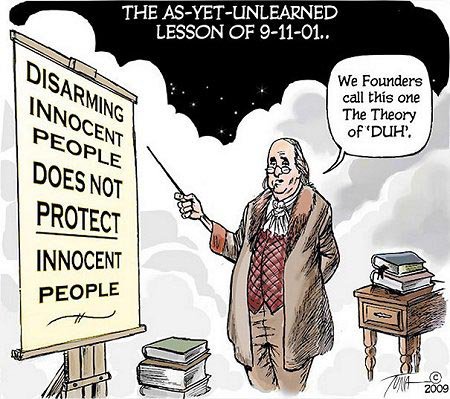










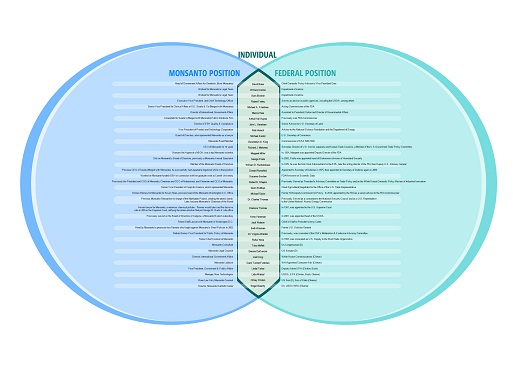

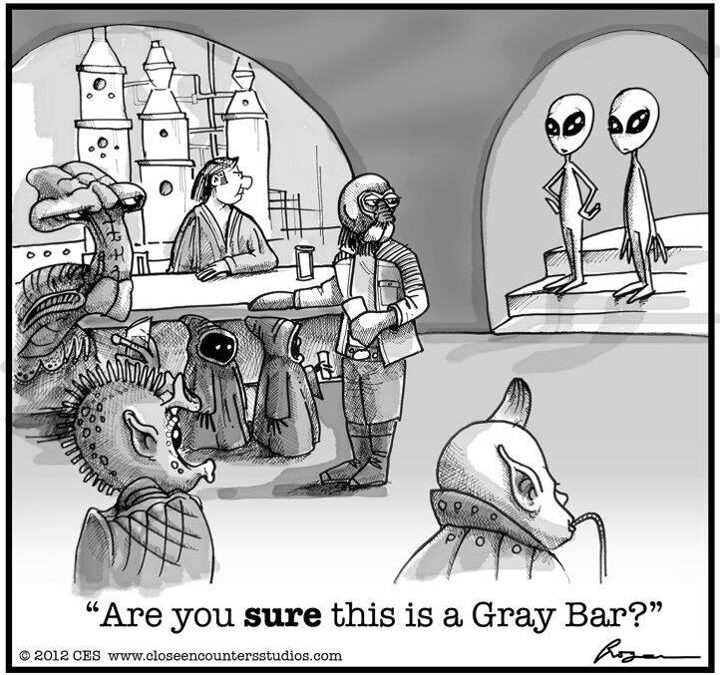




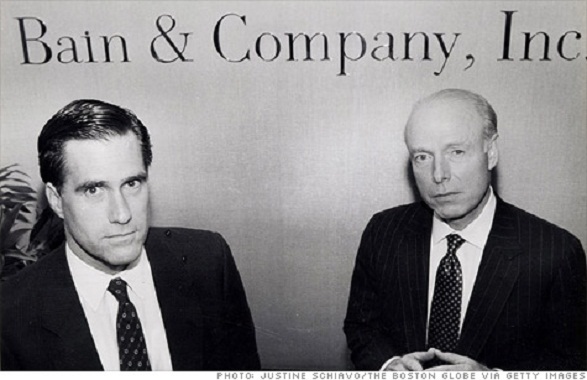





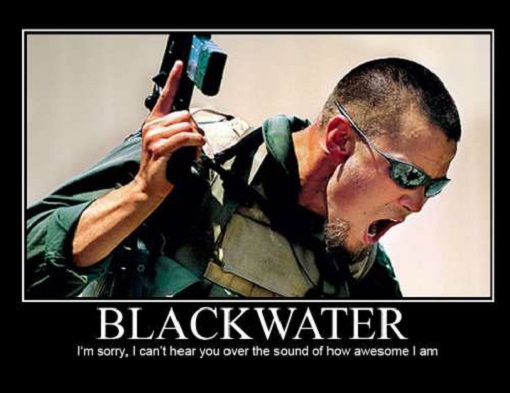

![[Image]](http://www.harpers.org/media/image/blogs/misc/graffiti.jpg)
![[Image]](http://www.harpers.org/media/image/blogs/misc/inscription.png)