If the Pentagon gets its way, the gentleman doodling on his notepad as your next overseas business trip goes on endlessly could be a soldier, sailor, airman or marine in disguise.
This extraordinary redefinition of the U.S. military’s authorities for clandestine action overseas is officially part of a Pentagon wish list for revisions to its legal authorities recently sent to Congress.
There’s another change the proposal would make — one that seems boring and bureaucratic, but explains a great deal. Authority for overseeing the Defense Department’s human spying lies with the Defense Intelligence Agency. The proposal would give it instead to the Undersecretary of Defense for Intelligence, the top aide for intel to the secretary of defense. And that undersecretary, Michael Vickers, is one of the Pentagon’s leading advocates of the transformation of special operations forces into elite intelligence operatives. Basically, Vickers would take control of a broad expansion in clandestine military activity.
Notice how the proposal says that using the cover of “commercial activities” would “provide an important safeguard for U.S. military forces.” Perhaps it would. But it would also place businessmen in danger. Once civilian commercial activities become a front for U.S. military spying, then foreign governments will likely view normal businessmen as targets for their own counterspying, or even detention.
This is why medical aid workers had such a negative reaction to the CIA’s use of a Pakistani doctor tocollect DNA in the town where Osama bin Laden was hiding under the cover of a vaccination program. If civilian activities become tied up with military activities, then the civilians who perform them will be seen as military targets, even if they have nothing to do with the military themselves.
“Additional classified background information regarding the Department’s conduct of its commercial cover program will be made available to the armed services committees,” the Pentagon promises in the proposal. Perhaps the generals will brief congressional staff in business suits.
It looks like the power of the IRS to revoke passports is merely a drop in the tyrannical bucket.
The Senate has voted to approve Bill 1813, which is now on its way to the House. The insidious bill has so many attacks on freedom that the most serious one has been largely overlooked.
There are two attacks on gun ownership in this bill. The text of the bill, all 1676 pages of it, can be found HERE.
The first attack on the right to bear arms is found on page 1323.
The Secretary may modify, suspend, or terminate a special permit or approval if the Secretary determines that—(1) the person who was granted the special permit or approval has violated the special permit or approval or the regulations issued under this chapter in a manner that demonstrates that the person is not fit to conduct the activity authorized by the special permit or approval; or (2) the special permit or approval is unsafe.
In the ambiguous language that the Congress so loves to employ in all things unconstitutional, we can translate that to the parental favorite, “Because I said so.”
The second attack on gun ownership is more subtle.
First, if this bill passes, the IRS will have the authority to take away the passports of those whom they say owe more than $50,000 in taxes. (The tax debt doesn’t have to be proven, mind you, the IRS simply has to accuse you of owing the money.) You can find this section on page 1447 of the Bill.
When your passport is revoked by the government, you are suddenly on the “no-fly list”.
Membership in the no-fly club puts you on yet another list, as a potential domestic terrorist.
Domestic terrorists are not allowed to have guns.
Don’t believe me? Listen to Raul Emanuel gloat of it. He eloquently states “If you are known as maybe a possible terrorist you cannot buy a handgun in America.” (1:13 of the video)
Emanuel, the Mayor of Chicago and former Obama Chief of Staff, makes the top of my personal treason list for this statement. In his own words, “maybe a possible terrorist” means you shouldn’t be allowed the rights guaranteed to you as an American. No proof necessary.
Bill 1813, ‘‘Moving Ahead for Progress in the 21st Century Act’’, is chock full of new ways to take away our personal freedoms. The bill would require “stalker boxes” on our vehicles, puts a huge number of restrictions on travel and transportation within the US, allows the government to revoke documents and licenses in ambiguous language and is, in essence, nearly 1700 pages of new restrictions. (You can find a summaryHERE if you don’t want to read all 1676 pages).
A Call to Action
Did your Senator vote for this bill? There’s a good chance he or she did, as only 22 Senators voted against it. You can find out how your senator voted HERE.
The bill was sponsored by Barbara Boxer (California) and co-sponsored by Max Baucus (Montana), James N. Inhofe (Oklahoma), and David Vitter (Louisiana). For your convenience, I’ve included links to the contact information for each of these Senators. Be sure and send an email to let them know how you feel about this new attack on freedom.
Email your Representatives and make it very clear that you consider this Bill an act of treason against the Constitution. This directory contains email addresses and contact information for all members of Congress.
Every bill that goes through Congress right now appears to hold another threat to the Constitution (if not multiple threats). Every word needs to be carefully analyzed so we can fight these attacks.
NEW YORK, NY — Brian Amento gripped the deadbolted door handle on the display next to him and with a click, the door unlocked at his touch. In his other hand, he was pinching a small metal disk called a piezoelectric transducer — like the ones used in guitar pickups — that was wired to his smartphone. The phone sent a digital key, identifying Amento as the homeowner, through his body and into the door.
Amento is a computer scientist at AT&T Labs. He talked with InnovationNewsDaily Thursday at a research fair AT&T held for reporters. Though for this display, the piezoelectric transducer connected to Amento’s phone with a large wire, eventually such sensors would be embedded directly in phones or perhaps wristwatches, Amento said. People’s smartphones would become their door keys, too.
In this prototype, Amento’s phone produced several frequencies of vibrations that humans can’t feel, but can hear, if the room is very quiet. In other words, as Amento said, “It’s an acoustic signal.”
The frequencies travel from the phone and through the skeleton, in the way that sound waves vibrate bones in the skull and inner ear. At the other end, the door handle has another piezoelectric transducer to detect the vibrations coming through a person’s hand. If this technology comes to market, different phones and door handles would have different vibration signatures that need to match for the door to unlock.
Amento switched the settings on his phone, demonstrating that his demo door would also open for the vibrations from a friend’s phone. On the other hand, it would send an alert to the homeowner if a stranger touched the door handle.
Amento and his colleagues think they can add another layer of security to the smartphone key, too — one that’s based on the unique properties of people’s skeletons. Because of differences in bone lengths and density, people’s skeletons should carry vibrations differently, they think. “If the signal goes through my body, it degrades in a different way than if it goes through your body,” Amento said. Among the five people he has tested, all of their skeletons transmitted vibrations differently. Of course, he’ll have to test more people to check if everyone is unique, but if that’s true, then the smartphone key will only work when the right person is using it.
The key is still in its prototype stage, Amento said, so he couldn’t say when people might be able to unlock their front doors with their own unique cellphone vibes. Once such systems work, however, people could start transmitting much more than their door keys through their bones. Amento and his colleagues are also working to see if people can exchange contact information just by shaking hands. The data would flow from one phone, through one person’s skeleton, into the next person’s and finally, into the recipient’s phone.
They also think a person’s unique vibes might help other smart devices identify them. A piezoelectric couch, for example, could sense who’s sitting there and offer her favorite channels. A piezoelectric car driver’s seat could identify the driver and adjust the mirrors accordingly.
A witness is someone who has firsthand knowledge about an event. An expert witness is a person who, by virtue of education, training or experience, is believed to have expertise in a particular area. A different type of witness is an eyewitness, who is a person that saw a specific event first hand. A witness can be extremely important for court proceedings. They are vital for news articles that expose government secrets. In some cases, investigative journalists can become an expert witness after conducting deep research into a controversial subject. This article will examine ten famous witnesses that suddenly died. In every case, the deaths are suspicious and have spawned a collection of conspiracy theories.
10 – David Wherley Jr.
Witnessed Event: U.S. Response to September 11, 2001
On September 11, 2001, David Wherley Jr. was the commander in charge of the 113th Fighter Wing at Andrews Air Force base, in Maryland. After the attack on New York City he took orders from the Secret Service to dispatch a fleet of aircraft to protect the White House and the Capitol. Wherley was an important 9/11 witness. He played a role in ordering the tactics used by the U.S. government in response to the terrorist activity. Wherley was mentioned on multiple occasions in the 9/11 Commission report. He later acted as the commanding general of the District of Columbia National Guard, from 2003 to 2008.
On June 22, 2009, David Wherley and his wife Ann boarded a Red Line Washington Metro train (#214) in Northeast Washington, D.C. While waiting for their train to leave Fort Totten station, it was struck by an oncoming Red Line train. The Wherley’s train was rear-ended at a high speed. Nine people were killed in the accident, including David Wherley and his wife. It was the deadliest crash in the history of the Washington Metro. Several survivors were trapped in the rubble for hours, and approximately 80 people were injured.
A preliminary investigation found that the accident occurred when the replacement of a track circuit component failed, which prevented certain signals from being reported. Survivors described the crash as like “hitting a concrete wall.” According to Daniel Kaniewski, a former Bush administration homeland security official, the overall emergency response to the event was “calm and ordered.” He indicated that the U.S. response “during extraordinary incidents has significantly improved” since September 11, 2001.
9 – Dwight Dixon
Witnessed Event: North Philadelphia Shooting
On April 29, 2008, a convicted drug dealer named Dwight Dixon got into an altercation with former NFL star Marvin Harrison, at a North Philadelphia car wash named Chuckie’s Garage. The two men had previously gotten into an argument when Harrison denied Dixon entry into a sports bar he owned and operated. On the day in question, Dixon and Harrison got into a fight outside the car wash. Someone pulled out a gun and started shooting. A collection of witnesses at the scene, including Dwight Dixon, said that it was Marvin Harrison who was firing with two separate weapons. Three people were injured in the gunfire. Dixon was shot in the left hand. A man named Robert Nixon was struck in his back and a child sitting in a nearby car suffered an eye injury from shattered glass.
Robert Nixon initially told police he knew nothing about what happened, but four days after the shooting he signed a statement saying he was positive that he saw Harrison with a gun in his hand at the time of the altercation. After an investigation, ballistics tests confirmed that five of the shell casings found at the crime scene had come from a high-powered Belgian handgun owned by Marvin Harrison. The gun was recovered from Harrison’s car wash.
After the story reached ESPN, Marvin Harrison’s personality was reported in a different light. For 12 NFL seasons, Marvin was one of most prolific wide receivers in the league. He was a true professional that rarely celebrated after any of his 128 touchdowns. Harrison stepped away from the game after the 2008 season.
In the spring of 2009, Dwight Dixon gave an interview to the ESPN program E:60, claiming that Harrison was the man that shot him. A few months later on July 21, 2009, Dwight Dixon was shot and killed in the Fairmount section of Philadelphia. A gunman approached the driver’s side of his Toyota Camry and fired four times through the back window and then fired three more times into the passenger side. Dwight Dixon was shot 7 times. Moments after the shooting, he told police that he believed the incident was related to the April 2008 assault. Dixon fell into a coma shortly after being shot and died a few months later. His murder remains unsolved.
In the summer of 2010, Marvin Harrison was pulled over by the police for traveling the wrong way down a one-way street. The officers claimed to have seen Harrison conceal a gun in the car. They searched his vehicle and found a 9mm weapon that was tested against three spent 9mm shell casings that were found inside the truck driven by the late Dwight Dixon at the scene of an April 2008 shooting. Since the discovery, the FBI has become involved in the investigation, with no recent news to report.
8 – Barbara Olson
Witnessed Event: American Airlines Flight 77
Barbara Olson was a lawyer, author and conservative American television commentator. In 1994, she joined the United States House of Representatives, becoming chief investigative counsel for the House Government Reform and Oversight Committee. In that position, Olson led a number of different investigations into the Clinton administration. She exposed the White House travel office scandal and the FBI files controversy. Olson published a collection of books that examine the history of Hillary Clinton and the actions of Bill Clinton in the final days of his presidency. Some of her accusations include unlawful pardons by Bill Clinton, the looting of the White House and executive orders that were sheer abuses of presidential power. On January 20, 2001, Bill Clinton pardoned 140 people in the final hours of his presidency.
In 1996, Barbara Olson married a man named Ted Olson. Ted successfully represented presidential candidate George W. Bush in the Supreme Court case of Bush v. Gore, which effectively determined the final result of the contested 2000 Presidential election. He subsequently served as United States Solicitor General in the Bush administration. On September 11, 2001, Barbara Olson boarded American Airlines Flight 77 traveling from Virginia to Los Angeles. She was visiting Los Angeles for a taping of Politically Incorrect with Bill Maher.
On September 11, 2001, Flight 77 was hijacked at 8:54. Between 9:16 and 9:26, Olson called her husband. According to him, she reported that the flight had been hijacked, and that the hijackers had knives and box-cutters. A minute into the conversation, the call was cut off. Shortly after, Barbara reached her husband again. Ted Olson asked for her location and she replied that the plane was flying over houses. Ted informed Barbara of the two previous hijackings and crashes. She didn’t display signs of panic over the phone. American Airlines Flight 77 crashed into the western side of the Pentagon at 09:37 EDT. All 64 people on board were killed, including Barbara Olson. Following her death, Politically Incorrect host, Bill Maher, left a panel seat vacant for a week.
The two phone calls Barbara Olson made from Flight 77 are an important factor to the accepted story of 9/11. They provide evidence that American 77 had been aloft after it had disappeared from FAA radar around 9:00 AM. The calls are also the only source of the widely accepted idea that the hijackers had box cutters. The story has been scrutinized by a collection of researchers, who have accused Ted Olson of changing his account. He originally indicated that Barbara used a cell phone to call him, but later said she called using an airline phone. The technology to enable cell phone calls from high-altitude flights wasn’t developed until 2004.
7 – Milton William Cooper
Witnessed Event: U.S. Naval Intelligence Gathering
After graduating from high school, William Cooper joined the U.S. Air Force and later the U.S. Navy. He served in the Vietnam War and then worked for Naval Security and Intelligence. Cooper gained notoriety after publishing a book titled Behold a Pale Horse. The text documents various UFO and paranormal activities he encountered while serving for Naval Intelligence. It examines government corruption, secret societies, and a collection of conspiracy theories. In the 1990s, William Cooper became a popular speaker on the UFO lecture circuit. He was the host of a worldwide shortwave radio show named Hour of the Time.
William Cooper was the first person to provide evidence of explosive material inside the Murrah Building in Oklahoma City on April 19, 1995. He publicly identified the type of explosives used in the Oklahoma City bombing. In his early writings, Cooper was convinced that the United States was hiding evidence of alien technology. Towards the end of his life Cooper turned his attention towards covert government programs and the militia movement. He became an outspoken critic of U.S. government abuses. William Cooper felt that the UFO phenomenon was a misinformation campaign organized to hide secret military operations. He asserted that the Internal Revenue Service (IRS) is actually the same organization as the Bureau of Alcohol, Tobacco and Firearms. Cooper felt the two organizations were involved in a broad, premeditated conspiracy to defraud the Citizens of the United States of America.
William Cooper produced several documentaries covering subjects such as the John F. Kennedy assassination and government black projects. He felt that JFK was shot and killed by his driver, a man named William Greer. In the Zapruder film Greer can be seen turning towards Kennedy the moment before he receives the fatal head wound. Following the death of her husband, Jacqueline Kennedy was bitterly critical of William Greer’s performance. William Cooper suggested that Jacqueline was attempting to get away from William Greer when she famously jumped on the back of the vehicle following the assassination. In the Zapruder film, Greer’s recorded front to back movement is extremely abnormal. The tape shows evidence of possible tampering.
In June 2001, three months before 9/11, William Cooper warned publicly about an important terrorist attack on United States, that would be blamed on Osama Bin Laden. During his June 28 broadcast, William Cooper said “I’m telling you be prepared for a major attack. But it won’t be Osama Bin Laden. It will be those behind the New World Order.” On 9/11 Cooper said “what we’re witnessing today is most probably the herald of the, at least, the redefinition of freedom, and probably its death.”
William Cooper was charged with various crimes in his lifetime, including tax evasion from 1992 to 1994, and bank fraud for giving false information on a loan application. In July and September 2001, Cooper was accused of brandishing a handgun near his home in Eagar, Arizona. On November 6, 2001, two months after September 11, William Cooper was fatally shot by a large collection of Arizona deputies who were attempting to serve him an arrest warrant. According to police accounts, Cooper, who was physically disabled, fled officers and pulled out a weapon. A gun fight ensued and William Cooper was killed. A deputy was critically injured in the incident.
6 – Kenneth Johannemann
Witnessed Event: Collapse of the Twin Towers
Kenny Johannemann worked as a part-time janitor in the World Trade Center when it was attacked and destroyed on September 11, 2001. He was in the North Tower waiting for an elevator when the first explosion occurred. The blast created a fireball that engulfed the elevator shaft. Johannemann responded by saving the life of a man that was badly burned in the event. He was in a similar position as William Rodriguez, who was also a janitor in the WTC North Tower, and who became internationally recognized for his heroic efforts on September 11. Rodriguez was the last person to leave the collapsing North Tower alive.
Following the events of September 11, 2001, Kenneth Johannemann and William Rodriguez provided a detailed account of their experience. One aspect of their stories is similar, but contradicts the official report presented by the 9/11 commission. Both men reported that they heard loud explosions in the basement of the North Tower immediately before and after the plane impacted. Kenneth Johannemann was adamant about the fact that he heard explosions not associated with the crash. William Rodriguez also claimed to have heard a massive rumble in the basement of the North Tower, seconds before the plane hit.
On August 31, 2008, Kenneth Johannemann committed suicide by way of a gunshot wound to the head. Mr Johannemann’s suicide note stated that he was depressed after being evicted from his residence. The testimony given by Kenneth Johannemann and William Rodriguez are identical in the fact that they describe large explosions in the WTC towers. Before his death, Johannemann regularly told his story to public crowds. His death was a surprise to everyone and instantly raised suspicion amongst 9/11 researchers.
5 – Gary Webb
Witnessed Event: Research into the Cocaine Trade
Gary Webb was a Pulitzer prize-winning American investigative journalist. In August of 1996, the San Jose Mercury News published Webb’s Dark Alliance, a 20,000 word, three-part investigative series which alleged that Nicaraguan drug traffickers had sold and distributed crack cocaine in Los Angeles during the 1980s. Webb alleged that drug profits were used to fund the CIA-supported Nicaraguan Contras. He never asserted that the CIA directly aided drug dealers to raise money for the Contras, but he did document that the CIA was aware of the cocaine transactions and the large shipments of cocaine into the U.S. by the Contra personnel.
According to the Columbia Journalism Review, the Dark Alliance series became “the most talked-about piece of journalism in 1996, and arguably the most famous set of articles of the decade.” Webb supported his research with documents obtained through the Freedom of Information Act. He investigated Nicaraguans linked to the CIA-backed Contras who had allegedly smuggled cocaine into the U.S. Their product was distributed as crack cocaine in Los Angeles. Webb also alleged that this influx of Nicaraguan-supplied cocaine sparked, and significantly fueled, the widespread crack cocaine epidemic that swept through many U.S. cities during the 1980s. He charged that the Reagan administration shielded inner-city drug dealers from prosecution in order to raise money for the Contras.
Gary Webb’s research generated fierce controversy around the world, and the San Jose Mercury News backed away from the story, effectively ending Webb’s career as a mainstream media journalist. On December 10, 2004, Gary Webb was found dead from two gunshot wounds to the head. The Sacramento County coroner Robert Lyons asserted that it was suicide. He said that a suicide note was found at the scene, although Lyons was unable to explain how Webb could shoot himself twice in the head with a .38 caliber pistol. Since the publication of Dark Alliance, many of Gary Webb’s accusations have been validated. Journalist George Sanchez wrote that “the CIA’s internal investigation by Inspector General Frederick Hitz vindicated much of Gary’s reporting” and observed that, despite the campaign against Webb, “the government eventually admitted to more than Gary had initially reported.”
4 – Ramin Pourandarjani
Witnessed Event: Misconduct at the Kahrizak Jail
Dr. Ramin Pourandarjani was an Iranian physician that worked at the Kahrizak detention center in southern Tehran. Following the 2009 Iranian election protests, Ramin Pourandarjani was made responsible for the medical care of several prisoners believed to have been tortured. One of his patients was Mohsen Ruholamini, a government scientist’s son, who was arrested following his participation in the post-election protests.
Mohsen Ruholamini, who was only 25-years-old, died in prison in July of 2009. His death certificate originally identified the cause of death as multiple blows to the head. A report given by the Iranian judicial authorities stated that Ruholamini died of “physical stress, the effects of being held in bad conditions, multiple blows and severe injuries to the body.”
Dr. Pourandarjani testified before a parliamentary committee investigating misconduct at the Kahrizak jail. The jail was subsequently closed by order of Ayatollah Khamenei. Presidential candidate and cleric, Mehdi Karroubi, publicly accused the Iranian police of having tortured and raped detainees in the prison. In response, the police raided Karroubi’s office, and confiscated names, addresses and testimonies of witnesses.
Following his testimony, Pourandarjani was one of the people arrested. He was interrogated by the Iranian police and released on bail. On November 10, 2009, at the age of 26, Ramin Pourandarjani died of poisoning from a salad laced with an overdose of blood pressure medication. Iranian authorities initially claimed Pourandarjani had died in a car accident, committed suicide, or died of a heart attack. They prohibited Pourandarjani’s family from performing an autopsy. The judiciary unit in Iran remains reluctant to investigate the sudden death of Dr. Ramin Pourandarjani.
3 – Lee Bowers Jr.
Witnessed Event: John F. Kennedy Assassination
Lee Bowers Jr. was a key witness to the assassination of John F. Kennedy. At the moment of the shooting he was operating the Union Terminal Company’s two-story interlocking tower, which was overlooking the parking lot just north of the grassy knoll and west of the Texas School Book Depository. Bowers had an unobstructed view of the stockade fence atop the knoll. He gave a detailed account of the assassination saying he had witnessed two unfamiliar men standing near the grassy knoll at the edge of the parking lot, within 10 or 15 feet of each other, “one man was middle-aged, fairly heavy-set, in a white shirt and dark trousers. The other was a younger man, about mid-twenties, in either a plaid shirt or a plaid coat or jacket.”
Lee Bowers also described a strange truck that was parked in the location of the assassination seven to ten minutes before Kennedy arrived. When the shots rang out, Bowers’ attention was drawn to the grassy knoll where he had witnessed the two men. He observed “some commotion” at that spot, “…something out of the ordinary, a sort of milling around…which attracted my eye for some reason, which I could not identify.” In an interview that Lee Bowers gave with attorney Mark Lane, he explained that the “commotion” that caught his eye may have been “a flash of light or smoke.”
Lee Bowers testified that immediately following the assassination a motorcycle policeman left the presidential motorcade and roared up the grassy knoll straight to where the two mysterious gentlemen were standing behind the fence. The policeman dismounted, but then climbed on his motorcycle and drove off. On the morning of August 9, 1966, Lee Bowers was driving south from Dallas on business. He was two miles from Midlothian when his brand new company car veered from the road and hit a bridge abutment. Bowers was killed in the accident. There was no autopsy performed and he was cremated soon afterward. A doctor from Midlothian, who rode in the ambulance with Bowers, noticed something peculiar about the victim. “He was in a strange state of shock. I’ve never seen anything like it.”
2 – Barry Jennings
Witnessed Event: Collapse of the Twin Towers
On the morning of September 11, 2001, Barry Jennings, who was a housing authority official in New York City, was near the World Trade Center Towers when they were attacked. Following the incident Barry reported to the city’s command center, which was located on the 23rd floor of the 7 World Trade Center structure. After reaching the office, Jennings and a man named Michael Hess realized that the room was completely empty. In an interview taped for the Loose Change film series, Jennings discussed the moment. “There was steaming coffee and sandwiches on the tables. It seemed that the room had recently been vacated.”
After getting word to evacuate, Jennings and Hess started to move down the staircase of 7 WTC. When the pair reached the 6th floor they were hit by a large explosion. The stairs underneath the men gave way and they were forced to climb over rubble to reach the 8th floor. While on the 8th floor Barry Jennings reported the sound of multiple loud explosions from below. Jennings and Hess were eventually saved by a collection of New York City firefighters and taken to an area called the “lobby.” The area was completely obliterated. While traveling through the lobby, Barry Jennings commented on dead bodies.
“And the firefighter who took us down kept saying, “Do not look down.” I kept saying, “Why?” We were stepping over people. And you know when you can feel when you are stepping over people.”
At 5:21 on the evening of September 11, 2001, the 7 World Trade Center building suffered a complete failure. The official cause of the collapse was due to damage sustained when the nearby North Tower of the WTC collapsed. The debris ignited fires, which continued to burn throughout the afternoon. The building’s internal fire suppression system lacked water pressure to fight the fires, and the building collapsed. The destruction of 7 WTC is a controversial subject among conspiracy theorists. Along with the Twin Towers, 7 WTC was the first steel building to experience a complete failure due to fire. The structure didn’t crumble as you might expect from fire damage. Instead it fell in an absolute free-fall (about 8 seconds).
Barry Jennings finished his interview for Loose Change by saying “I’m just confused about one thing, why World Trade Center 7 went down in the first place – I’m very confused about that – I know what I heard, I heard explosions.” Barry Jennings challenged the official 9/11 report. He said that while in the building he heard multiple explosions and witnessed damage not caused by fire. For this reason, many people found the testimony of Jennings contradictory to the official story of what happened on 9/11. Barry Jennings died on August 19, 2008, from an unknown cause. He passed away only a couple days before a report was to be released by the National Institute of Standards and Technology’s (NIST) on the collapse of 7 WTC.
1 – David Kelly
Witnessed Event: Biological Warfare Research in Iraq
David Kelly was a British scientist and expert on biological warfare. He was employed by the British Ministry of Defense, and served as a United Nations weapons inspector in Iraq. The Iraq War began on March 20, 2003. After the end of the initial ground attack, David Kelly was involved with a team attempting to find any trace of weapons of mass destruction in Iraq.
After analyzing photographs of two alleged mobile weapons laboratories in Iraq, Kelly was unhappy with the presented results. In response, he organized an interview with The Observer. On June 15, 2003, the newspaper published an article using Kelly as a confidential source. It said that “a British scientist and biological weapons expert who examined the trailers in Iraq said they are not mobile germ warfare laboratories. You could not use them for making biological weapons. They do not even look like them. They are exactly what the Iraqis said they were. Facilities for the production of hydrogen gas to fill balloons.”
On May 22, 2003, David Kelly met with Andrew Gilligan, a BBC journalist. A few weeks later, using information provided by Kelly, Gilligan published a series of articles about the British government’s dossier on weapons of mass destruction in Iraq. He said that the government had “sexed up” the military capabilities of Iraq in order to bolster the argument for going to war with the country. Gilligan quoted his source, David Kelly, as identifying Alastair Campbell, the former Prime Minister’s Director of Communications and Strategy, as being responsible for the suppressions. He suggested that the claim that Iraq was able to deploy biological weapons within 45 minutes was false.
On July 15, 2003, David Kelly was called before the parliamentary foreign affairs select committee. He was questioned aggressively about his actions. Two days later, on July 17, David Kelly went missing near his home in Oxfordshire. His body was discovered in area of woodlands known as Harrowdown Hill, about a mile away from his home. David Kelly had ingested up to 29 tablets of painkillers. He also slashed his left wrist with a knife. After an investigation, Kelly’s death was ruled a suicide. Since that time, a collection of medical experts have raised concerns over his cause of death.
Doctors have argued that the autopsy finding of a transected ulnar artery could not have caused a degree of blood loss that would kill someone, particularly when outside in the cold. In December 2010, The Times reported that Dr. Kelly had a rare abnormality in his arteries which could have contributed to his death. On December 5, 2009, six doctors began legal action to demand a formal inquest into the death of David Kelly, saying there was “insufficient evidence to prove beyond reasonable doubt he killed himself.” In January 2010, it was disclosed that Lord Hutton had requested that all files relating to his postmortem remain secret for 70 years. Hutton explained that he had done so to protect David Kelly’s wife and daughters from the distress of further media reports.
Psilocybin, the active ingredient in hallucinogenic mushrooms, shuts down parts of the brain that are responsible for regulating a sense of self.
In controlled settings, the drug may be a useful therapeutic tool for treating depression, anxiety and other psychiatric problems.
In the study, the rush of the first 10 to 30 seconds induced some fear, he added, but positive feelings then immediately swept over them.
After a psychedelic trip on magic mushrooms, people often describe the experience as mind-expanding, consciousness altering, emotionally insightful and even spiritually transcendent. Now, scientists have peered into the brains of people tripping on psilocybin — the active ingredient in mushrooms — and their results revealed a few surprises.
Instead of opening lines of communication between sensory-oriented regions of the brain, psilocybin appears to shut down activity in two key areas of the brain that regulate our sense of self and integrate our sense of awareness with our sense of the present.
The drug also decreases activity in something called the default mode network, which is believed to be involved in maintaining a balanced sense of consciousness and ego through self-reflection, though scientists still don’t entirely understand the network or agree about what it does.
The more these brain areas were suppressed, the researchers report today in Proceedings of the National Academy of Sciences, the more intense people reported their changes in perception to be.
Besides helping explain how magic mushrooms induce hallucinogenic adventures of the mind, the results suggest that, in controlled settings, psilocybin might be a useful tool for treating depression and other psychiatric problems.
“One of the parts of the brain that is markedly switched off [with psilocybin] is the anterior cingulate cortex, which is particularly overactive in people with depression,” said David Nutt, professor of neuropsychopharmacology at Imperial College, London. Some researchers “put electrodes in that part of the brain to switch it off. It would be a lot simpler and safer to use psilocybin instead of electrodes.”
In British author Aldous Huxley’s ruminations on the effects of mescaline, a psychedelic compound that occurs naturally in the Peyote cactus, he expressed the sense that the hallucinogenic drug removed natural constraints that keep the brain focused on the inputs and tasks necessary for normal functioning. By removing those constraints, Huxley speculated, hallucinogenic drugs create an otherworldly sense of reality and a mystical state of transcendence and transformation.
From subjective descriptions like those, scientists have long assumed that hallucinogens, like mescaline and psilocybin, work in the brain by increasing blood flow and creating new kinds of connections. Research on psychedelic effects in the brain, however, has been limited and hard to get approval for.
For the new study, Nutt and colleagues recruited 15 healthy people with previous experience taking hallucinogenic substances. Over two days, the researchers monitored activity in participants’ brains as they lay in a scanner for up to an hour. On the first day, participants received an intravenous shot of a placebo solution. The next day, they got a shot of psilocybin that was dosed to peak after about four minutes and was mostly over after about 30 minutes.
No one had trouble figuring out which shot contained the real drug. Afterwards, they talked at length about their experiences.
All of the participants described kaleidoscopic vision with images of bright and angular shapes, Nutt said. The rush of the first 10 to 30 seconds induced some fear, he added, but positive feelings then immediately swept over them. Many participants said that the benefits of the experience were profound and that they felt they had moved on from where they had been. Others said the experience was interesting, though not necessarily life-changing. None described the trip as negative.
“They mostly got the sense that they were going somewhere else, that they were being transmuted into space and being fragmented or stretched,” Nutt said. “One guy found himself kneeling at the feet of God. Some described being at one with the universe.”
In brain scans, the researchers saw a decrease in both blood flow and metabolism in several key areas after injection with the drug, including the anterior cingulate cortex, the medial prefrontal cortex and the posterior cingulate cortex. Also reduced was connectivity and communication between some of these areas.
The findings offer some potentially exciting opportunities to use psilocybin in therapeutic settings, said Roland Griffiths, a neuroscientist and pscyhopharmacologist at Johns Hopkins University in Baltimore.
His research has shown some long-lasting cognitive benefits of psilocybin, with study subjects reporting that they feel happier, calmer and more at peace more than a year after taking a carefully measured dose of the drug in an experimental setting. He is currently conducting a trial with cancer patients who are anxious or depressed.
Nutt plans next to see if the hallucinogen, combined with therapy, might be able to help calm hyperactive brain regions in people with enduring depression who are locked into obsessively negative mindsets.
There is reason to believe it might work. In another study, also published today in The British Journal of Psychiatry, Nutt and colleagues report that guiding people to think positively about events in their past while they were under the influence of psilocybin led to a greater sense of well-being two weeks later.
While the research offers tantalizing evidence that psilocybin can be safe and helpful in clinical settings, Griffiths said, the hallucinogen still carries risks when people take it on their own. Depending on the dose and the situation, the drug can lead to panic and cause people to harm themselves or others.
“From a cultural point of view, there may be some applications that are useful and therapeutic,” Griffiths said. “But I’m not sure we’re ever going to be able to go to the drug store, pick it up and bring it home.”
LOS ANGELES (CBS) — A bill authored by a Southland lawmaker that could potentially allow the federal government to prevent any Americans who owe back taxes from traveling outside the U.S. is one step closer to becoming law.
Senate Bill 1813 was introduced back in November by Senator Barbara Boxer (D-Los Angeles) to “reauthorize Federal-aid highway and highway safety construction programs, and for other purposes” .
After clearing the Senate on a 74 – 22 vote on March 14, SB 1813 is now headed for a vote in the House of Representatives, where it’s expected to encounter stiffer opposition among the GOP majority.
In addition to authorizing appropriations for federal transportation and infrastructure programs, the “Moving Ahead for Progress in the 21st Century Act” or “MAP-21″ includes a provision that would allow for the “revocation or denial” of a passport for anyone with “certain unpaid taxes” or “tax delinquencies”.
Section 40304 of the legislation states that any individual who owes more than $50,000 to the Internal Revenue Service may be subject to “action with respect to denial, revocation, or limitation of a passport”.
The bill does allow for exceptions in the event of emergency or humanitarian situations or limited return travel to the U.S., or in cases when any tax debt is currently being repaid in a “timely manner” or when collection efforts have been suspended.
However, there does not appear to be any specific language requiring a taxpayer to be charged with tax evasion or any other crime in order to have their passport revoked or limited — only that a notice of lien or levy has been filed by the IRS.
Boxer vowed last week to push House Republicans to pass the bipartisan transportation bill that would keep the Highway Trust Fund from going bankrupt.
“Thousands of businesses are at stake, and eventually we are talking about nearly three million jobs at stake,” she said in a statement. “There are many people on both sides of the aisle in the Senate who want to get our bill, MAP-21, passed into law, and I am going to do everything I can to keep the pressure on the Republican House to do just that.”
Here is the breif introduction. I’m using the alias Isaac, and used to work in what was called the CARET program in the 80’s. During my time there, I worked with a lot of the technology that is clearly at work in the recent drone/strange craft sightings, most notably the “language” and diagrams seen on the underside of each craft. What follows is a lengthy letter about who I am, what I know, and what these sightings are (probably) all about.
The appearance of these photos has convinced me to release at least some of the numerous photographs and photocopied documents I still possess some 20 years later that can explain a great deal about these sightings. On this site you will find some of these. They are available as high resolution scans that I am giving away free, PROVIDED THEY ARE NOT MODIFIED IN ANY WAY AND ARE KEPT TOGETHER ALONG WITH THIS WRITTEN MATERIAL.
I am also trying to get in touch with the witnesses so far, such as Chad, Rajman, Jenna, Ty, and the Lake Tahoe witness (especially Chad). I have advice for them that may be somewhat helpful in dealing with what they’ve seen and what I would recommend they do with what they know. If you are one of these witnesses, or can put me in touch with them, please contact Coast to Coast AM and let them know.
FAN MADE VIDEO – DRAGONFLY DRONE TECHNO REMIX
My Experience with the CARET Program and Extra-terrestrial Technology Isaac, June 2007
This letter is part of a package I’ve assembled for Coast to Coast AM to distribute to its audience. It is a companion to numerous document and photo scans and should not be separated from them.
You can call me Isaac, an alias I’ve chosen as a simple measure of protection while I release what would be called tremendously sensitive information even by todays standards. “Sensitive” is not necessarily synonymous with “dangerous”, though, which is why my conscience is clear as I offer this material up for the public. My government has its reasons for its continual secrecy, and I sympathize with many of them, but the truth is that I’m getting old and I’m not interested in meeting my maker one day with any more baggage than necessary! Furthermore, I put a little more faith in humanity than my former bosses do, and I think that a release of at least some of this info could help a lot more than it could hurt, especially in today’s world.
I should be clear before I begin, as a final note: I am not interested in making myself vulnerable to the consequences of betraying the trust of my superiors and will not divulge any personal information that could determine my identity. However my intent is not to deceive, so information that I think is too risky to share will be simply left out rather than obfuscated in some way (aside from my alias, which I freely admit is not my real name). I would estimate that with the information contained in this letter, I could be narrowed down to one of maybe 30-50 people at best, so I feel reasonably secure.
Some Explanation for the Recent Sightings
For many years I’ve occasionally considered the release of at least some of the material I possess, but the recent wave of photos and sightings has prompted me to cut to the chase and do so now.
I should first be clear that I’m not directly familiar with any of the crafts seen in the photos in their entirety. I’ve never seen them in a hangar or worked on them myself or seen aliens zipping around in them. However, I have worked with and seen many of the parts visible in these crafts, some of which can be seen in the Q3-85 Inventory Review scan found at the top of this page. More importantly though, I’m very familiar with the “language” on their undersides seen clearly in photos by Chad and Rajman, and in another form in the Big Basin photos.
One question I can answer for sure is why they’re suddenly here. These crafts have probably existed in their current form for decades, and I can say for sure that the technology behind them has existed for decades before that. The “language”, in fact, (I’ll explain shortly why I keep putting that in quotes) was the subject of my work in years past. I’ll cover that as well.
The reason they’re suddenly visible, however, is another matter entirely. These crafts, assuming they’re anything like the hardware I worked with in the 80’s (assuming they’re better, in fact), are equipped with technology that enables invisibility. That ability can be controlled both on board the craft, and remotely. However, what’s important in this case is that this invisibility can also be disrupted by other technology. Think of it like radar jamming. I would bet my life savings (since I know this has happened before) that these craft are becoming visible and then returning to invisibility arbitrarily, probably unintentionally, and undoubtedly for only short periods, due to the activity of a kind of disrupting technology being set off elsewhere, but nearby. I’m especially sure of this in the case of the Big Basin sightings, were the witnesses themselves reported seeing the craft just appear and disappear. This is especially likely because of the way the witness described one of the appearances being only a momentary flicker, which is consistent with the unintentional, intermittent triggering of such a device.
It’s no surprise that these sightings are all taking place in California, and especially the Saratoga/South Bay area. Not far from Saratoga is Mountain View/Sunnyvale, home to Moffett Field and the NASA Ames Research center. Again, I’d be willing to bet just about anything that the device capable of hijacking the cloaking of these nearby craft was inadvertently triggered, probably during some kind of experiment, at the exact moment they were being seen. Miles away, in Big Basin, the witnesses were in the right place at the right time and saw the results of this disruption with their own eyes. God knows what else was suddenly appearing in the skies at that moment, and who else may have seen it. I’ve had some direct contact with this device, or at least a device capable of the same thing, and this kind of mistake is not unprecedented. I am personally aware of at least one other incident in which this kind of technology was accidentally set off, resulting in the sudden visibility of normally invisible things. The only difference is that these days, cameras are a lot more common!
The technology itself isn’t ours, or at least it wasn’t in the 80’s. Much like the technology in these crafts themselves, the device capable of remotely hijacking a vehicle’s clacking comes from a non-human source too. Why we were given this technology has never been clear to me, but it’s responsible for a lot. Our having access to this kind of device, along with our occasionally haphazard experimentation on them, has lead to everything from cloaking malfunctions like this to full-blown crashes. I can assure you that most (and in my opinion all) incidents of UFO crashes or that kind of thing had more to do with our meddling with extremely powerful technology at an inopportune time than it did mechanical failure on their part. Trust me, those things don’t fail unless something even more powerful than them makes them fail (intentionally or not). Think of it like a stray bullet. You can be hit by one at any time, without warning, and even the shooter didn’t intent to hit you. I can assure you heads are rolling over this as well. If anyone notices a brilliant but sloppy physicist patrolling the streets of Baghdad in the next couple weeks, I’d be willing to guess how he got there. (I kid, of course, as I certainly hope that hasn’t actually happened in this case)
I’d now like to explain how it is that I know this.
The CARET Program
My story begins the same as it did for many of my co workers, with graduate and post-graduate work at university in electrical engineering. And I had always been interested in computer science, which was a very new field at the time, and my interest piqued with my first exposure to a Tixo during grad school. In the years following school I took a scenic route through the tech industry and worked for the kinds of companies you would expect, until I was offered a job at the Department of Defense and things took a very different turn.
My time at the DoD was mostly uneventful but I was there for quite a while. I apparently proved myself to be reasonably intelligent and loyal. By 1984 these qualities along with my technical background made me a likely candidate for a new program they were recruiting for called “CARET”.
Before I explain what CARET was I should back up a little. By 1984, Silicon Valley had been a juggernaut of technology for decades. In the less than 40 years since the appearance of Shockley’s transistor this part of the world had already produced a multi billion dollar computer industry and made technological strides that were unprecedented in other fields, from hypertext and online collaboration in ’68 to the Alto in ’73.
Private industry in Silicon Valley was responsible for some of the most incredible technological leaps in history and this fact did not go unnoticed by the US government and military. I don’t claim to have any special knowledge about Roswell or any of the other alleged early UFO events, but I do know that whatever the exact origin, the military was hard at work trying to understand and use the extra-terrestrial artifacts it had in its possession. While there had been a great deal of progress overall, things were not moving as quickly as some would have liked. So, in 1984, the CARET program was created with the aim of harnessing the abilities of private industry in silicon valley and applying it to the ongoing task of understanding extra-terrestrial technology.
One of the best examples of the power of the tech sector was Xerox PARC, a research center in Palo Alto, CA. XPARC was responsible for some of the major milestones in the history of computing. While I never had the privilege of working there myself I did know many of the people who did and I can say that they were among the brightest engineers I ever knew.
XPARC served as one of the models for the CARET program’s first incarnation, a facility called the Palo Alto CARET Laboratory (PACL, lovingly pronounced “packle” during my time there). This was where I worked, along with numerous other civilians, under the auspices of military brass who were eager to find out how the tech sector made so much progress so quickly. My time at the DoD was a major factor behind why I was chosen, and in fact about 30+ others who were hired around the same time had also been at the Department about as long, but this was not the case for everyone. A couple of my co-workers were plucked right from places like IBM and, at least two of them came from XPARC itself. My DoD experience did make me more eligable for positions of management, however, which is how I have so much of this material in my possession to begin with.
So in other words, civilians like myself who had at–at most–some decent experience working for the DoD but no actual military training or involvement, were suddenly finding ourselves in the same room as highly classified extra-terrestrial technology. Of course they spent about 2 months briefing us all before we saw or did anything, and did their best to convince us that if we ever leaked a single detail about what we were being told, they’d do everything short of digging up our ancestors and putting a few slugs in them too just for good measure. It seemed like there was an armed guard in every corner of every room. I’d worked under some pretty hefty NDAs in my time but this was so far out of my depth I didn’t think I was going to last 2 weeks in an environment like that. But amazingly things got off to a good start. They wanted us, plain and simple, and our industry had shown itself to be so good at what it did that they were just about ready to give us carte blanche.
Of course, nothing with the military is ever that simple, and as is often the case they wanted to have their cake and eat it too. What I mean by this is that despite their interest in picking our brains and learning whatever they could from our way of doing things, they still wanted to do it their way often enough to frustrate us.
At this point I’m going to gloss over the emotional side of this experience, because this letter isn’t intended to be a memoir, but I will say that there’s almost no way to describe the impact this kind of revelation has on your mind. There are very few moments in life in which your entire world view is turned forever upside down, but this was one of them. I still remember that turning point during the briefing when I realized what he’d just told us, and that I hadn’t heard him wrong, and that it wasn’t some kind of joke. In retrospect the whole thing feels like it was in slow motion, from that slight pause he took just before the term “extra-terrestrial” came out for the first time, to the way the room itself seemed to go off kilter as we collectively tried to grasp what was being said. My reflex kept jumping back and forth between trying to look at the speaker, to understand him better, and looking at everyone else around me, to make sure I wasn’t the only one that was hearing this. At the risk of sounding melodramatic, it’s a lot like a child learning his parents are divorcing. I never experienced that myself, but a very close friend of mine did when were boys, and he confided in me a great deal about what the experience felt like. A lot of what he said would aptly describe what I was feeling in that room. Here was a trusted authority figure telling you something that you just don’t feel ready for, and putting a burden on your mind that you don’t necessarily want to carry. The moment that first word comes out, all you can think about it is what it was like only seconds ago, and knowing that life is never going to be as simple as it was then. After all that time at the DoD, I thought I at least had some idea of what was going on in the world, but I’d never heard so much as a peep about this. Maybe one day I’ll write more on this aspect, because it’s the kind of thing I really would like to get off my chest, but for now I’ll digress.
Unlike traditional research in this area, we weren’t working on new toys for the air force. For numerous reasons, the CARET people decided to aim its efforts at commercial applications rather than military ones. They basically wanted us to turn these artifacts into something they could patent and sell. One of CARET’s most appealing promises was the revenue generated by these product-ready technologies, which could be funneled right back into black projects. Working with a commercial application in mind was also yet another way to keep us in a familiar mind state. Developing technology for the military is very different than doing so for the commercial sector, and not having to worry about the difference was another way that CARET was very much like private industry.
CARET shined in the way it let us work the way we were used to working. They wanted to recreate as much of the environment we were used to as they could without compromising issues like security. That meant we got free reign to set up our own workflow, internal management structure, style manuals, documentation, and the like. They wanted this to look and feel like private industry, not the military. They knew that was how to get the best work out of us, and they were right.
But things didn’t go as smoothly when it came to matters like access to classified information. They were exposing what is probably their single biggest secret to a group of people who had never even been through basic training and it was obvious that the gravity of this decision was never far from their minds. We started the program with a small set of extra-terrestrial artifacts along with fairly elaborate briefings on each as well as access to a modest amount of what research had already been completed. It wasn’t long before we realized we needed more though, and getting them to provide even the smallest amount of new material was like pulling teeth. CARET stood for “Commercial Applications Research for Extra-terrestrial Technology”, but we often joked that it should have stood for “Civilians Are Rarely Ever Trusted.”
PACL was located in Palo Alto, but unlike XPARC, it wasn’t at the end of a long road in the middle of a big complex surrounded by rolling hills and trees. PACL was hidden in an office complex owned entirely by the military but made to look like an unassuming tech company. From the street, all you could see was what appeared to be a normal parking lot with a gate and a guard booth, and a 1-story building inside with a fictitious name and logo. What wasn’t visible from the street was that behind the very first set of doors was enough armed guards to invade Poland, and 5 additional underground stories. They wanted to be as close as possible to the kinds of people they were looking to hire and be able to bring them in with a minimum of fuss.
Inside, we had everything we needed. State of the art hardware and a staff of over 200 computer scientists, electrical engineers, mechanical engineers, physicists and mathematicians. Most of us were civilians, as I’ve said, but some were military, and a few of them had been working on this technology already. Of course, you were never far from the barrel of a machine gun, even inside the labs themselves (something many of us never got used to), and bi-weekly tours were made by military brass to ensure that not a single detail was out of line. Most of us underwent extensive searches on our way into and out of the building. There it was, probably the biggest secret in the world, in a bunch of parts spread out on laboratory tables in the middle of Palo Alto so you can imagine their concern.
One downside to CARET was that it wasn’t as well-connected as other operations undoubtedly were. I never got to see any actual extra-terrestrials (not even photos), and in fact never even saw one of their compete vehicles. 99% of what I saw was related to the work at hand, all of which was conducted within a very narrow context on individual artifacts only. The remaining 1% came from people I met through the program, many of which working more closely with “the good stuff” or had in the past.
In fact, what was especially amusing about the whole affair was the way that our military management almost tried to act as if the technology we were essentially reverse engineering wasn’t extra-terrestrial at all. Aside from the word “extra-terrestrial” itself, we rarely heard any other terms like “alien” or “UFO” or “outer space” or anything. Those aspects were only mentioned briefly when absolutely necessary to explain something. In many cases it was necessary to differentiate between the different races and their respective technology, and they didn’t even use the word “races”. They were referred to simply as different “sources”.
The Technology
A lot of the technology we worked on was what you would expect, namely antigravity. Most of the researchers on the staff with backgrounds in propulsion and rocketry were military men, but the technology we were dealing with was so out of this world that it didn’t really matter all that much what your background was because none of it applied. All we could hope to do was use the vocabulary of our respective fields as a way to model the extremely bizarre new concepts we were very slowly beginning to understand as best we could. A rocket engineer doesn’t usually rub elbows much with a computer scientist, but inside PACL, we were all equally mystified and were ready to entertain any and all ideas.
The physicists made the most headway initially because out of all of our skills, theirs overlapped the most with the concepts behind this technology (although that isn’t saying much!) Once they got the ball rolling though, we began to find that many of the concepts found in computer science were applicable as well, albeit in very vague ways. While I didn’t do a lot of work with the antigrav hardware myself, I was occasionally involved in the assessment of how that technology was meant to interface with its user.
The antigrav was amazing, of course, as were the advances we were making with materials engineering and so on. But what interested me most then, and still amazes me most to this day, was something completely unrelated. In fact, it was this technology that immediately jumped out at me when I saw the Chad and Rajman photos, and even moreso in the Big Basin photos.
The “Language”
I put the word Language in quotes because calling what I am about to describe a “language” is a misnomer, although it is an easy mistake to make.
Their hardware wasn’t operated in quite the same way as ours. In our technology, even today, we have a combination of hardware and software running almost everything on the planet. Software is more abstract than hardware, but ultimately it needs hardware to run it. In other words, there’s no way to write a computer program on a piece of paper, set that piece of paper on a table or something, and expect it to actually do something. The most powerful code in the world still doesn’t actually doanything until a piece of hardware interprets it and translates its commands into actions.
But their technology is different. It really did operate like the magical piece of paper sitting on a table, in a manner of speaking. They had something akin to a language, that could quite literally executeitself, at least in the presence of a very specific type of field. The language, a term I am still using very loosely, is a system of symbols (which does admittedly very much resemble a written language) along with geometric forms and patterns that fit together to form diagrams that are themselves functional. Once they are drawn, so to speak, on a suitable surface made of a suitable material and in the presence of a certain type of field, they immediately begin performing the desired tasks. It really did seem like magic to us, even after we began to understand the principles behind it.
I worked with these symbols more than anything during my time at PACL, and recognized them the moment I saw them in the photos. They appear in a very simple form on Chad’s craft, but appear in the more complex diagram form on the underside of the Big Basin craft as well. Both are unmistakable, even at the small size of the Big Basin photos. An example of a diagram in the style of the Big Basin craft is included with this in a series of scanned pages from the [mistitled] “Linguistic Analysis Primer”. We needed a copy of that diagram to be utterly precise, and it took about a month for a team of six to copy that diagram into our drafting program!
Explaining everything I learned about this technology would fill up several volumes, but I will do my best to explain at least some of the concepts as long as I am taking the time to write all this down.
First of all, you wouldn’t open up their hardware to find a CPU here, and a data bus there, and some kind of memory over there. Their hardware appeared to be perfectly solid and consistent in terms of material from one side to the other. Like a rock or a hunk of metal. But upon [much] closer inspection, we began to learn that it was actually one big holographic computational substrate – each “computational element” (essentially individual particles) can function independently, but are designed to function together in tremendously large clusters. I say its holographic because you can divide it up into the smallest chunks you want and still find a scaled-down but complete representation of the whole system. They produce a nonlinear computational output when grouped. So 4 elements working together is actually more than 4 times more powerful than 1. Most of the internal “matter” in their crafts (usually everything but the outermost housing) is actually this substrate and can contribute to computation at any time and in any state. The shape of these “chunks” of substrate also had a profound effect on its functionality, and often served as a “shortcut” to achieve a goal that might otherwise be more complex.
So back to the language. The language is actually a “functional blueprint”. The forms of the shapes, symbols and arrangements thereof is itself functional. What makes it all especially difficult to grasp is that every element of each “diagram” is dependant on and related to every other element, which means no single detail can be created, removed or modified independently. Humans like written language because each element of the language can be understood on its own, and from this, complex expressions can be built. However, their “language” is entirely context-sensitive, which means that a given symbol could mean as little as a 1-bit flag in one context, or, quite literally, contain the entire human genome or a galaxy star map in another. The ability for a single, small symbol to contain, not just represent, tremendous amounts of data is another counter-intuitive aspect of this concept. We quickly realized that even working in groups of 10 or more on the simplest of diagrams, we found it virtually impossible to get anything done. As each new feature was added, the complexity of the diagram exponentially grew to unmanageable proportions. For this reason we began to develop computer-based systems to manage these details and achieved some success, although again we found that a threshold was quickly reached beyond which even the supercomputers of the day were unable to keep up. Word was that the extra-terrestrials could design these diagrams as quickly and easily as a human programmer could write a Fortran program. It’s humbling to think that even a network of supercomputers wasn’t able to duplicate what they could do in their own heads. Our entire system of language is based on the idea of assigning meaning to symbols. Their technology, however, somehow merges the symbol and the meaning, so a subjective audience is not needed. You can put whatever meaning you want on the symbols, but their behavior and functionality will not change, any more than a transistor will function differently if you give it another name.
Here’s an example of how complex the process is. Imagine I ask you to incrementally add random words to a list such that no two words use any of the same letters, and you must perform this exercise entirely in your head, so you can’t rely on a computer or even a pen and paper. If the first in the list was, say, “fox”, the second item excludes all words with the letters F, O and X. If the next word you choose is “tree”, then the third word in the list can’t have the letters F, O, X, T, R, or E in it. As you can imagine, coming up with even a third word might start to get just a bit tricky, especially since you can’t easily visualize the excluded letters by writing down the words. By the time you get to the fourth, fifth and sixth words, the problem has spiraled out of control. Now imagine trying to add the billionth word to the list (imagine also that we’re working with an infinite alphabet so you don’t run out of letters) and you can imagine how difficult it is for even a computer to keep up. Needless to say, writing this kind of thing “by hand” is orders of magnitude beyond the capabilities of the brain.
My background lent itself well to this kind of work though. I’d spent years writing code and designing both analog and digital circuits, a process that at least visually resembled these diagrams in some way. I also had a personal affinity for combinatorics, which served me well as I helped with the design of software running on supercomputers that could juggle the often trillions of rules necessary to create a valid diagram of any reasonable complexity. This overlapped quite a bit with compiler theory as well, a subject I always found fascinating, and in particular compiler optimization, a field that wasn’t half of what it is today back then. A running joke among the linguistics team was that Big-O notation couldn’t adequately describe the scale of the task, so we’d substitute other words for “big”. By the time I left I remember the consensus was “Astronomical-O” finally did it justice.
Like I said, I could go on for hours about this subject, and would love to write at least an introductory book on the subject if it wasn’t still completely classified, but that’s not the point of this letter so I’ll try to get back on track.
The last thing I’d like to discuss is how I got copies of this material, what else I have in my possession, and what I plan to do with it in the future.
My Collection
I worked at PACL from 1984 to 1987, by which time I was utterly burned out. The sheer volume of details to keep in mind while working with the diagrams was enough to challenge anyone’s sanity, and I was really at the end of my rope with the military’s attitude towards our “need to know”. Our ability to get work done was constantly hampered by their reluctance to provide us with the necessary information, and I was tired of bureaucracy getting in the way of research and development. I left somewhere in the middle of a 3-month bell curve in which about a quarter of the entire PACL staff left for similar reasons.
I was also starting to disagree with the direction the leadership wanted to take as far as the subject of extra-terrestrials went. I always felt that at least some form of disclosure would be beneficial, but as a lowly CARET engineer I wasn’t exactly in the position to call shots. The truth is, our management didn’t even want us discussing non-technical aspects of this subject (such as ethical or philosophical issues), even among ourselves, as they felt it was enough of a breach of security to let civilians like us anywhere near this kind of thing in the first place.
So, about 3 months before I resigned (which was about 8 months before I was really out, since you don’t just walk out of a job like that with a 2 week notice). I decided to start taking advantage of my position. As I mentioned earlier, my DoD experience got me into an internal management role sooner than some of my colleagues, and after about a year of that kind of status, the outgoing searches each night became slightly less rigorous. Normally, we were to empty out any containers, bags or briefcases, then remove our shirt and shoes and submit to a kind of frisking. Work was never allowed to go home with you, no matter who you were. For me, though, the briefcase search was eventually enough.
Even before I actually decided to do it, I was sure that I would be able to sneak certain materials out with me. I wanted to do this because I knew the day would come when I would want to write something like this, and I knew I’d regret it until the day I died if I didn’t at least leave the possibility open to do so. So I started photocopying documents and reports by the dozen. I’d then put the papers under my shirt around my lower back, tucked enough into my belt to ensure they wouldn’t fall out. I could do this in any one of a few short, windowless hallways on some of the lower floors, which were among the few places that didn’t have an armged guard watching my every move. I’d walk in one end with a stack of papers large enough that when I came out the other end with some of them in my shirt, there wouldn’t be a visible difference in what I was holding. You absolutely cannot be too careful if you’re going to pull a stunt like this. As long as I walked carefully they wouldn’t make a crinkling noise. In fact, the more papers I took, the less noise they made, since they weren’t as flimsy that way. I’d often take upwards of 10-20 pages at once. By the time I was done, I’d made out with hundreds of photocopies, as well as a few originals and a large collection of original photographs.
With this initial letter I have attached high resolution scans of the following:
A page from an inventory review with a photo that appears to depict one of the parts found in the Rajman sighting and parts very similar to the Big Basin craft
The first 9 pages of one of our quarterly research reports
Scans of the original photographs used in that report, since the photocopies obscure most of the details
5 pages from a report on our ongoing analysis of the “language” (inappropriately titled “linguistic analysis”), depicting the kind of diagram just barely visible on the underside of the Big Basin craft
This material is the most relevant and explanatory I could find on short notice. Now that these are up, IF I decide to release more in the future, I’ll be able to take my time and better search this rather large collection of mine that I’ve sadly never organized. I’m not sure what I’ll be doing with the rest of the collection in the future. I suppose I’ll wait and see how this all plays out, and then play it by ear. There are certainly risks involved in what I’m doing, and if I were to actually be identified and caught, there could be rather serious consequences. However, I’ve taken the proper steps to ensure a reasonable level of anonymity and am quite secure in the fact that the information I’ve so far provided is by no means unique among many of the CARET participants.
Besides, part of me has always suspected that the government relies on the occasional leak like this, and actually wants them to happen, because it contributes to a steady, slow-paced path towards revealing the truth of this matter.
Since Leaving CARET
Like I said, I left PACL in ’87, but have kept in touch with a great many of my friends and coworkers from those days. Most of us are retired by now, except of course for those of us that went on to get teaching jobs, but a few of us still hear things through the grapevine.
As for CARET itself, I’m not sure what’s become of it. Whether it’s still known by the same name, I’m quite sure it’s still active in some capacity, although who knows where. I heard from a number of people that PACL closed up shop a few years after I left, but I’ve still yet to get a clear answer on why exactly that happened. But I’m sure the kind of work we did there is still going strong. I’ve heard from a lot of friends that there are multiple sites like PACL in Sunnyvale and Mountain View, also disguised to look like unremarkable office space. But this is all second-hand information so you can make of it what you will.
Around 2002 or so I came across Coast to Coast AM and have been hooked ever since. I admit, I don’t take most of the show’s content as anything more than entertainment, but there have been occasions when I could be sure a guest was clearly speaking from experience or a well-informed source. For me, there’s just something very surreal about hearing all this speculation and so-called inside information about UFOs and the like, but being personally able to verify at least some of it as being true or false. It’s also a nightly reminder of how hectic things were in those days, which helps me enjoy my retirement all the more. Knowing I’m not part of that crazy world anymore really is something I enjoy on a daily basis, as much as I miss some of it.
Conclusion
What I’ve shared so far is only a very small portion of what I have, and what I know. Despite the very sheltered and insulated atmosphere within CARET, I did ultimately learn a great deal from various colleagues, and some of what I learned is truly incredible. I’d also like to say that for what it’s worth, during my time there I never heard anything about invasions, or abductions, or many of the more frightening topics that often pop up on Coast to Coast AM. That’s not to say that none of it is true, but in my time working alongside some of the most well-connected people in this field, it never came up. So at the very least I can say my intent is not to scare anyone. My view on the extra-terrestrial situation is very much a positive, albiet still highly secretive one.
One thing I can definitely say is that if they wanted us gone, we would have been gone a very, verylong time ago, and we wouldn’t even have seen it coming. Throw out your ideas about a space war or anything silly like that. We’d be capable of fighting back against them about as much as ants could fight back against a stampede of buffalo. But that’s OK. We’re the primitive race, they’re the advanced races, and that’s just the way it is. The other advanced races let them live through their primitive years back in their day, and there’s no reason to think it will be any different for us. They aren’t in the market for a new planet, and even if they were, there are way too many planets out there for them to care about ours enough to take it by force.
To reiterate my take on the recent sightings, I’d guess that experimentation done in the last couple months on a device that, among other things, is capable of interfering with various crafts onboard invisibility has resulted in a sudden wave of sightings. It may not explain all of the recent events, but like I said, I’d bet my life that’s exactly what happened at Big Basin at least, and it’s probably related in some way to the Chad, Rajman and Tahoe sightings. So, despite all the recent fanfare over this, I’d say this doesn’t mean much. Most importantly, they aren’t suddenly “here”. They’ve been here for a long time, but just happened to turn unintentionally visible for brief periods recently.
Lastly, there are so many people selling books, and DVDs, and doing lectures, and all that, that I would like to reiterate the fact that I am not here to sell anything. The material I’m sharing is free to distribute provided it’s all kept intact and unmodified, and this letter is included. I tend to question the motives of anyone charging money for their information, and will assure you that I will never do such a thing. And in the future, just to cover all the bases, anyone claiming to be me who’s selling a DVD or book is most certainly not going to be me.
Any future releases from me will come from the email address I’ve used to contact Coast to Coast AM, and will be sent to them only. I’d like to make this clear as well to ensure that people can be sure that any future information comes from the same source, although I must be clear: at this time I do not have any future plans for additional information. Time will tell how long I will maintain this policy, but do not expect anything soon. I’d really like to let this information “settle” for a while and see how it goes. If I find out I’m getting an IRS audit tomorrow, then maybe this wasn’t too smart. Until then, I’m going to take it slow. I hope this information has been helpful
The following collection of 25 flyers produced by the FBI and the Department of Justice are distributed to local businesses in a variety of industries to promote suspicious activity reporting. The flyers are not released publicly, though several have been published in the past by news media and various law enforcement agencies around the country. We have compiled this collection from a number of online sources.
To view the documents, click on a threat area in the menu to the left and the PDF will appear on the right side of the page. You can also download the complete collection of files (ZIP Archive, 6.27 MB).
Over the past year, the U.S. government has begun to think of Anonymous, the online network phenomenon, as a threat to national security. According to The Wall Street Journal, Keith Alexander, the general in charge of the U.S. Cyber Command and the director of the National Security Agency, warned earlier this year that “the hacking group Anonymous could have the ability within the next year or two to bring about a limited power outage through a cyberattack.” His disclosure followed the U.S. Department of Homeland Security’s release of several bulletins over the course of 2011 warning about Anonymous. Media coverage has often similarly framed Anonymous as a threat, likening it to a terrorist organization. Articles regularly refer to the Anonymous offshoot LulzSec as a “splinter group,” and a recent Fox News report uncritically quoted an FBI source lauding a series of arrests that would “[chop] off the head of LulzSec.”
This is the wrong approach. Seeing Anonymous primarily as a cybersecurity threat is like analyzing the breadth of the antiwar movement and 1960s counterculture by focusing only on the Weathermen. Anonymous is not an organization. It is an idea, a zeitgeist, coupled with a set of social and technical practices. Diffuse and leaderless, its driving force is “lulz” — irreverence, playfulness, and spectacle. It is also a protest movement, inspiring action both on and off the Internet, that seeks to contest the abuse of power by governments and corporations and promote transparency in politics and business. Just as the antiwar movement had its bomb-throwing radicals, online hacktivists organizing under the banner of Anonymous sometimes cross the boundaries of legitimate protest. But a fearful overreaction to Anonymous poses a greater threat to freedom of expression, creativity, and innovation than any threat posed by the disruptions themselves.
Hackers inserted a prank article on the PBS Web site declaring that the deceased rapper Tupac Shakur was “alive and well” in New Zealand.
No single image better captured the way that Anonymous has come to signify the Internet’s irreverent democratic culture than when, in the middle of a Polish parliamentary session in February 2012, well-dressed legislators donned Guy Fawkes masks — Anonymous’ symbol — to protest their government’s plan to sign the Anti-Counterfeiting Trade Agreement (ACTA). The treaty, designed to expand intellectual-property protection, involved years of negotiation among the United States, Japan, and the European Union, which are all like-minded on copyright law. It had the support of well-organized and well-funded companies, particularly in Hollywood and the recording industry. Although originally negotiated in secret, its contents were exposed by WikiLeaks in 2008. As a result, public pressure caused the treaty’s negotiators to water down many of its controversial provisions. But the final version still mimicked the least balanced aspects of U.S. copyright law, including its aggressive approach to asset seizure and damages. And so a last-minute protest campaign across Europe, using the symbolism of Anonymous, set out to stop the agreement from coming into force. So far, it has succeeded; no signatory has ratified it.
That is power — a species of soft power that allows millions of people, often in different countries, each of whom is individually weak, to surge in opposition to a given program or project enough to shape the outcome. In this sense, Anonymous has become a potent symbol of popular dissatisfaction with the concentration of political and corporate power in fewer and fewer hands.
It is only in this context of protest that one can begin to assess Anonymous’ hacking actions on the Internet. Over the last several years, the list of Anonymous’ cyber targets has expanded from more-or-less random Web sites, chosen for humor’s sake, to those with political or social meaning. In 2010, Anonymous activists launched a distributed denial of service (DDoS) attack — an action that prevents access to a Web site for several hours — against Web sites of the Motion Picture Association of America and the International Federation of the Phonographic Industry, the major trade groups for the film and music industries. The action came in response to revelations that several Indian movie studios had used an Indian company called Aiplex to mount vigilante DDoS attacks against illegal file-sharing sites.
With food prices hitting record highs, people are rioting and political regimes are crumbling. We can only imagine what it will be like when the global population rises to nine billion in 2050 from just under seven billion now. More riots, more deforestation, more hunger, more revolutions? How are these people going to be fed? The unequivocal answer we so often hear: biotechnology.
Let’s ignore for the moment the cause of rising food prices, which has been attributed to everything from bad weather and poor harvests to higher oil prices that push up the cost of fertilizers, the rise of biofuels, even commodity index funds (which are bidding up futures, though I’m skeptical they are leading the parade). The thing I get hung up on is the “nine billion.” It makes a great sound bite but what’s behind the figure?
So far the vast resources of commercial biotechnology have gone to commodity crops such as corn and soybeans (and soon alfalfa). The majority ends up as animal feed, and thus meat, which is the least efficient way to produce calories. Meat also happens to be available to the richest people, not the poorest. So, we haven’t really used GMOs to “feed the world.” Instead we’ve used them bring down the cost of industrial meat production and incentivize a transition to a meat-centric diet. The loss of calories that result from feeding grains to animals instead of humans represents the annual calorie needs of more than 3.5 billion people, according to the UN Environmental Program. In short, GMOs arguably are making matters worse by fueling the production of more animal feed and food-competing biofuels.
Be that as it may, we’re still stuck with the nine billion problem. Population is like compounding interest, with small changes producing big results down the road. So the growth rate is hugely important and it doesn’t always do what’s expected.National Geographic had an interesting take on this, showing that the argument popular in the 1960s about a “population bomb” largely turned out to be a fiction. By the early 1970s, fertility rates around the world had begun dropping faster than anyone had anticipated. Since then, the population growth rate has fallen by more than 40 percent.
In industrialized countries it took generations for fertility to fall to the replacement level or below. As that same transition takes place in the rest of the world, what has astonished demographers is how much faster it is happening there. …
“The problem has become a bit passé,” Hervé Le Bras (a French demographer) says. Demographers are generally confident that by the second half of this century we will be ending one unique era in history—the population explosion—and entering another, in which population will level out or even fall.
This is why numbers are important. On that score, Andrew Revkin had an interesting exchange on the dot earth blog at the Times that showed a range of opinion on what it would take to “feed the world.” Revkin’s post noted that Douglas Southgate, an agricultural economist at Ohio State University, “argues that a low growth scenario for population, leading to just under 8 billion people by 2050, could see a 26-percent drop in food prices even with substantial rise in consumption.” This is considered the low-range for 2050, but considering how off the mark Malthusians were in the past, it shouldn’t be entirely discounted.
But, let’s say, we do get to nine billion. The impact on resources, it turns out, depends a lot on what we eat. Vaclav Smil, a University of Manitoba analyst,pointed out to Revkin “a menu of possible food lifestyles,” which for a world of nine billion meant either bountiful supplies or scarcity. Here’s the spectrum:
1) eating enough to survive with reduced lifespans (Ethiopia),
2) eating enough to have some sensible though limited choices and to live near-full lifespans when considering other (hygienic, health care) circumstances (as in the better parts of India today),
3) having more than enough of overall food energy but still a limited choice of plant foods and only a healthy minimum of animal foods and live close to or just past 70 (China of the late 1980s and 1990s),
4) not wanting more carbohydrates and shifting more crop production and imports to [livestock] feed, not food, to eat more animals products, having overall some 3,000 kcal/capita a day and living full spans (China now),
5) having gross surpluses of everything, total supply at 3,500-3,700 kcal/day, eating too much animal protein, wasting 35-40% of all food, living record life spans, getting sick (U.S. and E.U. today).
Obviously, we want to avoid option one and two, as much as possible. Option three and four would mean one billion people who lack enough food today would be better off. But Smil says, “The world eating between levels 3-4 would not know what to do with today’s food.” In other words, we have enough already. But, he also adds, “the world at 5 is impossible.” Nor is it desirable, considering the obesity crisis and health risks.
So really, the question isn’t how will we feed nine billion by 2050? The question is how many people will we really have and what will they be eating?
Poverty of course plays a big role in both these issues because, as Juergen Voegele, director, agriculture and rural development, the World Bank, pointed out to Revkin: “We already have close to one billion people who go hungry today, not because there is not enough food in the world but because they cannot afford to buy it.”
Raising incomes, or course, is a difficult nut — one that doesn’t succumb to a solution hatched in a lab. But more income means better-educated families, and even declining population growth. The flip side, though, is that rising incomes are also associated with higher meat consumption, which can get us closer to option five on Smil’s lifestyle if we are not careful. So the best case: to raise incomes and to incentivize less resource-intensive food consumption.
But we don’t need to become vegans to save the world (which would doom us even if we did because so few would go along). In many developing countries, such an approach would amount to culinary imperialism, given the importance of meat for both income generation, the result of having a cow or goat or two, and as a source of much-needed calories for children from milk and scant meat. Never mind the use of manure to grow crops. We’re not talking about factory farms here, but animals that play a central role in cultures and livelihoods.
As the Nat Geo article concluded:
… it will be a hard thing for the planet if … people are eating meat and driving gasoline-powered cars at the same rate as Americans now do. It’s too late to keep the new middle class of 2030 from being born; it’s not too late to change how they and the rest of us will produce and consume food and energy.
F.B.I. targets peaceful anti-fracking and Rising Tide activists, Washington Post reveals
Rising Tide North Texas subject of intimidation campaign by federal government
In today’s Washington Post, it was revealed that the Federal Bureau of Investigation (FBI) has been investigating peaceful climate and anti-fracking activists as a threat. In response to anonymous complaints Rising Tide North Texas, a part of the Rising Tide North America network, has been the subject of an ongoing FBI investigation. The FBI has visited and called for an interview Rising Tide organizer, University of North Texas (UNT) student and a marine veteran of the Afghan war Ben Kessler, as well as UNT philosophy professor Adam Briggle.
“If all I have done to be investigated as a threat is to peacefully express my opinions, then we are in serious trouble,” said Ben Kessler. “Activism is not terrorism. The only dangerous threat in North Texas is the threat that hydro-fracturing, or “fracking,” has on the health and lives of the residents of our communities.”
The article also revealed cooperation between the F.B.I. and local police in Moscow Idaho around repeated protests organized by Wild Idaho Rising Tide around the tar sands heavy haul truck shipments.
Here is the article:
As eco-terrorism wanes, governments still target activist groups seen as threat
By Juliet Eilperin, Updated: Saturday, March 10, 5:12 PM
Ben Kessler, a student at the University of North Texas and an environmental activist, was more than a little surprised that an FBI agent questioned his philosophy professor and acquaintances about his whereabouts and his sign-waving activities aimed at influencing local gas drilling rules.“It was scary,” said Kessler, who is a national organizer for the nonviolent environmental group Rising Tide North America. He said the agent approached him this past fall and said that the FBI had received an anonymous complaint and were looking into his opposition to hydraulic fracturing, also known as “fracking.” The bureau respected free speech, the agent told him, but was “worried about things being taken to an extreme level.”
Even as environmental and animal rights extremism in the United States is on the wane, officials at the federal, state and local level are continuing to target groups they have labeled a threat to national security, according to interviews with numerous activists, internal FBI documents and a survey of legislative initiatives across the country.
Iowa Gov. Terry Brandstad (R) signed a law this month, backed by the farm lobby, that makes it a crime to pose as an employee or use other methods of misrepresentation to get access to operations in an attempt to expose animal cruelty. Utah passed a similar bill, nicknamed an “ag-gag” law, on Wednesday. Last month, Victor VanOrden, an activist in his mid-20s, received the maximum sentence of five years in prison under a separate Iowa law for attempting to free minksfrom one of the state’s fur farms.
At the same time, though, acts that might be defined as eco-terrorism are down. In recent years, the broad definition has included arson, setting mink free at fur farms, campaigns to financially bankrupt animal testing firms and protests in front of the homes of some of those firms’ executives.
Michael Whelan, executive director of Fur Commission USA, estimated that in the 1990s “there were close to 20 attacks per year on our farmers” and that since 2003 there have been fewer than two attacks a year on American mink farms.
“Overall we’ve seen a decline in activity, in terms of violent criminal activity,” FBI intelligence analyst Erin Weller said in an interview.
FBI officials say two factors contribute to the reduced threat.
One is their successful prosecutions of several activists, in particular the 15 convictions in 2007 for members of the Earth Liberation Front. The national sweep of radical environmentalists was chronicled in the Oscar-nominated 2011 documentary “If a Tree Falls.” Not only did several ELF members get long prison sentences — Stanislas Meyerhoff got 13 years — but also many activists testified against others to get lighter punishments.
“That’s had an impact on the movement as a whole,” Weller said.
The second factor is that environmental and animal rights activists may view a Democratic administration as more sympathetic to their goals and be less inclined to take radical steps.
“Obviously if you think there is going to be support for your position, you’re going to use legal means rather than illegal means,” Weller said.
Despite the decline in activity, the level of scrutiny has continued, say several who track state and federal enforcement.“There’s been very little change under the Obama administration,” said Will Potter, author of the book “Green is the New Red: An Insider’s Account of a Movement Under Siege.” After factoring in several state initiatives on top of federal enforcement, Potter said, “The political climate as a whole has gotten a lot worse.”
Some defended Goldman, however, there really is no defense. Worse yet, the problem goes far beyond Goldman to Merrill Lynch, Citigroup, Bank of America, Morgan Stanley, and for that matter everywhere else one looks.
I will get into specifics in a bit, but first consider an email from Timothy who writes
Hello Mish,
I just had to comment on your post. My dad lost 100’s of thousands in GM bonds. He was a 30 year client of Merrill Lynch.
His portfolio is always 100% invested. That’s the Wall Street psychology.
Timothy
Yes Timothy, that is the philosophy because it benefits Wall Street, not the client. Moreover, I am not surprised in the least by the pimping of GM.
Underwriters get paid to pimp garbage. They do not care what fools, pension plans, or widows on their last dime they sucker in. All they are concerned with is pimping the bond, pimping the IPO, and pimping whatever “trading” portfolio the corporation has to whatever suckers they can find.
On June 25, 2007, Wall Street powerhouse Morgan Stanleyput out a “buy” recommendation with respect to General Motors’ common stock. Robert Barry, Morgan Stanley’s star analyst, proclaimed a 52-week target price of $42 per share. Less than five months later, on November 7, 2007, Wall Street analysts were stunned by General Motors’ staggering third-quarter (9/30/07) loss of $39 billion — one of the largest bookkeeping losses in history, which was mostly related to the writedown of deferred tax assets.
Fifty-three weeks after Morgan Stanley’s buy recommendation, GM’s stock hit a 54-year low of $9.98 per share — on July 2, 2008, after Merrill Lynch’s recommendation had gone from a “buy” to “underperform” (i.e., sell) on that day. In one sweeping move overnight, Merrill Lynch analyst John Murphy cut his target price on GM by a whopping 75%, reducing the target price from $28 to $7. So how is it that GM suddenly went from respectability to mediocrity — in one analyst’s mind — overnight? In fact, why did it take until July 2008 to concede that GM was on life support? Wall Street, belatedly, is willing to acknowledge the fact that General Motors is teetering on theverge of bankruptcy.
Accordingly, key questions come to the forefront. How did any stock analyst, worth his salt, get blindsided by the aforementioned $38.3 billion writedown of deferred tax assets? Are Wall Street’s Ivy League-educated MBAs able to comprehend advanced accounting and finance? Has rigorous security analysis, on Wall Street, been supplanted by self-serving cheerleading and inane platitudes with the objective of transferring wealth from the masses to the Wall Street elites?
For Wall Street analysts to claim “surprise” at GM’s massive deferred tax asset writedown, during fiscal year 2007, and to finally discuss (in mid-2008) General Motors’ financial condition in terms of a possible bankruptcy, indicate that low-level fluff is easily passed on to Main Street “investors” under the guise of serious analysis.
The point here is that GM is so unprofitable that its top-level management realized they had to come clean and write down the value of its deferred tax assets because it became completely unpredictable as to when the company would actually return to making a profit, and thus use that tax asset against any future tax liability it incurs.
So, just how savvy are some of Wall Street’s best and brightest analysts? Nine days before GM’s deferred tax asset writedown bombshell, UBS upgraded its rating of GM to a “buy.” On September 13, 2007, Citigroup initiated coverage and issued a buy recommendation. Other Wall Street heavyweights, in 2007, that had weighed in with “upgraded” opinions of GM included Banc of America Securities, Goldman Sachs, J.P. Morgan, Lehman Brothers, and Deutsche Securities. One must heed Graham and Dodd’s words as to what purpose is behind a securities analyst’s recommendation. But then again, Wall Street analysts long ago abandoned their roles of providing independent expertise, and instead turned to selling their firm’s investment banking services.
Blatant Fraud, Not Rampant Stupidity
I invite you to read the rest of that damning exposé because there is plenty more to the story. Moreover, the story goes far beyond what is credible for a simple “stupidity” explanation.
Unfortunately, the pimping of GM stocks and bonds when GM was clearly headed towards bankruptcy is exactly the kind of “semi-soft fraud” that no one can prove.
A Word on Conflict of Interest and Bias
I am biased. So is John Hussman; So is Barry Ritholtz; So is Marc Faber; So is Jim Chanos; So is everyone else. We all are. It’s impossible to not be biased by something.
However, no one in the above group gets paid to underwrite securities. No one in the above group to the best of my knowledge gets paid commissions on transactions.
Therein lies the rub. Wall Street pimps and whores have no fiduciary responsibility to clients but they do have a vested interest to peddle compete garbage to anyone and everyone.
For that reason, I am strongly in favor of a “hard” wall between giving investment advice and offering securities to trade. Clearly the “soft promise” by Wall Street that “we won’t do it” is insufficient.
Some may suggest this goes against my Libertarian principles. I disagree. No Libertarian should be against laws that preserve property rights and no Libertarian should be against laws designed for the explicit purpose of preventing fraud.
Interestingly, independent investment advisors such as myself do have a hard legal requirement of fiduciary responsibility.
However, Wall Street pimps and whores do not have a legal requirement for fiduciary responsibility. Instead they duck and hide under “suitability” clauses.
That does not mean I will always be right, and indeed I guarantee you in advance I won’t be. However, I will guarantee you that I will not recommend anything I do not believe to be in the best interest of clients.
GM bonds, rating agency garbage, IPO mania, Beat-the-Street hype, and “Strong Buy” hysteria while insiders unload and firms actually bet against advice given to clients are proof of the pudding.
It’s a story that has circulated in and out of the UFO community for years: Did former U.S. President Dwight D. Eisenhower have three meetings with extraterrestrials?
An ex-government consultant says the story is true that the 34th commander in chief chatted, if you will, with aliens at a New Mexico air base, according to reports.
No definitive proof has ever surfaced to confirm this president-meets-aliens tale. However, according to Timothy Good, Eisenhower and FBI officials arranged for the out-of-this-world summit at Holloman Air Force Base.
Good claims that governments of the world have had ongoing contacts with ETs over many years.
The story about Eisenhower’s close encounter of the very personal kind — where he reportedly met with Nordic-looking aliens — supposedly unfolded while the president was vacationing in Palm Springs, Calif., in February 1954.
Whether you believe this story or not, an interesting related side-story reared its head in 2010. A retired New Hampshire state representative, Henry McElroy Jr., taped an intriguing video announcement in which he revealed seeing a secret briefing document intended for Eisenhower.
“To the best of my memory, this brief was pervaded with a sense of hope, and it informed President Eisenhower of the continued presence of extraterrestrial beings here in the United States of America,” McElroy said on the video.
“The tone of the brief indicated to me that there was no need for concern, since these visitors were in no way causing any harm or had any intentions whatsoever of causing any disruption then or in the future,” he explained.
McElroy goes on to say that, although he couldn’t verify times or places where any meetings might have taken place between Eisenhower and “off-world astronauts,” he believed that there were such meetings.
While it’s certainly difficult to prove any of these things, we’re left with the same question that always follows such stories: Who do you believe?
WATCH REP. HENRY MCELROY JR. DELIVER HIS TAPED STATEMENT ABOUT EISENHOWER AND ALIENS:
The development of a Human being is a feat of engineering brilliance which goes beyond the comprehension of the average person. The blueprint for this understated and yet stunning design begins to unfold when 23 chromosomes containing DNA information carried by Male sperm unites with 23 chromosomes contained in the Female egg – it is this combination of 46 chromosomes that will prompt the primitive heart (which consists of just two basic tubes at this stage) to form in the new embryo no less than 18 days after conception, incredibly, just four days later, around day 22, this primitive heart is animated by an ‘electric’ spark and begins beating.
Even though this primitive heart is the first organ to develop in the body it doesn’t resemble a heart in appearance as you can see by looking at the picture above, personally, I have to wonder if the left & right endocardial tubes materialize because (sub)atomic particles are attracted to and then structure themselves around two electric currents already in existence, likewise, is the moment the heart begins beating the moment a prototype ‘consciousness’ emerges and the proto-body becomes a living but not yet (consciously aware) intelligent being that has the potential to evolve into something quite extraordinary.
At the beginning and center of this brilliance is the heart. The heart develops before the brain. Furthermore, the institutionalized belief that the Heart is merely a pump has been shown to be wrong, in fact, it can be shown to be a twin opposing vortex which embodies the physical capacity to be considered a mini-brain and it communicates with the brain and body in four ways, these are through neurological communication (nervous system), biophysical communications (pulse wave), biochemical communication (hormones) andenergetic communication through the interaction of electromagnetic fields.
It is no longer viable to argue the brain is the driving seat of consciousness or that communication between the heart and brain is a one-way process… the belief that the brain speaks and the heart does as its told has been thrown out the window.
After extensive research, one of the early pioneers in neurocardiology, Dr. J. Andrew Armour, introduced the concept of a functional “heart brain” in 1991. His work revealed that the heart has a complex intrinsic nervous system that is sufficiently sophisticated to qualify as a “little brain” in its own right. The heart’s brain is an intricate network of several types of neurons, neurotransmitters, proteins and support cells like those found in the brain proper. Its elaborate circuitry enables it to act independently of the cranial brain – to learn, remember, and even feel and sense. The recent book Neurocardiology, edited by Dr. Armour and Dr. Jeffrey Ardell, provides a comprehensive overview of the function of the heart’s intrinsic nervous system and the role of central and peripheral autonomic neurons in the regulation of cardiac function.
Although we may not have the capacity as a developing embryo or foetus or baby to understand much of anything (at least that we can remember) every single cell in our body is being enveloped by an electric (informational) field which is emanating from the Mothers heart. This field oscillates with emotions, in other words, it can change frequencies and these changes can influence those coming into contact with it. Furthermore, others that comes into close proximity with the Mothers field will generate an interaction where information can be transferred energetically. Without even realizing we are an integral part of our Mothers conscious experiences… both good and bad. The same principle applies to adults.
Something else to consider as well is the phenomenon of water memory. When you consider we are water-based right down to the molecular level one has to ponder how much of an influence thoughts and feelings of the Mother and those that interact with the Mothers heart field have on cellular development. If words or emotions projected in anger distorts water at a molecular level what kind of distortion is being manifest to water-based (sub)atomic structures?
Sound frequencies are information in that they either carry or are instructions to organize matter – we can see this in Cymatics. Different frequencies structure matter into different shapes. We decode these frequencies and hear a noise that is the frequency – we basically tune in. Frequencies are energy/force information. Beethoven’s 9th symphony for example is harmonic frequencies or oscillating energies/force. Thoughts and emotions, which define human experience contain all kinds of information depending on what we are thinking and how we are feeling. This information or knowledge is intangible even though its coherent, organized, intelligent. Love and Hate will have unique frequencies and an entire spectrum of frequencies can manifest from Love and Hate when you consider the kind of feelings we can “will” into experience.
Thoughts and feelings are not only chemical-based but they are (electrical) energy or frequency based as well.
The final two studies in this section are concerned with energetic communication by the heart, which we also refer to as cardio-electromagnetic communication. The heart is the most powerful generator of electromagnetic energy in the human body, producing the largest rhythmic electromagnetic field of any of the body’s organs. The heart’s electrical field is about 60 times greater in amplitude than the electrical activity generated by the brain. This field, measured in the form of an electrocardiogram (ECG), can be detected anywhere on the surface of the body. Furthermore, the magnetic field produced by the heart is more than 5,000 times greater in strength than the field generated by the brain, and can be detected a number of feet away from the body, in all directions, using SQUID-based magnetometers. Prompted by our findings that the cardiac field is modulated by different emotional states (described in the previous section), we performed several studies to investigate the possibility that the electromagnetic field generated by the heart may transmit information that can be received by others.
Everything that is tangible in nature has dimension. This is an inescapable fact. The length of something reveals how long that something is. This is information. The width of something determines how wide that particular something is. This is information. Likewise the depth of some-thing establishes the height of an object – all of these tangible qualities define three dimensional information.
But what dimension(s) do thoughts and emotions have if they are transmitted energetically… do thoughts and feelings have dimension in that they are imprinted on/in/around indivisible (sub)atomic particles or are they attached to or are they an integral part of the energy associated with brain waves and electric fields.
Thus, the last two studies summarized in this section explore interactions that take place between one person’s heart and anothers brain when two people touch or are in proximity. This research elucidates the intriguing finding that the electromagnetic signals generated by the heart have the capacity to affect others around us. Our data indicate that one person’s heart signal can affect anothers brainwaves, and that heart-brain synchronization can occur between two people when they interact. Finally, it appears that as individuals increase psychophysiological coherence, they become more sensitive to the subtle electromagnetic signals communicated by those around them. Taken together, these results suggest that cardioelectromagnetic communication may be a little-known source of information exchange between people, and that this exchange is influenced by our emotions.
The highlighted section of energetic communication is the most fascinating and intriguing aspect of this research. This explores (energy) information being transferred between electric fields. We experience these types of interactions when we walk into a room and are able to “sense” something is wrong. We can’t quite put our finger on it. We feel bad vibes but we don’t know why and more often than not we will dismiss the vibes even though we know we were probably the topic of conversation moments before or that a heated exchange has just taken place between two people who are now sitting with fake smiles on flustered faces. It’s easier to tow the line of ignorance and dismiss the phenomenon despite the obvious static or electrical fluctuations lingering in the air.
The concept of intelligent energy gets even fuzzier because energy is defined through theconservation of energy.
“Energy can neither be created nor destroyed it can only be transformed from one state to another”
Think about the above for a moment. If thoughts, memories and emotions which can be measured via ‘brain-waves’ and electric fields, then these electric projections can only exist as part of something that cannot be created or destroyed.
Does the fact that the Heart field is massively more powerful than the brain field confirm which organ has the influence on the body. Does the presence of electric fields confirm the presence of at least two electric currents “pinched” at points we can call nodes. The nodes being the brain and heart. Let’s not forget the human body is designed as a near-perfect conductor of electricity because it is very much water-based… it is the perfect medium (entity) for facilitating this mysterious force.
When the heart stops beating or the brain ceases to function the Human body becomes inanimate or dead. What has happened… the body is no longer being animated and electricity (and consciousness) are no longer present in the flesh. Matter becomes lifeless, there is no magnetic field, the body cannot function when the electrical forces have departed. Where does this life-giving force or Fohat go if it cannot be created or destroyed. Some suggest the events (memories) that constitute to your life becomes part of theAkashic records or the eternal library.
Thoughts manifest within an ethereal part of our-self that we call the Mind. Memories, like thoughts, are energy-based and are “seen” in the Mind and not before our eyes. They are intangible. Where does this “information” disappear too, the brain is flesh and blood, it is tissue that consists of molecules, which are atoms fused together… they are indivisible particles… pieces of matter.
There are no flesh and blood filing cabinets hidden away in that drab grey organ we call a brain.
A YORKSHIRE councillor with bigger political aspirations claims he has had hundreds of encounters with aliens and even says he has a 9ft-tall green “mother”.
Coun Simon Parkes, who was elected to Whitby Town Council in February as a Labour Party candidate, claims he has been visited by extra-terrestrial beings throughout his life.
He says he has also been the subject of “horrific” alien operations, and had an implant put into his hand by the creatures.
Coun Parkes, who may stand for Scarborough Council in North Yorkshire, speaking in a YouTube video, said his first encounter was seeing a kite-shaped face when he was a foetus in the womb.
He adds that the first direct encounter he recalls with an alien came when he was a six-month-old baby.
“I was in the cot,” he said. “Two green stick things came in. I was aware of some movement over my head. I thought ‘they’re not mummy’s hands, mummy’s hands are pink’.”
Coun Parkes said he was then picked up by the creature, which was 9ft tall, had huge eyes, two holes for a nose and was wearing a purple cloak.
“I was looking straight into its face,” he said. “It enters my mind through my eyes and it sends a message down my optic nerve into my brain. It says ‘I’m your real mother, I’m your more important mother’.”
Coun Parkes says he then encountered aliens as a three-and-a-half year old, when 8ft tall “doctors” came to see him and armed “human enforcement” officers appeared through his wardrobe.
As an 11-year-old, he claims he was taken on board a craft by his alien “mother”, and made an agreement with the beings to gain knowledge about the past and future.
The agreement, according to the councillor, allowed his soul to be transported into extra-terrestrials. He also says he has been given an insight into the origins of the human race, which he believes was genetically altered by an advanced other-worldly civilisation to “dumb down” the species.
He said: “I’m only telling you what I’ve seen, they could be lying to me. The reason extra-terrestrials are interested in me is not because of my physical body, but because of what is inside me. My soul.
“These reptiles are guilty as hell. They have apologised several times to me.
They have said they are sorry for what they have done to your people.”
He said that only last week, a mysterious black car rammed into his while he was returning from a meeting with other believers.
“It was a horrendous crash,” he said. “The black car just zoomed up and rammed me, it went straight into the side of my car.
“The driver walked straight up to me, holding Coca-Cola, and said ‘I’m sorry, I had to do that’.
“I’m lucky to be alive.”
A North Yorkshire Police spokesperson confirmed that a four-vehicle pile-up had occurred on the A64 near Tadcaster, North Yorks. The spokesperson said it was caused when a car braked suddenly and that minor injuries were caused.
Coun Parkes added that his close encounters do not affect his work as a town councillor and claimed his extra-terrestrial beliefs “did not come up on the doorstep” while he was campaigning for the Whitby Town Council seat in the Stakesby ward.
Coun Parkes, who was a councillor in Hackney during the 1990s and says he often met with Tony Blair, went on to gain 229 votes in the Whitby election and was comfortably elected.
“For many people who don’t experience it, it’s very hard to accept it,” he said. “We are taught to only see and believe what we can touch, but it’s acceptable to believe in religion.
“It’s a personal matter and it doesn’t affect my work. I’m more interested in fixing someone’s leaking roof or potholes. People don’t want me to talk about aliens.
“I get more common sense out of the aliens than out of Scarborough Town Hall.
The aliens are far more aware of stuff. People in the Town Hall seem not to be aware of the needs of Whitby.”
Is there any truth in the allegations that informed circles made substantial profits in the financial markets in connection to the terror attacks of September 11, 2001, on the United States?
Arguably, the best place to start is by examining put options, which occurred around Tuesday, September 11, 2001, to an abnormal extent, and at the beginning via software that played a key role: the Prosecutor’s Management Information System, abbreviated as PROMIS. [i]
PROMIS is a software program that seems to be fitted with almost “magical” abilities. Furthermore, it is the subject of a decades-long dispute between its inventor, Bill Hamilton, and various people/institutions associated with intelligence agencies, military and security consultancy firms. [1]
One of the “magical” capabilities of PROMIS, one has to assume, is that it is equipped with artificial intelligence and was apparently from the outset “able to simultaneously read and integrate any number of different computer programs or databases, regardless of the language in which the original programs had been written or the operating systems and platforms on which that database was then currently installed.” [2]
And then it becomes really interesting:
What would you do if you possessed software that could think, understand every major language in the world, that provided peep-holes into everyone else’s computer “dressing rooms”, that could insert data into computers without people’s knowledge, that could fill in blanks beyond human reasoning, and also predict what people do – before they did it? You would probably use it, wouldn’t you? [3]
Granted, these capabilities sound hardly believable. In fact, the whole story of PROMIS, which Mike Ruppert develops in the course of his book Crossing the Rubicon in all its bizarre facets and turns, seems as if someone had developed a novel in the style of Philip K Dick and William Gibson. However, what Ruppert has collected about PROMIS is based on reputable sources as well as on results of personal investigations, which await a jury to take a first critical look at.
This seems all the more urgent if you add to the PROMIS capabilities “that it was a given that PROMIS was used for a wide variety of purposes by intelligence agencies, including the real-time monitoring of stock transactions on all the world´s major financial markets”. [4]
We are therefore dealing with a software that
a) Infiltrates computer and communication systems without being noticed.
b) Can manipulate data.
c) Is capable to track the global stock market trade in real time.
Point c is relevant to all that happened in connection with the never completely cleared up transactions that occurred just before September 11, [5] and of which the former chairman of the Deutsche Bundesbank Ernst Weltke said “could not have been planned and carried out without a certain knowledge”. [6]
I specifically asked financial journalist Max Keiser, who for years had worked on Wall Street as a stock and options trader, about the put option trades. Keiser pointed out in this context that he “had spoken with many brokers in the towers of the World Trade Center around that time. I heard firsthand about the airline put trade from brokers at Cantor Fitzgerald days before.” He then talked with me about an explosive issue, on which Ruppert elaborated in detail in Crossing the Rubicon.
Max Keiser: There are many aspects concerning these option purchases that have not been disclosed yet. I also worked at Alex Brown & Sons (ABS). Deutsche Bank bought Alex Brown & Sons in 1999. When the attacks occurred, ABS was owned by Deutsche Bank. An important person at ABS was Buzzy Krongard. I have met him several times at the offices in Baltimore. Krongard had transferred to become executive director at the CIA. The option purchases, in which ABS was involved, occurred in the offices of ABS in Baltimore. The noise which occurred between Baltimore, New York City and Langley was interesting, as you can imagine, to say the least.
Under consideration here is the fact that Alex Brown, a subsidiary of Deutsche Bank (where many of the alleged 9/11 hijackers handled their banking transactions – for example Mohammed Atta) traded massive put options purchases on United Airlines Company UAL through the Chicago Board Option Exchange (CBOE) – “to the embarrassment of investigators”, as British newspaper The Independent reported. [7]
On September 12, the chairman of the board of Deutsche Bank Alex Brown, Mayo A Shattuck III, suddenly and quietly renounced his post, although he still had a three-year contract with an annual salary of several million US dollars. One could perceive that as somehow strange.
A few weeks later, the press spokesperson of the Central Intelligence Agency (CIA) at that time, Tom Crispell, declined all comments, when he was contacted for a report for Ruppert´s website From the Wilderness, and had being asked “whether the Treasury Department or FBI [Federal Bureau of Investigation] had questioned CIA executive director and former Deutsche Bank-Alex Brown CEO [chief executive officer], A B ‘Buzzy’ Krongard, about CIA monitoring of financial markets using PROMIS and his former position as overseer of Brown’s ‘private client’ relations.” [8]
Just before he was recruited personally by former CIA chief George Tenet for the CIA, Krongard supervised mainly private client banking at Alex Brown. [9]
In any case, after 9/11 on the first trading day, when the US stock markets were open again, the stock price of UAL declined by 43%. (The four aircraft hijacked on September 11 were American Airlines Flight 11, American Airlines Flight 77 and UAL flights 175 and 93.)
With his background as a former options trader, Keiser explained an important issue to me in that regard.
Max Keiser: Put options are, if they are employed in a speculative trade, basically bets that stock prices will drop abruptly. The purchaser, who enters a time-specific contract with a seller, does not have to own the stock at the time when the contract is purchased.
Related to the issue of insider trading via (put or call) options there is also a noteworthy definition by the Swiss economists Remo Crameri, Marc Chesney and Loriano Mancini, notably that an option trade may be “identified as informed” – but is not yet (legally) proven – “when it is characterized by an unusual large increment in open interest and volume, induces large gains, and is not hedged in the stock market”. [10]
Open interest describes contracts which have not been settled (been exercised) by the end of the trading session, but are still open. Not hedged in the stock market means that the buyer of a (put or call) option holds no shares of the underlying asset, by which he might be able to mitigate or compensate losses if his trade doesn’t work out, or phrased differently: one does not hedge, because it is unnecessary, since one knows that the bet is one, pardon, “dead sure thing.” (In this respect it is thus not really a bet, because the result is not uncertain, but a foregone conclusion.)
In this case, the vehicle of the calculation was “ridiculously cheap put options which give the holder the ‘right’ for a period of time to sell certain shares at a price which is far below the current market price – which is a highly risky bet, because you lose money if at maturity the market price is still higher than the price agreed in the option. However, when these shares fell much deeper after the terrorist attacks, these options multiplied their value several hundred times because by now the selling price specified in the option was much higher than the market price. These risky games with short options are a sure indication for investors who knew that within a few days something would happen that would drastically reduce the market price of those shares.” [11]
Software such as PROMIS in turn is used with the precise intent to monitor the stock markets in real time to track price movements that appear suspicious. Therefore, the US intelligence services must have received clear warnings from the singular, never before sighted transactions prior to 9/11.
Of great importance with regard to the track, which should lead to the perpetrators if you were seriously contemplating to go after them, is this:
Max Keiser: The Options Clearing Corporation has a duty to handle the transactions, and does so rather anonymously – whereas the bank that executes the transaction as a broker can determine the identity of both parties.
But that may have hardly ever been the intention of the regulatory authorities when the track led to, amongst others, Alvin Bernard “Buzzy” Krongard, Alex Brown & Sons and the CIA. Ruppert, however, describes this case in Crossing the Rubicon in full length as far as possible. [12]
In addition, there are also ways and means for insiders to veil their tracks. In order to be less obvious, “the insiders could trade small numbers of contracts. These could be traded under multiple accounts to avoid drawing attention to large trading volumes going through one single large account. They could also trade small volumes in each contract but trade more contracts to avoid drawing attention. As open interest increases, non-insiders may detect a perceived signal and increase their trading activity. Insiders can then come back to enter into more transactions based on a seemingly significant trade signal from the market. In this regard, it would be difficult for the CBOE to ferret out the insiders from the non-insiders, because both are trading heavily.” [13]
The matter which needs clarification here is generally judged by Keiser as follows:
Max Keiser: My thought is that many (not all) of those who died on 9/11 were financial mercenaries – and we should feel the same about them as we feel about all mercenaries who get killed. The tragedy is that these companies mixed civilians with mercenaries, and that they were also killed. So have companies on Wall Street used civilians as human shields maybe?
According to a report by Bloomberg published in early October 2001, the US Securities and Exchange Commission (SEC) began a probe into certain stock market transactions around 9/11 that included 38 companies, among them: American Airlines, United Airlines, Continental Airlines, Northwest Airlines, Southwest Airlines, Boeing, Lockheed Martin Corp., American Express Corp., American International Group, AXA SA, Bank of America Corp., Bank of New York Corp., Bear Stearns, Citigroup, Lehman Brothers Holdings Inc., Morgan Stanley, General Motors and Raytheon. [14]
So far, so good. In the same month, however, the San Francisco Chronicle newspaper reported that the SEC took the unprecedented step to deputize hundreds, if not even thousands of key stakeholders in the private sector for their investigation. In a statement that was sent to almost all listed companies in the US, the SEC asked the addressed companies to assign senior staff for the investigation, who would be aware of “the sensitive nature” of the case and could be relied on to “exercise appropriate discretion”. [15]
In essence, it was about controlling information, not about provision and disclosure of facts. Such a course of action involves compromising consequences. Ruppert:
What happens when you deputize someone in a national security or criminal investigation is that you make it illegal for them to disclose publicly what they know. Smart move. In effect, they become government agents and are controlled by government regulations rather than their own conscience. In fact, they can be thrown into jail without a hearing if they talk publicly. I have seen this implied threat time after time with federal investigators, intelligence agents, and even members of United States Congress who are bound so tightly by secrecy oaths and agreements that they are not even able to disclose criminal activities inside the government for fear of incarceration. [16]
Among the reports about suspected insider trading which are mentioned in Crossing the Rubicon/From the Wilderness is a list that was published under the heading “Black Tuesday: The World’s Largest Insider Trading Scam?” by the Israeli Herzliyya International Policy Institute for Counterterrorism on September 21, 2001:
Between September 6 and 7, the CBOE saw purchases of 4,744 put options on United Airlines, but only 396 call options. Assuming that 4,000 of the options were bought by people with advance knowledge of the imminent attacks, these “insiders” would have profited by almost $5 million.
On September 10, 4,516 put options on American Airlines were bought on the Chicago exchange, compared to only 748 calls. Again, there was no news at that point to justify this imbalance; again, assuming that 4,000 of these options trades represent “insiders”, they would represent a gain of about $4 million.
[The levels of put options purchased above were more than six times higher than normal.]
No similar trading in other airlines occurred on the Chicago exchange in the days immediately preceding Black Tuesday.
Morgan Stanley Dean Witter & Co, which occupied 22 floors of the World Trade Center, saw 2,157 of its October $45 put options bought in the three trading days before Black Tuesday; this compares to an average of 27 contracts per day before September 6. Morgan Stanley’s share price fell from $48.90 to $42.50 in the aftermath of the attacks. Assuming that 2,000 of these options contracts were bought based upon knowledge of the approaching attacks, their purchasers could have profited by at least $1.2 million.
Merrill Lynch & Co, with headquarters near the Twin Towers, saw 12,215 October $45 put options bought in the four trading days before the attacks; the previous average volume in those shares had been 252 contracts per day (a 1200% increase). When trading resumed, Merrill’s shares fell from $46.88 to $41.50; assuming that 11,000 option contracts were bought by “insiders”, their profit would have been about $5.5 million.
European regulators are examining trades in Germany’s Munich Re, Switzerland’s Swiss Re, and AXA of France, all major reinsurers with exposure to the Black Tuesday disaster. (Note: AXA also owns more than 25% of American Airlines stock, making the attacks a “double whammy” for them.) [17]Concerning the statements of the former chairman of the Deutsche Bundesbank Ernst Welteke, their tenor in various press reports put together is as follows:
German central bank president Ernst Welteke later reports that a study by his bank indicates, “There are ever clearer signs that there were activities on international financial markets that must have been carried out with the necessary expert knowledge,” not only in shares of heavily affected industries such as airlines and insurance companies, but also in gold and oil. [Daily Telegraph, 9/23/2001] His researchers have found “almost irrefutable proof of insider trading”. [Miami Herald, 9/24/2001] “If you look at movements in markets before and after the attack, it makes your brow furrow. But it is extremely difficult to really verify it.” Nevertheless, he believes that “in one or the other case it will be possible to pinpoint the source”. [Fox News, 9/22/2001] Welteke reports “a fundamentally inexplicable rise” in oil prices before the attacks [Miami Herald, 9/24/2001] and then a further rise of 13 percent the day after the attacks. Gold rises nonstop for days after the attacks. [Daily Telegraph, 9/23/2001] [18]
Related to those observations, I sent a request via e-mail to the press office of the Deutsche Bundesbank on August 1, 2011, from which I was hoping to learn:
How did the Bundesbank deal with this information? Did US federal agencies ask to see the study? With whom did the Bundesbank share this information? And additionally:1. Can you confirm that there is such a study of the Bundesbank concerning 9/11 insider trading, which was carried out in September 2001?
2. If Yes: what is the title?
3. If Yes: who were the authors?
4. If Yes: has the study ever been made available to the public?
On August 2, I was then informed: “Your mail has been received by us and is being processed under the number 2011 / 011551.” Ultimately, however, the press office of the Deutsche Bundesbank was only available for an oral explanation on the phone. With this explanation, I then turned to the press office of the federal financial regulator in Germany, the Bundesanstalt fur Finanzdienstleistungsaufsicht, BaFin, with the following e-mail – and that because of obvious reasons:
Yesterday, I sent a request (see end of this e-mail) to the press office of the Deutsche Bundesbank relating to insider trading connected to the terrorist attacks on September 11, 2001, and respectively relating to an alleged study carried by the Deutsche Bundesbank. The request carries the reference number 2011 / 011551.
The press office or respectively Mr Peter Trautmann was only available for an oral explanation. I repeat this now, because it is related to your entity. This will be followed by my further questions.
According to an oral explanation from the press office of the Deutsche Bundesbank, there has never been a detailed and official study on insider trading from the Bundesbank. Rather, there has been probably ad-hoc analysis with corresponding charts of price movements as briefings for the Bundesbank board. In addition, it would have been the duty of the Bundesfinanzaufsicht to investigate this matter. The press office of the Bundesbank was also not willing to give out any written information, not even after my hint that this alleged study by the Bundesbank has been floating around the Internet for years without any contradiction. That was the oral information from the Bundesbank press office, or respectively from Mr Peter Trautmann.
Now my questions for you:
1. Has the BaFin ever investigated the 9/11 insider trading?
2. With what result? Have the results been made public?
3. Have there not been any grounds for suspicion that would have justified an investigation, for example as damaged enterprise: Munich Re, and as buyers of put options of UAL’s United Airlines Company: Deutsche Bank/Alex Brown?
4. Has the Deutsche Bundesbank ever enquired with BaFin what information they have regarding the 9/11 insider trading – for example for the creation of ad-hoc analysis for the Bundesbank?
5. Have the US federal agencies ever inquired if the BaFin could cooperate with them in an investigation?
Could you reply to me in writing, unlike the Deutsche Bundesbank, please? I would be very grateful for that!
The next day I did indeed receive an e-mail concerning this topic from Anja Engelland, the press officer of the BaFin in which she answered my questions as follows:
1. Yes, the former Bundesaufsichtsamt fur Wertpapierhandel, BAWe (federal supervisory for securities trading), has carried out a comprehensive analysis of the operations.
2. As a result, no evidence of insider trading has been found. Their approach and results have been published by the BAWe or BaFin in the annual reports for the years 2001 (cf S 26/27) and 2002 (cf p 156 above first paragraph). Here are the links. [See here and here.]
3. See annual reports 2001 and 2002. Put options on United Airlines were not traded on German stock exchanges (the first EUREX options on US equities were introduced only after the attacks on 9/11/2001); there were warrants on UAL and other US stocks, but those traded only in low volumes.
4. I personally do not know about such a request. Furthermore, the Bundesbank itself would have to comment on this.
5. BaFin is fundamentally entitled to the exchange of information with foreign supervisory authorities, like SEC, on the basis of written agreements, so-called memoranda of understanding (MoU). Regarding potential inquiries from foreign supervisory authorities, the BaFin can unfortunately not comment, this would be a matter of respective authority. For this I ask for understanding.
Then I wrote another brief note to BaFin, “in order to prevent any misunderstanding: your answers refers, as far as I understand, solely to the financial markets in Germany and Frankfurt, or not?” The reply from BaFin:
The answers refer to the German financial market as a whole and not only on the Frankfurt Stock Exchange. In terms of the assessment of foreign financial markets, the relevant authorities are the competent points of contact.
In my inquiries, I mentioned, among other things, a scientific study by US economist Allen M Poteshman from the University of Illinois at Urbana-Champaign, which had been carried out in 2006 regarding the put option trading around 9/11 related to the two airlines involved, United Airlines and American Airlines. Poteshman came to this conclusion: “Examination of the option trading leading up to September 11 reveals that there was an unusually high level of put buying. This finding is consistent with informed investors having traded options in advance of the attacks.” [19]
Lars Schall is a German financial journalist. This article published by the Asian Times is a slightly modified and updated excerpt from the book Mordanschlag 9/11. Eine kriminalistische Recherche zu Finanzen, Ol und Drogen (Assassination 9/11: A criminalistic research on finance, oil and drugs),published in Germany by Schild Verlag.
Despite overwhelming public support and support from a clear majority of Vermont’s Agriculture Committee, Vermont legislators are dragging their feet on a proposed GMO labeling bill. Why? Because Monsanto has threatened to sue the state if the bill passes.
The popular legislative bill requiring mandatory labels on genetically engineered food (H-722) is languishing in the Vermont House Agriculture Committee, with only four weeks left until the legislature adjourns for the year. Despite thousands of emails and calls from constituents who overwhelmingly support mandatory labeling, despite the fact that a majority (6 to 5) of Agriculture Committee members support passage of the measure, Vermont legislators are holding up the labeling bill and refusing to take a vote.
Instead, they’re calling for more public hearings on April 12, in the apparent hope that they can run out the clock until the legislative session ends in early May.
What happened to the formerly staunch legislative champions of Vermont’s “right to know” bill? They lost their nerve and abandoned their principles after Monsanto representative recently threatened a public official that the biotech giant would sue Vermont if they dared to pass the bill. Several legislators have rather unconvincingly argued that the Vermont public has a “low appetite” for any bills, even very popular bills like this one, that might end up in court. Others expressed concern about Vermont being the first state to pass a mandatory GMO labeling bill and then having to “go it alone” against Monsanto in court.
What it really comes down to this: Elected officials are abandoning the public interest and public will in the face of corporate intimidation.
Monsanto has used lawsuits or threats of lawsuits for 20 years to force unlabeled genetically engineered foods on the public, and to intimidate farmers into buying their genetically engineered seeds and hormones. When Vermont became the first state in the nation in 1994 to require mandatory labels on milk and dairy products derived from cows injected with the controversial genetically engineered Bovine Growth Hormone, Monsanto’s minions sued in Federal Court and won on a judge’s decision that dairy corporations have the first amendment “right” to remain silent on whether or not they are injecting their cows with rBGH – even though rBGH has been linked to severe health damage in cows and increased cancer risk for humans, and is banned in much of the industrialized world, including Europe and Canada.
Monsanto wields tremendous influence in Washington, DC and most state capitals. The company’s stranglehold over politicians and regulatory officials is what has prompted activists in California to bypass the legislature and collect 850,000 signatures to place a citizens’ Initiative on the ballot in November 2012. The 2012 California Right to Know Act will force mandatory labeling of GMOs and to ban the routine practice of labeling GMO-tainted food as “natural.”
All of Monsanto’s fear mongering and intimidation tactics were blatantly on display in the House Agriculture Committee hearings March 15-16.
During the hearings the Vermont legislature was deluged with calls, letters, and e-mails urging passage of a GMO labeling bill – more than on any other bill since the fight over Civil Unions in 1999-2000. The legislature heard from pro-labeling witnesses such as Dr. Michael Hansen, an expert on genetic engineering from the Consumers Union, who shredded industry claims that GMO’s are safe and that consumers don’t need to know if their food is contaminated with them.
Army General Keith Alexander, the director of the NSA, is having a busy year — hopping around the country, cutting ribbons at secret bases and bringing to life the agency’s greatly expanded eavesdropping network.
In January he dedicated the new $358 million CAPT Joseph J. Rochefort Building at NSA Hawaii, and in March he unveiled the 604,000-square-foot John Whitelaw Building at NSA Georgia.
Designed to house about 4,000 earphone-clad intercept operators, analysts and other specialists, many of them employed by private contractors, it will have a 2,800-square-foot fitness center open 24/7, 47 conference rooms and VTCs, and “22 caves,” according to an NSA brochure from the event. No television news cameras were allowed within two miles of the ceremony.
Overseas, Menwith Hill, the NSA’s giant satellite listening post in Yorkshire, England that sports 33 giant dome-covered eavesdropping dishes, is also undergoing a multi-million-dollar expansion, with $68 million alone being spent on a generator plant to provide power for new supercomputers. And the number of people employed on the base, many of them employees of Lockheed Martin and Northrop Grumman, is due to increase from 1,800 to 2,500 in 2015, according to a study done in Britain. Closer to home, in May, Fort Meade will close its 27-hole golf course to make room for a massive $2 billion, 1.8-million-square-foot expansion of the NSA’s headquarters, including a cybercommand complex and a new supercomputer center expected to cost nearly $1 billion.
The climax, however, will be the opening next year of the NSA’s mammoth 1-million-square-foot, $2 billion Utah Data Center. The centerpiece in the agency’s decade-long building boom, it will be the “cloud” where the trillions of millions of intercepted phone calls, e-mails, and data trails will reside, to be scrutinized by distant analysts over highly encrypted fiber-optic links.
Despite the post-9/11 warrantless wiretapping of Americans, the NSA says that citizens should trust it not to abuse its growing power and that it takes the Constitution and the nation’s privacy laws seriously.
But one of the agency’s biggest secrets is just how careless it is with that ocean of very private and very personal communications, much of it to and from Americans. Increasingly, obscure and questionable contractors — not government employees — install the taps, run the agency’s eavesdropping infrastructure, and do the listening and analysis.
And with some of the key companies building the U.S.’s surveillance infrastructure for the digital age employing unstable employees, crooked executives, and having troubling ties to foreign intelligence services, it’s not clear that Americans should trust the secretive agency, even if its current agency chief claims he doesn’t approve of extrajudicial spying on Americans. His predecessor, General Michael V. Hayden, made similar claims while secretly conducting the warrantless wiretapping program.
Until now, the actual mechanics of how the agency constructed its highly secret U.S. eavesdropping net, code-named Stellar Wind, has never been revealed. But in the weeks following 9/11, as the agency and the White House agreed to secretly ignore U.S. privacy laws and bypass the Foreign Intelligence Surveillance Court, J. Kirk Wiebe noticed something odd. A senior analyst, he was serving as chief of staff for the agency’s Signals Intelligence Automation Research Center (SARC), a sort of skunkworks within the agency where bureaucratic rules were broken, red tape was cut, and innovation was expected.
“One day I notice out in the hallway, stacks and stacks of new servers in boxes just lined up,” he said.
Passing by the piles of new Dell 1750 servers, Wiebe, as he often did, headed for the Situation Room, which dealt with threat warnings. It was located within the SARC’s Lab, on the third floor of Operations Building 2B, a few floors directly below the director’s office. “I walk in and I almost get thrown out by a guy that we knew named Ben Gunn,” he said. It was the launch of Stellar Wind and only a handful of agency officials were let in on the secret.
“He was the one who organized it,” said Bill Binney of Gunn. A former founder and co-director of SARC, Binney was the agency official responsible for automating much of the NSA’s worldwide monitoring networks. Troubled by the unconstitutional nature of tapping into the vast domestic communications system without a warrant, he decided to quit the agency in late 2001 after nearly forty years.
Gunn, said Binney, was a Scotsman and naturalized U.S. citizen who had formerly worked for GCHQ, Britain’s equivalent of the NSA, and later become a senior analyst at the NSA. The NSA declined Wired’s request to interview Gunn, saying that, as policy, it doesn’t confirm or deny if a person is employed by the agency.
Shortly after the secret meeting, the racks of Dell servers were moved to a room down the hall, behind a door with a red seal indicating only those specially cleared for the highly compartmented project could enter. But rather than having NSA employees putting the hardware and software together and setting up walls of monitors showing suspected terrorism threats and their U.S. communications, the spying room was filled with a half-dozen employees of a tiny mom-and-pop company with a bizarre and troubling history.
“It was Technology Development Corporation,” said Binney.
The agency went to TDC, he says, because the company had helped him set up a similar network in SARC — albeit one that was focused on foreign and international communications — the kind of spying the NSA is chartered to undertake.
“They needed to have somebody who knew how the code works to set it up,” he said. “And then it was just a matter of feeding in the attributes [U.S. phone numbers, e-mail addresses and personal data] and any of the content you want.” Those “attributes” came from secret rooms established in large telecom switches around the country. “I think there’s 10 to 20 of them,” Binney says.
Formed in April 1984, TDC was owned by two brothers, Randall and Paul Jacobson, and largely run out of Randall’s Clarkesville, Maryland house, with his wife acting as bookkeeper. But its listed address is a post office box in Annapolis Junction, across the Baltimore-Washington Parkway from the NSA, and thecompany’s phone number in various business directories is actually an NSA number in Binney’s old office.
The company’s troubles began in June 1992 when Paul lost his security clearance. “If you ever met this guy, you would know he’s a really strange guy,” Binney said of Paul. “He did crazy stuff. I think they thought he was unstable.” At the time, Paul was working on a contract at the NSA alongside a rival contractor, Unisys Corporation. He later blamed Unisys for his security problems and sued it, claiming that Unisys employees complained about him to his NSA supervisors. According to the suit, Unisys employees referred to him as “weird” and that he “acted like a robot,” “never wore decent clothes,” and was mentally and emotionally unstable. About that time, he also began changing his name, first to Jimmy Carter, and later to Alfred Olympus von Ronsdorf.
With “von Ronsdorf’s” clearance gone and no longer able to work at the NSA, Randy Jacobson ran the company alone, though he kept his brother and fellow shareholder employed in the company, which led to additional problems.
“What happened was Randy still let him have access to the funds of the company and he squandered them,” according to Binney. “It was so bad, Randy couldn’t pay the people who were working for him.” According to court records, Ronsdorf allegedly withdrew about $100,000 in unauthorized payments. But Jacobson had troubles of his own, having failed to file any income tax statements for three years in the 1990s, according to tax court records. Then in March 2002, around the time the company was completing Stellar Wind, Jacobson fired his brother for improper billing and conversion of company funds. That led to years of suits and countersuits over mismanagement and company ownership.
Despite that drama, Jacobson and his people appeared to have serious misgivings about the NSA’s program once they discovered its true nature, according to Binney. “They came and said, ‘Do you realize what these people are doing?’” he said. “‘They’re feeding us other stuff [U.S.] in there.’ I mean they knew it was unconstitutional right away.” Binney added that once the job was finished, the NSA turned to still another contractor to run the tapping operation. “They made it pretty well known, so after they got it up and running they [the NSA] brought in the SAIC people to run it after that.” Jacobsen was then shifted to other work at the NSA, where he and his company are still employed.
Randall Jacobsen answered his phone inside the NSA but asked for time to respond. He never called back.
In addition to constructing the Stellar Wind center, and then running the operation, secretive contractors with questionable histories and little oversight were also used to do the actual bugging of the entire U.S. telecommunications network.
According to a former Verizon employee briefed on the program, Verint, owned by Comverse Technology, taps the communication lines at Verizon, which I first reported in my book The Shadow Factory in 2008. Verint did not return a call seeking comment, while Verizon said it does not comment on such matters.
What is especially troubling is that both companies have had extensive ties to Israel, as well as links to that country’s intelligence service, a country with a long and aggressive history of spying on the U.S.
In fact, according to Binney, the advanced analytical and data mining software the NSA had developed for both its worldwide and international eavesdropping operations was secretly passed to Israel by a mid-level employee, apparently with close connections to the country. The employee, a technical director in the Operations Directorate, “who was a very strong supporter of Israel,” said Binney, “gave, unbeknownst to us, he gave the software that we had, doing these fast rates, to the Israelis.”
Because of his position, it was something Binney should have been alerted to, but wasn’t.
“In addition to being the technical director,” he said, “I was the chair of the TAP, it’s the Technical Advisory Panel, the foreign relations council. We’re supposed to know what all these foreign countries, technically what they’re doing…. They didn’t do this that way, it was under the table.” After discovering the secret transfer of the technology, Binney argued that the agency simply pass it to them officially, and in that way get something in return, such as access to communications terminals. “So we gave it to them for switches,” he said. “For access.”
But Binney now suspects that Israeli intelligence in turn passed the technology on to Israeli companies who operate in countries around the world, including the U.S. In return, the companies could act as extensions of Israeli intelligence and pass critical military, economic and diplomatic information back to them. “And then five years later, four or five years later, you see a Narus device,” he said. “I think there’s a connection there, we don’t know for sure.”
Narus was formed in Israel in November 1997 by six Israelis with much of its money coming from Walden Israel, an Israeli venture capital company. Its founder and former chairman, Ori Cohen, once told Israel’sFortune Magazine that his partners have done technology work for Israeli intelligence. And among the five founders was Stanislav Khirman, a husky, bearded Russian who had previously worked for Elta Systems, Inc. A division of Israel Aerospace Industries, Ltd., Elta specializes in developing advanced eavesdropping systems for Israeli defense and intelligence organizations. At Narus, Khirman became the chief technology officer.
A few years ago, Narus boasted that it is “known for its ability to capture and collect data from the largest networks around the world.” The company says its equipment is capable of “providing unparalleled monitoring and intercept capabilities to service providers and government organizations around the world” and that “Anything that comes through [an Internet protocol network], we can record. We can reconstruct all of their e-mails, along with attachments, see what Web pages they clicked on, we can reconstruct their [Voice over Internet Protocol] calls.”
Like Narus, Verint was founded by in Israel by Israelis, including Jacob “Kobi” Alexander, a former Israeli intelligence officer. Some 800 employees work for Verint, including 350 who are based in Israel, primarily working in research and development and operations, according to the Jerusalem Post. Among its products is STAR-GATE, which according to the company’s sales literature, lets “service providers … access communications on virtually any type of network, retain communication data for as long as required, and query and deliver content and data …” and was “[d]esigned to manage vast numbers of targets, concurrent sessions, call data records, and communications.”
In a rare and candid admission to Forbes, Retired Brig. Gen. Hanan Gefen, a former commander of the highly secret Unit 8200, Israel’s NSA, noted his former organization’s influence on Comverse, which owns Verint, as well as other Israeli companies that dominate the U.S. eavesdropping and surveillance market. “Take NICE, Comverse and Check Point for example, three of the largest high-tech companies, which were all directly influenced by 8200 technology,” said Gefen. “Check Point was founded by Unit alumni. Comverse’s main product, the Logger, is based on the Unit’s technology.”
According to a former chief of Unit 8200, both the veterans of the group and much of the high-tech intelligence equipment they developed are now employed in high-tech firms around the world. “Cautious estimates indicate that in the past few years,” he told a reporter for the Israeli newspaper Ha’artez in 2000, “Unit 8200 veterans have set up some 30 to 40 high-tech companies, including 5 to 10 that were floated on Wall Street.” Referred to only as “Brigadier General B,” he added, “This correlation between serving in the intelligence Unit 8200 and starting successful high-tech companies is not coincidental: Many of the technologies in use around the world and developed in Israel were originally military technologies and were developed and improved by Unit veterans.”
When asked about these contractors, the NSA declined to “verify the allegations made.”
But the NSA did “eagerly offer” that it “ensures deliberate and appropriate measures are taken to thoroughly investigate and resolve any legitimate complaints or allegations of misconduct or illegal activity” and “takes seriously its obligation to adhere to the U.S. Constitution and comply with the U.S. laws and regulations that govern our activities.”
The NSA also added that “we are proud of the work we do to protect the nation, and allegations implying that there is inappropriate monitoring of American communications are a disservice to the American public and to the NSA civilian and military personnel who are dedicated to serving their country.”
However, that statement elides the voluminous reporting by the New York Times, Washington Post, USA Today, Los Angeles Times and Wired on the NSA’s warrantless wiretapping program. Also not reflected is that in the only anti-warrantless wiretapping lawsuit to survive the government’s use of the “state secrets” privilege to throw them out, a federal judge ruled that two American lawyers had been spied on illegally by the government and were entitled to compensation.
So take the NSA’s assurances as you will.
But as NSA director Alexander flies around the country, scissors in hand, opening one top-secret, outsourced eavesdropping center after another, someone might want to ask the question no one in Congress seems willing to ask: Who’s listening to the listeners?
It’s a familiar argument in the annals of American violence: is some specific heinous deed the work of a disturbed individual acting alone? Or is it the work of unidentified conspirators? That’s the question hanging over the case of Sgt. Robert Bales, accused of killing 16 Afghan civilians last weekend. With U.S. officials releasing no information on how many soldiers are under investigation, it is premature to rule out the possibility that Bales had no accomplices.
A group of Afghan parliamentary investigators has concluded that Bales was part of a group of 15-20 soldiers. As Outlook Afghanistan reported Monday, “The team spent two days in the province, interviewing the bereaved families, tribal elders, survivors and collecting evidences at the site in Panjwai district.” One of the parliamentarians told Pajhwok Afghan News that investigators believed 15 to 20 American soldiers carried out the killings.
“I have encountered almost no Afghan who believes it could have been one person acting alone, whether they think it was a group or people back at the base somehow organizing or facilitating it,” Kate Clark of the Afghanistan Analysts Network told the Guardian. (The AAN is funded by four Scandanavian governments, all of which have troops in Afghanistan).
By contrast, few U.S. news account question that the massacre was the work of one man acting alone. In the U.S. media accounts Bales is described as the proverbial “lone nut,” a man under pressure from former investors and foreclosing banks who may have had too many tours of duties and too many drinks. In testimony to the House Armed Services Committee today, Gen. John Allen, commander of the international forces in Afghanistan, emphasized the singular nature of Bales’ actions. “We are now investigating what appears to be the murder of 16 innocent Afghan civilians at the hands of a U.S. service member,” he said. Allen also announced a separate administrative investigation into “command relationships associated with [Bales’] involvement in that combat outpost,” which suggests the scope of the probe may be broadening.
“He just snapped,” an unnamed senior U.S. official told the New York Times. “When it all comes out, it will be a combination of stress, alcohol and domestic issues.” This official’s comments reportedly drew from “accounts of the sergeant’s state of mind from two other soldiers with whom he illicitly drank alcohol on the night of the shootings, the official said, and those soldiers face disciplinary action.”
Leave aside this official’s willingness to draw sweeping conclusions from limited evidence. The passing admission that two other soldiers face disciplinary action for drinking with Bales on the night of the massacre might cast doubt on the notion that no one else knew what Bales was going to do. Army spokeswoman Lt. Col Amy Hannah said in telephone interview that she could not confirm the Times’ account. “I am not aware of any releases of information” about other soldiers facing disciplinary action, Hannah said. If the U.S. official’s remarks to the Times were accurate, then the Army is refraining from disclosing how many soldiers are under investigation.
Then there is conflicting eyewitness testimony. In this CNN video, one man describes the actions of a group in carrying out the killings. “They took him my uncle out of the room and shot him,” he says. “They came to this room and martyred all the children.” But one boy seen on the tape says there was only a single gunman. Still other witnesses pointed out a place outside the home, where they said they found footprints of more than one U.S. soldier.
Journalists seeking to clarify the question have been thwarted. In Afghanistan, Pajhaowk Afghan News reports that Lewis Boone, the public affairs director for coalition forces, declined to answer questions about the massacre, saying that a joint Afghan-ISAF team was investigating the killings. As the Seattle Times noted yesterday, the Army has been struggling “to regulate information on the Afghanistan suspect.”
Ryan Evans, who worked with ISAF in Afghanistan and is now a research fellow at the Center for National Policy in Washington, said the thought “a cover up is very unlikely.”
“I think the most likely story is that Bales was acting on his own,” he said in an email, “but that either (a) he was using multiple weapons systems and using standard small unit tactics (basically re-positioning and moving around) which gave the illusion of a larger force or (b) the local ODA went out looking for him at some point and people saw them or (c) a mixture of the two.”
That may be, but the military’s silence is only fueling alternative theories. “An attack carried out by a group can worsen Kabul-Washington relations more than it is now,” says Washington-based Afghan journalist, Farzad Lemeh. “Secondly, it would affect all U.S. military for showing mismanagement.”
With the Obama’s Afghan war policy facing another crisis, it is understandable that the White House and the Pentagon want to control the story. But the evidence does not entirely support the narrative they’re pushing.
Glenn Greenwald has a horrifying look at the repeated harassment to which filmmaker Laura Poitras, who has made a series of powerful documentaries about the impact of the War on Terror, has been subject when she’s returned home to the United States from trips abroad:
She has had her laptop, camera and cellphone seized, and not returned for weeks, with the contents presumably copied. On several occasions, her reporter’s notebooks were seized and their contents copied, even as she objected that doing so would invade her journalist-source relationship. Her credit cards and receipts have been copied on numerous occasions. In many instances, DHS agents also detain and interrogate her in the foreign airport before her return, on one trip telling her that she would be barred from boarding her flight back home, only to let her board at the last minute. When she arrived at JFK Airport on Thanksgiving weekend of 2010, she was told by one DHS agent — after she asserted her privileges as a journalist to refuse to answer questions about the individuals with whom she met on her trip — that he “finds it very suspicious that you’re not willing to help your country by answering our questions.” They sometimes keep her detained for three to four hours (all while telling her that she will be released more quickly if she answers all their questions and consents to full searches).
Poitras is now forced to take extreme steps — ones that hamper her ability to do her work — to ensure that she can engage in her journalism and produce her films without the U.S. Government intruding into everything she is doing. She now avoids traveling with any electronic devices. She uses alternative methods to deliver the most sensitive parts of her work — raw film and interview notes — to secure locations. She spends substantial time and resources protecting her computers with encryption and password defenses. Especially when she is in the U.S., she avoids talking on the phone about her work, particularly to sources. And she simply will not edit her films at her home out of fear — obviously well-grounded — that government agents will attempt to search and seize the raw footage.
The New York Times did a wonderful interview with Poitras as part of its September 11 coverage last year:
Apparently, it’s threatening to set up a continuum of reactions to the War on Terror that includes both Americans’ emotional reactions to the physical reality of Ground Zero and opponents of the U.S. occupation who are running for office in Iraq. Or perhaps Poitras’s sin is suggesting that things like the wars in Iraq and Afghanistan torture and indefinite detention…”are the things that were not created on 9/11. Those are things that we chose.” Because if we chose them, we can roll them back.
Creating sympathy for people who are harmed by our actions and suggesting we take responsibility for our own are just some of the powerful things that art can do. But confusing ideas that are dangerous to your interests—for example, the suggestion that the huge growth of our security state haven’t reaped us tangible benefits and may in fact have done some damage—and dangerous to the country is a mistake intelligent people out to be ashamed to make. Greenwald points out that DHS concluded that their interrogations of Poitras had produced nothing of value, and yet continued to perform them. Maybe those agencies should answer some questions about what they expect to get next time around, and why harassing Poitras is a valuable use of their time. It’s a far milder query than the ones Poitras is being interrogated for posing.
A guide to what data mining is, how it works, and why it’s important.
Big data is everywhere we look these days. Businesses are falling all over themselves to hire ‘data scientists,’ privacy advocates are concerned about personal data and control, and technologists and entrepreneurs scramble to find new ways to collect, control and monetize data. We know that data is powerful and valuable. But how?
This article is an attempt to explain how data mining works and why you should care about it. Because when we think about how our data is being used, it is crucial to understand the power of this practice. Without data mining, when you give someone access to information about you, all they know is what you have told them. With data mining, they know what you have told them and can guess a great deal more. Put another way, data mining allows companies and governments to use the information you provide to reveal more than you think.
Data mining allows companies and governments to use the information you provide to reveal more than you think.
To most of us data mining goes something like this: tons of data is collected, then quant wizards work their arcane magic, and then they know all of this amazing stuff. But, how? And what types of things can they know? Here is the truth: despite the fact that the specific technical functioning of data mining algorithms is quite complex — they are a black box unless you are a professional statistician or computer scientist — the uses and capabilities of these approaches are, in fact, quite comprehensible and intuitive.
For the most part, data mining tells us about very large and complex data sets, the kinds of information that would be readily apparent about small and simple things. For example, it can tell us that “one of these things is not like the other” a la Sesame Street or it can show us categories and then sort things into pre-determined categories. But what’s simple with 5 datapoints is not so simple with 5 billion datapoints.
And these days, there’s always more data. We gather far more of it then we can digest. Nearly every transaction or interaction leaves a data signature that someone somewhere is capturing and storing. This is, of course, true on the internet; but, ubiquitous computing and digitization has made it increasingly true about our lives away from our computers (do we still have those?). The sheer scale of this data has far exceeded human sense-making capabilities. At these scales patterns are often too subtle and relationships too complex or multi-dimensional to observe by simply looking at the data. Data mining is a means of automating part this process to detect interpretable patterns; it helps us see the forest without getting lost in the trees.
Discovering information from data takes two major forms: description and prediction. At the scale we are talking about, it is hard to know what the data shows. Data mining is used to simplify and summarize the data in a manner that we can understand, and then allow us to infer things about specific cases based on the patterns we have observed. Of course, specific applications of data mining methods are limited by the data and computing power available, and are tailored for specific needs and goals. However, there are several main types of pattern detection that are commonly used. These general forms illustrate what data mining can do.
Anomaly detection : in a large data set it is possible to get a picture of what the data tends to look like in a typical case. Statistics can be used to determine if something is notably different from this pattern. For instance, the IRS could model typical tax returns and use anomaly detection to identify specific returns that differ from this for review and audit.
Association learning: This is the type of data mining that drives the Amazon recommendation system. For instance, this might reveal that customers who bought a cocktail shaker and a cocktail recipe book also often buy martini glasses. These types of findings are often used for targeting coupons/deals or advertising. Similarly, this form of data mining (albeit a quite complex version) is behind Netflix movie recommendations.
Cluster detection: one type of pattern recognition that is particularly useful is recognizing distinct clusters or sub-categories within the data. Without data mining, an analyst would have to look at the data and decide on a set of categories which they believe captures the relevant distinctions between apparent groups in the data. This would risk missing important categories. With data mining it is possible to let the data itself determine the groups. This is one of the black-box type of algorithms that are hard to understand. But in a simple example – again with purchasing behavior – we can imagine that the purchasing habits of different hobbyists would look quite different from each other: gardeners, fishermen and model airplane enthusiasts would all be quite distinct. Machine learning algorithms can detect all of the different subgroups within a dataset that differ significantly from each other.
Classification: If an existing structure is already known, data mining can be used to classify new cases into these pre-determined categories. Learning from a large set of pre-classified examples, algorithms can detect persistent systemic differences between items in each group and apply these rules to new classification problems. Spam filters are a great example of this – large sets of emails that have been identified as spam have enabled filters to notice differences in word usage between legitimate and spam messages, and classify incoming messages according to these rules with a high degree of accuracy.
Regression: Data mining can be used to construct predictive models based on many variables. Facebook, for example, might be interested in predicting future engagement for a user based on past behavior. Factors like the amount of personal information shared, number of photos tagged, friend requests initiated or accepted, comments, likes etc. could all be included in such a model. Over time, this model could be honed to include or weight things differently as Facebook compares how the predictions differ from observed behavior. Ultimately these findings could be used to guide design in order to encourage more of the behaviors that seem to lead to increased engagement over time.
The patterns detected and structures revealed by the descriptive data mining are then often applied to predict other aspects of the data. Amazon offers a useful example of how descriptive findings are used for prediction. The (hypothetical) association between cocktail shaker and martini glass purchases, for instance, could be used, along with many other similar associations, as part of a model predicting the likelihood that a particular user will make a particular purchase. This model could match all such associations with a user’s purchasing history, and predict which products they are most likely to purchase. Amazon can then serve ads based on what that user is most likely to buy.
Data mining, in this way, can grant immense inferential power. If an algorithm can correctly classify a case into known category based on limited data, it is possible to estimate a wide-range of other information about that case based on the properties of all the other cases in that category. This may sound dry, but it is how most successful Internet companies make their money and from where they draw their power.
War Zone – Soldiers With No Name [Commander X interview]
Language: Greek | Interviews: English
On March 2012 War Zone covered the Anonymous story interviewing Commander X via Skype.
SOLDIERS WITH NO NAME: Activists or internet rebels? Pranksters, common hackers or contemporary revolutionaries with keyboards and flat-screens? For the first time on Greek television, the people behind the masks that spread panic with their attacks and have set off the alarm at governments and corporations around the world, reveal their goals and targets. The notorious “Anonymous” came on TV screens last night, in War Zone’s new two-part documentary “Soldiers With No Name”. via War Zone
The documentary also feature interviews with Wired journalist Quinn
A war correspondent and photographer, Sotiris has been filming news & current affairs documentaries since 2003, highlighting the stories of people in crisis and the contemporary issues of the world we live in. The awarded War Zone documentary series takes the viewer to the world’s hot spots and the centre of international news developments. Each feature of 60 minutes, is the result of long-term journalist research characterized by cinematic narrative, quality image & detailed editing. War Zone airs on Mega TV Greece.Norton and Chief Technology Officer of Application Security, INC, Josh Shaul.
INTERNET giant Facebook is accessing smartphone users’ personal text messages, an investigation revealed today.
Facebook admitted reading text messages belonging to smartphone users who downloaded the social-networking app and said that it was accessing the data as part of a trial to launch its own messaging service, The (London) Sunday Times reported.
Other well-known companies accessing smartphone users’ personal data – such as text messages – include photo-sharing site Flickr, dating site Badoo and Yahoo Messenger, the paper said.
It claimed that some apps even allow companies to intercept phone calls – while others, such as YouTube, are capable of remotely accessing and operating users’ smartphone cameras to take photographs or videos at any time.
Security app My Remote Lock and the app Tennis Juggling Game were among smaller companies’ apps that may intercept users’ calls, the paper said.
Emma Draper, of the Privacy International campaign group, said, “Your personal information is a precious commodity, and companies will go to great lengths to get their hands on as much of it as possible.”
More than 400,000 apps can be downloaded to Android phones, and more than 500,000 are available for iPhones – with all apps downloaded from Apple’s App Store covered by the same terms and conditions policy.
According to a YouGov poll for the newspaper, 70 per cent of smartphone users rarely or never read the terms and conditions policy when they download an app.
(NaturalNews) The state of Michigan is only days away from engaging in what can only be called true “animal genocide” — the mass murder of ranch animals based on the color of their hair. It’s all part of a shocking new “Invasive Species Order” (ISO) put in place by Michigan’sDepartment of Natural Resources(DNR). This Invasive Species Order suddenly and shockingly defines virtually all open-range pigs raised by small family farms to be illegal “invasive species,” and possession of just one of these animals is now a felony crime in Michigan, punishable by up to four years in prison.
The state has said it will “destroy” these pigs beginning in April, potentially byraiding local farms with government-issued rifles, then shooting the pig herds while arresting the members of the family and charging them with the “crime” of raising pigs with the wrong hair color. This may truly be a state-sponsored serial animal killing spree.
Reality check: You may think this story is some kind of early April Fools prank, but it isn’t. This is factually true and verifiable through the documents, videos and websites linked below. The state of Michigan seriously intends to unleash amass murder spree of pigs of the wrong colorbeginning April 1.
Yet these are the very pigs that farmers and ranchers in Michigan have been raisingfor decades. The state doesn’t seem to care about this, and there are indications thatthis ISO may have been nudged into position by the conventional pork industryas a tactic to wipe out its competition of local, specialty ranching conducted by small families and dedicated farmers who don’t work for the big pork corporations. (The Michigan Pork Grower’s Association.)
Hear the shocking interview and watch the family farm video…
I have recorded an exclusive interview withMark BakerfromBaker’s Green Acres— one of many ranching operations threatened with total destruction by state bureaucrats and this new Invasive Species Order. Listen to that interview here: http://buzz.naturalnews.com/000025-Michigan-pigs-invasive_species.htm…
The Baker family has also recorded a video explaining their farming operation and how the state of Michigan is threatening to destroy their entire farming operation. Watch that stunning video (and spread the word about it) at: http://www.youtube.com/watch?v=843yH_0RMIA
Mark Baker, by the way, is a veteran of the United States Air Force. As a veteran of the U.S. armed forces, he served to protect the rights of others, yet he now finds his own rights and freedoms under assault by the state of Michigan. He told NaturalNews he is determined to protect his livelihood at all costs and to take a stand against tyranny in Michigan.
Got the wrong hair color? The state of Michigan will kill you
The state of Michigan has issued a document describing nine “traits” of what they call “feral pigs” which they claim should be destroyed on April 1.
Those traits includehaving the wrong color on the tip of the hairor evenbeing born with striped hair. The traits are written so that virtually all pigs raised by family ranchers across the state of Michigan will be targeted for destruction by the state of Michigan starting April 1. Farmers who defend their livestock may be arrested as felons and charged with multiple felony crimes by the state.
Michigan to destroy pigs based on the color of their hair – racial profiling for animal murder
Here’s some of the language from the Michigan document describing which animals are to be destroyed. Remember: For a pig to qualify as “feral” according to state tyrants, it only has to exhibit ONE of these traits, not all of them:
1) Bristle-tip coloration: exhibit bristle tips that are lighter in color (e.g., white, cream, or buff) than the rest of the hair shaft.
2) Dark point coloration: exhibits “points” (i.e., distal portions of the snout, ears, legs, and tail) that are dark brown to black in coloration, and lack light-colored tips on the bristles.
3) Coat coloration: exhibit a number of coat coloration patterns:solid black, solid red / brown, black and white spotted, black and red / brown spotted.
4) Underfur: exhibit the presence of underfur that is lighter in color (e.g., smoke gray to brown) than the overlying dark brown to black bristles/guard hairs.
5) Juvenile coat pattern: exhibit striped coat patterns — a light grayish-tan to brown base coat, with a dark brown to black spinal stripe and three to four brown irregular longitudinal stripes with dark margins along the length of the body.
6) Skeletal appearance: Structures include skull morphology, dorsal profile, and external body measurements including tail length, head-body length, hind foot length, ear length, snout length, and shoulder height.
7) Tail structure: Straight tails.
8) Ear structure: Erect ear structure.
9) “Other characteristics not currently known to the MDNR that are identified by the scientific community.”
Did you catch that last one? So now the so-called “scientific community” can simply invent whatever trait they want and the state of Michigan will legalize the mass murder of all ranch animals displaying that trait.
The state of Michigan plans to bring guns to destroy local food, local farms
What’s clear from all this is that Michigan bureaucrats plan to bring guns and handcuffs to ranches all across Michigan, shooting their family livestock dead and ruining their farming operations. They then plan to arrest these ranchers as felons and separate them from their families, then charge them with felony crimes.
This is all being done under the mantra of “government is good! Government protects you!” It’s being pushed under the guise of protecting people from “invasive species,” yet what the Michigan bureaucrats don’t tell anyone is that now your local food producers have had their own ranch animals placed on that list!
That’s the trick here: Michigan has declaredfarm animalsto be an invasive species!
An epic battle of truth, freedom and justice is being waged in Michigan
We need your help to defend farm freedom in Michigan and across the country. Here are some actions you can take:
4) DONATE to help support the legal fees of the Baker family farm. Their website is atwww.BakersGreenAcres.com
5) DEMAND farm freedom in your area! No government has the right to tell us what food we can or cannot grow, eat or trade! It’s as simple as that, and any government bureaucrat, tyrant or local dictator who thinks they can trample on your God-given right to choose what kind of food you wish to produce or consume is in desperate need of having a boot shoved deeply and forcefully up their rear ends.
Give tyrants the boot! Defend local farms. Even if you don’t eat pork (I don’t), this is still a farm freedom issue worth fighting for.



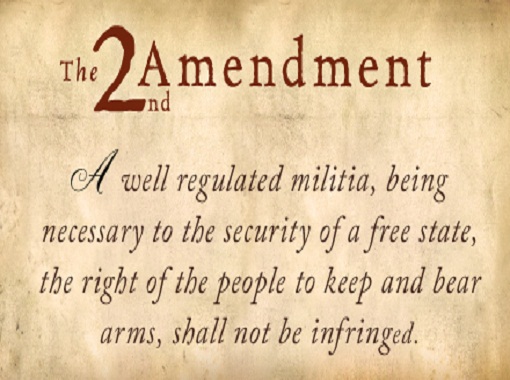

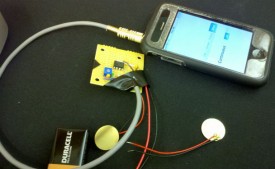
 NEW YORK, NY — Brian Amento gripped the deadbolted door handle on the display next to him and with a click, the door unlocked at his touch. In his other hand, he was pinching a small metal disk called a piezoelectric transducer — like the ones used in guitar pickups — that was wired to his smartphone. The phone sent a digital key, identifying Amento as the homeowner, through his body and into the door.




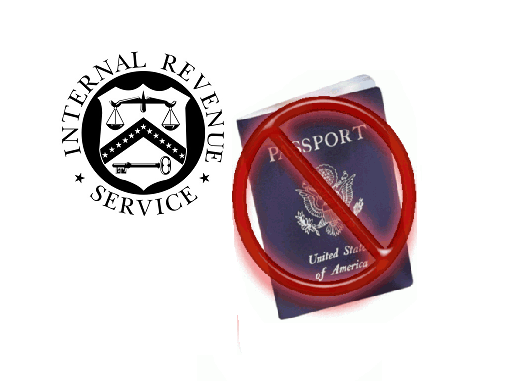

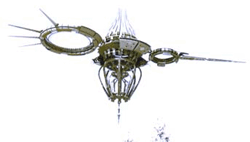



 The following collection of 25 flyers produced by the FBI and the Department of Justice are distributed to local businesses in a variety of industries to promote suspicious activity reporting. The flyers are not released publicly, though several have been published in the past by news media and various law enforcement agencies around the country. We have compiled this collection from a number of online sources.