A recent source has revealed that Bach’s music contains a very precise hidden code that was used to control humanity from the time of its creation onward. In fact, he was aware of the negative side of this embedded code and because he rebelled against using it he was thrown in jail for 2 years.
I was told within this code, by a source calling themselves Adamus, that the code can be used to create certain mental states that then create a suggestible state of mind especially to programming and following orders. And although a small fraction of humanity are resistant to this “sound code” the majority of humanity can be controlled using it.
It is no accident that this code embedded in Bach’s music has been played in churches worldwide since that time. In fact, that subliminally most people who do not know the name of Bach will still be able to hum or duplicate a Bach melody upon request even without knowing where it comes from.
This is no accident. But in fact a way in which humanity has been programmed since that time to remain subserviant and controlled. It is important to note this works not on an individual basis when one is alone but when people are in groups.
In essence, within his music is contained a code where no single note has been misplaced or done in error.
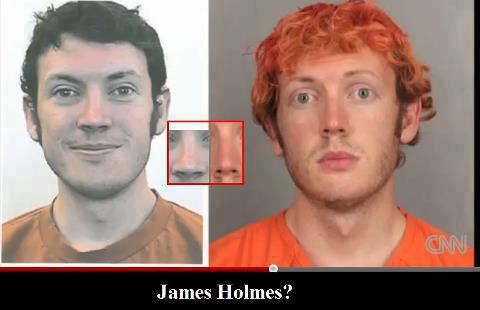
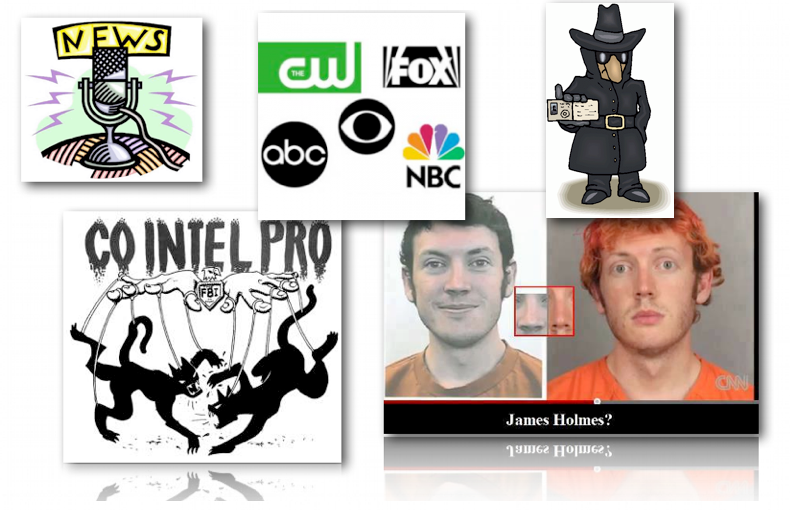
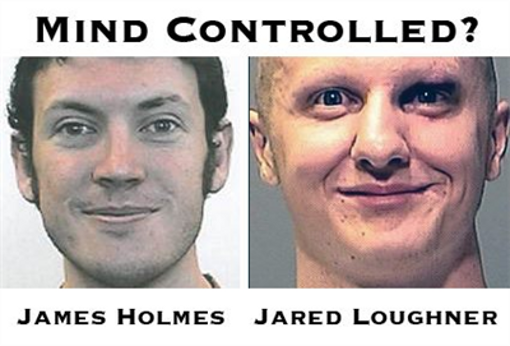
Anyone who looks closely at these photos can see there is a completely different individual being promoted as James Holmes, the Batman Joker Colorado Shooter.
Often, when folks find themselves having been visited or otherwise solicited for information by law enforcement, their reaction is to keep the fact that they’ve been targeted for government harassment quiet. In reality, however, the worst thing (next to cooperating!) that you can do in this situation is to keep it to yourself. In doing so, you deprive yourself of community support at a time that may be stressful and even terrifying and, simultaneously, you help the government maintain a veil of secrecy around the harassment and surveillance they use to destroy resistance movements.
Many people who’ve been harassed by law enforcement officers report having been threatened with negative consequences should they choose to go public about the incident. This, like so much of what they’ll tell you, is utter and complete bullshit. YOU ARE NOT LEGALLY BOUND TO KEEP THEIR SECRETS, and the fact that they often lie and try to convince you that you are only speaks to the fact that doing so benefits them, while spreading the word benefits us. Part of their strategy for repressing dissent is to quietly isolate individuals from their communities and terrorize them into cooperating in their efforts. If we expose what they’re doing every time they do it, we strip them of the freedom and protection that secrecy offers- think of it as a little counter-counter-insurgency tactic.
Publicizing government harassment is a protective measure. As we build a culture where people talk about and prepare for government repression, and support those facing it, we reduce the number of people who will turn on their comrades to save their own asses. If you come from a community where everyone is informed about incidents of harassment and knows how to deal with them calmly and effectively, and where not cooperating is the norm, you’ll be better equipped to deal with more serious situations as they arise. Whether or not you ever have been or ever will be involved in illegal activity, it’s possible that you, or someone you care about, or someone they care about, will at some point find themselves sitting in a jail cell being given the option of cooperating in exchange for some sort of leniency in charges or sentencing. And even if you don’t support ELF actions or other things that people are being indicted for these days, the old adage holds true with law enforcement: “give ’em an inch, and they’ll take down every poor fucker they can get their hands on.” That is, acquiescing to law enforcement demands that we remain silent about the things they do is just like giving a mouse a vegan cookie- who wants just one vegan cookie, after all?
Lastly, letting your community know that you’ve been visited is important because law enforcement visits are dangerous for everyone, not just the particular person who’s been visited, and you owe your community any information that may keep them safer. You don’t and can’t necessarily know exactly who may be endangered by government activity, but you can be sure that making it possible for those people it may affect to find out about it will help them. When you get visited, you may not have any idea why they’re asking what they’re asking- this could be because they’re wacked out creepers who don’t know what they’re talking about, or it could be that their asking about things that you had no involvement in. It’s not uncommon for visits to be made in a desperate attempt to find any in into radical circles that may, eventually, lead to a suspect. Thus, it’s important to be cautious about acting rashly and publicizing details (e.g., names mentioned, actions, etc.) of a visit in a way that will only incite open and potentially incriminating speculation in your community, and to balance that against the need to get as much information as possible out into the public realm so that people who it may affect can take appropriate actions to protect themselves. So, while there’s no doubt that you should go public immediately with your experience of government harassment, you should also take the time to consult with trusted friends and support networks to determine the best way to do so and still avoid unwittingly getting others in trouble.
Children’s stories so often end, “And they all lived happily ever after.” But can this ever be true if we just have, say, another twenty, thirty of forty years to live? Even a Prince or Princess has to di
So how come we aren’t going about terrified of the future? Most of us carry on as if we are watching some movie and that the reality on screen has absolutely nothing to do with us personally.
The majority of us must therefore be optimistic, despite sometimes having pessimistic thoughts. We have a strange belief in a sense of security which is built in to the way we mostly think and act.
Philosophers will say that this is simply human stupidity or short-sightedness.
I was mulling this over in my mind when by ‘chance’ I read that Thomas Lethbridge wrote. “When looking back over the past sequences of my life, I have observed that whatever one undertook invariably had a relationship to something one was going to do, perhaps many years afterwards. Something in some archaeological investigation would explain what was found in a completely different bit of work decades later.”
And what he must be talking about is – synchronicity, or some would call it coincidence!
Synchronicity links the parts of our life that matter. It also – Lethbridge’s words again – “… must surely imply the existence of some kind of plan for each individual.”
Behind the ‘random’ things which happen in our lives is a plan. We aren’t running scared every day because of this: we ‘know’ instinctively that we will live on.
A warning though from Lethbrdige, “… those who cannot be bothered to develop their minds will have to return to earth again after death and do the whole business again.”
The clues are out there, synchronicity may well provide the answers. All we have to do is solve the clues and discover our personal plan.
There might really be a ‘game of life’ for all of us to play – enjoy!
We’ve certainly talked quite a bit about the institutional-level corruption of the way Congress and lobbying works, but a recent This American Life episode, done in partnership with thePlanet Money team takes a much deeper dive into how lobbying works. You absolutely should listen to it. It’s really fascinating, even for folks who follow a lot of this stuff. There is also a full transcript, but hearing the whole thing is quite fascinating. Among the elements that are most interesting are the details of just how much time and effort goes into politicians raising money, and how the various fundraisers work.
But one thing that struck me in listening to it, was a comment made towards the end by (former) Senator Russ Feingold, who points out that while most people think of lobbying as bribery, they often have the picture backwards. It’s extortion:
I’ve had conversations with Democratic givers out here in the Bay Area and I’ll tell you, you wouldn’t believe the requests they’re getting. The opening ante is a million dollars. It’s not, gee, it’d be nice if you give a million. That’s sort of the baseline. This is unprecedented. And, in fact, one thing that John and I experienced was that sometimes the corporations that didn’t like the system would come to us and say, you know, you guys, it’s not legalized bribery, it’s legalized extortion. Because it’s not like the company CEO calls up to say, gee, I’d love to give you some money. It’s usually the other way around. The politician or their agent who’s got the Super PAC, they’re the ones that are calling up and asking for the money.
This is actually confirmed much earlier in the show, when former lobbyist Jimmy Williams explains that part of the job of the lobbyist is to avoid calls from politicians who are always asking for money:
Jimmy Williams: A lot of them would call and say, “Hey, can you host an event for me?” And you never want to say no. Actually, no. You always want to say no. In fact, you always want to say no. But, you could look on your phone with these caller IDs and you would be like, really? I’m not taking that call.
Alex Blumberg: Oh, so you would dodge calls for fundraising?
Jimmy Williams: Oh yeah. Every lobbyist does. Are you kidding? You spend most of your time dodging phone calls. Oh yeah.
What’s equally stunning as you listen to it, is how much everyone seems to dislike the system. The politicians hate having to spend many hours each day fundraising (which they do from phone banks across the street from the Capitol, because they’re not allowed to do it from their offices). The lobbyists hate having to focus on raising money for the politicians. The donors hate getting the calls asking for more money. One politicians talks about how he burned out all his friends:
Walt Minnick: You essentially wear out your friends and you wear out the people who are your natural supporters, because if someone writes you one check or comes to a fundraiser, they get on a list. And three or four months later you call them back again. And the best thing about being an ex-congressman is my friends now return my phone calls.
The show concludes with a fascinating discussion between Senators John McCain and Russ Feingold, who famously passed campaign finance reform a decade or so ago, only to see most of what they worked for get tossed aside by the Supreme Court’s Citizens United case. McCain explains that the Supreme Court ruled the way it did because it simply has no idea how corrupt the political system is today:
John McCain: At first, I was outraged. The day that Russ and I went over and observed the arguments, the questions that were asked, the naivety of the questions that were asked and the arrogance of some of the questioners, it was just stunning. Particularly Scalia with his sarcasm. Why shouldn’t these people be able to engage in this process? Why do you want to restrict them from their rights of free speech? And the questions they asked showed they had not the slightest clue as to what a political campaign is all about and the role of money that it plays in political campaigns. And I remember when Russ and I walked out of there, I said, Russ, we’re going to lose and it’s because they are clueless. Remember that day we were over there, Russ?
Russ Feingold: Absolutely, John. I couldn’t agree with you more. It clearly was one of the worst decisions ever of the Supreme Court. The trouble with this issue– and I think John would agree with this– is people have gotten so down about it, they think it’s always been this way. Well, it’s never been this way, since 1907. It’s never been the case that when you buy toothpaste or detergent or a gallon of gas, that the next day that money can be used on a candidate that you don’t believe in. That’s brand new. That’s never happened since the Tillman act and the Taft Hartley Act. And so, people have to realize this is a whole new deal. It’s not business as usual.
So why doesn’t it get fixed? Well, because the people in power now know how to use the system to win, so they’re afraid to mess with it, and potentially lose their ability to use the system as it stands now to succeed.
Russ Feingold: We managed to get– against all odds, we did get people. It took a lot of hard work. Now the problem is, of course, is people are reticent to do that because they got elected under the system.
Alex Blumberg: So it’s just fear of change?
Russ Feingold: Sure. When you win a certain way, your people say to you, hey, this is how we do it and this is how we won. We better not mess with success. I think that’s one of the problems in this presidential race, where not only the Republicans, but even my candidate, President Obama, has opened the door to this unlimited money through some of his people. It’s hard to get people to change something after they win that way. And that’s one of my worries about it.
It really is worth listening to the whole thing if you want to understand the institutional, unavoidable level of corruption in DC — even if it’s not the way you may have suspected it worked. The folks at Planet Money have also done some follow up stories that are interesting, including a detailing of the most and least lucrative committee assignments. In the full episode, they explain that committee assignments are all a part of the corrupt process. If you get on a “good” committee (define by its ability to raise more money from lobbyists), it also means that your party demands that you pay more money back to the party, or you may lose that lucrative committee seat. Still, it may surprise some folks that the least lucrative position is on the Judiciary Committee. That’s the committee that handled SOPA and PIPA… which involved no shortage of lobbyists. The cynical voice in the back of my head wonders if part of the SOPA/PIPA fight was really about turning the Judiciary Committee into a cash-flow positive committee, rather than a cash-flow negative committee.
If you’ve got the money, it looks like you could eat all your meals (and have some drinks) at fundraisers.
And if you’re wondering where these fundraisers happen? Planet Money has mapped those out as well. The most common locations happen to (conveniently) form a ring around the Capitol:
No reason to travel very far to collect your money, I guess…
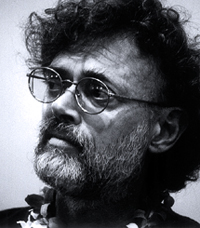
Terence Kemp McKenna (November 16, 1946 – April 3, 2000) was an American philosopher, psychonaut, researcher, teacher, lecturer and writer on many subjects, such as human consciousness, language, psychedelic drugs, the evolution of civilizations, the origin and end of the universe, alchemy, and extraterrestrial beings.
Facts lead me to speculate that the chemtrails so often seen in our skies are sprayed for financial gain. Chemtrails are admittedly sprayed as part of weather modification programs. There are two large financial markets that rise and fall with the weather; the weather derivatives market and the catastrophe reinsurance market. Chemtrails may be sprayed as part of a plan to manipulate the weather derivative and catastrophe reinsurance markets.
Even though the catastrophe reinsurance market is much larger, the focus of this paper is the history of the weather derivatives market because, while the history of the catastrophe reinsurance market is murky (I may uncover more in time), lots of information about the history of the weather derivatives market is available. It is this way because Enron originated the weather derivatives market. The fall of Enron was one of the greatest corporate scandals in American history, so there has been much already investigated and exposed.
Enron
When you’re talking about the history of weather derivatives, you’re talking about Enron. They developed the most widely used early trading platforms, they were founding members of the leading industry association and were counterparties in the first known domestic and international transactions.
In their heyday, Enron received Fortune Magazine’s award for ‘Most Innovative Company’ six years in a row. They gave their Enron Prize for Distinguished Public Service to people like Nelson Mandela and Mikhail Gorbachev. Henry Kissinger and James Baker worked as Enron consultants; traveling to such far-flung destinations as Kuwait and China preaching the Enron gospel. Stock analysts gushed over everything Enron did. Enron could seemingly do no wrong.
The only problem was, Enron was cooking the books seven ways to Sunday. When the S.H.T.F., Enron’s stock tanked like World Trade Center building 7 and eventually brought down one of the nation’s oldest and largest accounting firms, Arthur Andersen.
Although the company itself has long since been chopped up and sold off, former Enron employees now populate many other financial market trading establishments.
Enron Weather
The particular division known to buy and sell weather derivatives was called ‘Enron Weather.’ Enron Weather started as a small, but promising bit of the company. By the time of Enron’s demise in 2001, Enron Weather had grown to a significant part of their business.
It is suggested that Enron CEO Jeff Skilling’s brother, Tom Skilling originally had the idea for weather derivatives. Peter Fusaro and Ross Miller write in their book ‘What Went Wrong at Enron’:
“As temperatures spike upward in summer and fall in winter, utilities also potentially needed a hedge against the weather. Or so Enron thought – thanks to an idea that some Enron sources say Jeff Skilling’s brother Thomas, a weatherman in Chicago, suggested.”
Tom Skilling is the chief meteorologist at WGN-TV in Chicago, Illinois.
Loren Fox, the author of ‘Enron: The Rise and Fall’ tells the story of Enron Weather like this:
“…weather derivatives came to be championed by an employee working at the grassroots level and seeing customers’ daily needs. John Sherriff, who at the time managed gas trading for the western United States, began looking at derivatives linked to the weather in late 1995, and Vincent Kaminski’s research group worked on the idea in 1996. A gas trader named Lynda Clemmons was very interested in the idea, based on her conversations with executives at electric utilities that used coal-fired power plants…. In 1997, Enron handed off its weather derivatives effort to Clemmons, who was only 27. She began a one-person weather-hedging department within ECT…”
Fox continues:
“…Clemmons built up Enron’s weather business so that it did 350 transactions (hedging up to $400 million in potential revenues) in 1998, turning its first profit that year.”
Enron initiated the weather derivatives market in Europe as well. According to scholar Samuel Randalls, “In the UK, the first weather derivative deal was sold by Enron to Scottish Hydropower who, at that time, 1998, were taking part in a government pilot scheme for the privatization and deregulation of energy markets.”
Enron’s Oslo office became the base of their European weather derivatives business.
In 2000, Enron also introduced weather derivatives in Australia; offering temperature-based products for Sydney, Melbourne, Hong Kong, Tokyo and Osaka.
In 2002, after the bankruptcy, the Enron trading desk (including Enron Weather) was bought by UBS Warburg.
John Sherriff is now the owner of Lake Tahoe Financial and other Sherriff family businesses.
Mrs. Clemmons left Enron in 2000. She took a number of her colleagues from Enron’s weather team and set up weather derivatives company Element Reinsurance. After Enron, Lynda Clemmons also worked at XL Weather & Energy, The Storm Exchange Inc. and Vyapar Capital Market Partners. According to her Linkedin profile, Mrs. Clemmons is now an independent consultant.
a history of corruption
The Enron financial market trading desk, just like the company itself, had a history of corruption. Back in 1987, the Enron trading operations were called ‘Enron Oil.’ When questions about an Enron account at New York’s Apple Bank began surfacing, Enron management turned a blind eye. Money was pouring into this questionable account from a bank in the Channel Islands and flowing out to the account of a man named Tom Mastroeni; the treasurer of Enron Oil.
Enron management explained away these money flows and this questionable account as completely legal profit shifting. Although Mastroeni produced doctored bank statements and admitted a cover-up, Enron management didn’t pursue the issue. Nobody involved was even reprimanded. Revelations continued to come out, but Enron management did nothing. Enron’s accounting firm Arthur Andersen exhibited a similar disinterest.
After management confirmed an official lack of responsible oversight, Enron Oil traders ignored position limits and got themselves in big trouble. Only then did Enron executives show interest.
The authors of ‘The Smartest Guys in the Room’ tell the story like this:
“For months, Borget [the CEO of Enron Oil] had been betting that the price of oil was headed down, and for months, the market had stubbornly gone against him. As his losses had mounted, he had continually doubled down, ratcheting up the bet in the hope of recouping everything when prices ultimately turned in his direction. Finally, Borget had dug a hole so deep – and so potentially catastrophic – that there was virtually no hope of ever recovering.”
Enron brass was in a panic. Enron was looking at a $1 billion loss; enough to bankrupt the company. Management sent in some expert traders who, over the course of a few weeks, managed to clear out these positions with only a $140 million hit.
Enron had to tell people about this $140 million trading loss, though. Enron’s stock slid 30%. The blame game began. Ken Lay, the affable Enron founder and CEO, denied any responsibility. News of the scandal conveniently came out right after a big bank loan approval.
The U.S. attorney’s office charged Borget and Mastroeni with fraud and personal income tax violations. In 1990, Borget pled guilty to three felonies and was sentenced to a year in jail and and five years’ probation. Mastroeni pled guilty to two felonies. He got a suspended sentence and two years probation.
deregulation
Ken Lay helped his company make more money and created new financial markets (such as the weather derivatives market) through energy sector deregulation. Deregulation created a situation where Enron and others could more effectively manipulate and arbitrage (specifically regulatory arbitrage) markets.
Let us refer to a feature article published by industry publication Risk.net:
“‘Enron was the focal point of the deregulation agenda,’ says Jonathan Whitehead, who started with Enron Europe in 1996 and was heading the liquefied natural gas (LNG) business in Houston at the time of Enron’s demise. ‘It was the most vocal when explaining to regulators and governments and customers the benefits of deregulated markets. I don’t think deregulation in power and gas in Europe or the US would have come as far as it has without Enron,’ he says.
“Pushing for deregulation was very much a part of the company’s strategy from the start. ‘Ken Lay [chairman and chief executive of Enron] was the visionary at the time as far as seeing where deregulation could go and actually driving deregulation,’ says Mark Frevert, who worked at one of Enron’s predecessor companies, Houston Natural Gas, from 1984 and stayed at Enron until it’s demise.”
the right connections
Deregulation necessarily required help from the federal government. To make it happen, Enron and Ken Lay (who died in 2006) had the right federal connections in spades.
Ken Lay enlisted in the navy in 1968. His friend pulled some strings and had him transfered to the Pentagon. According to the authors of The Smartest Guys in the Room, Lay spent his time at the Pentagon, “…conducting studies on the military-procurement process. The work provided the basis for his doctoral thesis on how defense spending affects the economy.”
As I have explained in earlier writings, there is reason to believe that domestic chemtrail spraying operations and weather modification activities are carried out by our military. Ken Lay had many high level military connections.
Mr. Lay had the right political and specifically energy related political connections as well. He worked in the Nixon administration as a Federal Power Commission aide, then as deputy undersecretary of energy in the Interior Department. As chairman and CEO of Enron, he sat on the boards of Washington think tanks and often travelled to Washington.
A revolving door existed between Enron and the federal government. Enron executive Tom White left the company to join the Bush Jr. administration as secretary of the army. Enron executive Herbert ‘Pug’ Winokur was Lay’s old Pentagon friend. Robert Zoellick (now head of the World Bank) represented Enron, then the United States as Trade Representative and later as Deputy Secretary of State.
According to the authors of ‘The Smartest Guys in the Room’:
“In 1993, Lay added Wendy Gramm [to the Enron board], who had just finished a stint as chairman of the Commodities Futures Trading Commission (CFTC) and was married to Texas Senator Phil Gramm.”
It goes on:
“Just after Wendy Gramm stepped down from the CFTC, that agency approved an exemption that limited the regulatory scrutiny of Enron’s energy-derivatives trading business, a process she had set in motion.”
When Enron galloped into Europe, they had an influential lord on their side. Greg Palast covers it like this:
“The fact that a truly free market [in electricity] didn’t exist and cannot possibly work did not stop Britain’s woman in authority, Prime Minister Margaret Thatcher, from adopting it. It was more than free market theories that convinced her. Whispering in her ear was one Lord Wakeham, then merely ‘John’ Wakeham, Thatcher’s energy minister. Wakeham approved the first ‘merchant’ power station. It was owned by a company created only in 1985 – Enron. Lord Wakeham’s decision meant that, for the first time in any nation, an electricity plant owner, namely Enron, could charge whatever the market could bear… or, more accurately, could not bear.
“It was this act in 1990 that launched Enron as the deregulated international power trader. Shortly thereafter, Enron named Wakeham to its board of directors and placed him on Enron’s audit and compliance committee.”
As I speculate, a scheme to manipulate financial markets by modifying the weather would necessarily involve intelligence agencies. According to the authors of ‘The Smartest Guys in the Room,’ Enron had intelligence agency connections:
“One of Enron’s key advantages over its competitors was information: it simply had more of it than its competitors. It’s physical assets provided information, of course. And Enron didn’t stop there. It employed CIA agents who could find out anything about anyone. In stead of tracking the weather on the Weather Channel, the company had a meteorologist on staff. He’d arrive at the office at 4:30 A.M., download data from a satellite, and meet with the traders at 7:00 A.M. to share his insights.”
It continues:
“By the late 1990’s, these research efforts were herded together into something called the fundamentals group – fundies in trader parlance. The fundies group produced intelligence reports and held morning briefings…”
the Bush family
Mr. Lay and Enron had many connections to the Bush family and their cohorts. President George W. Bush (Bush Jr.) lovingly called Ken Lay ‘Kenny Boy.’ Mr. Lay was also close to his father, fellow Houstonian, George H.W. Bush (Bush Sr.). For example, in 1991, Bush Sr. offered Mr. Lay the position of commerce secretary. Mr. Lay turned him down. He wanted to be treasury secretary.
Greg Palast, in his book ‘The Best Democracy Money Can Buy,’ characterizes the Bush/Enron relationship like this:
“But what about Pioneer Lay of Enron Corp? His company, America’s number one power speculator, was also Dubya’s number-one political career donor ($1.8 million to Republicans during the 2000 presidential campaign). Lay was personal advisor to Bush during the postelection ‘transition.’ And his company held secret meetings with the energy plan’s drafters. Bush’s protecting electricity deregulation meant a big payday for Enron – subsequent bankruptcy not withstanding – sending profits up $87 million in the first quarter of Bush’s reign.”
Other Bushes were getting some, too. Greg Palast writes:
“Two months after the bankruptcy, Governor Jeb Bush of Florida traveled to the Texas home of Enron’s ex-president, Rich Kinder, to collect a stack of checks totaling $2 million at the power pillager’s $500-per-plate fund-raising dinner. There are a lot of workers in Florida who will wish they had a chance to lick those plates, because that’s all that’s left of the one-third of a billion dollars Florida’s state pension fund invested in Enron – three times as much as any other of the fifty states.”
Mr. Palast continues:
“Governor Bush encouraged a scheme by a company called Azurix to repipe the entire Southern Florida water system with new reservoirs that would pump fresh water into the swamps. From the view of expert hydrologists, such a mega-project is a crackbrained and useless waste of gobs of money. As part of the deal, Azurix would be handed the right to sell the reservoir’s water to six million Florida customers. Azurix was the wholly owned subsidiary of Enron that had recently been kicked out of Buenos Aires.”
Specializing in private equity buyouts, The Carlyle Group is one of their two main family businesses and one of the nation’s largest defense contractors. Chemtrail spraying is a military operation. The Carlyle Group could help geoengineering programs happen.
Participation in a scheme to defraud the population while murdering them at the same time would probably be A-o.k. with the Bush family. Bush family members exhibit recurring criminal behavior. Forget about the Enron connections. Do you know about the Nazi connections? Are you aware of the numerous links to 9/11? Have you heard of the connections to the attempted Reagan assassination or the attempted assassination of Pope John Paul II? Don’t forget that little Iran-Contra fiasco and the drug dealing, gun running and money laundering. Yup, they’re connected to that dirty, dirty BCCI thing, too. Folks, these are just some of the things we know about. When you see a few cockroaches, you can bet there are hundreds more in the wall.
So, who funds the Bush family? The answer is a little investment bank called Brown Brothers Harriman. Maybe you’ve heard of it. Webster Tarpley and Anton Chaitkin in their book ‘George Bush: the Unauthorized Biography’ describe the situation like this:
“For George Bush, Brown Brothers Harriman was and remains the family firm in the deepest sense. The formidable power of this bank and its ubiquitous network, wielded by Senator Prescott Bush up through the time of his death in 1972, and still active on George’s behalf down to the present day, is the single most important key to every step of George’s business, covert operations and political career.”
And I’ll go you one better. Who owns Brown Brothers Harriman (BBH)? That’s a good question because they are a private company. You cannot buy shares of BBH on any stock exchange. But, in fact, it really doesn’t matter who owns BBH because BBH (like all other big banks) suckles at the teet of the United States Federal Reserve Bank.
In order to get that fresh, uncirculated capital (which has more value than the money which is already in circulation), Brown Brothers Harriman acts upon the orders of the United States Federal Reserve Bank. Sure, BBH has businesses that make money, but when they start a new business such as weather derivatives, they act with the approval of the Fed. I understand this may be a lot to swallow for the uninitiated, but this is the way it works. Read ‘The Creature from Jekyll Island’ by G. Edward Griffin.
Who owns the Fed? Well, that’s the power behind the throne. It is an official secret, but I dare write the name of N.M. Rothschild as represented by the Bank of England.
In short, the Bush family, Enron and Ken Lay had the right political, business, intelligence and military connections necessary to facilitate the scheme I outline.
conclusions
Enron was a business laboratory directed by big banks. In the new world of deregulation created by the Bushes, Enron and others, the purpose of the company was to throw things against the wall and see what stuck. Enron employees were merely minions of those who controlled the purse strings. Enron was the perfect environment in which to try something new like weather derivatives. In light of the histories of corruption exhibited by those involved, it is understandable that the weather derivatives market they created may have been part of yet another murderous rip-off.
While most financial market trading operations are seen as unreliable, Enron’s trading desk was often regarded as their most productive and stable business. Could this have been because they were getting inside information about weather produced by geoengineering activities? I don’t know. I do know they had the ways and means necessary. Enron had motive and opportunity. Enron benefitted from weather derivatives.
notes -‘The Smartest Guys in the Room’ book by Bethany McLean and Peter Elkind, Penguin Books 2004 -‘Weather as a Force Multiplier: Owning the Weather 2025’ report by the United States Air Force 1996 -‘The BCCI Affair’ report by Senators John Kerry and Hank Brown, 1992 -‘George Bush: the Unauthorized Biography’ book by Webster Tarpley and Anton Chaitkin, Progressive Press 2004 -‘The Best Democracy Money Can Buy’ book by Greg Palast, Penguin Books 2003 -‘Wall Street and the Rise of Hitler’ book by Antony Sutton, Buccaneer Books 1976 -‘Conspiracy of Fools’ by Kurt Eichenwald, Broadway Books 2005 -‘Enron: Charting the Legacy 10 Years on’ article by Risk.net 2011 -Enron annual report, 2000 -‘The Secrets of the Federal Reserve’ book by Eustace Mullins, Bridger House Publishers, Inc. 2009 -‘The Creature from Jekyll Island’ book by G. Edward Griffin, American Media 2010 -‘Enron: The Rise and Fall’ book by Loren Fox, John Wiley & Sons, Inc. 2003 -‘What Went Wrong at Enron: Everyone’s Guide to the Largest Bankruptcy in U.S. History’ book by Peter C. Fusaro and Ross M. Miller, John Wiley & Sons 2002 -‘Weather, Finance and Meteorology – forecasting and derivatives’ by Samuel Randalls School of Geography, Earth and Environmental Sciences, University of Birmingham
“The policy set for GE alfalfa will most likely guide policies for other GE crops as well. True coexistence is a must.” – Whole Foods Market, Jan. 21, 2011
In the wake of a 12-year battle to keep Monsanto’s Genetically Engineered (GE) crops from contaminating the nation’s 25,000 organic farms and ranches, America’s organic consumers and producers are facing betrayal. A self-appointed cabal of the Organic Elite, spearheaded by Whole Foods Market, Organic Valley, andStonyfield Farm, has decided it’s time to surrender to Monsanto. Top executives from these companies have publicly admitted that they no longer oppose the mass commercialization of GE crops, such as Monsanto’s controversial Roundup Ready alfalfa, and are prepared to sit down and cut a deal for “coexistence” with Monsanto and USDA biotech cheerleader Tom Vilsack.
In a cleverly worded, but profoundly misleading email sent to its customers last week, Whole Foods Market, while proclaiming their support for organics and “seed purity,” gave the green light to USDA bureaucrats to approve the “conditional deregulation” of Monsanto’s genetically engineered, herbicide-resistant alfalfa. Beyond the regulatory euphemism of “conditional deregulation,” this means that WFM and their colleagues are willing to go along with the massive planting of a chemical and energy-intensive GE perennial crop, alfalfa; guaranteed to spread its mutant genes and seeds across the nation; guaranteed to contaminate the alfalfa fed to organic animals; guaranteed to lead to massive poisoning of farm workers and destruction of the essential soil food web by the toxic herbicide, Roundup; and guaranteed to produce Roundup-resistant superweeds that will require even more deadly herbicides such as 2,4 D to be sprayed on millions of acres of alfalfa across the U.S.
In exchange for allowing Monsanto’s premeditated pollution of the alfalfa gene pool, WFM wants “compensation.” In exchange for a new assault on farmworkers and rural communities (a recent large-scale Swedish study found that spraying Roundup doubles farm workers’ and rural residents’ risk of getting cancer), WFM expects the pro-biotech USDA to begin to regulate rather than cheerlead for Monsanto. In payment for a new broad spectrum attack on the soil’s crucial ability to provide nutrition for food crops and to sequester dangerous greenhouse gases (recent studies show that Roundup devastates essential soil microorganisms that provide plant nutrition and sequester climate-destabilizing greenhouse gases), WFM wants the Biotech Bully of St. Louis to agree to pay “compensation” (i.e. hush money) to farmers “for any losses related to the contamination of his crop.”
In its email of Jan. 21, 2011 WFM calls for “public oversight by the USDA rather than reliance on the biotechnology industry,” even though WFM knows full well that federal regulations on Genetically Modified Organisms (GMOs) do not require pre-market safety testing, nor labeling; and that even federal judges have repeatedly ruled that so-called government “oversight” of Frankencrops such as Monsanto’s sugar beets and alfalfa is basically a farce. At the end of its email, WFM admits that its surrender to Monsanto is permanent: “The policy set for GE alfalfa will most likely guide policies for other GE crops as well True coexistence is a must.”
Why Is Organic Inc. Surrendering?
According to informed sources, the CEOs of WFM and Stonyfield are personal friends of former Iowa governor, now USDA Secretary, Tom Vilsack, and in fact made financial contributions to Vilsack’s previous electoral campaigns. Vilsack was hailed as “Governor of the Year” in 2001 by the Biotechnology Industry Organization, and traveled in a Monsanto corporate jet on the campaign trail. Perhaps even more fundamental to Organic Inc.’s abject surrender is the fact that the organic elite has become more and more isolated from the concerns and passions of organic consumers and locavores.
The Organic Inc. CEOs are tired of activist pressure, boycotts, and petitions. Several of them have told me this to my face. They apparently believe that the battle against GMOs has been lost, and that it’s time to reach for the consolation prize. The consolation prize they seek is a so-called “coexistence” between the biotech Behemoth and the organic community that will lull the public to sleep and greenwash the unpleasant fact that Monsanto’s unlabeled and unregulated genetically engineered crops are now spreading their toxic genes on 1/3 of U.S. (and 1/10 of global) crop land.
WFM and most of the largest organic companies have deliberately separated themselves from anti-GMO efforts and cut off all funding to campaigns working to label or ban GMOs. The so-called Non-GMO Project, funded by Whole Foods and giant wholesaler United Natural Foods (UNFI) is basically a greenwashing effort (although the 100% organic companies involved in this project seem to be operating in good faith) to show that certified organic foods are basically free from GMOs (we already know this since GMOs are banned in organic production), while failing to focus on so-called “natural” foods, which constitute most of WFM and UNFI’s sales and are routinely contaminated with GMOs.
From their “business as usual” perspective, successful lawsuits against GMOs filed by public interest groups such as the Center for Food Safety; or noisy attacks on Monsanto by groups like the Organic Consumers Association, create bad publicity, rattle their big customers such as Wal-Mart, Target, Kroger, Costco, Supervalu, Publix and Safeway; and remind consumers that organic crops and foods such as corn, soybeans, and canola are slowly but surely becoming contaminated by Monsanto’s GMOs.
Whole Foods’ Dirty Little Secret: Most of the So-Called “Natural” Processed Foods and Animal Products They Sell Are Contaminated with GMOs
The main reason, however, why Whole Foods is pleading for coexistence with Monsanto, Dow, Bayer, Syngenta, BASF and the rest of the biotech bullies, is that they desperately want the controversy surrounding genetically engineered foods and crops to go away. Why? Because they know, just as we do, that 2/3 of WFM’s $9 billion annual sales is derived from so-called “natural” processed foods and animal products that are contaminated with GMOs. We and our allies have tested their so-called “natural” products (no doubt WFM’s lab has too) containing non-organic corn and soy, and guess what: they’re all contaminated with GMOs, in contrast to their certified organic products, which are basically free of GMOs, or else contain barely detectable trace amounts.
Approximately 2/3 of the products sold by Whole Foods Market and their main distributor, United Natural Foods (UNFI) are not certified organic, but rather are conventional (chemical-intensive and GMO-tainted) foods and products disguised as “natural.”
Unprecedented wholesale and retail control of the organic marketplace by UNFI and Whole Foods, employing a business model of selling twice as much so-called “natural” food as certified organic food, coupled with the takeover of many organic companies by multinational food corporations such as Dean Foods, threatens the growth of the organic movement.
Covering Up GMO Contamination: Perpetrating “Natural” Fraud
Many well-meaning consumers are confused about the difference between conventional products marketed as “natural,” and those nutritionally/ environmentally superior and climate-friendly products that are “certified organic.”
Retail stores like WFM and wholesale distributors like UNFI have failed to educate their customers about the qualitative difference between natural and certified organic, conveniently glossing over the fact that nearly all of the processed “natural” foods and products they sell contain GMOs, or else come from a “natural” supply chain where animals are force-fed GMO grains in factory farms or Confined Animal Feeding Operations (CAFOs).
A troubling trend in organics today is the calculated shift on the part of certain large formerly organic brands from certified organic ingredients and products to so-called “natural” ingredients. With the exception of the “grass-fed and grass-finished” meat sector, most “natural” meat, dairy, and eggs are coming from animals reared on GMO grains and drugs, and confined, entirely, or for a good portion of their lives, in CAFOs.
Whole Foods and UNFI are maximizing their profits by selling quasi-natural products at premium organic prices. Organic consumers are increasingly left without certified organic choices while genuine organic farmers and ranchers continue to lose market share to “natural” imposters. It’s no wonder that less than 1% of American farmland is certified organic, while well-intentioned but misled consumers have boosted organic and “natural” purchases to $80 billion annually-approximately 12% of all grocery store sales.
The Solution: Truth-in-Labeling Will Enable Consumers to Drive So-Called “Natural” GMO and CAFO-Tainted Foods Off the Market
There can be no such thing as “coexistence” with a reckless industry that undermines public health, destroys biodiversity, damages the environment, tortures and poisons animals, destabilizes the climate, and economically devastates the world’s 1.5 billion seed-saving small farmers.
There is no such thing as coexistence between GMOs and organics in the European Union. Why? Because in the EU there are almost no GMO crops under cultivation, nor GM consumer food products on supermarket shelves. And why is this? Because under EU law, all foods containing GMOs or GMO ingredients must be labeled. Consumers have the freedom to choose or not to choose GMOs; while farmers, food processors, and retailers have (at least legally) the right to lace foods with GMOs, as long as they are safety-tested and labeled.
Of course the EU food industry understands that consumers, for the most part, do not want to purchase or consume GE foods. European farmers and food companies, even junk food purveyors like McDonald’s and Wal-Mart, understand quite well the concept expressed by a Monsanto executive when GMOs first came on the market: “If you put a label on genetically engineered food you might as well put a skull and crossbones on it.”
The biotech industry and Organic Inc. are supremely conscious of the fact that North American consumers, like their European counterparts, are wary and suspicious of GMO foods. Even without a PhD, consumers understand you don’t want your food safety or environmental sustainability decisions to be made by out-of-control chemical companies like Monsanto, Dow, or Dupont – the same people who brought you toxic pesticides, Agent Orange, PCBs, and now global warming.
Industry leaders are acutely aware of the fact that every single industry or government poll over the last 16 years has shown that 85-95% of American consumers want mandatory labels on GMO foods. Why? So that we can avoid buying them. GMO foods have absolutely no benefits for consumers or the environment, only hazards. This is why Monsanto and their friends in the Bush, Clinton, and Obama administrations have prevented consumer GMO truth-in-labeling laws from getting a public discussion in Congress.
Although Congressman Dennis Kucinich (Democrat, Ohio) recently introduced a bill in Congress calling for mandatory labeling and safety testing for GMOs, don’t hold your breath for Congress to take a stand for truth-in-labeling and consumers’ right to know what’s in their food. Especially since the 2010 Supreme Court decision in the so-called Citizens United case gave big corporations and billionaires the right to spend unlimited amounts of money (and remain anonymous, as they do so) to buy media coverage and elections, our chances of passing federal GMO labeling laws against the wishes of Monsanto and Food Inc. are all but non-existent.
Perfectly dramatizing the “Revolving Door” between Monsanto and the Federal Government, Supreme Court Justice Clarence Thomas, formerly chief counsel for Monsanto, delivered one of the decisive votes in the Citizens United case, in effect giving Monsanto and other biotech bullies the right to buy the votes it needs in the U.S. Congress.
With big money controlling Congress and the media, we have little choice but to shift our focus and go local. We’ve got to concentrate our forces where our leverage and power lie, in the marketplace, at the retail level; pressuring retail food stores to voluntarily label their products; while on the legislative front we must organize a broad coalition to pass mandatory GMO (and CAFO) labeling laws, at the city, county, and state levels.
The Organic Consumers Association, joined by our consumer, farmer, environmental, and labor allies, has just launched a nationwide Truth-in-Labeling campaign to stop Monsanto and the Biotech Bullies from force-feeding unlabeled GMOs to animals and humans.
Utilizing scientific data, legal precedent, and consumer power the OCA and our local coalitions will educate and mobilize at the grassroots level to pressure giant supermarket chains (Wal-Mart, Kroger, Costco, Safeway, Supervalu, and Publix) and natural food retailers such as Whole Foods and Trader Joe’s to voluntarily implement “truth-in-labeling” practices for GMOs and CAFO products; while simultaneously organizing a critical mass to pass mandatory local and state truth-in-labeling ordinances – similar to labeling laws already in effect for country of origin, irradiated food, allergens, and carcinogens.
If local and state government bodies refuse to take action, wherever possible we must attempt to gather sufficient petition signatures and place these truth-in-labeling initiatives directly on the ballot in 2011 or 2012. If you’re interested in helping organize or coordinate a Millions Against Monsanto and Factory Farms Truth-in-Labeling campaign in your local community, sign up here:http://organicconsumers.org/oca-volunteer/
Many people have asked us why we endorsed the coexistence option rather than an outright ban on GE alfalfa. That was never an option in Washington! The USDA presented the industry with only two options that they were considering– deregulation and deregulation with restrictions. Given the pervasive planting of GE crops in the U.S. – 93% of soy, 86% of corn, 93% of cotton and 93% of canola seed planted were genetically engineered in the U.S. in 2010 – the option of an outright ban was not on the table. Whole Foods Market — along with the National Cooperative Grocers Association, the National Organic Coalition, the Organic Trade Association, and other companies and groups — endorsed the path of deregulation with restrictions, or coexistence, not because it was a perfect path, but because it was a path to create meaningful change right now in the regulating of genetically engineered foods and the protection of non-GE foods. (Read the full response.)
For a more thorough analysis related to the geological existence for sites such as these, visit: http://welteislehre.com/
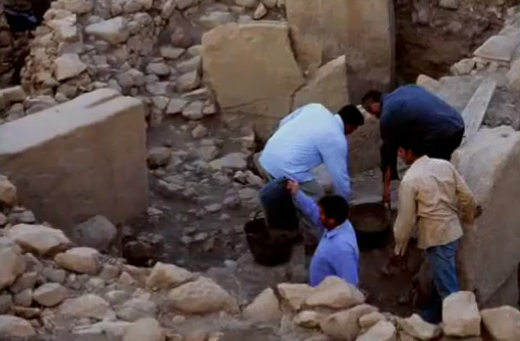
Amazing find (History Chanel documentary) in what is now Turkey, 12,000 year-old circular city. Twice as old as any city in Mesopotamia. The Germans are excavating it.
Perceived Natural Disasters – Katrina, Sumatra Tsunami, Haiti Earthquake, Fukishima, Oil Spill, HAARP Technologies That make it Possible, Motivations, Manipulations, then a few Hidden Health Advancements and a Quick How-to on Avoiding The ‘Healthcare’ Traps!
Hidden Technologies: Advanced Propulsion, Anti-Gravity, FREE energy, Over Unity Explained, Living Off-The-Grid, Considerations, Expectations, & Technologies Important for Survival
James Stewart, the 65-year-old raw “milk man” and founder of Rawesome Foods, was assaulted near his home today by three armed men driving unmarked luxury vehicles with no license plates. Carrying firearms on their hips and dressed in gangster-style street clothes, Satanic T-shirt imagery and tattoos, they claimed to be making an “arrest” and verbally assaulted James, sprayed pepper spray in his face, then forced his head against a car and screamed, according to witnesses, “You better listen to me or you’re gonna have a bad f*ckin’ day!”
James Stewart’s cell phone was on the entire time, and a phone witness told NaturalNews the arrest was conducted “Nazi style.” Meanwhile, James was screaming to anyone who would listen, “HELP ME! HELP ME! WHY ARE YOU DOING THIS TO ME?”
A partial video of the incident was captured by a witness. The redness in the face of James Stewart is due to the pepper spray assault. That video link is here: http://www.youtube.com/watch?v=UYTP9C7jtrI
James was wanted on $130,000 in bail by Ventura County, which had originally put him on $1 million bail — an amount usually reserved for murderers, rapists or serial killers. James, accused of selling “unpasteurized milk” through Rawesome Foods, was made the target of an FDA-funded and politically motivated attempt to destroy the raw milk industry in California. He has been charged with financial crimes by Ventura County even though there is literally no legitimate evidence whatsoever linking James to any such crimes, and the entire case is already in the process of being unraveled.
In the Ventura case, there is no crime, no evidence, and not even any justifiable reason to arrest James and put him on bail in the first place! The entire thing was utterly fabricated as a publicity stunt to attempt to intimidate would-be raw milk producers.
Bounty hunters drive cars with no plates, carry weapons, intimidate witnesses
In the arrest video, James clearly says, “Sir I was trying to give you the information that I thought Mr. McAfee was giving to me.” James is referring to Mark McAfee of Organic Pastures, California’s largest organic milk producer. NaturalNews has confirmed that Mark McAfee, among several other people, had helped fund James Stewart’s bail bond. According to James Stewart, who phoned from Ventura county jail, Mark McAfee was present at the “arrest” and watched the bounty hunters take James away.
UPDATE: Readers of this story were asking for more details and comments on Mark McAfee. As this story is moving quickly, some of the relevant details haven’t yet been reported. Mark had really gone out on a limb to help bail out James Stewart, even putting up his own house as collateral. When James failed to make a recent court appearance in Ventura — because he had decided to fight the malicious charges against him from outside the system — this put McAfee and other people at financial risk. McAfee, in particular, had mortgaged his house to raise some of this bail money, which I believe came to $100,000 on McAfee’s part. This money would have been forfeited had James not been taken into custody by the bounty hunters.
It’s not yet clear whether McAfee had anything to do with leading the bounty hunters to James. Many people suspect so, and opinion is currently divided over whether this was a reluctant but important act of financial preservation or a betrayal of a key figure in the raw food community. I intend to reach out to McAfee to ask for his accounting of events, if he is willing to go on the record with comments. My history with McAfee has so far been a positive one, and I have known him to be a strong advocate of raw food freedom and someone who clearly went out of his way to help James Stewart make his bail.
Bounty hunters verbally intimidate witnesses
During the so-called “arrest,” one of the bounty hunters attempts to verbally intimidate the person filming the video, threatening them by saying, “You’re interfering with an arrest, you’re blocking traffic.” In reality, the bounty hunter never identified himself, never read James any rights and was not involved in any legal arrest whatsoever. The whole thing was a charade carried out by what might appear to a rational person to be armed thugs driving stolen vehicles while impersonating undercover police officers.
In the video, what appears to be a firearm can be seen on the hip of one of the men wearing a pink shirt. At no point during the assault did these men show any badges or identification of any kind. According to California law, “All bounty hunters must carry with them a certification of completion of required courses and training programs.”
According to witnesses, these armed men did not produce any certificates at all. Instead, they verbally intimidated the people filming the incident. One of the bounty hunters called the camera person a “retard” for daring to film him.
We can hear on the video another bounty hunter saying, “You’re in a lot of trouble, you better get an attorney!” During all this, they are rifling through James’ pockets and apparently stealing all his personal belongings. “You are in a lot more trouble than anybody up here,” one of them says to James. “You are in a lot of trouble.”
Over raw milk? Really? Is this what California has come to now? If you sell unpasteurized milk, you get accosted by three armed men driving unlicensed (stolen?) vehicles, working for the state?
“We are not the police…”
When the witnesses filming the incident asked for the badge numbers of the individuals who claimed to be making an “arrest,” they were told, “We’re not the police so we’re not gonna give you badge numbers.”
Later in the video, a close-up image appears for one of the license plates of the luxury vehicles used by the armed assailants. It is clearly an Infinity car dealership plate number KMA-367. The vehicle is a white Infinity luxury sedan.
The other vehicle, which also has no California license plate, is a black sports car. While James is being stuffed into one of the vehicles, one of the bounty hunters calls him a “scumbag.”
James has privately told me, the editor of NaturalNews, that he fears if he is taken back to jail, he will be tortured, subjected to starvation or even murdered by the authorities there. This may be more likely than you think, because the outright criminality of California officials who persecuted James Stewart is now being exposed.
For example, NaturalNews has already exposed Michelle LeCavalier and L.A. district attorney prosecutors for illegally signing search warrants and conducting armed raids on Rawesome Foods even though they had never taken an oath of office as required by California law (http://www.naturalnews.com/036523_Rawesome_District_Attorney_imperson…).
This means the armed raid against Rawesome Foods, the arrest of James Stewart and all the actions taken against him were illegal. Furthermore, James now has a potential multi-million-dollar civil case against Los Angeles County — and possibly individuals in Ventura County — for false arrest, kidnapping and violating his civil rights while they were “impersonating” officials.
Given these circumstances, James has legitimate reason to fear that county authorities there — who almost certainly staged the armed bounty hunter interception of James last night — may quite literally be trying to kill him.
James told me on the phone many times, “I love live, I will not give up. If they say I committed suicide, it means they killed me, Mike. They’re gonna try to kill me.”
That James was stuffed into unmarked, unlicensed cars driven by intimidating-looking men carrying weapons and verbally threatening witnesses at the scene only further supports the legitimacy of James’ fear.
Let Ventura County know we are watching and that we demand the charges against James be dropped
Here, I ask for your support to let the Ventura County DA’s office know we are watching them, and we hold them responsible for the treatment of James.
Call the main DA’s office at 805-654-2500 and let them know that you are joining tens of thousands of other people who are watching this and carefully scrutinizing their behavior. The Ventura County case against James Stewart is, I can assure you, utterly fabricated and completely without merit. It should be immediately dropped and James set free.
Ventura County has been waging a “war of personal vengeance” against Stewart (http://www.naturalnews.com/035197_James_Stewart_Sharon_Palmer_Ventura…). Both Ventura and L.A. counties have spent millions of dollars in taxpayer money in an attempt to incarcerate a raw milk man! A senior citizen! The man is 65 years old, utterly non-violent in every way, and yet has been targeted in the most vicious manner by district attorneys who apparently don’t have any real criminals to go after.
Questions remain about the “arrest” of James Stewart
Some serious questions emerge tonight from the “hunting down” of James Stewart by Ventura county:
• What crime has James allegedly committed that is so serious it justifies $130,000 in bail bonds?
• Where is the evidence of such crimes? (It doesn’t exist!)
• Why are armed individuals who claim to be working for the county running around Ventura with unlicensed vehicles that appear to be stolen off the new car lot of an Infinity dealership?
• Why were these “bounty hunters” dressed in Satanic imagery and sporting gang-style facial hair and tattoos while driving high-dollar luxury cars?
• Why were they so verbally abusive to James Stewart, calling him a “scumbag” if they were just bounty hunters looking to earn a paycheck?
• How were these bounty hunters able to locate James Stewart in the first place? Were they tipped off by someone?
• What will happen to James Stewart in Ventura county jail? Will they torture him? Will they silence him? Will they drop the charges and apologize?
This story is developing here on NaturalNews.com. We will continue to bring you details as we speak with witnesses and investigate more deeply. Share this story. Spread the word: No one who sells real food in California is safe from the “authorities” there. You can and will be targeted, kidnapped, robbed at gunpoint by the police, then tortured in the jail system.
Treacherous wording upholds “States” gun rights but not individuals
The text of the anticipated and hotly-contested United Nations Arms Trade Treaty has been leaked, with the treaty itself set to be adopted and signed by member States as early as tomorrow, July 27. President Obama, today joining the chorus for gun control inside the United States in the wake of the Batman massacre, has previously indicated that he would sign the treaty, which would then have to be ratified by the Senate.
Masked behind the language of promoting peace in an international world by preventing genocide, the UN has unleashed a great Trojan Horse that calls upon States to enact national legislation sufficient to meet the minimum goals outlined in this treaty– including gun registries, background checks, import/export controls and more for arms of all types, including small & conventional weapons. “Each State Party shall adopt national legislation or other appropriate national measures regulations and policies as may be necessary to implement the obligations of this Treaty,” the treaty text states in part.
It makes specific note that the treaty places no limit upon greater gun control efforts within individual nations, and additionally places no expiration on the agreement. The scope of this language proves the analysis by Infowars (1, 2, 3, 4), writers at Forbes and many other publications that have been warning about this deceptive encroachment to be correct– there is an effort to disarm America underway.
The devil, as usual, is in the details.
Repeatedly, the treaty obligates States to establish “national control systems” to meet the particulars of the treaty. While the phrase “within national laws and regulations” appears to suggest that the 2nd Amendment would limit the implementation, properly read in the context of the wording and history itself, it really only invites new “regulations” where no “law” can be established.
The first “principle” outlined in the preamble reads: “1. The inherent rights of all States to individual or collective self-defense.” While the language of the treaty appears to recognize the legal right to keep such arms, the text actually recognizes the “inherent right of States” to “individual and collective” self-defense.
This is NOT the same as individual persons’ inherent right to keep and bear arms as recognized and enumerated in the United States’ Bill of Rights. Instead, it puts the collectivist unit known as the State above the individual, in complete defiance of the system set-up in the United States. Individual defense for a State, for instance, refers to what is known on the international scene as “unilateral war,” while collective defense is recognize in such actions as that of NATO or other allied bodies. The States’ right to maintain internal order has also been recognized by the UN, but all other purposes for arms ownership are seen as illegitimate.
It specifically recognizes [only] the “lawful private ownership and use of conventional arms exclusively for, inter alia, recreational, cultural, historical and sporting activities for States where such ownership and use are permitted or protected by law.” There’s been a great deal of rhetoric from gun grabbers over the years attempting to emphasize gun ownership for legitimate sporting uses, but the real purpose of arms ownership is a balance of power at the individual level in order to discourage tyranny at the State level. THAT is what the founding fathers intended, and that is the historical legacy Americans cherish.
NO SPECIFIC PROTECTION for individual persons is contained in this dangerous treaty, though the same media who’ve been demonizing critics of the UN’s effort as delusional and paranoid will attempt to argue otherwise, clinging to deliberately inserted clauses herein that look like stop-guards and protections for gun rights, but properly read, do no such thing.
While the UN advises States to keep within the scope of their own laws, the end-run assault against American’s 2nd Amendment is unmistakeable.
The United Nations has a sordid history of pursuing “general and complete disarmament,” and individual arms including legally owned arms have always been part of that focus. The United Nations treaty from 2001, known as the “SADC Protocol: Southern African Development Community” is, according to the UN’s own disarmament website, a “regional instrument that aims to curtail small arms ownership and illicit trafficking in Southern Africa along with the destruction of surplus state weapons. It is a far-reaching instrument, which goes beyond that of a politically binding declaration, providing the region with a legal basis upon which to deal with both the legal and the illicit trade in firearms.”
As we have previously noted, U.S. troops have been trained to confiscate American guns, while the confiscation in New Orleans after Hurricane Katrina has already set the precedent. The deception over aiming for legal guns while pretending to target “illicit” weapons is continued here in this 2012 monster treaty.
Below is the text in full, as it has been proposed and released. Any changes in the signed version will be noted when that time comes:
————————
UNITED NATIONS ARMS TRADE TREATY TEXT
PREAMBLE
The States Parties to this Treaty.
Guided by the purposes and principles of the Charter of the United Nations.
Recalling that the charter of the UN promotes the establishment and maintenance of international peace and security with the least diversion for armaments of the world’s human and economic resources;
Reaffirming the obligation of all State Parties to settle their international disputes by peaceful means in such a manner that international peace and security, and justice, are not endangered, in accordance with the Charter of the UN;
Underlining the need to prevent, combat and eradicate the illicit trade of conventional arms and to prevent their diversion to illegal and unauthorized end use, such as terrorism and organized crime;
Recognizing the legitimate political, security, economic and commercial rights and interests of States in the international trade of conventional arms;
Reaffirming the sovereign right and responsibility of any State to regulate and control transfers of conventional arms that take place exclusively within its territory pursuant to its own legal or constitutional systems;
Recognizing that development, human rights and peace and security, which are three pillars of the United Nations, are interlinked and mutually reinforcing.
Recalling the United Nations Disarmament Commission guidelines on international arms transfers adopted by the General Assembly;
Noting the contribution made by the 2001 UN Programme of Action to preventing combating and eradicating the illicit trade in small arms and light weapons in all its aspects, as well as the 2001 Protocol against the illicit manufacturing of and trafficking in Firearms, their parts and components and ammunition, supplementing the United Nations Convention against Transnational Organized Crime;
Recognizing the security, social, economic and humanitarian consequences of the illicit trade in and unregulated trade of conventional arms;
Recognizing the challenges faced by victims of armed conflict and their need for adequate care, rehabilitation and social and economic inclusion;
Bearing in mind that the women and children are particularly affected in situations of conflict and armed violence;
Emphasizing that nothing in this treaty prevents States from exercising their right to adopt additional more rigorous measures consistent with the purpose of this Treaty;
Recognizing the legitimate international trade and lawful private ownership and use of conventional arms exclusively for, inter alia, recreational, cultural, historical and sporting activities for States where such ownership and use are permitted or protected by law;
Recognizing the active role that non-governmental organizations and civil society can play in furthering the goals and objectives of this Treaty; and
16. Emphasizing that regulation of the international trade in conventional arms should not hamper international cooperation and legitimate trade in material, equipment and technology for peaceful purposes;
Have agreed as follows:
Principles
Guided by the Purposes and Principles of the Charter of the United Nations, States Parties, In promoting the goals and objectives of this Treaty and implementing its provisions, shall act in accordance with the following principles:
The inherent rights of all States to individual or collective self-defense;
2. Settlement of individual disputes by peaceful means in such a manner that international peace and security, and justice, are not endangered;
3. The rights and obligations of States under applicable international law, including international humanitarian law and international human rights law;
4. The responsibility of all States, in accordance with their respective international obligations, to effectively regulate and control international transfer of conventional arms as well as the primary responsibility of all States to in establishing and implementing their respective national export control systems; and
5. The necessity to implement this Treaty consistently and effectively and in a universal, objective and non-discriminatory manner.
Article 1
Goals and Objectives
Cognizant of the need to prevent and combat the diversion of conventional arms into the illicit market or to unauthorized end users through the improvement of regulation on the international trade in conventional arms,
The goals and objectives of this Treaty are:
– For States Parties to establish the highest possible common standards for regulating or improving regulation of the international trade in conventional arms;
– To prevent, combat and eradicate the illicit trade in conventional arms and their diversion to illegal and unauthorized end use;
In order to:
– Contribute to international and regional peace, security and stability;
– Avoid that the international trade in conventional arms contributes to human suffering;
– Promote cooperation, transparency and responsibility of States Parties in the trade in conventional arms, thus building confidence among States Parties,
Article 2
– A. Covered Items
– 1. This Treaty shall apply to all conventional arms within the following categories:
– a. Battle Tanks
– b. Armored combat vehicles
– c. Large-caliber Artillery systems
– d. Combat aircraft
– e. Attack helicopters
– f. Warships
– g. Missiles and missile launchers
– h. Small Arms and Light Weapons
– 2. Each State Party Shall establish and Maintain a national control system to regulate the export of munitions to the extent necessary to ensure that national controls on the export of the conventional arms covered by Paragraph a1 (a)-(h) are not circumvented by the export of munitions for those conventional arms.
– 3. Each State Party shall establish and maintain a national control system to regulate the export of parts and components to the extent necessary to ensure that national controls on the export of the conventional arms covered by Paragraph A1 are not circumvented by the export of parts and components of those items.
– 4. Each State Party shall establish or update, as appropriate, and maintain a national control list that shall include the items that fall within Paragraph 1 above, as defined on a national basis, based on relevant UN instruments at a minimum. Each State Party shall publish its control list to the extent permitted by national law.
– B. Covered Activities
– 1. This Treaty shall apply to those activities of the international trade in conventional arms covered in paragraph a1 above, and set out in Articles 6-10, hereafter referred to as “transfer.”
– 2. This Treaty shall not apply to the international movement of conventional arms by a State Party or its agents for its armed forces or law enforcement authorities operating outside its national territories, provided they remain under the State Party’s ownership.
Article 3
Prohibited Transfers
A State Party shall not authorize any transfer of conventional arms within the scope of this Treaty if the transfer would violate any obligation under any measure adopted by the United Nations Security Council acting under Chapter VII of the Charter of the United Nations, in particular arms embargoes.
A State Party shall not authorize any transfer of conventional arms within the scope of this Treaty if the transfer would violate its relevant international obligations, under international agreements, to which it is a Party, in particular those relating to the international transfer of, or illicit trafficking in, conventional arms.
A State Party shall not authorize a transfer of conventional arms within the scope of this Treaty for the purpose of facilitating the commission of genocide, crimes against humanity, war crimes constituting grave breaches of the Geneva Conventions of 1949, or serious violations of Common Article 3 of the Geneva Convention of 1949.
Article 4
National Assessment
Each State Party, in considering whether to authorize an export of conventional arms within the scope of this Treaty, shall, prior to authorization and through national control systems, make an assessment specific to the circumstances of the transfer based on the following criteria:
Whether the proposed export of conventional arms would:
Be used to commit or facilitate serious violations of international humanitarian law;
Be used to commit or facilitate serious violations of international human rights law;
Contribute to peace and security;
Be used to commit or facilitate an act constituting an offense under international conventions and protocols relating to terrorism or transnational organized crime, to which the transferring State is a Party;
In making the assessment, the transferring State Party shall apply the criteria set out in Paragraph 2 consistently and in an objective and non-discriminatory manner and in accordance with the principles set out in this Treaty, taking into account relevant factors, including information provided by the importing State.
4. In assessing the risk pursuant to Paragraph 2, the transferring State Party may also take into consideration the establishment of risk mitigation measures including confidence-building measures and jointly developed programs by the exporting and importing State.
5. If in the view of the authorizing State Party, this assessment, which would include any actions that may be taken in accordance with Paragraph 4, constitutes a substantial risk, the State Party shall not authorize the transfer.
Article 5
Additional Obligations
Each State Party, when authorizing an export, shall consider taking feasible measures, including joint actions with other States involved in the transfer, to avoid the transferred arms:
being diverted to the illicit market;
be used to commit or facilitate gender-based violence or violence against children;
become subject to corrupt practices; or
adversely impact the development of the recipient State.
Article 6
General Implementation
Each State Party shall implement this Treaty in a consistent, objective and non-discriminatory manner in accordance with the goals and objectives of this Treaty;
The implementation of this Treaty shall not prejudice previous or future obligations undertaken with regards to international instruments, provided that those obligations are consistent with the goals and objectives of this Treaty. This Treaty shall not be cited as grounds for voiding contractual obligations under defense cooperation agreements concluded by States Parties to this Treaty.
Each State Party shall take all appropriate legislative and administrative measures necessary to implement the provisions of this Treaty and designate competent national authorities in order to have an effective, transparent and predictable national control system regulating the transfer of conventional arms;
Each State Party shall establish one or more national contact points to exchange information on matters related to the implementation of this Treaty. A State Party shall notify the Implementation Support Unit (See Article 13) of its national contact point(s) and keep the information updated.
State Parties involved in a transfer of conventional arms shall, in a manner consistent with the principles of this Treaty, take appropriate measures to prevent diversion to the illicit market or to unauthorized end-users. All State Parties shall cooperate, as appropriate, with the exporting State to that end.
If a diversion is detected the State or States Parties that made the decision shall verify the State or States Parties that could be affected by such diversion, in particulate those State Parties that are involved in the transfer, without delay.
Each State Party shall take the appropriate measures, within national laws and regulations, to regulate transfers of conventional arms within the scope of the Treaty.
Article 7
Export
Each State Party shall conduct risk assessments, as detailed in Articles 4 and 5, whether to grant authorizations for the transfer of conventional arms under the scope of this Treaty. State Parties shall apply Articles 3-5 consistently, taking into account all relevant information, including the nature and potential use of the items to be transferred and the verified end-user in the country of final destination.
Each State Party shall take measures to ensure all authorizations for the export of conventional arms under the scope of the Treaty are detailed and issued prior to the export. Appropriate and relevant details of the authorization shall be made available to the importing, transit and transshipment State Parties, upon request.
Article 8
Import
Importing State Parties shall take measures to ensure that appropriate and relevant information is provided, upon request, to the exporting State Party to assist the exporting State in its criteria assessment and to assist in verifying end users.
State Parties shall put in place adequate measures that will allow them, where necessary, to monitor and control imports of items covered by the scope of the Treaty. State Parties shall also adopt appropriate measures to prevent the diversion of imported items to unauthorized end users or to the illicit market.
Importing State Parties may request, where necessary, information from the exporting State Party concerning potential authorizations.
Article 9
Brokering
Each State Party shall take the appropriate measures, within national laws and regulations, to control brokering taking place under its jurisdiction for conventional arms within the scope of this Treaty.
Article 10
Transit and Transshipment
Each State Party shall adopt appropriate legislative, administrative or other measures to monitor and control, where necessary and feasible, conventional arms covered by this Treaty that transit or transship through territory under its jurisdiction, consistent with international law with due regard for innocent passage and transit passage;
Importing and exporting States Parties shall cooperate and exchange information, where feasible and upon request, to transit and transshipment States Parties, in order to mitigate the risk of discretion;
Article 11
Reporting, Record Keeping and Transparency
Each State Party shall maintain records in accordance with its national laws and regardless of the items referred to in Article 2, Paragraph A, with regards to conventional arms authorization or exports, and where feasible of those items transferred to their territory as the final destination, or that are authorized to transit or transship their territory, respectively.
Such records may contain: quantity, value, model/type, authorized arms transfers, arms actually transferred, details of exporting State(s), recipient State(s), and end users as appropriate. Records shall be kept for a minimum of ten years, or consistent with other international commitments applicable to the State Party.
States Parties may report to the Implementation Support Unit on an annual basis any actions taken to address the diversion of conventional arms to the illicit market.
Each State Party shall, within the first year after entry into force of this Treaty for that State Party, provide an initial report to States Parties of relevant activities undertaken in order to implement this Treaty; including inter alia, domestic laws, regulations and administrative measures. States Parties shall report any new activities undertaken in order to implement this Treaty, when appropriate. Reports shall be distributed and made public by the Implementation Support Unit.
Each State Party shall submit annually to the Implementation Support Unit by 31 May a report for the preceding calendar year concerning the authorization or actual transfer of items included in Article 2, Paragraph A1. Reports shall be distributed and made public by the Implementation Support Unit. The report submitted to the Implementation Support Unit may contain the same type of information submitted by the State Party to other relevant UN bodies, including the UN Register of Conventional Arms. Reports will be consistent with national security sensitivities or be commercially sensitive.
ARTICLE 12
ENFORCEMENT
Each State Party shall adopt national legislation or other appropriate national measures regulations and policies as may be necessary to implement the obligations of this Treaty.
ARTICLE 13
IMPLEMENTATION SUPPORT UNIT
This Treaty hereby establishes an Implementation Support Unit to assist States Parties in its implementation.
The ISU shall consist of adequate staff, with necessary expertise to ensure the mandate entrusted to it can be effectively undertaken, with the core costs funded by States Parties.
The implementation Support Unit, within a minimized structure and responsible to States Parties, shall undertake the responsibilities assigned to it in this Treaty, inter alia:
Receive distribute reports, on behalf of the Depository, and make them publicly available;
Maintain and Distribute regularly to States Parties the up-to-date list of national contact points;
Facilitate the matching of offers and requests of assistance for Treaty implementation and promote international cooperation as requested;
Facilitate the work of the Conference of States Parties, including making arrangements and providing the necessary service es for meetings under this Treaty; and
Perform other duties as mandated by the Conference of States Parties.
ARTICLE 14
INTERNATIONAL COOPERATION
States Parties shall designate national points of contact to act as a liaison on matters relating to the implementation of this Treaty.
States Parties shall cooperate closely with one another, as appropriate, to enhance the implementation of this Treaty consistent with their respective security interests and legal and administrative systems.
States Parties are encouraged to facilitate international cooperation, including the exchange of information on matters of mutual interest regarding the implementation and application of this Treaty in accordance with their national legal system. Such voluntary exchange of information may include, inter alia, information on national implementation measures as well as information on specific exporters, importers and brokers and on any prosecutions brought domestically, consistent with commercial and proprietary protections and domestic laws, regulations and respective legal and administrative systems.
4. Each State Party is encouraged to maintain consultations and to share information, as appropriate, to support the implementation of this Treaty, including through their national contact points.
5. States Parties shall cooperate to enforce the provisions of this Treaty and combat breaches of this Treaty, including sharing information regarding illicit activities and actors to assist national enforcement and to counter and prevent diversion. States Parties may also exchange information on lessons learned in relation to any aspect of this Treaty, to develop best practices to assist national implementation.
Article 15
International Assistance
In fulfilling the obligation of this Treaty, States Parties may seek, inter alia, legal assistance, legislative assistance, technical assistance, institutional capacity building, material assistance or financial assistance. States, in a position to do so, shall provide such assistance. States Parties may contribute resources to a voluntary trust fund to assist requesting States Parties requiring such assistance to implement the Treaty.
States Parties shall afford one another the widest measure of assistance, consistent with their respective legal and administrative systems, in investigations, prosecutions and judicial proceedings in relation to the violations of the national measures implemented to comply with obligations under of the provisions of this Treaty.
Each State Party may offer or receive assistance, inter alia, through the United Nations international, regional, subregional or national organizations, non-governmental organizations or on a bi-lateral basis. Such assistance may include technical, financial, material and other forms of assistance as needed, upon request.
Article 16
Signature, Ratification, Acceptance, Approval or Accession
This Treaty shall be open for signature on [date] at the United Nations Headquarters in New York by all States and regional integration organizations.
This Treaty is subject to ratification, acceptance or approval of the Signatories.
This Treaty shall be open for accession by any state and regional integration organization that has not signed the Treaty.
4. The instruments of ratification, acceptance, approval or accession shall be deposited with the Depositary.
5. The Depositary shall promptly inform all signatory and acceding States and regional integration organizations of the date of each signature, the date of deposit of each instrument of ratification, acceptance, approval or accession and the date of the entry into force of this Treaty, and of the receipt of notices.
6. “Regional integration organization” shall mean an organization constituted by sovereign States of a given region, to which its Member States have transferred competence in respect of matters governed by this Treaty and which has been duly authorized, in accordance with its internal procedures, to sign, ratify, accept, approve or accede to it.
7. At the time of its ratification, acceptance, approval or accession, a regional integration organization shall declare the extent of its competence with respect to matters governed by this Treaty. Such organizations shall also inform the Depositary of any relevant modifications in the extent of it competence.
8. References to “State Parties” in the present Treaty shall apply to such organizations within the limits of their competence.
Article 17
Entry into Force
This Treaty shall enter into force thirty days following the date of the deposit of the sixty-fifth instrument of ratification, acceptance or approval with the Depositary.
For any State or regional integration organization that deposits its instruments of accession subsequent to the entry into force of the Treaty, the Treaty shall enter into force thirty days following the date of deposit of its instruments of accession.
For the purpose of Paragraph 1 and 2 above, any instrument deposited by a regional integration organization shall not be counted as additional to those deposited by Member States of that organization.
Article 18
Withdrawal and Duration
This Treaty shall be of unlimited duration.
Each State Party shall, in exercising its national sovereignty, have the right to withdraw from this Convention. It shall give notice of such withdrawal to all other States Parties from this Convention. It shall give notice of such withdrawal to all other States Parties and to the Depositary. The instrument of withdrawal shall include a full explanation of the reasons motivating this withdrawal.
A state shall not be discharged, by reason of its withdrawal, from the obligations arising from this treaty while it was a party to the Treaty, including any financial obligations, which may have accrued.
Article 19
Reservations
Each State party, in exercising its national sovereignty, may formulate reservations unless the reservation is incompatible with the object and purpose of this Treaty.
Article 20
Amendments
At any time after the Treaty’s entry into force, a State Party may propose an amendment to this Treaty.
Any proposed amendment shall be submitted in writing to the Depository, which will then circulate the proposal to all States Parties, not less than 180 days before next meeting of the Conference of States Parties. The amendment shall be considered at the next Conference of States Parties if a majority of States Parties notify the Implementation Support Unit that they support further consideration of the proposal no later than 180 days after its circulation by the Depositary.
Any amendment to this Treaty shall be adopted by consensus, or if consensus is not achieved, by two-thirds of the States Parties present and voting at the Conference of States Parties. The Depositary shall communicate any amendment to all States Parties.
A proposed amendment adopted in accordance with Paragraph 3 of this Article shall enter into force for all States Parties to the Treaty that have accepted it, upon deposit with the Depositary. Thereafter, it shall enter into force for any remaining State Party on the date of deposit of its instrument of accession.
Article 21
Conference of States Parties
The Conference of States Parties shall be convened not later than once a year following the entry into force of this Treaty. The Conference of States Parties shall adopt rules of procedure and rules governing its activities, including the frequency of meetings and rules concerning payment of expenses incurred in carrying out those activities.
The Conference of States Parties shall:
a. Consider and adopt recommendations regarding the implementation of this Treaty, in particular the promotion of its universality; TR
b. Consider amendments to this Treaty;
c. Consider and decide the work and budget of the Implementation Support Unit;
d. Consider the establishment of any subsidiary bodies as may be necessary to improve the functioning of the Treaty;
e. Perform any other function consistent with this Treaty.
3. If circumstances merit, an exceptional meeting of the State Parties may be convened if required and resources allow.
Article 22
Dispute Settlement
States Parties shall consult and cooperate with each other to settle any dispute that may arise with regard to the interpretation or application of this Treaty.
States Parties shall settle any dispute between them concerning the interpretation or application of this Treat though negotiations or other peaceful means of the Parties mutual choice.
States Parties may pursue, by mutual consent, third party arbitration to settle any dispute between them, regarding issues concerning the implementation of this Treaty.
Article 23
Relations with States not party to this Treaty
States Parties shall apply Articles 3-5 to all transfers of conventional arms within the scope of this Treaty to those not party to this Treaty.
Article 24
Relationship with other instruments
States Parties shall have the right to enter into agreements on the trade in conventional arms with regards to the international trade in conventional arms, provided that those agreements are compatible with their obligations under this Treaty and do not undermine the objects and purposes of this Treaty.
Article 25
Depositary and Authentic Texts
The Secretary-General of the United Nations is the Depositary of this Treaty.
The original text of this Treaty, of which the Arabic, Chinese, English, Russian and Spanish texts are equally authentic.
(Emphasis in bold added by this author for help in analysis)
There are several techniques for the control and manipulation of a internet forum no matter what, or who is on it. We will go over each technique and demonstrate that only a minimal number of operatives can be used to eventually and effectively gain a control of a ‘uncontrolled forum.’
Technique #1 – ‘FORUM SLIDING’
If a very sensitive posting of a critical nature has been posted on a forum – it can be quickly removed from public view by ‘forum sliding.’ In this technique a number of unrelated posts are quietly prepositioned on the forum and allowed to ‘age.’ Each of these misdirectional forum postings can then be called upon at will to trigger a ‘forum slide.’ The second requirement is that several fake accounts exist, which can be called upon, to ensure that this technique is not exposed to the public. To trigger a ‘forum slide’ and ‘flush’ the critical post out of public view it is simply a matter of logging into each account both real and fake and then ‘replying’ to prepositined postings with a simple 1 or 2 line comment. This brings the unrelated postings to the top of the forum list, and the critical posting ‘slides’ down the front page, and quickly out of public view. Although it is difficult or impossible to censor the posting it is now lost in a sea of unrelated and unuseful postings. By this means it becomes effective to keep the readers of the forum reading unrelated and non-issue items.
Technique #2 – ‘CONSENSUS CRACKING’
A second highly effective technique (which you can see in operation all the time at www.abovetopsecret.com) is ‘consensus cracking.’ To develop a consensus crack, the following technique is used. Under the guise of a fake account a posting is made which looks legitimate and is towards the truth is made – but the critical point is that it has a VERY WEAK PREMISE without substantive proof to back the posting. Once this is done then under alternative fake accounts a very strong position in your favour is slowly introduced over the life of the posting. It is IMPERATIVE that both sides are initially presented, so the uninformed reader cannot determine which side is the truth. As postings and replies are made the stronger ‘evidence’ or disinformation in your favour is slowly ‘seeded in.’ Thus the uninformed reader will most like develop the same position as you, and if their position is against you their opposition to your posting will be most likely dropped. However in some cases where the forum members are highly educated and can counter your disinformation with real facts and linked postings, you can then ‘abort’ the consensus cracking by initiating a ‘forum slide.’
Technique #3 – ‘TOPIC DILUTION’
Topic dilution is not only effective in forum sliding it is also very useful in keeping the forum readers on unrelated and non-productive issues. This is a critical and useful technique to cause a ‘RESOURCE BURN.’ By implementing continual and non-related postings that distract and disrupt (trolling ) the forum readers they are more effectively stopped from anything of any real productivity. If the intensity of gradual dilution is intense enough, the readers will effectively stop researching and simply slip into a ‘gossip mode.’ In this state they can be more easily misdirected away from facts towards uninformed conjecture and opinion. The less informed they are the more effective and easy it becomes to control the entire group in the direction that you would desire the group to go in. It must be stressed that a proper assessment of the psychological capabilities and levels of education is first determined of the group to determine at what level to ‘drive in the wedge.’ By being too far off topic too quickly it may trigger censorship by a forum moderator.
Technique #4 – ‘INFORMATION COLLECTION’
Information collection is also a very effective method to determine the psychological level of the forum members, and to gather intelligence that can be used against them. In this technique in a light and positive environment a ‘show you mine so me yours’ posting is initiated. From the number of replies and the answers that are provided much statistical information can be gathered. An example is to post your ‘favourite weapon’ and then encourage other members of the forum to showcase what they have. In this matter it can be determined by reverse proration what percentage of the forum community owns a firearm, and or a illegal weapon. This same method can be used by posing as one of the form members and posting your favourite ‘technique of operation.’ From the replies various methods that the group utilizes can be studied and effective methods developed to stop them from their activities.
Technique #5 – ‘ANGER TROLLING’
Statistically, there is always a percentage of the forum posters who are more inclined to violence. In order to determine who these individuals are, it is a requirement to present a image to the forum to deliberately incite a strong psychological reaction. From this the most violent in the group can be effectively singled out for reverse IP location and possibly local enforcement tracking. To accomplish this only requires posting a link to a video depicting a local police officer massively abusing his power against a very innocent individual. Statistically of the million or so police officers in America there is always one or two being caught abusing there powers and the taping of the activity can be then used for intelligence gathering purposes – without the requirement to ‘stage’ a fake abuse video. This method is extremely effective, and the more so the more abusive the video can be made to look. Sometimes it is useful to ‘lead’ the forum by replying to your own posting with your own statement of violent intent, and that you ‘do not care what the authorities think!!’ inflammation. By doing this and showing no fear it may be more effective in getting the more silent and self-disciplined violent intent members of the forum to slip and post their real intentions. This can be used later in a court of law during prosecution.
Technique #6 – ‘GAINING FULL CONTROL’
It is important to also be harvesting and continually maneuvering for a forum moderator position. Once this position is obtained, the forum can then be effectively and quietly controlled by deleting unfavourable postings – and one can eventually steer the forum into complete failure and lack of interest by the general public. This is the ‘ultimate victory’ as the forum is no longer participated with by the general public and no longer useful in maintaining their freedoms. Depending on the level of control you can obtain, you can deliberately steer a forum into defeat by censoring postings, deleting memberships, flooding, and or accidentally taking the forum offline. By this method the forum can be quickly killed. However it is not always in the interest to kill a forum as it can be converted into a ‘honey pot’ gathering center to collect and misdirect newcomers and from this point be completely used for your control for your agenda purposes.
CONCLUSION
Remember these techniques are only effective if the forum participants DO NOT KNOW ABOUT THEM. Once they are aware of these techniques the operation can completely fail, and the forum can become uncontrolled. At this point other avenues must be considered such as initiating a false legal precidence to simply have the forum shut down and taken offline. This is not desirable as it then leaves the enforcement agencies unable to track the percentage of those in the population who always resist attempts for control against them. Many other techniques can be utilized and developed by the individual and as you develop further techniques of infiltration and control it is imperative to share then with HQ.
Note: The first rule and last five (or six, depending on situation) rules are generally not directly within the ability of the traditional disinfo artist to apply. These rules are generally used more directly by those at the leadership, key players, or planning level of the criminal conspiracy or conspiracy to cover up.
1. Hear no evil, see no evil, speak no evil. Regardless of what you know, don’t discuss it — especially if you are a public figure, news anchor, etc. If it’s not reported, it didn’t happen, and you never have to deal with the issues.
2. Become incredulous and indignant. Avoid discussing key issues and instead focus on side issues which can be used show the topic as being critical of some otherwise sacrosanct group or theme. This is also known as the ‘How dare you!’ gambit.
3. Create rumor mongers. Avoid discussing issues by describing all charges, regardless of venue or evidence, as mere rumors and wild accusations. Other derogatory terms mutually exclusive of truth may work as well. This method which works especially well with a silent press, because the only way the public can learn of the facts are through such ‘arguable rumors’. If you can associate the material with the Internet, use this fact to certify it a ‘wild rumor’ from a ‘bunch of kids on the Internet’ which can have no basis in fact.
4. Use a straw man. Find or create a seeming element of your opponent’s argument which you can easily knock down to make yourself look good and the opponent to look bad. Either make up an issue you may safely imply exists based on your interpretation of the opponent/opponent arguments/situation, or select the weakest aspect of the weakest charges. Amplify their significance and destroy them in a way which appears to debunk all the charges, real and fabricated alike, while actually avoiding discussion of the real issues.
5. Sidetrack opponents with name calling and ridicule. This is also known as the primary ‘attack the messenger’ ploy, though other methods qualify as variants of that approach. Associate opponents with unpopular titles such as ‘kooks’, ‘right-wing’, ‘liberal’, ‘left-wing’, ‘terrorists’, ‘conspiracy buffs’, ‘radicals’, ‘militia’, ‘racists’, ‘religious fanatics’, ‘sexual deviates’, and so forth. This makes others shrink from support out of fear of gaining the same label, and you avoid dealing with issues.
6. Hit and Run. In any public forum, make a brief attack of your opponent or the opponent position and then scamper off before an answer can be fielded, or simply ignore any answer. This works extremely well in Internet and letters-to-the-editor environments where a steady stream of new identities can be called upon without having to explain criticism, reasoning — simply make an accusation or other attack, never discussing issues, and never answering any subsequent response, for that would dignify the opponent’s viewpoint.
7. Question motives. Twist or amplify any fact which could be taken to imply that the opponent operates out of a hidden personal agenda or other bias. This avoids discussing issues and forces the accuser on the defensive.
8. Invoke authority. Claim for yourself or associate yourself with authority and present your argument with enough ‘jargon’ and ‘minutia’ to illustrate you are ‘one who knows’, and simply say it isn’t so without discussing issues or demonstrating concretely why or citing sources.
9. Play Dumb. No matter what evidence or logical argument is offered, avoid discussing issues except with denials they have any credibility, make any sense, provide any proof, contain or make a point, have logic, or support a conclusion. Mix well for maximum effect.
10. Associate opponent charges with old news. A derivative of the straw man — usually, in any large-scale matter of high visibility, someone will make charges early on which can be or were already easily dealt with – a kind of investment for the future should the matter not be so easily contained.) Where it can be foreseen, have your own side raise a straw man issue and have it dealt with early on as part of the initial contingency plans. Subsequent charges, regardless of validity or new ground uncovered, can usually then be associated with the original charge and dismissed as simply being a rehash without need to address current issues — so much the better where the opponent is or was involved with the original source.
11. Establish and rely upon fall-back positions. Using a minor matter or element of the facts, take the ‘high road’ and ‘confess’ with candor that some innocent mistake, in hindsight, was made — but that opponents have seized on the opportunity to blow it all out of proportion and imply greater criminalities which, ‘just isn’t so.’ Others can reinforce this on your behalf, later, and even publicly ‘call for an end to the nonsense’ because you have already ‘done the right thing.’ Done properly, this can garner sympathy and respect for ‘coming clean’ and ‘owning up’ to your mistakes without addressing more serious issues.
12. Enigmas have no solution. Drawing upon the overall umbrella of events surrounding the crime and the multitude of players and events, paint the entire affair as too complex to solve. This causes those otherwise following the matter to begin to lose interest more quickly without having to address the actual issues.
13. Alice in Wonderland Logic. Avoid discussion of the issues by reasoning backwards or with an apparent deductive logic which forbears any actual material fact.
14. Demand complete solutions. Avoid the issues by requiring opponents to solve the crime at hand completely, a ploy which works best with issues qualifying for rule 10.
15. Fit the facts to alternate conclusions. This requires creative thinking unless the crime was planned with contingency conclusions in place.
16. Vanish evidence and witnesses. If it does not exist, it is not fact, and you won’t have to address the issue.
17. Change the subject. Usually in connection with one of the other ploys listed here, find a way to side-track the discussion with abrasive or controversial comments in hopes of turning attention to a new, more manageable topic. This works especially well with companions who can ‘argue’ with you over the new topic and polarize the discussion arena in order to avoid discussing more key issues.
18. Emotionalize, Antagonize, and Goad Opponents. If you can’t do anything else, chide and taunt your opponents and draw them into emotional responses which will tend to make them look foolish and overly motivated, and generally render their material somewhat less coherent. Not only will you avoid discussing the issues in the first instance, but even if their emotional response addresses the issue, you can further avoid the issues by then focusing on how ‘sensitive they are to criticism.’
19. Ignore proof presented, demand impossible proofs. This is perhaps a variant of the ‘play dumb’ rule. Regardless of what material may be presented by an opponent in public forums, claim the material irrelevant and demand proof that is impossible for the opponent to come by (it may exist, but not be at his disposal, or it may be something which is known to be safely destroyed or withheld, such as a murder weapon.) In order to completely avoid discussing issues, it may be required that you to categorically deny and be critical of media or books as valid sources, deny that witnesses are acceptable, or even deny that statements made by government or other authorities have any meaning or relevance.
20. False evidence. Whenever possible, introduce new facts or clues designed and manufactured to conflict with opponent presentations — as useful tools to neutralize sensitive issues or impede resolution. This works best when the crime was designed with contingencies for the purpose, and the facts cannot be easily separated from the fabrications.
21. Call a Grand Jury, Special Prosecutor, or other empowered investigative body. Subvert the (process) to your benefit and effectively neutralize all sensitive issues without open discussion. Once convened, the evidence and testimony are required to be secret when properly handled. For instance, if you own the prosecuting attorney, it can insure a Grand Jury hears no useful evidence and that the evidence is sealed and unavailable to subsequent investigators. Once a favorable verdict is achieved, the matter can be considered officially closed. Usually, this technique is applied to find the guilty innocent, but it can also be used to obtain charges when seeking to frame a victim.
22. Manufacture a new truth. Create your own expert(s), group(s), author(s), leader(s) or influence existing ones willing to forge new ground via scientific, investigative, or social research or testimony which concludes favorably. In this way, if you must actually address issues, you can do so authoritatively.
23. Create bigger distractions. If the above does not seem to be working to distract from sensitive issues, or to prevent unwanted media coverage of unstoppable events such as trials, create bigger news stories (or treat them as such) to distract the multitudes.
24. Silence critics. If the above methods do not prevail, consider removing opponents from circulation by some definitive solution so that the need to address issues is removed entirely. This can be by their death, arrest and detention, blackmail or destruction of their character by release of blackmail information, or merely by destroying them financially, emotionally, or severely damaging their health.
25. Vanish. If you are a key holder of secrets or otherwise overly illuminated and you think the heat is getting too hot, to avoid the issues, vacate the kitchen.
1) Avoidance. They never actually discuss issues head-on or provide constructive input, generally avoiding citation of references or credentials. Rather, they merely imply this, that, and the other. Virtually everything about their presentation implies their authority and expert knowledge in the matter without any further justification for credibility.
2) Selectivity. They tend to pick and choose opponents carefully, either applying the hit-and-run approach against mere commentators supportive of opponents, or focusing heavier attacks on key opponents who are known to directly address issues. Should a commentator become argumentative with any success, the focus will shift to include the commentator as well.
3) Coincidental. They tend to surface suddenly and somewhat coincidentally with a new controversial topic with no clear prior record of participation in general discussions in the particular public arena involved. They likewise tend to vanish once the topic is no longer of general concern. They were likely directed or elected to be there for a reason, and vanish with the reason.
4) Teamwork. They tend to operate in self-congratulatory and complementary packs or teams. Of course, this can happen naturally in any public forum, but there will likely be an ongoing pattern of frequent exchanges of this sort where professionals are involved. Sometimes one of the players will infiltrate the opponent camp to become a source for straw man or other tactics designed to dilute opponent presentation strength.
5) Anti-conspiratorial. They almost always have disdain for ‘conspiracy theorists’ and, usually, for those who in any way believe JFK was not killed by LHO. Ask yourself why, if they hold such disdain for conspiracy theorists, do they focus on defending a single topic discussed in a NG focusing on conspiracies? One might think they would either be trying to make fools of everyone on every topic, or simply ignore the group they hold in such disdain.Or, one might more rightly conclude they have an ulterior motive for their actions in going out of their way to focus as they do.
6) Artificial Emotions. An odd kind of ‘artificial’ emotionalism and an unusually thick skin — an ability to persevere and persist even in the face of overwhelming criticism and unacceptance. This likely stems from intelligence community training that, no matter how condemning the evidence, deny everything, and never become emotionally involved or reactive. The net result for a disinfo artist is that emotions can seem artificial.
Most people, if responding in anger, for instance, will express their animosity throughout their rebuttal. But disinfo types usually have trouble maintaining the ‘image’ and are hot and cold with respect to pretended emotions and their usually more calm or unemotional communications style. It’s just a job, and they often seem unable to ‘act their role in character’ as well in a communications medium as they might be able in a real face-to-face conversation/confrontation. You might have outright rage and indignation one moment, ho-hum the next, and more anger later — an emotional yo-yo.
With respect to being thick-skinned, no amount of criticism will deter them from doing their job, and they will generally continue their old disinfo patterns without any adjustments to criticisms of how obvious it is that they play that game — where a more rational individual who truly cares what others think might seek to improve their communications style, substance, and so forth, or simply give up.
7) Inconsistent. There is also a tendency to make mistakes which betray their true self/motives. This may stem from not really knowing their topic, or it may be somewhat ‘freudian’, so to speak, in that perhaps they really root for the side of truth deep within.
I have noted that often, they will simply cite contradictory information which neutralizes itself and the author. For instance, one such player claimed to be a Navy pilot, but blamed his poor communicating skills (spelling, grammar, incoherent style) on having only a grade-school education. I’m not aware of too many Navy pilots who don’t have a college degree. Another claimed no knowledge of a particular topic/situation but later claimed first-hand knowledge of it.
8) Time Constant. Recently discovered, with respect to News Groups, is the response time factor. There are three ways this can be seen to work, especially when the government or other empowered player is involved in a cover up operation:
a) ANY NG posting by a targeted proponent for truth can result in an IMMEDIATE response. The government and other empowered players can afford to pay people to sit there and watch for an opportunity to do some damage. SINCE DISINFO IN A NG ONLY WORKS IF THE READER SEES IT – FAST RESPONSE IS CALLED FOR, or the visitor may be swayed towards truth.
b) When dealing in more direct ways with a disinformationalist, such as email, DELAY IS CALLED FOR – there will usually be a minimum of a 48-72 hour delay. This allows a sit-down team discussion on response strategy for best effect, and even enough time to ‘get permission’ or instruction from a formal chain of command.
c) In the NG example 1) above, it will often ALSO be seen that bigger guns are drawn and fired after the same 48-72 hours delay – the team approach in play. This is especially true when the targeted truth seeker or their comments are considered more important with respect to potential to reveal truth. Thus, a serious truth sayer will be attacked twice for the same sin.
WASHINGTON — James Holmes, the 24-year old suspect in the mass shooting of Batman “The Dark Knight Rises” movie goers in Aurora, Colorado that left 12 people dead and 58 injured, has had a number of links to U.S. government-funded research centers. Holmes’s past association with government research projects has prompted police and federal law enforcement officials to order laboratories and schools with which Holmes has had a past association not to talk to the press about Holmes.
Holmes was one of six recipients of a National Institutes of Health Neuroscience Training Grant at the University of Colorado Anschutz Medical Campus in Denver. Holmes is a graduate of the University of California at Riverside with a Bachelor of Science degree in neuroscience. Although Holmes dropped out of the PhD neuroscience program at Anschutz in June, police evacuated two buildings at the Anschutz center after the massacre at the Aurora movie theater. Holmes reportedly gave a presentation at the Anschutz campus in May on Micro DNA Biomarkers in a class titled “Biological Basis of Psychiatric and Neurological Disorders.”
Initial reports of Holmes having an accomplice in the theater shooting have been discounted by the Aurora police. However, no explanation has been given by police why the Anschutz campus buildings were evacuated after Holmes was already in custody in the Arapahoe County jail.
The Anschutz Medical Campus is on the recently de-commissioned site of the U.S. Army’s Fitzsimons Army Medical Center and is named after Philip Anschutz, the billionaire Christian fundamentalist oil and railroad tycoon who also owns The Examiner newspaper chain and website and the neo-conservative Weekly Standard. The Anschutz Medical Campus was built by a $91 million grant from the Anschutz Foundation.
In 2006, at the age of 18, Holmes served as a research intern at the Salk Institute at the University of California at San Diego in La Jolla. It is noteworthy that for the previous two years before Holmes worked at the Salk Institute, the research center was partnered with the Defense Advance Research Projects Agency (DARPA), Columbia University, University of California at San Francisco, University of Wisconsin at Madison, Wake Forest University, and the Mars Company (the manufacturers of Milky Way and Snickers bars) to prevent fatigue in combat troops through the enhanced use of epicatechina, a blood flow-increasing and blood vessel-dilating anti-oxidant flavanol found in cocoa and, particularly, in dark chocolate.
The research was part of a larger DARPA program known as the “Peak Soldier Performance Program,” which involved creating brain-machine interfaces for battlefield use, including human-robotic bionics for legs, arms, and eyes. DARPA works closely with the Defense Science Office on projects that include the medical research community. Fitzsimons was at the forefront of DARPA research on the use of brain-connected “neuroprosthetic” limbs forsoldiers amputated or paralyzed in combat.
According to his LinkedIn profile, James Holmes’s father, Dr. Robert Holmes, who received a PhD in Statistics in 1981 from the University of California at Berkeley, worked for San Diego-based HNC Software, Inc. from 2000 to 2002. HNC, known as a “neural network” company, and DARPA, beginning in 1998, have worked on developing “cortronic neural networks,” which would allow machines to interpret aural and visual stimuli to think like humans. The cortronic concept was developed by HNC Software’s chief scientist and co-founder, Robert Hecht-Nielsen. HNC merged with the Minneapolis-based Fair Isaac Corporation (FICO), a computer analysis and decision-making company. Robert Holmes continues to work at FICO.
It has also emerged that Holmes, when he was 20, worked as a camp counselor at Camp Max Straus of the Jewish Big Brothers and Sister of Los Angeles. According to the Jewish Journal, among other tasks, Holmes helped to teach boys between the ages of 7 to 10 archery. In another unusual detail, the car Holmes used to drive to the Aurora movie theater had Tennessee plates. Holmes is originally from San Diego.
James Holmes is the grandson of Lt. Col. Robert Holmes, one of the first Turkish language graduates of the Army Language School, later the Defense Language Institute, in Monterey, California. Graduating from the Turkish language class in 1948, Holmes spent a career in the Army, which likely included more than a few intelligence-related assignments. Typically, U.S. military officers conversant in Turkish served with either the Defense Intelligence Agency or the Central Intelligence Agency at either the U.S. embassy in Ankara or the Consulate General in Istanbul, or both.
Terrence Sejnowski, the Francis Crick Professor at the Salk Institute for Biological Studies and the director of the Computational Neurobiology Laboratory, in an interview with Cognitive Science Online in 2008, had the following comment about recent studies of the human brain: “Alan Newell [cognitive psychology researcher at the intelligence community-linked RAND Corporation] once said that when AI [artificial intelligence] was founded not enough was known about the brain to be of any help and in the early 1980s, symbol processing was the only game in town. That has changed and we now know a lot about the brain, perhaps more than we need to know [emphasis added].”
More than we need to know!
The links between the younger and elder Holmes and U.S. government research on creating super-soldiers, human brain-machine interfaces, and human-like robots beg the question: “Was James Holmes engaged in a real-life Jason Bourne TREADSTONE project that broke down and resulted in deadly consequences in Aurora, Colorado?” In any event, if the Batman movies are now serving as a newer version of J.D. Salinger’s Catcher in the Rye subliminal messaging triggering mechanism, — Salinger’s novel was of interest to a number of American political assassins — keep in mind that August 10 is the opening date of The Bourne Legacy. It may be wise to skip that film in the theater for a while.

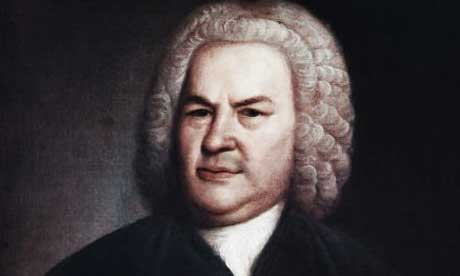
 A recent source has revealed that Bach’s music contains a very precise hidden code that was used to control humanity from the time of its creation onward. In fact, he was aware of the negative side of this embedded code and because he rebelled against using it he was thrown in jail for 2 years.