Professor Carol Ambruster, 69, University professor and Astronomy and Astrophysics Officers had found nothing in Ambruster’s life or history that appeared suspicious. Philly.com reported; Carol W. Ambruster, 69 was found by her roommate in the kitchen of her apartment in the 5500 block of Wayne Avenue, Germantown with a knife in her neck about 9 p.m., police said. She also had been stabbed in the chest. Ambruster, a tenured professor in the department of astronomy and astrophysics at Villanova, retired in 2011. Ambruster attended Northeastern University, where she majored in physics, and received her doctorate in astronomy from the University of Pennsylvania in 1984. Her research interests included stars and the history of astronomy
Precisely, this is the number 1.61803399, represented by the Greek letter Phi, and considered truly unique in its mathematical properties, its prevalence throughout nature, and its ability to achieve a perfect aesthetic composition.
According to astrophysicist Mario Livio:
Some of the greatest mathematical minds of all ages, from Pythagoras and Euclid in ancient Greece, through the medieval Italian mathematician Leonardo of Pisa and the Renaissance astronomer Johannes Kepler, to present-day scientific figures such as Oxford physicist Roger Penrose, have spent endless hours over this simple ratio and its properties. But the fascination with the Golden Ratio is not confined just to mathematicians. Biologists, artists, musicians, historians, architects, psychologists, and even mystics have pondered and debated the basis of its ubiquity and appeal. In fact, it is probably fair to say that the Golden Ratio has inspired thinkers of all disciplines like no other number in the history of mathematics.
In mathematics and the arts, two quantities are in the golden ratio if their ratio is the same as the ratio of their sum to the larger of the two quantities. When the Golden Mean is conceptualised in two dimensions it is typically presented as a regular spiral that is defined by a series of squares and arcs, each forming “Golden Rectangles”.
This symbolic potential arises because of the way the mean’s spiral shape resembles growth patterns observed in nature and its proportions are reminiscent of those in human bodies. Thus, these simple spirals and rectangles, which served to suggest the presence of a universal order underlying the world, were thereby dubbed “golden” or “divine”.
The Golden Ratio in History
The golden ratio has fascinated Western intellectuals of diverse interests for at least 2,400 years. The earliest known monuments believed to have been built according to this alluring number are the statues of the Parthenon in Greece, dating back between 490 and 430 BC. However, there are many who have argued that it goes back much further than this and that the Egyptians were well versed in the properties of this unique number.
According to some historians, the Egyptians thought that the golden ratio was sacred. Therefore, it was very important in their religion. They used the golden ratio when building temples and places for the dead. In addition, the Egyptians found the golden ratio to be pleasing to the eye. They used it in their system of writing and in the arrangement of their temples. The Egyptians were aware that they were using the golden ratio, but they called it the “sacred ratio.”
The first recorded definition of the golden ratio dates back to the period when Greek mathematician, Euclid (c. 325–c. 265 BC), described what he called the “extreme and mean ratio”. However, the ratio’s unique properties became popularised in the 15th century when aesthetics were a vital component of Renaissance art and geometry served both practical and symbolic purposes. As the famous mathematician, astronomer, and astrologer, Johannes Kepler (1571 – 1630) wrote:
Geometry has two great treasures: one is the Theorem of Pythagoras, and the other the division of a line into extreme and mean ratio; the first we may compare to a measure of gold, the second we may name a precious jewel.
The Golden Ratio in Architecture
Many artists and architects have proportioned their work to approximate the golden ratio, with the belief that the outcome will be more aesthetically pleasing. Using any of these ratios, an architect can design a door handle that has a complementary relationship to its door, which in turn has a similar relationship to its enclosing wall, and so on. But more than this, the golden ratio has been used for the façade of great buildings from the Parthenon to the Great Mosque of Kairouan and all the way through to modern landmarks such as the Sydney Opera House and the National Gallery in London.
The Golden Ratio in Nature
Perhaps what is most surprising about the Golden Ratio is that it can be seen as a naturally occurring phenomenon in nature. The golden ratio is expressed in the arrangement of branches along the stems of plants and the veins in leaves. It can be seen in the skeletons of animals and humans and the branching of their veins and nerves. It can even be seen in the proportions of chemical compounds and the geometry of crystals. Essentially, it is all around us and within us and for this reason, German psychologist Adolf Zeising (1810 – 1876) labelled it a ‘universal law’:
in which is contained the ground-principle of all formative striving for beauty and completeness in the realms of both nature and art, and which permeates, as a paramount spiritual ideal, all structures, forms and proportions, whether cosmic or individual, organic or inorganic, acoustic or optical; which finds its fullest realization, however, in the human form.
As a result of the unique properties of this golden proportion, many view the ratio as sacred or divine and as a door to a deeper understanding of beauty and spirituality in life, unveiling a hidden harmony or connectedness in so much of what we see.
If you had a business selling something that made you well over a hundred billion dollars per year, would you take steps to eradicate the need for your business? Or would you make every effort for that money continue rolling in?
Take cancer, for example. Don’t let all the media hype about “The Cure” fool you. No one who is in a position to do so wants to end cancer because they are all making a killing on the big business of treatment, while ordinary people go broke, suffer horribly, and die.
There will never be a “cure” brought to market because there just isn’t enough profit in eradicating the disease entirely. There will never be a governing body that protects consumers from being subjected to known carcinogens, because that, too, will stop the cash from rolling in. A great deal of research is covered up and many potential cures are ignored and discredited because there is far more money in perpetuating illness than in curing it. In 2012, the reported spending on cancer treatment was 124.6 billion dollars. Blood money.
The Grim Statistics
Just the word “cancer” sends a frisson of fear down the spine of the most stalwart optimist. Terrifyingly, almost one in two people will get the dreaded disease, and the numbers are only getting worse. Here are some quick stats for background:
Nearly half of all Americans will develop cancer in their lifetime. (source) Quick math tells us that is an astonishing 157 million victims.
Over half a million people in America died of cancer in 2012. (source)
In 2011, cancer was the #1 cause of death in the Western world, and #2 in developing countries. (source)
Cancer is the #1 cause of childhood death in the United States. (source)
This is a fairly recent increase. A hundred years ago, the number was far different. At that time, 1 in 33 people was stricken with the disease. And despite billions of dollars being spent to find “the cure”, the World Health Organization predicts that deaths from cancer will DOUBLE by the year 2030.
It’s being normalized. The news is full of photos of babies who are missing an eye, of beautiful bald children who have lost their hair to chemo, and of people who have had to have body parts removed in order to survive a few more years. But cancer is NOT normal. It isn’t something that “just happens.” Researchers know the things that cause cancer. Government protection agencies do, too, but they do nothing to limit these toxins in the marketplace.
Why?
Because, cancer is big business and those who are profiting have great financial interest in seeing the deadly trend continue to increase.
Poisoned for Profit
So what has changed? How did we go from a 3% chance of contracting cancer to a 41% chance?
It’s the advent of Big Pharma, Big Agri and Big Business. They are getting rich off of poisoning Americans through the manufacture of toxic elements that we are exposed to on a daily basis.
Unless you live in a bubble and have no contact with manufactured items, outside air, or the sun, you are exposed to a staggering number of known and suspected carcinogens every day. (Check out THIS LIST to see the known and suspected carcinogens that are readily available in the United States.)
The statistics support that the cumulative build up of all these different toxins in the human body eventually results in cancer in many people.
First, the manufacturers and the “food” producers profit when we buy their poisoned goods.
Then the medical system and pharmaceutical companies profit when we become ill and must fight cancer.
The drugs alone can cost over $100,000 per year, and that is on top of exorbitant costs for radiation, chemotherapy, and physicians’ bills. In the United States, cancer is the #1 most expensive “per person” illness to treat. (source)
Why would those who profit want to prevent cancer when 95.5 BILLION DOLLARS PER YEAR is spent on treating it? There is a vested interest in this increase in illness and the people benefiting from it have no intention of reducing the cases of cancer.
Don’t Count on Obamacare
Don’t look to Obamacare to be the saving grace of cancer victims, either. With this type of government-controlled medicine, budgets will be strictly adhered to and the decisions on how to proceed and what will be paid for will NOT be in the hands of the ill person. Treatments, medications, and funds will be strictly allocated through what many people are referring to as “death panels.”
Furthermore, Obamacare only covers 60% of your medical costs in most cases (after a hefty deductible) and none of your medication is covered. If you don’t have $50,000 or more kicking around for your co-pay, you will be out of luck, despite diligently paying your worthless monthly premiums.
Prevention: Your Only Defense
Avoiding carcinogens as diligently as possible is your best defense against becoming the “1 in 3″, but it isn’t easy. Furthermore, you’ll be considered an “extremist” or a “kook” by those around you who have buried their heads in the sand.
Basically, a spending day in the Western world is a like spending a day running a gauntlet of toxins and carcinogens. Big Pharma, Big Agri and Big Business are getting rich off of poisoning Americans.
There are steps you can take to limit your exposure but be prepared for many people to consider your actions extreme. Very few people are committed enough to their health and the health of their family to do the research required to identify the dangers around them and then go against the current to avoid those perils. (source)
Since most of us don’t live in a bubble, we will be subjected to some of these toxins – they’re impossible to avoid entirely. However, you can limit your exposure by taking the following steps to reduce your exposure to everyday poisons. (This list is expanded from the article, “The Great American Cancer Cluster” with permission from The Daily Sheeple.)
Purchase organic foods as often as possible.GMOs and pesticides are proven carcinogens.
Load your plate with colorful antioxidants. Opt for organic versions of foods like berries, colorful veggies, dark chocolate, and coffee, to name a few, are loaded with powerful, cancer-fighting antioxidants and will boost your immune system against other types of illness and disease as well.
Avoid processed foods. Many of the additives and preservatives featured abundantly in North America are banned in other countries precisely because of the health risks they represent.
Select non-toxic cookware. Nonstick cookware contains Teflon and perfluorooctanoic acid (PFOA), which emit at least toxic gases within 5 minutes of heating up that nonstick pan. Once the pans become scratched, toxic particles are leached directly into the food you’re preparing. Aluminum cookware is also potentially toxic. Cast iron, ceramic, glass, and clay are all better cookware options.
Don’t smoke.
Consume alcohol only in moderation.
Limit the use of plastic in your home. BPA or Bisphenol-A are petrochemical plastics that are a major component of many water bottles, lines the inside of canned goods, and makes up the hard material of many reusable food containers, including some brands of baby bottles. They leach cancer causing endocrine disruptors into food, especially if the food is hot. Use glass containers whenever possible.
Select personal care products that do not contain petrochemicals. Many cosmetics and other health and beauty aids contain petrochemicals. The danger of this is their byproduct, 1,4-dioxane, a proven carcinogen. The U.S. Environmental Protection Agency classifies dioxane as a probable human carcinogen California state law has classified dioxane to cause cancer. Animal studies in rats suggest that the greatest health risk is associated with inhalation of vapors. Avoid the following ingredients:
Paraffin Wax
Mineral Oil
Toluene
Benzene
Phenoxyethanol
Anything with PEG (polyethylene glycol)
Anything ending in ‘eth’ indicates that it required ethylene oxide (a petrochemical) to produce e.g. myreth, oleth, laureth, ceteareth
Anything with DEA (diethanolamine) or MEA (ethanolamine)
Butanol and any word with ‘butyl’ – butyl alcohol, butylparaben, butylene glycol
Ethanol and word with ‘ethyl’ – ethyl alcohol, ethylene glycol, ethylene dichloride, EDTA (ethylene-diamine-tetracetatic acid), ethylhexylglycerin
Any word with “propyl” – isopropyl alcohol, propylene glycol, propylalcohol, cocamidopropyl betaine
Methanol and any word with ‘methyl’ – methyl alcohol, methylparaben, methylcellulose
Parfum or fragrance – 95% of chemicals used in fragrance are from petroleum
Opt for natural, biodegradable food grade cleaning products. According to the website Natural Pure Organics, the average household contains up to 25 gallons of toxic materials, most of which are in cleaning products. When you use these cleaners, they linger in the air and on the surfaces, increasing your exposure to carcinogens as you inhale the toxins into your lungs or absorb them through your skin.
Avoid artificial sweeteners.Aspartame, for example, is a known carcinogen that breaks down into formaldehyde in the human body.
Refuse vaccines. Many vaccines contain formaldehyde and mercury, both of which are known carcinogens. By the age of two, if a child has received all of the recommended vaccines, he or she has received 2,370 times the “allowable safe limit” for mercury (if there is such a thing as a safe level of poison). The HPV vaccine can actually increase the risk of reproductive cancer. The polio vaccine most recently came under fire for its cancer-causing ingredients. (Learn more about the cancer causing ingredients in vaccines HERE.)
Avoid tap water. If you have municipal water, drink it at the risk of ingesting loads of toxins. First, there is the willful addition of sodium fluoride, a pesticide which is labeled as “deadly to humans.” Not only has the consumption of fluoride been linked to cancer, but it also lowers IQs, causes infertility, and causes hardening of the arteries. Then there is the addition of chlorine, which is used to kill bacteria that could make us sick. Unfortunately, according to Dr. Michael J. Plewa, a genetic toxicology expert at the University of Illinois, chlorinated water is carcinogenic. “Individuals who consume chlorinated drinking water have an elevated risk of cancer of the bladder, stomach, pancreas, kidney and rectum as well as Hodgkin’s and non-Hodgkin’s lymphoma.”
Maintain a healthy body weight. Obesity has been linked to increased risks of cancers of the esophagus, breast, endometrium, uterus, colon and rectum, kidney, pancreas, thyroid, and gallbladder.
Exercise daily.
The mindboggling thing is that those who strictly avoiding carcinogens and toxins are labeled “crazy” or “hysterical”. I can’t tell you how many times I have watched people roll their eyes or scoff when I refuse to partake in things that are hazardous. Somehow, drinking water from my own BPA-free water bottle is considered to be “extreme”. Not taking my children to McDonald’s or feeding them hot-dogs and Doritos is “mean”. Making our body care products and cleaning products from wholesome, non-toxic ingredients is “silly”.
I believe that knowingly ingesting toxic ingredients is “crazy”. I believe that rubbing carcinogens on my body or spraying them around my house is “ridiculous”. I think that having poison injected into my defenseless children or feeding it to them on a colorful plate is “mean”.
Never forget that the bottom line is profit. Don’t expect the FDA or the EPA to step in. They’ve proven time and again that their purpose is to serve the interests of Big Business, not the consumers.
Cancer represents big money to the pharmaceutical companies and the health industry. They do NOT have a vested interest in prevention. So, maybe, just maybe, subjecting your body to the tender mercies of Big Pharma and the AMA and lining their already loaded pockets is just a little bit sillier than taking steps to avoid illness altogether.
This article is dedicated to some beloved people in my life, one of whom fought it and won and the other who is fighting the good fight and will not go quietly… much love to SD and JS, and all who are touched by this icy finger.
Ericson Harrell wore the Guy Fawkes mask, he said, because it’s a “symbol of protest.”
“I always keep my mask in my truck, my cape in the truck, the flag in truck and everything,” he said. “So I put on the mask and the cape, grabbed the flag, and I stood on the corner.”
Eventually a female police officer confronted him, at which point he asserted “my right to free speech,” and tried to convince the officer that the anti-masking statute didn’t apply to him, because that statute “was not put into place for peaceful protests, not for figures just standing on the side of the road trying to express their first amendment rights.”
After her supervisor showed up, he was arrested for refusing to remove his mask or identify himself.
He stated that the officer and her supervisor thought he was part of a larger anti-Obamacare protest, but “in actual reality, I was alone at the time. I was a soldier of one.”
Harrell also claimed that he only announced himself as a police officer “after the fact, because I didn’t want to get any preferential treatment.”
The anti-masking statute, he correctly claimed, was put into place “sometime in the 1950s because of the Ku Klux Klan trying to intimidate a certain group of people — a certain race of people.” He declined to specify which “group” or “race” that was.
Harrell is currently on administrative leave, and his department will make a decision as to his permanent employment situation after the charges against him are dealt with.
Watch the complete interview with Ericson Harrell below.
Why are huge numbers of dead birds dropping dead and washing up along the coastlines of Alaska? It is being reported that many of the carcases of the dead birds are “broken open and bleeding”. The photo of some of these dead birds at the top of this article was originally posted by Alaska native David Akeya on Facebook. You can find more photos of these dead birds right here. And of course it isn’t just birds that are dying. As you will see below, something is causing mass death events among various populations of fish as well. In addition, it has been reported that large numbers of polar bears, seals and walruses in Alaska are being affected by hair loss and “oozing sores”. So precisely what is causing all of this? Could Fukushima be responsible? Authorities are claiming that all of this is being caused by “disease” or “harsh weather”, but are they actually telling us the truth? Evaluate the evidence that I have shared below and decide for yourself…
#1 Something is causing large numbers of dead birds to wash up on shores all over Alaska. The following is a report from Alaska Public Media about just one of these incidents…
Hundreds of dead birds washed up on the shores of St. Lawrence Island towards the end of November. And though the cause of the die off isn’t yet known, the quick response demonstrates a mounting capacity for dealing with unexpected environmental events in the region.
Scientists do not know why this is happening. Some of them are blaming “harsh weather”.
#2 Something is causing large numbers of seals and walruses to lose hair and develop “oozing sores”…
For example, while skin ulcers and other conditions — hair loss, lethargy, oozing sores, bloody mucous, congested lungs — are affecting seals and walruses, it’s not known if the two species are suffering from the same sickness. And although much studying has been done to determine whether it’s the result of a virus or radiation, and no tests have linked these origins to the illness, it’s not yet known what the root cause is. Toxins and environmental factors, like harmful algae blooms and thermal burns, are under consideration. As is whether allergy, hormone or nutritional problems might play a role.
Once again, scientists do not know why this is happening.
Wildlife experts are studying whether fur loss and open sores detected in nine polar bears in recent weeks is widespread and related to similar incidents among seals and walruses.
The bears were among 33 spotted near Barrow, Alaska, during routine survey work along the Arctic coastline. Tests showed they had “alopecia, or loss of fur, and other skin lesions,” the U.S. Geological Survey said in a statement.
Once again, scientists do not know why this is happening.
#4 The population of sockeye salmon along the coastlines of Alaska is at a “historic low”…
Aboriginal people in British Columbia who rely on Skeena River sockeye are facing some extremely difficult decisions as sockeye salmon returns plunge to historic lows.
Lake Babine Chief Wilf Adam was on his way to Smithers, B.C., on Monday for a discussion about whether to entirely shut down the food fishery on Lake Babine, something he said would be drastic and unprecedented – but may ultimately be necessary.
Authorities say that the number of sockeye salmon has dropped by more than 80 percent since last year…
Mel Kotyk, North Coast area director for the Department of Fisheries and Oceans, said the department’s monitoring activities were finding one of the lowest runs in 50 years.
Only 453,000 sockeye are expected to swim along the Skeena this year, Kotyk said, compared to approximately 2.4 million last year, forcing all commercial and recreational Skeena sockeye fisheries to be closed.
Once again, scientists do not know why this is happening.
Independent fisheries scientist Alexandra Morton is raising concerns about a disease she says is spreading through Pacific herring causing fish to hemorrhage.
Ms. Morton has called on the federal Department of Fisheries and Oceans to investigate, saying it could cause large-scale herring kills and infect wild salmon, which feed heavily on herring.
“I’ve been seeing herring with bleeding fins,” Ms. Morton said Monday. “Two days ago I did a beach seine on Malcolm Island [near Port McNeill on northern Vancouver Island] and I got approximately 100 of these little herring and they were not only bleeding from their fins, but their bellies, their chins, their eyeballs. These are very, very strong disease symptoms.”
Once again, scientists do not know why this is happening.
#6 Some residents of Alaska are absolutely convinced that Fukushima is to blame for the rapidly declining fish populations. For example, just check out the following excerpt from a recent editorial in one Alaskan newspaper…
We are concerned this hazardous material is hitching a ride on marine life and making its way to Alaska.
Currents of the world’s oceans are complex. But, generally speaking, two surface currents — one from the south, called the Kuroshio, and one from the north, called the Oyashio — meet just off the coast of Japan at about 40 degrees north latitude. The currents merge to form the North Pacific current and surge eastward. Fukushima lies at 37 degrees north latitude. Thousands of miles later, the currents hit an upwelling just off the western coast of the United States and split. One, the Alaska current, turns north up the coast toward British Columbia and Southeast Alaska. The other, the California current, turns south and heads down the western seaboard of the U.S.
The migration patterns of Pacific salmon should also be taken into consideration. In a nutshell, our salmon ride the Alaska current and follow its curve past Sitka, Yakutat, Kodiak and the Aleutian Islands. Most often, it’s the chinook, coho and sockeye salmon migration patterns that range farthest. Chum and pink salmon seem to stay closer to home. Regardless of how far out each salmon species ventures into the Pacific, each fish hitches a ride back to its home rivers and spawning grounds on the North Pacific current, the same one pulling the nuclear waste eastward.
We all know too much exposure to nuclear waste can cause cancer. And many understand that certain chemicals, such as cesium-137 and strontium-9, contained in said waste products can accumulate in fish by being deposited in bones and muscle permanently.
We are concerned our Alaska salmon are being slowly tainted with nuclear waste. We are worried about the impact this waste could have on our resources, and especially the people who consume them.
A Vancouver Aquarium researcher is sounding the alarm over “puzzling” changes he’s observed in the killer whale pods that live off the southern British Columbia coast.
Dr. Lance Barrett-Lennard says he fears changes in the ocean environment are prompting odd behaviour and an unusually high mortality rate.
Barrett-Lennard says the southern resident orca pod, which is found in the Salish Sea between Vancouver Island and the B.C. mainland, has lost seven matriarchs over the past two years, and he’s noticed a lack of vocalizations from the normally chatty mammals.
Once again, scientists do not know why this is happening.
These kinds of things are happening further south along the Pacific coast as well.
For example, the recent death of thousands of birds down in Oregon is absolutely baffling scientists…
Residents have reported groups ranging from 10 to 200 dead or dying barn and violet-green swallows in barns and around other structures where they perch. The Oregon Department of Fish and Wildlife said the dieoffs appear to be worst close to rivers and standing water where the birds tend to gather.
The toll, estimated in the thousands, has stunned Fish and Wildlife specialists. “This type of mortality event is unprecedented and considered a rare and unusual event,” said Colin Gillin, wildlife veterinarian for the agency. “The effect on bird populations is unknown.”
Some scientists are blaming these deaths on “harsh weather”.
Do you buy that?
Clearly something very unusual is happening, and it should not be unreasonable to ask if Fukushima is at least partially responsible for all of this.
Without a doubt, the Pacific Ocean appears to be a much different place than it was before the Fukushima disaster. In fact, one very experienced Australian adventurer said that he felt as though “the ocean itself was dead” as he journeyed from Japan to San Francisco recently…
The next leg of the long voyage was from Osaka to San Francisco and for most of that trip the desolation was tinged with nauseous horror and a degree of fear.
“After we left Japan, it felt as if the ocean itself was dead,” Macfadyen said.
“We hardly saw any living things. We saw one whale, sort of rolling helplessly on the surface with what looked like a big tumour on its head. It was pretty sickening.
“I’ve done a lot of miles on the ocean in my life and I’m used to seeing turtles, dolphins, sharks and big flurries of feeding birds. But this time, for 3000 nautical miles there was nothing alive to be seen.”
In place of the missing life was garbage in astounding volumes.
“Part of it was the aftermath of the tsunami that hit Japan a couple of years ago. The wave came in over the land, picked up an unbelievable load of stuff and carried it out to sea. And it’s still out there, everywhere you look.”
What in the world would cause the Pacific Ocean to be “dead” like that?
Where did all the life go?
Hopefully we will start to get some answers to these questions.
Meanwhile, radiation levels around Fukushima just continue to increase. The following is from a recent RT article…
Outdoor radiation levels have reached their highest at Japan’s Fukushima nuclear plant,warns the operator company.Radiation found in an area near a steel pipe that connects reactor buildings could kill an exposed person in 20 minutes,local media reported.
The plant’s operator and the utility responsible for the clean-up Tokyo Electric Power Company (TEPCO) detected record radiation levels on a duct which connects reactor buildings and the 120 meter tall ventilation pipe located outside on Friday. TEPCO measured radiation at eight locations around the pipe with the highest estimated at two locations – 25 Sieverts per hour and about 15 Sieverts per hour, the company said. This is the highest level ever detected outside the reactor buildings, according to local broadcaster NHK.
And every single day, another 400 tons of very highly radioactive water gets released into the Pacific Ocean. The total amount of radioactive material in the Pacific is constantly rising, and because many of these radioactive particles have a half-life of 30 years or longer, much of this material is going to be with us for a very, very long time.
This is turning out to be the greatest environmental disaster in modern history, and it is very far from over.
We’re being destroyed from within by a socialistic bureaucracy who’s overriding goal is its own survival at the cost of National Security, which as the historian Thomas Cahill asserts was one of the major reasons for the fall of the Roman Empire.
This story has been reported in partnership between The New York Times, the Guardian and ProPublica based on documents obtained by The Guardian.
Not limiting their activities to the earthly realm, American and British spies have infiltrated the fantasy worlds of World of Warcraft and Second Life, conducting surveillance and scooping up data in the online games played by millions of people across the globe, according to newly disclosed classified documents.
Fearing that terrorist or criminal networks could use the games to communicate secretly, move money or plot attacks, the documents show, intelligence operatives have entered terrain populated by digital avatars that include elves, gnomes and supermodels.
The spies have created make-believe characters to snoop and to try to recruit informers, while also collecting data and contents of communications between players, according to the documents, disclosed by the former National Security Agency contractor Edward J. Snowden. Because militants often rely on features common to video games — fake identities, voice and text chats, a way to conduct financial transactions — American and British intelligence agencies worried that they might be operating there, according to the papers.
Takeaways: How Spy Agencies Operate In Virtual Worlds
GATHERING INTELLIGENCE: U.S. and British intelligence agencies — including the Central Intelligence Agency, Defense intelligence agency and Britain’s Government Communications Headquarters — have operated in virtual worlds and gaming communities to snoop and try to recruit informants. For example, according to Snowden documents, the U.S. has conducted spy operations in Second Life (pictured), where players create human avatars to socialize, buy and sell goods and explore exotic virtual destinations. (Second Life image via Linden Lab)
Online games might seem innocuous, a top-secret 2008 NSA document warned, but they had the potential to be a “target-rich communication network” allowing intelligence suspects “a way to hide in plain sight.” Virtual games “are an opportunity!,” another 2008 NSA document declared.
But for all their enthusiasm — so many CIA, FBI and Pentagon spies were hunting around in Second Life, the document noted, that a “deconfliction” group was needed to avoid collisions — the intelligence agencies may have inflated the threat.
The documents do not cite any counterterrorism successes from the effort, and former American intelligence officials, current and former gaming company employees and outside experts said in interviews that they knew of little evidence that terrorist groups viewed the games as havens to communicate and plot operations.
Games “are built and operated by companies looking to make money, so the players’ identity and activity is tracked,” said Peter W. Singer of the Brookings Institution, an author of “Cybersecurity and Cyberwar: What Everyone Needs to Know.” “For terror groups looking to keep their communications secret, there are far more effective and easier ways to do so than putting on a troll avatar.”
The surveillance, which also included Microsoft’s Xbox Live, could raise privacy concerns. It is not clear exactly how the agencies got access to gamers’ data or communications, how many players may have been monitored or whether Americans’ communications or activities were captured.
One American company, the maker of World of Warcraft, said that neither the NSA nor its British counterpart, the Government Communications Headquarters, had gotten permission to gather intelligence in its game. Many players are Americans, who can be targeted for surveillance only with approval from the nation’s secret intelligence court. The spy agencies, though, face far fewer restrictions on collecting certain data or communications overseas.
“We are unaware of any surveillance taking place,” said a spokesman for Blizzard Entertainment, based in Irvine, Calif., which makes World of Warcraft. “If it was, it would have been done without our knowledge or permission.”
A spokeswoman for Microsoft declined to comment. Philip Rosedale, the founder of Second Life and a former chief executive officer of Linden Lab, the game’s maker, declined to comment on the spying revelations. Current Linden executives did not respond to requests for comment.
A Government Communications Headquarters spokesman would neither confirm nor deny any involvement by that agency in gaming surveillance, but said that its work is conducted under “a strict legal and policy framework” with rigorous oversight. An NSA spokeswoman declined to comment.
Intelligence and law enforcement officials became interested in games after some became enormously popular, drawing tens of millions of people worldwide, from preteens to retirees. The games rely on lifelike graphics, virtual currencies and the ability to speak to other players in real time. Some gamers merge the virtual and real worlds by spending long hours playing and making close online friends.
In World of Warcraft, players share the same fantasy universe — walking around and killing computer-controlled monsters or the avatars of other players, including elves, animals or creatures known as orcs. In Second Life, players create customized human avatars that can resemble themselves or take on other personas — supermodels and bodybuilders are popular — who can socialize, buy and sell virtual goods, and go places like beaches, cities, art galleries and strip clubs. In Microsoft’s Xbox Live service, subscribers connect online in games that can involve activities like playing soccer or shooting at each other in space.
According to American officials and documents that Mr. Snowden provided to The Guardian, which shared them with The New York Times and ProPublica, spy agencies grew worried that terrorist groups might take to the virtual worlds to establish safe communications channels.
In 2007, as the NSA and other intelligence agencies were beginning to explore virtual games, NSA officials met with the chief technology officer for the manufacturer of Second Life, the San Francisco-based Linden Lab. The executive, Cory Ondrejka, was a former Navy officer who had worked at the NSA with a top-secret security clearance.
He visited the agency’s headquarters at Fort Meade, Md., in May 2007 to speak to staff members over a brown bag lunch, according to an internal agency announcement. “Second Life has proven that virtual worlds of social networking are a reality: come hear Cory tell you why!” said the announcement. It added that virtual worlds gave the government the opportunity “to understand the motivation, context and consequent behaviors of non-Americans through observation, without leaving U.S. soil.”
Ondrejka, now the director of mobile engineering at Facebook, said through a representative that the NSA presentation was similar to others he gave in that period, and declined to comment further.
Even with spies already monitoring games, the NSA thought it needed to step up the effort.
“The Sigint Enterprise needs to begin taking action now to plan for collection, processing, presentation and analysis of these communications,” said one April 2008 NSA document, referring to “signals intelligence.” The document added, “With a few exceptions, NSA can’t even recognize the traffic,” meaning that the agency could not distinguish gaming data from other Internet traffic.
By the end of 2008, according to one document, the British spy agency, known as GCHQ, had set up its “first operational deployment into Second Life” and had helped the police in London in cracking down on a crime ring that had moved into virtual worlds to sell stolen credit card information. The British spies running the effort, which was code-named “Operation Galician,” were aided by an informer using a digital avatar “who helpfully volunteered information on the target group’s latest activities.”
Though the games might appear to be unregulated digital bazaars, the companies running them reserve the right to police the communications of players and store the chat dialogues in servers that can be searched later. The transactions conducted with the virtual money common in the games, used in World of Warcraft to buy weapons and potions to slay monsters, are also monitored by the companies to prevent illicit financial dealings.
In the 2008 NSA document, titled “Exploiting Terrorist Use of Games & Virtual Environments,” the agency said that “terrorist target selectors” — which could be a computer’s Internet Protocol address or an email account — “have been found associated with Xbox Live, Second Life, World of Warcraft” and other games. But that document does not present evidence that terrorists were participating in the games.
Still, the intelligence agencies found other benefits in infiltrating these online worlds. According to the minutes of a January 2009 meeting, GCHQ’s “network gaming exploitation team” had identified engineers, embassy drivers, scientists and other foreign intelligence operatives to be World of Warcraft players — potential targets for recruitment as agents.
At Menwith Hill, a Royal Air Force base in the Yorkshire countryside that the NSA has long used as an outpost to intercept global communications, American and British intelligence operatives started an effort in 2008 to begin collecting data from World of Warcraft.
One NSA document said that the World of Warcraft monitoring “continues to uncover potential Sigint value by identifying accounts, characters and guilds related to Islamic extremist groups, nuclear proliferation and arms dealing.” In other words, targets of interest appeared to be playing the fantasy game, though the document does not indicate that they were doing so for any nefarious purposes. A British document from later that year said that GCHQ had “successfully been able to get the discussions between different game players on Xbox Live.”
By 2009, the collection was extensive. One document says that while GCHQ was testing its ability to spy on Second Life in real time, British intelligence officers vacuumed up three days’ worth of Second Life chat, instant message and financial transaction data, totaling 176,677 lines of data, which included the content of the communications.
For their part, players have openly worried that the NSA might be watching them.
In one World of Warcraft discussion thread, begun just days after the first Snowden revelations appeared in the news media in June, a human death knight with the user name “Crrassus” asked whether the NSA might be reading game chat logs.
“If they ever read these forums,” wrote a goblin priest with the user name “Diaya,” “they would realize they were wasting” their time.
Even before the American government began spying in virtual worlds, the Pentagon had identified the potential intelligence value of video games. The Pentagon’s Special Operations Command in 2006 and 2007 worked with several foreign companies — including an obscure digital media business based in Prague — to build games that could be downloaded to mobile phones., according to people involved in the effort. They said the games, which were not identified as creations of the Pentagon, were then used as vehicles for intelligence agencies to collect information about the users.
The SAIC headquarters in McLean, Va., and the company’s island in Second Life. (The Meridian Group, SAIC)
Eager to cash in on the government’s growing interest in virtual worlds, several large private contractors have spent years pitching their services to American intelligence agencies. In one 66-page document from 2007, part of the cache released by Mr. Snowden, the contracting giant SAIC promoted its ability to support “intelligence collection in the game space,” and warned that online games could be used by militant groups to recruit followers and could provide “terrorist organizations with a powerful platform to reach core target audiences.”
It is unclear whether SAIC received a contract based on this proposal, but one former SAIC employee said that the company at one point had a lucrative contract with the CIA for work that included monitoring the Internet for militant activity. An SAIC spokeswoman declined to comment.
In spring 2009, academics and defense contractors gathered at the Marriott at Washington Dulles International Airport to present proposals for a government study about how players’ behavior in a game like World of Warcraft might be linked to their real-world identities. “We were told it was highly likely that persons of interest were using virtual spaces to communicate or coordinate,” said Dmitri Williams, a professor at the University of Southern California who received grant money as part of the program.
After the conference, both SAIC and Lockheed Martin won contracts worth several million dollars, administered by an office within the intelligence community that finances research projects.
It is not clear how useful such research might be. A group at the Palo Alto Research Center, for example, produced a government-funded study of World of Warcraft that found “younger players and male players preferring competitive, hack-and-slash activities, and older and female players preferring noncombat activities,” such as exploring the virtual world. A group from the nonprofit SRI International, meanwhile, found that players under age 18 often used all capital letters both in chat messages and in their avatar names.
Those involved in the project were told little by their government patrons. According to Nick Yee, a Palo Alto researcher who worked on the effort, “We were specifically asked not to speculate on the government’s motivations and goals.”
Saudi militants were behind the massive car bombing and assault on Yemen’s military headquarters that killed more than 50 people, including foreigners, investigators said in a preliminary report released Friday.
Al-Qaeda claimed responsibility for the attack, saying it was retaliation for US drone strikes that have killed dozens of the terror network’s leaders.
The attack – the deadliest in Sanaa since May 2012 – marked an escalation in the terror network’s battle to undermine the US-allied government and destabilise the impoverished Arab nation despite the drone strikes and a series of US-backed military offensive against it.
US forces also have been training and arming Yemeni special forces, and exchanging intelligence with the central government.
Military investigators described a two-stage operation, saying heavily armed militants wearing army uniforms first blew up a car packed with 500 kilograms of explosives near an entrance gate, then split into groups that swept through a military hospital and a laboratory, shooting at soldiers, doctors, nurses, doctors and patients.
Officials earlier said 11 militants were killed, including the suicide bomber who drove the car. It was not clear if the 12th attacker was captured or escaped.
The investigative committee led by Yemen’s Chief of Staff Gen. Ahmed al-Ashwal, said militants shot the guards outside the gates of the military hospital, allowing the suicide bomber to drive the car inside, but a gunfight forced him to detonate his explosives before reaching his target.
It said the 12 militants killed, included Saudis.
Two military officials told The Associated Press that wounded soldiers had told them the assailants who stormed the hospital separated out the foreigners and shot everybody in the head.
Other military officials said American security agents were helping with the investigations, but that could not be confirmed. All officials spoke on condition of anonymity because they were not allowed to brief reporters.
Yemeni commandos and other security forces besieged the militants before they could reach the ministry’s main building, preventing them from going further than the ministry’s entrance gate. All the attackers were killed by 4:30 pm Thursday, according to the committee.
Yemeni security forces launched a manhunt in the capital to find the perpetrators, sparking gun battles that killed five suspected militants and a Yemeni commando, officials said.
The committee, which sent its report to Yemeni President Abed Rabbo Mansour Hadi, did not explain how it came to its conclusions.
The report, read on state TV, raised the death toll to 56 and said more than 200 people were wounded.
The foreigners killed included two aid workers from Germany, two doctors from Vietnam, two nurses from the Philippines and a nurse from India, according to Yemen’s Supreme Security Commission.
But a spokesman for the Philippines’ Department of Foreign Affairs, Raul Hernandez, said on Friday that seven Filipinos were killed in the attack, including a doctor and nurses, while 11 others were wounded.
The victims were among 40 Filipino workers in the hospital. Hernandez said that the Philippines’ honorary consul reported that the others survived by pretending to be dead.
It was not immediately possible to reconcile the conflicting accounts. But officials from the military hospital said Friday that at least 10 foreigners had been killed.
The United States considers the Yemeni al-Qaeda branch to be the most active in the world and it has escalated drone attacks against the militants in Yemen.
I’m finishing up a novel, a piece of speculative fiction in a genre you could call “economic-thriller”.
The Mark of the Beast?
In the book, the dollar crashes in a hyperinflationary fire (natch), replaced by a new currency called the american. The exchange rate at the time of the changeover is $1,000 equals ₳1. To illustrate its purchasing power, ₳1 buys you a candy bar.
However, americans don’t exist as physical currency. There are no “american bills” like there are dollar bills, and no coins either. Instead, americans are a fully digital currency: They exist in the ether. You need a card—be it a credit card, debit card, or EBT card—to spend americans. And to receive americans, either from employers, customers, government, etc., you need a “central account” which is tethered to your Social Security number.
The rationale for these measures is convenience—but the implication is, no one can earn, save or spend money without the government being aware of exactly what you are doing.
Since the government can easily access all your spending and earning of americans, no one can launder money, or evade taxes, or even so much as fail to pay all their bills on time. Law-makers and politicians and pundits say it’s no big deal that the government will know everything about the citizen’s finances, because, “If you’re not doing anything wrong, you’ve got nothing to hide! If you’re paying all your bills and your taxes and your loans, you got nothing to worry about!”
Another feature of this virtual currency: With americans, you can never again be late with your bills. Payments you have to make are automatically deducted from your central account. And if you take out a loan for whatever purpose, not only is that information in your central account, but your ability to spend money is automatically prioritized: Taxes get paid first, followed by private loans, then bills, then food, then “etc.”
In the novel, law-makers use this compulsory “compliance” as a selling point for the american. “Think of the convenience! No more worrying about paying your bills—your bills are all paid for you!”
However, if you don’t have enough money for “etc.”—entertainment, booze, an ice-cream sundae with the kids, what have you—you don’t get any. And if after paying off your loans and bills there isn’t enough left over for food—then no food for you. Ditto with bills: No money for electricity, or water, or heat? Then no electricity, or water, or heat for you. And if perchance you can’t fully pay off your loans, then you are declared in “non-compliance”. And if you can’t pay off your taxes, then you are charged as being in “criminal non-compliance”—and then woe is you.
In the language of the novel, it is a “fully-compliant currency”—and it forces the people to be “fully-compliant citizens” of the dictates of the government and the banksters.
This is of course a fiction I invented for my upcoming novel—but I couldn’t help notice how lawmakers and banks are all of a sudden getting on the bitcoin bandwagon.
For something that was supposed to be a threat to the established order, which is what bitcoin and the other cryptocurrencies promised to be, the established order sure seems to be happy with it: The U.S. Senate hearings on bitcoins were pretty much ofa success for bitcoins, and banks are starting to thrownothing but lovein bitcoin’s direction. The mainstream media isn’t putting down bitcoins, as it did a few years back.
In short, and unlike what a lot of cryptocurrency proselytizers have been saying—that the powers that be would beagainstbitcoins—the establishment seems to be fullyin favor—or at least accepting—of bitcoins.
Makes you goHmm . . ., now doesn’t it?
Me, I’ve already explainedhereandherewhy I think that bitcoins are in a bubble, and why bitcoins and other cryptocurrencies will never be currencies per se, only an asset class. My thinking is, cryptocurrencies represent a new class of assets whose value is highly unstable so long as they are not actually tethered to some good or service people both need to buy and have to sell. Until that day happens, cryptocurrencies are nothing but speculative investments that can plummet to zero at a moment’s notice.
However, thinking about cryptocurrencies from the point of view of the Federal Reserve, or a senator on the Banking Committee, or a trader at a bank’s prop desk, cryptocurrencies such as bitcoin have a lot of advantages—they’re not something to be dismissed out of hand.
All of bitcoin’s benefits to the establishment revolve around its blockchain.
In simple terms, a blockchain is a registry of all transactions carried out in bitcoins. Thus is resolved the problem of double-spending one particular bitcoin: It can’t be done (at least in theory) due to the blockchain.
But the blockchain is in fact a register—a trail—of bitcoins. So it’s a relative cinch to piece together each and every transaction of any particular wallet in the bitcoin universe. And since exchanges need detailed personal information about a bitcoin user in order to comply with money-laundering laws before issuing a new user with a wallet, the government or other interested parties could determine what any one particular person has been doing in the bitcoin marketplace.
In other words: Imagine that the government knew each and every cent you earned and spent, without a single exception.
That cannot be done with dollars, at least not easily. The dollar’s inefficiencies when compared to bitcoin or any other cryptocurrency are exactly what make tracking dollar transactions so hard. That’s why money-laundering in fact exists: Criminals are taking advantage of inefficiencies in the dollar to hide their profits and thus not get caught.
But with bitcoins as they currently exist, it is asnapto keep people compliant. Once some simple baseline limitations are imposed on users of bitcoins—such as the rules implemented by exchanges so as to comply with money-laundering laws—a user’s transactions are as transparent as glass.
Which is what a government would want, in order to get every bit of tax revenue it wants. Which is what a bank would want, in order to properly gauge the risk of a loan it is extending, and thereby maximize its profits.
Not only that, being able to track people’s spending completely, in real time, as can be done with bitcoin and conceivably every cryptocurrency, the government could easily rescind someone’s ability to earn money.
Witness how the government shut off WikiLeaks’ source of funding—took them less than a week. WikiLeaks depended exclusively on donations made via credit card payments—so by “encouraging” the credit card companies, Visa and Mastercard, to refuse to process donations to the organization, the U.S. government shut down Wikileaks justdaysafter the first big document leaks of 2010.
With bitcoin or some similar cryptocurrency, the government wouldn’t even need to take the step of contacting credi card companies to “encourage them to do the right thing”: The government could simply make any payment to a targeted group invalid. (And perhaps get a notice of whoever it was who donated to the targeted group?)
All this is to say, bitcoins and other cryptocurrencies are potentially a great step forward for a government looking to impose a Panopticon society on the American people. We can’t travel without TSA’s approval, so why not extend that power to people’s ability to interact in the economy as well? Due to the fact that, with bitcoins, there is a trail from people to their bitcoin wallet to their bitcoin usage, a trail that is relatively easy to read, the government could have this power over each and every citizen—the power to monitor and control our interactions with the economy.
Which is why bitcoin—far from being a threat—might just prove to be the fully-compliant currency the U.S. government can come to love. A currency that will let it have unfettered access to each and every financial transaction you carry out.
Is that something that we as a people want? More power to the government? Because that’s the promise of bitcoin.
With evidence growing that training the mind or inducing specific modes of consciousness can have beneficial health effects, scientists have sought to understand how these practices physically affect the body. A new study by researchers in Wisconsin, Spain, and France reports the first evidence of specific molecular changes in the body following a period of intensive mindfulness practice. The study investigated the effects of a day of intensive mindfulness practice in a group of experienced meditators, compared to a group of untrained control subjects who engaged in quiet non-meditative activities. After eight hours of mindfulness practice, the meditators showed a range of genetic and molecular differences, including altered levels of gene-regulating machinery and reduced levels of pro-inflammatory genes, which in turn correlated with faster physical recovery from a stressful situation. “To the best of our knowledge, this is the first paper that shows rapid alterations in gene expression within subjects associated with mindfulness meditation practice,” says study author Richard J. Davidson, founder of the Center for Investigating Healthy Minds and the William James and Vilas Professor of Psychology and Psychiatry at the University of Wisconsin-Madison. “Most interestingly, the changes were observed in genes that are the current targets of anti-inflammatory and analgesic drugs,” says Perla Kaliman, first author of the article and a researcher at the Institute of Biomedical Research of Barcelona, Spain (IIBB-CSIC-IDIBAPS), where the molecular analyses were conducted.
Mindfulness-based trainings have shown beneficial effects on inflammatory disorders in prior clinical studies and are endorsed by the American Heart Association as a preventative intervention. The new results provide a possible biological mechanism for therapeutic effects.
Gene Activity Can Change According To Perception
According to Dr. Bruce Lipton, gene activity can change on a daily basis. If the perception in your mind is reflected in the chemistry of your body, and if your nervous system reads and interprets the environment and then controls the blood’s chemistry, then you can literally change the fate of your cells by altering your thoughts.
In fact, Dr. Lipton’s research illustrates that by changing your perception, your mind can alter the activity of your genes and create over thirty thousand variations of products from each gene. He gives more detail by saying that the gene programs are contained within the nucleus of the cell, and you can rewrite those genetic programs through changing your blood chemistry.
In the simplest terms, this means that we need to change the way we think if we are to heal cancer. “The function of the mind is to create coherence between our beliefs and the reality we experience,” Dr. Lipton said. “What that means is that your mind will adjust the body’s biology and behavior to fit with your beliefs. If you’ve been told you’ll die in six months and your mind believes it, you most likely will die in six months. That’s called the nocebo effect, the result of a negative thought, which is the opposite of the placebo effect, where healing is mediated by a positive thought.”
That dynamic points to a three-party system: there’s the part of you that swears it doesn’t want to die (the conscious mind), trumped by the part that believes you will (the doctor’s prognosis mediated by the subconscious mind), which then throws into gear the chemical reaction (mediated by the brain’s chemistry) to make sure the body conforms to the dominant belief. (Neuroscience has recognized that the subconscious controls 95 percent of our lives.)
Now what about the part that doesn’t want to die–the conscious mind? Isn’t it impacting the body’s chemistry as well? Dr. Lipton said that it comes down to how the subconscious mind, which contains our deepest beliefs, has been programmed. It is these beliefs that ultimately cast the deciding vote.
“It’s a complex situation,” said Dr. Lipton. People have been programmed to believe that they’re victims and that they have no control. We’re programmed from the start with our mother and father’s beliefs. So, for instance, when we got sick, we were told by our parents that we had to go to the doctor because the doctor is the authority concerning our health. We all got the message throughout childhood that doctors were the authority on health and that we were victims of bodily forces beyond our ability to control. The joke, however, is that people often get better while on the way to the doctor. That’s when the innate ability for self-healing kicks in, another example of the placebo effect.
Mindfulness Practice Specifically Affects Regulatory Pathways
The results of Davidson’s study show a down-regulation of genes that have been implicated in inflammation. The affected genes include the pro-inflammatory genes RIPK2 and COX2 as well as several histone deacetylase (HDAC) genes, which regulate the activity of other genes epigenetically by removing a type of chemical tag. What’s more, the extent to which some of those genes were downregulated was associated with faster cortisol recovery to a social stress test involving an impromptu speech and tasks requiring mental calculations performed in front of an audience and video camera.
Biologists have suspected for years that some kind of epigenetic inheritance occurs at the cellular level. The different kinds of cells in our bodies provide an example. Skin cells and brain cells have different forms and functions, despite having exactly the same DNA. There must be mechanisms–other than DNA–that make sure skin cells stay skin cells when they divide.
Perhaps surprisingly, the researchers say, there was no difference in the tested genes between the two groups of people at the start of the study. The observed effects were seen only in the meditators following mindfulness practice. In addition, several other DNA-modifying genes showed no differences between groups, suggesting that the mindfulness practice specifically affected certain regulatory pathways.
The key result is that meditators experienced genetic changes following mindfulness practice that were not seen in the non-meditating group after other quiet activities — an outcome providing proof of principle that mindfulness practice can lead to epigenetic alterations of the genome.
Previous studies in rodents and in people have shown dynamic epigenetic responses to physical stimuli such as stress, diet, or exercise within just a few hours.
“Our genes are quite dynamic in their expression and these results suggest that the calmness of our mind can actually have a potential influence on their expression,” Davidson says.
“The regulation of HDACs and inflammatory pathways may represent some of the mechanisms underlying the therapeutic potential of mindfulness-based interventions,” Kaliman says. “Our findings set the foundation for future studies to further assess meditation strategies for the treatment of chronic inflammatory conditions.”
Subconscious Beliefs Are Key
Too many positive thinkers know that thinking good thoughts–and reciting affirmations for hours on end–doesn’t always bring about the results that feel-good books promise.
Dr. Lipton didn’t argue this point, because positive thoughts come from the conscious mind, while contradictory negative thoughts are usually programmed in the more powerful subconscious mind.
“The major problem is that people are aware of their conscious beliefs and behaviors, but not of subconscious beliefs and behaviors. Most people don’t even acknowledge that their subconscious mind is at play, when the fact is that the subconscious mind is a million times more powerful than the conscious mind and that we operate 95 to 99 percent of our lives from subconscious programs.
“Your subconscious beliefs are working either for you or against you, but the truth is that you are not controlling your life, because your subconscious mind supersedes all conscious control. So when you are trying to heal from a conscious level–citing affirmations and telling yourself you’re healthy–there may be an invisible subconscious program that’s sabotaging you.”
The power of the subconscious mind is elegantly revealed in people expressing multiple personalities. While occupying the mind-set of one personality, the individual may be severely allergic to strawberries. Then, in experiencing the mind-set of another personality, he or she eats them without consequence.
The new science of epigenetics promises that every person on the planet has the opportunity to become who they really are, complete with unimaginable power and the ability to operate from, and go for, the highest possibilities, including healing our bodies and our culture and living in peace.
About the Author
Michael Forrester is a spiritual counselor and is a practicing motivational speaker for corporations in Japan, Canada and the United States.
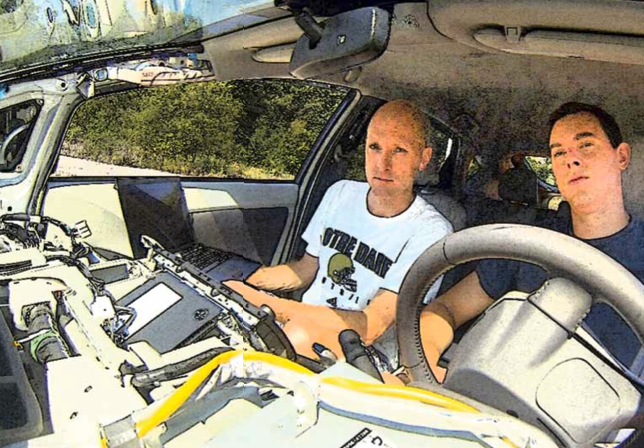
Hackers Chris Valasek and Charlie Miller have demonstrated from the backseat of a Toyota Prius that all you need is a Macbook and a USB cable in order to hack into a computer-controlled car.
Valasek is the director of security intelligence for IOActive and Miller is a security engineer for Twitter.
These two security researchers showed that they can turn off the breaks, for example, even if the driver is at the helm.
Using a grant from the Defense Advanced Research Projects Agency (DARPA), Miller and Valasek have been researching computerized car vulnerabilities since 2012 and will be displaying their findings at DEF CON, a hacker’s conference in Las Vegas next month.
Miller asserted that they “had full control of braking” and that they “disengaged the brakes so if you were going slow and tried to press the brakes they wouldn’t work. We could turn the headlamps on and off, honk the horn. We had control of many aspects of the automobile.”
• Turn off power to the steering
• Have the onboard GPS give incorrect directions
• Change the numbers on the speedometer
• Force the car to change direction
Miller explained: “At the moment there are people who are in the know, there are nay-sayers who don’t believe it’s important, and there are others saying it’s common knowledge but right now there’s not much data out there. We would love for everyone to start having a discussion about this, and for manufacturers to listen and improve the security of cars.”
Using the vehicle’s electronic control unit (ECU) and the on-board diagnostics port (OBD), Miller and Valasek gained control over a 2010 Ford Escape and Toyota Prius.
ECUs are embedded systems that “controls one or more of the electrical system or subsystems in a motor vehicle.”
The OBD is the “vehicle’s self-diagnostic and reporting” apparatus that “gives the vehicle owner or repair technician access to the status of the various vehicle sub-systems.”
A representative from Toyota explained that the hacker would have to be in the car to manipulate its systems.
He said: “Altered control can only be made when the device is connected. After it is disconnected the car functions normally. We don’t consider that to be ‘hacking’ in the sense of creating unexpected behavior, because the device must be connected – ie the control system of the car physically altered. The presence of a laptop or other device connected to the OBD [on board diagnostics] II port would be apparent.”
Hacking into cars that are remotely controlled, such as Google’s self-driving vehicles, is a concern and this researcher could uncover implications for security purposes.
In 2010, teams from the University of Washington (UW) and the University of California (UC) were able to breach the computer systems of cars using cellular phone connections, Bluetooth headsets and a CD.
Stefan Savage from UC explained that their research “explores how hard it is to compromise a car’s computers without having any direct physical access to the car.”
Computerized cars “contain cellular connections and Bluetooth wireless technology” that could be tapped into remotely and used to take over the controls of the vehicle, listen into the conversations taking place in the cab of the car and completely compromise the safety of the vehicle.
Because computer connections to cars are virtually indistinguishable from internet-connected computers, their propensity toward vulnerabilities from outside influences are similar.
Using an On-Star navigation unit, a hacker could utilize the controls a remote technician at the GPS corporation’s on-call center because they are fully capable of controlling a vehicle in the event of an accident or call from a customer.
With complete disregard for driver privacy, the Obama administration gave their consent to the National Highway Traffic Safety Administration (NHTSA) to mandate black box event data recorders (EDR) be installed in all new cars in the US.
The NHTSA says that by September 2014 all car and light trucks will be equipped with EDRs that will silently “record the actions of drivers and the responses of their vehicles in a continuous information loop.”
The information recorded by EDRs includes:
• vehicle speed
• whether the brake was activated in the moments before a crash
• crash forces at the moment of impact
• information about the state of the engine throttle
• air bag deployment timing and air bag readiness prior to the crash
• whether the vehicle occupant’s seat belt was buckled
The NHTSA claims that “EDRs do not collect any personal identifying information or record conversations and do not run continuously.”
Advanced EDRs can collect detailed information about drivers and their driving habits; including the size and weight of the driver, the seat position, the habits of the driver as well as passengers.
The excuse is the EDRs gather information about car crashes in the moments leading up to the accident that manufacturers can use to improve their safety measures when constructing vehicles. However, the government regulation utilizes surveillance technology with policies that do not outline the expressed use of the data collected in the EDRs.
Led by firebrand Rep. Jason Chaffetz (R-Utah), Congress is to launch an official investigation into the mysterious helicopter crash that killed several members of the Navy SEAL team 6 in Afghanistan in 2011.
Back in May, the families of the SEALs went public with concerns that the Obama administration was at least partially responsible for the deaths of their sons.
The family members say that they still have not received satisfactory answers to their questions, and that there are still many inconsistencies and contradictions in the explanations they have been provided.
“We’re going to dive into this.” said Chaffetz, who is acting in his position as chairman of the House Oversight and Government Reform subcommittee on National Security.
30 Americans were killed in the crash on August 6, 2011 when insurgents shot down a U.S. military helicopter during fighting in eastern Afghanistan, making it the largest loss of life in a single incident for the U.S. military during the war. 22 of the victims belonged to the same unit as the Navy SEALS involved in the purported Osama Bin Laden operation, just three months earlier.
US military officials have maintained that none of the individuals involved directly in the Bin Laden mission were killed in the crash. However, sources have claimed that there were at least two SEALs who died on the chopper who had been involved in the Bin Laden raid.
Some of the families feel that the Obama administration’s handling of the death of Bin Laden made retaliatory attacks against SEAL Team 6 more likely. Family members have also expressed concerns that SEALS were sent into battle “without special operations aviation and proper air support.”
Chaffetz has said that he is preparing to send questions to the Pentagon and may hold congressional hearings on the issue. He noted that the families deserve answers: “That’s why you do an investigation. I want to be as factual as I can.” he said.
Larry Klayman of Freedom Watch, who is representing some of the families told reporters “This is a scandal even greater than Benghazi.”
“There we lost four valued American lives; here we sacrificed 30 American soldiers. The big question is were these brave Americans sold out by the Afghani government as payment to the Taliban for the death of bin Laden?” Klayman added.
Klayman’s questions stem from the fact that Afghani forces accompanying the Navy SEAL servicemen on the helicopter were most likely not properly vetted, meaning that they may have disclosed classified information to the Taliban about the mission, resulting in the shoot down of the helicopter.
Pentagon documents have confirmed that immediately prior to the take off of the helicopter, seven Afghan commandos who were listed on the passenger itinerary were mysteriously replaced by other Afghan military officials.
Defense officials have confirmed that all seven names of the Afghan soldiers on the passenger list did not tally with those on board when the chopper took to the air.
The families of the SEALs have noted that their sons did not have trust in Afghan soldiers, with one quoted as saying, “They are loyal to the highest bidder.”
Charlie Strange, the father of one of the killed SEALs also pointed out “There was no eye in the sky tracking [the Chinook]. Why not?”
In addition, pre-assault fire was requested by the team, but was denied by military officials on the ground.
“My son Michael died,” Strange said. “I want to know, who made these calls?”
The Pentagon probe into the shoot down denies that the incident was an “established ambush,” instead claiming that “it was a lucky shot of a low-level fighter that happened to be living [in the area]. He heard all the activity and he happened to be in the right spot.”
Families have countered those suggestions by pointing out that leading militants took to the internet in the immediate aftermath of the attack, to boast that they had successfully ambushed SEAL Team 6.
The Pentagon has also claimed that, despite recovering all the bodies of those killed, the helicopter’s black box was washed away in a flash flood.
The Pentagon told the families that all the bodies were cremated due to the fact that they were badly burned in the crash. However, pictures have emerged that show some deceased SEALs without bad burns.
“The body I saw didn’t need to be cremated,” Rep. Chaffetz said, also noting that the DoD’s explanation regarding the helicopter’s black box is “awfully odd.”
Perhaps even more controversially, family members have also provided evidence that suggests a Muslim cleric attended the funerals of the service members and disparaged them by “damning them as infidels to Allah” during an Islamic prayer.
Refusing to answer specific questions, a DoD spokesperson stated “the operational planning and execution of this mission was consistent with previous missions” and “was thoroughly investigated … we share in the grief of all of the families who lost their loved ones. The loss of 38 U.S. and Afghan military personnel was a tragic loss during a difficult campaign.”
A renowned American engineer was found dead in his hotel room in Salford after his heart suddenly stopped working. Mark Ferri, 59, from Tennessee, had completed two degrees in engineering as well as an MBA before becoming a nuclear engineer. At an inquest into Mr. Ferri’s death at Bolton Crown Court, it was heard that the dad-of-one was visiting Manchester on business on September 18, the day of his death. It was said Mr. Ferri had been under stress from his job. His wife, Michaela, told the inquest, “He said a number of times, this job is killing me.”. Mr. Ferri was originally due to return to the US a week earlier to see his family but was asked to remain in the UK for an extra week. On September 5, Mrs. Ferri spoke to her husband and, “he didn’t sound right”. She said, “He said it was just his work and they were giving him additional assignments and he was feeling overwhelmed and he didn’t think he would be able to complete them”.
Information security, especially at schools that provide training on the subject, in for-profit higher education should not be a premium. It would make a really great story to send an “undercover” technician to DeVry and Rasmussen campuses to observe their incredible service delivery.
Rasmussen’s portal has long had a SQL injection vulnerability that has been published on the internet several times. It still remains uncorrected.
Rasmussen College and DeVry Institute of Technology are both HLC accredited schools with for-profit business models. Both schools often claim, “the same accreditation as Harvard” and other quality Universities. Surprisingly, the two institutions have a lot more in common. From sharing questionable leadership to providing questionable placement practices for students and even extremely questionable security policies, these institutions are the embodiment of the flaws of American education.
The curriculum, and curriculum for partner schools as mentioned later, is created by individuals that rarely have any current knowledge in the subjects. Course material is often incorrect or misunderstood by the instructors. The policy of both institutions require instructors with Masters Degrees, but because they do not invest in qualified candidates they will allow, for example, an individual with a Masters Degree in Business to teach OpenGL Programming based on course material created by an individual with no programming experience.
Rasmussen and DeVry not only share the same accreditation, but the sponsorship was provided with the same seed money. The two institutions share employees, transferring their employees back and forth. One such employee is Todd Pombert, a newly appointed Vice President of Infrastructure and Technology for Rasmussen College. Having very little professional experience when compared to individuals at similar roles, it was insisted Todd be given this role by Gerald Gagliardi. Gerald Gagliardi is on the board of directors for businesses like NetWolves and Rasmussen College itself. A shrewd investor from Boca Raton, Mr. Gagliardi is shrewd investor that has used his resources to create successful people and businesses as he decides. There is no altruism here.
Rasmussen College, Inc. itself, along with it’s sister company Deltak Innovation which is now owned by John Wiley & Sons in an attempt to break into online courseware, is reorganizing. Rasmussen Collge will be its own entity with I.T. services provided by Collegis Managed Services. These are the same employees but now with a different title. Services provided include lead generation, hosting online courses with the Angel, Blackboard and Moodle LMS systems; retaining student data and more. Customers of Collegis include Purdue University, University of Florida, Gonzaga, Benedictine, Lubbock, Anna Maria College and more – if a school’s online URL includes learntoday.info it is a Rasmussen (now Collegis) resource. Similarly, if the URL begins with “engage” then it is most likely a Collegis resource. These schools are outsourcing to Collegis hosting some of their online courses. There are no operational controls, no security officer and no practice in providing even the smallest amount of protection for the data these schools have hosted with Collegis. In particular, many colleges are Jesuit schools that are preyed upon for their association to other Jesuit colleges.
In the case of Todd Pombert this individual was promoted to a very senior role with no practical or noticeable work experience that should be required for a leader in an industry requiring critical care in student information security. A drop-out from his Master’s Degree, this individual maintains this position only because of the multi-level-marketing that DeVry and Rasmussen consider as qualifications for employment. There is no Security Officer for Rasmussen College. There is no reputable third party providing those services. Todd Pombert does not have the qualifications to adhere to industry practices that provide protection, confidentiality and integrity to managed services exposing flaws to their customers. Worse, an educational institution cannot provide and does not insist on the training required to keep students of Rasmussen and its partners safe. The lack of knowledge is so blatant that Todd Pombert keeps an archive of every email he received at DeVry to use as reference at Rasmussen. From confidential information, business plans, document templates and even financial data, much of DeVry’s history and future decisions are recorded unsecured on a “competitor” owned laptop with no disk encryption.
The school has all of the students in the same domain as contractors, faculty, staff and the board of directors. Not only does this create conflicts, but it allows any domain user (ie: student, contractor, etc) to browse the domain for information about any other user. Students are free to attempt to brute force Executive passwords giving them access to unencrypted financial information of other students and more. The network services between campus and the datacenter is the same class A network – you can reach the Chicago based datacenter from a school in Fargo from any ethernet jack. There are no standard, practical security mechanisms in place to prevent such a thing.
Students are forced to use a password convention that they often can’t change – firstname.lastname password: fl1234. This 6 character password utilizes the last four digits of the student’s social security number. None of the websites have any protection from common brute force attacks. If you know the name of a student (Joe Smith) then you know 1/3 of his password (jsXXXX) and it is trivial to use the portal, online courses or other services to continually guess 0000-9999. This exposes the student to possible fraud from someone acquiring their personal identifying information as well as allows an intruder to view the student’s grades, financial data email to the student with the same password and any academic work the student has previously submitted.
Staff manage students through a public RDP system at class.learntoday.info. There is no password policy assigned. Staff are free to use passwords including their own names and more. If an intruder gains access to the RDP system all student financial data is stored unencrypted on a Windows file share.
The wireless network for Rasmussen is WEP. WEP is a long outdated mechanism for securing a wireless network. Modern approaches to attacking WEP networks can allow an intruder to gain access within minutes. Again, financial data for students and the school itself are not encrypted in-place or in-flight. An attacker is able to gain access to any information just by being near a campus or corporate site.
There is no NAP, no RADIUS no 802.1X. The networks are completely unprotected. Coincidentally, both schools teach courses that promote the use of tools capable of easily harvesting corporate, student and financial data like Wireshark and Snort.
Even basic controls have been neglected. The printers and copiers throughout all sites run default settings with no authentication and the web interface enabled. Anyone can request a re-print of jobs including social security numbers or financial data.
The employee portal itself did not follow practical standards and did not have SSL protecting employee information from being broadcast in plain text. That includes the passwords of financial aid employees as well as C-level visitors to local campuses.
These points above may not even be considered the most critical flaws in the service provided. The practices of Rasmussen and DeVry are a blight on Higher Education as a whole. Their practices should be considered, and some are outright, criminally negligent.
Rasmussen and DeVry continue to pay their questionable leadership large amounts of money. This is a clear misappropriation. If even a fraction of Todd Pombert’s salary was spent on security reviews, operational controls or educating Todd Pombert then these schools would not be risking disastrous consequences for their students and students of large, responsible institutions like Purdue and the University of Florida.
For Rasmussen (Collegis) hosted instances of online platforms nearly all of the content has the same ACL. There is nothing protecting content from one school from being used in another school’s offering or worse – being copied by an intruder.
Finally, to add insult to injury, while these schools are raking in student tuition to pay higher amounts of money to irresponsible leadership, they are placing students with Bachelor’s degrees as minimum wage Gamestop clerks. They claim this to be “in-field” placement for Information Technology students. The subject of ballooning student loans is covered in-depth lately and there is no need to remind you that these students will never be able to pay their debt for an education they received at profit for individuals just as qualified as graduates.
Below is a letter claimed to be written by a former music executive who says he witnessed a secret meeting in 1991 where the prison industrial complex encouraged the music industry to promote rap artists who glorify crime with the goal of encouraging listeners to get locked up in prison, so the private prisons could make more money. It’s a very interesting read, but unless others come forward and confirm his story, there is no way to verify whether or not this meeting took place. This letter first surfaced on HipHopisRead.com after the admin claims he received it in his email anonymously on April 24, 2012. The spelling and grammatical errors have been left as they were in the original and have not been corrected. This ‘Dot’ Connects to Others, namely Prisons – for – Profit, Police Militarization, and plans for Martial Law by way of Racial Divide. All of which we’ve documented for some time. The buttons below will auto-search those keywords.
After more than 20 years, I’ve finally decided to tell the world what I witnessed in 1991, which I believe was one of the biggest turning point in popular music, and ultimately American society. I have struggled for a long time weighing the pros and cons of making this story public as I was reluctant to implicate the individuals who were present that day. So I’ve simply decided to leave out names and all the details that may risk my personal well being and that of those who were, like me, dragged into something they weren’t ready for.
Between the late 80’s and early 90’s, I was what you may call a “decision maker” with one of the more established company in the music industry. I came from Europe in the early 80’s and quickly established myself in the business. The industry was different back then. Since technology and media weren’t accessible to people like they are today, the industry had more control over the public and had the means to influence them anyway it wanted. This may explain why in early 1991, I was invited to attend a closed door meeting with a small group of music business insiders to discuss rap music’s new direction. Little did I know that we would be asked to participate in one of the most unethical and destructive business practice I’ve ever seen.
The meeting was held at a private residence on the outskirts of Los Angeles. I remember about 25 to 30 people being there, most of them familiar faces. Speaking to those I knew, we joked about the theme of the meeting as many of us did not care for rap music and failed to see the purpose of being invited to a private gathering to discuss its future. Among the attendees was a small group of unfamiliar faces who stayed to themselves and made no attempt to socialize beyond their circle. Based on their behavior and formal appearances, they didn’t seem to be in our industry. Our casual chatter was interrupted when we were asked to sign a confidentiality agreement preventing us from publicly discussing the information presented during the meeting. Needless to say, this intrigued and in some cases disturbed many of us. The agreement was only a page long but very clear on the matter and consequences which stated that violating the terms would result in job termination. We asked several people what this meeting was about and the reason for such secrecy but couldn’t find anyone who had answers for us. A few people refused to sign and walked out. No one stopped them. I was tempted to follow but curiosity got the best of me. A man who was part of the “unfamiliar” group collected the agreements from us.
Quickly after the meeting began, one of my industry colleagues (who shall remain nameless like everyone else) thanked us for attending. He then gave the floor to a man who only introduced himself by first name and gave no further details about his personal background. I think he was the owner of the residence but it was never confirmed. He briefly praised all of us for the success we had achieved in our industry and congratulated us for being selected as part of this small group of “decision makers”. At this point I begin to feel slightly uncomfortable at the strangeness of this gathering. The subject quickly changed as the speaker went on to tell us that the respective companies we represented had invested in a very profitable industry which could become even more rewarding with our active involvement. He explained that the companies we work for had invested millions into the building of privately owned prisons and that our positions of influence in the music industry would actually impact the profitability of these investments. I remember many of us in the group immediately looking at each other in confusion. At the time, I didn’t know what a private prison was but I wasn’t the only one. Sure enough, someone asked what these prisons were and what any of this had to do with us. We were told that these prisons were built by privately owned companies who received funding from the government based on the number of inmates. The more inmates, the more money the government would pay these prisons. It was also made clear to us that since these prisons are privately owned, as they become publicly traded, we’d be able to buy shares. Most of us were taken back by this. Again, a couple of people asked what this had to do with us. At this point, my industry colleague who had first opened the meeting took the floor again and answered our questions. He told us that since our employers had become silent investors in this prison business, it was now in their interest to make sure that these prisons remained filled. Our job would be to help make this happen by marketing music which promotes criminal behavior, rap being the music of choice. He assured us that this would be a great situation for us because rap music was becoming an increasingly profitable market for our companies, and as employee, we’d also be able to buy personal stocks in these prisons. Immediately, silence came over the room. You could have heard a pin drop. I remember looking around to make sure I wasn’t dreaming and saw half of the people with dropped jaws. My daze was interrupted when someone shouted, “Is this a f****** joke?” At this point things became chaotic. Two of the men who were part of the “unfamiliar” group grabbed the man who shouted out and attempted to remove him from the house. A few of us, myself included, tried to intervene. One of them pulled out a gun and we all backed off. They separated us from the crowd and all four of us were escorted outside. My industry colleague who had opened the meeting earlier hurried out to meet us and reminded us that we had signed agreement and would suffer the consequences of speaking about this publicly or even with those who attended the meeting. I asked him why he was involved with something this corrupt and he replied that it was bigger than the music business and nothing we’d want to challenge without risking consequences. We all protested and as he walked back into the house I remember word for word the last thing he said, “It’s out of my hands now. Remember you signed an agreement.” He then closed the door behind him. The men rushed us to our cars and actually watched until we drove off.
A million things were going through my mind as I drove away and I eventually decided to pull over and park on a side street in order to collect my thoughts. I replayed everything in my mind repeatedly and it all seemed very surreal to me. I was angry with myself for not having taken a more active role in questioning what had been presented to us. I’d like to believe the shock of it all is what suspended my better nature. After what seemed like an eternity, I was able to calm myself enough to make it home. I didn’t talk or call anyone that night. The next day back at the office, I was visibly out of it but blamed it on being under the weather. No one else in my department had been invited to the meeting and I felt a sense of guilt for not being able to share what I had witnessed. I thought about contacting the 3 others who wear kicked out of the house but I didn’t remember their names and thought that tracking them down would probably bring unwanted attention. I considered speaking out publicly at the risk of losing my job but I realized I’d probably be jeopardizing more than my job and I wasn’t willing to risk anything happening to my family. I thought about those men with guns and wondered who they were? I had been told that this was bigger than the music business and all I could do was let my imagination run free. There were no answers and no one to talk to. I tried to do a little bit of research on private prisons but didn’t uncover anything about the music business’ involvement. However, the information I did find confirmed how dangerous this prison business really was. Days turned into weeks and weeks into months. Eventually, it was as if the meeting had never taken place. It all seemed surreal. I became more reclusive and stopped going to any industry events unless professionally obligated to do so. On two occasions, I found myself attending the same function as my former colleague. Both times, our eyes met but nothing more was exchanged.
As the months passed, rap music had definitely changed direction. I was never a fan of it but even I could tell the difference. Rap acts that talked about politics or harmless fun were quickly fading away as gangster rap started dominating the airwaves. Only a few months had passed since the meeting but I suspect that the ideas presented that day had been successfully implemented. It was as if the order has been given to all major label executives. The music was climbing the charts and most companies when more than happy to capitalize on it. Each one was churning out their very own gangster rap acts on an assembly line. Everyone bought into it, consumers included. Violence and drug use became a central theme in most rap music. I spoke to a few of my peers in the industry to get their opinions on the new trend but was told repeatedly that it was all about supply and demand. Sadly many of them even expressed that the music reinforced their prejudice of minorities.
I officially quit the music business in 1993 but my heart had already left months before. I broke ties with the majority of my peers and removed myself from this thing I had once loved. I took some time off, returned to Europe for a few years, settled out of state, and lived a “quiet” life away from the world of entertainment. As the years passed, I managed to keep my secret, fearful of sharing it with the wrong person but also a little ashamed of not having had the balls to blow the whistle. But as rap got worse, my guilt grew. Fortunately, in the late 90’s, having the internet as a resource which wasn’t at my disposal in the early days made it easier for me to investigate what is now labeled the prison industrial complex. Now that I have a greater understanding of how private prisons operate, things make much more sense than they ever have. I see how the criminalization of rap music played a big part in promoting racial stereotypes and misguided so many impressionable young minds into adopting these glorified criminal behaviors which often lead to incarceration. Twenty years of guilt is a heavy load to carry but the least I can do now is to share my story, hoping that fans of rap music realize how they’ve been used for the past 2 decades. Although I plan on remaining anonymous for obvious reasons, my goal now is to get this information out to as many people as possible. Please help me spread the word. Hopefully, others who attended the meeting back in 1991 will be inspired by this and tell their own stories. Most importantly, if only one life has been touched by my story, I pray it makes the weight of my guilt a little more tolerable.
Thank you.
KRS One saw the reality of the situation a long time ago.
He tried to warn us. How relevant are these lyrics today?
Ask Yourself Why You’ve Never Heard of this OG Truth-Bomb dropper
Now here’s a little truth, open up your eye While you’re checkin’ out the boom-bap, check the exercise Take the word overseer, like a sample Repeat it very quickly in a crew, for example Overseer, overseer, overseer, overseer Officer, officer, officer, officer Yeah,officerfromoverseer You need a little clarity? Check the similarity! The overseer rode around the plantation The officer is off, patrollin’ all the nation The overseer could stop you, “What you’re doing?” The officer will pull you over just when he’s pursuing The overseer had the right to get ill And if you fought back, the overseer had the right to kill The officer has the right to arrest And if you fight back they put a hole in your chest
Conscious hip-hop is often confused with its musical cousin, political hip-hop, possibly because they both speak to social turmoil.
A disdain for commercialism is another common thread that weaves the two styles together. Politically charged songs by rappers such as Dead Prez and Public Enemy are usually delivered in a militant fashion.
September 6, 2012: Decrypted Matrix with Max Maverick on Revealing Talk Radio
Prison Industrial Complex Explained: Learn how Corporations are outsourcing & privatizing labor costs to the Prison Industry and how there are massive profits exploding from within this corrupted Incarceration System. Slave Labor Camps, Return of the Debtor Prisons, Products most often created by Prisoners, Recent Wallstreet investments & the Goldman Sachs connection. SERCO, UNICOR, Federal Prison Industries, Inc. and the astronomical nationwide per-capita figures that will make your head spin.
1. Find something beautiful and appreciate it.
Beauty is all around us, from the morning dew to the evening stars and everything in between. Most go through life not noticing all the beautiful things that are around them, and yes it’s every where, so take the time to notice them, and appreciate them when you see it. Whether it’s the scent of a flower or the way rain ripples in puddles of water, appreciate the beauty life has to offer.
2. Make a list of all that you are grateful for.
Making a gratitude list shifts your vibrations from focusing on what you do not have to what is already abundant in your life. There is more to be grateful for than you could possibly imagine. You can start with “I’m Alive!” and expand from there. Gratitude is the Attitude.
3. Meditate.
Sit in a comfortable position, close your eyes and breath in and out. Too often we rush through our days with a scattered brain leaving us in a state of anxiety and stress, Meditation helps to calm your spirit down and put you in a peaceful state of mind. 10 Minuets of meditation a day can change your life forever.
4. Do something for someone else.
Giving to someone else shifts your thinking from “I don’t have enough, to I have more than enough to give to others.” Abundance is a high vibration.
5. Stop complaining and gossiping.
Complaining and Gossip puts you in a very low vibration. Ask yourself “Are the things you are talking about bringing you more of what you want?” if not then, Stop complaining, and start finding ways to rejoice.
6. Move. Exercise. Get active.
Vibration requires movement, the more you move the better your vibrations move. So Get Active! Dance! The happier you feel, the more you will draw happy experiences to yourself because you are operating at a different frequency.
7. Realize that you have more control over your life than you thought.
You are not a victim to circumstance, past, family upbringing, trauma, or anything else. You can change your life in an instant. Just realize this. In many wisdom traditions this is called “total responsibility.” No one is responsible for how you feel right now but you. It isn’t a curse. It’s a blessing because it gives you your power back.
8. Breathe.
Just sit and try to make your breath longer, fuller, and more relaxed. It has a direct affect on your nervous system and helps to calm you down. A calm vibration is a high vibration.
9. Do Something You’re Afraid Of
Fear holds us back from being in a state of love and happiness, and facing those fears opens you up to a greater world of possibilities. Fear of Heights? Go skydiving. Scared of public speaking, say a poem at an open mic. You’ll begin to realize your fear was worse then the actual problem, and a sense of relief will wash over you.
10. Have a Meaningful Conversation with a Friend
Rather than gossip or complaining, talk about you ideas. What do you have planned for yourself? what do you think is the nature of reality? Are we spiritual beings having a human experience? Talking about these things with someone helps to raise both your vibrations by thinking big. If you don’t have someone to talk to about these kinds of things with, there’s a community of higher minded individuals right here. Leave a comment down below and let’s chat!
As part of his promises regarding better oversight of the National Security Agency, President Obama called for expert external opinion on where the lines of privacy should be drawn:
Fourth, we’re forming a high-level group of outside experts to review our entire intelligence and communications technologies. We need new thinking for a new era. We now have to unravel terrorist plots by finding a needle in the haystack of global telecommunications. And meanwhile, technology has given governments — including our own — unprecedented capability to monitor communications. – President Obama.
And yet, no. Obama’s panel is not a set of outsiders in the slightest. As some have pointed out in recent days, the group is instead a slurry of insiders, former insiders, and a previous colleague of the president’s.
Member Michael Morell is from the CIA, Richard Clarke is former national security, Cass Sunstein is ex-Obama White House, Peter Swire was part of the Clinton administration, and Geoffrey Stone is also University Chicago stock, same as the president.
Stone, at a minimum, is part of the ACLU, and thus might have a bit of a backbone on the privacy side of things. But the group is surprisingly un-outsidery, and hardly undogmatic. This has not gone unnoticed. However, something that fewer have noticed is that the group contains no technology or telecom folk.
This is almost comical, as we are arguing over digital and telephonic surveillance. PRISM, tapping of fiber-optic cables, storing the nation’s phone records, and forcing telcos to send huge swatches of the Internet to the NSA, and yet not a single voice from the industries impacted will take part.
In the age of cynicism, this must be a high point.
The group is in fact a good mix of people from the establishment who have perspectives on security, but it is utterly incomplete. To exclude from the conversation companies that are directly impacted by the NSA — bullied is probably a better word — is to silence possible dissent. And that is the opposite of open, or fair.
Not that in this discussion there has been much proffered openness of fairness, but when the president assembles a panel of “outsiders” to examine current policy, one could hope for a bit of each. In the assembled group, those in favor of curtailing the NSA’s surveillance activities couldn’t win a voice vote. That’s not so good, really.
If we are going to legally force tech and telco firms to hand over private information of regular folks, they deserve a hand in the discussion. Unless, naturally, the meetings are a sham in the hopes of quieting public outrage and dissent. In that case, a few former insiders can be tossed together for a chat that will mean little and accomplish less. Which appears to be the case.
At each stage of the NSA revelation saga, the government has obfuscuated or offered little. This is another example of the latter.
Throughout history, one of the ways in which the human spirit has overcome or dealt with the brutish forces of authoritarian regimes has been through the use of humor. As such, it is no surprise that clever Americans from sea to shining sea have figured out ways to mock the NSA while also making a dollar or two. One of these folks is Dan McCall, founder of politically themed T-shirt company Liberty Maniacs. Several days after the spy scandal erupted, Dan created a shirt that read NSA: The only part of the government that actually listens. See below:
Pretty hilarious right? Well, the NSA didn’t find it particularly funny and, in fact, according to the Daily Dot this is what happened:
“Within an hour or two,” as McCall told the Daily Dot, Zazzle emailed him to say the shirt had been removed from the Zazzle site. (Zazzle didn’t respond to the Daily Dot’s request for comment, nor did the NSA.
Zazzle’s first email, which McCall forwarded to the Daily Dot, said in part:
Unfortunately, it appears that your product, The NSA, contains content that is in conflict with one or more of our acceptable content guidelines.
We will be removing this product from the Zazzle Marketplace shortly. …
Result: Not Approved
Policy Notes: Design contains an image or text that may infringe on intellectual property rights. We have been contacted by the intellectual property right holder and we will be removing your product from Zazzle’s Marketplace due to infringement claims.
McCall, who says he’d worked with Zazzle for five years, asked for an explanation, but when the company responded June 11, the distributor didn’t share much more:
Unfortunately, it appears that your product, ” the nsa”, does not meet Zazzle Acceptable Content Guidelines. Specifically, your product contained content which infringes upon the intellectual property rights of National Security Agency.
We have been contacted by legal representatives from the National Security Agency, and at their request, have removed the product from the Zazzle Marketplace.
The NSA: Protecting Americans from terrorists, nuclear war and funny t-shirts since 1952.
As the hearing continues, our ace photographer Melina Mara reports she spotted Sen. John McCain (R-Ariz.) “passing the time by playing poker on his iPhone during the hearing.”
We eagerly await the photographic proof, but generally trust Melina’s sharp eye.
Update 5:55 p.m.: And here’s the proof:
Update 6:38 p.m.: After the photo made the rounds on Twitter, McCain tweeted the following in response:


 Professor Carol Ambruster, 69, University professor and Astronomy and Astrophysics Officers had found nothing in Ambruster’s life or history that appeared suspicious. Philly.com reported; Carol W. Ambruster, 69 was found by her roommate in the kitchen of her apartment in the 5500 block of Wayne Avenue, Germantown with a knife in her neck about 9 p.m., police said. She also had been stabbed in the chest. Ambruster, a tenured professor in the department of astronomy and astrophysics at Villanova, retired in 2011. Ambruster attended Northeastern University, where she majored in physics, and received her doctorate in astronomy from the University of Pennsylvania in 1984. Her research interests included stars and the history of astronomy