InfoGraphic: Where Does Gitmo Fit In? The Long, Winding History of Prison Camps

 InfoGraphic: Where Does Gitmo Fit In? The Long, Winding History of Prison Camps

The history of prison camps dates way back to the dawn of time, with victorious battles leading to enslavement and eventual death for the defeated. In the middle ages, these practices moved to trades and ransoms. From those ancient times until now, civilizations have battled on how to properly treat prisoners of war, and Gitmo is no different. www.infographicworld.com has created an infographic exploring the history of prisoners of war, along with the present conditions – and the future – of Gitmo.

Gitmo has a sordid history, which was brought prominently into light after the September 11th attacks. Gitmo is a financial hog, costing $454 million in 2013 alone. Since 2002, the naval station has amassed over $5 billion in total costs to the U.S. Since 2002, 779 prisoners have been held at Gitmo, costing $3 million per prisoner per year.

From political lines, to the overall public perception of the prison, this infographic from www.infographicworld.com covers everything you need to know about Gitmo.

Gitmo-and-the-history-of-prison-camps

Remember When: Finkelstein Shreds Blitzer on Israel Palestine Double-Standards

Remember When: Finkelstein Shreds Blitzer on Israel Palestine Double-Standards


Israel is under an obligation to terminate its breaches of international law; it is under an obligation to cease forthwith the works of construction of the wall being built in the Occupied Palestinian Territory, including in and around East Jerusalem, to dismantle forthwith the structure therein situated, and to repeal or render ineffective forthwith all legislative and regulatory acts relating thereto, in accordance with paragraph 151 of this Opinion; -International Court of Justice in the Hague Press Release 2004/28

Speaking engagement :The Intifada within the American, Israeli, Islamic Triangle was a debate that took place on the 8th of November 1989 at the University of Pennsylvania .

Sponsored by The International Student Council

Co-Sponsored by: Senior VP for Research and Dean of the Graduate School, Vice Provost and Dean of Undergraduate Education, School of Communications, Middle East Studies Comittee, University Office of International Prgorams, Department of Political Science, Department of History.

Weird Al Yankovic Calls out ‘The Illuminati’ & NWO in Latest Music Video

Weird Al Yankovic Calls out ‘The Illuminati’ & NWO in Latest Music Video

We partnered with “Weird Al” to create this music video for his new album, “Mandatory Fun.” Also featuring Patton Oswalt, Tom Lennon, and Robert Ben Garant.

“Weird Al” Yankovic’s new album Mandatory Fun out now: http://smarturl.it/MandatoryFun

See more http://www.collegehumor.com
LIKE us on: http://www.facebook.com/collegehumor
FOLLOW us on: http://www.twitter.com/collegehumor
FOLLOW us on: http://www.collegehumor.tumblr.com

Cast
Cooking Show Host “Weird Al” Yankovic
Stage Manager Patton Oswalt
CIA Agent Thomas Lennon
CIA Agent Ben Garant
Cameraman 1 Will McLaughlin
Cameraman 2 Mike Still
Backup Singer Kathryn Burns
Backup Singer Elaine Carroll
Backup Singer Andree Vermuelen
Waiter Jose Perales
Stand In (Patton Oswalt) John Medrano
Boom Op Nick Mundy
Clapper David Futernick
Restaurant Patron David Chernavsky
Restaurant Patron Nicole Cleaveland
Restaurant Patron Ify Nwadiwe
Restaurant Patron Greg Stees
Restaurant Patron Kenny Sharman
Restaurant Patron Ray Timmons
Restaurant Patron Yanick Thomassaint
Crew
Position Name
Director Al Yankovic
Writer Al Yankovic
Producer Jon Wolf
Cinematography Clyde Smith
Editor Al Yankovic
Big Breakfast President of Original Content Sam Reich
Big Breakfast VP of Production/ Executive Producer Spencer Griffin
Director of Production Sam Sparks
Director of Post Production Michael Schaubach
Production Manager Sam Kirkpatrick
Casting Director Chrissy Fiorilli-Ellington
Production Designer Dan Butts
Costume Designer Leah Piehl
Lead Hair and Makeup Sean James
HMU Asst Diana Barton
HMU Asst Kaho Chan
HMU Asst Cassie Lyons-Marquez
Script Supervisor Carly Romberg
Production Coordinator Michele Santoro
1st Assistant Director Matt McKinnon
2nd Assistant Director Harrison Woliner
Art Department Coordinator Pamela Barba
Set Decorator Laura Harper
On Set Jon Boyday
Leadman Christopher Yager
Construction Matthew Berry
Art PA Jonathan Carnevale
Playback Operator JP Robelot for BoTown Sound
Visual Effects Gloo Studios
Motion Graphics Artist Bill Bergen
Assistant Motion Graphics Artist Pedro Mendoza
1st Assistant Camera Ian Jay
2nd Assistant Camera / DiT Brittany Barber
Gaffer Zack Savitz
Key Grip Chris Rauch
Best Boy Electric Tim Davis
Best Boy Grip Matt Rodgers
Electric Blake Engel
Grip Chris Rojas
Wardrobe PA Sara Kannberg
Seamstress Rosie Alvarez
Choreographer Kathryn Burns
Post Production Supervisor Evan Watkins
Post Production Coordinator Andrew Mallonee
Head Assistant Editor Phil Fox
Post Production Sound Mix Michael McAlister
Production Legal Karen Segall
Production Accountant Christine Rodriguez
1st Assistant Production Accountant Shay Parsons
2nd Assistant Production Accountant Rebecca Call
Set Photographer Robyn Von Swank
Set PA Devin Hassan
Intern Scott Gallopo
Intern Sara Reihani

Snowden Saga Decrypted: NSA Leaker or Distraction Double Agent?

Snowden Saga Decrypted: NSA Leaker or Distraction Double Agent?


Max Maverick breaks down everything we know, don’t know, and should be asking about this mainstream media ‘circus’ that has become of the Snowden NSA Leak Disclosure.

Major Players – Hidden Hands

Past NSA Leaks & Leakers

Advanced Technologies Covered-Up

Artificial Intelligence Disclosure

Snowden Leak Pros & Cons

The Attack on the Internet Itself

What can be done about it?
 
 
NSA Codenames & Intentions
https://wp.decryptedmatrix.com/live/raw-list-of-nsa-nicknames-and-codewords/

 
Bruce SchneierThe NSA: Capabilities and Countermeasures

Speaker: Bruce Schneier
Edward Snowden has given us an unprecedented window into the NSA’s surveillance activities. Drawing from both the Snowden documents and revelations from previous whistleblowers, I will describe the sorts of surveillance the NSA does and how it does it. The emphasis is on the technical capabilities of the NSA, not the politics of their actions. This includes how it conducts Internet surveillance on the backbone, but is primarily focused on their offensive capabilities: packet injection attacks from the Internet backbone, exploits against endpoint computers and implants to exfiltrate information, fingerprinting computers through cookies and other means, and so on.

I will then talk about what sorts of countermeasures are likely to frustrate the NSA. Basically, these are techniques to raise the cost of wholesale surveillance in favor of targeted surveillance: encryption, target hardening, dispersal, and so on.

Question: Should You Trust Tor?

Question: Should You Trust Tor?

nsa-tor-spying

Answer: Not if Your Life is at Stake

By Bill Blunden, July 16, 2014

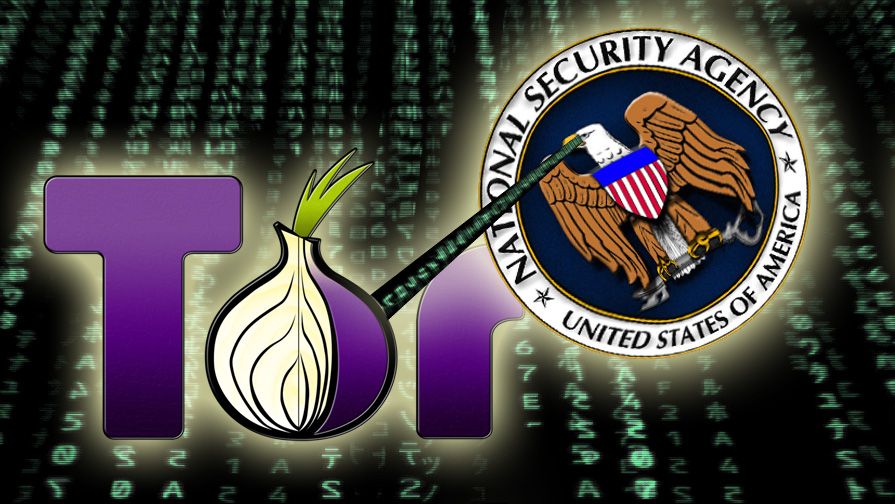
In the ongoing drizzle of Snowden revelations the public has witnessed a litany of calls for the widespread adoption of online anonymity tools. One such technology is Tor, which employs a network of Internet relays to hinder the process of attribution. Though advocates at the Electronic Frontier Foundation openly claim that “Tor still works[1]” skepticism is warranted. In fact anyone risking incarceration (or worse) in the face of a highly leveraged intelligence outfit like the NSA would be ill- advised to put all of their eggs in the Tor basket. This is an unpleasant reality which certain privacy advocates have been soft-pedaling.

The NSA Wants You To Use Tor

Tor proponents often make a big deal of the fact that the NSA admits in its own internal documents that “Tor Stinks,” as it makes surveillance more work-intensive[2]. What these proponents fail to acknowledge is that the spies at the NSA also worry that Internet users will abandon Tor:

[A] Critical mass of targets use Tor. Scaring them away from Tor might be counterproductive”

Go back and re-read that last sentence. Tor is a signal to spies, a big waving flag that gets their attention and literally draws them to your network traffic[3]. Certain aspects of Tor might “stink” but ultimately the NSA wants people to keep using Tor. This highlights the fact that security services, like the FBI[4], have developed sophisticated tools to remove the veil of anonymity that Tor aims to provide.

For example, the Washington Post reports[5]:

One document provided by Snowden included an internal exchange among NSA hackers in which one of them said the agency’s Remote Operations Center was capable of targeting anyone who visited an al-Qaeda Web site using Tor.”

It’s well known that Tor is susceptible to what’s called a traffic confirmation attack (AKAend-to-end correlation), where an entity monitoring the network traffic on both sides of a Tor session can wield statistical tools to identify a specific communication path. Keep in mind that roughly 90 percent of the world’s internet communication flows through the United States[6], so it’s easy for U.S. intelligence to deploying this approach by watching data flows around entry and exit points[7].

Another method involves “staining” data with watermarks. For example, the NSA has been known to mark network traffic by purchasing ad space from online companies like Google. The ads cause web browsers to create a cookie artifact on the user’s computer which identifies the machine viewing the ad[8]. IP addresses may change but the cookie and its identifiers do not.

De-cloaking Tor users doesn’t necessarily require a federal budget either. According to a couple of researchers slated to speak at Black Hat in a few weeks[9]:

In our analysis, we’ve discovered that a persistent adversary with a handful of powerful servers and a couple gigabit links can de-anonymize hundreds of thousands Tor clients and thousands of hidden services within a couple of months. The total investment cost? Just under $3,000.”

Client Network Exploitation (CNE) Trumps Crypto

Back in 2009 security researcher Joanna Rutkowska implemented what she dubbed the “Evil Maid” attack to foil TrueCrypt’s disk encryption scheme[10]. By compromising the Windows boot environment her team was able to capture the hard disk’s encryption passphrase and circumvent TrueCrypt’s protection. While users can [usually] defend against this sort of monkey business, by relying on a trusted boot process, the success of the Evil Maid attack underscores the capacity for subversion to trump encryption.

This type of client-side exploitation can be generalized for remote network-based operations. In a nutshell, it doesn’t matter how strong your network encryption is if a spy can somehow hack your computer and steal your encryption passphrase (to decrypt your traffic) or perhaps just pilfer the data that they want outright.

Enter the NSAs QUANTUM and FOXACID tag team. QUANTUM servers have the ability to mimic web sites and subsequently re-direct user requests to a second set of FOXACID servers which infects the user’s computer with malware[11]. Thanks to Ed Snowden it’s now public knowledge that the NSA’s goal is to industrialize this process of subversion (a system codenamed TURBINE[12]) so it can be executed on an industrial scale. Why go to the effort of decrypting Tor network traffic when spies can infect, infiltrate, and monitor millions of machine at a time?

Is it any wonder that the Kremlin has turned to old-school typewriters[13] and that German officials have actually considered a similar move[14]? In the absence of a faraday cage even tightly configured air- gapped systems can be breached using clever radio and cellular-based rootkits[15]. As one user shrewdly commented in an online post[16]:

Ultimately, I believe in security. But what I believe about security leaves me far from the cutting edge; my security environment is more like bearskins and stone knives, because bearskins and stone knives are simple enough that I can *know* they won’t do something I don’t want them to do. Smartphones and computers simply cannot provide that guarantee. The parts of their security models that I do understand, *won’t* prevent any of the things I don’t want them to do.”

Software is hard to trust, there are literally thousands upon thousands of little nooks where a flaw can be “accidentally” inserted to provide a back door. Hardware is even worse.

Denouement

About a year ago John Young, the operator of the leaks site Cryptome, voiced serious concerns in a mailing list thread about the perception of security being conveyed by tools like Tor[17]:

Security is deception. Comsec a trap. Natsec the mother of secfuckers”

Jacob Appelbaum, who by the way is intimately involved with the Tor project, responded:

Whatever you’re smoking, I wish you’d share it with the group”

Appelbaum’s cavalier dismissal fails to appreciate the aforementioned countermeasures. What better way to harvest secrets from targets en mass than to undermine a ubiquitous technology that everyone thinks will keep them safe? Who’s holding the shit-bag now? For activists engaged in work that could get them executed, relying on crypto as a universal remedy is akin to buying snake oil. John Young’s stance may seem excessive to Tor promoters like Appelbaum but if Snowden’s revelations have taught us anything it’s that the cynical view has been spot on.

Bill Blunden is an independent investigator whose current areas of inquiry include information security, anti-forensics, and institutional analysis. He is the author of several books, including The Rootkit Arsenal and Behold a Pale Farce: Cyberwar, Threat Inflation, and the Malware-IndustrialComplex. Bill is the lead investigator at Below Gotham Labs.

End Notes

1 Cooper Quintin, “7 Things You Should Know About Tor,” Electronic Frontier Foundation, July 1, 2014, https://www.eff.org/deeplinks/2014/07/7-things-you-should-know-about-tor

2 ‘Tor Stinks’ presentation, Guardian, October 4, 2013,http://www.theguardian.com/world/interactive/2013/oct/04/tor-stinks-nsa-presentation-document

3 J. Appelbaum, A. Gibson, J. Goetz, V. Kabisch, L. Kampf, L. Ryge, “NSA targets theprivacy-conscious,” http://daserste.ndr.de/panorama/aktuell/nsa230_page-1.html

4 Kevin Poulsen, “FBI Admits It Controlled Tor Servers Behind Mass Malware Attack,”

Wired, September 13, 2013, http://www.wired.com/threatlevel/2013/09/freedom-hosting-fbi/

5 Barton Gellman, Craig Timberg, and Steven Rich, “Secret NSA documents show campaign against Tor encrypted network,” Washington Post, October 4, 2013

6 James Ball, “NSA stores metadata of millions of web users for up to a year, secret files show,” Guardian, September 30, 2013, http://www.theguardian.com/world/2013/sep/30/nsa-americans-metadata-year-documents/print

7 Maxim Kammerer, [tor-talk] End-to-end correlation for fun and profit, August 20, 2007,https://lists.torproject.org/pipermail/tor-talk/2012-August/025254.html

8 Seth Rosenblatt, “NSA tracks Google ads to find Tor users,” CNET, October 4, 2013, http://news.cnet.com/8301-1009_3-57606178-83/nsa-tracks-google-adsto-find-tor-users/

9 Alexander Volynkin & Michael McCord, “You Don’t Have to be the NSA to Break Tor: Deanonymizing Users on a

Budget,” Black Hat USA 2014, https://www.blackhat.com/us-14/briefings.html#you-dont-have-to-be-the-nsa-to-break-tor-deanonymizing-users-on-a-budget

10 Joanna Rutkowska, “Evil Maid goes after TrueCrypt!” Invisible Things Lab’s Blog, October 16, 2009, http://theinvisiblethings.blogspot.com/2009/10/evil-maid-goes-after-truecrypt.html

11 Bruce Schneier, “Attacking Tor: how the NSA targets users’ online anonymity,” Guardian, October 4, 2013, http://www.theguardian.com/world/2013/oct/04/tor-attacks-nsa-users-online-anonymity/print

12 Ryan Gallagher and Glenn Greenwald, “How the NSA Plans to Infect ‘Millions’ of Computers with Malware,”

Intercept, March 12, 2014, https://firstlook.org/theintercept/article/2014/03/12/nsa-plans-infect-millions-computers-malware/

13 Chris Irvine, “Kremlin returns to typewriters to avoid computer leaks,” Telegraph, July 11, 2014,http://www.telegraph.co.uk/news/worldnews/europe/russia/10173645/Kremlin-returns-to-typewriters-to-avoid-computer-leaks.html

14 Cyrus Farivar, “In the name of security, German NSA committee may turn to typewriters,” Ars Technica, July 14, 2014, http://arstechnica.com/tech-policy/2014/07/in-the-name-of-security-german-nsa-committee-may-turn-to-typewriters/

15 Jacob Appelbaum, “Shopping for Spy Gear: Catalog Advertises NSA Toolbox,” Der Spiegel, December 29, 2013, http://www.spiegel.de/international/world/catalog-reveals-nsa-has-back-doors-for-numerous-devices-a-940994.html

16 “Iron Box Security,” Cryptome, June 6, 2014, http://cryptome.org/2014/06/iron-box-security.htm

17 “Natsec the Mother of Secfuckers,” Cryptome, June 9, 2013, http://cryptome.org/2013/06/nat-secfuckers.htm

Glenn Thomas

Glenn Thomas

Glenn-ThomasGlenn Thomas, AIDS and Ebola expert and spokesperson for the World Health Organization. Ebola expert Glenn Thomas was among the 298 people who were killed when Malaysia Airlines flight MH17 was shot down and crashed in Ukraine. It is understood he was one of more than 100 researchers who were aboard the flight on their way to an international Aids conference in Australia. Among the other delegates aboard the plane was Joep Lange, a leading AIDS researcher and former president of the International AIDS Society (IAS).

Critical Facts All US Citizens Should Know Abut Israel & Palestine

Critical Facts All US Citizens Should Know Abut Israel & Palestine

israel-palestine-wall

“Desparation”

    • Gaza (along with the West Bank and East Jerusalem) is occupied Palestinian territory under international law, determined by the vast majority of the world, as well as the highest court in the world, the UN’s International Court of Justice. Gaza cannot commit aggression against Israel, since Israel is in constant and continual commission of illegal aggression against Palestine by occupying it (illegally and sadistically blockading it and frequently committing terrorism against its civilians, including by targeting them with chemical weapons provided by US taxpayers – see “Rain of Fire” by Human Rights Watch). As documented by Amnesty Int’l, Human Rights Watch, and many others, Israel intentionally targets and murders civilians, including children, en masse.


palestine_children_abuse_by_israeli_solders

Israeli Child Abusers At Work

  • But, even ignoring international law and that Gaza is under illegal Israeli occupation, Gaza did not initiate this current round of violence; Israel did:
    • Western/US/Israeli propaganda says the violence started with the kidnapping and killing of three Israeli youths on June 12th. That is a lie:
    • On May 20th, the Israeli government murdered 2 unarmed Palestinian teens, one on video, and wounded a third.
    • The firing of pathetic scrap metal rockets from impoverished Gaza, which have killed no one, were in fact launched in response to earlier Israeli bombings, killings, assassinations, and arrests of Palestinians, including children.
  • Since the year 2000, Israel has killed 1,500 Palestinian children, while Palestinians have killed 132 Israeli children. That means Israel has killed over 1,000% percent more Palestinian children than vice versa.
  • According to a landmark, comprehensive study of all of Israel’s wars, by Zeev Maoz, Professor of Political Science at the University of California, Davis, former head of the Graduate School of Government and Policy and of the Jaffee Center for Strategic Studies at Tel Aviv University, and former academic director of the M.A. Program at the Israeli Defense Forces’ National Defense College:
    • “. most of the wars in which Israel was involved were the result of deliberate Israeli aggressive design . None of these wars – with the possible exception of the 1948 War of independence – was what Israel refers to as Milhemet Ein Berah (war of necessity). They were all wars of choice . ” – Defending the Holy Land, pg. 35, (bold added)
    • “I review a number of peace-related opportunities ranging from the Zionist-Hashemite collusion in 1947 through the collapse of the Oslo Process in 2000. In all those cases I find that Israeli decision makers – who had been willing to embark upon bold and daring military adventures – were extremely reluctant to make even the smallest concessions for peace . I also find in many cases Israel was engaged in systematic violations of agreements and tacit understandings between itself and its neighbors.” – Defending the Holy Land, pg. 40
  • Israel has violated more UN resolutions than any other country. That includes Iraq under Hussein.
  • Hamas is the government elected by Gaza in elections that Jimmy Carter (and many others) observed and said were completely fair and free. Israel constantly says Hamas uses human shields. But in Israel’s biggest massacre of Gaza, the one in 2009, all the human rights organizations, including Amnesty, HRW, and the jurist Richard Goldstone, found that Hamas DID NOT use human shields. On the contrary, Israel used human shields, which is a regular practice for Israel. Israel uses civilians as human shields.
    • Israel forced Palestinian civilians to dig and lay naked in trenches around Israeli tanks. See here at 6:45.
          • XIV. THE USE OF PALESTINIAN CIVILIANS AS HUMAN SHIELDS

Israel-using-human-shield-boy
israel-uses-human-shields


      • “The Mission received allegations that in two areas in north Gaza Israeli troops used Palestinian men as human shields… The Mission found the foregoing witnesses to be credible and reliable. It has no reason to doubt the veracity of their accounts and found that the different stories serve to support the allegation that Palestinians were used as human shields.”
  • Noam Chomsky: “Hamas is regularly described as ‘Iranian-backed Hamas, which is dedicated to the destruction of Israel.’ One will be hard put to find something like ‘democratically elected Hamas, which has long been calling for a two-state settlement in accord with the international consensus’—blocked for over 30 years by the US and Israel. All true, but not a useful contribution to the Party Line, hence dispensable.”
  • In the history of all rocket and mortar fire into Israel, 26 people, total, have been killed. And remember, Palestine breaks ceasefires far less often than Israel, as documented above.
    • This number of 26 is in contrast to the minimum number of 1,400 people who were murdered by Israel in a single one of its terrorist atrocities, the 2009 Gaza Massacre.
    • Noting that in the current massacre, zero Israelis and over 100 Palestinians have thus far been killed, and noting that Gaza is a concentration camp – Israel allows no one to enter or leave – Dan Sanchez gives a perfect description of the disparity in arms between the US/Israeli war machine and Palestinian scrap metal projectiles: “They [the Gazans] are like fish in a barrel, being blasted by a shotgun from above. It’s like some of the fish in the barrel pathetically spitting water at the gunman, and [US media calls] that a “shooting battle.”
  • The rhetoric and tactics of Hamas and other groups resisting Israeli occupation and colonization can be brutal (though far less so than Israel). Propagandists try to attribute this to anti-Semitism, to distract from the fact that these groups are resisting having their country stolen and their people dispossessed and annihilated. Native American resistance to European colonizers was sometimes extremely brutal, as was their rhetoric, but everyone universally recognizes that this was not because of “anti-White-ism”, or “anti-European-ism”, but because they were having their land stolen and their people massacred, the same thing that Israel is doing to the Palestinians.
    • Palestinians have the right under international law to resist occupation, ethnic cleansing, colonization, aggression, and annexation. Miko Peled, son of an Israeli general, recently stated that if Israel doesn’t Like rockets, they should decolonize Palestine. Dr. Norman Finkelstein notes that “The Palestinians have the right to use arms to resist an occupation . However, the fact that morally and legally they have that right doesn’t mean that it’s the most prudent strategy. In my opinion, a national Palestinian leadership committed to mobilizing nonviolent resistance can defeat the Israeli occupation if those of us living abroad lend support to it.”
  • In 1948, the people who wanted to form a Jewish state carried out a massive terror and ethnic cleansing campaign against the occupants of Palestine, expelling about half of them (750,000) from their land and into concentrated areas (Gaza and West Bank). Israel has slowly continued colonizing even those areas, which were specifically reserved by the UN for Palestinians. Israel takes all the best land and resources, such as water. Here is a visualization of what has happened, and is currently happening with massive support from Obama:
map-story-of-palestinian-nationhood

Genocide – GET IT!?

  • Israeli settlement building in Palestine is a war crime under international law. Under Obama, Israeli settlement building is up over 130%.
  • For about 40 years, there has been an international consensus that Israel must stop colonizing territory outside its 1967 borders. The consensus has been blocked by the United States, in isolation from the international community (much like the USA’s isolated, strong support for South African Apartheid). Every year there is a UN vote on the issue, and every year it goes about 165 to 2, the world against the US and Israel. This continues under Obama. All human rights groups support the consensus, as does Hamas, the Arab League, Iran, the Organization of the Islamic Conference… Virtually everyone, except the US and Israel. (More details on this page.)
FreePalestine_Anti-Semitism

Hypocricy Defined

  • Palestinians are brutalized, repressed and impoverished by Israel. To get a quick visual understanding of the difference between Gaza and Israel, take a look at the images of people and cities being wantonly pummeled by Israeli terrorism when you search the word “Gaza“, and the images of opulence, wealth and luxury that come up when you search “Tel Aviv“.
  • Israel, whose government intentionally targets, tortures, and murders civilians, including children, including with chemical weapons, and whose government uses Palestinian civilians as human shields, and whose government is the last entity on Earth carrying out old-style ethnic cleansing and colonization of foreign countries, is the single biggest recipient of US aid, at over three billion dollars a year and huge amounts of lethal weaponry such as attack helicopters and white phosphorous chemical explosives.
  • To reiterate, Obama requested more military aid for Israel than any president ever. This is not because Obama and the USA love Jewish people. Obama was recently an accomplice in a literal neo-Nazi-led coup d’etat in Ukraine, and is currently fully supporting the junta-integrated Ukrainian government, which is staffed with several neo-Nazis in high ministries, and which uses neo-Nazi paramilitaries to carry out massacres (and possibly genocide) against people resistant to the junta. The actual reason the US supports Israel is discussed below.
  • As Amnesty International has noted, all aid to Israel is illegal under international (and US) law, because Israel is a consistent violator of human rights.

Amnesty International also noted that Israel’s 2009 massacre of Gaza would not have been possible without the illegal funding (money and weapons) and support Israel gets from the USA.

This is also true of the current massacre Israel is committing in Gaza.

However, in a way, that is good news.

That means US citizens can STOP the massacres.

stop-killing-palestinians

MSM Refuses to Cover Anti-Israel War Crime Protests

If we stop our money and weapons-flow to Israel, which is illegal anyway, we stop Israeli terrorism! All we have to do is stop committing a crime, and we will stop more crimes! That’s great news.

Here is a previous example of how this has worked: When the USA cut its funding for Indonesia’s genocide against East Timor, which the USA was funding almost exclusively, Indonesia was forced to stop and withdraw. All it took was cutting off our illegal flow of money and weapons to the criminals.

The same thing would happen if we cut our illegal funding for Israel’s genocides and acts of terrorism, ethnic cleansing, colonization, and annexation against Palestine.

But since the USA is an anti-democratic country, the only way to stop US plutocrats from using our money to fund Israeli terrorism is to force it through massive, non-violent pressure.

One way it happens is when it becomes too politically costly for the plutocracy to keep funding genocide and terror, meaning the costs of their illegal support outweigh the benefits, as in Indonesia. In that case, massive publicity and indigenous resistance accomplished the goal.

But Israel is the USA’s main imperial – and nuclear – base for controlling the Middle East, which US planners, in 1945, called the greatest material prize in world history, due to the oil and gas. Thus, it might require more, as in non-violently making our country into a democracy so that people control their own institutions and money, and thus the way we operate as a society and interact with the world.

Last note: To be clear, Israel is a legal state, but only within the borders allotted to it by the United Nations – the Pre-1967 borders, which existed before Israel started eating away, through terror, ethnic cleansing, colonization, and annexation, at the areas reserved by the United Nations for Palestinians, as well as areas of other countries, such as Syria (the Golan Heights).

Per international law, US domestic law, and common sense, Israel doesn’t deserve any support until it abandons isolationism and accepts that it can’t steal other people’s countries, and stops blockading and withdraws its soldiers and settlers, all there illegally, from those countries.

Israel is, militarily, the most powerful country in the Middle East, by far. Removing our support for the Israeli government (which we are legally required to do) will not put Israelis in danger. It will pressure the Israeli government to stop doing what endangers Israelis, which is committing aggressive acts against Israel’s neighbors.

If Israel ends its status as a consistent violator of human rights, decolonizes Palestine, and respects its neighbors, it could be a pleasure – and legal – to work with and support Israel.

Germany, Japan, and South Africa went from being the most reviled countries on Earth to being some of the most admired. Maybe Israel could undergo the same transformation, but not unless we, US citizens, help by ceasing to enable Israeli terrorism and war crimes by illegally supporting them.

Media Distorts Truth About Israel’s Campaign of Brutality Against Gaza

Media Distorts Truth About Israel’s Campaign of Brutality Against Gaza

israel-attacks-gaza-civilians

Today Israel carried out aerial strikes in Gaza targeting a mosque it claims was hosting rockets, a disabled care center and a geriatric urgent care hospital, where international volunteers have since rushed to shield patients.

In the deadliest strike yet, the home of Gaza’s police chief was also bombed, killing 18 members of his family.

These horrors are just the latest examples of death and destruction being wreaked amidst Israel’s five day long bombing campaign dubbed ‘Operation Protective Edge’.

Since the beginning of the offensive, at least 150 Palestinians have been killed and over 1,000 more injured. Thousands of homes have been utterly destroyed. No Israelis have yet died from a Hamas launched rocket.

Yet despite the disproportionality of the brutality, the establishment media continues to distort the truth by painting Hamas as the sole aggressor.

From FOX‘s ‘Gaza Rockets Aimed at Israel: What Would you Do with Just 15 Seconds?’ to liberal alt-news site VOX‘s ‘The Tragedy Never Ends, Palestinian Rockets Force Israeli Peace Conference to Evacuate’ to even Human Rights Watch, a human rights organization that is supposed to be unbiased in its criticism of atrocities, which leads with ‘Indiscriminate Palestinian Rocket Attacks’.

But perhaps most disturbing is the initial headline crafted by The New York Timesdescribing an Israeli missile bombing a cafe in Gaza packed with Palestinians watching the World Cup:

ABC Distorts Truth to Fit Pro-Israel Bias

As journalist Rania Khalek explains in an article dissecting the egregious error:

“Sawyers bald misreporting reflects either a deliberate lie by ABC news or willful ignorance so severe that Palestinian death and misery is invisible even when it’s staring ABC producers right in the face.”

The Western media routinely devalues Palestinian lives, and the dead bodies that stack up every time Israel goes on the offense remain an inconvenient truth for its narrative.

palestine-gaza-attack-civilians-dead

What Israel is actually doing in Gaza – MURDER

Another common misconception thanks to the media’s false depiction of Palestine is that Hamas is a rogue terrorist group, when in reality it is the democratically elected leadership of Gaza. When the IDF claims it only targets Hamas, it could mean any building affiliated with the government or social services provided to Palestinians.

As Noam Chomsky said, this isn’t war, it’s murder:

“When Israelis in the occupied territories now claim that they have to defend themselves, they are defending themselves in the sense that any military occupier has to defend itself against the population they are crushing.”

According to the White House, Israeli Prime Minister Netanyahu is acting ‘responsible’ in his defense of the rocket attacks. Yet the collective punishment of over a million people living in an open-air prison hardly seems as such.

I made a statement recently addressing Israel’s irresponsible barbarism:

Why Doesn’t the Media Care About Dead Palestinians?

Since posting this video, I have been overwhelmed at the feedback and support from thousands of Palestinians around the world. It’s already been featured on one of Turkey’s most popular news websites En Son Haber, Indonesian newspaper Liputan, translated in French on DailyMotion, posted on Arabic newspaper Alwatan Voice and has gone viral on Palestinian TV station Raya FM.

I strongly denounce deadly force on both sides, but it’s important to not frame this as a cycle of violence. One is the colonizer oppressor, the other the colonized oppressed. As IDF General’s son Miko Peled said, Palestinians living in occupied territories have two choices: the completely surrender, or resist – and resistance is what we’re seeing now.

**

Don’t miss Max Blumenthal talking about how the Israeli government hid information on the three murdered teens’ deaths in order to incite violence, racial tensions and justify a military rampage.

Why Gaza is Burning: What the Corporate Media Isn’t Telling You

**

IDF General’s son Miko Peled talks about the latest siege on Gaza and why Israel should decolonize Palestine and end the apartheid regime if it doesn’t like getting shot at with rockets.

IDF General’s Son: If Israel Doesn’t Like Rockets, Decolonize Palestine

**

Earlier this year, Secretary of State John Kerry came under fire for saying that Israel could turn into an apartheid state if reforms aren’t made. I outline five reason why it already is one.

5 Reasons Why Israel is an Apartheid State

**

When Israel launched its 2012 military offensive dubbed ‘Operation Pillar of Defense’, the IDF knowingly bombed a journalist tower in Gaza that housed RT among other foreign news networks. I responded to the war crime on Breaking the Set.

Many Americans think the clock starts with Hamas rockets every time Israel carries out a military operation, without realizing the history of the occupation and roots of the conflict. Here’s a brief breakdown.

Written by Abby Martin @abbymartin

Photo by flickr user Jordi Bernabeu Farrus

thanks MediaRoots.org

Why “One Gun” or “Three Guns” for TSHTF Is a Bad Idea

Why “One Gun” or “Three Guns” for TSHTF Is a Bad Idea

freedom-vigilanceWe’ve all been part of these discussions, and we’ve all read a ton of them on forums and blogs over the years: “if you could have only one gun for TEOTWAWKI, what would it be?” A more enlightened-seeming variant on this same theme are discussions that start with, “if you could pick only three guns for TSHTF…”

Here’s what’s wrong with so many of these discussions: no matter what flavor of civilization-ending apocalypse you contemplate — meteor strike, supervolcano, global pandemic , EMP blast, etc. — a SHTF scenario is likely to play out in phases, and for each phase you’re going to need a different skill set and a different load-out — not just a gun, but a complement of tools and skills.

Below is my brief attempt to sketch out the three phases that society would go through in a total collapse, and to think about some load-out options for each. Sure, you could read this and then pick three guns — one gun per phase — but by the end you’ll see that this attitude is putting the cart before the horse. The smarter thing to do is to put together a set of load-outs that will give you multiple options for dealing with each phase. You may still end up with three guns, but the point is that “which three guns… ” is not the question that you start with. Instead, the right question is “what mix of weapons and accessories are the best fit for each of the scenarios I’m envisioning?”

Phase 1: martial law and trigger-happy authorities

In the initial phase of a catastrophe, a phase that admittedly may last only a day or two depending on the swiftness and severity of the cataclysm, there will be some attempt by authorities to maintain law and order. During this phase, if you’re walking around with an AR or AK strapped to your back, you’re likely to be taken for a looter and shot on sight.

This is the red dot or reflex sight + polymer frame pistol phase. Mobile, concealable, accurate, quiet, and 100% reliable are what you’re looking for. Don’t worry about how long the batteries will last in your Aimpoint right now — you just have to get through this phase without getting arrested or shot.

If you think you’re going to get through this phase with a bow or a crossbow, then all I can say is that I’ll be glad to use your bow in phase 3 when I stumble across your corpse clutching it.

My personal fantasy load-out for this phase would be a suppressed Glock 17 paired with something like the Daniel Defense ISR-300 (a short-barreled rifle chambered in .300 Blackout with an integrally attached suppressor).

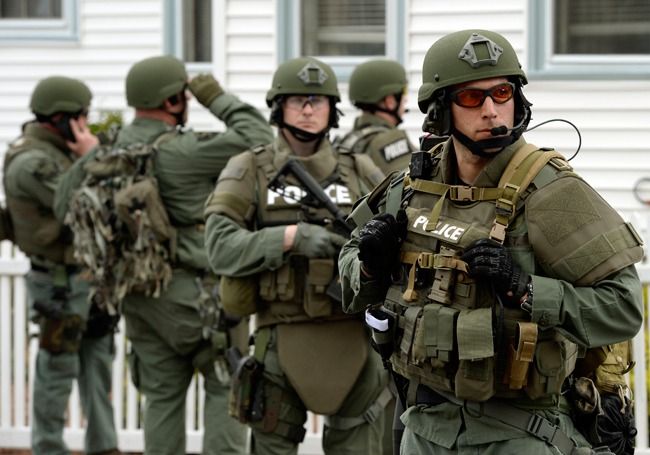
boston-swatWhy the focus on stealth? Because if you do have to shoot someone or something during this phase, there’s a good chance that you may not want the whole neighborhood to know that shots were fired at your house. The authorities will be dealing with mass chaos and won’t have time to sort out who shot first, so if they show up at your house and you’re armed to the teeth and standing over a pile of corpses, then it may not go well for you. So a suppressed short-barreled rifle is your best bet for home defense here, because at least you have the option of not involving an organized gang of heavily armed, yet frightened and confused people (i.e. the police or whoever is trying to maintain order) who may decide that you’re a threat.

Note that now is the time for you to either start your NFA paperwork, or obtain the theoretical know-how to build a homemade can. I’m not saying go out and build a silencer, because that’s illegal. But maybe download the info and print it out, and store it as part of your bug-out gear. Do not under any circumstances attempt to actually make a homemade silencer, though, because that’s a felony. You do it, you get caught, you go to jail — end of story. I’m not winking or smiling here — do not do it, and in fact don’t even gather the materials for it because you don’t want to be guilty of constructive possession of such a thing.

Experienced pistol shooters (which does not describe me) will no doubt be fine skipping the CQB personal defense weapon (PDW) and using a suppressed semi-auto pistol for this phase. This is great, because as I mentioned above, you’ll need a pistol anyway.

So get your phase 1 load-out together, and learn to shoot and move with it. And for God’s sake just pick the best tools for the immediate job at hand, without worrying about whether or not the batteries will last another 20 years. You’ll need every technological advantage, no matter how fragile and/or short-lived that technology may seem, to fight your way through this temporary phase. If you can afford some good night-vision equipment, then by all means add it to your phase 1 load-out, and quit worrying about whether your grandchildren will still be able to use it to defend the homestead.

Phase 2: lawlessness and die-off

This is the open-carry assault rifle phase. Very few people are going to make it past this phase, but if you do, it’s because you have reliable long gun, plenty of ammo, a good optic, some training, and a few capable allies at your side.

The people who have survived phase 1 are not going to be happy campers. They’ll be hungry, justifiably terrified, and aggressive. They’ll also be gathered together in groups and gangs, which is exactly how you should plan to roll during this phase. More allies with guns means a better chance for you and yours to survive, which is why the training that you do for this phase should involve learning to shoot and move as part of a group.

You’ll want carbine and shotgun options — the pistol that got you through phase 1 will probably become a rarely used backup weapon, and your long guns will become your primary weapons. My personal pick for phase 2 is an AR-15 with a Trijicon ACOG, but that’s because I know the AR platform pretty well. Others will choose the AK. There’s also the Tavor, SCAR, and numerous other options. I won’t wade into this debate, because this is what most people are thinking of when they post “what gun and optic should I get for SHTF?” in various forums.

Phase 3: long-term survival

At some point your optics will run out of batteries, and depending on your stockpiles you may run out of ammo even before then. When this happens, it’s all about trapping and snares, fishing, farming, and finding ways to harvest a few thousand calories per day per family member.

Note that taking wild game of any kind is difficult, and it involves a lifetime of practice. Depending on the terrain you’re in and your skill set, hunting for food will range from very difficult to downright impossible. Farming is an order of magnitude easier and more predictable, so if you really want to be prepared then you should learn to grow your own food.

Of course, you will still do some shooting — this is the phase where you get to bust out that double-barreled shotgun with the multi-caliber barrel inserts, and go scavenging for ammo. If that shotgun was your phase 1 weapon, then you probably didn’t make it this far, but it will make a fine phase 3 hunting and home/farm defense gun.

This is the phase where a lot of people plan to rely on archery to take game. Please. Bowhunting is hard. Trapping isn’t a cakewalk, but it’s a vastly easier and more reliable way to get protein that stalking around in the woods with a bow; it also relies far less on expensive consumables (i.e arrowheads and strings) that you’d need to stockpile.

I personally think that .once-again-cheap 22LR ammo is the best thing to stock up on for this phase, and judging by the recent shortage, plenty of people agree with me.

Conclusion

Many of you will disagree with some, or even all, of my recommendations. But I hope if you take away anything from this article, it’s the idea that any catastrophe will unfold in series of distinct phases or stages, and you’ll need to prepare for each one. The tools and skills that will get you through the initial phase won’t necessarily be the best suited for the next phase, and so on. So the answer is to have specialized load-outs for different types of situations. You want to have options, so that you can improvise, adapt, and overcome. Don’t think in terms of “one gun” or “three guns” — think in terms of scenarios and loadouts.

This is actually how US Special Forces operate. They have different load-outs that fit different mission profiles; sometimes this involves selecting different weapons and tools, and sometimes it involves reconfiguring the same weapon or tool. But the main thing is that they have options, and they adapt their load-out to fit their situation.

What types of scenarios do you imagine that you’ll face in a catastrophe, and what type of load-out (gun, optic, ammo, clothing, tools) would be the best fit for each scenario? Don’t get sucked into the game of trying to put together one single loadout that will fit every scenario, because I promise you, when you’re watching the chaos unfold and you’re wetting your pants, you’re going to wish dearly that you hadn’t tied yourself to a one-size-fits-all, jack-of-all-trades-master-of-none solution. You’re going to want to reach for the very best tool for the job that is immediately staring you in the face, and you won’t be happy if you’re stuck with the second- or third-best tool for wide a range of jobs that you may or may not encounter.

via AllOutDoor.com

US Police Have Killed Over 5,000 Civilians Since 9/11

US Police Have Killed Over 5,000 Civilians Since 9/11

police-state-insiderStatistically speaking, Americans should be more fearful of the local cops than “terrorists.”

Though Americans commonly believe law enforcement’s role in society is to protect them and ensure peace and stability within the community, the sad reality is that police departments are often more focused on enforcing laws, making arrests and issuing citations. As a result of this as well as an increase in militarized policing techniques, Americans are eight times more likely to be killed by a police officer than by a terrorist, estimates a Washington’s Blog report based on official statistical data.

Though the U.S. government does not have a database collecting information about the total number of police involved shootings each year, it’s estimated that between 500 and 1,000 Americans are killed by police officers each year. Since 9/11, about 5,000 Americans have been killed by U.S. police officers, which is almost equivalent to the number of U.S. soldiers who have been killed in the line of duty in Iraq.

Because individual police departments are not required to submit information regarding the use of deadly force by its officers, some bloggers have taken it upon themselves to aggregate that data. Wikipedia also has a list of “justifiable homicides” in the U.S., which was created by documenting publicized deaths.

Mike Prysner, one of the local directors of the Los Angeles chapter for ANSWER — an advocacy group that asks the public to Act Now to Stop War and End Racism — told Mint Press Newsearlier this year that the “epidemic” of police harassment and violence is a nationwide issue.

He said groups like ANSWER are trying to hold officers accountable for abuse of power. “[Police brutality] has been an issue for a very long time,” Prysner said, explaining that in May, 13 people were killed in Southern California by police.

As Mint Press News previously reported, each year there are thousands of claims of police misconduct. According to the CATO Institute’s National Police Misconduct Reporting Project, in 2010 there were 4,861 unique reports of police misconduct involving 6,613 sworn officers and 6,826 alleged victims.

Most of those allegations of police brutality involved officers who punched or hit victims with batons, but about one-quarter of the reported cases involved firearms or stun guns.

Racist policing

A big element in the police killings, Prysner says, is racism. “A big majority of those killed are Latinos and Black people,” while the police officers are mostly White, he said. “It’s a badge of honor to shoot gang members so [the police] go out and shoot people who look like gang members,” Prysner argued, giving the example of 34-year-old Rigoberto Arceo, who was killed by police on May 11.

According to a report from the Los Angeles Times, Arceo, who was a biomedical technician at St. Francis Medical Center, was shot and killed after getting out of his sister’s van. The Los Angeles County Sheriff’s Department says Arceo “advanced on the deputy and attempted to take the deputy’s gun.” However, Arceo’s sister and 53-year-old Armando Garcia — who was barbecuing in his yard when the incident happened — say that Arceo had his hands above his head the entire time.

Prysner is not alone in his assertion that race is a major factor in officer-related violence. This past May, astudy from the the Malcolm X Grassroots Movement, an anti-racist activist organization, found that police officers, security guards or self-appointed vigilantes killed at least 313 Black people in 2012 — meaning one Black person was killed in the U.S. by law enforcement roughly every 28 hours.

Prysner said the relationship between police departments and community members needs to change and that when police shoot an unarmed person with their arms in the air over their head, the officer should be punished.

Culture of misconduct

“You cannot have a police force that is investigating and punishing itself,” Prysner said, adding that taxpayer money should be invested into the community instead of given to police to buy more guns, assault rifles and body armor.

Dissatisfied with police departments’ internal review policies, some citizens have formed volunteer police watch groups to prevent the so-called “Blue Code of Silence” effect and encourage police officers to speak out against misconduct occurring within their department.

As Mint Press News previously reported, a report released earlier this year found that of the 439 cases of police misconduct that then had been brought before the Minneapolis’s year-old misconduct review board, not one of the police officers involved has been disciplined.

Although the city of Minneapolis spent $14 million in payouts for alleged police misconduct between 2006 and 2012, despite the fact that the Minneapolis Police Department often concluded that the officers involved in those cases did nothing wrong.

Other departments have begun banning equipment such as Tasers, but those decisions were likely more about protecting the individual departments from lawsuits than ensuring that officers are not equipped with weapons that cause serious and sometimes fatal injuries when used.

To ensure officers are properly educated on how to use their weapons and are aware of police ethics, conflict resolution and varying cultures within a community, police departments have historically heldtraining programs for all officers. But due to tighter budgets and a shift in priorities, many departments have not provided the proper continuing education training programs for their officers.

Charles Ramsey, president of both the Major Cities Chiefs Association and the Police Executive Research Forum, called that a big mistake, explaining that it is essential officers are trained and prepared for high-stress situations:

“Not everybody is going to be able to make those kinds of good decisions under pressure, but I do think that the more reality-based training that we provide, the more we put people in stressful situations to make them respond and make them react.”

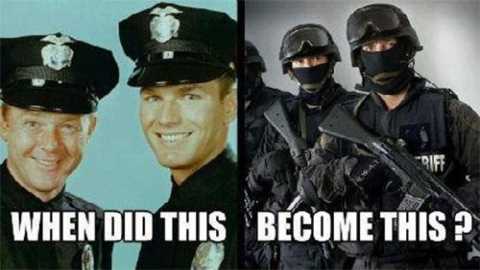
GI Joe replaces Carl Winslow

Military-Police-StateIn order to help local police officers protect themselves while fighting the largely unsuccessful War on Drugs, the federal government passed legislation in 1994 allowing the Pentagon to donate surplus military equipment from the Cold War to local police departments. Meaning that “weaponry designed for use on a foreign battlefield has been handed over for use on American streets … against American citizens.”

So while the U.S. military fights the War on Terror abroad, local police departments are fighting another war at home with some of the same equipment as U.S. troops, and protocol that largely favors officers in such tactics as no-knock raids.

Radley Balko, author of “Rise of the Warrior Cop,” wrote in the Wall Street Journal in August:

“Since the 1960s, in response to a range of perceived threats, law-enforcement agencies across the U.S., at every level of government, have been blurring the line between police officer and soldier.

“Driven by martial rhetoric and the availability of military-style equipment—from bayonets and M-16 rifles to armored personnel carriers—American police forces have often adopted a mind-set previously reserved for the battlefield. The war on drugs and, more recently, post-9/11 antiterrorism efforts have created a new figure on the U.S. scene: the warrior cop—armed to the teeth, ready to deal harshly with targeted wrongdoers, and a growing threat to familiar American liberties.”

As Mint Press News previously reported, statistics from an FBI report released in September reveal that a person is arrested on marijuana-related charges in the U.S. every 48 seconds, on average — most were for simple possession charges.

According to the FBI’s report, there were more arrests for marijuana possession than for the violent crimes of murder and nonnegligent manslaughter, forcible rape, robbery and aggravated assault — 658,231 compared with 521,196 arrests.

While groups that advocate against police brutality recognize and believe that law enforcement officials should be protected while on duty, many say that local police officers do not need to wear body armor, Kevlar helmets and tactical equipment vests — all while carrying assault weapons.

“We want the police to keep up with the latest technology. That’s critical,” American Civil Liberties Union senior counsel Kara Dansky said. “But policing should be about protection, not combat.”

According to the National Law Enforcement Officers Memorial Fund, there are more than 900,000 sworn law enforcement officers in the United States. In 2012, 120 officers were killed in the line of duty. The deadliest day in law enforcement history was reportedly Sept. 11, 2001, when 72 officers were killed.

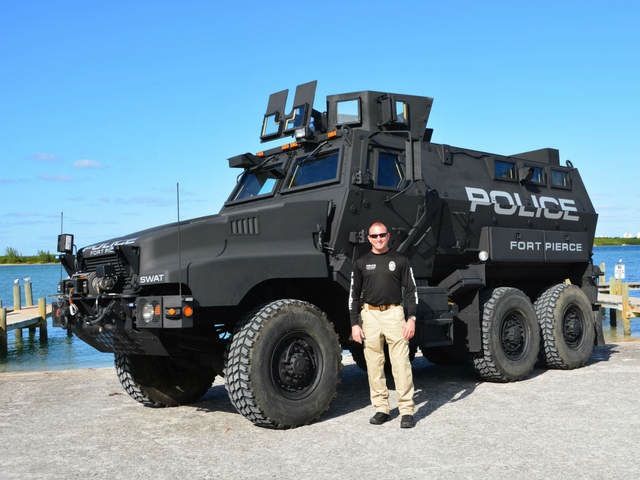
Despite far fewer officers dying in the line of duty compared with American citizens, police departments are not only increasing their use of protective and highly volatile gear, but are increasingly setting aside a portion of their budget to invest in new technology such as drones, night vision goggles, remote robots, surveillance cameras, license plate readers and armored vehicles that amount to unarmed tanks.

Though some officers are on board with the increased militarization and attend conferences such as the annual Urban Shield event, others have expressed concern with the direction the profession is heading.

For example, former Arizona police officer Jon W. McBride said police concerns about being “outgunned” were likely a “self-fulfilling prophecy.” He added that “if not expressly prohibited, police managers will continually push the arms race,” because “their professional literature is predominately [sic] based on the acquiring and use of newer weapons and more aggressive techniques to physically overwhelm the public. In many cases, however, this is the opposite of smart policing.”

“Coupled with the paramilitary design of the police bureaucracy itself, the police give in to what is already a serious problem in the ranks: the belief that the increasing use of power against a citizen is always justified no matter the violation. The police don’t understand that in many instances they are the cause of the escalation and bear more responsibility during an adverse outcome.

“The suspects I encountered as a former police officer and federal agent in nearly all cases granted permission for me to search their property when asked, often despite unconcealed contraband. Now, instead of making a simple request of a violator, many in law enforcement seem to take a more difficult and confrontational path, fearing personal risk. In many circumstances they inflame the citizens they are engaging, thereby needlessly putting themselves in real and increased jeopardy.”

Another former police officer who wished to remain anonymous agreed with McBride and told Balko,

“American policing really needs to return to a more traditional role of cops keeping the peace; getting out of police cars, talking to people, and not being prone to overreaction with the use of firearms, tasers, or pepper spray. … Don’t get me wrong, I’ve been in more than my share tussles and certainly appreciate the dangers of police work, but as Joseph Wambaugh famously said, the real danger is psychological, not physical.”

Release Us – a short film on police brutality by Charles Shaw

 MINT PRESS NEWS

Contributed by Secrets of the Fed of Secretsofthefed.com.

evolution-of-police-state

11 Shocking Facts About America’s Militarized Police Forces

11 Shocking Facts About America’s Militarized Police Forces

police-militarized

The militarization of police is harming civil liberties, impacting children, and transforming neighborhoods into war zones.

The “war on terror” has come home–and it’s wreaking havoc on innocent American lives.  The culprit is the militarization of the police.

The weapons used in the “war on terror” that destroyed Afghanistan and Iraq have made their way to local law enforcement. While police forces across the country began a process of militarization complete with SWAT teams and flash-bang grenades when President Reagan intensified the “war on drugs,” the post-9/11 “war on terror” has added fuel to the fire.

Through laws and regulations like a provision in defense budgets that authorize the Pentagon to transfer surplus military gear to police forces, local law enforcement are using weapons found on the battlefields of South Asia and the Middle East.

A recent New York Times article by Matt Apuzzoreported that in the Obama era, “police departments have received tens of thousands of machine guns; nearly 200,000 ammunition magazines; thousands of pieces of camouflage and night-vision equipment; and hundreds of silencers, armored cars and aircraft.”  The result is that police agencies around the nation possess military-grade equipment, turning officers who are supposed to fight crime and protect communities into what look like invading forces from an army. And military-style police raids have increased in recent years, with one count putting the number at 80,000 such raids last year.

In June, the American Civil Liberties Union (ACLU) brought more attention to police militarization when it issued a comprehensive, nearly 100-page (appendix and endnotes included) report titled, “War Comes Home: The Excessive Militarization of American Policing.”  Based on public records requests to more than 260 law enforcement agencies in 26 states, the ACLU concluded that “American policing has become excessively militarized through the use of weapons and tactics designed for the battlefield” and that this militarization “unfairly impacts people of color and undermines individual liberties, and it has been allowed to happen in the absence of any meaningful public discussion.”

The information contained in the ACLU report, and in other investigations into the phenomenon, is sobering. From the killing of innocent people to the lack of debate on the issue, police militarization has turned into a key issue for Americans. It is harming civil liberties, ramping up the “war on drugs,” impacting the most marginalized members of society and transforming neighborhoods into war zones.  Here are 11 important–and horrifying–things you should know about the militarization of police.

1. It harms, and sometimes kills, innocent people. When you have heavily armed police officers using flash-bang grenades and armored personnel carriers, innocent people are bound to be hurt.  The likelihood of people being killed is raised by the practice of SWAT teams busting down doors with no warning, which leads some people to think it may be a burglary, who could in turn try to defend themselves. The ACLU documented seven cases of civilians dying, and 46 people being injured.  That’s only in the cases the civil liberties group looked at, so the number is actually higher.

Take the case of Tarika Wilson, which the ACLU summarizes.  The 26-year-old biracial mother lived in Lima, Ohio.  Her boyfriend, Anthony Terry, was wanted by the police on suspicion of drug dealing.  So on January 4, 2008, a SWAT team busted down Wilson’s door and opened fire.  A SWAT officer killed Wilson and injured her one-year-old baby, Sincere Wilson. The killing sparked rage in Lima and accusations of a racist police department, but the officer who shot Wilson, Sgt. Joe Chavalia, was found not guilty on all charges.

2. Children are impacted. As the case of Wilson shows, the police busting down doors care little about whether there’s a child in the home.  Another case profiled by the ACLU shows how children are caught up the crossfire–with devastating consequences.

In May, after their Wisconsin home had burned down, the Phonesavanh family was staying with relatives in Georgia. One night, a SWAT team with assault rifles invaded the home and threw a flashbang grenade–despite the presence of kids’ toys in the front yard.  The police were looking for the father’s nephew on drug charges.  He wasn’t there.  But a 19-month-old named Bou Bou was–and the grenade landed in his crib.

Bou Bou was wounded in the chest and had third-degree burns. He was put in a medically induced coma.

Another high-profile instance of a child being killed by paramilitary police tactics occurred in 2010, when seven-year-old Aiyana Stanley-Jones was killed in Detroit.  The city’s Special Response Team (Detroit’s SWAT) was looking for Chauncey Owens, a suspect in the killing of a teenager who lived on the second floor of the apartment Jones lived in.

Officers raided the home, threw a flash-bang grenade, and fired one shot that struck Jones in the head.  The police agent who fired the fatal shot, Joseph Weekley, has so far gotten off easy: a jury trial ended in deadlock last year, though he will face charges of involuntary manslaughter in September.  As The Nation’s Mychal Denzel Smith wrote last year after Weekley was acquitted: “What happened to Aiyana is the result of the militarization of police in this country…Part of what it means to be black in America now is watching your neighborhood become the training ground for our increasingly militarized police units.”

Bou Bou and Jones aren’t the only case of children being impacted.

According to the ACLU, “of the 818 deployments studied, 14 percent involved the presence of children and 13 percent did not.”

3. The use of SWAT teams is unnecessary.  In many cases, using militarized teams of police is not needed.  The ACLU report notes that the vast majority of cases where SWAT teams are deployed are in situations where a search warrant is being executed to just look for drugs. In other words, it’s not even 100% clear whether there are drugs at the place the police are going to.  These situations are not why SWAT was created.

Furthermore, even when SWAT teams think there are weapons, they are often wrong. The ACLU report shows that in the cases where police thought weapons would be there, they were right only a third of the time.

4. The “war on terror” is fueling militarization. It was the “war on drugs” that introduced militarized policing to the U.S.  But the “war on terror” has accelerated it.

A growing number of agencies have taken advantage of the Department of Defense’s “1033” program, which is passed every year as part of the National Defense Authorization Act, the budget for the Pentagon.  The number of police agencies obtaining military equipment like mine-resistant ambush protected (MRAP) vehicles has increased since 2009,according to USA Today, which notes that this “surplus military equipment” is “left over from U.S. military campaigns in Iraq, Afghanistan and elsewhere.”  This equipment is largely cost-free for the police agencies who receive them.

In addition to the Pentagon budget provision, another agency created in the aftermath of 9/11 is helping militarize the police.  The Department of Homeland Security’s (DHS) own grants funnel military-style equipment to local police departments nationwide.  According to a 2011 Center for Investigative Reporting story published by The Daily Beast, at least $34 billion in DHS grants have gone to police agencies to buy military-style equipment.  This money has gone to purchase drones, tactical vests, bomb-disarming robots, tanks and more.

5. It’s a boon to contractor profits. The trend towards police militarization has given military contractors another lucrative market where they can shop their products.  Companies like Lockheed Martin and Blackhawk Industries are making big bucks by selling their equipment to agencies flush with Department of Homeland Security grants.

In addition to the actual selling of equipment, contractors also sponsor training events for SWAT teams, like Urban Shield, a major arms expo that has attracted increasing attention from activists in recent years.  SWAT teams, police agencies and military contractors converge on Urban Shield, which was held in California last year, to train and to promote equipment to buy.

6. Border militarization and police militarization go hand in hand. The “war on terror” and “war on drugs” aren’t the only wars helping police militarization.  There’s also the war on undocumented immigrants.

The notorious Sheriff Joe Arpaio, infamous for brutal crackdowns on undocumented immigrants, is the paradigmatic example of this trend.  According to the ACLU, Arpaio’s Maricopa County department has acquired a machine gun so powerful it could tear through buildings on multiple city blocks.  In addition, he has 120 assault rifles, five armored vehicles and ten helicopters. Other law enforcement agencies in Arizona have obtained equipment like bomb suits and night-vision goggles.

Then there’s a non-local law enforcement agency on the border: the Border Patrol, which has obtained drones and attack helicopters.  And Border Patrol agents are acting like they’re at war.  A recent Los Angeles Times investigation revealedthat law enforcement experts had found that that the Border Patrol has killed 19 people from January 2010-October 2012, including some of whom when the agents were under no lethal, direct threat.

7. Police are cracking down on dissent. In 1999, massive protests rocked Seattle during the World Trade Organization meeting.  The police cracked down hard on the demonstrators using paramilitary tactics. Police fired tear gas at protesters, causing all hell to break loose.

Norm Stamper, the Seattle police chief at the time, criticized the militarized policing he presided over in a Nation article in 2011.  “Rocks, bottles and newspaper racks went flying. Windows were smashed, stores were looted, fires lighted; and more gas filled the streets, with some cops clearly overreacting, escalating and prolonging the conflict,” wrote Stamper.

More than a decade after the Seattle protests, militarized policing to crack down on dissent returned with a vengeance during the wave of Occupy protests in 2011. Tear gas and rubber bullets were used to break up protests in Oakland.Scott Olsen, an Occupy Oakland protester and war veteran, was struck in the head by a police projectile, causing a fractured skull, broken neck vertebrae and brain swelling.

8. Asset forfeitures are funding police militarization. In June, AlterNet’s Aaron Cantuoutlined how civil asset forfeiture laws work.

“It’s a legal fiction spun up hundreds of years ago to give the state the power to convict a person’s property of a crime, or at least, implicate its involvement in the committing of a crime. When that happened, the property was to be legally seized by the state,” wrote Cantu.  He went on to explain that law enforcement justifies the seizing of property and cash as a way to break up narcotics rings’ infrastructure.  But it can also be used in cases where a person is not convicted, or even charged with, a crime.

Asset forfeitures bring in millions of dollars for police agencies, who then spend the money for their own uses.  And for some police departments, it goes to militarizing their police force.

New Yorker reporter Sarah Stillman, who penned a deeply reported piece on asset forfeitures,wrote in August 2013 that“thousands of police departments nationwide have recently acquired stun grenades, armored tanks, counterattack vehicles, and other paramilitary equipment, much of it purchased with asset-forfeiture funds.”  So SWAT teams have an incentive to conduct raids where they seize property and cash.  That money can then go into their budgets for more weapons.

9. Dubious informants are used for raids. As the New Yorker’s Stillman wrote in another piece,informants are “the foot soldiers in the government’s war on drugs. By some estimates, up to eighty per cent of all drug cases in America involve them.”  Given SWAT teams’ focus on finding drugs, it’s no surprise that informants are used to gather information that lead to military-style police raids.

A 2006 policy paper by investigative journalist Radley Balko, who has done the most reporting on militarized policing, highlighted the negative impact using informants for these raids have. Most often, informants are “people who regularly seek out drug users and dealers and tip off the police in exchange for cash rewards” and other drug dealers, who inform to gain leniency or cash from the police.  But these informants are quite unreliable–and the wrong information can lead to tragic consequences.

10. There’s been little debate and oversight.  Despite the galloping march towards militarization, there is little public debate or oversight of the trend.  The ACLU report notes that “there does not appear to be much, if any, local oversight of law enforcement agency receipt of equipment transfers.” One of the group’s recommendations to change that is for states and local municipalities to enact laws encouraging transparency and oversight of SWAT teams.

11. Communities of color bear the brunt. Across the country, communities of color are the people most targeted by police practices.  In recent years, the abuse of “stop and frisk” tactics has attracted widespread attention because of the racially discriminatory way it has been applied.

Militarized policing has also targeted communities of color. According to the ACLU report, “of all the incidents studied where the number and race of the people impacted were known, 39 percent were Black, 11 percent were Latino, 20 were white.” The majority of raids that targeted blacks and Latinos were related to drugs–another metric exposing how the “war on drugs” is racist to the core.

via Intellihub.com

War Against Illuminati + Dark Forces with Project Camelot’s Kerry Cassidy

War Against Illuminati + Dark Forces with Project Camelot’s Kerry Cassidy

Conspiracy fact and witnesses to the dark side of aliens, reptilians, illuminati and personal links to the pleiadians are all discussed with Kerry Cassidy of Project Camelot. We discuss the silver star, illuminati, and many of the connections between the higher orders of influence and both light and darkness. The vatican connections to illuminati, chakra work, and whistleblowers alike are examined with the veteran interviewer in the uncensored talk with Sean Stone for Buzzsaw.

GUEST BIO:
Kerry Lynn Cassidy is the CEO and co-Founder of Project Camelot. Kerry has a BA in English with graduate work in Sociology, an MBA certificate from the UCLA Anderson Graduate School of Management, and was competitively selected to attend a year of film school at the UCLA Extension Short Fiction Film Program as one of their first “hyphenates”: a writer-director-producer.
Kerry conducts interviews documenting the testimony of whistleblowers with above top secret clearances as well as researchers and experiencers covering all aspects of reality both on and off planet. She speaks at conferences around the world on the subjects of ETs, the Illuminati agenda, mind control, the matrix, prophecies, Kundalini activation and more. Kerry is an intuitive and spent years researching the occult and studying Eastern philosophy. While spending dedicated time in meditation, she linked her chakras in her 20s and has had multiple samadhi experiences since then.
Kerry Cassidy is also a well known radio talk show host, hosts events and speaks around the world. She writes groundbreaking articles and commentary on current events from a Big Picture standpoint involving black projects, secret space and conspiracies.

ADD’L LINKS:
http://projectcamelotportal.com/
http://thelip.tv/show/buzzsaw/
Buzzsaw Full Episodes:
https://www.youtube.com/watch?v=Fs7mc…
Buzzsaw Short Clips Playlist:
https://www.youtube.com/watch?v=7GJZk…
https://www.facebook.com/EnterTheBuzz…
https://www.facebook.com/thelip.tv
http://www.youtube.com/theliptv

EPISODE BREAKDOWN:
00:01 Welcome to Buzzsaw.
00:30 Introducing Kerry Cassidy.
01:00 What was the inspiration behind Project Camelot?
07:00 The last pope?
09:00 Illuminati, freemasons, templars, and dark magicians.
13:30 Whistleblowing, the reptilian agenda. and the many different reptilian races.
21:00 The war between humans and the various extraterrestrial factions.
28:30 Truth in certain sci-fi features and black magic in Hollywood.
42:10 Thanks and goodbye.

DEA Gets Unchecked Access To Call Records; Taught To Lie About Where They Got Them

DEA Gets Unchecked Access To Call Records; Taught To Lie About Where They Got Them

nsa_eyeShortly after the Snowden leaks began exposing the NSA’s massive collection efforts, the New York Times uncovered the DEA’s direct access to AT&T telecom switches (via non-government employee “analysts” working for AT&T), from which it and other law enforcement agencies were able to gather phone call and location data.

Unlike the NSA’s bulk records programs (which are limited to holding five years worth of data), the Hemisphere database stretches back to 1987 and advertises instant access to “10 years of records.” And unlike the NSA’s program, there’s not even the slightest bit of oversight. All law enforcement needs to run a search of the Hemisphere database is an administrative subpoena — a piece of paper roughly equivalent to calling up Hemisphere analysts and asking them to run a few numbers. Administrative subpoenas are only subject to the oversight of the agency issuing them.

It’s highly unlikely these administrative subpoenas are stored (where they could be accessed as public records) considering the constant emphasis placed on parallel construction in the documents obtained by Dustin Slaughter of MuckRock — documents it took the DEA ten months to turn over.

Unlike the documents obtained by the New York Times (possibly inadvertently), these do contain a few redactions, including some apparent success stories compiled at the end of the presentation. But like the earlier documents, the documents show that the DEA and law enforcement have unchecked access to a database that agents and officers are never allowed to talk about — not even inside a courtroom.

It is expected that all Hemisphere requests will be paralleled with a subpoena for CDRs from the official carrier for evidentiary purposes.

It’s spelled out more explicitly on a later slide, listed under “Official Reporting.”

DO NOT mention Hemisphere in any official reports or court documents.

Judging from the request date, it would appear that this version of the Hemisphere presentation possibly precedes the New York Times’ version. However, this one does not name the cooperating telco, although that appears to be a deliberate choice of the person writing the presentation, rather than due to redaction. At one point the document declares Hemisphere can access records “regardless of carrier,” but later clarifies that it will only gather info that crosses certain telecom switches — most likely AT&T’s. Additional subpoenas will be needed to gather info from other carriers, as well as to obtain subscriber information linked to searched numbers. This small limitation plays right into the DEA’s insistence that HemispheDEAre be “walled off” from defendants, court systems and the public.

If exigent circumstances make parallel construction difficult, Hemisphere analysts (non-government liaisons within the telco) will “continue to work with the investigator throughout the entire prosecution process in order to ensure the integrity of
Hemisphere and the case at hand.” Analysts are allowed to advise investigators on report writing, presentations to prosecutors and issues occurring during the trial phase. The word “integrity” seems out of place when it describes non-government employees assisting government agencies in hiding the origin of evidence from other government agencies.

Cross-referencing what’s been redacted in this one with the unredacted document published earlier, it appears as though the DEA is trying to (belatedly) hide the fact that its Hemisphere can also search IMSI and IMEI data (for wireless connections). Although this document states (after a long redaction) that Hemisphere does not collect subscriber information, that’s only partially true. As of July 2012, subscriber information for AT&T customers can be obtained from the database. This information may have been redacted or it may be that this presentation pre-dates this added ability.

What this shows is that the DEA has access to loads of information and a policy of “parallel construction in all things.” Tons of other government agencies, including the NSA, FBI and CIA are funneling information to the DEA and instructing it to hide the origin. The DEA then demands law enforcement agencies around the nation to do the same thing. This stacks the deck against defendants, who are “walled off” from the chain of evidence, preventing them from challenging sources, methods or the integrity of the evidence itself.

HEMISPHERE DOCUMENT 

via TechDirt.com

5 Ways to Stop Being Average Now

5 Ways to Stop Being Average Now

No one wants to be average but by definition most people fall into that category. Break out of the mold and do work that separates you from the rest of the pack through these five strategies.

1. Retrain Your Brain

As long as you as an individual… can convince yourself that in order to move forward as best you can you have to be optimistic, you can be described as ‘one of the faithful,’ one of those people who can say, ‘Well, look, something’s going to happen! Let’s just keep trying. Let’s not give up. — Tom Hanks

The power of belief is staggering. That can be both good and bad. If you believe you’re average you will inevitably remain average. However, if you believe you can be great, doors will start to open. Put some effort into convincing yourself that you’re not just another average person. Convince yourself that being average is a limit you impose on yourself, and keep reminding yourself that you are limitless. The next thing you should do to be more than average is…

2. Attract What You Want

What you seek is seeking you. ― Rumi

The best case scenario is for what you’re after to come to you. Success is extremely attractive, so one of the best ways to attract what you want is by demonstrating your success. Prove to anyone who meets you that you fall in the “above average” category. If you want someone to consider you for your dream job, make it a point to show them why you’re that person’s dream employee. The smartest, simplest way to do that is to always put in your best effort. So you should…

3. Really Do The Work

Laziness may appear attractive, but work gives satisfaction. — Anne Frank

Being average can often equate to being, well, lazy. If you know you can accomplish more but choose not to exert real effort and rise above your peers, the shoe most definitely fits. You may not get fired from your job, but you sure aren’t getting that big promotion. If you’re only making a minimal effort, you’ll only find minimal success. To get further in life you need to really put in the work. If you decide things are “good enough” you will quickly find yourself becoming stagnant. If you keep telling yourself that you can do better, you will become better. But there are other people trying to become more than average, too, so you have to work…

4. Harder, Better, Faster, Stronger

You have to learn the rules of the game. And then you have to play better than anyone else. — Albert Einstein

Be better than your peers by being engaged in what you’re doing. Eliminate all distractions by finding a calm environment. Carve out a place for yourself that is free from the regular demands of your daily life so you can just do the work. The best thing you can do is find somewhere quiet, but even if you are working in a chaotic chaotic you can tune everything out with a pair of headphones and the right music.

5. Don’t Be Forgotten

My biggest fear in life is to be forgotten. — Evita Peron

Average can also mean invisible. If you only do what is asked of you, there’s no reason for people not to forget you. People will remember you if what you do is memorable, so produce work of such a high quality that there’s no way it or you can be forgotten. One trick is to make sure what you offer is distinct from what anybody else does. Find a way to produce things that are truly unique. You can’t be average if you’re original.

via LifeHack.org

Simple Tips for Personality Development

Simple Tips for Personality Development

Our personality affects many things in our own life. The way we communicate with others, the way we live, the way we walk and talk, all makes our personality. Our personality influences our relationships with friends and family. It is also important for us to maintain a good attitude in our personality for our personal as well as our professional life. There are various basic habits by which we can enhance our personality. Some of the top 10 tips for personality development are given below.

1. Exercise daily:

1

Your personality also includes your body shape and structure. When you exercise daily you will have an attractive personality and people will admire as well as adore you. It is not just good so that you can look good but also it is good for your body. Exercising daily will keep you away from many diseases ad infections.

2. Work on your accent:

2

When you speak your accent should be such that pleases everyone. When your accent is good it will directly or indirectly influence people around. You can do this by watching good English movies so that you can adopt the accent they are speaking and also by participating in various debates and social gatherings.

3. Be kind:

3

When you talk to people whose economic status is less than that of yours, you should treat them equally. You should never differentiate between people who are financially sound and financially not sound. Be kind to the poor and respect the elders. These manners and quality of yours will always enhance your personality and your children will look up to you as a great parent.

4. Good eating habits:

4

To enhance your personality you should look to your eating habits. You should always eat keeping your mouth closed and making no noise out of your mouth. This comes in the basic manners which will help you to improve your personality. This will also help the people in your family who are younger than you to adapt the same habits which you have.

5. Use ‘please’ and ‘thank you’:

5

These are the basic manners that one should apply in everyday life. In today’s scenario where mobiles and friends are given more importance than parents we forget to use words such as these. We should always be humble enough to use please, kindly and thank you for what we say. Some people think that by using them others will think less of him/her but it is just a myth. This shows that you have good etiquette and manners embedded in you since childhood.

6. Read a lot:

6

Reading is a very good habit that every person should build. Reading will increase your knowledge as well as make you wise. Reading good authors is also very important. Select good authors and also read self help books so that you develop your personality reading them. Reading brings to you many other options to help you with. One being it improves your reading then it will improve your vocabulary then you can learn a lot from a single book. A good reader will always become a good speaker.

7. Speak softly:

7

There is a different grace and elegance in your voice when you speak softly. It shows the humbleness in your nature. Everyone likes people who have a soft tone of speaking and not those who shout on top of their voices. When one speaks softly then it shows that a person is not rebellious and is calm, quite and patient. So this is one of the ways that will definitely enhance your personality and will influence people around you.

8. Dress tidily:

8

One of the basic manners of a person is seen by the way he/she dresses up. It is not about accessorizing yourself or wearing branded clothes but it is about carrying your own figure well and dressing up tidily no matter where you go. So one should always dress neatly and tidily accompanied by a sweet fragrance that suits your personality. This shows that you are ready and motivated for the task that you are about to do. This is one of the ways of personality development that you should take in consideration for enhancing your personality.

9. Walk with poise:

9

When you walk with poise you walk gracefully and elegantly. So even how you walk shows your personality. It is said that first impression is the last impression so if you are called for an interview, the interviewers could see how you are just by seeing and noticing how you walk. One should always walk with poise as it reflects your inner self. This is one way how you can develop your overall personality. It is not just one single thing but small basic habit makes up your whole personality.

10. Enhance your vocabulary:

10

in order develop and enhance your personality your vocabulary should be very good. Try to learn at least 5 different words every day. Make different sentences and use them in your day to day activity. This will make you grow in your vocabulary and will improve your personality. Everybody looks up to the person whose vocabulary is good. This is one of the different ways of improving your personality. The way you speak and what you speak will always influence people around you.


viat Top-10-List.org

How Magic Mushrooms Alter The Mind Like Dreaming

How Magic Mushrooms Alter The Mind Like Dreaming

magic-shroomsScientists studying the effects of the psychedelic chemical in magic mushrooms have found the human brain displays a similar pattern of activity during dreams as it does during a mind-expanding drug trip.

Psychedelic drugs such as LSD and magic mushrooms can profoundly alter the way we experience the world, but little is known about what physically happens in the brain.

In a study published in the journal Human Brain Mapping, researchers examined the brain effects of psilocybin, the psychedelic ingredient in magic mushrooms, using data from brain scans of volunteers who had been injected with the drug.

“A good way to understand how the brain works is to perturb the system in a marked and novel way. Psychedelic drugs do precisely this and so are powerful tools for exploring what happens in the brain when consciousness is profoundly altered,” said Dr Enzo Tagliazucchi, who led the study at Germany’s Goethe University.

Magic mushrooms grow naturally around the world and have been widely used since ancient times for religious rites and also for recreation.

British researchers have been exploring the potential of psilocybin to alleviate severe forms of depression in people who don’t respond to other treatments, and obtained some positive results from early-stage experiments.

In the United States, scientists have seen positive results in trials using MDMA, a pure form of the party drug ecstasy, in treating post-traumatic stress disorder.

DREAM-LIKE STATE

People who use psychedelic drugs often describe “expanded consciousness”, including vivid imagination and dream-like states.

To explore the biological basis of these experiences, Tagliazucchi’s team analysed brain imaging data from 15 volunteers who were given psilocybin intravenously while they lay in a functional magnetic resonance imaging (fMRI) scanner.

The volunteers were scanned under the influence of psilocybin and when they had been injected with a placebo, or dummy drug. The researchers looked at fluctuations in what is called the blood-oxygen level dependent (BOLD) signal, which tracks activity levels in the brain.

They found that with psilocybin, activity in the more primitive brain network linked to emotional thinking became more pronounced, with several parts of the network – such as the hippocampus and anterior cingulate cortex – active at the same time. This pattern is similar to when people are dreaming.

They also found that volunteers on psilocybin had more disjointed and uncoordinated activity in the brain network that is linked to high-level thinking, including self-consciousness.

“People often describe taking psilocybin as producing a dreamlike state and our findings have, for the first time, provided a physical representation for the experience in the brain,” said Robin Carhart-Harris of Imperial College London’s department of medicine, who also worked on the study.

“I was fascinated to see similarities between the pattern of brain activity in a psychedelic state and the pattern of brain activity during dream sleep, especially as both involve the primitive areas of the brain linked to emotions and memory.”

(Reporting by Kate Kelland, editing by Mark Trevelyan)

via BusinessInsider.com

Blackwater Threatens to Kill State Dept Investigator, Trying to Investigate

Blackwater Threatens to Kill State Dept Investigator, Trying to Investigate

blackwater_xe_academiEven the mightiest have their come-uppance when their internal logic spews out destructiveness returning on the self—“blowback” in a way perhaps not seen before. I refer to James Risen’s extraordinary article in the New York Times, “Before Shooting in Iraq, a Warning on Blackwater,” (June 30), in which the customary meaning of “blowback” refers to policies, e.g., the invasions of Iraq and Afghanistan, the confrontation with Russia over Ukraine, the “pivot” of military power to the Pacific intent on the encirclement, containment, isolation of China, produce unintended, or if intended, still unwelcome, consequences for the initiator of the policy or action.

Thus: Iraq, out-of-control (from the US standpoint, a raging civil war negating massive intervention and alerting the world to America’s hegemonic purposes); Afghanistan, original support of the Taliban against the Soviet Union, resulting in their material strengthening now turned against the US, endangering its power-position in the region; use of Ukraine as a basis for bringing NATO forces to the Russian border, now an overreach which may disrupt the EU and weaken US dominance over it; and blatant confrontation with China, both military and trade, with potential for war leading to nuclear annihilation. The status and role of world policeman is losing its blackjack, its reputation as global bully being challenged through the rise of multiple power-centers and industrial-commercial-financial patterns no longer defined, supervised, indeed controlled, by American global interests and military implementation.

That is blowback in its familiar guise. Less so, the self-chosen instruments of repression spilling out of behemoth’s mouth because America’s dependence on repression to secure its aims makes it dependent as well on the executors of repression, in this case, given the extreme stress on privatization (the core of the monster’s functional existence), Blackwater at your service, a private army on hire to USG for pursuit of the dirty work, deemed necessary, yet, delegated to official forces, the cause of embarrassment and shame. Browbeating indigenous populations, with an overwhelming swagger and display in the grand tradition of conquerors, in addition to protecting representatives of the conquerors, is a mission worthy, as here, of billion dollar contracts to the private militias (euphemism: “security guards”) as insurance the military victory and occupation will hold.

Here Blackwater is, and is treated as, inseparable from the intervention (read: conquest) itself, at times assisting in the fighting on an informal basis—it has not yet been invited to join NATO(!)—but more to the point, the intimidating presence in the post-military phase, as though instilling the message: You Iraqis think the military is bad, well don’t mess around, for far worse awaits you, we former Navy SEALS know nothing can touch us. Our motto might as well be, A Law Unto Ourselves, even USG—beyond the status-of-forces agreement it forced your government to sign—afraid of us. Blowback: the cancer in the bowels of behemoth rapidly spreading to the extremities, spinal column, brain. Soon we shall all be made over in the image of Blackwater, or rather, as Blackwater would like to see, as its actions show, America become, a nation subservient to its thugs, extolling martial glory for its own sake and for the sake of global dominance. Authoritarianism once off the ground knows no limits and demands the complete adherence of its subjects. America has lived with CIA for decades; Blackwater is icing on the cake.

***

Before turning to the evidence contained in James Risen’s article, it is important to see how events from the past are converging on the present. His credentials as a whistleblower are borne out by his previous record (exposure of CIA dirty tricks, in his book State of War, with respect to Iran’s nuclear program) and current circumstances (he faces a possible jail sentence for refusing to disclose, from that account, the identity of an anonymous source). In the Bush doghouse for exposing the use of warrantless wire taps in 2005, and now, Obama contemplating more serious action, jail time for not complying with a DOJ subpoena, possibly leading to an Espionage Act prosecution, for which Obama excels over all of his predecessors combined (liberals, of course, furiously denying the sordid record), Risen not only stares down his persecutors, Obama, Holder, DOJ, but here presents an exposure in some ways more damning of US baseness from the top down, nurturing a murderous nest in the structure of government.

As for the administration hounding, Jonathan Mahler’s New York Times article, “Reporter’s Case Poses Dilemma for Justice Dept.,” (June 27), implies that Risen’s refusal to be intimidated is causing Obama and Holder second thoughts about pushing for his imprisonment. According to John Rizzo, CIA’s acting general counsel, Bush people wanted State of War kept off the market—too late, however. Risen then was subpoenaed to testify against the suspected leaker—and refused. “More than six years of legal wrangling,” in what Mahler terms “the most serious confrontation between the government and the press in recent history,” is coming to a head. Risen “is now out of challenges. Early this month, the Supreme Court declined to review his case, a decision that allows prosecutors to compel his testimony.”

But The Times, in defending its own man, cannot strongly protest, lest it antagonize the White House. Yes, Obama appears to be in a bind: “Though the court’s decision looked like a major victory for the government, it has forced the Obama administration to confront a hard choice. Should it demand Mr. Risen’s testimony and be responsible for a reporter’s being sent to jail? Or reverse course and stand down, losing credibility with an intelligence community that has pushed for the aggressive prosecution of leaks?” If Obama and USG were truly democratic (small “d”), there should not be a choice but only one course of action, moreover reigning in the “intelligence community” serving under their control.

The reporter, I believe reflecting the paper’s view, however, credits the Obama administration with actually weighing alternatives and being capable of making moral choices: “The dilemma comes at a critical moment for an administration that has struggled to find a balance between aggressively enforcing laws against leaking and demonstrating concern for civil liberties and government transparency.” What balance? What concern? Everything points the other way, on both civil liberties (e.g., due process and habeas corpus rights for detainees) and government transparency (simply, a thick protective shield in place, symbolized by the high art of redaction—and, as with Blackwater’s killing sprees, the refusal or half-heartedness about prosecution). Its reporter’s back against the wall, NYT ignores the Espionage Act prosecutions of whistleblowers.

Mahler succinctly describes the reporting: “The failed C.I.A. action at the heart of Mr. Risen’s reporting was intended to sabotage Iran’s nuclear weapons program. Intelligence officials assigned a former Russian scientist who had defected to the United States to deliver a set of faulty blueprints for a nuclear device to an Iranian scientist. But the Russian scientist became nervous and informed the Iranians that the plans were flawed.” One readily appreciates the dangers to the National Security State, especially revelations of the stupidity and dangerousness of its crown jewel, CIA, posed by investigative journalism. The Times, to its everlasting shame, bowed to Coldoleezza Rice’s request to withhold publication of the article. As a Times spokesperson later declared, “We weighed the government’s concerns and the usual editorial considerations and decided not to run the story.” Hence, James Risen—enemy of National Security; he “broke the story” later in State of War. Yet Bush is not the only culprit in this story; Obama ordered two additional subpoenas to force Risen to testify, his DOJ going after him hammer-and-tongs: “After a trial court largely quashed his third subpoena [the first under Bush] in late 2010, the Justice Department successfully challenged the ruling in a federal appeals court, arguing that the First Amendment does not afford any special protections to journalists.” Enough said about the dedication to civil liberties and freedom of the press: “The administration then urged the Supreme Court not to review Mr. Risen’s case.”

***

iraq-blackwater-civilians-killedI have already discussed the mass killings in Nisour Square, Baghdad, in a previous article. Now we learn that this was part of a pattern in Blackwater’s behavior—again, Risen’s reporting. Even for one who is a seasoned critic, it is painful for me to write about. Organized thuggery knows no limits particularly when working for the highest authority, immunity from punishment worn as a badge of honor, as meanwhile government officials hide their eyes. Risen writes, “Just weeks before Blackwater guards fatally shot 17 civilians in Baghdad’s Nisour Square in 2007, the State Department began investigating the security contractor’s operations in Iraq. But the inquiry was abandoned after Blackwater’s top manager there issued a threat: ‘that he could kill’ the government’s chief investigator and ‘no one could or would do anything about it as we were in Iraq,’ according to department reports.” A private contractor threatens the life of a State Department investigator! No reprisal, punishment, cancellation of the contract, not even disclosure of the threat—yet Blackwater still in place years later, as part of the silence on atrocities in the Obama-Hillary era.

Those 17 killed are on America’s hands, bloody hands. There was a clear warning about what to expect: “After returning to Washington, the chief investigator wrote a scathing report to State Department officials documenting misconduct by Blackwater employees and warning that lax oversight of the company, which had a contract worth more than $1 billion to protect American diplomats, had created ‘an environment full of liability and negligence.’” Even more outrageous, Risen notes, the investigators become the criminals gumming up the security works: “American Embassy officials in Baghdad sided with Blackwater rather than the State Department investigators as a dispute over the probe escalated in August 2007, the previously undisclosed documents show. The officials told the investigators that they had disrupted the embassy’s relationship with the security contractor and ordered them to leave the country, according to the reports.”

Jean Richter, lead investigator, wrote, in a memo to the State Department only weeks prior to Nisour Square: “’The management structures in place to manage and monitor our contracts in Iraq have become subservient to the contractors themselves. Blackwater contractors saw themselves as above the law…. ‘hands off’ [management meant that] the contractors, instead of Department officials, are in command and in control.’” Now, nearly seven years later, four Blackwater guards are on trial, facing, if ever convicted, watered down charges, this being “ the government’s second attempt to prosecute the case in an American court [I wonder how serious the effort under Holder and Obama] after previous charges against five guards were dismissed in 2009.” Much of the time this is on Obama’s watch, yet, “despite a series of investigations in the wake of Nisour Square, the back story of what happened with Blackwater and the embassy in Baghdad before the fateful shooting has never been fully told.”

So much for transparency, civil liberties, and prosecuting the crimes of a predecessor (the cardinal rule of presidents, at least this one, cover-up WAR CRIMES past and present, a solemn command of the National Security State). Silence and deniability, in all matters large and small, characterize the responses of USG and private principals: “The State Department declined to comment on the aborted investigation. A spokesman for Erik Prince, the founder and former chief executive of Blackwater, who sold the company in2010, said Mr. Prince had never been told about the matter.” The $1B contract itself testifies to the fusion of patriotism, secrecy, repression, and yes, corporate profit: “After Mr. Prince sold the company, the new owners named it Academi. In early June, it merged with Triple Canopy, one of its rivals for government and commercial contracts to provide private security. The new firm is called Constellis Holdings.” Like war, private security stands to make a killing (pardon the pun), no doubt in flight from the original name for damage-control and public-relations purposes.

Previous to Nisour Square (Sept. 16, 2007) Blackwater guards “acquired a reputation…for swagger and recklessness,” but complaints “about practices ranging from running cars off the road to shooting wildly in the streets and even killing civilians typically did not result in serious action by the United States or the Iraqi government.” After firing in the Square, there was closer scrutiny, the Blackwater claim that they were fired on even US military officials denied, and “[f]ederal prosecutors later said Blackwater personnel had shot indiscriminately with automatic weapons, heavy machine guns and grenade launchers.” To no avail, given the symbiotic relationship between the company and the government. In fact, Blackwater had itself been run by Prince as a nation in microcosm, its people shortly before Nisour Square gathered by him at company headquarters in Moyock, North Carolina and made to “swear an oath of allegiance” like the one required of enlistees in the US military. They were handed copies of the oath, which, after reciting the words, were told to sign.

The State Department investigation into Blackwater in Iraq, which began Aug. 1, 2007 and was slated for one month, led early to the “volatile” situation (including the death threat), our knowledge coming from “internal State Department documents” furnished “to plaintiffs in a lawsuit against Blackwater that was unrelated to the Nisour Square shootings,” seemingly by accident then and fleshed out by Risen. In that month—or that part of it before being forced to leave– the investigators discovered “a long list of contract violations by Blackwater,” staffing changes of security details “without State Department approval,” reducing the number of guards on details, “storing automatic weapons and ammunition in their private rooms, where they were drinking heavily and partying with frequent female visitors,” and, for many, failing “to regularly qualify on their weapons” or “carrying weapons on which they had never been certified” nor “authorized to use.” Extravagance for mayhem abroad, less than peanuts for critical needs at home, education, health care, employment, beyond the means or reach of Imperial grandeur as the national obsession.

In addition to “overbilling the State Department by manipulating its personnel records, using guards assigned to the State Department contract for other work and falsifying other staffing data on the contract,” (no wonder the investigators’ poor reception by Blackwater’s resident head in Iraq), one of its affiliates forced “third country nationals” who did the dirty work at low wages “to live in squalid conditions, sometimes three to a cramped room with no bed,” according to the investigators’ report. Their conclusion: “Blackwater was getting away with such conduct because embassy personnel had gotten too close to the contractor.”

Ah, the denouement; we have a name to go with the face of the project manager who threatened Richter’s life, Daniel Carroll, who said he could kill him without anything happening to himself “as we were in Iraq” (this was witnessed by Donald Thomas, the other investigator), and Richter, in his memo to the Department stated: “I took Mr. Carroll’s threat seriously. We were in a combat zone where things can happen unexpectedly, especially when issues involve potentially negative impacts on a lucrative security contract.” Nicely put, and corroborated by Thomas, who wrote in a separate memo that “others in Baghdad had told the two investigators to be ‘very careful,’ considering that their review could jeopardize job security for Blackwater personnel.” The wonder perhaps is that Richter and Thomas were not prosecuted under the Espionage Act for spoiling the show. It didn’t matter. No one at State listened.

The two men were ordered to leave (Aug 23), and “cut short their inquiry and returned to Washington the next day.” Finally, on Oct. 5, after the Nisour Square scandal, State Department officials responded to Richter’s “August warning,” and took statements from him and Thomas about “their accusations of a threat by Mr. Carroll, but took no further action.” A special panel convened by Rice on Nisour Square “never interviewed Mr. Richter or Mr. Thomas.” The official who led the panel “told reporters on Oct. 23, 2007, that the panel had not found any communications from the embassy in Baghdad before the Nisour Square shooting that raised concerns about contractor conduct.” Voila, vanished in thin air. This State Department officer deserves the last word: “We interviewed a large number of individuals. We did not find any, I think, significant pattern of incidents that had not—that the embassy had suppressed in any way.” And my last word: fascism. Beyond all structural-cultural-societal considerations about wealth-concentration, industrial-financial consolidation, foreign expansion through preponderant power and the spirit of militarism, the rampaging privatization with government consent witnessed here, which has wreaked havoc on another people, only to be covered over by the state, aka, the National Security State, disregarding its Constitutional protections to the individual, as in sponsoring massive surveillance, is enough for me to satisfy the working definition of that single word.

via Norman Pollack has written on Populism. His interests are social theory and the structural analysis of capitalism and fascism. He can be reached at pollackn@msu.edu.

NSA and FBI Duck Dive Dodge Accountabilty, Absolute Figures on Search

NSA and FBI Duck Dive Dodge Accountabilty, Absolute Figures on Search

NSA says it has no idea how much US info it collects, but FBI searches for it so much it can’t count how many times.


NSAgoogleThe blowback against the National Security Agency has long focused on the unpopular Patriot Act surveillance program that allows the NSA to vacuum up billions of US phone records each year. But after a rush of attention this week, some much deserved focus is back on the surveillance state’s other seemingly limitless program: the warrantless searches made possible by Section 702 of the Fisa Amendments Act, which allows the NSA to do all sorts of spying on Americans and people around the world – all for reasons that, in most cases, have nothing to do with terrorism.

The long awaited draft report from the independent Privacy and Civil Liberties Board (PCLOB) on this subject was finally released Tuesday night, and it gives Americans a fairly detailed look unclassified at how the NSA spies through its notorious Prism program – and how it snoops “upstream” (a euphemism for the agency’s direct access to entire internet streams at telecoms like AT&T). The board issued a scathing report on the Patriot Act surveillance months ago, but oddly they went the opposite route this time around.

While many of the details are interesting, the board’s new report recommends no systematic changes to the several disturbing privacy issues covered therein. The Electronic Frontier Foundation (my former employer) issued a scathing PCLOB review late Tuesday night, calling the report “legally flawed and factually incomplete” and saying it ignored the “essential privacy problem … that the government has access to or is acquiring nearly all communications that travel over the Internet.”

As usual, it’s the Edward Snowden revelations that give context to all the snooping – and provide the impetus to keep pushing for real reform. Some 36 hours before the latest PCLOB report was made public, the Washington Post’s Ellen Nakashima and Barton Gellman disclosed previously unreleased Snowden documents showing that true scope of “702”-style information sweeps:

Virtually no foreign government is off-limits for the National Security Agency, which has been authorized to intercept information from individuals ‘concerning’ all but four countries on Earth.

As the Post reports, the Foreign Intelligence Surveillance Court’s interpretation of the the Fisa Amendments Act is so broad, it “could allow for surveillance of academics, journalists and human-rights researchers.”

Fisa Amendments Act surveillance also includes scanning the emails of Americans never even accused of a crime. It’s the Snowden revelations that originally led the New York Times to report last year any conversation you’ve ever had with someone outside the country may be fair game under the act, as the NSA “is searching the contents of vast amounts of Americans’ e-mail and text communications into and out of the country who mention information about foreigners under surveillance.”

Perhaps in an attempt to pre-empt the PCLOB report, Director of National Intelligence James Clapper finally just released what he promised Sen Ron Wyden months ago: the number of warrantless searches by the US government on American communications in its vast databases of information collected under the Fisa Amendments Act. This is the second giant problem with 702 surveillance. Wyden refers to these as “backdoor” searches since they’re performed using data supposedly collected for “foreign intelligence” purposes – even though they still suck up huge amounts of purely US information. And it’s exactly the type of search the House overwhelmingly voted to ban in its surprise vote two weeks ago.

The NSA conducted “backdoor” searches 198 times in 2013 (and another 9,500 for internet metadata on Americans). Curiously, the CIA conducts far more warrantless searches of American information in the NSA databases than the NSA itself – almost 10 times more. But the FBI was the worst culprit, querying data on Americans so many times it couldn’t even count. The DNI left it at this: “the FBI believes the number of queries is substantial.”

The FBI has always been the NSA’s silent partner in all its surveillance and has long been suspected of doing the dirty work on Americans’ data after it’s been collected by NSA.

Wyden, who has for years repeatedly pushed for this information to be released to the public, responded:

When the FBI says it conducts a substantial number of searches and it has no idea of what the number is, it shows how flawed this system is and the consequences of inadequate oversight. This huge gap in oversight is a problem now, and will only grow as global communications systems become more interconnected.

The PCLOB also went on to reveal in its report that the FBI can search the vast Prism database for crimes that have nothing to do with terrorism, or even national security. Oh, and how many US persons have had their data collected through Prism and other 702 programs? That government has no idea.

Unfortunately, the PCLOB chickened out of making any real reform proposals, leading Politico’s Josh Gerstein to point out that the Republican-controlled House already endorsed more aggressive reforms than the civil liberties board. More bizarrely, one of the holdouts on the panel for calling for real reform is supposed to be a civil liberties advocate. The Center for Democracy and Technology’s vice president, James Dempsey, had the chance to side with two other, more liberal members on the five-person panel to recommend the FBI get court approval before rummaging through the NSA’s vast databases, but shamefully he didn’t.

Now, as the Senate takes up a weakened House bill along with the House’s strengthened backdoor-proof amendment, it’s time to put focus back on sweeping reform. And while the PCLOB may not have said much in the way of recommendations, now Congress will have to. To help, a coalition of groups (including my current employer, Freedom of the Press Foundation) have graded each and every representative in Washington on the NSA issue. The debate certainly isn’t going away – it’s just a question of whether the public will put enough pressure on Congress to change.

via Trevor Timm at TheGuardian.com


Drones for Thought – Taking UAV Technology to New Heights

Drones for Thought – Taking UAV Technology to New Heights

killer-uavThe history of pilotless aircraft in the United States military stretches back to the days of the Wright brothers. It’s difficult to describe any good that emerges from warfare, but many modern technological advancements — computers, zippers, microwaves — can be traced back to conflicts of a bygone era. Today unmanned aerial vehicles are being used by a whole slew of people, the U.S. Department of Defense being just one primary example. While drones have been used routinely to support or undertake lethal force abroad for over a decade, their domestic applications are just now being given more serious consideration. The capabilities and contributions of UAVs have, up until recently, been propelled more or less exclusively by the defense community. UAV technology may currently be associated with what some would consider secretive and nefarious militarism, but in examining the range of practical, commercial applications we can only hope that drone technology will begin to move away from the dark side.   

President Obama’s approach to counterterrorism has been marked by his embrace of drone technology to target terrorist operatives. But they’ve come a long way since their first strike operations: drone backpacks are now used by soldiers, and Predator drones come equipped with even more powerful warheads. U.S. DOD spending on drones increased from $284M in 2000 to $3.3B in October of 2012. Small surveillance drones, called Cicadas, are now being released from balloons to collect data on the ground in Iraq. In short, the military has a seemingly infinite range of uses for unmanned aerial vehicles, large and small. And the scope of drone missions only continues to expand, as the technology necessary to program and operate them becomes at once more commonplace and versatile. Over the next decade, the Pentagon anticipates that the number of “multirole” UAVs (those capable of both spying and striking) will nearly quadruple.

As of October 2013, the Federal Aviation Administration had issued 285 clearance certificates for drones inside the United States. Under pressure from the Unmanned Systems Caucus (or drone lobby) the Department of Homeland Security has accepted eight Predator drones for use along the U.S.-Canada and U.S.-Mexico borders. The FAA is set to further open skies to commercial drones by 2015, allowing civilians to finally explore and expand upon the uses of UAV technology. But even with the law by their side, can civilian companies ever hope to utilize drones to the extent in which they are employed by the military? Many recognize the civil potential of flying robots, but recognize that with certain valuable contributions also comes the possibility of tighter law enforcement and increased government surveillance.

The dualistic nature of drones is being explored by hobbyists and venture capitalists alike. Mark Zuckerberg of Facebook is even developing a program that will employ drones and satellite internet to deliver internet to disenfranchised communities throughout the world. While this probably speaks to Zuckerberg’s opportunism (and his desire to compete in the marketplace against Google’s Loon Project and HughesNet Internet) that isn’t to say that people in underserved communities don’t stand to benefit. The U.S. government already uses drones to protect endangered wildlife species, like the sandhill crane, and researchers in Indonesia and Malaysia are also using unmanned aerial devices to monitor the activity of similarly threatened orangutan populations. UAV systems are emerging as key tools in agricultural innovation and the monitoring of natural resources. Search and rescue missions, 3-D mapping and surveying projects, and hurricane tracking projects are also being carried out by UAVs. With unmanned aircraft, it seems the sky’s the limit for civil and commercial usage.

But the business of drones still comes with plenty of risks. The American Civil Liberties Union has warned of a “dystopian future” in which “mass, suspicionless searches of the general population” are the norm. Given the history of drones as advanced tools of the government and military, this doesn’t seem like an empty threat. And for now, the law still stands in the way of any real development on the commercial end. Despite the fact that many ideas for drones, from the delivery of Amazon parcels to Domino’s pizzas, have been suggested, the military still holds the key to their innovation from an American standpoint. Their function as a militaristic tool remains at the forefront of their continued growth, resulting in large spending increases for advanced cameras, sensors, and systems with attack capabilities. But the integration of drone technology into domestic airspace by law enforcement — and later, by corporations — seems inevitable. As technological improvements continue to catapult the UAV industry into the future, the true beneficiaries of these developments remain to be seen.

The Other Sabu: A Hypothesis of Non-Compliance

The Other Sabu: A Hypothesis of Non-Compliance

Sabu-informant-or-patsy

New York, NY – May 27th 2014

History was made today in a NYC courtroom with the extra-leniant sentencing of notorious Anonymous hacker turned FBI Informant ‘Sabu’ otherwise known as Hector Xavier Monsegur. But, what if things are not what they appear to be?

When considering history in hindsight, things were rarely what they seemed at the time. Cybersecurity drama and events should be held in similar regard, as the game of smoke and mirrors has never been more applicable than within the globally distributed Internet and its ‘security mechanisms’. Lets take a moment to consider the recent developments with this case and look at the sentencing from a different perspective.

Federal agents and LEAs accross the globe have been known to bend the rules, outright lie, or falsify evidence to suit their best interest. Not in pursuit of truth nor justice, but instead in pursuit of ‘winning’ at whatever cost. Another subject entirely, but it remains a fundamental pillar to this overall hypothesis.. What if Sabu never flipped, and [for reasons still unclear] they are only providing the illusion that he has?

Virtually everything known about how these ‘hacks’ unfolded has been described only by Court Documents and MSM/Fox News opinion of those documents. When considering that the messaging is one sided, it becomes even more interesting when observing how hard the MSM and FBI have pushed this message, which is that ‘Sabu turned informant on a dime’.

Judge Preska, being the wife of a hacked stratfor client, was arguably conflicted from start in Jeremy Hammond’s case, the individual who allegedly hacked Stratfor at behest of Sabu & the FBI. Today, this same judge not only provided a lenient sentence on Hector, but offered a public and glowing praise of the effectiveness of his efforts in subsequent critical takedowns. This is highly suspicious, as a ‘real’ thank you from a judge should be a sealed case, and witness protection. What the message actually sounded like was a backhanded compliment meaning ‘thanks for nothing, and good luck with the death threats’.

Love him or hate him, Sabu isn’t stupid. Certainly not, if he’s capable of doing all of these things the government claims he can do. In that assumption, one would allso assume he would outright demand protection, and probably future employment. What’s the point of flipping on multiple high value targets, if the end result is a publicly announced ‘time served’ with release back into a furious community, hated & minimum-wage forever? Finding a highly intelligent hacker that would agree to this, is incredibly unrealistic.

Taking an objective look at all the evidence, without bias, another theory can emerge. While it’s not much, there are historical Tweets and leaked IRC conversations to keep in mind, that may tell another side of the story. In a final Twitter posting, Sabu calls out the FBI for ‘being cowards, and not to give in’. Another post on the day before going dark, reminiscent of a yet-to-leak Snowden, Sabu describes invasive & illegal government spying, and hints that ‘informants & corporate compliance’ as the government’s only real tools. Some would just say he’s only playing the part. Others could say those tweets were a deliberate slap in the face, and evidence of non-compliance.

In those leaked IRC conversations, if believed are legitimate, outline some additional possibilities and variations to the actual events as we understand them.

http://cryptome.org/2014/05/sabu-m45t3rs4d0w8-2012-0330-0524.pdf

You’ll find that m45t3rs4d0w8 (aka Sanguinarious) brings up the false flag possibility, and they discuss the lies of FoxNews and how ‘anons believe anything’ and ‘dont ask the right questions’. Later in the leaked record, its discussed how the MSM lied about how he was caught. It should be noted that alledged LulSec accomplice, JoePie91 also believes there are inconsitencies with the Sabu story, and how he was nabbed, as documented on his blog March 10, 2012 shortly after Sabu’s public arrest.

http://cryto.net/~joepie91/blog/2012/03/10/something-stinks-in-the-story-of-sabu/

In what could be most telling, m45t3rs4d0w8 not Sabu that then explains “regarding those things they ‘said’ you did” he noticed some court documentation doesnt make sense, has missing dates, and possibly falsified Witness and Defendant signatures. Sabu replies, “Good things to question, sadly no one is questioning like you are”.

Other final bits to mention would be Sabu’s talk of return. “I cant wait until i’m sentenced so i can finally get the truth out”, and his disgust of LEA/FBI manipulations, “they will go through your entire life… they will find a way to blackmail your a**. I’m not even ****ing exaggerating.”

Journalism requires critical thinking in order to truly get the message across. Proposed are critical unanswered questions:

Q. If Sabu is cooperating with such efficiency, why is gov’t hanging him out to dry?

No Witness Protection Offered nor Demanded?
No Sealed Case (to Protect the Informant)?

Anyone else in Sabu’s shoes would likely have said “OK, you got me, i’ll cooperate. But you’re going to seal this case, and give me witness protection. Otherwise the public will crucify me”.

Q. Is there a chance that Sabu was apprehended, but the FBI simply used his alias to entrap Hammond / Davis / Ackroyd/ etc by themselves?

What proof do we really have that Hector himself is responsible?

Q. Could the FBI have decided that publicly promoting Sabu as a crucial Anonymous Informant was a most effective way to ‘make the FBI look good’, whether true or not?

If Sabu had not flipped, do we believe the FBI would admit this failure?
Does the FBI have the will & means to falsify this into reality?

In conclusion, opinion should still be out on whether Hector Xavier Monesgur deserves the landslide of lambasting. It would be wise to dig deeper, withhold some bias (towards the incarcerated) and keep in mind…

All warfare, is based on deception..” Sun Tzu

Who will be the first to interview Xavier, and ask these and likely more very important questions?

Max Maverick, Editor
DecryptedMatrix.com

editor@decryptedmatrix.com


EXHIBITS:

Playing the part? Or a slap in the face of federal pressure?

sabu-final-tweet

sabu-tweets-activism-anti-informant


False Flag op? Willing to cop to 12 charges?

sabu-chat-counts


Falsified Documents?

sabu-chat-stratfor


Sabu ready to speak the truth?  Feds lying about how they caught him?

sabu-chat-shells


Sabu disgusted by blackmail?

sabu-disgusted-by-blackmail


Raw List of NSA Nicknames and Codewords

Raw List of NSA Nicknames and Codewords

istock_000004093101small

Below is a listing of nicknames and codewords related to US Signals Intelligence (SIGINT) and Communications Security (COMSEC). Most of them are from the NSA, some are from other government or military agencies. Some of them also have an abbreviation which is shown in brackets.

NICKNAMES are generally unclassified. NSA uses single word nicknames, outside NSA they usually consist of two separate words, with the first word selected from alphabetical blocks that are assigned to different agencies by the Joint Staff. Usually, nicknames are printed using all capital letters.

CODEWORDS are always classified and always consist of a single word. Active codewords, or their three-letter abbreviations, which identify a classification compartment always need to be shown in the classification or banner line. Normally, codewords are printed using all capital letters.

Due to very strict secrecy, it’s not always clear whether we see a nickname or a codeword, but terms mentioned in public sources like job descriptions are of course unclassified nicknames.

Please keep in mind that a listing like this will always be work in progress (this list has been copied on some other websites and forums, but only this one is being updated frequently!).

See also the lists of Abbreviations and Acronyms and GCHQ Nicknames and Codewords

A

ACIDWASH – Covert access point for a mobile phone network in Afghanistan

ACORN – Retired SIGINT product codeword

ACCORDIAN – Type 1 Cryptographic algorithm used in a number of crypto products

AETHER – ONI tool “to correlate seemingly disparate entities and relationships, to identify networks of interest, and to detect patterns”

AGILITY – NSA internet information tool or database

AGILEVIEW – NSA internet information tool or database

AIRGAP – Database which deals with priority DoD missions

AIRHANDLER – NSA-G operations center for producing intelligence from Afghanistan

AIRSTEED – Cell phone tracking program of the Global Access Operations (GAO)

AIRWOLF – ?

ALAMITO – The mission of Mexico at the United Nations in New York

ALPHA – Retired SIGINT Exchange Designator for Great Britain

ALTEREGO – A type of Question-Focused Dataset based on E.164

AMBERJACK – SIGINT/EW collection and exploitation system

AMBLE – Retired SIGINT product codeword

AMBULANT (AMB) – SI-ECI compartment related to the BULLRUN program

ANCHORY – NSA software system which provides web access to textual intelligence documents

ANGRYNEIGHBOR – Family of radar retro-reflector tools used by NSA’s TAO division

APALATCHEE – The EU mission in New York

APERIODIC – SI-ECI compartment related to the BULLRUN program

APEX – IP packet reconstruction tool(?)

APPLE1 – Upstream collection site

APSTARS – NSA tool that provides “semantic integration of data from multiple sources in support of intelligence processing”

ARKSTREAM – Implant used to reflash BIOS, installed by remote access or intercepted shipping

ARTIFICE – SSO corporate partner (foreign?)

AUTOSOURCE – NSA tool or database

AQUACADE – A class of SIGINT spy satellites (formerly RHYOLITE)

AQUADOR – Merchant ship tracking tool

ARCA – SIGINT Exchange Designator for ?

ARGON – Satellite mapping program

ARTIFICE – SSO corporate partner under the STORMBREW program

ASPHALT – Project to increase the volume of satellite intercepts at Menwith Hill Station

ASPHALT-PLUS – See above

ASSOCIATION – NSA analytical tool or database

ATALANTA – EU anti-piracy operation

ATLAS – CSEC database

AUNTIE – SI-ECI compartment related to the BULLRUN program

AUTO ASSOCIATION – Second party database

B

BAMBOOSPRING – ?

BANANAGLEE – Software implant that allows remote Jetplow firmware installation

BANISTER – The Columbian trade bureau in New York

BANYAN – NSA tactical geospatial correlation database

BASECOAT – Program targeting the mobile phone network on the Bahamas

BASTE – Retired SIGINT product codeword

– Type 1 Block cipher algorithm, used with many crypto products

BEACHHEAD – Computer exploit delivered by the FERRETCANON system

BEAMER – ?

BELLTOPPER – NSA database

BELLVIEW – SIGINT reporting tool

– List of personnel cleared for access to highly sensitive information or operations

BINOCULAR – Former NSA intelligence dissemination tool

BIRCHWOOD – Upstream collection site

BLACKBOOK – ODNI tool for large-scale semantic data analysis

BLACKFOOT – The French mission at the United Nations in New York

BLACKHEART – Collection through FBI implants

BLACKMAGIC – NSA database or tool

BLACKPEARL – NSA database of survey/case notations(?)

BLACKWATCH – NSA reporting tool

– Program for intercepting phone and internet traffic at switches in the US (since 1978)

BLINDDATE – Hacking tools for WLAN collection, plus GPS

BLUEANCHOR – Partner providing a network access point for the YACHTSHOP program

BLUEFISH (BLFH) – Compartment of the KLONDIKE control system

BLUEZEPHYR – Sub-program of OAKSTAR

BOOTY – Retired SIGINT product codeword

– DNI and DNR metadata visualization tool

BOURBON – Joint NSA and GCHQ program for breaking Soviet encryption codes (1946-?)

BROKENRECORD – NSA tool

BROKENTIGO – Tool for computer network operations

BROADSIDE – Covert listening post in the US embassy in Moscow

BROOMSTICK – ?

BRUNEAU – Operation against the Italian embassy in Washington DC using LIFESAVER techniques

BRUTUS – Tool or program related to MARINA

BUFFALOGREEN – The name ORANGECRUSH was known to Polish partners

BULLDOZER – PCI bus hardware implant on intercepted shipping

– An NSA COI for decryption of network communications

BULLSEYE – NSG High-Frequency Direction-Finding (HF-DF) network (now called CROSSHAIR)

(BYE) – Retired SCI control system for overhead collection systems (1961-2005)

BYZANTINE – First word of nicknames for programs involving defense against Chinese cyber-warfare and US offensive cyber-warfare

BYZANTINE ANCHOR (BA) – A group of Chinese hackers which compromised multiple US government and defense contractor systems since 2003

BYZANTINE CANDOR (BC) – A group of Chinese hackers which compromised a US-based ISP and at least one US government agency

BYZANTINE FOOTHOLD (BF) – A group of Chinese hackers who attacked various international companies and internet services providers

BYZANTINE HADES (BH) – A concerted effort against Chinese hackers who attacked the Pentagon and military contractors. Probably renamed to the LEGION-series

C

CADENCE – NSA database with tasking dictionaries

CAJABLOSSOM – Automated system for analysing and profiling internet browsing histories

CALYPSO – Remote SATCOM collection facility

CANDYGRAM – Laptop mimicking GSM cell tower, sends out SMS whenever registered target enters its area, for tracking and ID of targets

– Class of COMINT spy satellites (1968-1977)

CANOE – Retired SIGINT product codeword

CANNON LIGHT – Counterintelligence database of the US Army

CAPRICORN – (former?) database for voice data

CAPTIVATEDAUDIENCE – Computer implant plug-in to take over a targeted computer’s microphone and record conversations taking place near the device

CARBOY – Second Party satellite intercept station at Bude, England

CARBOY II – Units of ECHELON which break down satellite links into telephone and telegraph channels

CARILLON – NSA high performance computing center, since 1976 made up of IBM 360s and later four IBM 3033s

CASport – NSA user authorization service

– Computer system capable of automatically analyzing the massive quantities of data gathered across the entire intelligence community

CENTER ICE – Data center for the exchange of intelligence regarding Afghanistan among the members of the 14-Eyes/SSEUR

CENTERMASS – NSA tool or database

CERF CALL MOSES1 – Contact Event Record Format – for certain telephony metadata

CHALKFUN – Analytic tool, used to search the FASCIA database

CHASEFALCON – Major program of the Global Access Operations (GAO)

CHEER – Retired SIGINT product codeword

CHESS – Compartment of TALENT KEYHOLE for the U-2 spy plane

CHEWSTICK – NSA tool or database

CHIMNEYPOOL – Framework or specification of GENIE-compliance for hardware/software implants

CHIPPEWA – Some communications network, involving Israel

CHUTE – Retired SIGINT product codeword

CIMBRI – Probably a metadata database

CINEPLEX – NSA tool or database

CLASSIC BULLSEYE – Worldwide ocean SIGINT surveillance system (1960’s-?)

CLEVERDEVICE – Upstream collection site

CLOUD – NSA database

COASTLINE – NSA tool or database

COBALTFALCON – Sub-program of OAKSTAR

COBRA FOCUS – NSA-G operations center for producing intelligence from Iraq

COGNOS – NSA tool or database

CORDOBA – Type 2 Cryptographic algorithm used in a number of crypto chips

COMBAT SENT – Reconaissance operation

COMMONDEER – Computer exploit for looking whether a computer has security software

COMMONVIEW – NSA database or tool

CONFIRM – NSA database for personell access

CONJECTURE – Network compatible with HOWLERMONKEY

CONTRAOCTAVE – NSA telephony tasking database Used to determine ‘foreigness’

CONVEYANCE – Voice content ingest processor

COPILOT – System that automatically scans digital data for things like language, phone and creditcard numbers and attachments

COPSE – Retired SIGINT product codeword

CORALINE – NSA satellite intercept station at Sabena Seca at Puerto Rico (closed)

CORALREEF – Database for VPN crypto attack data

– A series of photographic surveillance satellites (1959-1972)

CO-TRAVELER – Set of tools for finding unknown associates of intelligence targets by tracking movements based upon cell phone locations

COTTONMOUTH (CM) – Computer implant devices used by NSA’s TAO division

COTTONMOUTH-I (CM-I) – USB hardware implant providing wireless bridge into target network and loading of exploit software onto target PCs, formerly DEWSWEEPER

COTTONMOUTH-II (CM-II) – USB hardware host tap provides covert link over USP into target’s network co-located with long haul relay; dual-stacked USB connector, consists of CM-I digital hardware plus long haul relay concealed in chassis; hub with switches is concealed in a dual stacked USB connector and hard-wired to provide intra-chassis link.

COTTONMOUTH-III (CM-III) – Radio Frequency link for commands to software implants and data infiltration/exfiltration, short range inter-chassis link within RJ45 Dual Stacked USB connector

COURIERSKILL – NSA Collection mission system

COWBOY – The DICTIONARY computer used at the Yakima station of ECHELON

CRANKSHAFT – Codename for Osama bin Laden

CREAM – Retired SIGINT product codeword

CREDIBLE – Transport of intelligence materials to partner agencies

CREST – Database that automatically translates foreign language intercepts in English

CRISSCROSS – Database of telecommunications selectors

CROSSBEAM – GSM module mating commercial Motorola cell with WagonBed controller board for collecting voice data content via GPRS (web), circuit-switched data, data over voice, and DTMF to secure facility, implanted cell tower switch

CROSSHAIR – NSG High-Frequency Direction-Finding (HF-DF) network (formerly BULLSEYE)

CROSSBONES – Analytic tool

CRUMPET – Covert network with printer, server and desktop nodes

CULTWEAVE – Smaller size SIGINT database

CYBERTRANS – A common interface to a number of underlying machine translation systems

CYCLONE Hx9 – Base station router, network in a box using Typhon interface

D

DAFF – Codeword for products of satellite imagery

DAMEON – Remote SATCOM collection facility

DANCINGOASIS (DGO) – SSO program collecting data from fiber optic cables between Europe and the Far East (since 2011)

DANDERSPRITZ – Software tool that spoofs IP and MAC addresses, intermediate redirector node

DANGERMOUSE – Tactical SIGINT collecting system for like cell phone calls

DARDANUS – Remote SATCOM collection facility

DAREDEVIL – Shooter/implant as part of the QUANTUM system

DARKTHUNDER – SSO Corporate/TAO Shaping program

DARKQUEST – Automated FORNSAT survey system

DAUNT – Retired SIGINT product codeword

DECKPIN – NSA crisis cell activated during emergencies

DEEPDIVE – An XKEYSCORE related method

DEITYBOUNCE – Provides implanted software persistence on Dell PowerEdge RAID servers via motherboard BIOS using Intel’s System Management Mode for periodic execution, installed via ArkStream to reflash the BIOS

DELTA – Former SCI control system for intercepts from Soviet military operations

DENIM – Retired SIGINT product codeword

DESPERADO – NSA software tool to prepare reports

DEWSWEEPER – Technique to tap USB hardware hosts

DIKTER – SIGINT Exchange Designator for Norway

DINAR – Retired compartment for intercepts from foreign embassies in Washington

DIONYSUS – Remote SATCOM collection facility

DIRESCALLOP – Method to circumvent commercial products that prevent malicious software from making changes to a computer system

DISCOROUTE – A tool for targeting passively collected telnet sessions

– NSA database for text messages (SMS)

DISTANTFOCUS – A pod for tactical SIGINT and precision geolocation (since 2005)

DIVERSITY – SIGINT Exchange Designator for ?

DOBIE – The South African consulate and mission at the UN in New York

DOCKETDICTATE – Something related to NSA’s TAO division

DOGCOLLAR – A type of Question-Focussed Dataset based on the Facebook display name cookie

DOGHUT – Upstream collection site

DOUBLEARROW – One of NSA’s voice processing databases?

DRAGGABLEKITTEN – An XKEYSCORE Map/Reduce analytic

DREADNOUGHT – NSA operation focused on Ayatollah Khamenei

– Passive collection of emanations (e.g. from printers or faxes) by using a radio frequency antenna

DROPOUTJEEP – STRAITBIZARRE-based software implant for iPhone, initially close access but later remotely

– System for processing data from mobile communication networks

DRUID – SIGINT Exchange Designator for third party countries

– A US military numeral cipher/authentication system

DRYTORTUGAS – Analytic tool

DYNAMO – SIGINT Exchange Designator for Denmark

E

EAGLE – Upstream collection site

– A SIGINT collection network run by Australia, Canada, New Zealand, the United Kingdom, and the United States

ECHO – SIGINT Exchange Designator for Australia

ECRU (EU) – Compartment of the ENDSEAL control system

EDEN – Upstream collection site

EGOTISTICALGIRAFFE (EGGI) – NSA program for exploiting the TOR network

EGOTISTICALGOAT (EGGO) – NSA tool for exploiting the TOR network

EIDER – Retired SIGINT product codeword

EINSTEIN – Cell phone network intercepting equipment used by SCS units

– Intrusion detection system for US government network gateways (deployed in 2004)

EINSTEIN 2 – Second version of the EINSTEIN program for detecting malicious network activity

EINSTEIN 3 – Third version of the EINSTEIN program that will monitor government computer traffic on private sector sites too

ELEGANTCHAOS – Large scale FORNSAT data analysis system

EMBRACEFLINT – Tool for computer network operations

ENDSEAL (EL) – SCI control system

ENDUE – A COI for sensitive decrypts of the BULLRUN program

ENTOURAGE – Directional finder for line of bearing for GSM, UMTS, CDMA, FRS signals, works with NEBULA active interrogator within GALAXY program

EPICSHELTER – Sophisticated data backup system designed by Edward Snowden

ERRONEOUSINGENUITY (ERIN) – NSA tool for exploiting the TOR network

EVENINGEASEL – Program for surveillance of phone and text communications from Mexico’s cell phone network

EVILOLIVE – Iinternet geolocation tool

EVOLVED MUTANT BROTH – Second party database

EYESPY – System that scans data for logos of companies, political parties and other organizations, as well for pictures with faces for facial recognition

F

FACELIFT – Codeword related to NSA’s Special Source Operations division

– NSA corporate partner with access to international cables, routers, and switches (since 1985)

FAIRVIEWCOTS – System for processing telephony metadata collected under the FAIRVIEW program

FALLENORACLE – NSA tool or database

FALLOUT – DNI metadata ingest processor/database

– DNR metadata ingest processor/database

FASCINATOR – Series of Type 1 encryption modules for Motorola digital-capable voice radios

FASHIONCLEFT (FC) – Wrapper used to exfiltrate data of VPN and VoIP communications

FASTBAT – Telephony related database?

FASTFOLLOWER – Tool to identify foreign agents who might tail American case officers overseas by correlating cellphone signals

FASTSCOPE – NSA database

FEEDTROUGH – Software implant for unauthorized access to Juniper firewall models N5XT, NS25, NS50, NS200, NS500, ISG1000

FERRETCANON – Subsystem of the FOXACID system

FINKDIFFERENT (FIDI) – Tool used for exploiting TOR networks

FIRE ANT – Open Source visualisation tool

– NSA key generation scheme, used for exchanging EKMS public keys

FIRETRUCK – SIGINT tool or database

FIREWALK -Bidirectional network implant, passive gigabit ethernet traffic collector and active ethernet packet injector within RJ45 Dual Stacked USB connector, digital core used with HOWLERMONKEY, formerly RADON

– NSA program for securing commercial smartphones

FLARE – Retired SIGINT product codeword

FLATLIQUID – TAO operation against the office of the Mexican president

FLEMING – The embassy of Slovakia in Washington DC

FLINTLOCK – The DICTIONARY computer used at the Waihopai station of ECHELON

FLUXBABBITT – Hardware implant for Dell PowerEdge RAID servers using Xeon processors

FOGGYBOTTOM – Computer implant plug-in that records logs of internet browsing histories and collects login details and passwords used to access websites and email accounts

FOREMAN – Tactical SIGINT database? Used to determine ‘foreigness’

FOURSCORE – (former?) database for fax and internet data

FOXACID (FA?) – System of secret internet servers used to attack target computers

FOXSEARCH – Tool for monitoring a QUANTUM target which involves FOXACID servers

FOXTRAIL – NSA tool or database

FRIARTUCK – VPN Events tool or database (CSEC?)

FREEFLOW-compliant – Supported by TURBULENCE architecture

FREEZEPOST – Something related to NSA’s TAO division

FRONTO – Retired SIGINT Exchange Designator for ?

FROSTBURG – Connection Machine 5 (CM-5) supercomputer, used by NSA from 1991-1997

FROTH – Retired SIGINT product codeword

FRUGALSHOT – FOXACID servers for receiving callbacks from computers infected with NSA spying software

G

GALACTICHALO – Remote SATCOM collection facility

GALAXY – Find/fix/finish program of locating signal-emitting devices of targets

GAMMA (G) – Compartment for highly sensitive communication intercepts

GAMUT – NSA collection tasking tool or database

GARLIC – The NSA satellite intercept station at Bad Aibling (Germany)

GATEKEEPER – NSA user account management system

GAVEL – Retired SIGINT product codeword

GECKO II – System consisting of hardware implant MR RF or GSM, UNITEDRAKE software implant, IRONCHEF persistence back door

GEMINI – Remote SATCOM collection facility

GENESIS – Modified GSM handset for covert network surveys, recording of RF spectrum use, and handset geolocation based on software defined radio

GENIE – Overall close-access program, collection by Sigads US-3136 and US-3137

GHOSTMACHINE – NSA’s Special Source Operations cloud analytics platform

GINSU – Provides software persistence for the CNE implant KONGUR having PCI bus hardware implant BULLDOZER on MS desktop PCs

GILGAMESH – Predator-based NSA geolocation system used by JSOC

GISTQEUE (GQ) – NSA software or database

GJALLER – NSA tool or database

GLINT – Retired SIGINT product codeword

GLOBALBROKER – NSA tool or database

GM-PLACE – Database for the BOUNDLESSINFORMANT tool

GODLIKELESION – Modernization program for NSA’s European Technical Center (ETC) in Wiesbaden in 2011

GODSURGE – Runs on FLUXBABBITT circuit board to provide software persistence by exploiting JTAG debugging interface of server processors, requires interdiction and removal of motherboard of JTAG scan chain reconnection

GOPHERSET – Software implant on GMS SIM phase 2+ Toolkit cards that exfiltrates contact list, SMS and call log from handset via SMS to user-defined phone; malware loaded using USB smartcard reader or over-the-air.

GOSSAMER – SIGINT/EW collection and exploitation system

GOTHAM – Processor for external monitor recreating target monitor from red video

GOURMETTROUGH – Configurable implant for Juniper NetScreen firewalls including SSG type, minimal beaconing

GOUT – Subcompartment of GAMMA for intercepts of South Vietnamese government communications

GOVPORT – US government user authentication service

GRAB – SIGINT satellite program

GREY FOX – The 2003 covername of the Mission Support Activity (MSA) of JSOC

GREYSTONE (GST) – CIA’s highly secret rendition and interrogation programs

GROK – Computer implant plug-in used to log keystrokes

GUMFISH – Computer implant plug-in to take over a computer’s webcam and snap photographs

GUPY – Subcompartment of GAMMA for intercepts from Soviet leadership car phones (1960’s-70’s)

H

HALLUXWATER – Software implant as boot ROM upgrade for Huawei Eudemon firewalls, finds patch points in inbound packet processing, used in O2, Vodafone and Deutsche Telekom

HAMMERCHANT – Implant for network routers to intercept and perform exploitation attacks against data sent through a Virtual Private Network (VPN) and/or phone calls via Skype and other VoIP software

HAMMERMILL – Insertion Tool controls HEADWATER boot ROM backdoor

HAMMERSTEIN – Implant for network routers to intercept and perform exploitation attacks against data sent through a Virtual Private Network (VPN) and/or phone calls via Skype and other VoIP software

HAPPYFOOT – Program that intercepts traffic generated by mobile apps that send a smartphone’s location to advertising networks

HARD ASSOCIATION – Second party database

– An IBM supercomputer used by NSA from 1962-1976

HAVE BLUE – Development program of the F-117A Stealth fighter-bomber

HAVE QUICK (HQ) – Frequency-hopping system protecting military UHF radio traffic

HEADWATER – Permanent backdoor in boot ROM for Huawei routers stable to firmware updates, installed over internet, capture and examination of all IP packets passing through host router, controlled by Hammermill Insertion Tool

HEMLOCK – Operation against the Italian embassy in Washington DC using HIGHLANDS techniques

HERCULES – CIA terrorism database

HERETIC – NSA tool or database

HEREYSTITCH – Collaboration program between NSA units T1222 and SSG

HERMOS – Joint venture between the German BND and another country with access for NSA (2012)

HERON – Retired SIGINT product codeword

HIGHCASTLE – Tactical database?

HIGHLANDS – Technique for collection from computer implants

HIGHTIDE – NSA tool or database

HOBGOBLIN – NSA tool or database

HOLLOWPOINT – Software defined radio platform

HOMEBASE – Database which allows analysts to coordinate tasking with DNI mission priorities

HOMEMAKER – Upstream collection site

HOMINGPIGEON – Program to intercept communications from airplane passengers

HOTZONE – ?

HOWLERMONKEY (HM) – Generic radio frequency (RF) transceiver tool used for various applications

HUFF – System like FOXACID?

HYSON – Retired SIGINT product codeword

I

ICEBERG – Major NSA backbone project

ICREACH – Tool that uses telephony metadata

IDITAROD (IDIT) – Compartment of the KLONDIKE control system

INCENSER – A joint NSA-GCHQ high-volume cable tapping operation, part of the WINDSTOP program

INDIA – SIGINT Exchange Designator for New Zealand (retired)

– Satellite intercept station near Khon Khaen, Thailand (1979-ca. 2000)

INTREPID SPEAR – The 2009 covername of the Mission Support Activity (MSA) of JSOC

– Series of ELINT and COMINT spy satellites (since 2009)

IRATEMONK – Hard drive firmware providing software persistence for desktops and laptops via Master Boot Record substitution, for Seagate Maxtor Samsung file systems FAR NRFS EXT3 UFS, payload is implant installer, shown at internet cafe

IRONAVENGER – NSA hacking operation against an ally and an adversary (2010)

IRONCHEF – Provides access persistence back door exploiting BIOS and SMM to communicate with a 2-way RF hardware implant

IRONSAND – Second Party satellite intercept station in New Zealand

ISHTAR – SIGINT Exchange Designator for Japan (retired)

ISLANDTRANSPORT – Internal messaging service, as part of the QUANTUM system

IVORY – Retired SIGINT product codeword

IVY BELLS – NSA, CIA and Navy operation to place wire taps on Soviet underwater communication cables

J

JACKKNIFE – The NSA satellite intercept station at Yakima (US)

JACKPOT – Internal NSA process improvement program (early 1990s – early 2000s)

JETPLOW – Persistent firmware back door for Cisco PIX and ASA firewall and routers, modifies OS at boot time

JOLLYROGER – NSA database

JOSEKI-1 – Classified Suite A algorithm

JOURNEYMAN – Major NSA backbone project

JUGGERNAUT – Ingest system for processing signals from (mobile?) phone networks

– Class of SIGINT reconnaissance satellites (1971-1983)

JUNIORMINT – Implant digital core, either mini printed circuit board or ultra-mini Flip Chip Module, contains ARM9 micro-controller, FPGA Flash SDRAM and DDR2 memories

K

KAMPUS – SIGINT Exchange Designator for ? (retired)

KANDIK (KAND) – Compartment of the KLONDIKE control system

KARMA POLICE – Second party database

KATEEL – The Brazilian embassy in Washington

KEA – Asymmetric-key Type 2 algorithm used in products like Fortezza, Fortezza Plus

KEELSON – Internet metadata processing system

KEYCARD – Database for VPN key exchange IP packet addresses

KEYRUT – SIGINT Exchange Designator for ? (retired)

KILTING – ELINT database

KIMBO – Retired SIGINT product codeword

KLIEGLIGHT (KL) – Tactical SIGINT reports

KLONDIKE (KDK) – Control system for sensitive geospatial intelligence

KLONDIKE – The embassy of Greece in Washington DC

KNIGHTHAWK – Probably a military SIGINT tool

– Method for summarizing very large textual data sets

KONGUR – Software implant restorable by GINSU after OS upgrade or reinstall

KRONE – Retired SIGINT product codeword

L

(LAC) – Retired NSA dissemination control marking

LADYLOVE – The NSA satellite intercept station at Misawa, Japan (since 1982)

LANYARD – Reconaissance satellite program

LARUM – Retired SIGINT product codeword

LEGION AMBER – Chinese hacking operation against a major US software company

LEGION JADE – A group of Chinese hackers

LEGION RUBY – A group of Chinese hackers

LEGION YANKEE – Chinese hacking operation against the Pentagon and defense contractors (2011)

LEMONWOOD – NSA satellite intercept station in Thailand

LEXHOUND – Tool for targeting social networking?

LIBERTY – First word of nicknames for collection and analysis programs used by JSOC and other sensitive DOD activities

LIBERTY BLUE – Modified RC-12 Guardrail surveillance airplane used by JSOC’s Mission Support Activity (MSA)

LIFESAVER – Technique which images the hard drive of computers

LIONSHARE – Internal NSA process improvement program (2003-2008)

LITHIUM – Facility to filter and gather data at a major (foreign?) telecommunications company under the BLARNEY program

LODESTONE – NSA’s CRAY-1 supercomputer

LOGGERHEAD – Device to collect contents of analog cell phone calls (made by Harris Corp.)

LOMA – SCI control system for Foreign Instrumentation and Signature Intelligence

LOPERS – Software application for Public Switched Telephone Networks or some kind of hardware

LOUDAUTO – An ANGRYNEIGHBOR radar retro-reflector, microphone captures room audio by pulse position modulation of square wave

M

MACHINESHOP – ?

MADCAPOCELOT – Sub-program of STORMBREW for collection of internet metadata about Russia and European terrorism

MAESTRO-II – Mini digital core implant, standard TAO implant architecture

MAGIC – Codeword for decrypted high-level diplomatic Nazi messages

– A keystroke logging software developed by the FBI

MAGNES – Remote SATCOM collection facility

MAGNETIC – Technique of sensor collection of magnetic emanations

– Series of SIGINT spy satellites (since 1985)

MAGOTHY – The embassy of the European Union in Washington DC

MAILORDER – Data transfer tool (SFTP-based?)

– Federal database of personal and financial data of suspicious US citizens

– NSA database of bulk phone metadata

MANASSAS – Former NSA counter-encryption program, succeeded by BULLRUN

– NSA database of bulk internet metadata

MARKHAM – NSA data system?

MARTES – NSA software tool to prepare reports

MASTERLINK – NSA tasking source

MASTERSHAKE – NSA tool or database

MATRIX – Some kind of data processing system

MAYTAG – Upstream collection site

MEDLEY – Classified Suite A algorithm

MENTOR – Class of SIGINT spy satellites (since 1995)

MERCED – The Bulgarian embassy in Washington DC

MERCURY – Soviet cipher machine partially exploited by NSA in the 1960’s

MERCURY – Remote SATCOM collection facility

MESSIAH – NSA automated message handling system

METAWAVE – Warehouse of unselected internet metadata

METROTUBE – Analytic tool for VPN data

METTLESOME – NSA Collection mission system

MIDAS – Satellite program

MIDDLEMAN – TAO covert network

MILKBONE – Question-Focused Dataset used for text message collection

– A sister project to Project SHAMROCK (1967-1973)

MINERALIZE – Technique for collection through LAN implants

MIRANDA – Some kind of number related to NSA targets

MIRROR – Interface to the ROADBED system

MOCCASIN – A hardware implant, permanently connected to a USB keyboard

MONKEYCALENDAR – Software implant on GMS SIM cards that exfiltrates user geolocation data

MONKEYROCKET – Sub-program of OAKSTAR for collecting internet metadata and content through a foreign access point

MOONLIGHTPATH (EGL?) – SSO collection facility

MOONPENNY – The NSA satellite intercept station at Harrogate (Great Britain)

MORAY – Compartment for the least sensitive COMINT material, retired in 1999

MORPHEUS – Program of the Global Access Operations (GAO)

MOTHMONSTER – NSA tool for exploiting the TOR network

MOVEONYX – Tool related to CASPORT

MULBERRY – The mission of Japan at the United Nations in New York

(JPM?) – Joint NSA-GCHQ operation to tap the cables linking Google and Yahoo data clouds to the internet Part of WINDSTOP

MUSKET – Retired SIGINT Exchange Designator for ?

MUSKETEER – NSA’s Special Signal Collection unit

– SSO unilateral voice interception program

– Presidential Global Communications System

N

NASHUA – The mission of India at the United Nations in New York

NAVAJO – The mission of Vietnam at the United Nations in New York

NAVARRO – The embassy of Georgia in Washington DC

NEBULA – Base station router similar to CYCLONE Hx9

NECTAR – SIGINT Exchange Designator for ? (retired)

NELEUS – Remote SATCOM collection facility

NEMESIS – SIGINT satellite

– Operation to kill or capture Osama bin Laden (2011)

NETBOTZ – Remote monitoring tool

NEWSDEALER – NSA’s internal intelligence news network

NIAGARAFILES – Data transfer tool (SFTP-based?)

NIGHTSTAND – 802.11 wireless packet injection tool that runs on standalone x86 laptop running Linux Fedora Core 3 and exploits windows platforms running Internet Explorer, from 8 miles away

NIGHTWATCH – Portable computer in shielded case for recreating target monitor from progressive-scan non-interlaced VAGRANT signals

NINJANIC – Something related to TURMOIL

NITESURF – NSA tool or database

NITRO – Remote SATCOM collection facility

NOCON – NSA dissemination marking or COI

NONBOOK (NK) – Compartment of the ENDSEAL control system

NORMALRUN – NSA tool or database

NUCLEON – Database for contents of phone calls

NYMROD – Automated name recognition system

O

– Umbrella program to filter and gather information at major telecommunications companies (since 2004)

OCEAN – Optical collection system for raster-based computer screens

OCEANARIUM – Database for SIGINT from NSA and intelligence sharing partners around the world

OCEANFRONT – Part of the communications network for ECHELON

OCEAN SHIELD – NATO anti-piracy operation

OCEANSURF – Engineering hub of the Global Access Operations (GAO)

OCELOT – Actual name: MADCAPOCELOT

OCTAVE – NSA tool for telephone network tasking (succeeded by the UTT?)

OCTSKYWARD – Collection of GSM data from flying aircraft

OILSTOCK – A system for analyzing air warning and surveillance data

– CSEC tool for discovering and identifying telephone and computer connections

OLYMPIC – First word of nicknames for programs involving defense against Chinese cyber-warfare and US offensive cyber-warfare

OLYMPIC GAMES – Joint US and Israel operation against the Iranian nuclear program (aka Stuxnet)

OLYMPUS – Software component of VALIDATOR/SOMBERKNAVE used to communicate via wireless LAN 802.11 hardware

OMNIGAT – Field network component

ONEROOF – Main tactical SIGINT database, with raw and unfiltered intercepts

– Newer units of the LACROSSE reconaissance satellites

ORANGEBLOSSOM – Sub-program of OAKSTAR for collection from an international transit switch (sigad: US-3251)

ORANGECRUSH – Sub-program of OAKSTAR for collecting metadata, voice, fax, phone and internet content through a foreign access point

ORION – SIGINT satellite

ORLANDOCARD – NSA operation thtat attracted visits from 77,413 foreign computers and planted spyware on more than 1,000 by using a ‘honeypot’ computer

OSAGE – The embassy of India in Washington DC

OSCAR – SIGINT Exchange Designator for the USA

OSWAYO – The embassy annex of India in Washington DC

– The Lockheed A-12 program (better known as SR-71)

P

PACKAGEDGOODS – Program which tracks the ‘traceroutes’ through which data flows around the Internet

PACKETSCOPE – Internet cable tapping system

PACKETSWING – NSA tool or database

PACKETWRENCH – Computer exploit delivered by the FERRETCANON system

PADSTONE – Type 1 Cryptographic algorithm used in several crypto products

PAINTEDEAGLE – SI-ECI compartment related to the BULLRUN program

PALANTERRA – A family of spatially and analytically enabled Web-based interfaces used by the NGA

PANGRAM (PM) – Alleged SCI control system

PANTHER – The embassy of Vietnam in Washington DC

PARCHDUSK (PD) – Productions Operation of NSA’s TAO division

PARTNERMALL PROGRAM (PMP) – A single collaboration environment, to be succeeded by the Global Collaboration Environment (GCE)

PARTSHOP – ?

PATHFINDER – SIGINT analysis tool (developed by SAIC)

PATHWAY – NSA’s former main computer communications network

– Call chaining analysis tool (developed by i2)

PAWLEYS – SI-ECI compartment related to the BULLRUN program

PEARL – Retired SIGINT product codeword

PEDDLECHEAP – Computer exploit delivered by the FERRETCANON system

PENDLETON – SI-ECI compartment related to the BULLRUN program

PEPPERBOX – Tool or database for targeting Requests (CSEC?)

PERDIDO – The mission of the European Union at the United Nations in New York

PERFECTMOON – An out-sites covering system

PHOTOANGLO – A continuous wave generator and receiver. The bugs on the other end are ANGRYNEIGHBOR class

PIEDMONT – SI-ECI compartment related to the BULLRUN program

PICARESQUE (PIQ) – SI-ECI compartment related to the BULLRUN program

PICASSO – Modified GSM handset that collects user data plus room audio

PINUP – Retired SIGINT product codeword

– Database for recorded signals intercepts/internet content

PITCHFORD – SI-ECI compartment related to the BULLRUN program

PIVOT – Retired SIGINT product codeword

PIXIE – Retired SIGINT product codeword

PLATFORM – Computer system linking the ECHELON intercept sites

PLUS – NSA SIGINT production feedback program

POCOMOKE – The Brazilian Permanent Mission to the UN in New York

POISON NUT – CES VPN attack orchestrator

POLARBREEZE – NSA technique to tap into nearby computers

POPPY – SIGINT satellite program

POPTOP – Collection system for telephony data

POWELL – The Greek mission at the United Nations in New York

PREFER – System for identifying and extracting text messages (SMS) from the DISHFIRE database

PRESSUREPORT – Software interface related to PRESSUREWAVE

PRESSUREWAVE – NSA cloud database for VPN and VoIP content and metadata

PRIMECANE – American high-tech company cooperating in providing a network access point for the ORANGECRUSH program

– Program for collecting foreign internet data from US internet companies

PROFORMA – Intelligence derived from computer-based data

– Mobile tactical SIGINT collection system

PROTEIN – SIGINT Exchange Designator for ?

PROTON – SIGINT database for time-sensitive targets/counterintelligence

PROTOSS – Local computer handling radio frequency signals from implants

PURPLE – Codename for a Japanese diplomatic cryptosystem during WWII

– US military OPSEC program (since 1966)

PUTTY – NSA tool or database

PUZZLECUBE – NSA tool or database

PYLON – SIGINT Exchange Designator for ?

Q

QUADRANT – A crypto implementation code

QUADRESPECTRE PRIME – ?

– A consolidated QUANTUMTHEORY platform to reduce latencies by co-locating passive sensors with local decisioning and traffic injection (under development in 2011)

– Secret servers placed by NSA at key places on the internet backbone; part of the TURMOIL program

QUANTUMBISCUIT – Enhancement of QUANTUMINSERT for targets which are behind large proxies

QUANTUMBOT – Method for taking control of idle IRC bots and botnets)

QUANTUMBOT2 – Combination of Q-BOT and Q-BISCUIT for webbased botnets

QUANTUMCOOKIE – Method to force cookies onto target computers

QUANTUMCOPPER – Method for corrupting file uploads and downloads

QUANTUMDNS – DNS injection/redirection based off of A record queries

QUANTUMHAND – Man-on-the-side technique using a fake Facebook server

QUANTUMINSERT (QI) – Man-on-the-side technique that redirects target internet traffic to a FOXACID server for exploitation

QUANTUMMUSH – Targeted spam exploitation method

QUANTUMNATION – Umbrella for COMMONDEER and VALIDATOR computer exploits

QUANTUMPHANTOM – Hijacks any IP address to use as covert infrastructure

QUANTUMSKY – Malware used to block targets from accessing certain websites through RST packet spoofing

QUANTUMSMACKDOWN – Method for using packet injection to block attacks against DoD computers

QUANTUMSPIN – Exploitation method for instant messaging

QUANTUMSQUEEL – Method for injecting MySQL persistant database connections

QUANTUMSQUIRREL – Using any IP address as a covert infrastructure

QUANTUMTHEORY (QT) – Computer hacking toolbox used by NSA’s TAO division, which dynamically injects packets into target’s network session

QUANTUM LEAP – CIA tool to “find non-obvious linkages, new connections, and new information” from within a dataset

QUARTERPOUNDER – Upstream collection site

– Relay satellite for reconaissance satellites

QUEENSLAND – Upstream collection site

R

RADIOSPRING – ?

RADON – Host tap that can inject Ethernet packets

RAGEMASTER – Part of ANGRYNEIGHBOR radar retro-reflectors, for red video graphics array cable in ferrite bead RFI chokers between video card and monitor, target for RF flooding and collection of VAGRANT video signal

(RGT) – ECI compartment for call and e-mail content collected under FISA authority

RAILHEAD – NCTC database project

RAISIN – NSA database or tool

RAMPART – NSA operational branches that intercept heads of state and their closest aides. Known divisions are RAMPART-A, RAMPART-I and RAMPART-T. Also mentioned as a suite of programs for assuring system functionality

RAVEN – SIGINT satellite

REACTOR – Tool or program related to MARINA?

REBA – Major NSA backbone project

REDHAWK – NSA tool

REDROOF – NSA tool

REMATION – Joint NSA-GCHQ counter-TOR workshop

RENOIR – NSA telephone network visualization tool

REQUETTE – A Taiwanese TECO in New York

RESERVE (RSV) – Control system for the National Reconnaissance Office (NRO)

RESERVEVISION – Remote monitoring tool

RESOLUTETITAN – Internet cable access program?

RETRO – see RETROSPECTIVE

RETROSPECTIVE – 30-day retrospective retrieval tool for SCALAWAG

RETURNSPRING – High-side server shown in UNITEDRAKE internet cafe monitoring graphic

RHINEHEART – NSA tool or database

– Class of SIGINT spy satellites (in 1975 changed to AQUACADE)

RICHTER – SIGINT Exchange Designator for Germany

RIPCORD – ?

RIVET JOINT – Reconaissance operation

ROADBED – Probably a military SIGINT database

ROCKYKNOB – Optional DSP when using Data Over Voice transmission in CROSSBEAM

RONIN – NSA tool for detecting TOR-node IP-addresses

RORIPA – SIGINT Exchange Designator for ?

ROYALNET – Internet exploitation tool

RUFF – Compartment of TALENT KEYHOLE for IMINT satellites

RUMBUCKET – Analytic tool

RUTLEY – Network of SIGINT satellites launched in 1994 and 1995

S

SABRE – Retired SIGINT product codeword

SALEM – ?

SALVAGERABBIT – Computer implant plug-in that exfiltrates data from removable flash drives that connect to an infected computer

SAMOS – Reconnaissance satellite program

SAPPY – Retired SIGINT product codeword

SARATOGA – SSO access facility (since 2011)

SARDINE – SIGINT Exchange Designator for Sweden

– Narrow band voice encryption for radio and telephone communication

SAVIN – Retired SIGINT product codeword

SCALAWAG – Collection facility under the MYSTIC program

SCALLION – Upstream collection site

SCAPEL – Second Party satellite intercept station in Nairobi, Kenia

SCHOOLMONTANA – Software implant for Juniper J-series routers used to direct traffic between server, desktop computers, corporate network and internet

SCIMITAR – A tool to create contact graphs?

SCISSORS – System used for separating different types of data and protocols

SCORPIOFORE – SIGINT reporting tool

SEABOOT – SIGINT Exchange Designator for ?

SEADIVER – Collection system for telephony data

SEAGULLFARO – High-side server shown in UNITEDRAKE internet cafe monitoring graphic

SEARCHLITE – Tactical SIGINT collecting system for like cell phone calls

SEASONEDMOTH (SMOTH) – Stage0 computer implant which dies after 30 days, deployed by the QUANTUMNATION method

SECONDDATE – Method to influence real-time communications between client and server in order to redirect web-browsers to FOXACID malware servers

SECUREINSIGHT – A software framework to support high-volume analytics

SEMESTER – NSA SIGINT reporting tool

– Transportable suite of ISR equipment (since 1991)

– Radome on top of the U2 to relay SIGINT data to ground stations

SENTINEL – NSA database security filter

SERENADE – SSO corporate partner (foreign?)

SERUM – Bank of servers within ROC managing approvals and ticket system

SETTEE – SIGINT Exchange Designator for ?

– Operation for intercepting telegraphic data going in or out the US (1945-1975)

SHAREDVISION – Mission program at Menwith Hill satellite station

SHARKFIN – Sweeps up all-source communications intelligence at high speed and volumes

SHARPFOCUS (SF2) – Productions Operation of NSA’s TAO division

SHELLTRUMPET – NSA metadata processing program (since December 2007)

SHENANIGANS – Aircraft-based NSA geolocation system used by CIA

SHIFTINGSHADOW – Sub-program of OAKSTAR for collecting telephone metadata and voice content from Afghanistan through a foreign access point

SHILLELAGH – Classified Suite A algorithm

SHORTSHEET – NSA tool for Computer Network Exploitation

SHOTGIANT – NSA operation for hacking and monitoring the Huawei network (since 2009)

SIERRAMONTANA – Software implant for Juniper M-series routers used by enterprises and service providers

SIGINT NAVIGATOR – NSA database

SIGSALY – The first secure voice system from World War II

SILKWORTH – A software program used for the ECHELON system

SILLYBUNNY – Some kind of webbrowser tag which can be used as selector

SILVER – Soviet cipher machine partially exploited by NSA in the 1960’s

SILVERCOMET – SIGINT satellites?

SILVERZEPHYR (SZ) – Sub-program of OAKSTAR for collecting phone and internet metadata and content from Latin and South America through an international transit switch

SIRE – A software program used for the ECHELON system(?)

– Type 2 Block cipher algorithms used in various crypto products

SKOPE – SIGINT analytical toolkit

SKYSCRAPER – Interface to the ROADBED system

SKYWRITER – NSA tool to prepare (internet) intelligence reports

SLICKERVICAR – Used with UNITEDRAKE or STRAITBIZARRE to upload hard drive firmware to implant IRATEMONK

SLINGSHOT – End Product Reports (CSEC?)

SMOKEYSINK – SSO access facility (since 2011?)

SNICK – 2nd Party satellite intercept station in Oman

SNORT – Repository of computer network attack techniques/coding

SOAPOPERA – (former?) database for voice, end product and SRI information

SOMBERKNAVE – Windows XP wireless software implant providing covert internet connectivity, routing TCP traffic via an unused 802.11 network device allowing OLYMPUS or VALIDATOR to call home from air-gapped computer

SORTING HAT – ?

SORTING LEAD – ?

SOUFFLETROUGH – Software implant in BIOS Juniper SSG300 and SSG500 devices, permanent backdoor, modifies ScreenOS at boot, utilizes Intel’s System Management Mode

SOUNDER – Second Party satellite intercept station at Cyprus

SPARKLEPONY – Tool or program related to MARINA

SPARROW II – Airborne wireless network detector running BLINDDATE tools via 802.11

SPECTRE – SCI control system for intelligence on terrorist activities

SPECULATION – Protocol for over-the-air communication between COTTONMOUTH computer implant devices, compatible with HOWLERMONKEY

SPHINX – Counterintelligence database of the Defense Intelligence Agency

SPINNERET (SPN) – SSO collection facility

SPLITGLASS – NSA analytical database

SPLUNK – Tool used for SIGINT Development

SPOKE – Compartment for less sensitive COMINT material, retired in 1999

SPOTBEAM – ?

SPORTCOAST – Upstream collection site

SPRIG – Retired SIGINT product codeword

SPRINGRAY – Some kind of internal notification system

SPYDER – Analytic tool for selected content of text messages from the DISHFIRE database

STARBURST – The initial code word for the STELLARWIND compartment

STARLIGHT – Analyst tool

STARPROC – User lead that can be uses as a selector

STARSEARCH – Target Knowledge tool or database (CSEC?)

STATEROOM – Covert SIGINT collection sites based in US diplomatic facilities

STEELFLAUTA – SSO Corporate/TAO Shaping program

STEELKNIGHT – (foreign?) partner providing a network access point for the SILVERZEPHYR program

STEELWINTER – A supercomputer acquired by the Norwegian military intelligence agency

STELLAR – Second Party satellite intercept station at Geraldton, Australia

STELLARWIND (STLW) – SCI compartment for the President’s Surveillance Program information

STEPHANIE – Covert listening post in the Canadian embassy in Moscow (est. 1972)

STINGRAY – Device for tracking the location of cell phones (made by Harris Corp.) STONEGHOST – DIA network for information exchange with UK, Canada, Australia and New Zealand (TS/SCI)

STORMBREW – Program for collection from an international transit switches and cables (since 2001)

STRAIGHTBIZARRE – Software implant used to communicate through covert channels

STRATOS – Tool or databse for GPRS Events (CSEC?)

STRAWHAT – NSA datalinks between field sites and processing centers (1969-?)

STRIKEZONE – Device running HOWLERMONKEY personality

STRONGMITE – Computer at remote operations center used for long range communications

STRUM – (see abbreviations)

STUCCOMONTANA – Software implant for Juniper T-Series routers used in large fixed-line, mobile, video, and cloud networks, otherwise just like SCHOOLMONTANA

STUMPCURSOR – Foreign computer accessing program of the NSA’s Tailored Access Operations

SUBSTRATUM – Upstream collection site

SUEDE – Retired SIGINT product codeword

SULPHUR – The mission of South Korea at the United Nations in New York

SUNSCREEN – Tool or database

SURFBOARD – NSA tool or database

SURLEYSPAWN – Data RF retro-reflector, gathers keystrokes FSK frequency shift keyed radar retro-reflector, USB or IBM keyboards

SURPLUSHANGAR – High to low diode, part of the QUANTUM system

SURREY – Main NSA requirements database, where tasking instructions are stored and validated, used by the FORNSAT, SSO and TAO divisions

SUTURESAILOR – Printed circuit board digital core used with HOWLERMONKEY

SWAMP – NSA data system?

SWAP – Implanted software persistence by exploiting motherboard BIOS and hard drive Host Protected Area for execution before OS loads, operative on windows linux, freeBSD Solaris

– NSA data model for analyzing target connections

T

TACOSUAVE – ?

TALENT KEYHOLE (TK) – Control system for space-based collection platforms

TALK QUICK – An interim secure voice system created to satisfy urgent requirements imposed by conditions to Southeast Asia. Function was absorbed by AUTOSEVOCOM

TAPERLAY – Covername for Global Numbering Data Base (GNDB), used for looking up the registered location of a mobile device

TARMAC – Improvement program at Menwith Hill satellite station

TAROTCARD – NSA tool or database

TAWDRYYARD – Beacon radio frequency radar retro-reflector used to positionally locate deployed RAGEMASTER units

TEMPEST – Investigations and studies of compromising electronic emanations

– GCHQ program for intercepting internet and telephone traffic

THESPIS – SIGINT Exchange Designator for ?

THINTREAD – NSA program for wiretapping and sophisticated analysis of the resulting data

THUMB – Retired SIGINT product codeword

THUNDERCLOUD – Collaboration program between NSA units T1222 and SSG

TIAMAT – Joint venture between the German BND and another country with access for NSA

TICKETWINDOW – System that makes SSO collection available to 2nd Party partners

TIDALSURGE – Router Configurations tool (CSEC?)

TIDEWAY – Part of the communications network for ECHELON

TIMBERLINE – The NSA satellite intercept station at Sugar Grove (US)

TINMAN – Database related to air warning and surveillance

TITAN POINTE – Upstream collection site

– Presumably Chinese attacks on American computer systems (since 2003)

TITLEHOLDER – NSA tool

TOPAZ – Satellite program

TOTECHASER – Software implant in flash ROM windows CE for Thuraya 2520 satellite/GSM/web/email/MMS/GPS

TOTEGHOSTLY – Modular implant for windows mobile OS based on SB using CP framework, Freeflow-compliant so supported by TURBULENCE architecture

TOWERPOWER – NSA tool or database

TOXICARE – NSA tool

TOYGRIPPE – NSA’s CES database for VPN metadata

TRACFIN – NSA database for financial data like credit card purchases

TRAFFICTHIEF – Part of the TURBULENCE and the PRISM programs

TRAILBLAZER – NSA Program to analyze data carried on communications networks

TRAILMAPPER – NSA tool or database

TRANSX – NSA database

TREACLEBETA – TAO hacking against the Pakistani terrorist group Lashkar-e-Taiba

TREASUREMAP – NSA internet traffic visualization tool

TREASURETROVE – Analytic tool

TRIBUTARY – NSA provided voice threat warning network

TRIGGERFISH – Device to collect the content of digital cell phone calls (made by Harris Corp.)

TRINE – Predecessor of the UMBRA compartment for COMINT

TRINITY – Implant digital core concealed in COTTONMOUTH-I, providing ARM9 microcontroller, FPGA Flash and SDRAM memories

TRITON – Tool or database for TOR Nodes (CSEC?)

– Series of ELINT reconnaissance satellites (1994-2008)

TRYST – Covert listening post in the British embassy in Moscow

TUBE – Database for selected internet content?

TUMULT – Part of the TURBULENCE program

TUNINGFORK – Sustained collection linked to SEAGULLFARO, previously NSA database or tool for protocol exploitation

TURBINE – Active SIGINT: centralized automated command/control system for managing a large network of active computer implants for intelligence gathering (since 2010)

TURBOPANDA – The Turbopanda Insertion Tool allows read/write to memory, execute an address or packet; joint NSA/CIA project on Huawei network equipment

TURBULENCE (TU) – Integrate NSA architecture with several layers and sub-programs to detect threats in cyberspace (since 2005)

TURMOIL – Passive SIGINT sensors: high speed collection of foreign target satellite, microwave and cable communications, part of the TURBULENCE program Maybe for selecting common internet encryption technologies to exploit.

TURTLEPOWER -NSA tool

TUSKATTIRE – Ingest system for cleaning and processing DNR (telephony) data

TUTELAGE – Active defense system to monitor network traffic in order to detect malicious code and network attacks, part of the TURBULENCE program

TWEED – Retired SIGINT product codeword

TWISTEDKILT – Writes to Host Protected area on hard drive to implant Swap and its implant installer payload

TWISTEDPATH – NSA tool or database

TYPHON HX – GSM base station router network in box for tactical Sigint geolocating and capturing user

U

ULTRA – Decrypted high-level military Nazi messages, like from the Enigma machine

UMBRA – Retired compartment for the most sensitive COMINT material

UNIFORM – SIGINT Exchange Designator for Canada

UNITEDRAKE – Computer exploit delivered by the FERRETCANON system

USHER – Retired SIGINT product codeword

V

VAGRANT – Radar retro-reflector technique on video cable to reproduce open computer screens

VALIDATOR – Computer exploit delivered by the FERRETCANON system for looking whether a computer has security software, runs as user process on target OS, modified for SCHOOLMONTANA, initiates a call home, passes to SOMBERKNAVE, downloads OLYMPUS and communicates with remote operation center

– Decrypted intercepts of messages from Soviet intelligence agencies

VERDANT (VER) – Alleged SCI control system

VESUVIUS – Prototype quantum computer, situated in NSA’s Utah Data Center

VICTORYDANCE – Joint NSA-CIA operation to map WiFi fingerprints of nearly every major town in Yemen

VIEWPLATE – Processor for external monitor recreating target monitor from red video

VINTAGE HARVEST – Probably a military SIGINT tool

VITALAIR – NSA tool

VOICESAIL – Intelligence database

– Class of SIGINT spy satellites (1978-1989)

VOXGLO – Multiple award contract providing cyber security and enterprise computing, software development, and systems integration support

W

WABASH – The embassy of France in Washington DC

WAGONBED – Hardware GSM controller board implant on CrossBeam or HP Proliant G5 server that communicates over I2C interface

WALBURN – High-speed link encryption, used in various encryption products

WARPDRIVE – Joint venture between the German BND and another country with access for NSA (2013)

WATERWITCH – Hand-held tool for geolocating targeted handsets to last mile

WAVELEGAL – Authorization service that logs data queries

WEALTHYCLUSTER – Program to hunt down tips on terrorists in cyberspace (2002- )

WEASEL – Type 1 Cryptographic algorithm used in SafeXcel-3340

WEBCANDID – NSA tool or database

WESTPORT – The mission of Venezuela at the United Nations in New York

WILLOWVIXEN – Method to deploy malware by sending out spam emails that trick targets into clicking a malicious link

WISTFULTOLL – Plug-in for UNITEDRAKE and STRAITBIZARRE used to harvest target forensics via Windows Management Instrumentation and Registry extractions, can be done through USB thumb drive

WHIPGENIE (WPG) – ECI compartment for details about the STELLARWIND program

WHITEBOX – Program for intercepting the public switched telephone network?

WHITELIST – NSA tool

WHITETAMALE – Operation for collecting e-mails from Mexico’s Public Security Secretariat

WINDCHASER – Tool or program related to MARINA

WINDSORBLUE – Supercomputer program at IBM

WINDSTOP – Joint NSA-GCHQ unilateral high-volume cable tapping program

WINTERLIGHT – A QUANTUM computer hacking program in which Sweden takes part

WIRESHARK – Database with malicious network signatures

WITCH – Retired SIGINT product codeword

WITCHHUNT – ?

WOLFPOINT – SSO corporate partner under the STORMBREW program

WORDGOPHER – Platform to enable demodulation of low-rate communication carriers

WRANGLER – Database or system which focuses on Electronic Intelligence

X

– Program for finding key words in foreign language documents

XKEYSCORE (XKS) – Program for analysing SIGINT traffic

Y

YACHTSHOP – Sub-program of OAKSTAR for collecting internet metadata

YELLOWPIN – Printed circuit board digital core used with HOWLERMONKEY

YELLOWSTONE – NSA analytical database

YUKON – The embassy of Venezuela in Washington DC

Z

ZAP – (former?) database for texts

ZARF – Compartment of TALENT KEYHOLE for ELINT satellites, retired in 1999

ZESTYLEAK – Software implant that allows remote JETPLOW firmware installation, used by NSA’s CES unit

– See also this list of NSA codewords from 2002

Links and Sources

– List of NSA Code Names Revealed

– About What the NSA’s Massive Org Chart (Probably) Looks Like

– About Code Names for U.S. Military Projects and Operations

– National Reconnaissance Office: Review and Redaction Guide (pdf)

– About How Codes Names Are Assigned

– Wikipedia article about the Secret Service codename

– List of crypto machine designators

– Wikipedia article about the CIA cryptonym

– Article about Security Clearances and Classifications

– Listing in German: Marjorie-Wiki: SIGDEV

– William M. Arkin, Code Names, Deciphering U.S. Military Plans, Programs, adn Operations in the 9/11 World, Steerforth Press, 2005.

via Electrospaces.Blogspot.com

Smoking Gun: The HAARP and Chemtrails Connection

Smoking Gun: The HAARP and Chemtrails Connection

dance_obama-chemtrails-oil-spill-dees
No matter how deeply disturbing the thought of using the environment to manipulate behavior for national advantage is to some, the technology permitting such use will very probably develop within the next few decades. – Dr. Gordon J.F. MacDonald 1968

In order to increase functionality and effectiveness, ionospheric heaters are used in combination.Peter A. Kirby, Contributor
Activist Post

Located on an United States Air Force site near Gakona, Alaska, the High-frequency Active Auroral Research Project (HAARP) is the world’s largest and most functional ionospheric heater. Construction began in 1993. Today, HAARP can generate super high powered beams of directed energy. HAARP is designed to shoot these energy beams 200 kilometers up into the sky; affecting an area known as earth’s ionosphere. In doing this, HAARP can perform a number of functions.

The known uses of HAARP are: weather modification, power beaming, earth tomography (mapping of our planet’s interior), Star Wars-type defense capabilities, enhanced communications, communication disruptions and mind control. For an in-depth discussion about what HAARP does and how it does it, you must read the 1995 book Angels Don’t Play this HAARP by Dr. Nick Begich and journalist Jeane Manning. You can freely access a searchable .pdf here: http://freedomfchs.com/adpthaarp.pdf 

Although lesser ionospheric heaters do not generate energy beams as powerful or possess the same functionality as HAARP, similar facilities are located around the world. Along with a smaller facility located near Fairbanks, Alaska, other ionospheric heater locations include: Puerto Rico, Norway, Russia, Tajikistan, Peru and the Middle East. The latest word is that Russia, China and the United States have set up HAARP-like facilities in Antarctica. (Source)


The HAARP website explains the differences between HAARP and other ionospheric heaters like this, “HAARP is unique to most existing facilities due to the combination of a research tool which provides electronic beam steering, wide frequency coverage and high effective radiated power collocated with a diverse suite of scientific observational instruments.” HAARP can be remotely operated. HAARP employs technology originally envisioned and demonstrated by 
American inventor Nikola Tesla.


HAARP is jointly managed by the U.S. Air Force, the U.S. Navy and the Defense Advanced Research Projects Agency (DARPA) in conjunction with the Geophysical Institute of the University of Alaska, Fairbanks. Here’s more from the HAARP website:

Technical expertise and procurement services as required for the management, administration and evaluation of the program are being provided cooperatively by the Air Force (Air Force Research Laboratory), the Navy (Office of Naval Research and Naval Research Laboratory), and the Defense Advanced Research Projects Agency. Since the HAARP facility consists of many individual items of scientific equipment, both large and small, there is a considerable list of commercial, academic and government organizations which are contributing to the building of the facility by developing scientific diagnostic instrumentation and by providing guidance in the specification, design and development of the IRI [HAARP]. BAE Advanced Technologies (BAEAT) is the prime contractor for the design and construction of the IRI. Other organizations which have contributed to the program include the University of Alaska, Stanford University, Cornell University, University of Massachusetts, UCLA, MIT, Dartmouth University, Clemson University, Penn State University, University of Tulsa, University of Maryland, SRI International, Northwest Research Associates, Inc., and Geospace, Inc.

The HAARP website notes that, “…major construction at the facility was completed during 2007.”

12 U.S. patents are commonly recognized as applicable. A man named Dr. Bernard Eastlund is listed as the inventor on two of these patents and a co-inventor on another. Dr. Eastlund is commonly acknowledged as the inventor of HAARP.

The 12 HAARP patents were all assigned to ARCO Power Technologies Incorporated (APTI); a subsidiary of Atlantic Richfield Company (ARCO). APTI also won the initial contract to build HAARP. In 1994, APTI was sold to a company called E-Systems. E-Systems then changed APTI’s name to Advanced Power Technologies Incorporated. Largely involved in communications and information systems, E-Systems gets most of its business from and has extensive ties to the National Security Agency and the Central Intelligence Agency. In 1995, Raytheon acquired E-Systems. Raytheon, the defense contracting behemoth, now holds all 12 HAARP patents. 

chemtrails_zombiesWeather Modification

As far back as 1958, the chief White House advisor on weather modification, Captain Howard T. Orville, said the U.S. defense department was studying “ways to manipulate the charges of the earth and sky and so affect the weather” by using an electronic beam to ionize or de-ionize the atmosphere over a given area.The seminal 1996 Air Force report ‘Owning the Weather 2025’ outlines a weather modification program utilizing ground based support such as HAARP.Let us reference a passage from Nick Begich and Jeane Manning’s book Angels Don’t Play this HAARP:

Eastlund’s enthusiasm for planetary-scale engineering came through just as clearly in an interview with Omni Magazine. While acknowledging that many of the uses of his invention are warlike, he also talked about ‘more benign’ uses. His view of benign included using the technology to reroute the high-altitude jet stream, which is a major player in shaping global weather. Another way to control the weather with his technology would be to build ‘plumes of atmospheric particles to act as a lens or focusing device’ for sunlight, he told Omni. With this, the people controlling the antennae could aim in such a way that the return beams would hit a certain part of the earth. With the heating ability, they could experiment until they could control wind patterns in a specific place.

The Omni article explained. ‘What this means, he says, is that by controlling local weather patterns one could, say, bring rain to Ethiopia or alter the summer storm pattern in the Caribbean.’

United States patent #4,686,605 ‘Method and Apparatus for Altering a Region in the Earth’s Atmosphere, Ionosphere and/or Magnetosphere’ is one of the 12 HAARP patents. Dr. Eastlund is credited as the inventor. It states, “Weather modification is possible by, for example, altering upper atmosphere wind patterns or altering solar absorption patterns by constructing one or more plumes of atmospheric particles which will act as a lens or focusing device.”I know that quote on the surface looks like a connection between HAARP and chemtrails, but, before we think we have the smoking gun, realize that they are probably talking about particles precipitated from the ionosphere forming a lens without the need of chemtrails; as outlined elsewhere in the patent. The good news is, the patent goes on:

Also as alluded to earlier, molecular modifications of the atmosphere can take place so that positive environmental effects can be achieved. Besides actually changing the molecular composition of an atmospheric region, a particular molecule or molecules can be chosen for increased presence. For example, ozone, nitrogen, etc. concentrations in the atmosphere could be artificially increased. Similarly, environmental enhancement could be achieved by causing the breakup of various chemical entities such as carbon dioxide, carbon monoxide, nitrous oxides, and the like. Transportation of entities can also be realized when advantage is taken of the drag effects caused by regions of the atmosphere moving up along diverging field lines. Small micron sized particles can be then transported, and, under certain circumstances and with the availability of sufficient energy, larger particles or objects could be similarly affected.

That, my friends is a smoking gun. They are talking about introducing small particles into the atmosphere and then using HAARP to move them and the matter around them for the purpose of weather modification.

HAARP can be used in conjunction with chemtrails in order to modify the weather. Disbursed metallic particles such as aluminum, barium and strontium (the main chemtrail ingredients) may increase the atmosphere’s conductivity and therefore enhance HAARP’s weather modification performance.

A grand history of releasing stuff into the atmosphere as part of scientific research exists.

In the early 1960s our U.S. military dumped 350,000 2-4cm copper needles into the ionosphere attempting to create a ‘telecommunications shield.’

The HAARP executive summary says:

DOD [Department of Defense] agencies already have on-going efforts in the broad area of active ionospheric experiments, including ionospheric enhancements. These include both space and ground based approaches. The space-based efforts include chemical releases (e.g., the Air Force’s Brazilian Ionospheric Modification Experiment, BIME; the Navy’s RED AIR program; and multi-agency participation in the Combined Release and Radiation Effects Satellite, CERES).

Patent #4,686,605’s description states, “It has also been proposed to release large clouds of barium in the magnetosphere so that photoionization will increase the cold plasma density, thereby producing electron precipitation through enhanced whistler-mode interaction.” Barium is the second most common chemtrail ingredient.

These chemical releases are not all necessarily chemtrails, but they show our military’s extensive atmospheric chemical release activities involving ground and space based monitoring and support.

Lastly, let us refer again to Angels Don’t Play this HAARP:

…there is a super-powerful electrical connection between the ionosphere and the part of the atmosphere where our weather comes onstage, the lower atmosphere. Furthermore, scientific theories describe how the electrical energetic levels of the atmosphere are connected to cloud processes.

Chemtrails may enhance this connection between the lower and upper atmosphere. Then, when HAARP manipulates the ionosphere, the lower areas of the atmosphere (where our weather happens) can be manipulated accordingly.

Power Beaming

United States patent #5,068,669 titled ‘Power Beaming System’ outlines the technical details of how to remotely power airplanes.

Let us refer to a passage from ‘Angels Don’t Play this HAARP.’ Dr. Nick Begich and Jeane Manning reference an ‘Aviation Week’ article:

This ‘Star Wars’ technology developed by ARCO Power Technologies, Incorporated [patent #5,068,669’s assignee] was used in a microwaved-powered aircraft. The aircraft was reported to be able to stay aloft for up to 10,000 hours at 80,000 foot altitudes in a single mission. This craft was envisioned as a surveillance platform. The craft had no need for refueling because the energy was beamed to it and then converted to electrical energy for use by the aircraft. Flight tests were undertaken at Tyendinga Airport near Kingston, Ontario, Canada in the early 1990’s. This test by APTI most likely involved this patent…

If HAARP is powering the chemtrail airplanes, this would be a great logistical advantage as the planes would not need to be grounded for fueling. The airplanes would probably only need to be grounded for payload and maintenance and therefore could remain in the sky, performing their functions without interruption for long periods of time. This would also be an advantage because the more time these planes spend in the air, the less chance there is of the program being exposed. It’s incredibly difficult (as this author has learned) to expose something going on at 40,000 ft. in the sky. The power beaming need not be constant as the airplanes could utilize capacitors.

Little HAARPs

It is reported that smaller, mobile versions of HAARP exist.

Let us refer again to Angels Don’t Play this HAARP:

Is it possible that the HAARP scientists could have miniaturized the technology so that they don’t need such a large area of land and electrical power as called for in Eastlund’s pattents? Manning asked him.

“It’s entirely possible,” he [Eastlund] replied. “They have had a lot of good engineers working on it for some time. I would hope they have improved it.”

Aviation Week reports in 2008 that the United States Defense Advanced Research Projects Agency (DARPA) is developing an airborne version of HAARP. BAE Systems, the article tells us, is to demonstrate this unit by towing it, ‘behind a helicopter.’

Here is a picture of what is described as a mobile HAARP ship:

It has been speculated that this HAARP ship was used to trigger the March 2011 magnitude 9.0 Japan earthquake.

There may be many HAAARP-like facilities of which we are not aware. There may be HAARP-like technology all around us! As noted earlier, ionospheric heaters such as HAARP are used in combination to increase capabilities and effectiveness.

A little HAARP atop the Rocky Mountains at North American Aerospace Defense Command (NORAD) might work well. This is also the location from which I speculate the airplanes are commanded.

A Pattern of Deception

When it comes to HAARP, our government has shown a pattern of denial and obfuscation. In many instances, the HAARP website and the military contradict each other and/or the authors of ‘Angels Don’t Play this HAARP.’

The HAARP website claims that HAARP is not used for weather modification and the military has never admitted to these capabilities. The patents, Nick Begich, Jeane Manning and the European parliament say HAARP can modify the weather.

Although the HAARP website claims experiments are only being carried out in a relatively small portion of the ionosphere directly over the facility, the HAARP executive summary says, “For broader military applications, the potential for significantly altering regions of the ionosphere at relatively great distances (1000 km or more) from a [ionospheric] heater is very desirable.”

The HAARP website claims that HAARP does not make holes in the ionosphere. The European parliament and the authors of Angels Don’t Play this HAARP say it does.

The HAARP website and the military deny that HAARP is a ‘Star Wars’ defense type weapon. The European parliament and the authors of Angels Don’t Play this HAARP insist it is; the patents support their position. Angels says:

In February, 1995, the Star Wars missile defense shield was supposed to be dead. The United States House of Representatives by a 218 to 212 voted to kill the program. Yet HAARP continues on while the motives of the military are hidden from the world.

The military and the HAARP website both claim that HAARP is not a classified project, but leaked documents show that the military planners intend to keep the program under wraps.

The HAARP website contradicts itself about military involvement. In their self-description, they say they are a military project, but in the FAQs, they say HAARP is, “not designed to be an operational system for military purposes.” All this while the military’s executive summary says HAARP is to ‘exploit’ ionospheric processes for Department of Defense purposes.

Dr. Eastlund has contradicted the official military position many times. Even though they have been exhaustively proven, our military denies connections between Eastlund, APTI and HAARP. Eastlund himself said in a 1988 NPR interview that the military had tested some of the ideas presented in the patents. According to Dr. Begich and Jeane Manning:

Eastlund said in a 1988 radio interview that the defense department had done a lot of work on his concepts, but he was not at liberty to give details. He later told Manning that after he had worked within ARCO for a year and applied for patents, Defense Advanced Research Project agency (DARPA) had combed through his theories then gave out a contract for him to study how to generate the relativistic (light speed) electrons in the ionosphere.

Here’s more about Eastlund from Angels:

Eastlund told Chadwick of National Public Radio that the patent should have been kept under government secrecy. He said he had been unhappy that it was issued publicly, but, as he understood it, the patent office does not keep basic ‘fundamental information’ secret. ‘You don’t get a patent if you don’t describe in enough detail to another person how to use it,’ he said. Specifics of military applications of his patent remain proprietary (secret), he added.

I guess it’s just a matter of who you trust. I choose to trust the patents, Nick Begich and Jeane Manning because, about HAARP, the government has been caught lying. To my knowledge, the authors of ‘Angels Don’t Play this HAARP’ have not once yet been found to be lying. The patents speak for themselves.

Conclusions

Even the technocratic European parliament found serious concerns about HAARP. A 1999 European parliament committee report, after hearing Dr. Nick Begich and others, concluded:

[the Committee on the Environment, Public Health and Consumer Protection] Regards the US military ionospheric manipulation system, HAARP, based in Alaska, which is only a part of the development and deployment of electromagnetic weaponry for both external and internal security use, as an example of the most serious emerging military threat to the global environment and human health, as it seeks to interfere with the highly sensitive and energetic section of the biosphere for military purposes, while all of its consequences are not clear, and calls on the Commission, Council and the Member States to press the US Government, Russia and any other state involved in such activities to cease them, leading to a global convention against such weaponry;

I speculate that HAARP, when and if used for nefarious purposes (such as weather modification in co-operation with chemtrails), is remotely operated from Lawrence Livermore National Laboratory, Los Alamos National Laboratory and/or Wright-Patterson Air Force Base. During my humble investigation, I found that these three locations have produced much of the leading research and development. HAARP is an incredibly high-tech machine. You need highly skilled scientists and engineers to run the thing. The best place to run HAARP would be from a laboratory where the technology was developed. Also, most people (top scientists included) are generally not so hot about relocating to the wilds of Alaska. As noted earlier, HAARP can be remotely operated.

We know HAARP can modify the weather. If one could, don’t you think they would? Weather control is god-like power. Chemtrails may be sprayed to enhance the effectiveness of these operations. If this is the case, our government’s pattern of lying and obfuscation about HAARP makes perfect sense and is consistent with behavior exhibited by others associated with every aspect of chemtrails, geoengineering and the related activities I outline.


Notes:
– Unless Peace Comes book edited by Nigel Calder, Viking Press 1968

– Angels Don’t Play this HAARP book by Dr. Nick Begich and Jeane Manning, Earthpulse Press 1995

-United States patent #4,686,605 ‘Method and Apparatus for Altering a Region in the Earth’s Atmosphere, Ionosphere and/or Magnetosphere’ assigned to ARCO Power Technologies Incorporated 1987

-United States patent #5,068,669 ‘Power Beaming System’ assigned to ARCO Power Technologies Incorporated 1991

-‘HAARP HF Active Auroral Research Program: Joint Services Program Plans and Activities’ report by the Air Force Geophysics Laboratory and the Navy Office of Naval Research 1990

-‘Equatorial Ionospheric Irregularities Produced by the Brazilian Ionospheric Modification Experiment (BIME)’ report by J.A. Klobuchar and M.A. Abdu Journal of Geophysical Research vol. 94, no. A3 1989

-‘Clouds and the Earth’s Radiant Energy System CERES’ report by the National Aeronautics and Space Administration 1999

-‘DARPA at 50’ Aviation Week Aug. 18, 2008

-European parliament report on the environment, security and foreign policy: Committee on Foreign Affairs, Security and Defense Policy January 14, 1999

-‘Weather as a Force Multiplier: Owning the Weather 2025’ report by the United States Air Force 1996

-‘Holes in Heaven: HAARP and Advances in Tesla Technology’ video by Paula Randol-Smith Productions and Gallina Projects 1998*

-‘Angels Still Don’t Play this HAARP’ video by Dr. Nick Begich, Earthpulse Press, Swenson Media Group 2006*

*available for free on YouTube

Websites:
haarp.alaska.edu/haarp
aviationweek.com
raytheon.com
earthpulse.com
darpa.mil
onr.navy.mil
naic.edu
wpafb.af.mil
norad.mil
llnl.gov
lanl.gov
wpafb.af.mil
gi.alaska.edu
nwra.com
bellgeo.com
sri.com

Peter A. Kirby is a San Rafael, CA author and activist. Check out his ebook Chemtrails Exposed.


The Lightbulb Conspiracy – A Lesson in Planned Obsolescence

The Lightbulb Conspiracy – A Lesson in Planned Obsolescence

Planned obsolescence (OR PROGRAM) is the deliberate reduction of the useful life of products, to ensure frequent repurchases and consumption.

In the past, products were built to last. Then, in early 1920, a group of industrial reached the following conclusion:

“An article that refuses to goes down is a tragedy for the business”, especially in the modern consumer society, which is based on accelerated production cycles, repurchase and disposal.

This documentary combines research work with rare footage, stored under lock and key, on the practice of planned obsolescence by large companies in the world from 1920 to the present day.

The film, spoken in English, French, Spanish and German, travels the world interviewing witnesses who experienced the beginning of this practice, now applied worldwide, which harms consumers, generates mountains of waste and feeds the cemeteries of electronic equipment, which never stop growing.

http://youtu.be/vfbbF3oxf-E

Rumsfeld Documentary Reveals What an Unaccountable Slippery Bastard He Is

Rumsfeld Documentary Reveals What an Unaccountable Slippery Bastard He Is

Director Errol Morris’s ‘The Unknown Unknown’ shows Rumsfeld as unapologetic.

RUMSFELDSo what do we know now that we didn’t after documentarian Errol Morris’s 100-minute Q&A with Donald “I Don’t Do Quagmires” Rumsfeld in  “The Unknown Known”? Only that the former U.S. secretary of defense is still a master strategist of evasion, contradiction, misdirection and malapropism.

As a footnote, here’s what we do know to date about that dirty little Iraq War that “Rummy,” the George W. Bush White House and their nincompoop Pentagon neo-cons cooked up and spoon fed to the omnivorous American public: more than 4400 U.S. military deaths and 32,000 wounded, at least 100,000 to as many as 500,000 Iraqi fatalities, millions more displaced, and an estimated price tag of $3 trillion, give or take a few hundred billion.

Yet like most of the questions that Morris tosses—gently—at his subject, any such factual horrors are sidestepped, parried and danced around by a fitfully nimble Rumsfeld. Relaxed, nattily dressed and imperiously self-assured as ever, Morris’ hollow yet overstuffed man does his imitation of “Hogan’s Heroes” Sgt. Schultz (“I know nothing, nothing”) while implausibly denying personal culpability for any stink that blew back from the Iraq War, whether the phony Weapons of Mass Destruction raison d’être, prisoner torture or the fictitious links between Saddam Hussein and the 9/11 World Trade Center attacks.

In his Oscar-winning “The Fog of War,” Morris at least got Lyndon Johnson-era Defense Secretary Robert McNamara to shoulder some of blame for the Vietnam War quagmire. But Rumsfeld is impishly unapologetic, even as his own words are shot down by Morris’ juxtapositions with TV news footage culled from the run-up and catastrophic letdown to the 2003 Iraq invasion and subsequent U.S. occupation. Yet it’s clear that Morris’ mission isn’t to catch his subject in a Captain Queeg-style meltdown that would cause Rummy to shout “Good gracious” or “Henny-penny” and storm off the set.

Rather, Morris is chiefly interested in the infernal meta-narrative of how those in the pinnacles of power can delude themselves for so long and so often that—perhaps—they don’t even know what the truth is anymore. This is a man seemingly without an ounce of introspection and one who surely sleeps well at night, confident he did all the right things, from his time as the youngest (44) secretary of defense, during the Gerald Ford presidency, to his Freddy Krueger-like return to the Pentagon as prime architect of the shock-and-awe Iraq and Afghanistan U.S.-led invasions.

Morris goes out of his way to humanize Rumsfeld, including humdrum details of his marriage while tracing his long career as Republican White House insider and go-to warhorse who trumpeted “peace through strength” and other hawkish mantras. We hear Morris’ off-camera questions, but the slippery answers are challenged only indirectly via news footage and period headlines, not by contrary interviews that would offer known arguments to Rumsfeld’s self-serving explanations.

The film’s title is a quote from one of the enormous number of official memos Rumsfeld generated over the decades. In one wacky rumination from 2004 (Subject: What You Know), he writes of the “things that you think you know that it turns out you do not.” For Morris, this is a four-star analogy for his subject, a polarizing public figure who indeed is a riddle wrapped in an enigma—and cloaked in an impenetrable armor of Orwellian double-talk. As running metaphor, Morris cuts back and forth to images of a deep blue sea, significantly more fathomable than Rumsfeld himself.

As to any possible policy misfires during his Washington tenures, Rumsfeld blithely chalks them up to the unintended consequences of war, executive decision-making and the inevitable inability for leaders like him to anticipate everything, for Pete’s sake: i.e., heck, Stuff Happens. This expedient philosophy can rationalize pretty much any horrors stretching from Abu Ghraib to Gitmo. If only Emily Littella were still on active duty, I know she’d just say, “Never mind.”

And so it goes in Rummy-speak, as Morris sends his cameras down the rabbit hole into an upside-down universe where government morality and mea culpas have no standing, yet mad tautologies like “the absence of evidence is not the evidence of absence” do. In the question of those well-known phantom WMDs, such inane statements can justify anything, including interminable wars in which bodies are still piling up, peace is not won, and mass Mideast destruction marches on.


via Alternet.org